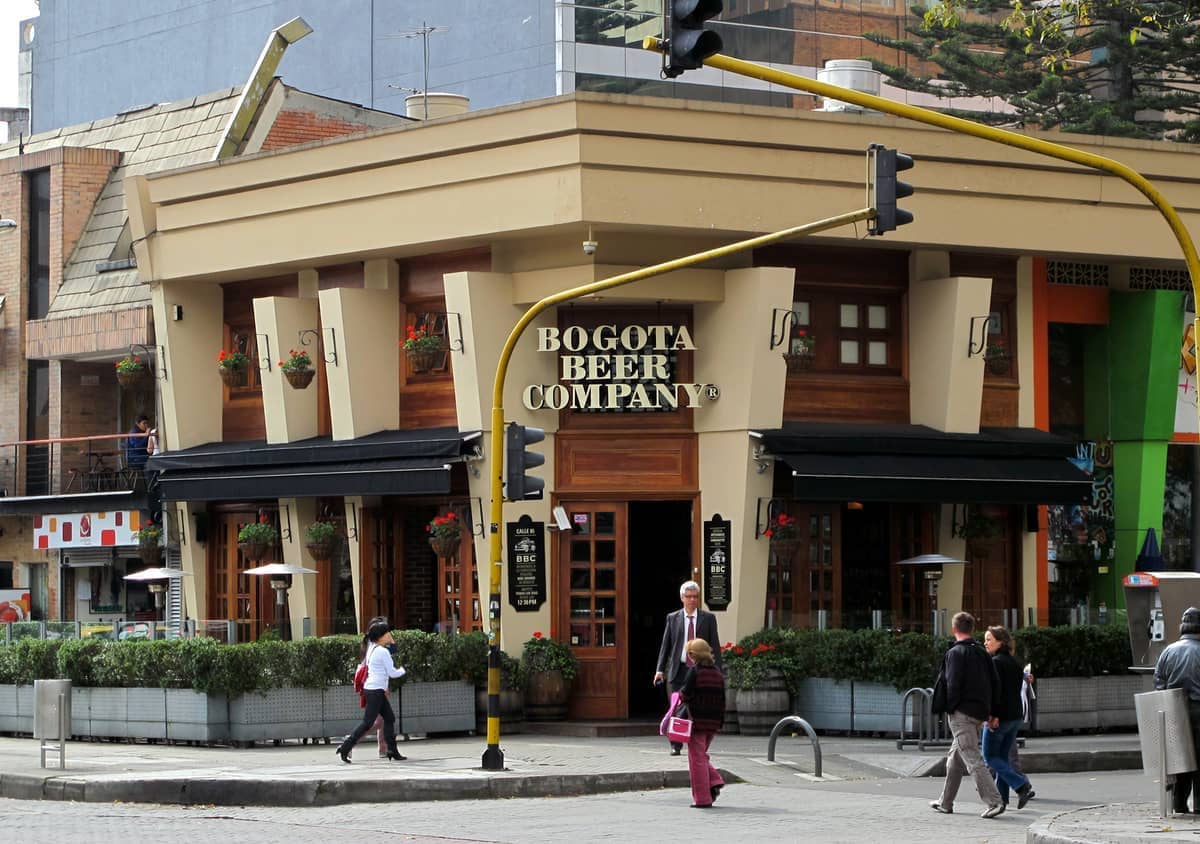
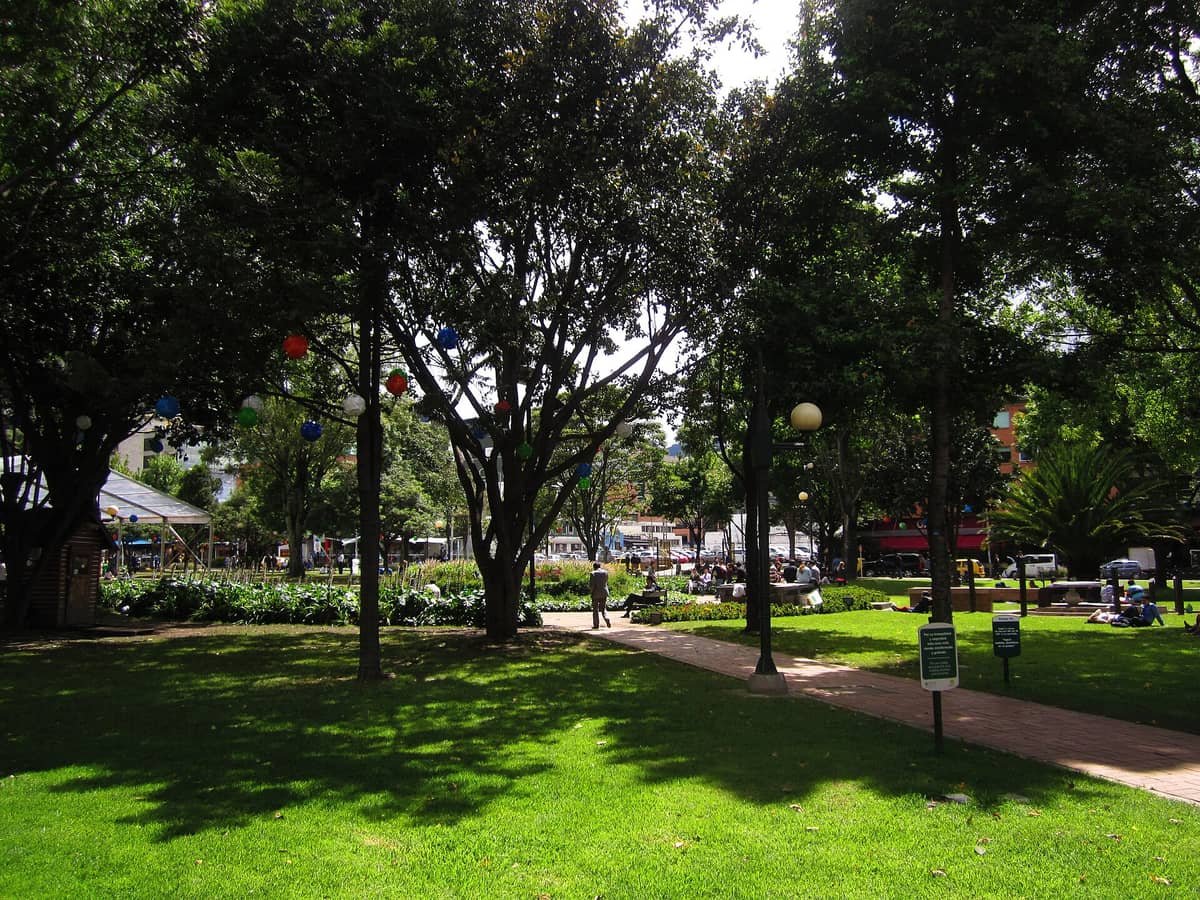
Zona Rosa and Zona T form the beating heart of north Bogotá's leisure scene, concentrated around Calle 82–85 and the iconic T-shaped pedestrian strip at Carrera 12A and Calle 83. This is where the city's upper-middle class comes to eat, drink, and shop, surrounded by international restaurants, major malls, and bars that fill well past midnight on weekends.
Zona Rosa is Bogotá's most polished leisure district: a compact rectangle of north-city blocks where high-end restaurants, international chains, nightclubs, and two of the city's biggest malls share space with street-level bars and coffee shops. Zona T, the pedestrian-only T-shaped intersection at its core, is the place that first-time visitors to Bogotá picture when they imagine the city's social life.
Orientation
Zona Rosa sits in the northern half of Bogotá, within the broader Chapinero district, at an elevation of roughly 2,640 meters above sea level alongside the rest of the city. Its boundaries are generally understood as Calle 79 to the south, Calle 85 to the north, Carrera 11 to the east, and Carrera 15 to the west. This puts it squarely between the older Chapinero neighborhood to the south and the more residential El Chicó sector to the north.
The geographic centerpiece is Zona T: a pedestrian-only T-shaped passageway formed by the intersection of Carrera 12A and Calle 83. Think of it as the nucleus from which the rest of the district radiates. Within a few blocks, you hit Andino Mall on Carrera 11 and El Retiro Mall slightly to the northwest, both of which anchor the retail identity of the area. To the east, the terrain begins to rise gently toward the Cerros Orientales, though you won't feel that pull much in the flat commercial grid of Zona Rosa itself.
Travelers staying in Zona Rosa are well-positioned to reach most of Bogotá's key attractions. La Candelaria, the colonial historic center, is roughly 8–10 km to the south. Usaquén, Bogotá's northern village-within-a-city, is about 4 km up Carrera 15. The area connects naturally to Chapinero to the south, which runs along the same north-south transit corridors.
Character & Atmosphere
Zona Rosa does not feel like the rest of Bogotá. The streets are noticeably cleaner, the sidewalks wider, and the lighting after dark considerably better than most of the city. Security guards stand at the entrances of virtually every major building. English menus appear without being asked. For a visitor arriving from the more chaotic rhythms of La Candelaria or the southern neighborhoods, stepping into Zona T can feel disorienting in a comfortable way, like walking from one city into another.
Morning in Zona Rosa is quiet by Bogotá's standards. The restaurants haven't opened yet, the mall gates are still down, and the only real activity is at the cafés and juice bars along Calle 82 and Carrera 13 where office workers and hotel guests order tinto and arepas before the workday. The light at this altitude hits differently in the mornings: thin, clear, and cool, often with the Andes visible at the end of perpendicular streets.
By midday on weekdays, the district fills with business lunches and shoppers. The Zona T pedestrian strip becomes a steady flow of people in office attire, tourists checking Google Maps, and delivery couriers weaving between tables. On weekends, especially Saturday afternoons, the tempo shifts: families appear alongside groups of friends, the restaurant queues grow, and the bars begin to pre-game before the evening properly starts.
After 9 PM on Thursday through Saturday, Zona Rosa becomes one of the loudest places in Bogotá. The clubs on and around Zona T draw significant crowds, music spills onto the street, and the pedestrian corridor turns into a slow-moving social scene. This is when the area most distinctly belongs to a younger, well-off demographic, though the mix includes tourists and expats. The energy is genuine rather than performative, but it is not the place for an early night.
ℹ️ Good to know
Zona Rosa is concentrated enough that most of what you'll want is within a 10-minute walk of the Zona T intersection. Save yourself navigation confusion by orienting around Calle 83 and Carrera 12A as your central reference point.
What to See & Do
Zona Rosa is not a neighborhood built around traditional sightseeing, and it would be misleading to present it as such. There are no colonial churches, no major museums, no historical monuments within its core blocks. What the area offers instead is Bogotá at its most commercially polished: shopping, eating, and a nightlife scene that ranks among the city's best-organized.
Andino Mall, on Carrera 11 near Calle 82, is one of Bogotá's most established upscale shopping centers. It carries international and Colombian fashion brands, a well-curated food hall, a cinema, and consistent year-round foot traffic. El Retiro Mall, a few blocks northwest, has a slightly more modern layout and attracts a similar crowd. Both are worth a walk-through if only to understand the consumerist pulse of northern Bogotá.
Beyond retail, the neighborhood rewards slow walking. The Zona T pedestrian strip has outdoor seating that fills up at golden hour, and the surrounding blocks of Calle 82 to 85 between Carreras 11 and 15 contain a rotating mix of art galleries, boutique stores, and concept coffee shops. Those looking to combine a Zona Rosa base with broader city exploration should read the complete guide to things to do in Bogotá to map out excursions to the rest of the city.
Walk the full Zona T pedestrian strip at different times: afternoon for café culture, evening for bar-hopping
Browse Andino Mall and El Retiro Mall for Colombian designer labels alongside international brands
Use the neighborhood as a base for day trips: the Cerros Orientales above Chapinero are accessible by taxi in under 15 minutes
Look for pop-up design markets and gallery openings on weekends in the surrounding blocks
Check the area around Carrera 13 and Calle 82 for independent bookshops and specialty stores
If you want to move beyond Zona Rosa's commercial grid, the city's most dramatic natural landmark is reachable in about 20 minutes by taxi. Cerro de Monserrate offers sweeping views over all of northern Bogotá, including Zona Rosa's relatively low-rise rooftops, and gives useful geographic context for how the city is laid out.
Eating & Drinking
The food scene in Zona Rosa is the strongest argument for staying in or spending an evening here. The concentration of restaurants per block is genuinely impressive, covering Colombian regional cooking, Japanese, Italian, Middle Eastern, Peruvian-Nikkei, and a growing number of modern Colombian fusion concepts. For a broader tour of what Bogotá's dining scene looks like across the city, the Bogotá food guide covers the full picture.
Price points lean upward compared to most of Bogotá. A sit-down meal at a mid-range Zona T restaurant will typically cost more than the same quality of food in Chapinero or La Macarena. That said, the zone is not uniformly expensive: you can find empanadas, arepas, and affordable set lunches (the traditional almuerzo corriente) on the side streets off Carrera 15, catering to the neighborhood's service workers and office staff.
Coffee culture here skews toward the specialty end. Several cafés in Zona Rosa and the immediate surrounding blocks source single-origin Colombian beans and offer brew methods you won't always find elsewhere in the city. If coffee is a priority during your visit, the Colombian coffee guide for Bogotá will help you identify what to look for and where.
The bar and nightclub scene is concentrated in and immediately around Zona T. The strip itself has outdoor bars with table service. Clubs cluster on the adjacent side streets, ranging from cocktail lounges to venues with live salsa and electronic music sets that run until the early hours. Thursday nights draw a younger after-work crowd; Friday and Saturday nights are when the full circuit operates at capacity. Cocktail quality is generally high by regional standards.
Sit-down restaurants: strong showing in Colombian fusion, Peruvian, and Italian concepts
Street food: empanadas, arepas, and fresh juices available on side streets, especially toward Carrera 15
Specialty coffee: multiple independent cafés with single-origin Colombian offerings
Bars: outdoor table service on Zona T itself, with more intimate cocktail bars on side streets
Clubs: live music venues and DJ-led clubs within a few blocks of the T intersection
💡 Local tip
For a more local and less tourist-facing dining experience at lower prices, walk two or three blocks west toward Carrera 15 or south toward Calle 79. The restaurants there serve the same quality Colombian cuisine to the neighborhood's everyday residents rather than hotel guests.
Getting There & Around
TransMilenio, Bogotá's bus rapid transit system, is the most practical public transport option for reaching Zona Rosa. The Calle 85 station on the Autopista Norte (Carrera 15) corridor puts you within walking distance of the northern edge of the district; from there, it's roughly a 5–7 minute walk east to Zona T. The Héroes station, slightly further south, is another common reference point for approaching the area from downtown. For a full overview of navigating the city by public transit, see the guide to getting around Bogotá.
Ride-hailing apps, particularly Uber, Cabify, and Didi, work reliably in this part of the city and are frequently the most practical option for late-night returns. The neighborhood's popularity means surge pricing can kick in after midnight on weekends, so having multiple apps installed is worth the minor setup time. Traditional metered taxis are also available, though app-based options give you a fixed price and a record of the trip.
Once inside the district, everything is walkable. The Zona T pedestrian strip is car-free by design, and the blocks between Calles 79 and 85 from Carrera 11 to 15 are compact enough that you rarely need transport between destinations. Flat terrain makes this one of the more pleasant walking zones in Bogotá, though altitude means a brisk pace will wind you more than expected if you've just arrived from sea level.
⚠️ What to skip
Phone theft and petty robbery do occur in and around Zona Rosa, particularly near busy nightlife venues late at night. Keep phones off the street when not in use, avoid displaying expensive jewelry, and use ATMs inside malls or hotels rather than street-facing machines. U.S. and European diplomatic advisories have specifically flagged the broader Chapinero and Zona Rosa area for opportunistic crime at night.
From El Dorado International Airport, Zona Rosa is approximately 12–15 km to the northeast depending on route and traffic. By taxi or ride-hailing app, the journey typically takes 25–45 minutes depending on the time of day. The Avenida El Dorado corridor that connects the airport to the city center sees significant congestion during peak hours. Verify current transfer costs before arriving, as prices fluctuate.
Where to Stay
Zona Rosa is one of Bogotá's most popular areas for international travelers, and the accommodation options reflect that. The district and its immediate surroundings have a concentration of four and five-star hotels, boutique properties, and well-maintained aparthotels. For travelers who want a single base that combines convenience, safety, and easy access to dining, this is the strongest candidate in the city. The broader where to stay in Bogotá guide compares Zona Rosa against other neighborhoods including Usaquén, La Macarena, and La Candelaria.
The best hotel positioning within the district is the area immediately surrounding Zona T and Andino Mall, between Calles 82 and 85 and Carreras 11 and 13. This puts you within a few minutes' walk of the main restaurant and bar strip without being directly on the noisiest streets. If you're a light sleeper, ask specifically about rooms facing interior courtyards or away from Calle 83, which sees the most foot and vehicle traffic after dark.
Zona Rosa suits business travelers, couples, and visitors who prioritize easy access to international-standard restaurants and a polished street environment. It is less suited to budget travelers, those looking for an immersive local experience, or families with young children who need early bedtimes given the district's noise levels on weekend evenings.
ℹ️ Good to know
Zona Rosa sits at 2,640 meters above sea level. If you're arriving from a low-altitude city, altitude adjustment (called 'soroche' locally) can cause headaches and fatigue for the first day or two. Take it easy on arrival and stay hydrated. The specialty coffee culture here makes it tempting to overcaffeinate early on; that won't help.
How Zona Rosa Fits Into a Bogotá Trip
Zona Rosa works best as a base or as a designated evening destination rather than a full-day itinerary. Most travelers spending a few days in Bogotá will find themselves here at least once, whether for dinner, a night out, or shopping. Those on a three-day itinerary can use the 3 days in Bogotá itinerary to slot Zona Rosa into an evening schedule while spending days in La Candelaria, La Macarena, or on day trips from the city.
For those interested in Bogotá's broader nightlife beyond Zona Rosa's relatively mainstream offering, La Macarena offers a more bohemian alternative a few kilometers south. Chapinero Alto has a well-established LGBTQ+ scene. Usaquén brings a more relaxed, village-like evening energy. Zona Rosa occupies the upscale end of that spectrum, and knowing where it sits helps calibrate expectations. Also worth reading before your trip: the Bogotá safety tips guide for city-wide context on navigating the city confidently.
TL;DR
Zona Rosa and Zona T form Bogotá's most polished leisure district, concentrated around Calle 82–85 and the pedestrian T-intersection at Carrera 12A and Calle 83.
Best for: travelers who want easy access to international-standard restaurants, upscale shopping, and a well-organized nightlife scene in a relatively secure street environment.
Not ideal for: budget travelers, those seeking an immersive local neighborhood experience, or light sleepers sensitive to weekend nightlife noise.
Practical note: petty theft and phone robbery do occur near nightlife venues at night; exercise standard urban precautions and use in-app ride services for late-night returns.
Transit: reachable by TransMilenio from Calle 85 station on Autopista Norte, and by Uber, Cabify, or Didi from anywhere in the city; internally walkable once you arrive.
Three days is enough to get a real feel for Bogotá, D.C. — Colombia's high-altitude capital of roughly 8 million people. This itinerary covers the historic core, world-class museums, the city's best neighborhoods, and one excellent day trip, with honest logistics and timing built in.
Bogotá holds its own as a museum city. From world-class pre-Columbian collections to free art galleries and immersive history museums, these are the institutions that make the Colombian capital one of Latin America's most rewarding cultural destinations.
Bogotá's climate stays mild year-round thanks to its 2,640 m elevation, but the best time to visit depends on your priorities. This guide breaks down dry seasons, rainy periods, major festivals, crowd levels, and what no one tells you about Bogotá's weather.
Everything you need to navigate El Dorado International Airport (BOG) and reach central Bogotá efficiently. From TransMilenio routes and TuLlave cards to regulated taxi fares and private transfers, this guide covers every option with real prices and clear trade-offs.
At 2,640 metres above sea level, Bogotá is one of the highest capital cities in the world. This guide covers everything you need to know: altitude sickness symptoms, prevention strategies, UV risks, seasonal weather patterns, and practical tips for arriving healthy and staying comfortable.
Every Sunday and public holiday, Bogotá closes over 127 km of city streets to cars and opens them to cyclists, runners, skaters, and walkers. This is your complete guide to the Ciclovía: how it works, where to ride, what to expect, and how to make the most of it.
Bogotá, Colombia has quietly become one of Latin America's most practical bases for remote workers. This guide covers real monthly budgets, coworking space prices, the best neighborhoods to live and work from, and what no one tells you before you land at El Dorado.
Bogotá's food scene runs deeper than most visitors expect. This guide covers the city's signature dishes, where to find them by neighborhood, what to skip, and how to eat like someone who actually lives there.
December is one of the best months to visit Bogotá, D.C. The city enters its drier season, temperatures are mild, and the famous Ruta de la Navidad transforms entire districts into illuminated corridors. Here is everything you need to plan your visit.
Bogotá's nightlife scene runs deep and late, from craft beer bars in Chapinero to high-end mixology lounges in Zona T. This guide breaks down the best areas, what to spend, when to go, and what to watch out for.
Bogotá, Colombia gets a bad reputation that doesn't tell the full story. This guide breaks down the real risks by neighborhood, time of day, and situation — so you can travel smart, not scared.
Bogotá, D.C. offers one of South America's most varied shopping landscapes, from pre-dawn flower markets and weekend craft fairs to polished upscale malls. This guide covers where to shop, what to buy, what things cost, and how to avoid the common mistakes that waste both time and money.
Bogotá, D.C. has built one of Latin America's most serious street art scenes, with politically charged murals, internationally recognized artists, and organized tours running daily across multiple neighborhoods. This guide covers where to go, which tours are worth your money, and what to know before you walk out the door.
Bogotá, Colombia sits at 2,640 metres above sea level, which means the city defies every tropical climate stereotype. Temperatures hover in a narrow band year-round, but two distinct rainy seasons shape when and how you should visit. This guide breaks down the month-by-month reality, what to pack, and when crowds and prices peak.
Bogotá, D.C. is a surprisingly rewarding destination for families. From free city museums and mountaintop adventures to cycling days and colonial history, this guide covers the best kid-friendly activities in Bogotá, Colombia, with real prices, practical logistics, and notes on what works with children of different ages.
Bogotá, D.C. has become one of Latin America's most serious specialty coffee cities, with farm-to-cup roasters, barista workshops, and day trips to working coffee farms all within reach. This guide covers where to drink, what to order, what to avoid, and how to get the most out of Colombian coffee culture in the capital.
Bogotá, D.C. sits at 2,640 m above sea level in the heart of the Colombian Andes, making it an ideal base for exploring some of South America's most distinctive landscapes and colonial heritage. This guide covers the top day trips from Bogotá with practical transport details, realistic timings, and honest assessments of what each destination actually delivers.
Bogotá offers a surprising number of free experiences. From permanently free world-class museums to weekly car-free streets, colonial plazas, and sprawling urban parks, the city rewards travelers who know where to look. This guide covers the best no-cost activities, with clear notes on when free access applies.
Bogotá, D.C. has one of Latin America's most extensive urban transit networks, but navigating it takes some preparation. This guide covers TransMilenio, SITP buses, the TransMiCable, taxis, ride-hailing apps, and airport transfers — with current fares, practical tips, and clear notes on what works and what to avoid.
Bogotá, D.C. is one of South America's most underrated capitals. This guide covers the best things to do in Bogotá across culture, food, neighborhoods, and day trips, with current prices, opening hours, and practical notes on what to skip.
Choosing where to stay in Bogotá shapes your entire trip. This guide breaks down every major neighborhood by safety, price range, atmosphere, and proximity to key attractions, so you can book with confidence.