Bogotá Weather & Climate: What to Expect Year-Round
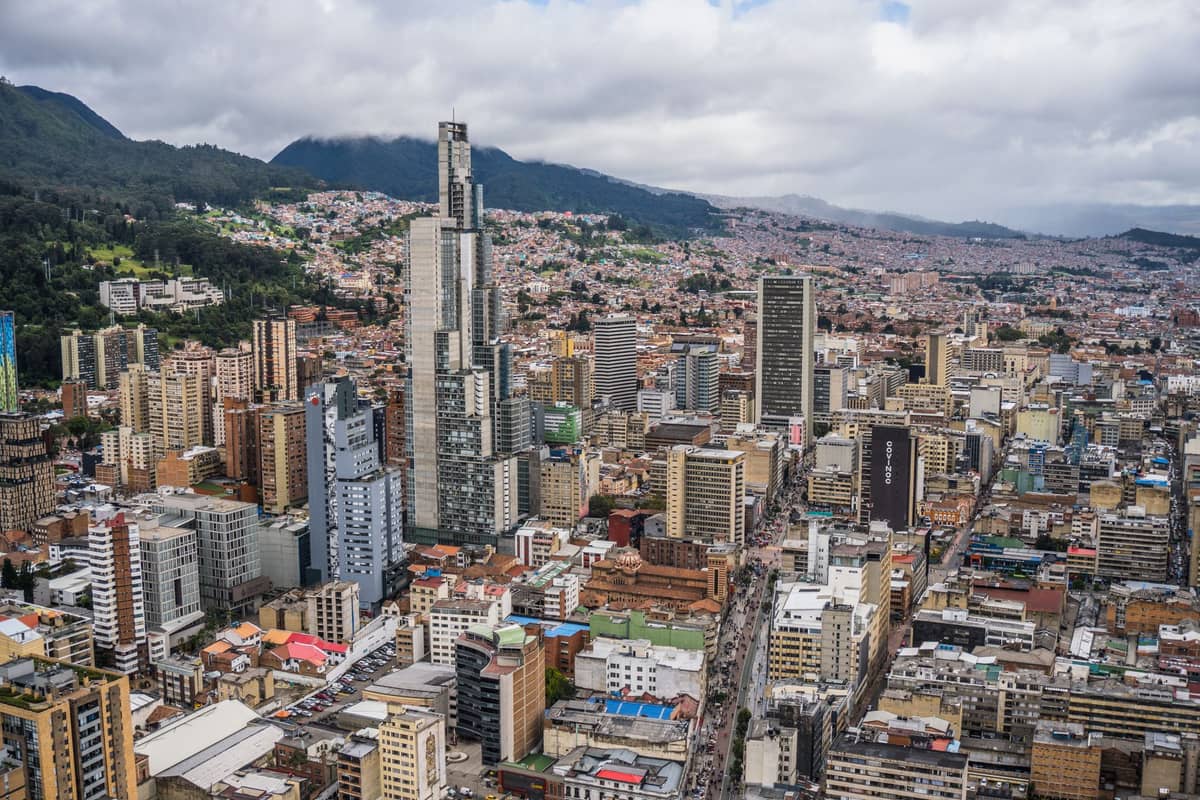
Bogotá, Colombia sits at 2,640 metres above sea level, which means the city defies every tropical climate stereotype. Temperatures hover in a narrow band year-round, but two distinct rainy seasons shape when and how you should visit. This guide breaks down the month-by-month reality, what to pack, and when crowds and prices peak.
Plan and book this trip
Tools from our partner Travelpayouts help you compare flights and hotels. If you book through them, we may earn a commission at no extra cost to you.
Flights
Hotels map
TL;DR
- Bogotá's elevation of 2,640 m keeps average temperatures between 14–20 °C year-round — cool and spring-like, never hot.
- There are two rainy seasons (March–May and October–November) and two drier windows (December–February and June–September).
- The best months to visit for sunshine and outdoor activities are July–August and December–February — see our guide to the best time to visit Bogotá for the full breakdown.
- Pack layers every single day: mornings can be 7–10 °C and afternoons can climb to 20 °C in the same outing.
- UV exposure at altitude is high even on overcast days — sunscreen is not optional.
Why Bogotá's Climate Defies Expectations
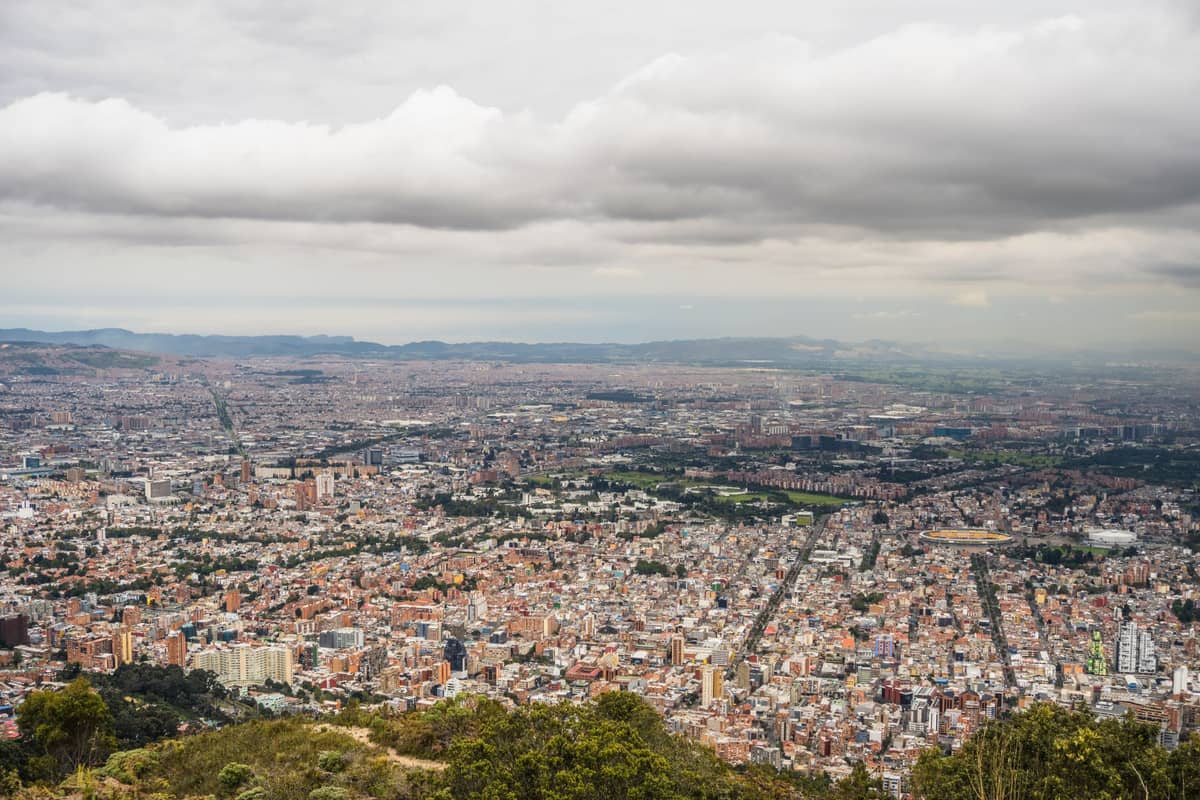
Most people arrive expecting a tropical city and are immediately surprised by the cold. Bogotá, D.C. sits at 2,640 metres above sea level in the Eastern Andes, which overrides what latitude alone would predict. The city lies just 4° north of the equator, but the altitude compresses the climate into something closer to a cool European spring than a Colombian coast. The Köppen classification is Cfb — temperate oceanic — a phrase more often attached to Medellín than to Bogotá's cooler plateau climate. That label is partially accurate and partially misleading.
The average annual temperature sits around 14–15 °C (57–59 °F). On a typical day, you might start at 8 °C under fog at 6 a.m., reach a pleasant 19–20 °C by midday when the sun breaks through, then drop back to 12 °C by early evening. There is no summer-winter temperature swing to speak of. What changes across the calendar year is not warmth — it is rain. Understanding Bogotá's weather means understanding rainfall patterns, not temperature seasons.
ℹ️ Good to know
Bogotá is frequently mischaracterised as a cold city or, conversely, as a hot tropical destination. It is neither. Think San Francisco at its mildest, but with daily fog cycles and an equatorial sun overhead. The UV index at this altitude can be extreme even on cloudy days.
The Two Rainy Seasons and Two Dry Windows
Bogotá operates on a bimodal rainfall calendar driven by the Intertropical Convergence Zone (ITCZ) passing over the Andes twice a year. The two main wet periods are March through May and October through November. April and October are consistently the wettest months, with heavy afternoon downpours that can last one to three hours and occasionally trigger flooding in lower-lying areas of the city.
The drier windows fall between December and February and again between June and September. 'Drier' does not mean rain-free — short showers remain possible on any given day, and skies can be overcast for stretches even in the dry season. But the frequency and intensity of rain drops noticeably. July and August are widely considered the sunniest, most stable months for sightseeing, and they coincide with Northern Hemisphere summer holidays, which means more international visitors and slightly busier attractions.
- March–May (Rainy Season 1) Frequent afternoon showers, April being the wettest month. Outdoor plans need flexibility. Museum and indoor cultural touring works well.
- June–September (Drier Window) July and August offer the most consistent sunshine. Good for Cerro de Monserrate, outdoor markets, and day trips. Busier with tourists.
- October–November (Rainy Season 2) October rivals April for rainfall. Fog can be persistent in mornings. Fewer tourists, lower hotel prices, but outdoor visibility suffers.
- December–February (Drier Window) December is festive and relatively dry. January is one of the driest months of the year. February sees rain picking up again toward month's end.
⚠️ What to skip
Fog and heavy rain during the October–November rainy season can occasionally affect visibility at El Dorado International Airport (BOG). If you're arriving or departing during these months, check real-time flight status on the official airport site (eldorado.aero) before heading to the airport.
Month-by-Month Temperature and Rain Reality
January and February are among Bogotá's driest and sunniest months. Daytime highs regularly reach 18–20 °C with clear skies, and the city feels at its most energetic. This is also shoulder season for international tourism, so attractions like the Museo del Oro and Plaza de Bolívar are less crowded than in July–August. March marks the transition: the first rains arrive, typically as afternoon thunderstorms rather than all-day drizzle.
April and May require the most planning flexibility. Afternoon downpours are almost daily, often starting around 2–4 p.m. The upside is that the Eastern Hills (Cerros Orientales) turn vivid green, and the city's botanical garden, Jardín Botánico de Bogotá, is at its most lush. June brings gradual improvement. July and August are the sweet spot: more sunshine, fewer rain disruptions, and ideal conditions for the Cerro de Monserrate hike or weekend day trips to the surrounding Sabana de Bogotá.
September sits in a transitional zone — still relatively dry early in the month, becoming wetter toward October. October and November are the second rainy peak. Temperatures do not drop dramatically (still averaging 14–15 °C), but overcast skies and persistent drizzle can make outdoor sightseeing uncomfortable without waterproof gear. December recovers quickly: the first weeks are often rainy, but by mid-December the skies clear, the city decorates for the holidays, and the festive atmosphere makes it one of the more enjoyable months to visit.
What to Pack for Bogotá's Weather
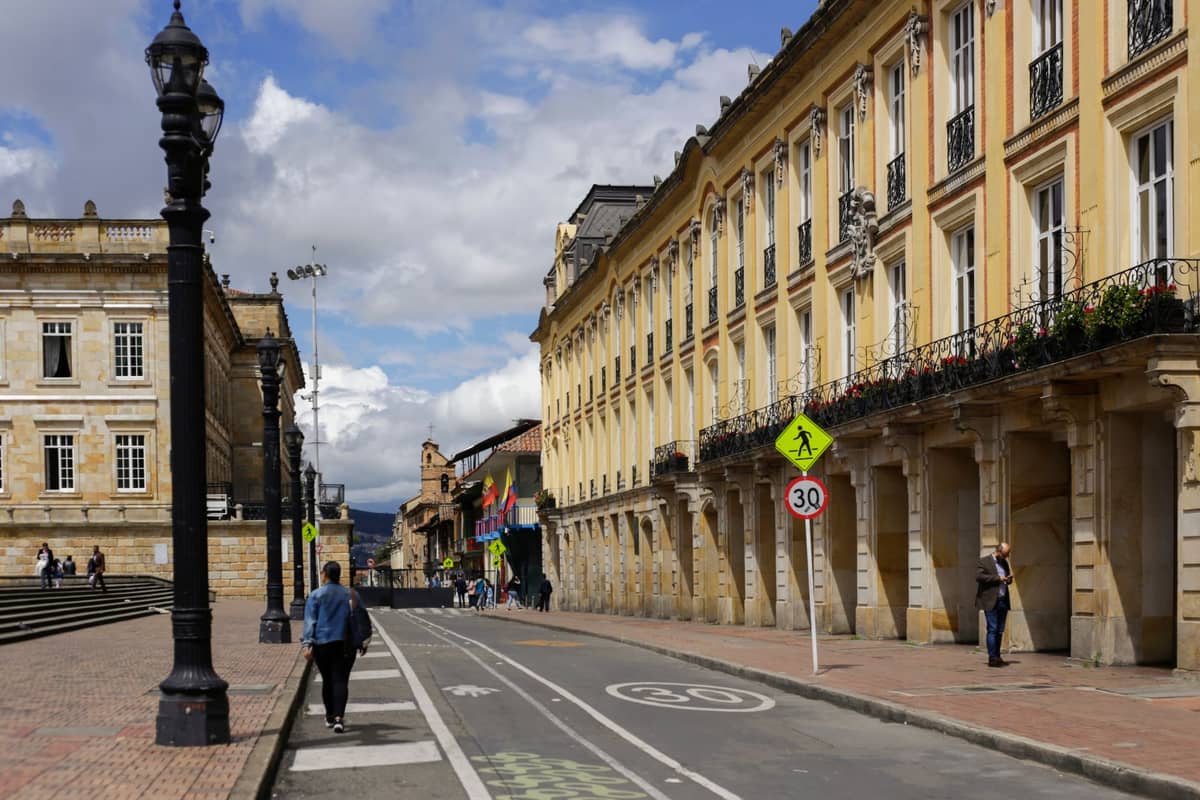
The golden rule for Bogotá packing is layers, always. A morning walk in La Candelaria or up to the Quinta de Bolívar might start at 9–10 °C requiring a jacket, but if you spend four hours walking and the sun comes out, you will be stripping down to a t-shirt by midday. Locals dress in a pragmatic, urban style — not particularly casual, not formally dressed. Carrying a light packable jacket and a compact umbrella in your bag covers most situations.
- A mid-weight jacket or fleece — essential for mornings, evenings, and rainy days
- Waterproof or water-resistant outer layer, especially for the wet seasons
- Comfortable walking shoes with decent grip (cobblestones in La Candelaria get slippery when wet)
- Sunscreen SPF 50+ — UV radiation at 2,640 m is significantly higher than at sea level, even under cloud cover
- Sunglasses for clear-day outings
- A compact umbrella or rain poncho if visiting March–May or October–November
- Light base layers for indoor comfort — buildings are rarely heated, so interiors can feel cool
✨ Pro tip
Skip the bulky rain jacket if you're packing light. A thin, packable windproof shell with a hood weighs almost nothing and handles 80% of Bogotá's weather situations. Pair it with a merino wool mid-layer and you're equipped for mornings, evenings, and surprise showers alike.
Altitude, UV, and Acclimatisation
Bogotá's elevation of 2,640 m is worth taking seriously, particularly if you're flying in from sea level. Mild altitude symptoms — light headaches, slight breathlessness on stairs, disrupted sleep — are common in the first 24–48 hours. Most visitors acclimatise quickly, but it's worth keeping the first day low-key: explore La Candelaria at a gentle pace rather than attempting a strenuous hike up to Monserrate on day one. For a full breakdown of symptoms and how to manage them, our Bogotá altitude guide covers everything you need to know.
UV radiation is the other altitude factor most visitors underestimate. The thinner atmosphere at 2,640 m filters less UV than at sea level. On a sunny January or July day in Bogotá, UV index readings can reach 12–14 (extreme on the WHO scale), which is comparable to a tropical beach at midday. Even on cloudy days, UV levels are higher than most visitors expect from a cool city. Apply SPF 50 sunscreen if you plan to spend more than 30 minutes outdoors, and reapply after rain.
How Weather Affects What You Do and When
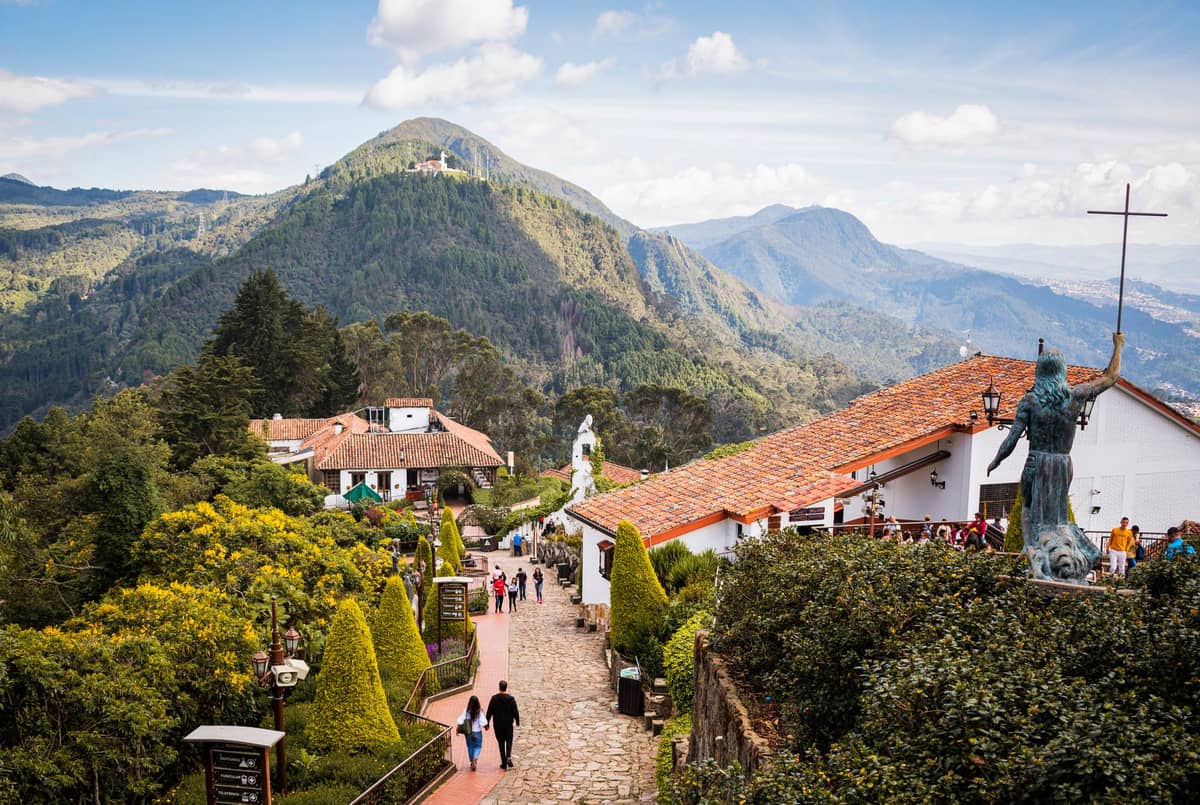
Bogotá's weather patterns should actively shape your itinerary. The city's famous Ciclovía takes over 120 km of roads every Sunday, but it's far more enjoyable — and far better attended — during the drier months when skies are clear. Similarly, day trips to sites like the Catedral de Sal in Zipaquirá or the Laguna de Guatavita depend heavily on road conditions and visibility, both of which are significantly better in the dry season.
For indoor culture — world-class museums, galleries, and food markets — the rainy season is actually fine. The Museo del Oro and Museo Botero are worth visiting regardless of what is happening outside. The Paloquemao market is at its most vivid in the early morning before afternoon rains arrive, so scheduling a 7–9 a.m. visit works well in any season.
If you're planning hikes into the surrounding highlands — Parque Nacional Natural Chingaza or Parque Chicaque — timing matters considerably. Trails can become muddy and slippery during the wet months, and cloud cover can completely obscure the views that make these trips worthwhile. Plan highland excursions for June–August or December–February whenever possible.
💡 Local tip
In Bogotá, afternoon rain is the default, not the exception. Schedule outdoor priorities for mornings — ideally between 9 a.m. and 1 p.m. — and keep indoor activities or café stops for the 2–5 p.m. window when showers are most likely.
FAQ
What is the weather like in Bogotá, Colombia?
Bogotá has a cool, mild climate year-round due to its elevation of 2,640 metres. Average temperatures range from around 7–10 °C at night to 18–20 °C in the afternoon. There are two rainy seasons (March–May and October–November) and two drier periods (December–February and June–September). There is no summer or winter in the tropical sense — rainfall patterns are the main seasonal variable.
What is Bogotá's elevation and how does it affect visitors?
Bogotá sits at 2,640 metres (8,661 feet) above sea level, making it one of the highest capital cities in the world. Visitors from sea level may experience mild altitude symptoms in the first 24–48 hours: headaches, slight breathlessness, or disrupted sleep. Acclimatisation is usually straightforward within one to two days. UV radiation is also significantly higher at this altitude, so sunscreen is essential even on cloudy days.
What is the best time of year to visit Bogotá for good weather?
July and August are widely considered the best months, offering the most consistent sunshine and lowest rainfall. December through February is the other strong window — January in particular is one of the driest months of the year. Both periods suit outdoor activities, day trips, and hiking. Avoid October if possible, as it is statistically the wettest month.
Does Bogotá have a cold climate? Do I need a heavy coat?
Bogotá is cool but not cold in the winter-coat sense. A mid-weight fleece or jacket is usually sufficient for evenings and mornings. Temperatures rarely drop below 5–7 °C even at night, and daytime temperatures can reach 20 °C on sunny afternoons. The bigger risk is getting caught underdressed in the rain, so a waterproof outer layer is more useful than heavy insulation.
Can Bogotá's weather cause flight delays at El Dorado Airport?
Yes, occasionally. Heavy rain and fog during the main rainy seasons — particularly October and November — can reduce visibility and cause delays or diversions at El Dorado International Airport (BOG). This is not an everyday occurrence, but if you are travelling during the wetter months, monitor real-time flight status through the official airport website (eldorado.aero) before heading to the terminal.