Plaza de Mercado de Paloquemao: Bogotá's Greatest Market Hall
Plaza de Mercado de Paloquemao is one of Bogotá's largest and most atmospheric covered markets, where wholesale vendors, home cooks, and curious travelers all share the same aisles. Open before dawn and free to enter, it offers an unfiltered look at Colombian food culture — from dozens of exotic native fruits to floor-to-ceiling towers of cut flowers.
Quick Facts
- Location
- Av. Calle 19 No. 25-04, Los Mártires, Bogotá, D.C.
- Getting There
- Multiple bus routes along Avenida Calle 19; taxi or ride-hailing (Uber, Cabify, Didi) recommended for first-time visitors
- Time Needed
- 1.5 to 3 hours
- Cost
- Free entry; pay only for purchases. Parking approx. COP 3,000/hour (verify on arrival)
- Best for
- Food lovers, photographers, early risers, families, and anyone wanting a local Bogotá experience
- Official website
- plazadepaloquemao.com
What Paloquemao Actually Is
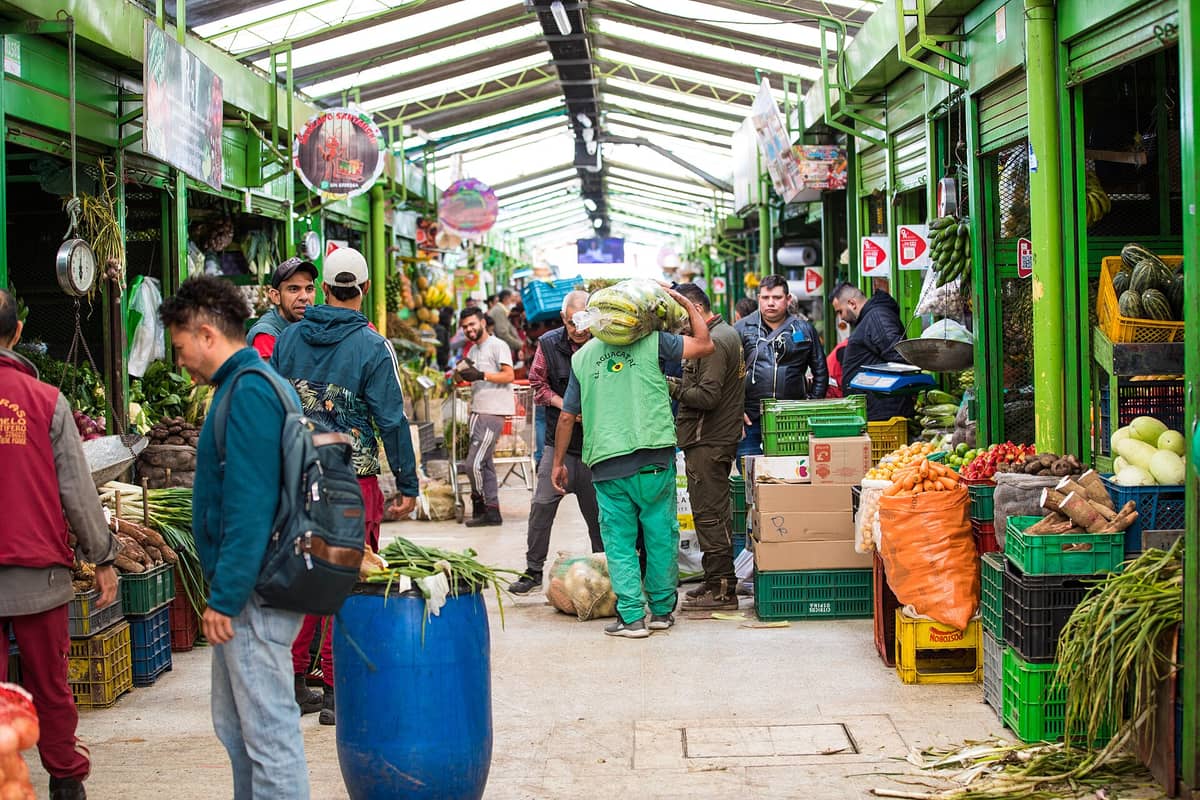
Plaza de Mercado de Paloquemao is not a tourist market. There are no souvenir stalls, no English menus, and no one trying to flag you down for a photo opportunity. This is a working wholesale and retail market hall — one of Bogotá's most traditionally important — where restaurants, street vendors, caterers, and ordinary families source their produce every single day.
The building itself is a large enclosed nave, with high ceilings that let in diffused light and enough airflow to keep the temperature comfortable even on warmer Bogotá afternoons. Aisles run in organized sections: fruits in one wing, vegetables in another, cut flowers occupying their own fragrant zone, and a separate area for meats and prepared foods. The layout is logical once you walk through it once, though on your first visit the sheer volume of goods can feel disorienting in the best possible way.
For travelers who want to go beyond the Museo del Oro and Plaza de Bolívar and see how Bogotá actually feeds itself, Paloquemao is one of the most genuinely revealing places in the city.
The Experience by Time of Day
Paloquemao opens at 4:30 a.m. Monday through Saturday, and that early hour is not a gimmick — it is when the market is at its operational peak. Wholesale buyers arrive before sunrise, trucks unload crates of produce in the outer areas, and the aisles have a purposeful, almost choreographed energy. The smell is intense in a good way: cold stone floors, cut greenery, the sharpness of tropical citrus, and the damp sweetness of flowers that were cut hours ago.
By 7:00 to 9:00 a.m., the wholesale rush has settled and retail buyers take over. This is arguably the best window for visitors: the stalls are fully stocked, the light through the roof panels is clear and photogenic, and vendors have more time to talk. You can ask about unfamiliar fruits — granadilla, lulo, uchuva, zapote, mamoncillo — and most sellers will offer a slice or a taste without hesitation.
After midday, the market thins out noticeably. Some vendors begin packing unsold produce. On Sundays and public holidays, the market closes at 2:30 p.m. rather than 4:30 p.m., so arriving after 11:00 a.m. on those days means you may find reduced selection. Plan accordingly.
💡 Local tip
Best visiting window: weekday mornings between 7:00 and 10:00 a.m. The wholesale rush is over, stalls are fully stocked, and the light is good for photography. Avoid arriving after noon if you want the full experience.
Tickets & tours
Hand-picked options from our booking partner. Prices are indicative; availability and final rates are confirmed when you complete your booking.
Candelaria walking tour
From 35 €Instant confirmationFree cancellationCoffee farm guided tour
From 114 €Instant confirmationFree cancellationZipaquira Salt Cathedral guided tour
From 86 €Instant confirmationFree cancellationBogota full-day bike rental
From 19 €Instant confirmationFree cancellation
The Flower Section: The Market's Most Photographed Corner
Even travelers with no interest in food tend to stop cold when they reach the flower section. Paloquemao supplies much of Bogotá's cut-flower retail trade, and the scale is extraordinary. Roses in forty shades, birds of paradise, anthuriums, heliconias, and native Andean varieties are stacked in buckets from floor to vendor-height, color-blocked in a way that looks almost deliberately staged but is entirely functional.
Colombia is one of the world's largest flower exporters, and Bogotá's altitude and proximity to growing regions in the Sabana mean flowers here are exceptionally fresh and priced well below what you would pay in a florist. Vendors sell by the bunch, and bunches are generous. If you are staying in the city for a few more days, buying flowers at Paloquemao is one of the more affordable and distinctly Colombian things you can do.
ℹ️ Good to know
Photography note: The flower section offers the best natural light in the market. Shoot between 8:00 and 10:00 a.m. when the overhead panels are at their brightest. Ask before pointing a camera directly at vendors — most are happy, but a quick gesture of acknowledgment goes a long way.
Exotic Fruit and Colombian Produce: A Practical Guide
The fruit section at Paloquemao is one of the most thorough introductions to Colombian and Amazonian biodiversity available anywhere in the city. Many of the fruits on display are not found in European or North American supermarkets, and some are specific to altitude ranges in the Colombian Andes or tropical lowlands.
Look for: lulo (a tart orange with green flesh used in juice), granadilla (a cousin of passion fruit with a sweet, gelatinous interior), uchuva (cape gooseberry, sold with its papery husk), chontaduro (peach palm fruit, often eaten with salt and honey), mamoncillo (small green fruits with a slippery sweet-tart flesh), and zapote (a brown-skinned fruit with salmon-colored flesh and a custardy texture). Vendors will almost always let you try before you buy, particularly mid-morning when retail customers are the primary audience.
Prices are quoted in Colombian pesos and fluctuate with season and supply. Bring cash — small bills are preferred, and change can be limited at busy stalls. Card readers exist but are not universal. A practical market run of fresh fruit, a bunch of flowers, and breakfast at one of the food counters can easily come to under COP 30,000.
Eating at Paloquemao
There are food counters and small prepared-food stalls within the market offering Colombian breakfast staples: changua (a milk and egg soup common in Bogotá), arepas with cheese or hogao (a cooked tomato-onion sauce), tamales, and fresh juices made to order from the fruit sold just a few aisles away. These counters are primarily geared toward vendors, porters, and early-morning workers — which means portions are large, prices are low, and the food is straightforward rather than restaurant-polished.
Eating here pairs well with a broader Bogotá food guide itinerary. If you are planning a full morning around the market, consider arriving hungry and eating breakfast at one of the counters before or after browsing the produce sections.
Getting There and Practical Logistics
The market is located in the Los Mártires area at Avenida Calle 19 No. 25-04, west of the historic center. For first-time visitors, a taxi or ride-hailing app (Uber, Cabify, or Didi) is the most straightforward option. Drop-off directly at the entrance is easy, and the surrounding streets are navigable in daylight hours. Multiple TransMilenio feeder bus routes run along Avenida Calle 19 if you prefer public transport, though the bus network in this area requires some familiarity with the system.
If Paloquemao is part of a wider day of exploring central Bogotá, it pairs logically with Iglesia de San Francisco and the historic center of La Candelaria, both of which are a short taxi ride east.
Opening hours are Monday to Saturday 4:30 a.m. to 4:30 p.m., and Sundays and public holidays 5:00 a.m. to 2:30 p.m.
⚠️ What to skip
The Los Mártires neighborhood, while functional and busy during market hours, requires standard urban caution. Keep bags close, avoid displaying expensive camera equipment unnecessarily, and use ride-hailing apps rather than hailing unmarked taxis on the street. Check current safety guidance before your visit.
Who Should Think Twice
Paloquemao is not for everyone. If you are looking for a curated artisan experience, handcrafted goods, or a relaxed tourist-friendly atmosphere, the Usaquén flea market is a better fit. Paloquemao is loud, has wet floors in the produce aisles, can be physically crowded during peak hours, and operates at a pace set by working vendors rather than visiting tourists.
Visitors with significant mobility limitations should note that aisles become narrow and slippery during busy periods, and there is no clearly documented step-free or wheelchair-accessible route through the building. Arriving during off-peak hours (late morning on a weekday) will at least reduce the crowd pressure, but the wet floors remain a consistent factor.
If you are short on time in the city and prioritizing major cultural institutions, consult a 3-day Bogotá itinerary to decide whether a market morning fits your schedule. For travelers with even half a free morning, it almost always does.
Insider Tips
- Go on a weekday rather than a Sunday. The Sunday hours are shorter (closing at 2:30 p.m.) and the selection is reduced by midmorning. A Tuesday or Wednesday visit gives you the full range of stock and a less compressed timeline.
- Bring a small reusable bag or tote. Plastic bags are available from vendors but are often flimsy and may not survive a full load of fruit and a bunch of flowers. A canvas bag also signals that you are a thoughtful buyer rather than someone just browsing.
- If you want to try changua or tamales at the food counters, go before 9:00 a.m. These breakfast items sell out early because the market workers who eat here arrive at dawn.
- Ask vendors to write down the Spanish name of any fruit you try and want to remember. Many of these names do not have standard English equivalents, and having the written name makes it far easier to find the fruit again at a restaurant or juice bar elsewhere in the city.
- The flower section is at its most visually impressive early in the morning when deliveries have just arrived and buckets are at full capacity. By early afternoon, some varieties will have sold down to the last few stems.
Who Is Paloquemao Market For?
- Food-curious travelers who want to understand Colombian ingredients firsthand
- Photographers looking for natural-light color and texture without a tourist crowd
- Early risers who want to start the day with a local breakfast and a market walk
- Families with children curious about exotic tropical fruits
- Travelers spending multiple days in Bogotá who want to supplement a museum-heavy itinerary with something grounded and sensory
Nearby Attractions
Combine your visit with:
- Cascada La Chorrera
Cascada La Chorrera is Colombia's tallest waterfall, plunging approximately 590 metres through cloud forest on the road to Choachí, less than an hour east of Bogotá. The hike to reach it is a proper half-day commitment, not a gentle stroll, but the payoff is one of the most dramatic natural sights within day-trip distance of the capital.
- Catedral de Sal de Zipaquirá
Carved 180 meters beneath a working salt mine, the Catedral de Sal de Zipaquirá is one of South America's most extraordinary architectural achievements. This guide covers what to expect underground, how to get there from Bogotá, and whether the trip is worth your time.
- Jardín Botánico de Bogotá
The Jardín Botánico de Bogotá José Celestino Mutis is one of Colombia's most important living plant collections, spread across a flat, walkable campus that includes the striking Tropicario greenhouse complex. It is a calm, well-organized space that rewards visitors who enjoy botany, photography, and a break from the city's pace without leaving it.
- Laguna de Guatavita
Laguna de Guatavita is a circular crater lake in the Cundinamarca highlands and one of Colombia's most significant sacred sites. Associated with the Muisca El Dorado ritual, it sits 75 km northeast of Bogotá inside a protected forest reserve managed by CAR. Access is by mandatory guided walk only, making every visit a slow, deliberate encounter with both Andean ecology and pre-Columbian history.