Cascada La Chorrera: A 590-Metre Waterfall Within Reach of Bogotá
Cascada La Chorrera is Colombia's tallest waterfall, plunging approximately 590 metres through cloud forest on the road to Choachí, less than an hour east of Bogotá. The hike to reach it is a proper half-day commitment, not a gentle stroll, but the payoff is one of the most dramatic natural sights within day-trip distance of the capital.
Quick Facts
- Location
- Vereda La Victoria, km 27 on the Bogotá–Choachí road, Cundinamarca
- Getting There
- Choachí minibus from Bogotá, exit at La Chorrera turnoff; continue by walk or local jeep to park entrance
- Time Needed
- 4–6 hours for the full round-trip hike; typical visiting window roughly 08:00–15:00 (confirm current hours locally)
- Cost
- Approximately COP 20,000–35,000 entry for adults (verify current rates on arrival); prices have changed over time
- Best for
- Hikers, nature lovers, and anyone wanting a dramatic half-day escape from the city
- Official website
- lachorrera.com.co
What Cascada La Chorrera Actually Is
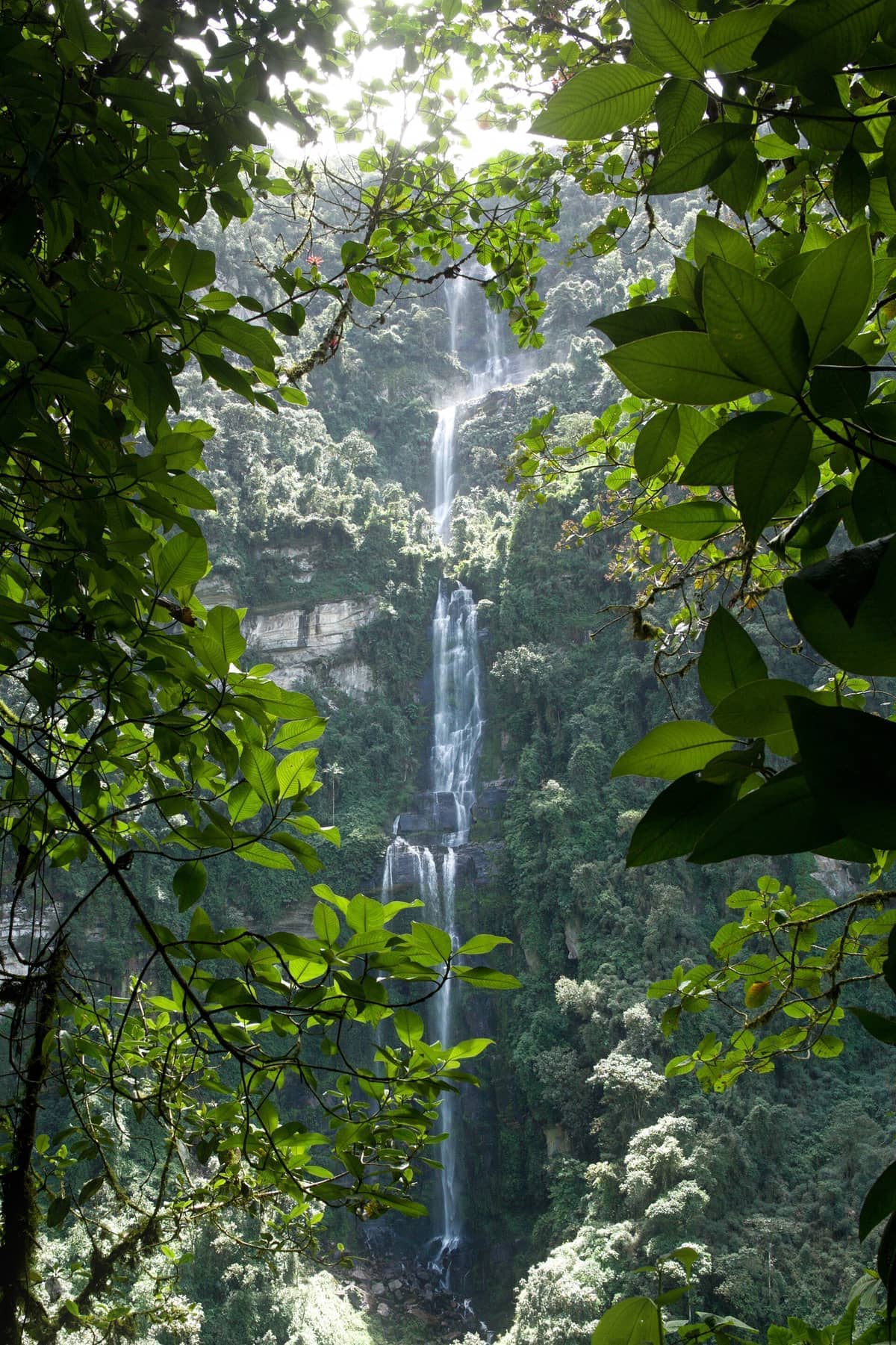
Cascada La Chorrera holds the title of Colombia's tallest waterfall, with a total drop of around 590 metres spread across several cascading tiers. One of the most photographed sections is the main free-fall drop of La Chorrera itself: a single white thread of water launching off a basalt lip and disappearing into mist far below. The full waterfall is less a single curtain of water and more a long series of falls carved into the steep eastern face of the Andes, where the cordillera drops sharply toward the lowland valleys of Cundinamarca.
The surrounding ecosystem is Andean cloud forest, which means you are walking through a world of dripping moss, ferns the size of small trees, and a persistent cool fog that drifts through the canopy. The air smells of wet earth and vegetation. On rainy days the forest is moody and green in a way that feels almost theatrical; on clear mornings the views opening up across the valley are genuinely wide.
ℹ️ Good to know
Trail hours are often described as running roughly from mid-morning to mid-afternoon, with last departures around 13:00–14:00; exact schedules vary, so confirm current hours before or upon arrival. Guided hikes appear to operate primarily on Saturdays, Sundays, and public holidays. Arrive early: setting out after 10:00 leaves very little margin to complete the trail comfortably before gates close.
Getting There from Bogotá
The waterfall sits near the km 27 mark of the Bogotá–Choachí road, placing it about 45 minutes to 1 hour from the city by car under normal traffic conditions. The eastern Andes road climbs steeply and winds through several villages before the La Chorrera turnoff appears on the left when travelling from Bogotá.
The most common budget approach is to take a Choachí-bound minibus from Bogotá, get off at the La Chorrera turnoff, and either walk or flag down a local jeep for the remaining distance to the park entrance. If you prefer to organise transport in advance, several tour operators in Bogotá offer full-day packages that include transport, a guide, and sometimes lunch. This is a reliable option for solo travellers unfamiliar with the route. For general orientation on moving around the city before or after your trip, the getting around Bogotá guide covers TransMilenio connections and ride-hailing options in more detail.
Driving yourself or taking a private ride-hailing service (Uber, Cabify, or Didi all operate in Bogotá) gives more flexibility and removes the uncertainty of roadside bus stops. If you choose this route, confirm the driver is willing to wait or arrange a pickup time before you begin the hike.
Tickets & tours
Hand-picked options from our booking partner. Prices are indicative; availability and final rates are confirmed when you complete your booking.
Candelaria walking tour
From 35 €Instant confirmationFree cancellationCoffee farm guided tour
From 114 €Instant confirmationFree cancellationZipaquira Salt Cathedral guided tour
From 86 €Instant confirmationFree cancellationBogota full-day bike rental
From 19 €Instant confirmationFree cancellation
The Hike: What to Expect on the Trail
From the park entrance the trail descends into the cloud forest before climbing back up to the main viewpoints. The path is unpaved, often muddy, and involves some genuinely steep sections. Total round-trip hiking time is typically four to six hours depending on pace, how long you spend at the falls, and which viewpoints you stop at along the way.
The trail is not technical but it is physically demanding. The combination of altitude (the area sits around 2,400–2,600 metres) and sustained climbing will catch out visitors who underestimate the effort. Bogotá itself sits at 2,640 metres, so if you have been in the city for a few days your body has some acclimatisation, but the hike still requires a baseline of fitness.
⚠️ What to skip
The attraction is not wheelchair accessible. The path involves uneven terrain, stream crossings, and muddy sections that require sturdy footwear. Trail sandals and flat sneakers are a poor choice. Waterproof hiking boots or at minimum grippy trail shoes are recommended.
The best light for photographing the falls tends to be mid-morning, when the sun is high enough to clear the valley walls but before clouds build in the afternoon. If you visit during Bogotá's main rainy periods (roughly March to May and September to November), the waterfall volume is higher and more visually dramatic, but trail conditions are significantly muddier and slippery. The relatively drier periods (December to February and June to August) offer more stable footing and clearer skies, though the falls can be less full.
At the Waterfall: Sensory Details and Viewpoints
When you first hear the falls before you see them, the sound is a low sustained roar that grows as you descend the final section of trail. The mist reaches you several minutes before the main viewpoint, coating your face and camera lens. Standing at the base viewpoint looking up at El Chiflón, the scale takes a moment to register: the water appears thin and almost delicate from that distance, but the sound undercuts any impression of gentleness.
There are multiple viewpoints at different elevations offering different perspectives on the cascade. The uppermost tier is the most photogenic for the full drop; lower points bring you close enough to feel the spray physically. Bring a dry bag or waterproof case for your phone or camera if you plan to get close.
The immediate area around the falls is cool enough that even visitors who were warm on the trail will want an extra layer. Pack a light waterproof jacket regardless of the weather in Bogotá when you leave. Cloud forest temperatures and a waterfall's permanent microclimate are unpredictable.
Cultural and Ecological Context
The Bogotá–Choachí corridor sits within the eastern Andes cordillera, a zone of exceptional biodiversity. The cloud forest around La Chorrera is part of the broader Andean ecosystem that includes páramo (high-altitude moorland) at its upper edges, a habitat type found almost exclusively in the northern Andes and one of the world's most water-rich ecosystems. The Cerros Orientales, the forested ridge that defines Bogotá's eastern horizon, are part of the same ecological system; if you are interested in the relationship between the city and its surrounding mountains, the Cerros Orientales are worth understanding before you visit.
The route to La Chorrera passes through small Cundinamarcan municipalities where local residents have built a modest tourism economy around the waterfall. The Asociación de Turismo La Palma manages the attraction; buying your entry ticket directly supports this community-based operation. Entry fees have increased over the years and vary, so treat any price you read online as an estimate and confirm the current rate at the gate.
Who Should Reconsider This Trip
La Chorrera is frequently described online as a day trip from Bogotá suitable for almost anyone, which understates the physical commitment involved. If you have not done any hiking at altitude before, are not comfortable on uneven and muddy terrain, or have limited time in the city, there are closer and less demanding nature options near Bogotá.
Visitors travelling with young children should assess the trail distance and conditions honestly before committing. Families with older children who hike regularly may manage it fine, but it is not the kind of outing that works well if anyone in the group is reluctant or unprepared. The Bogotá with kids guide covers more accessible family options across the city and surrounding area.
Travellers on a tight city itinerary should also weigh the time cost carefully. Including travel in both directions and the hike itself, La Chorrera takes a full day. If you have two or three days total in Bogotá and have not yet seen the main museums and historic centre, that time may be better spent in the city.
Practical Summary: What to Bring
- Waterproof hiking boots or trail shoes with good grip
- A light waterproof or windproof jacket, regardless of morning conditions
- At least 1.5 litres of water per person, more in dry season
- Snacks or a packed lunch (food options near the entrance are limited)
- Cash in Colombian pesos for the entry fee and any transport
- A dry bag or waterproof case for your phone or camera
- Sunscreen and sunglasses for open sections of the trail
- A small first aid kit if you hike regularly without a guide
💡 Local tip
Departure from Bogotá by 07:00–07:30 gives you the most comfortable margin. You reach the trail in the cooler morning hours, have time to spend at the falls, and complete the descent with daylight to spare before the typical mid‑afternoon closing time.
Insider Tips
- The trail can be done independently, but hiring a local guide at the entrance adds context about the cloud forest ecology and ensures you do not miss secondary viewpoints. Guides can sometimes be arranged directly through the Asociación de Turismo La Palma when you arrive.
- On weekends and Colombian public holidays the parking area at the turnoff fills quickly and the trail becomes noticeably more crowded from mid-morning onward. Weekday visits, if your schedule allows, are significantly quieter.
- If you travel by minibus, confirm with the driver the exact point to disembark. 'La Chorrera' is sometimes confused locally with nearby place names. Having the address 'km 27, carretera Bogotá–Choachí' written down avoids confusion.
- The falls are most powerful during and immediately after the main rainy periods (around April–May and again in October–November, when water volume tends to be highest). If the visual drama of the waterfall matters more to you than ideal trail conditions, plan accordingly.
- A lightweight trekking pole is worth packing if you have one. The descent back to the entrance involves the same steep and often slippery sections, and poles significantly reduce the strain on your knees.
Who Is Cascada La Chorrera For?
- Experienced day hikers who want a serious trail within reach of a major city
- Nature and photography enthusiasts drawn to cloud forest and dramatic waterfall scenery
- Visitors with at least four or five days in Bogotá who have already covered the main urban sights
- Travellers acclimatised to altitude who can manage several hours of uphill and downhill walking on rough terrain
- Those interested in Andean ecosystems and Colombian natural geography beyond the city
Nearby Attractions
Combine your visit with:
- Catedral de Sal de Zipaquirá
Carved 180 meters beneath a working salt mine, the Catedral de Sal de Zipaquirá is one of South America's most extraordinary architectural achievements. This guide covers what to expect underground, how to get there from Bogotá, and whether the trip is worth your time.
- Jardín Botánico de Bogotá
The Jardín Botánico de Bogotá José Celestino Mutis is one of Colombia's most important living plant collections, spread across a flat, walkable campus that includes the striking Tropicario greenhouse complex. It is a calm, well-organized space that rewards visitors who enjoy botany, photography, and a break from the city's pace without leaving it.
- Laguna de Guatavita
Laguna de Guatavita is a circular crater lake in the Cundinamarca highlands and one of Colombia's most significant sacred sites. Associated with the Muisca El Dorado ritual, it sits 75 km northeast of Bogotá inside a protected forest reserve managed by CAR. Access is by mandatory guided walk only, making every visit a slow, deliberate encounter with both Andean ecology and pre-Columbian history.
- Paloquemao Market
Plaza de Mercado de Paloquemao is one of Bogotá's largest and most atmospheric covered markets, where wholesale vendors, home cooks, and curious travelers all share the same aisles. Open before dawn and free to enter, it offers an unfiltered look at Colombian food culture — from dozens of exotic native fruits to floor-to-ceiling towers of cut flowers.