Usaquén Flea Market: Bogotá's Best Weekend Market in a Colonial Plaza
The Mercado de las Pulgas de Usaquén draws hundreds of vendors to a cobblestone colonial square in northern Bogotá every Saturday, Sunday, and holiday Monday. Entry is free, the range of goods runs from hand-thrown ceramics to vintage leather jackets, and the surrounding neighborhood adds restaurants and café terraces to round out a half-day outing.
Quick Facts
- Location
- Carrera 6A between Calles 119 and 120A, Usaquén, Bogotá, D.C.
- Getting There
- Taxi or ride-hailing (Uber, Cabify, Didi) from central Bogotá; TransMilenio to northern stations + short walk
- Time Needed
- 2 to 4 hours, depending on how thoroughly you browse and whether you stay for lunch
- Cost
- Free entry; vendor prices vary and are individually set
- Best for
- Souvenir hunters, antique browsers, slow-paced weekend mornings, and families
- Official website
- www.mercadopulgasusaquen.com
What Is the Usaquén Flea Market?
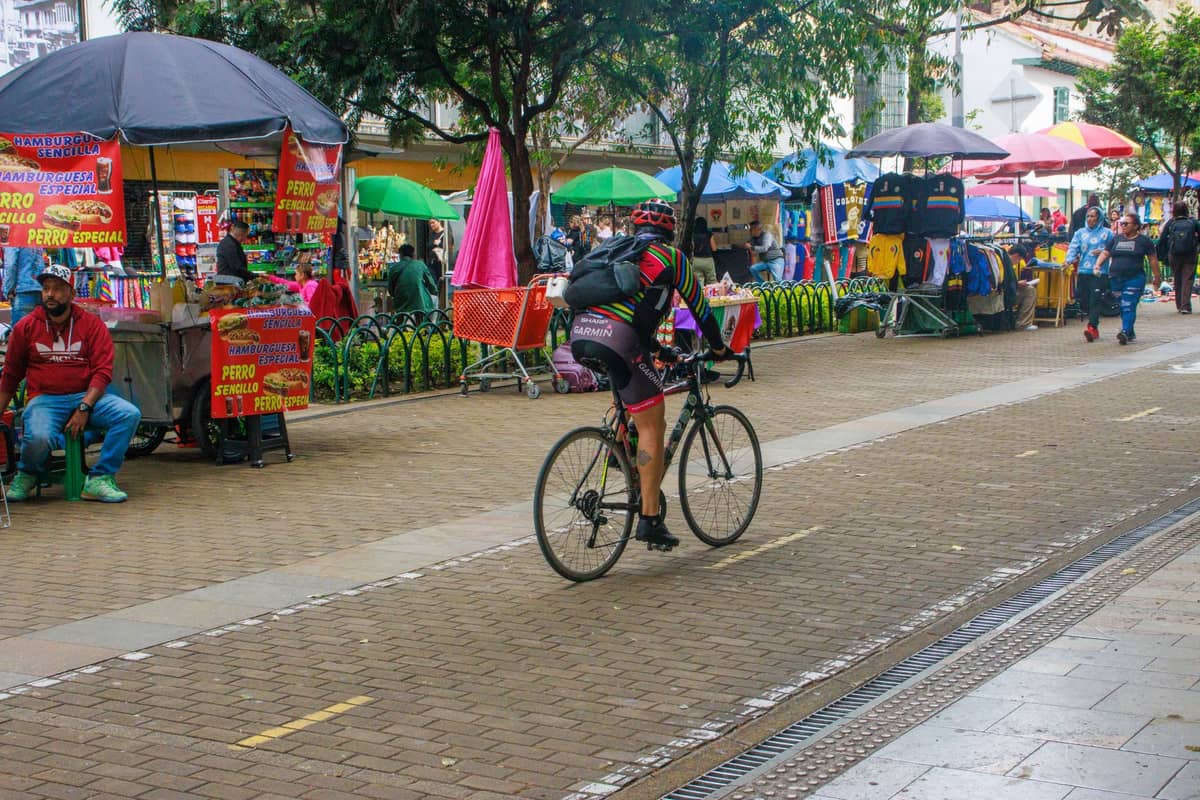
The Mercado de las Pulgas de Usaquén is Bogotá's most established open-air artisan and antique market, operating every Saturday, Sunday, and holiday Monday in the historic colonial core of the Usaquén neighborhood in the city's far north. Stalls line the cobblestone streets around Parque de Usaquén, spilling into adjacent lanes near Carrera 6A between Calles 119 and 120A, and along Carrera 5. Vendors are organized under the Asociación Mercado de las Pulgas de Usaquén, which gives the market a more consistent character than the improvised weekend markets found in other parts of the city.
The mix of goods is genuinely broad: hand-painted ceramics, woolen ruanas (traditional Colombian ponchos), silver jewelry, vintage cameras, stacked paperbacks in Spanish and English, oil paintings by local artists, leather goods, retro furniture, and one-off pieces of pre-Columbian-style decorative work. It is not exclusively artisan and it is not exclusively antique — it is the combination that makes it interesting, because the two categories rub up against each other at every turn.
ℹ️ Good to know
Official hours: Sundays and holiday Mondays from 09:00 to 17:30 (with additional Saturday opening on some weekends). Arrive by 10:00 to browse at a relaxed pace before the midday crowds thin out the better stalls.
The Setting: Usaquén's Colonial Square
Usaquén is not just another Bogotá barrio. It was an independent colonial township for centuries before the city expanded north and absorbed it in the mid-twentieth century. The original village center survived that absorption largely intact, which is why the area around the square still has the proportions and materials of a much smaller, older place: whitewashed walls, low terracotta rooftops, a modest church on the corner, and a central park shaded by palms and broad-leafed trees.
This historic texture is a significant part of what makes the market worth visiting. You are not browsing stalls in a car park or a modern plaza — you are walking through streets that predate Bogotá's expansion by generations. The Usaquén neighborhood around the market is also lined with restaurants, coffee shops, and converted colonial houses serving as boutique stores, so there is enough going on to fill a relaxed half-day without feeling rushed.
Tickets & tours
Hand-picked options from our booking partner. Prices are indicative; availability and final rates are confirmed when you complete your booking.
Candelaria walking tour
From 35 €Instant confirmationFree cancellationCoffee farm guided tour
From 114 €Instant confirmationFree cancellationZipaquira Salt Cathedral guided tour
From 86 €Instant confirmationFree cancellationBogota full-day bike rental
From 19 €Instant confirmationFree cancellation
How the Market Feels at Different Times of Day
Between 09:00 and 10:30 on a Sunday, the market is at its quietest and most pleasant. The air at 2,640 meters above sea level is cool and clear in the morning, with a faint smell of fresh coffee from the cafés that open early along the surrounding streets. Vendors are still arranging their stalls, some spreading goods directly onto blankets on the stone pavement, others hanging textiles from metal frames. The light at this hour is soft and even, which makes it noticeably better for photography than the harsh midday glare.
By 11:30, the square starts to fill with a mix of Bogotano families, domestic tourists from other Colombian cities, and international visitors. The sound level rises: cumbia occasionally drifts from a speaker near one of the food stalls, children run through gaps between vendor tables, and the general hum of negotiation and conversation takes over. This is the most social hour of the market, and also the most crowded.
After 14:00, foot traffic drops noticeably as people move into the surrounding restaurants for lunch. The pace slows, vendors become more willing to talk and to negotiate, and the market takes on a more relaxed character. If bargaining matters to you, late afternoon is the more productive window. By 17:00, some stalls begin packing up ahead of the official 17:30 close.
💡 Local tip
Saturday mornings tend to be slightly less crowded than Sundays. If you can choose, Saturday between 09:30 and 11:00 offers the most comfortable browsing conditions.
What to Look For and What to Buy
Jewelry is one of the strongest categories at the Usaquén market. Several vendors specialize in silver set with Colombian emeralds or semi-precious stones, and while quality varies, the prices are significantly lower than in jewelry stores in Zona Rosa. Ask to see a hallmark and do not hesitate to take time comparing pieces between different stalls before committing.
Textiles are another highlight. Hand-woven mochilas (shoulder bags traditionally made by indigenous communities in northern Colombia), wool blankets, and embroidered linens are sold by vendors who can usually explain their provenance. These make meaningful, compact gifts. Ceramics range from functional earthenware bowls to decorative painted plates, and prices are reasonable enough that buying something breakable is less of a risk than it might seem.
For those interested in vintage and antique pieces, the market carries a rotating stock of old Colombian coins, mid-century photographs, leather-bound books, and obsolete gadgetry. These stalls reward slow browsing rather than quick scanning. If the market sparks a broader interest in Colombian craft, the Museo Botero in La Candelaria and the Museo del Oro put the decorative traditions of the country into a much deeper historical context.
Food and Coffee Around the Market
The market itself includes a handful of food stalls selling arepas, fresh-cut fruit with salt and lime, empanadas, and hot chocolate. These are functional rather than destination-worthy, but they are useful if you are hungry and do not want to break the browsing flow.
The real food scene is in the streets immediately surrounding the square. Usaquén has a high concentration of quality restaurants for a neighborhood this size — several of them set in colonial houses with interior courtyards. For context on how to navigate eating and drinking around the market, the Bogotá food guide covers the neighborhood's restaurant options in detail. If coffee is your priority, look for the specialty cafés along Calle 119A, which have become a reliable presence in the area over the past few years.
Practical Details: Getting There, Weather, and What to Bring
Usaquén sits in Bogotá's far north, which means it is a meaningful distance from the historic center and from hotel clusters in Chapinero or Zona Rosa. A ride-hailing app (Uber, Cabify, or Didi all operate reliably in this part of the city) from central Bogotá typically takes 20 to 40 minutes depending on traffic, which can be heavy on weekend mornings heading north. TransMilenio connects to the northern part of the city, though reaching the market from the nearest station involves a walk or a short local bus connection.
Bogotá's climate at 2,640 meters means the mornings are cool — typically between 8°C and 13°C — even during the dry season. By early afternoon temperatures usually reach the high teens Celsius, and the sun at this altitude is noticeably stronger than at sea level. Layers are the practical approach: a light jacket or fleece for the early hours, which you can remove once the square warms up. Good walking shoes matter here because the market is spread across cobblestones and uneven pavement.
Rain is a real factor. Bogotá's wetter months run roughly from April through May and again from September through November. Even in the dry season (December to March and June to August), afternoon showers are not unusual. The market continues to operate in light rain, but heavy downpours can reduce both vendor presence and visitor comfort significantly. For a broader picture of what weather to expect, the Bogotá weather and climate guide gives month-by-month detail.
⚠️ What to skip
The market is set on cobblestone streets and uneven surfaces throughout. Wheelchair users and visitors with limited mobility will find most of the open plaza area manageable, but narrower vendor lanes and interior areas of surrounding buildings are harder to navigate. Check specific venues in advance if accessibility is a priority.
Cash in Colombian pesos (COP) is the practical currency here. Some vendors accept card payments, but many do not, and the ones who do may add a surcharge. ATMs are available in the surrounding neighborhood. Bringing a mix of smaller bills makes negotiation easier and avoids the common awkwardness of vendors not having change for large notes.
Photography Tips
The market is visually rich: the warm terracotta and whitewash of the colonial architecture, the layered textures of stacked textiles and metalwork, the faces of vendors who have been doing this for years. Morning light from the east hits the Parque de Usaquén facades particularly well between 09:30 and 11:00. Ask before photographing people — most vendors are amenable if you show genuine interest in their work rather than treating them as background.
Detail shots of individual craft objects work well with a close-up lens, since the quality of workmanship is often the interesting story. The market's organic layout means wide shots are harder to compose cleanly — there are always canopy frames, power cables, or parked vehicles in the background — but the street-level human activity photographs honestly and well.
Is the Market Worth the Trip?
For most visitors to Bogotá, yes — with some honesty about expectations. This is not a small artisan collective selling handmade goods exclusively from the surrounding region. It is a large, varied market where quality and authenticity differ from stall to stall, and where commercial reproduction pieces exist alongside genuine craft work. The experience rewards attention and patience rather than a quick pass-through.
What makes it worth the journey from central Bogotá is the combination of the market itself with the neighborhood surrounding it. Usaquén is one of the more pleasant areas in the city to walk, eat, and sit outdoors, and the colonial square provides a sense of place that most other Bogotá market settings lack. Travelers who prefer concentrated, curated cultural experiences may find the Paloquemao market a more authentic everyday alternative, but for shopping, craft, and a half-day of atmosphere, Usaquén is a genuinely good option.
Visitors who should think twice: those staying in La Candelaria or the south of the city, for whom the trip north is significant; anyone visiting mid-week when the market does not operate; and travelers hoping for a quiet, uncrowded experience on a Sunday afternoon in peak season.
Insider Tips
- Cash is strongly preferred. Bring an assortment of smaller COP bills — vendors rarely have change for 50,000 or 100,000 peso notes, and flashing large bills can also complicate price negotiations.
- If a vendor quotes you a price and you are genuinely interested but find it high, a calm and polite counter-offer of 10 to 20 percent below asking is generally acceptable. Walking away slowly after a counter-offer often results in a revised price.
- The streets immediately north and south of the main plaza have vendors who see less foot traffic and sometimes have more interesting or unusual stock. Most visitors circle the park and leave without exploring the side streets — do the opposite.
- Check whether the day you plan to visit falls on a Colombian public holiday. Holiday Mondays bring the market out on a day most tourists do not expect it, which results in lighter crowds and a more relaxed atmosphere than typical Sundays.
- If rain starts, duck into one of the covered restaurant patios on the surrounding streets rather than leaving entirely. Showers in Bogotá are frequently short, and the market often resumes full activity within 30 to 45 minutes.
Who Is Usaquén Flea Market For?
- Travelers looking for Colombian crafts, textiles, or jewelry as souvenirs with more character than airport shops
- Antique and vintage browsers who enjoy the unpredictability of market finds
- Families with children who need space to move and something visually engaging at ground level
- Food-motivated visitors who want to pair a morning browse with lunch at one of Usaquén's better restaurants
- Photographers interested in street-level human activity and colonial architectural backdrops