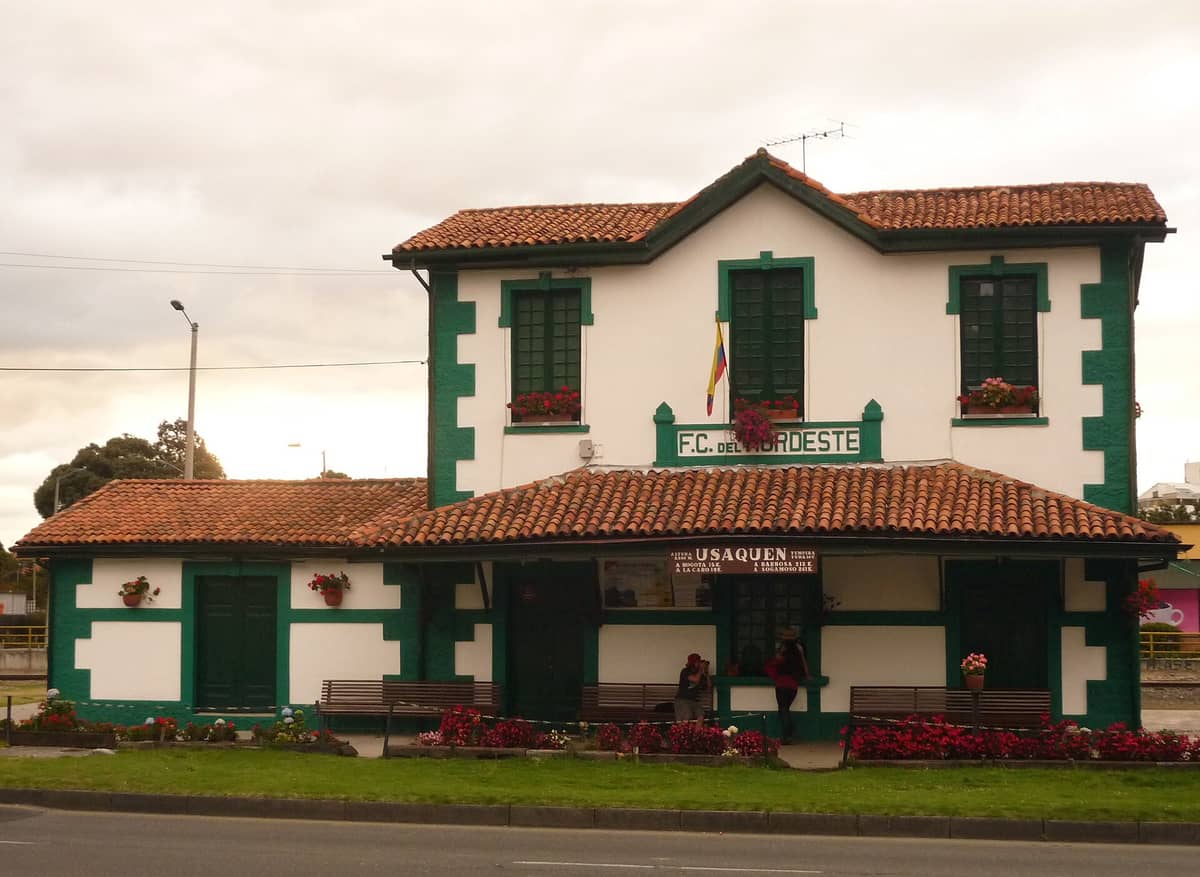
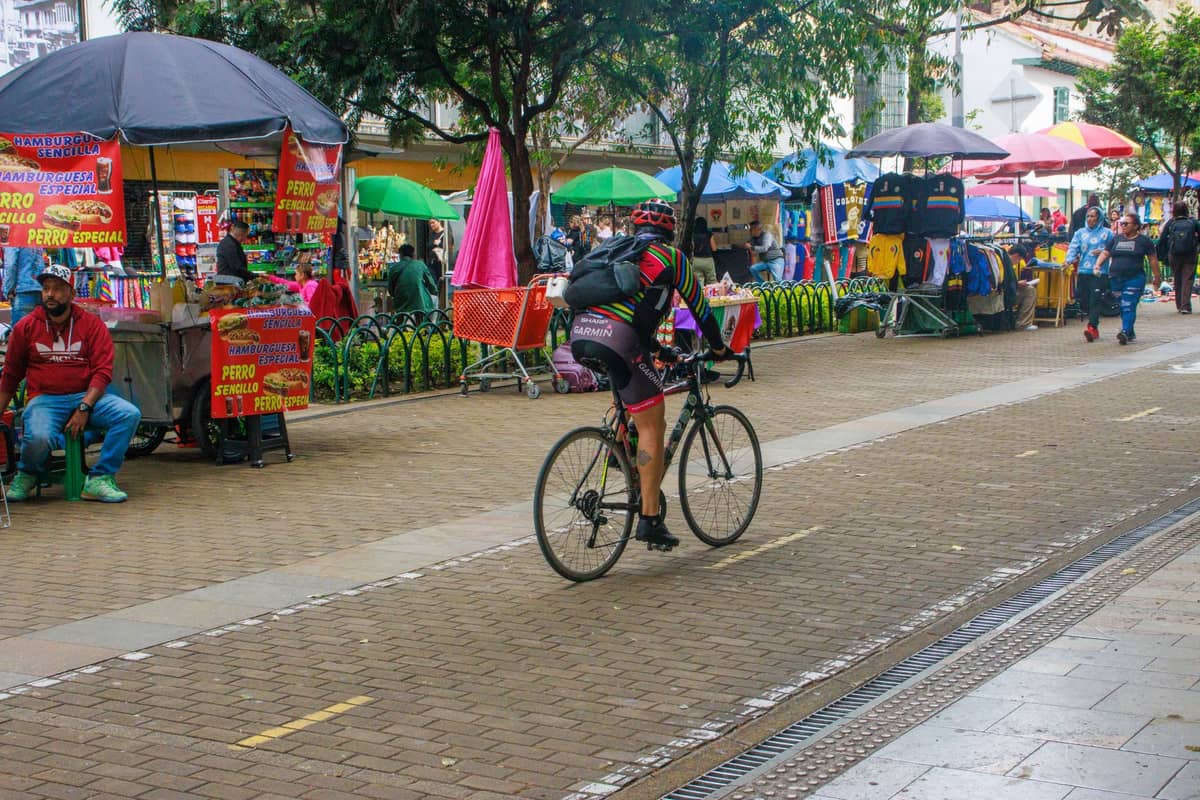
Usaquén is Bogotá's northernmost colonial district, centered on a leafy plaza and a grid of low-rise streets that feel remarkably unhurried for a city of eight million. On weekdays it functions as an upscale residential and dining neighborhood; on Sundays it transforms into the city's most popular open-air market destination, drawing both locals and visitors from across Bogotá.
Usaquén operates at a different tempo from the rest of Bogotá. Once a separate municipality absorbed by the expanding capital, its historic core has held onto its small-town proportions: a colonial plaza, whitewashed church facades, and streets narrow enough that you can hear conversations from across the road. The neighborhood's split personality, a calm residential quarter on weekdays and a crowded market destination on Sundays, makes it one of the most versatile stops in the city.
Orientation
Usaquén sits at the northern end of Bogotá, roughly between Calle 116 to the south and Calle 127 to the north, with Carrera 7 (Avenida Séptima) forming its western boundary and around Carrera 6–6A marking its eastern edge. It is the historic core of the much larger Localidad de Usaquén, which extends further north and east into residential suburbs and commercial corridors, but when travelers and residents talk about Usaquén, they almost always mean this compact colonial center.
The neighborhood anchors itself around Parque de Usaquén, a single tree-filled plaza that gives the area its sense of scale and identity. From the park, the main commercial streets radiate outward in a tightly packed grid, most of the action concentrated between Carreras 6 and 7 and from Calle 118 up to around Calle 120. The streets are relatively flat and easily walkable, which distinguishes Usaquén from the hilly terrain you find closer to the eastern Cerros Orientales.
Usaquén's position in the north of Bogotá places it comfortably close to other upper-city districts like the Zona Rosa and the Chapinero corridor, both about 20–30 minutes south by taxi or app-based ride. The historic center of La Candelaria is approximately 45–60 minutes south, depending on traffic. Understanding this north-south axis along Carrera 7 is the key to navigating Bogotá, and Usaquén sits at the top of it.
Character & Atmosphere
On a Tuesday morning, Usaquén feels more like a prosperous small town that got swallowed by a capital city than a neighborhood within one of Latin America's largest urban areas. The colonial facades along the streets near Parque de Usaquén are painted in white and warm ochre tones, many converted into restaurants and boutique shops with their original wooden doorframes intact. Delivery workers and dog walkers outnumber tourists before noon, and the cafés along the plaza fill up gradually with locals who seem to have nowhere urgently to be.
By mid-afternoon, the light catches the terracotta rooftops at a low angle and the streets take on a photogenic quality that the weekend crowds often obscure. Restaurants begin setting out their evening tables, and the neighborhood transitions from a quiet daytime quarter into a destination for dinner. The dining scene along the streets flanking Parque de Usaquén skews upscale, with menus priced well above what you'd pay in Chapinero or La Candelaria, though the quality generally justifies the difference.
Sunday is a different experience altogether. The weekly flea market brings vendors, artisans, antique dealers, and food stalls into the streets surrounding the plaza, and the foot traffic increases dramatically from around 10:00 until the late afternoon, when most stalls begin closing around 17:30. The market has a dual character: one section leans toward artisan crafts, jewelry, and handmade clothing, while another section deals in secondhand books, vintage objects, and antiques. Families, couples, and groups of friends treat the Sunday market as a social outing, not simply a shopping trip, so the atmosphere is relaxed even when the streets are crowded.
💡 Local tip
If you want the Usaquén market experience without the crowds, arrive before 10:00 on Sunday morning. Most vendors are set up but the dense afternoon foot traffic hasn't built yet, and you'll find it easier to browse and talk to sellers.
After dark, Usaquén settles into a restaurant-and-bar rhythm rather than a nightlife one. This is not where you come for late-night clubs; that scene belongs further south in Chapinero or Zona Rosa. The streets around the plaza are well-lit and active until around 22:00 or 23:00 on weekends, quieter on weeknights. As with anywhere in Bogotá, it's sensible to stay in the well-traveled zones around the plaza and main commercial streets after dark and to use ride-hailing apps rather than walking to less-lit streets on the edges of the locality.
What to See & Do
Parque de Usaquén is the natural starting point for any visit. The plaza is anchored by a colonial-era church and surrounded by low buildings that have been adapted into restaurants, cafés, and commercial spaces without losing their original scale. Sitting on one of the park benches and watching the neighborhood go about its day is not a passive activity here; it's the main event on a weekday.
The Usaquén Flea Market is the single biggest draw for visitors and runs every Saturday, Sunday, and holiday Monday throughout the year. The market spills across several blocks near the plaza and offers a genuinely mixed range of goods: handwoven textiles, leather goods, silver jewelry, vintage cameras, old maps, LP records, ceramics, and prepared foods. It's worth clarifying that while the market includes antiques and collectibles, it also has a significant section of standard tourist crafts. Discerning buyers will want to look past the first few rows of stalls.
Beyond the immediate colonial center, Usaquén serves as a practical base for exploring the northern reaches of the city. The Cerros Orientales, Bogotá's eastern mountain ridge, are visible from most streets and accessible from the eastern edge of the neighborhood. Walking routes into the hills are possible from this part of the city, though the entry points are less developed than those near La Candelaria or La Macarena.
Parque de Usaquén: the colonial plaza at the center of the neighborhood
Usaquén Flea Market: weekends and holiday Mondays, surrounding streets near the plaza
Iglesia de Santa Bárbara: the 17th-century colonial church on the park's edge
Boutique shopping along Calle 119 and Carrera 6
Walking the surrounding residential streets to see the colonial-to-modern architectural mix
ℹ️ Good to know
Usaquén is close to Bogotá's northern TransMilenio corridor, and Bogotá's Sunday Ciclovía along Carrera 7 connects the neighborhood with other parts of the city, including areas near major parks such as Parque Metropolitano Simón Bolívar and Parque Nacional, making day combinations possible.
Eating & Drinking
Usaquén's food scene is one of the strongest in northern Bogotá, built around a cluster of restaurants that occupy converted colonial houses and spill onto the streets with outdoor tables when the weather cooperates. The dominant style is upscale Colombian and international, with an emphasis on well-executed dishes rather than novelty. Price points are noticeably higher than the city center or Chapinero, though still modest by North American or European standards.
For context on the wider city food landscape before drilling into Usaquén, the Bogotá food guide provides a useful overview of cuisines and neighborhoods. Usaquén fits into that picture as the northern anchor of the city's restaurant corridor, a counterpart to the more experimental dining scene found in Zona G to the south.
On Sunday market days, the food options multiply significantly. The flea market brings with it a row of food stalls selling arepas, empanadas, fresh juice, and various regional Colombian snacks. These stalls are reliable for a quick, inexpensive meal while you browse the market, and the quality is generally higher than typical street food because vendors compete for the same weekend crowd week after week.
Coffee culture in Usaquén leans toward specialty third-wave cafés rather than traditional tinto stands. Several independent cafés near the plaza source Colombian single-origin beans and offer brewing methods you won't find at a corner café. If Colombian coffee is a priority, Usaquén is a good neighborhood to explore it.
For a deeper dive into Colombian coffee culture and where to experience it across Bogotá, the Colombian coffee guide for Bogotá covers the city's best options in detail.
Upscale Colombian cuisine: multiple restaurants in converted colonial houses near Parque de Usaquén
International dining: sushi, Italian, Middle Eastern options along Calle 119 corridor
Specialty coffee: independent cafés within a few blocks of the plaza
Casual neighborhood bars: low-key options on side streets, particularly active on Friday and Saturday evenings
⚠️ What to skip
Restaurant prices in Usaquén can catch budget travelers off guard. A sit-down lunch for two at a mid-range restaurant near the plaza can easily run 60,000–120,000 COP before drinks. If you're watching costs, the Sunday market stalls offer far better value.
Getting There & Around
Usaquén is well connected to the rest of Bogotá by public transport, though reaching the historic core typically requires using TransMilenio on the Autopista Norte corridor and then transferring to regular SITP urban buses or walking. The Calle 127 and Héroes TransMilenio stations on the Autopista Norte corridor are the most useful entry points, with SITP routes and local buses running from those areas toward the Plaza de Usaquén. Journey times from central Bogotá districts vary, but plan on roughly 30–50 minutes from the Chapinero area and up to an hour from La Candelaria, depending on traffic and connections.
For a complete guide to navigating Bogotá's transit network, including TransMilenio route logic and SITP integration, see the getting around Bogotá guide. It's particularly useful for visitors who want to combine Usaquén with other northern neighborhoods in a single day.
For most visitors, ride-hailing apps (Uber, Cabify, and Didi all operate in Bogotá) are the most convenient and predictable way to reach Usaquén. The northern location means fares from central Bogotá are moderate, and the apps give you a fixed price before you confirm the trip. On Sunday, expect some street closures and reduced vehicle access near the market zone, which can affect drop-off points. Ask the driver to drop you at Parque de Usaquén and walk from there.
Once inside the neighborhood, everything in the historic core is walkable. The streets near the plaza are flat, well-paved, and compact enough that you can cover the main areas on foot in 20–30 minutes. Walking further east toward the Cerros or north into residential Usaquén requires more time and energy, but the streets remain safe and navigable during daylight hours.
Bogotá's Ciclovía program, which closes major roads to cars on Sundays, runs along Carrera 7 and passes near Usaquén. If you're visiting on a Sunday, this creates an enjoyable option for cycling or walking along the Séptima from other northern neighborhoods into Usaquén without dealing with traffic.
Where to Stay
Usaquén is a practical base for travelers who want to be in northern Bogotá and prioritize access to upscale dining, the Sunday market, and proximity to the city's northern business districts. It suits visitors who find the area around Zona Rosa and Parque de la 93 appealing but want slightly more character in their surroundings.
The accommodation options in Usaquén itself skew toward boutique hotels, guesthouses in renovated colonial buildings, and upscale short-term rentals. Large chain hotels are not common within the historic core, though they exist on the major corridors nearby. Staying within a few blocks of Parque de Usaquén gives you the most neighborhood feel, with restaurants and cafés walkable in minutes.
One consideration: if your Bogotá itinerary centers on the city's major museums and the historic center, staying in Usaquén means spending meaningful time in transit each day. La Candelaria, the Museo del Oro, and the Plaza de Bolívar are 45–60 minutes away by public transport or 30–40 minutes by app ride in light traffic. For a museum-heavy itinerary, a more central location in Chapinero or near the Séptima corridor might serve you better.
For a fuller comparison of Bogotá's neighborhoods as bases for visitors, the where to stay in Bogotá guide breaks down the options by traveler type and budget.
Safety & Practical Notes
Usaquén's historic core is considered one of the safer areas in Bogotá for visitors, particularly during the day and in the well-trafficked zones around the plaza and main commercial streets. The neighborhood's upscale residential character means it has consistent foot traffic and active street life during daylight hours, which generally correlates with lower risk for tourists.
Standard urban caution applies after dark. Stick to the lit streets near the plaza and main restaurants, use ride-hailing apps rather than walking long distances at night, and apply the same awareness you'd use in any large city. The Bogotá safety tips guide covers the city-wide picture in more detail and is worth reading before your trip.
On busy Sunday market days, petty theft is a known risk in crowded areas. Keep bags zipped and in front of you, avoid displaying expensive cameras or phones unnecessarily in dense crowds, and be aware of your surroundings when the streets are at their most congested in the early afternoon. None of this should discourage a visit, but Sunday markets anywhere in the world attract opportunistic theft, and Usaquén is no exception.
Bogotá sits at about 2,640 meters above sea level, and Usaquén is similarly high. First-time visitors to the city sometimes underestimate how the altitude affects energy levels, particularly during active days. Take the first day or two slowly, stay hydrated, and don't plan a full day of walking through Usaquén as your first activity after landing. The effects typically diminish within 24–48 hours for most people.
TL;DR
Usaquén's colonial plaza and surrounding streets offer a quieter, more residential face of Bogotá compared to the city center or commercial zones like Zona Rosa.
The Sunday flea market is the neighborhood's defining weekly event and the main reason most visitors make the trip north. If you're in Bogotá on a Sunday, it belongs on your itinerary.
The food and café scene is strong and skews upscale. Budget travelers can eat well at the Sunday market stalls but should expect higher prices at sit-down restaurants.
Best suited to travelers who want a base with character in northern Bogotá, or who are combining a Sunday market visit with a day of dining and neighborhood exploration.
Not ideal as a base for itineraries focused on museums and the historic center, given the 45–60 minute transit time to La Candelaria and surrounding areas.
Three days is enough to get a real feel for Bogotá, D.C. — Colombia's high-altitude capital of roughly 8 million people. This itinerary covers the historic core, world-class museums, the city's best neighborhoods, and one excellent day trip, with honest logistics and timing built in.
Bogotá holds its own as a museum city. From world-class pre-Columbian collections to free art galleries and immersive history museums, these are the institutions that make the Colombian capital one of Latin America's most rewarding cultural destinations.
Bogotá's climate stays mild year-round thanks to its 2,640 m elevation, but the best time to visit depends on your priorities. This guide breaks down dry seasons, rainy periods, major festivals, crowd levels, and what no one tells you about Bogotá's weather.
Everything you need to navigate El Dorado International Airport (BOG) and reach central Bogotá efficiently. From TransMilenio routes and TuLlave cards to regulated taxi fares and private transfers, this guide covers every option with real prices and clear trade-offs.
At 2,640 metres above sea level, Bogotá is one of the highest capital cities in the world. This guide covers everything you need to know: altitude sickness symptoms, prevention strategies, UV risks, seasonal weather patterns, and practical tips for arriving healthy and staying comfortable.
Every Sunday and public holiday, Bogotá closes over 127 km of city streets to cars and opens them to cyclists, runners, skaters, and walkers. This is your complete guide to the Ciclovía: how it works, where to ride, what to expect, and how to make the most of it.
Bogotá, Colombia has quietly become one of Latin America's most practical bases for remote workers. This guide covers real monthly budgets, coworking space prices, the best neighborhoods to live and work from, and what no one tells you before you land at El Dorado.
Bogotá's food scene runs deeper than most visitors expect. This guide covers the city's signature dishes, where to find them by neighborhood, what to skip, and how to eat like someone who actually lives there.
December is one of the best months to visit Bogotá, D.C. The city enters its drier season, temperatures are mild, and the famous Ruta de la Navidad transforms entire districts into illuminated corridors. Here is everything you need to plan your visit.
Bogotá's nightlife scene runs deep and late, from craft beer bars in Chapinero to high-end mixology lounges in Zona T. This guide breaks down the best areas, what to spend, when to go, and what to watch out for.
Bogotá, Colombia gets a bad reputation that doesn't tell the full story. This guide breaks down the real risks by neighborhood, time of day, and situation — so you can travel smart, not scared.
Bogotá, D.C. offers one of South America's most varied shopping landscapes, from pre-dawn flower markets and weekend craft fairs to polished upscale malls. This guide covers where to shop, what to buy, what things cost, and how to avoid the common mistakes that waste both time and money.
Bogotá, D.C. has built one of Latin America's most serious street art scenes, with politically charged murals, internationally recognized artists, and organized tours running daily across multiple neighborhoods. This guide covers where to go, which tours are worth your money, and what to know before you walk out the door.
Bogotá, Colombia sits at 2,640 metres above sea level, which means the city defies every tropical climate stereotype. Temperatures hover in a narrow band year-round, but two distinct rainy seasons shape when and how you should visit. This guide breaks down the month-by-month reality, what to pack, and when crowds and prices peak.
Bogotá, D.C. is a surprisingly rewarding destination for families. From free city museums and mountaintop adventures to cycling days and colonial history, this guide covers the best kid-friendly activities in Bogotá, Colombia, with real prices, practical logistics, and notes on what works with children of different ages.
Bogotá, D.C. has become one of Latin America's most serious specialty coffee cities, with farm-to-cup roasters, barista workshops, and day trips to working coffee farms all within reach. This guide covers where to drink, what to order, what to avoid, and how to get the most out of Colombian coffee culture in the capital.
Bogotá, D.C. sits at 2,640 m above sea level in the heart of the Colombian Andes, making it an ideal base for exploring some of South America's most distinctive landscapes and colonial heritage. This guide covers the top day trips from Bogotá with practical transport details, realistic timings, and honest assessments of what each destination actually delivers.
Bogotá offers a surprising number of free experiences. From permanently free world-class museums to weekly car-free streets, colonial plazas, and sprawling urban parks, the city rewards travelers who know where to look. This guide covers the best no-cost activities, with clear notes on when free access applies.
Bogotá, D.C. has one of Latin America's most extensive urban transit networks, but navigating it takes some preparation. This guide covers TransMilenio, SITP buses, the TransMiCable, taxis, ride-hailing apps, and airport transfers — with current fares, practical tips, and clear notes on what works and what to avoid.
Bogotá, D.C. is one of South America's most underrated capitals. This guide covers the best things to do in Bogotá across culture, food, neighborhoods, and day trips, with current prices, opening hours, and practical notes on what to skip.
Choosing where to stay in Bogotá shapes your entire trip. This guide breaks down every major neighborhood by safety, price range, atmosphere, and proximity to key attractions, so you can book with confidence.