Zona G
Zona G is Bogotá's most concentrated fine-dining corridor, a compact grid of converted houses in Chapinero where some of Colombia's most celebrated chefs have set up shop. The neighborhood is defined almost entirely by its restaurants, wine bars, and specialty cafés, making it less a place to wander and more a destination to arrive at with a reservation in hand.
Located in Bogotá, Colombia
Overview
Zona G earns its name in practice: the 'G' stands for gastronómica, and this six-block stretch in northern Bogotá's Chapinero locality is the closest thing the city has to a dedicated restaurant district. Old residential houses have been converted into some of Latin America's most talked-about dining rooms, and on any given weeknight the streets between Calles 69 and 70 fill with the kind of crowd that books tables weeks in advance.
Orientation
Zona G sits in the upper part of Chapinero, one of Bogotá's central localities, pressed against the lower slopes of the Cerros Orientales. The district occupies a rough grid between Calles 64 and 72 and Carreras 4 and 9, though its commercial core clusters tightly around the intersection of Calles 69 to 70 and Carreras 5 to 6. That six-block kernel is where virtually all the action happens.
The neighborhood borders Zona Rosa to the west and the quieter residential streets of Rosales and Chapinero Alto to the east and north. Carrera 7, one of Bogotá's main north-south arteries, forms a practical western boundary. Walking east from Carrera 7, the streets climb gently toward the hills, and the urban texture changes quickly from commercial to residential within a block or two of the restaurant corridor.
To the south, Zona G merges into broader Chapinero, and Avenida Chile (Calle 72) marks the northern edge of the district's active stretch. Understanding this geography matters practically: Zona G is not a neighborhood you move through on the way to somewhere else. It sits slightly off the main commercial grid, uphill from Carrera 7, which is precisely what gives it its calm, unhurried atmosphere compared to the louder strips to the west.
ℹ️ Good to know
Zona G is not a residential neighborhood in the traditional sense. Most of the street-level activity is concentrated in a handful of blocks around Calles 69–70 and Carreras 5–6. If you're navigating by address, look for that grid first.
Character and Atmosphere
By day, Zona G is surprisingly quiet. The streets around Carrera 5 between Calles 69 and 71 are lined with large converted houses, many of them painted in muted tones, with small signs or minimal branding that signal a restaurant is inside rather than announcing it loudly. There is morning foot traffic from residents in adjacent Rosales and from office workers cutting through on Carrera 7, but the restaurant strip itself doesn't fully wake up until lunch service begins around noon.
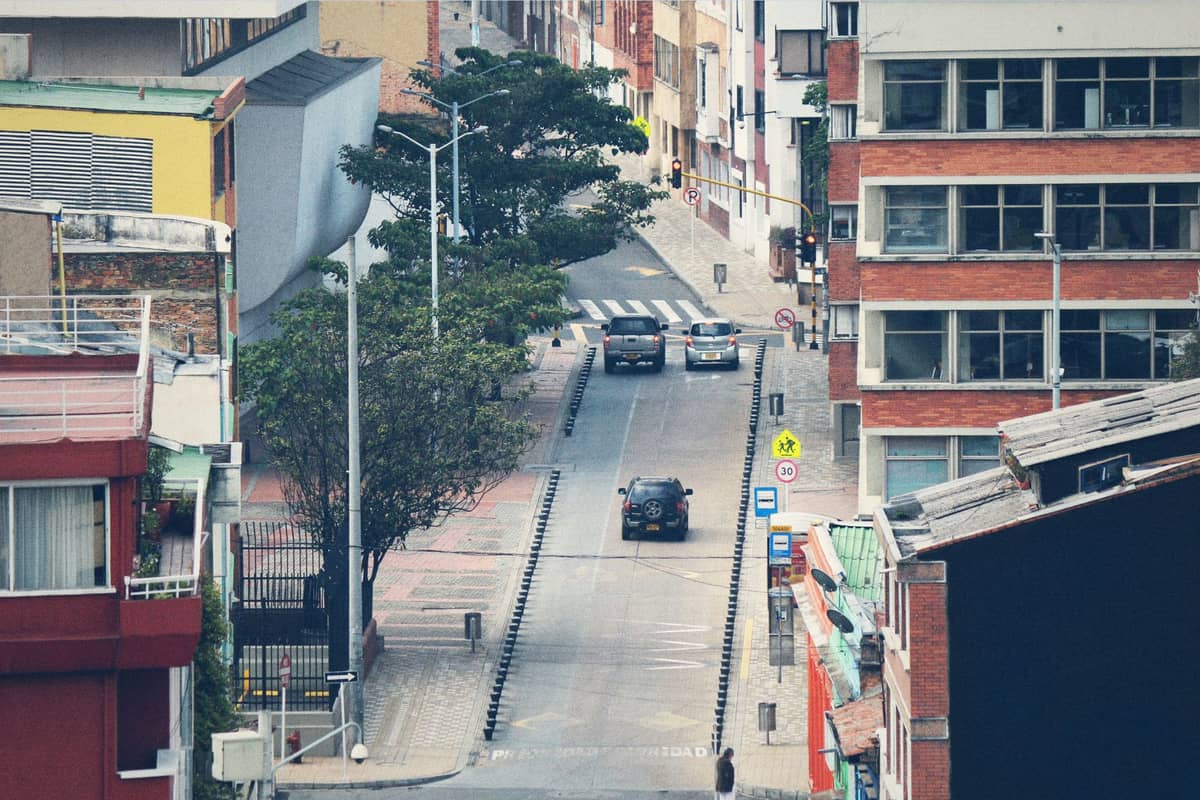
Afternoon light filters through the tall trees along these residential-grade streets, and the area takes on a calm that is almost deceptive given how animated it becomes after 7 PM. By early evening, taxis and ride-hailing cars begin stacking up near the corner intersections, dropping off couples and groups dressed for dinner. The streets are narrow enough that a few parked cars can give the area a slightly congested feel on Friday and Saturday nights, but that compression also adds to the sense that something concentrated and intentional is happening here.
Zona G does not have the loose, bar-crawl energy of Zona Rosa or the eclectic street life of La Macarena. Its atmosphere is specifically dining-focused: people come to sit down at a good table, not to drift between venues. That makes it feel more adult and deliberate than many of Bogotá's other entertainment corridors. It also means that if you are not eating here, there is relatively little to do.
What to See and Do
Zona G exists almost entirely for eating and drinking. There are no major museums, public plazas, or monuments within the district itself. What the area offers instead is the experience of some of Colombia's most ambitious cooking in settings that balance elegance with the informal warmth that characterizes Bogotá's better restaurants.
The restaurant interiors themselves are often the most interesting spaces to spend time in. Many occupy former family homes, with original architectural details retained alongside contemporary design elements. High ceilings, interior courtyards, and the occasional preserved tile floor give these converted spaces a character that a purpose-built restaurant rarely achieves. Arriving early for a drink at the bar before sitting down to eat is worth doing for this reason alone.
If you are spending a full day in this part of the city, Zona G pairs logically with a morning or afternoon in La Macarena, the arts and café district a short ride to the south, before returning to Zona G for dinner. Alternatively, the Parque Nacional Enrique Olaya Herrera is within a reasonable walk or short taxi ride and offers a large green space for an afternoon break between meals.
For travelers building a broader Bogotá itinerary, check the 3-day Bogotá itinerary for suggestions on how to structure time across the city's distinct neighborhoods.
Eating and Drinking
This is, without qualification, what Zona G does best. The district holds a density of serious restaurants that would be notable in any Latin American capital. The cooking ranges from modern Colombian tasting menus to international cuisine executed at a high level, and the quality-to-pretension ratio is generally favorable: the best places here focus on the food rather than staging an experience around it.
El Chato, on Calle 65 near Carrera 4, is one of the most cited addresses in Colombian gastronomy, with a menu built around local ingredients and techniques that shift regularly. El Cielo, on Calle 70, takes a more theatrical approach with a multi-sensory tasting menu format. Harry Sasson, one of Bogotá's long-standing fine-dining institutions, sits just north of Zona G on Carrera 9 and anchors the district's more classic end of the spectrum. Leo, associated with chef Leonor Espinosa and her work on Colombian biodiversity, rounds out the marquee names. These are reservation-essential restaurants, particularly on weekends.
Beyond the flagship names, the surrounding blocks support a solid secondary layer of wine bars, specialty coffee shops, and casual restaurants aimed at neighborhood regulars rather than destination diners. Prices at the top-end restaurants are high by Colombian standards but remain accessible compared to equivalent dining in European or North American capitals. A full tasting menu at a flagship might run between 300,000 and 700,000 COP per person depending on the restaurant and beverage pairing.
- El Chato (Calle 65 #4-76): modern Colombian cooking, ingredient-driven, reservation recommended
- El Cielo (Calle 70 #4-47): multi-sensory tasting menus, theatrical presentation
- Harry Sasson (Carrera 9 #75-70): classic fine dining, broad menu, reliable for business meals and special occasions
- Leo: focused on Colombian biodiversity and regional ingredients, internationally recognized
- Specialty coffee cafés in the surrounding residential streets of Rosales, ideal for a morning or afternoon break
For a broader picture of eating well across Bogotá, the Bogotá food guide covers everything from street food to fine dining across the city's neighborhoods.
💡 Local tip
Book top restaurants in Zona G at least several days in advance, especially for Friday and Saturday evenings. Walk-ins are possible at lunch on weekdays, but the most sought-after spots fill quickly for dinner service. Most have online reservation systems or accept bookings by phone.
Getting There and Around
The most practical way to reach Zona G is by taxi or ride-hailing app. Uber, Cabify, and Didi all operate in Bogotá and can drop you directly at a restaurant address on Calles 69 to 70. From Zona Rosa or Parque de la 93, the ride typically takes around ten to fifteen minutes depending on traffic. From La Candelaria in the historic center, expect fifteen to twenty minutes. Traffic on Carrera 7 can be heavy during evening rush hour, so factor in extra time if you are heading to an early dinner reservation.
By TransMilenio, the nearest trunk-line corridor runs along Avenida Caracas to the west, with Calle 72 station serving the area, and the future Metro Line 1 station at Calle 72 also planned along this axis. Neither stop puts you immediately in front of the restaurant core, so a short connecting bus or a ten-minute walk uphill from Carrera 7 is typically necessary. For guidance on navigating the city's bus rapid transit system, see the guide to getting around Bogotá.
Within the district itself, everything is walkable. The core restaurant strip spans only a few blocks, and moving between venues on foot takes under ten minutes. The streets are well-lit at night in the active dining area, though it becomes darker and quieter as you move uphill toward the hillier residential blocks above Carrera 3. Keep to the main restaurant streets in the evening.
⚠️ What to skip
Like all central Bogotá areas, standard urban precautions apply in Zona G after dark: use app-based rides rather than hailing taxis from the street, keep phones out of sight when not in use, and avoid walking long distances into the darker residential streets above Carrera 3 at night. The immediate restaurant zone is well-patrolled and considered safe by Bogotá standards, but the surrounding areas vary.
Where to Stay
Zona G itself has limited hotel infrastructure. Because it is primarily a dining district rather than a residential or hotel zone, most travelers use it as a destination for meals while staying elsewhere. The closest practical base for access to Zona G is the Chapinero or Zona Rosa area to the west, where there is a wider range of accommodation options at different price points.
Travelers who prioritize dining and want to walk to restaurants would do well in Rosales, the quiet residential neighborhood immediately adjacent to Zona G, where some boutique guesthouses and short-term rentals operate. For a fuller breakdown of Bogotá's accommodation zones and which type of traveler each suits, see the where to stay in Bogotá guide.
If you want to combine Zona G dining with the hotel infrastructure of a larger district, Zona Rosa and the area around Parque de la 93 are both within a short ride and offer the widest range of international-standard hotels in northern Bogotá.
Is Zona G Right for You
Zona G is a singular kind of destination. It does one thing at an unusually high level, and it does very little else. If you are a traveler who plans trips around dining and is specifically interested in where Colombian gastronomy is being pushed forward, this small grid of streets is essential. If you are looking for a neighborhood with daytime culture, markets, street life, or a range of budget options, you will find Zona G limited.
The district works best as part of a broader day: exploring La Candelaria's historic center or visiting the Museo del Oro during daylight hours, then arriving in Zona G for an evening reservation. That structure plays to the district's strengths without asking it to be something it is not.
TL;DR
- Zona G is Bogotá's most concentrated fine-dining district, occupying a compact six-block grid in Chapinero between Calles 64 and 72 and Carreras 4 and 9, with the restaurant core around Calles 69 to 70 and Carreras 5 to 6.
- The district is home to several of Colombia's most acclaimed restaurants, including El Chato, El Cielo, Leo, and Harry Sasson. Reservations are essential at the top end, especially on weekends.
- It is best reached by taxi or ride-hailing app directly to a restaurant address. TransMilenio connections exist on Avenida Caracas and Calle 72, but require a short uphill walk.
- Zona G is considered one of Bogotá's safer dining areas, though standard urban precautions apply after dark, particularly beyond the lit restaurant streets.
- Best for: food-focused travelers, special-occasion diners, and anyone serious about Colombian gastronomy. Less suited to budget travelers or those seeking varied daytime activities.
Related Travel Guides
- 3 Days in Bogotá: The Perfect Itinerary
Three days is enough to get a real feel for Bogotá, D.C. — Colombia's high-altitude capital of roughly 8 million people. This itinerary covers the historic core, world-class museums, the city's best neighborhoods, and one excellent day trip, with honest logistics and timing built in.
- Best Museums in Bogotá: 10 Essential Collections to Visit
Bogotá holds its own as a museum city. From world-class pre-Columbian collections to free art galleries and immersive history museums, these are the institutions that make the Colombian capital one of Latin America's most rewarding cultural destinations.
- Best Time to Visit Bogotá: A Month-by-Month Guide
Bogotá's climate stays mild year-round thanks to its 2,640 m elevation, but the best time to visit depends on your priorities. This guide breaks down dry seasons, rainy periods, major festivals, crowd levels, and what no one tells you about Bogotá's weather.
- Bogotá El Dorado Airport: Arrivals, Transfers & Getting to the City
Everything you need to navigate El Dorado International Airport (BOG) and reach central Bogotá efficiently. From TransMilenio routes and TuLlave cards to regulated taxi fares and private transfers, this guide covers every option with real prices and clear trade-offs.
- Bogotá Altitude: How to Handle the High Elevation
At 2,640 metres above sea level, Bogotá is one of the highest capital cities in the world. This guide covers everything you need to know: altitude sickness symptoms, prevention strategies, UV risks, seasonal weather patterns, and practical tips for arriving healthy and staying comfortable.
- Bogotá's Ciclovía: The World's Greatest Sunday Bike Ride
Every Sunday and public holiday, Bogotá closes over 127 km of city streets to cars and opens them to cyclists, runners, skaters, and walkers. This is your complete guide to the Ciclovía: how it works, where to ride, what to expect, and how to make the most of it.
- Bogotá for Digital Nomads: Coworking, Cafés & Living Costs
Bogotá, Colombia has quietly become one of Latin America's most practical bases for remote workers. This guide covers real monthly budgets, coworking space prices, the best neighborhoods to live and work from, and what no one tells you before you land at El Dorado.
- What to Eat in Bogotá: A Complete Colombian Food Guide
Bogotá's food scene runs deeper than most visitors expect. This guide covers the city's signature dishes, where to find them by neighborhood, what to skip, and how to eat like someone who actually lives there.
- Bogotá in December: Christmas Lights, Weather & What to Expect
December is one of the best months to visit Bogotá, D.C. The city enters its drier season, temperatures are mild, and the famous Ruta de la Navidad transforms entire districts into illuminated corridors. Here is everything you need to plan your visit.
- Bogotá Nightlife: Best Bars, Clubs & Areas (Practical 2026 Guide)
Bogotá's nightlife scene runs deep and late, from craft beer bars in Chapinero to high-end mixology lounges in Zona T. This guide breaks down the best areas, what to spend, when to go, and what to watch out for.
- Is Bogotá Safe? A Practical Safety Guide for Travelers
Bogotá, Colombia gets a bad reputation that doesn't tell the full story. This guide breaks down the real risks by neighborhood, time of day, and situation — so you can travel smart, not scared.
- Shopping in Bogotá: Best Markets, Malls & Souvenirs Guide
Bogotá, D.C. offers one of South America's most varied shopping landscapes, from pre-dawn flower markets and weekend craft fairs to polished upscale malls. This guide covers where to shop, what to buy, what things cost, and how to avoid the common mistakes that waste both time and money.
- Bogotá Street Art Guide: Best Murals & Graffiti Tours
Bogotá, D.C. has built one of Latin America's most serious street art scenes, with politically charged murals, internationally recognized artists, and organized tours running daily across multiple neighborhoods. This guide covers where to go, which tours are worth your money, and what to know before you walk out the door.
- Bogotá Weather & Climate: What to Expect Year-Round
Bogotá, Colombia sits at 2,640 metres above sea level, which means the city defies every tropical climate stereotype. Temperatures hover in a narrow band year-round, but two distinct rainy seasons shape when and how you should visit. This guide breaks down the month-by-month reality, what to pack, and when crowds and prices peak.
- Bogotá with Kids: The Best Family Activities in Colombia's Capital
Bogotá, D.C. is a surprisingly rewarding destination for families. From free city museums and mountaintop adventures to cycling days and colonial history, this guide covers the best kid-friendly activities in Bogotá, Colombia, with real prices, practical logistics, and notes on what works with children of different ages.
- Colombian Coffee in Bogotá: Best Cafés, Workshops & Coffee Culture
Bogotá, D.C. has become one of Latin America's most serious specialty coffee cities, with farm-to-cup roasters, barista workshops, and day trips to working coffee farms all within reach. This guide covers where to drink, what to order, what to avoid, and how to get the most out of Colombian coffee culture in the capital.
- Best Day Trips from Bogotá: Salt Mines, Sacred Lakes & Colonial Towns
Bogotá, D.C. sits at 2,640 m above sea level in the heart of the Colombian Andes, making it an ideal base for exploring some of South America's most distinctive landscapes and colonial heritage. This guide covers the top day trips from Bogotá with practical transport details, realistic timings, and honest assessments of what each destination actually delivers.
- Free Things to Do in Bogotá: 12 Ways to Explore the City Without Spending a Peso
Bogotá offers a surprising number of free experiences. From permanently free world-class museums to weekly car-free streets, colonial plazas, and sprawling urban parks, the city rewards travelers who know where to look. This guide covers the best no-cost activities, with clear notes on when free access applies.
- Getting Around Bogotá: The Complete Transport Guide
Bogotá, D.C. has one of Latin America's most extensive urban transit networks, but navigating it takes some preparation. This guide covers TransMilenio, SITP buses, the TransMiCable, taxis, ride-hailing apps, and airport transfers — with current fares, practical tips, and clear notes on what works and what to avoid.
- Best Things to Do in Bogotá: A Practical Guide to Colombia's Capital
Bogotá, D.C. is one of South America's most underrated capitals. This guide covers the best things to do in Bogotá across culture, food, neighborhoods, and day trips, with current prices, opening hours, and practical notes on what to skip.
- Where to Stay in Bogotá: Best Neighborhoods & Hotels Guide
Choosing where to stay in Bogotá shapes your entire trip. This guide breaks down every major neighborhood by safety, price range, atmosphere, and proximity to key attractions, so you can book with confidence.