Bogotá Street Art Guide: Best Murals & Graffiti Tours
Bogotá, D.C. has built one of Latin America's most serious street art scenes, with politically charged murals, internationally recognized artists, and organized tours running daily across multiple neighborhoods. This guide covers where to go, which tours are worth your money, and what to know before you walk out the door.
Plan and book this trip
Tools from our partner Travelpayouts help you compare flights and hotels. If you book through them, we may earn a commission at no extra cost to you.
Flights
Hotels map
TL;DR
- La Candelaria is the starting point for most graffiti tours, but the Distrito Graffiti area and Barrio San Felipe have larger-format murals worth the extra effort.
- The Original Bogotá Graffiti Tour runs twice daily (10:00 and 14:00) on a donation basis — recommended COP 50,000–60,000 (around US$12–15).
- Commercial small-group tours run US$13–21 per person and are bookable via GetYourGuide, Viator, and TripAdvisor.
- Bogotá's street art is not illegal — local policy changes have made muralism widely tolerated and formally supported in many districts.
- The dry seasons (December–March and July–August) are best for walking tours. See the full Bogotá weather guide for planning details.
Why Bogotá Became a Street Art Capital
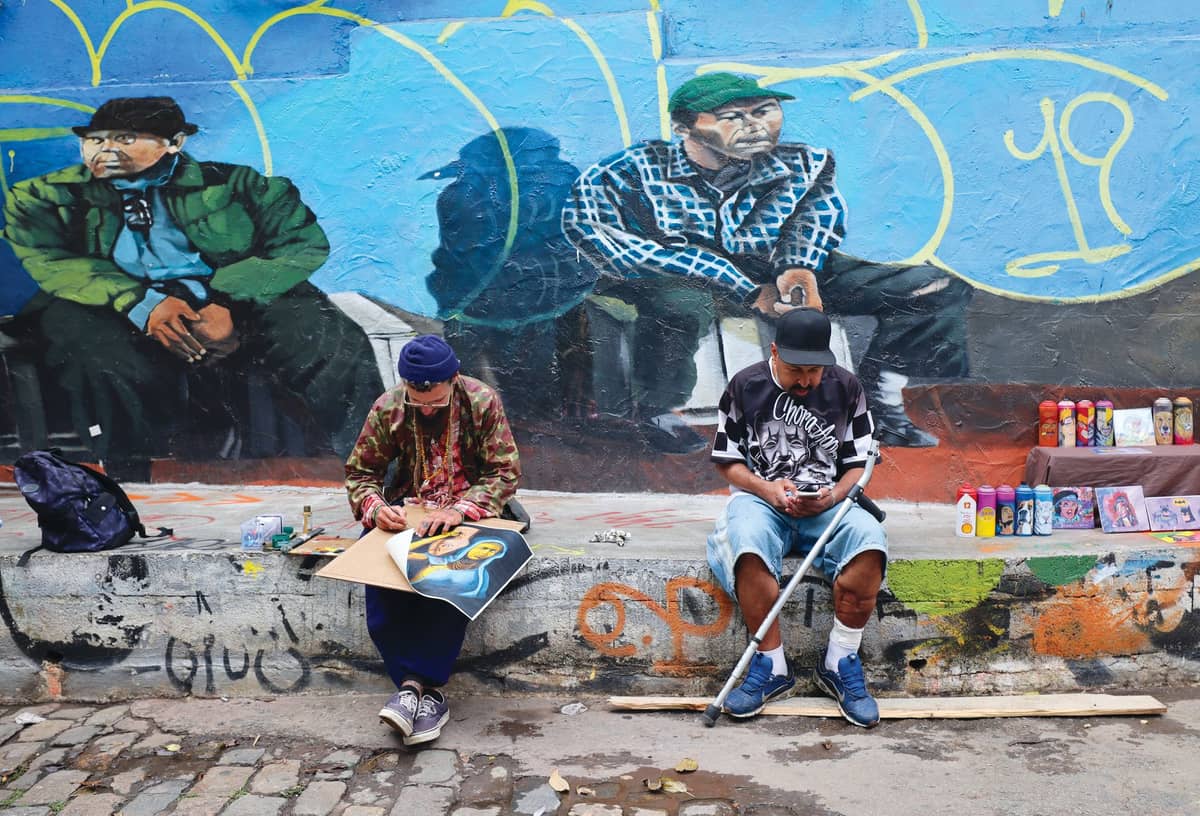
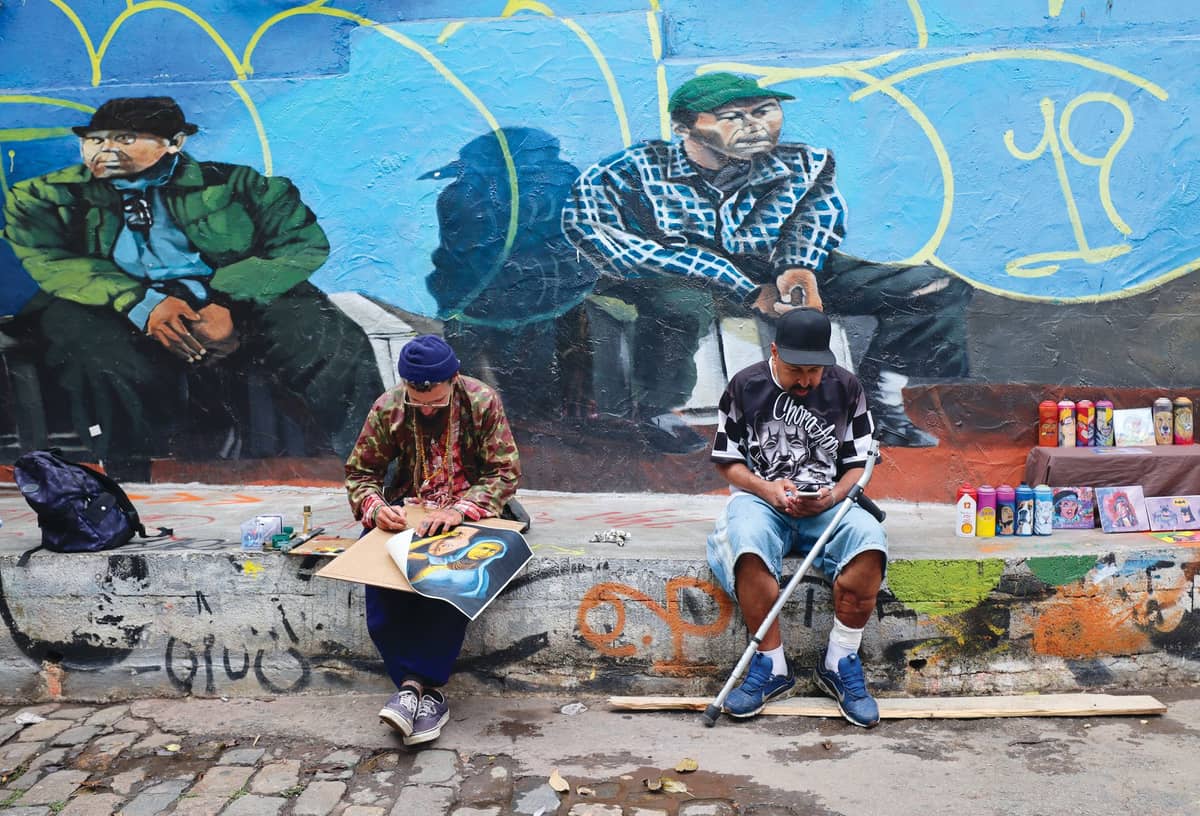
Bogotá's street art scene did not happen by accident. It grew out of a politically charged urban culture where walls became a medium for commentary on inequality, conflict, and identity. The turning point came in 2011, when city policy began to shift, a change later associated with Mayor Gustavo Petro's administration toward tolerating and in some cases actively supporting muralism as a form of urban expression. That policy shift, combined with a wave of local and international artists drawn to the city's permissive attitude, transformed neighborhoods like La Candelaria and the Distrito Graffiti corridor into open-air galleries that now attract tens of thousands of visitors each year.
The context matters when you look at the murals. Many pieces reference Colombia's armed conflict, forced displacement, and socioeconomic inequality. Others celebrate Afro-Colombian and Indigenous identity. Understanding that layer makes the experience significantly richer than just photographing walls. If you want broader cultural context before your tour, the Museo Botero and the Museo del Oro offer solid grounding in Colombian art and history, both free or low-cost to enter.
The Main Street Art Neighborhoods
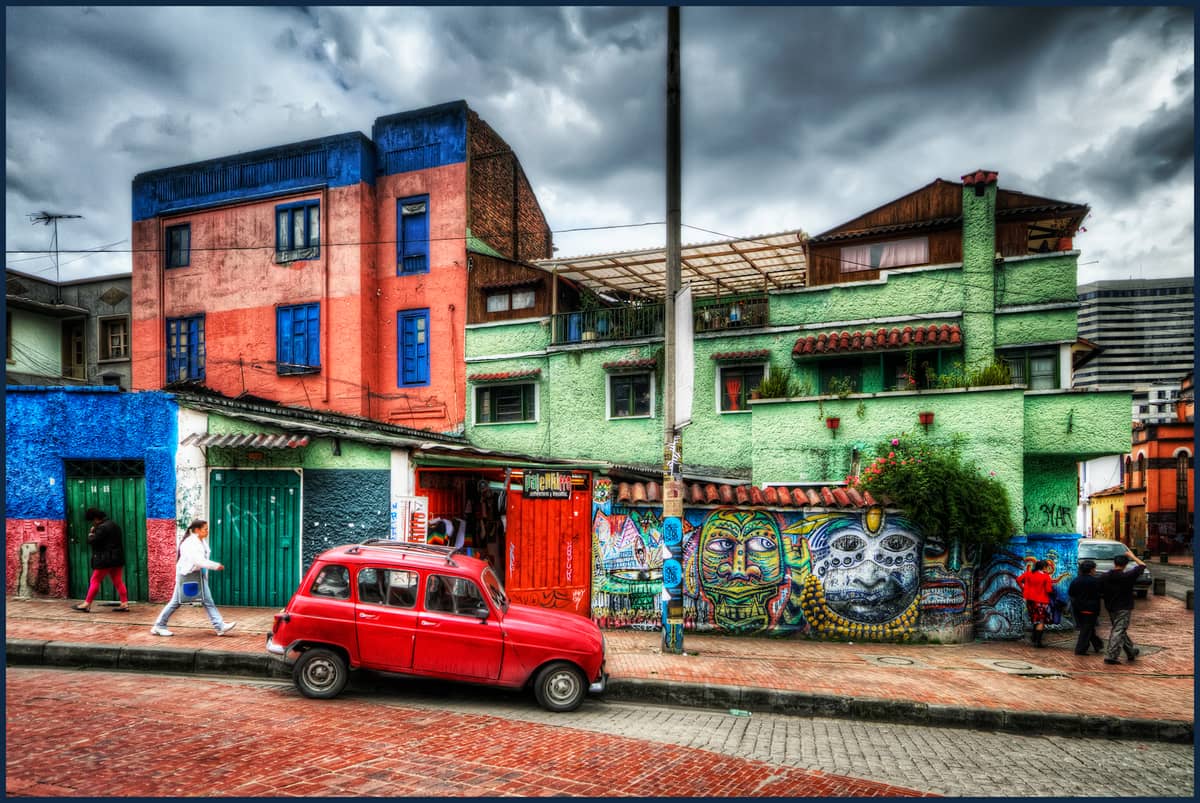
Most visitors start in La Candelaria, the historic colonial center of Bogotá, D.C. The density of murals here is genuinely impressive: walk two blocks in almost any direction from the Plaza de Bolívar and you will encounter large-scale pieces covering entire building facades. The political content is overt in this area, reflecting the neighborhood's proximity to government institutions and its long history of student protest culture.
Barrio San Felipe, north of the center in the Chapinero area, has developed into a hub for gallery-adjacent street art with a more contemporary and internationally influenced aesthetic. Artists based in San Felipe tend to work on a larger scale and with more experimental techniques. It is a noticeably different vibe from La Candelaria and worth the trip if you have more than one day.
The Distrito Graffiti corridor, running near Avenida El Dorado in the western part of the city, is where you will find some of the most monumental works. These are not impromptu tags or small pieces — they are curated, large-format murals painted by artists invited through formal cultural programs. The scale alone makes it worth a dedicated visit. Ciudad Bolívar in the south is a different proposition: murals here are embedded in community social projects and carry a rawer, more urgent tone. Tours that include TransMiCable cable-car rides to Ciudad Bolívar are particularly popular because the journey itself is an experience.
ℹ️ Good to know
Street art in Bogotá is not illegal in practice. After significant public debate and policy shifts, muralism is widely tolerated across the city. In designated areas and through community programs, it is formally supported. Commissioned murals in Distrito Graffiti are specifically permitted by the city. Do not assume a piece is vandalism — the vast majority of what you will see on a tour has been painted with permission.
Graffiti Tours: Which One to Book
There are three main tiers of tour available, each suited to a different type of traveler. Understanding the differences will save you money and help you set accurate expectations.
- Original Bogotá Graffiti Tour (donation-based) Community-led walking tour focused on political and social murals in La Candelaria. Runs twice daily at 10:00 and 14:00, lasting approximately 2.5 hours. Donation-based with a recommended contribution of COP 20,000–30,000 (roughly US$5–7). Meet-up point is in the La Candelaria area — check bogotagraffiti.com for current details. Widely considered the most authentic option, with guides who have deep personal knowledge of the art and the artists.
- Commercial Small-Group Tours (US$13–21/person) Bookable via GetYourGuide, Viator, and TripAdvisor with instant confirmation. Tours typically run 2–2.5 hours in morning and afternoon blocks (common slots: 10:00–12:30 and 14:00–16:30). Group size is usually capped at 10–15 people. English-speaking guides, structured itineraries, and included hotel pickup options are the main advantages over the donation-based tour. Quality varies by operator — check recent reviews before booking.
- Specialized Private Tours: Distrito Graffiti and Ciudad Bolívar Private tours focusing on large-format murals in Distrito Graffiti or community art in Ciudad Bolívar, sometimes including a TransMiCable cable-car ride. Prices generally start around COP 330,000–420,000 for small groups. Operators like Capital Graffiti Tours specialize in these routes. Best for travelers who have already done La Candelaria and want to go deeper.
⚠️ What to skip
The "free tour" label is misleading. The Original Bogotá Graffiti Tour operates on a donation model — guides are not paid a salary and depend entirely on tips. Joining without donating is considered disrespectful. Budget at least COP 50,000 per person (around US$12) as a minimum, more if you find the experience worthwhile. Tours run daily including Sundays, but capacity may be reduced on major Colombian national holidays, so advance booking is advised during peak periods.
Self-Guided Street Art Walk: La Candelaria to San Felipe
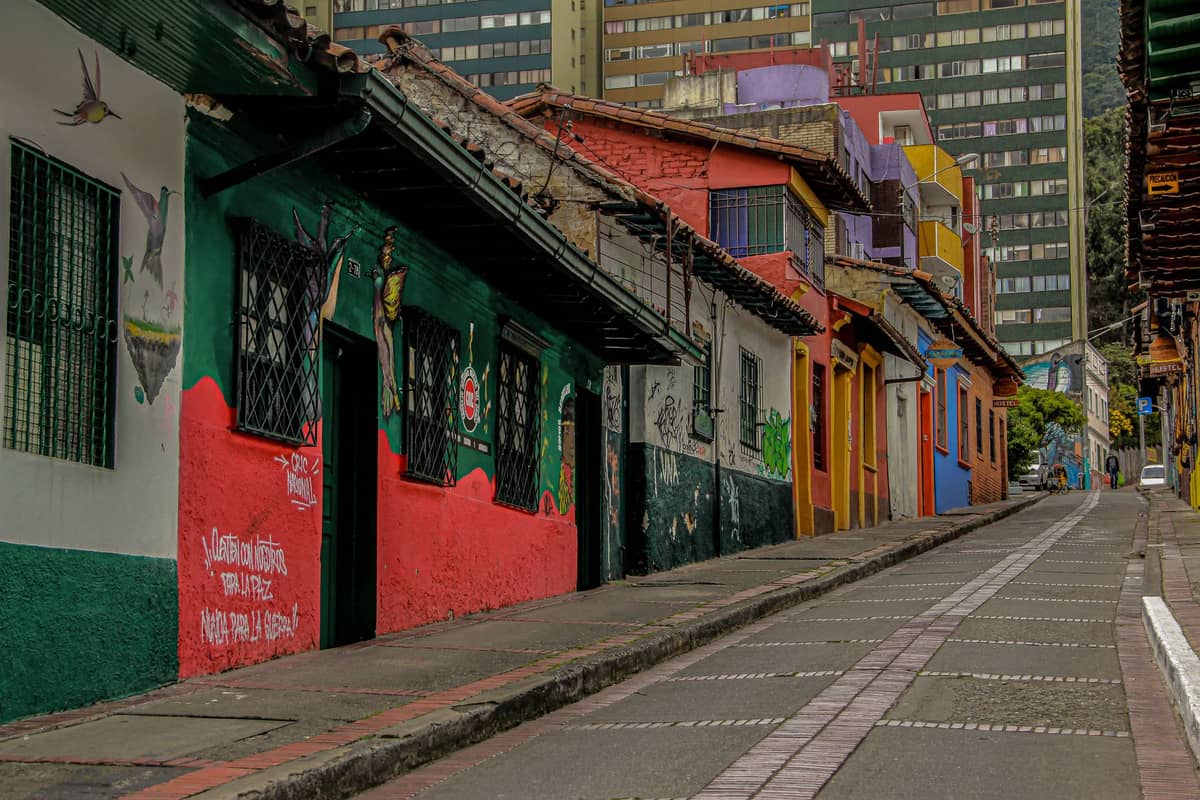
If you prefer to explore independently, a self-guided walk between La Candelaria and the edges of San Felipe is entirely feasible and costs nothing beyond transport. Start at the Plaza de Bolívar in La Candelaria and walk east and north through the streets around Carrera 3 and Calle 12. The density of murals in this zone is high enough that you will rarely walk more than half a block without encountering something significant.
From La Candelaria, take a Transmilenio bus or a ride-hailing app (Uber, Cabify, and Didi all operate in Bogotá) north to San Felipe. The neighborhood around Carrera 24 and Calle 75 has a strong concentration of gallery-adjacent murals and is walkable in an afternoon. If you want to extend the day, La Macarena sits between the two areas and has a scattering of smaller pieces worth photographing.
✨ Pro tip
Morning light (before 10:00) is consistently better for photographing murals in La Candelaria because the streets run roughly east-west and the walls are well-lit without harsh shadows. By early afternoon, many of the best walls are in direct shade or backlit. If photography matters to you, plan your self-guided walk early and book a guided tour for the afternoon session.
Practical Planning: Weather, Safety, and Getting Around
Bogotá sits at 2,640 meters above sea level, which means the climate is mild but unpredictable. Average daytime temperatures stay in the high teens to low 20s Celsius year-round, but rain can arrive quickly and unexpectedly. Walking tours of 2–3 hours are perfectly manageable, but going without a waterproof layer is a genuine mistake regardless of season.
The dry seasons, roughly December through March and July through August, offer the most reliable conditions for outdoor walking. Rain is less frequent, the murals photograph better, and guides report higher tour satisfaction rates during these windows. If you are visiting in the wetter months of April-May or September-November, morning slots tend to be drier than afternoon ones. For a full breakdown of what to expect month by month, the Bogotá weather and climate guide covers the details.
La Candelaria gets significant foot traffic during the day and is generally safe for tourists on guided tours and in busy areas. As with any large city, situational awareness matters, particularly with cameras and phones. Ciudad Bolívar tours are best done with a reputable operator who knows the area. For broader safety context, the Bogotá safety tips guide is worth reading before you arrive. Getting around between neighborhoods is straightforward via Transmilenio or ride-hailing apps. The altitude can cause mild fatigue for new arrivals, so do not underestimate the effect of spending three hours walking at 2,640 meters if you arrived recently. See the Bogotá altitude guide for acclimatization advice.
- Wear layers: temperatures can drop quickly in the afternoon, especially when clouds roll in
- Carry a small daypack with a waterproof cover or a compact rain jacket
- Use Uber, Cabify, or Didi between neighborhoods rather than flagging street taxis
- Bring cash in Colombian pesos (COP) for donation-based tours and street food — many tour operators also accept card, but confirm in advance
- Charge your phone the night before: street art photography is battery-intensive
- Book afternoon tours for Ciudad Bolívar routes to catch the cable car during daylight
Combining Street Art with the Rest of Bogotá
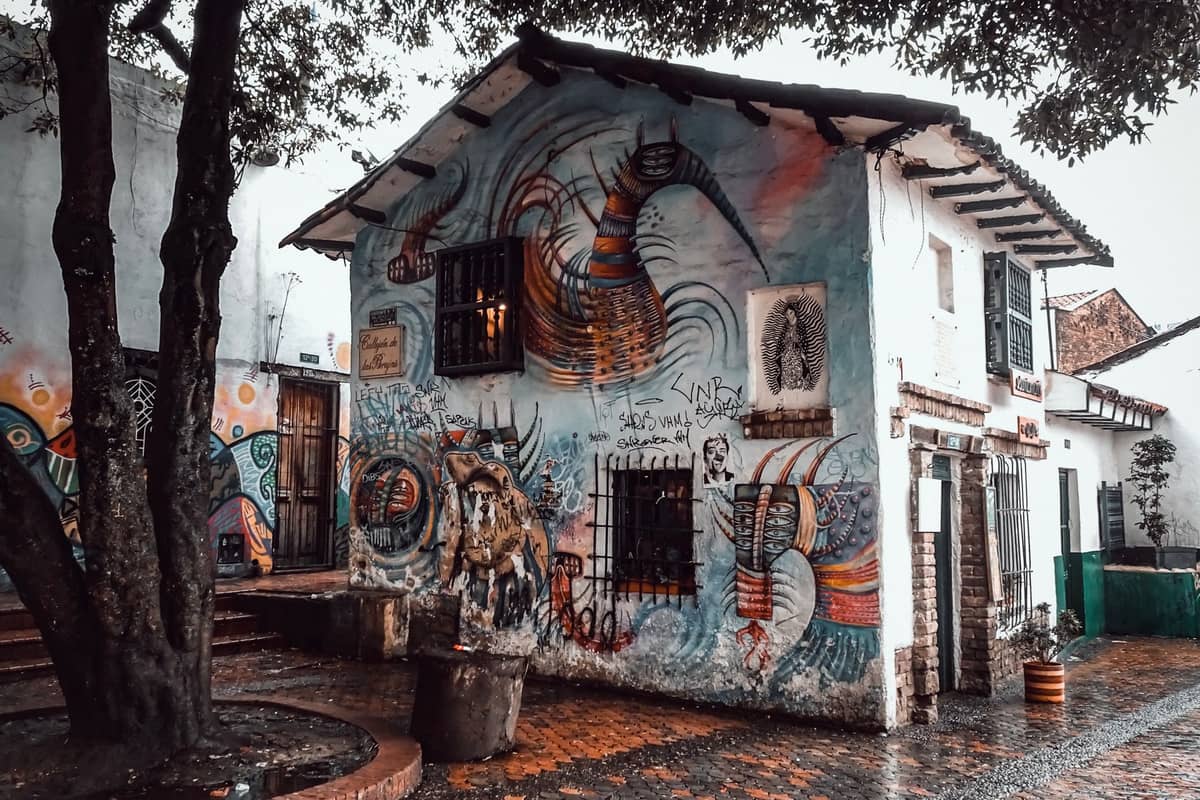
A graffiti tour pairs naturally with a broader day in La Candelaria. After a morning tour, the Plaza de Bolívar and the surrounding museums are a short walk away. The Centro Cultural Gabriel García Márquez is directly in the neighborhood and often features rotating exhibitions that complement the street art context. If you have a full day, a late afternoon visit to Cerro de Monserrate offers a different perspective on the city, including views down into the streets you just walked.
Travelers spending multiple days in the city can use street art tours as an anchor activity alongside a Bogotá food tour or a visit to Paloquemao market. The things to do in Bogotá guide covers how to build a full itinerary around these activities. If you are in the city for three days, the 3-day Bogotá itinerary suggests a logical sequence that includes a graffiti tour on day one.
FAQ
Is street art legal in Bogotá?
Yes, in practice. After significant policy changes and public debate, muralism and graffiti are widely tolerated across Bogotá, D.C. In designated areas like Distrito Graffiti, murals are formally permitted and even commissioned through cultural programs. The works you see on organized tours are overwhelmingly painted with permission from building owners or through official city initiatives.
How much does a graffiti tour in Bogotá cost?
The Original Bogotá Graffiti Tour operates on a donation basis, with a recommended contribution now around COP 50,000–60,000 (approximately US$12–15 per person). Commercial small-group tours through operators on GetYourGuide, Viator, and TripAdvisor typically cost US$13–35 per person. Private tours focused on Distrito Graffiti or Ciudad Bolívar generally start around COP 330,000 for small groups and increase with group size.
What is the best neighborhood for street art in Bogotá?
La Candelaria has the highest density of murals and is the most accessible starting point. For large-format, monumental works, the Distrito Graffiti corridor near Avenida El Dorado is more impressive. Barrio San Felipe offers a contemporary gallery-adjacent scene. Ciudad Bolívar has community-embedded murals with strong social content. Each area has a distinct character — serious street art enthusiasts should visit at least two.
When is the best time to do a graffiti tour in Bogotá?
The dry seasons (December–March and July–August) offer the most reliable weather for walking tours. Morning slots before 10:00 are best for photography because the light on walls in La Candelaria is cleaner. Tours run daily including Sundays, but booking in advance is recommended during peak travel periods and around major Colombian national holidays when capacity may be reduced.
Can I do a self-guided street art walk in Bogotá?
Yes. La Candelaria is dense enough with murals that a self-guided walk starting from Plaza de Bolívar and heading east and north along Carrera 3 and Calle 12 will surface significant works within minutes. Barrio San Felipe around Carrera 24 and Calle 75 is another strong area for independent exploration. A guided tour adds context and history that you will miss on your own, but the walls are publicly accessible at no cost.