Museo del Oro (Gold Museum): Bogotá's Most Important Museum
The Museo del Oro in La Candelaria holds one of the world's largest collections of pre-Hispanic gold artifacts, spanning thousands of pieces from Colombia's indigenous cultures. Operated by Banco de la República, it is the single most significant cultural institution in Bogotá and one of the great archaeological museums of Latin America.
Quick Facts
- Location
- Carrera 6 #15-88, La Candelaria, Bogotá, D.C.
- Getting There
- TransMilenio: Museo del Oro station on Avenida Jiménez (short walk)
- Time Needed
- 2 to 3 hours for a thorough visit
- Cost
- COP 5,000–21,000 depending on nationality and sales channel (verify on banrepcultural.org) / free on Sundays and for children under 12 and adults over 60
- Best for
- History enthusiasts, first-time visitors to Bogotá, families with older children
- Official website
- www.banrepcultural.org/bogota/museo-del-oro/programa-tu-visita
What Is the Museo del Oro?
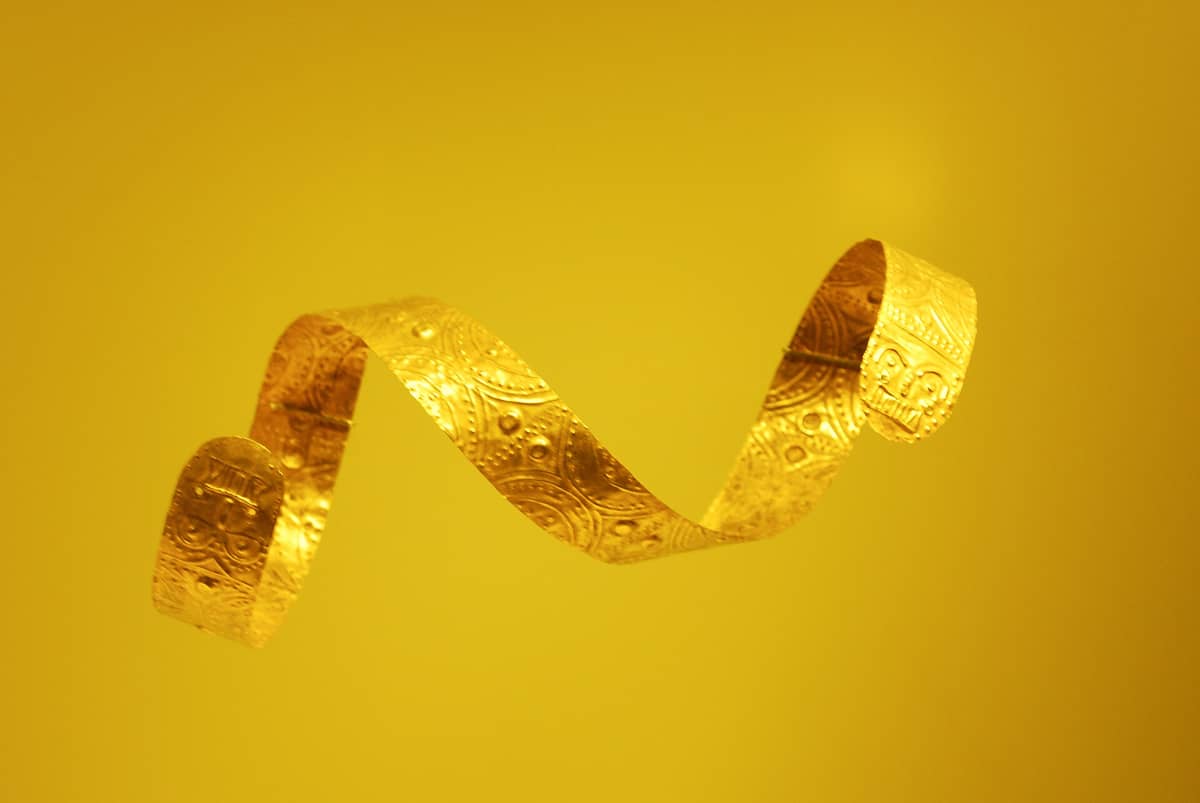
The Museo del Oro, officially the Museo del Oro del Banco de la República, is Colombia's flagship archaeological museum and one of the most significant repositories of pre-Hispanic material culture anywhere in the world. Located at Carrera 6 #15-88 in the historic district of La Candelaria, the museum houses tens of thousands of objects, including gold pieces, tumbaga alloys (a gold-copper blend used throughout pre-Columbian Colombia), ceramics, textiles, and carved stone. These artifacts represent at least a dozen distinct indigenous cultures that flourished across present-day Colombia before Spanish colonization.
The collection is operated by Banco de la República, Colombia's central bank, which has managed and expanded it since the museum's founding in 1939. The current building, a modernist building whose original block opened in 1968 and was later expanded, reopening fully in 2008, was designed to handle the collection's scale and the roughly half a million visitors who pass through annually. The exhibition design is thoughtful, well-lit, and clearly sequenced for international visitors who arrive with no prior knowledge of pre-Columbian Colombia.
💡 Local tip
Admission is free for everyone on Sundays, which makes it the busiest day by far. If you want more space and quieter rooms, visit on a Tuesday or Wednesday morning between 9:00 a.m. and 11:00 a.m.
The Collection: What You Will Actually See
The permanent exhibition spans multiple floors and is organized both thematically and by culture. You will encounter ritual objects, ceremonial vessels, nose ornaments, pectorals, tunjos (votive figurines), and funerary urns. Some pieces are so small and intricate they require magnifying glass panels set into the display cases. Others, such as large ceremonial shields and composite crowns, command the entire sightline of a room.
The Muisca culture, indigenous to the high plateau that now forms the Bogotá savanna, is represented in particular depth. Their goldwork is directly connected to the El Dorado legend: the ritual of the Muisca ruler covering himself in gold dust before wading into a sacred lake was documented by Spanish chroniclers and is illustrated here through artifacts and context panels. The Muisca raft, a famous tumbaga figurine depicting this ceremony, is one of the most reproduced images in Colombian cultural history and is displayed as a centerpiece of the collection.
Beyond the Muisca, the museum traces metalworking traditions from the Calima, Zenú, Tairona, Quimbaya, and several other cultures, each with a distinct aesthetic vocabulary. If you want to understand Colombia's pre-Hispanic history before stepping into the streets of La Candelaria, this museum provides the clearest available foundation. Pair it afterward with a walk to the Plaza de Bolívar and the colonial churches surrounding it, and the contrast between indigenous and Spanish colonial heritage becomes genuinely vivid.
Tickets & tours
Hand-picked options from our booking partner. Prices are indicative; availability and final rates are confirmed when you complete your booking.
Candelaria walking tour
From 35 €Instant confirmationFree cancellationCoffee farm guided tour
From 114 €Instant confirmationFree cancellationZipaquira Salt Cathedral guided tour
From 86 €Instant confirmationFree cancellationBogota full-day bike rental
From 19 €Instant confirmationFree cancellation
The Offering Chamber: The Museum's Most Memorable Moment
The most discussed room in the museum is the Sala de la Ofrenda, a circular chamber on the upper floor designed to simulate the experience of standing inside a sacred cave or ritual space. Visitors enter through a narrow passage into complete darkness. After a minute or so, the room slowly illuminates to reveal hundreds of gold objects displayed in circular cases around the walls, lit to appear as though they glow from within.
The effect is deliberately theatrical, and it works. The contrast between the ordinary gallery lighting in the surrounding rooms and this chamber's designed atmosphere creates a genuine shift in how the objects feel. It is the kind of curatorial decision that skeptics sometimes find overdone, but most visitors find it affecting rather than gimmicky. Children, in particular, tend to stop talking when they enter. If you are visiting with limited time and need to prioritize, make sure this room is on your route.
Hours, Prices, and Getting There
The museum is open Tuesday through Saturday from 9:00 a.m. to 7:00 p.m., with last entry at 6:00 p.m. On Sundays and public holidays, hours are 10:00 a.m. to 5:00 p.m. with last entry at 4:00 p.m. The museum is closed on Mondays, including holiday Mondays. Check the official Banco de la República website before visiting during any Colombian holiday period, as there may be additional closures on certain dates such as Good Friday, Labor Day, or days around Christmas and New Year.
- Foreign visitors: verify current tariff (published figures range from COP 5,000 to about COP 21,000)
- Colombian nationals and resident foreigners: COP $10,000
- Students (with valid ID): COP $5,000
- Children under 12 and adults over 62: free
- Sundays: free for everyone
- School groups with prior reservation, indigenous groups, and certain institutional members: free
Getting here by public transit is straightforward. The TransMilenio bus rapid transit system has a dedicated Museo del Oro station on Avenida Jiménez, and the museum entrance is a short walk from the stop. If you are traveling from Chapinero or Zona Rosa, a ride-hailing app (Uber, Cabify, or Didi are widely available in Bogotá) will deliver you to the door in 15 to 25 minutes depending on traffic. For general orientation on moving around the city, the guide to getting around Bogotá covers TransMilenio routes and app-based options in detail.
⚠️ What to skip
Ticket prices and free-admission days are subject to change. Verify current tariffs on the official Banco de la República website before your visit, especially if you are planning around the free Sunday admission.
How the Experience Changes by Time of Day
Early mornings on weekdays are the most rewarding time to visit. By 9:15 a.m. on a Tuesday, the larger gallery rooms can feel almost private. The gold objects under controlled lighting have a particular quality in the quiet, when you can stand close to individual cases without other visitors pressing in behind you. The sound inside the building is mostly ambient, a soft ventilation hum and the occasional muffled conversation from a school group in an adjacent room.
By midday on any day, and throughout the day on Sundays, the museum fills considerably. School groups dominate weekday late mornings, moving through in coordinated clusters with guides who speak at full volume. Weekend afternoons bring a mixed crowd of Colombian families, foreign tourists, and university students. The Sala de la Ofrenda can have a queue outside during peak hours, which partially breaks the immersive effect the room is designed to create.
Saturday evenings, especially in the hour before 7:00 p.m. closing, see a noticeable drop in visitor numbers. The lighting in the galleries shifts slightly warmer as the afternoon progresses, and the street noise from the surrounding La Candelaria streets filters in near the entrance areas. It is not a dramatic difference, but the museum has a different quality in those final hours, calmer and more contemplative.
Practical Notes for Your Visit
Photography without flash is permitted throughout most of the permanent collection, and the exhibition design accommodates it reasonably well. The gold objects are lit to minimize glare, and most display cases are clean enough that reflection is not a major obstacle. A phone camera is sufficient for most shots. The Sala de la Ofrenda is the most talked-about room in the building; flash is prohibited there and photography may be restricted during the light-and-sound sequence, but the room's ambient light is calibrated to register well on modern phone cameras when photos are allowed.
The building is equipped with elevators and ramps and is described by the museum as accessible to visitors with reduced mobility. Wheelchair access is available from the main entrance, and staff are available to assist. Not every corner of the building is equally adapted, so visitors with specific accessibility requirements are advised to contact the museum in advance.
There is a museum shop near the ground-floor exit selling reproductions, books, and jewelry. Quality varies across the product range, but the reproduction pieces are priced reasonably and are among the better souvenir options in the La Candelaria area. The museum also has a small café. For more substantial dining options after your visit, the Bogotá food guide covers restaurants within reach of the historic center.
Bogotá sits at 2,640 meters above sea level, and the walk from TransMilenio stations to the museum, while short, is enough to remind visitors who are not yet acclimatized. Dress in layers: La Candelaria mornings can be noticeably cool, while the museum's interior is climate-controlled and warm. Carry your jacket into the building rather than leaving it in a locker.
Who This Museum Is For, and Who Might Skip It
The Museo del Oro rewards visitors who arrive with some curiosity about pre-Hispanic Colombia, even if that curiosity starts at zero. The exhibition text is clear, available in both Spanish and English, and does not assume prior knowledge. First-time visitors to Bogotá who are working through the essential sites, perhaps following a three-day Bogotá itinerary, consistently rank this among the most worthwhile two to three hours they spend in the city.
Visitors who struggle with museum formats generally, those who find themselves losing attention in display-case environments regardless of subject matter, may find two hours here is one hour too many. The museum is comprehensive rather than concise, and there is a point in the upper-floor galleries where even engaged visitors begin to experience artifact fatigue. If that describes you, plan to spend 90 minutes, focus on the Muisca floor and the Sala de la Ofrenda, and leave before you stop absorbing what you are seeing.
Families with young children will find the building manageable and the Sala de la Ofrenda genuinely memorable for kids. However, children under about eight years old are unlikely to engage with the exhibition text or the cultural context. The Bogotá with kids guide covers age-specific recommendations across the city's attractions if you are calibrating a family itinerary.
Insider Tips
- The free Sunday admission is widely known among locals, and the museum fills early. If Sunday is your only option, arrive at 10:00 a.m. exactly when doors open, head directly to the Sala de la Ofrenda on the upper floor before the crowds build, and work your way back down through the collection.
- Audio guides are available in multiple languages and add meaningful context to the ritual objects that the wall panels cover only briefly. They are worth the additional fee, particularly for the Muisca and Quimbaya sections.
- The museum's ground-floor temporary exhibition space rotates several times a year and occasionally presents work that complements the permanent collection in unexpected ways. Check the Banco de la República website for current programming before you visit.
- If you are visiting La Candelaria on the same day, the Museo del Oro pairs logically with the Museo Botero, which is operated by the same institution (Banco de la República) and is a short walk away. Both museums are free on Sundays, so combining them that day makes the visit cost nothing.
- Large bags must be checked at the cloakroom near the entrance. The process is quick and free, but plan for an extra five minutes on arrival, especially during busy periods.
Who Is Museo del Oro For?
- First-time visitors to Bogotá building a foundational understanding of Colombian history
- Travelers with an interest in pre-Columbian archaeology and indigenous cultures
- Budget travelers visiting on Sunday when admission is free
- Families with children aged eight and older who can engage with exhibition content
- Anyone with a half-day in La Candelaria who wants one anchor institution to structure their visit
Nearby Attractions
Other things to see while in La Candelaria:
- Centro Cultural Gabriel García Márquez
Designed by celebrated Colombian-French architect Rogelio Salmona and inaugurated in 2008, the Centro Cultural Gabriel García Márquez is La Candelaria's most architecturally refined public building. Entry to the bookstore and courtyard is free, making it one of the few genuinely unhurried cultural stops in the historic center.
- Iglesia de San Francisco
Standing at the corner of Avenida Jiménez and Carrera 7, the Iglesia de San Francisco is one of the most significant colonial-era churches in Bogotá and the city’s oldest surviving church. It anchors La Candelaria with a gilded baroque interior that quietly outlasts every passing tourist group. Entry is free.
- Museo Botero
Housed in a restored colonial mansion in La Candelaria, Museo Botero is one of South America's most significant art museums — and it charges nothing to enter. The collection spans Fernando Botero's voluminous figures alongside international masters including Picasso, Dalí, and Renoir, all donated by the artist himself to the Colombian people.
- Plaza de Bolívar
Plaza de Bolívar is the civic and symbolic center of Bogotá, a nearly 13,903 m² open square in La Candelaria ringed by the city's most consequential buildings. Free to enter at any hour, it rewards visitors who understand what they're looking at and when to arrive.