Centro Cultural Gabriel García Márquez: Bogotá's Most Elegant Cultural Space
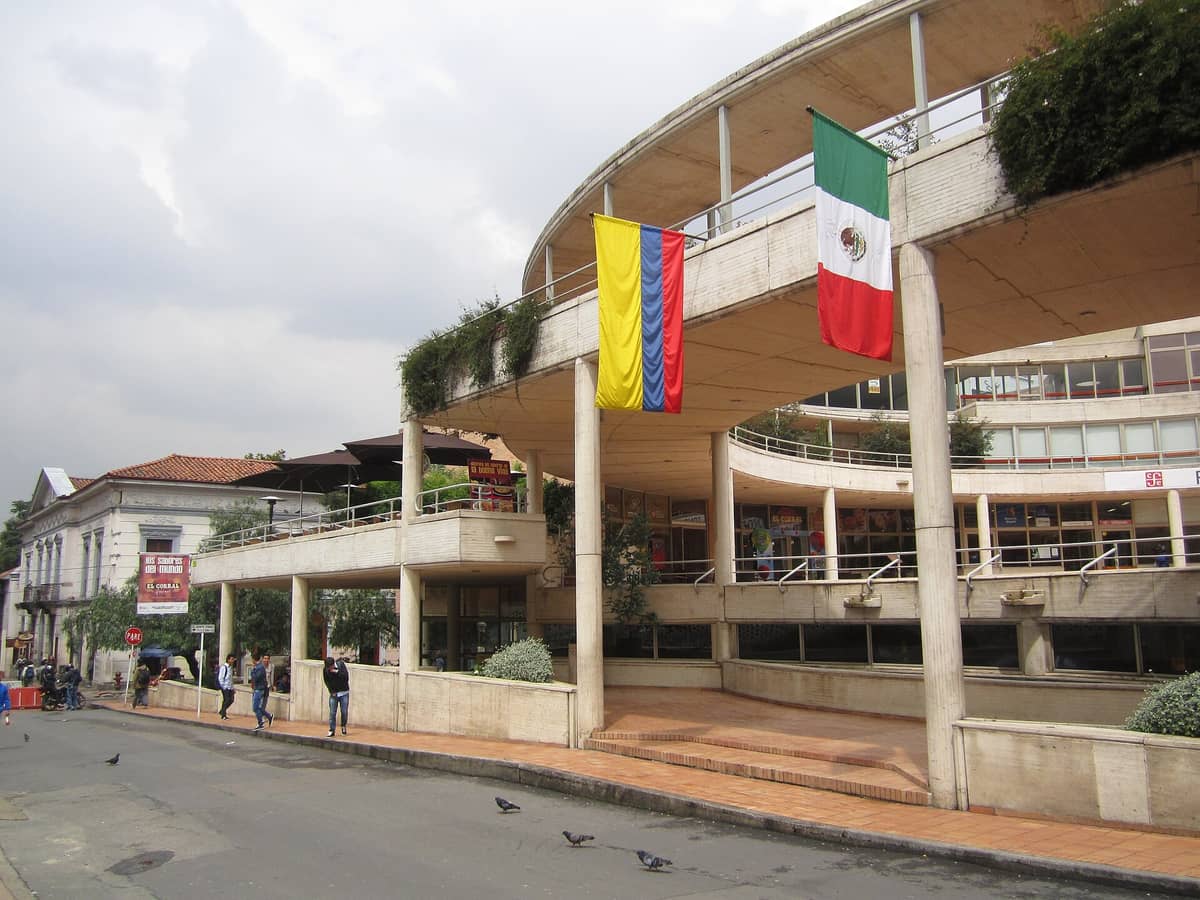
Designed by celebrated Colombian-French architect Rogelio Salmona and inaugurated in 2008, the Centro Cultural Gabriel García Márquez is La Candelaria's most architecturally refined public building. Entry to the bookstore and courtyard is free, making it one of the few genuinely unhurried cultural stops in the historic center.
Quick Facts
- Location
- Calle 11 # 5-60, La Candelaria, Bogotá, D.C.
- Getting There
- TransMilenio: Avenida Jiménez station, then 10–15 min walk east
- Time Needed
- 45 minutes to 2 hours, depending on exhibitions
- Cost
- Free general entry; some events sold separately in COP
- Best for
- Architecture lovers, book readers, design photographers, cultural travelers
- Official website
- www.fondodeculturaeconomica.com/Internacional/filial/1002
What the Centro Cultural Gabriel García Márquez Actually Is
The Centro Cultural Gabriel García Márquez is not a museum in the conventional sense. There are no permanent collections behind glass, no queues for timed entry, and no audio guides. What it is instead is the Colombian headquarters of Fondo de Cultura Económica, the prestigious Mexican-founded publishing house, wrapped in one of the most thoughtfully designed public buildings in Bogotá. The center opened in 2008, sitting on the northeast corner of Calle 11 and Carrera 5 in the heart of La Candelaria, and immediately became a reference point for how civic architecture and cultural programming can coexist without feeling institutional.
The ground floor bookstore is the center's anchor. It stocks an unusually serious selection of Spanish-language literature, social sciences, history, and philosophy, leaning toward Latin American publishers. Even if you read no Spanish at all, the space itself rewards a slow walk through its shelves. Natural light filters down from above, and the low hum of the street outside barely penetrates the interior.
ℹ️ Good to know
General access to the bookstore and central courtyard is free of charge. Occasional exhibitions or ticketed events take place in the upper levels; check the Fondo de Cultura Económica Colombia website or ask at the front desk on arrival.
The Architecture: Rogelio Salmona's Final Major Work
The building was designed by Rogelio Salmona, a Colombian-French architect widely regarded as one of the most important architects in 20th-century Latin America. Trained in Paris under Le Corbusier, Salmona developed a signature language rooted in red brick, water, and the dialogue between interior and exterior space. The Centro Cultural Gabriel García Márquez is often cited as one of his final major commissions, and it shows the full maturity of his thinking.
The facade along Calle 11 reads as calm and somewhat understated from the street, but the real revelation comes once you step inside. A central courtyard with a shallow reflecting pool draws the eye upward through multiple open gallery levels. The brick detailing is precise rather than decorative, with subtle geometric patterning that rewards close inspection. Salmona used light as a material here: at midday, the sun reaches the water directly, and the reflected shimmer moves across the interior walls. Late afternoon, when the angle shifts, the warm brick tones deepen considerably.
If you have any interest in architecture, this building is worth visiting independently of whatever is showing. It stands in instructive contrast to the colonial churches and republican government buildings a few blocks away on Plaza de Bolívar, demonstrating how a 21st-century structure can respond to a historic neighborhood without replicating it.
For a broader look at La Candelaria's architectural range, pair this visit with Iglesia de San Francisco, Bogotá's oldest surviving church, just a short walk northwest.
Tickets & tours
Hand-picked options from our booking partner. Prices are indicative; availability and final rates are confirmed when you complete your booking.
Candelaria walking tour
From 35 €Instant confirmationFree cancellationCoffee farm guided tour
From 114 €Instant confirmationFree cancellationZipaquira Salt Cathedral guided tour
From 86 €Instant confirmationFree cancellationBogota full-day bike rental
From 19 €Instant confirmationFree cancellation
What the Visit Feels Like at Different Times of Day
Weekday mornings between 9:00 and 11:00 are the calmest. The bookstore staff are organizing the day, university students sometimes arrive early for a quiet place to read, and the courtyard is largely empty. The light at this hour is cool and direct, coming from the east, and the reflecting pool is glasslike. This is the best window for photography of the architecture without people in every frame.
By midday on weekdays, and through most of Saturday, the center draws a steady flow of visitors: students from the nearby Universidad de los Andes and Colegio Mayor, government workers on lunch breaks from surrounding ministries, and cultural tourists working through La Candelaria's main circuit. The courtyard benches fill up, the café area gets a short queue, and the bookstore becomes genuinely animated. It is still comfortable, not crowded in any stressful sense, but the solitude of the morning is gone.
Sunday hours are shorter, typically opening at 10:30 and closing at 17:00. La Candelaria on Sundays has a different character: lighter street traffic, fewer informal vendors, a quieter pace that makes the walk from TransMilenio more pleasant. The center on Sundays tends to attract a more leisurely crowd, people browsing the bookstore without a specific purchase in mind, sitting in the courtyard with coffee, or catching a temporary exhibition before it closes.
💡 Local tip
Wednesday and Saturday hours currently extend to 19:00 rather than 18:00. If you are visiting La Candelaria in the afternoon and want to finish with an unhurried stop at the bookstore, these are the days to plan for.
The Bookstore and Cultural Programming
Fondo de Cultura Económica has been publishing serious Spanish-language books since its founding in Mexico in 1934, and the Bogotá store reflects that institutional identity. You will find Colombian literature well represented alongside Mexican, Argentine, and Spanish titles. There are dedicated sections for economics, political philosophy, history of ideas, and art criticism. The children's section is small but carefully curated. Prices are in Colombian pesos and, by the standards of a specialty bookstore, reasonable.
Beyond the bookstore, the upper gallery levels host rotating exhibitions that change every few weeks. These skew toward visual arts, graphic design, photography, and illustrated book editions rather than fine art in the traditional sense. Quality and relevance vary, but the exhibitions are consistently worth a glance, partly because the gallery spaces themselves, with their open balconies overlooking the courtyard, are pleasant to move through.
If the cultural programming here sparks an interest in Bogotá's broader arts scene, the Museo Botero is a five-minute walk away and offers free entry to one of the most significant collections of Colombian and European art in the country.
Getting There and Navigating La Candelaria
The most practical arrival by public transit is via TransMilenio to the Avenida Jiménez station on the B Line. From there, walk east along Avenida Jiménez (also called Calle 13) for about ten to twelve minutes until you reach Carrera 5, then turn south one block to Calle 11. The walk takes you through some of the most photographed streetscape in the historic center, past street artists, book vendors, and the edge of the university district.
SITP bus routes along Carrera 4, 5, and 10 also stop within a few minutes' walk. If you're coming by ride-hailing app, Uber, Cabify, and Didi all operate in Bogotá, and the address, Calle 11 # 5-60, is easy to enter directly. Parking in La Candelaria is constrained; arriving by car independently is not recommended on busy weekdays.
La Candelaria has a lot to cover in a single day. For a structured route, the 3-day Bogotá itinerary includes the cultural center alongside the neighborhood's other key stops.
⚠️ What to skip
La Candelaria warrants awareness of your surroundings, particularly around Avenida Jiménez and the San Victorino area to the west. The cultural center itself is a calm indoor environment, but keep bags closed and phones less visible on the approach streets, especially after dark.
Photography and Practical Details
The interior courtyard and bookstore are genuinely photogenic and, in normal circumstances, photography for personal use is permitted in the public areas. The reflecting pool works best when shot from ground level with a wide lens; from the upper gallery balconies, the full geometry of Salmona's courtyard design becomes clear. Bring a camera with good performance in shade: the interior is naturally lit but not always brightly so, particularly on overcast days, which are common in Bogotá during the rainy seasons of April to May and September to November.
The building is designed for public use and appears generally accessible by modern standards, though visitors with specific mobility requirements should confirm lift access and adapted facilities directly with the center by calling +57 601 283 2200 before their visit, as detailed accessibility information is not consistently published online.
Dress practically for La Candelaria: layered clothing suits Bogotá's altitude of 2,640 meters, where mornings can be cold (around 8 to 10 degrees Celsius) and midday sun strong even when air temperatures seem mild. A light jacket that packs into a bag covers most scenarios.
If you are new to Bogotá's altitude and climate patterns, the Bogotá altitude guide explains what to expect and how to manage the acclimatization period in your first day or two.
Practical Take: Who This Is For and Who Should Skip It
The Centro Cultural Gabriel García Márquez will mean the most to travelers who care about architecture, independent publishing, or the texture of everyday cultural life in a Latin American capital. It is not a spectacle. There are no interactive displays, no English-language interpretation panels, and no gift shop beyond the bookstore itself. If you need a narrative, a dramatic view, or a checking-off-the-list experience, this is not the right stop.
For anyone who enjoys spending thirty minutes browsing a serious bookstore, sitting with a coffee in a well-designed courtyard, or looking closely at how brick and water and light can be organized into something memorable, this is one of the more satisfying free stops in the entire city. It also serves well as a decompression point mid-morning, after the intensity of the Museo del Oro or before committing to the uphill walk toward other La Candelaria sites.
The Museo del Oro is about a ten-minute walk northwest and is the natural pairing for a morning in this part of the city, one of South America's most important pre-Columbian collections followed by one of its finest contemporary civic buildings.
Insider Tips
- The reflecting pool in the central courtyard is at its most photogenic in the 9:00 to 10:30 window on clear mornings, before shade from the upper levels falls across the water surface.
- The café on the ground floor is a quieter alternative to the coffee shops on Calle 11 outside, and prices are comparable. It's a good place to sit and plan your next move without the street noise.
- If you want to check what exhibitions are currently showing, search for 'FCE Colombia' on social media rather than navigating the main website, which is not always updated promptly.
- Wednesday and Saturday are currently the late-closing days (19:00 instead of 18:00), making them the best options if your morning is committed elsewhere in the city.
- The upper balcony levels overlooking the courtyard are open during exhibition hours. Even if the exhibition itself is unremarkable, the bird's-eye view of Salmona's floor plan is worth climbing for.
Who Is Centro Cultural Gabriel García Márquez For?
- Architecture enthusiasts who want to see Rogelio Salmona's mature work in its original setting
- Readers and book collectors looking for serious Spanish-language titles at fair prices
- Photographers seeking interior architectural subjects with natural light
- Travelers who want a quiet, free respite mid-way through a full La Candelaria day
- Cultural travelers interested in how Latin American publishing and civic space intersect
Nearby Attractions
Other things to see while in La Candelaria:
- Iglesia de San Francisco
Standing at the corner of Avenida Jiménez and Carrera 7, the Iglesia de San Francisco is one of the most significant colonial-era churches in Bogotá and the city’s oldest surviving church. It anchors La Candelaria with a gilded baroque interior that quietly outlasts every passing tourist group. Entry is free.
- Museo Botero
Housed in a restored colonial mansion in La Candelaria, Museo Botero is one of South America's most significant art museums — and it charges nothing to enter. The collection spans Fernando Botero's voluminous figures alongside international masters including Picasso, Dalí, and Renoir, all donated by the artist himself to the Colombian people.
- Museo del Oro
The Museo del Oro in La Candelaria holds one of the world's largest collections of pre-Hispanic gold artifacts, spanning thousands of pieces from Colombia's indigenous cultures. Operated by Banco de la República, it is the single most significant cultural institution in Bogotá and one of the great archaeological museums of Latin America.
- Plaza de Bolívar
Plaza de Bolívar is the civic and symbolic center of Bogotá, a nearly 13,903 m² open square in La Candelaria ringed by the city's most consequential buildings. Free to enter at any hour, it rewards visitors who understand what they're looking at and when to arrive.