3 Days in Bogotá: The Perfect Itinerary
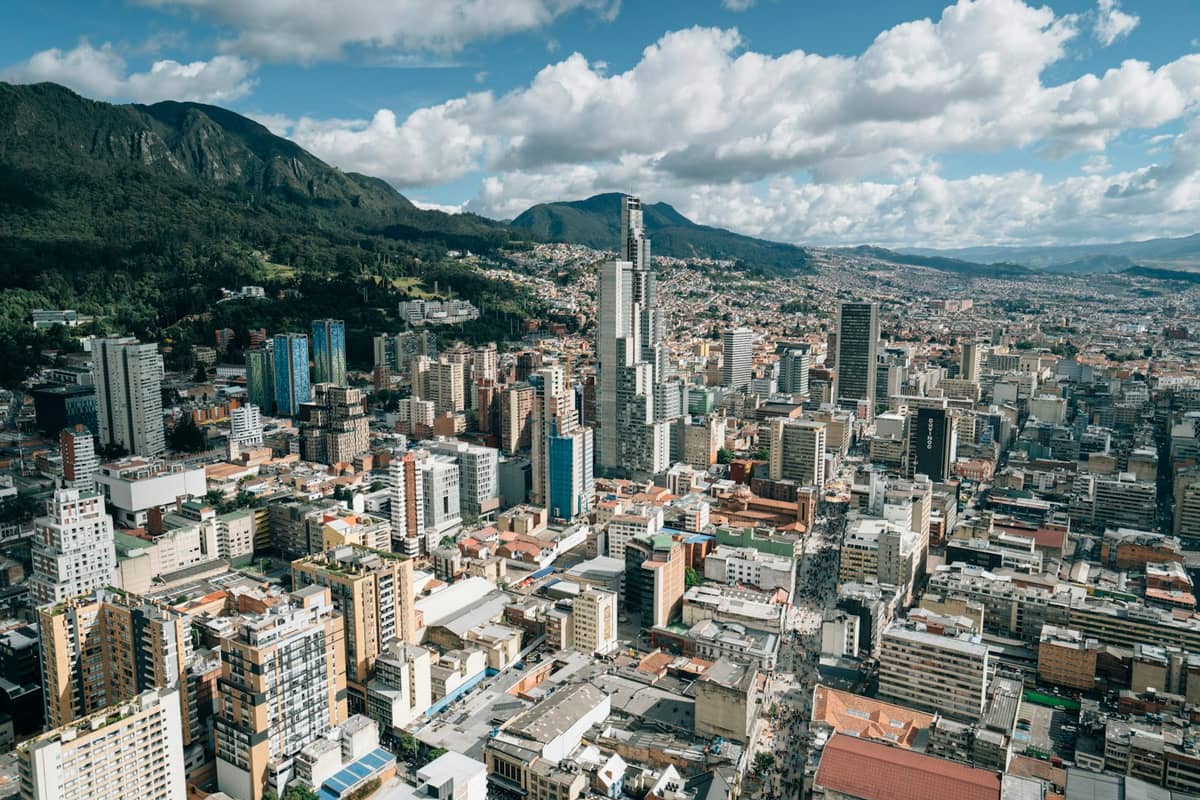
Three days is enough to get a real feel for Bogotá, D.C. — Colombia's high-altitude capital of roughly 8 million people. This itinerary covers the historic core, world-class museums, the city's best neighborhoods, and one excellent day trip, with honest logistics and timing built in.
Plan and book this trip
Tools from our partner Travelpayouts help you compare flights and hotels. If you book through them, we may earn a commission at no extra cost to you.
Flights
Hotels map
TL;DR
- Bogotá sits at 2,640 m above sea level — acclimatize on arrival day, pack layers, and expect afternoon rain even in dry months. Read the Bogotá altitude guide before you fly.
- Museo del Oro is closed every Monday (including holiday Mondays) — plan your itinerary around this or you will miss one of South America's best museums.
- Day 1: La Candelaria and the historic center. Day 2: Chapinero, Zona Rosa, and Usaquén. Day 3: Choose a day trip from Bogotá — Catedral de Sal or Laguna de Guatavita are the top two options.
- El Dorado Airport (BOG) sits roughly 10–15 km by road from the center; use official taxis, Uber/Cabify/Didi, or the TransMilenio K86/M86 bus routes for a lower-cost connection.
- Budget travelers can keep costs low: Museo del Oro is free on Sundays, many parks and street art areas cost nothing, and good local meals run COP $15,000–35,000.
Before You Arrive: Logistics, Altitude, and What to Pack
Bogotá, D.C. (officially Bogotá, Distrito Capital) is the highest major capital city in the Americas after La Paz and Quito, sitting at exactly 2,640 m above sea level. That elevation shapes everything about your visit: the temperature, your energy levels on day one, UV exposure even on overcast days, and how quickly alcohol hits. The Bogotá weather and climate is classified as subtropical highland — daytime temperatures typically reach the high teens to low 20s °C, while nights regularly drop toward 8°C or below. Rain falls year-round, with heavier periods in April–May and September–November, and relatively drier stretches December–March and June–August. Plan flexible days regardless of when you visit.
⚠️ What to skip
Altitude sickness (soroche) is a real concern in the first 24–48 hours. On arrival day, rest more than you think you need to, drink water, avoid alcohol, and skip strenuous uphill walks. Monserrate can wait until Day 2 once your body has adjusted.
El Dorado International Airport (BOG) sits roughly 10–15 km west of the historic center, depending on your destination. From the airport, you have three practical options: an official airport taxi (fixed-rate zones, pay at the booth before you exit), a ride-hailing app (Uber, Cabify, and Didi all operate in Bogotá), or the TransMilenio/SITP public bus network — routes K86 and M86 connect the airport to central stops including Museo Nacional and Universidades without requiring a transfer. The bus is the cheapest option but involves luggage and crowds during peak hours. Check current routes at the official TransMilenio route search platform before travel.
- Pack layers, not a heavy coat A waterproof jacket, mid-layer fleece, and light base layers handle Bogotá's temperature swings better than a single bulky coat.
- Bring sunscreen and a hat UV radiation is significantly stronger at 2,640 m. Cloudy skies do not block UV — travelers routinely get sunburned on overcast days.
- Download offline maps Google Maps works well in Bogotá but mobile data can be patchy in La Candelaria's older streets. Download the area before you land.
- Get Colombian pesos (COP) early ATMs at the airport dispense COP. Many local restaurants, markets, and smaller attractions are cash-preferred or cash-only.
- Know the emergency number Colombia's emergency number is 123. Colombia's country dialing code is +57.
Day 1: La Candelaria and the Historic Center
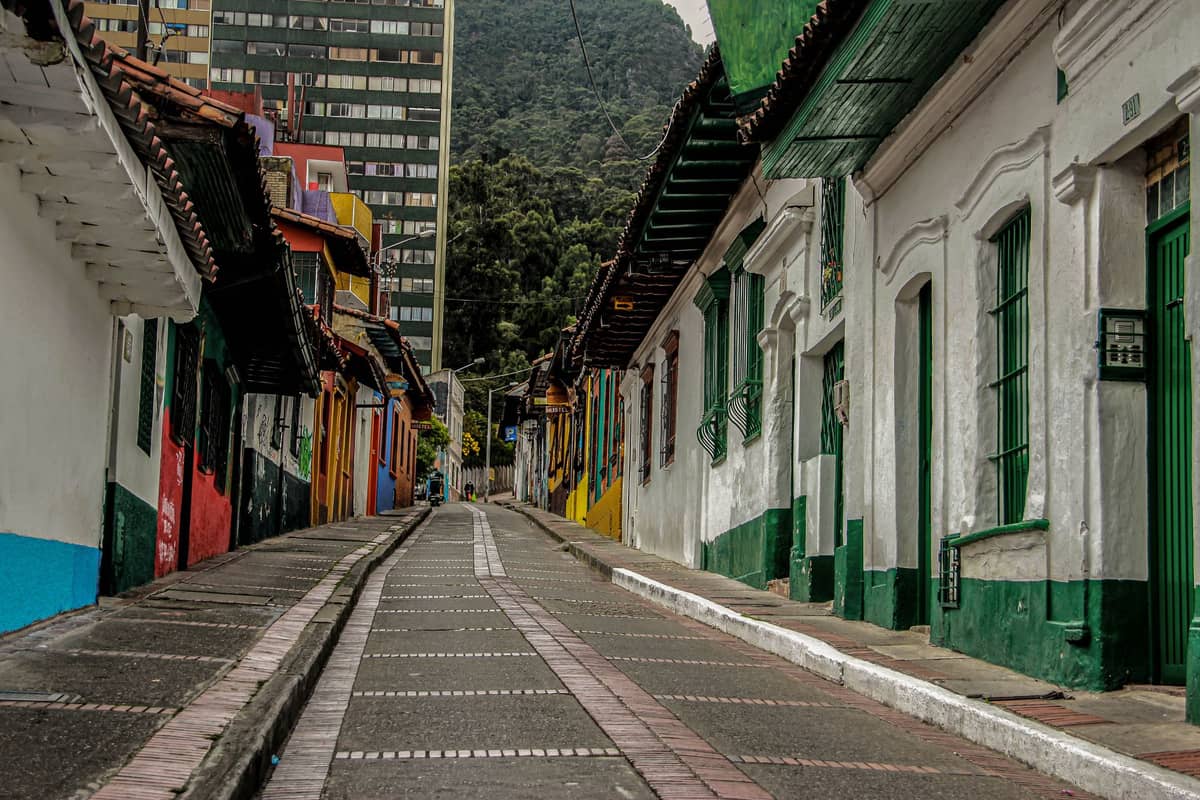
Start your three days in Bogotá where the city itself started: La Candelaria, the colonial-era historic center. The streets here are steep, narrow, and lined with centuries-old architecture, political murals, and an impressive concentration of free or low-cost cultural institutions. Spend the morning walking — but take it easy if you arrived yesterday and are still adjusting to the altitude.
The anchor of any La Candelaria visit is the Museo del Oro, one of the genuinely outstanding museums anywhere in Latin America. It holds the world’s largest collection of pre-Hispanic gold artifacts — over 55,000 pieces — and the context provided about indigenous Colombian cultures makes it far more than a room full of shiny objects. Admission is listed around COP 5,000–21,000 depending on nationality and sales channel (verify before visiting), and entry is free on Sundays. Hours are Tuesday–Saturday 9:00–19:00 and Sundays 10:00–17:00. Critically: the museum is closed every Monday, including holiday Mondays. If Day 1 falls on a Monday, swap this to Day 2.
After the Museo del Oro, walk five minutes southwest to Plaza de Bolívar — the formal heart of the Colombian state, flanked by the Capitolio Nacional, the Palacio de Justicia, and the Catedral Primada. The square is worth 20–30 minutes of your time, but do not confuse historical significance with tourist polish: it is an active political and civic space, not a curated heritage site. On weekdays especially, you will see government workers, protestors, students, and pigeons in roughly equal measure.
The Museo Botero sits a short walk from the plaza and should not be skipped. Fernando Botero donated over 100 of his own works plus a significant international collection to the Banco de la República, and admission is free. It is consistently one of the best free cultural experiences in Bogotá. Nearby, the Iglesia de San Francisco is worth a stop for its extraordinary gilded interior — one of the finest examples of colonial religious art in the country.
💡 Local tip
La Candelaria is best explored before 15:00. Afternoons bring heavier rain and the area can feel less comfortable after dark for visitors unfamiliar with the city. Plan your Candelaria morning, then move north in the afternoon.
End Day 1 with a visit to Cerro de Monserrate — but only if you are feeling well-acclimatized. The funicular and cable car run Monday–Saturday until 22:00 (Sunday until 17:00, holidays until 17:00), making a sunset or early-evening ascent possible. The views over Bogotá's sprawling grid from 3,152 m are extraordinary, especially at dusk when the city lights begin to emerge. Check the official Monserrate website for current prices and schedules before going, as these are updated periodically.
Day 2: Chapinero, Zona Rosa, and Usaquén
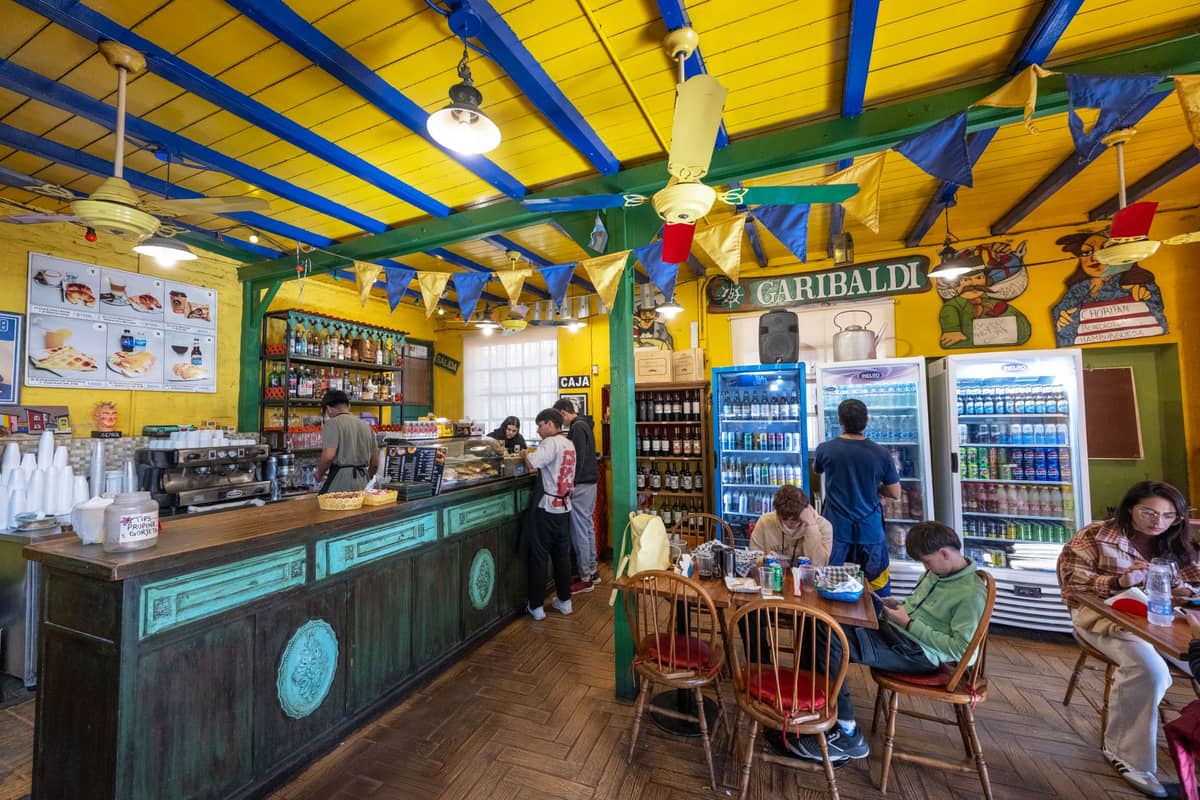
Day 2 shifts north to the modern, wealthier side of Bogotá — a contrast that makes both halves of the city easier to understand. Start in Chapinero, the large central district that blends bookshops, independent coffee shops, universities, and some of Bogotá's most interesting dining. For a proper Colombian coffee education, this is the neighborhood to explore — the city's specialty coffee scene is concentrated here and in the Zona G.
From Chapinero, head to Zona Rosa (also called Zona T, after the pedestrian T-shaped walkway at its center). This is Bogotá's main upscale commercial and restaurant district, home to international brands, rooftop bars, and a high density of good restaurants. It is not the most authentic slice of the city, but the food quality is reliable and the area is walkable and well-maintained. The Parque de la 93 a few blocks north offers a more local atmosphere — a green square surrounded by restaurants that fills with office workers at lunch and families in the evening.
Spend the afternoon in Usaquén, Bogotá's northern colonial village swallowed by the city's expansion. The historic core around the main square retains its whitewashed architecture and church, and the surrounding streets are full of good restaurants, antique shops, and upscale dining. On Sundays, the Usaquén flea market fills several surrounding streets with crafts, antiques, street food, and live music — one of the better weekend markets in the city. If Day 2 lands on a Sunday, this is where to spend your afternoon.
✨ Pro tip
Bogotá's Ciclovía runs every Sunday and holiday: over 120 km of main roads close to cars from 7:00 to 14:00. If Day 2 is a Sunday, rent a bike and cycle between Chapinero, Zona Rosa, and Usaquén along car-free avenues — it is one of the best ways to understand the city's scale and energy.
Day 3: The Best Day Trip from Bogotá
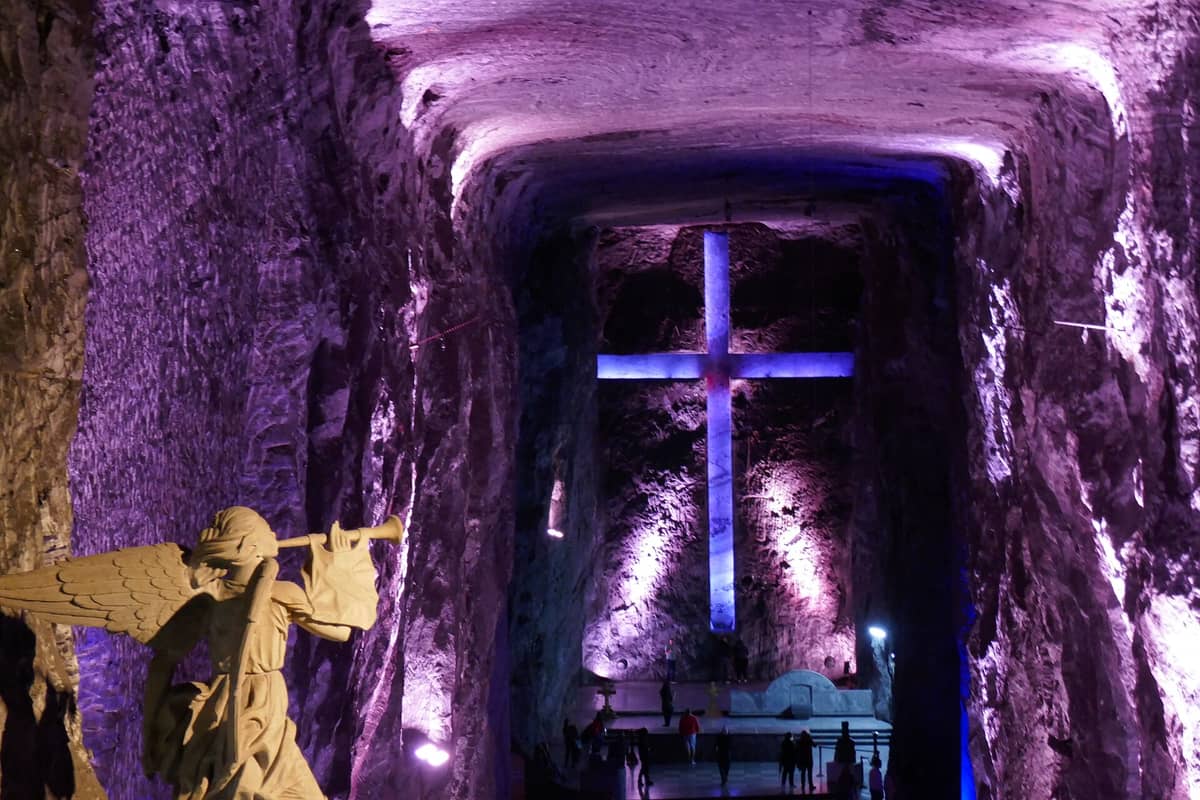
Bogotá's position on the Sabana (the high plateau surrounding the city) puts several extraordinary destinations within 1–2 hours. Use Day 3 for a day trip rather than trying to cover more of the city — three days is not enough to exhaust Bogotá, but a day trip adds a dimension that staying in the city cannot replicate. The two strongest options are the Catedral de Sal de Zipaquirá and the Laguna de Guatavita.
- Catedral de Sal de Zipaquirá A cathedral built inside a working salt mine, 49 km north of Bogotá. The engineering is genuinely impressive and the religious iconography carved directly into salt walls is unlike anything else in Colombia. Tours depart regularly from Bogotá; the town of Zipaquirá itself is worth a 30-minute walk around the main square. Full visit takes around 4–5 hours including transport.
- Laguna de Guatavita The sacred lake linked to the El Dorado legend — the actual origin point of the gold-covered chief myth that sent Spanish conquistadors across a continent. The circular lake sits in a protected reserve, accessible via a 90-minute guided hike. Located about 75 km northeast of Bogotá, typically reached by organized tour or private car. Mornings offer clearer weather.
- Parque Natural Chicaque A cloud forest reserve 25 km southwest of Bogotá, accessible by bus and cable car. Best for travelers who want a half-day in nature without committing to a full organized tour. The forest is dense, often misty, and a completely different ecological experience from the city.
For a full breakdown of logistics, transport options, costs, and lesser-known alternatives, see the dedicated day trips from Bogotá guide. Most organized tours to Zipaquirá or Guatavita depart by 8:00–9:00 and return by mid-afternoon, leaving the evening free for a final dinner in the city.
Practical Logistics: Getting Around, Eating, and Staying
TransMilenio, Bogotá's bus rapid transit network, covers the main north-south and east-west corridors and is the fastest way to travel large distances across the city. It is cheap (around COP $3,550 per trip), runs frequently, and connects most of the neighborhoods in this itinerary. That said, it gets extremely crowded during morning and evening rush hours (roughly 7:00–9:00 and 17:00–19:00). For shorter trips within neighborhoods, ride-hailing apps (Uber, Cabify, Didi) are convenient and reasonably priced. Full transport options are covered in the getting around Bogotá guide.
For accommodation, the decision usually comes down to location: La Candelaria puts you closest to Day 1 attractions but the area quiets (and feels less comfortable) at night. The Zona Rosa, Chapinero, and La Macarena neighborhoods balance access to sights with better restaurant and nightlife options. Usaquén is the most relaxed base but adds transit time to the historic center. A detailed breakdown by budget and neighborhood is in the where to stay in Bogotá guide.
Bogotá's food scene ranges from cheap, filling set lunches (menú del día, usually COP $15,000–25,000 for soup, main, and juice) to ambitious modern Colombian restaurants in Zona G and La Macarena that rank among the best in South America. For first-time visitors, the Bogotá food guide maps out the essential dishes — ajiaco (the city's signature chicken and potato soup), changua (a milk-based breakfast soup), and the full range of street snacks that fuel the city's working population.
ℹ️ Good to know
Tap water in Bogotá is generally reported as safe to drink in most urban areas, which is unusual for a city this size in Latin America and reduces the need to buy bottled water throughout your stay. Colombia uses Type A and Type B plugs at 110V/60Hz — the same standard as the United States and Canada.
What to Skip (and What Is Overrated)
Torre Colpatria offers rooftop views of the city, but the observation deck is only open on weekend afternoons and holiday hours are inconsistent. For views, Monserrate is significantly more dramatic and reliable. The teleférico and funicular up Monserrate are both well-maintained; the hike up is possible but takes 60–90 minutes of steep climbing — only worth it if acclimatization is complete and weather is clear.
Paloquemao market is worth adding if you have a morning free — it is one of the largest fresh produce and flower markets in the country and gives a completely different view of how Bogotá actually functions. See the Paloquemao market page for opening hours and what to expect. Do not, however, try to fit it into an already dense Day 1 — La Candelaria alone can absorb a full morning.
Three days does not leave room for Bogotá's street art circuit in any depth. The Candelaria murals are unavoidable and excellent, but a proper street art tour through the surrounding barrios takes a dedicated half-day. If this interests you, consider extending to four nights — or treat it as the anchor of a return visit. The city rewards repeat trips more than most South American capitals.
FAQ
Is 3 days enough for Bogotá?
Three days covers the main highlights comfortably if you structure them well: one day in La Candelaria, one day exploring the northern neighborhoods, and one day for a day trip. You will not exhaust the city — Bogotá has enough museums, food, and neighborhoods to fill a week — but three days gives you a genuine feel for both its history and its contemporary character.
What is the best time to visit Bogotá?
December to March and July to August are among the driest periods and generally the most comfortable for outdoor sightseeing and day trips. That said, rain is possible any month of the year at 2,640 m elevation, and afternoon showers can occur even in peak dry season. The city hosts major events in August (including Rock al Parque) and around New Year, which affects hotel prices and availability.
Is Bogotá safe for tourists?
Bogotá requires the same common-sense precautions as any large Latin American capital: stay aware of your surroundings, avoid displaying expensive equipment unnecessarily, use app-based taxis rather than hailing unmarked cabs on the street, and research which areas to avoid at night. La Candelaria is busy and generally fine during the day but quieter and less advisable to wander alone after dark. The northern neighborhoods (Chapinero, Zona Rosa, Usaquén) have a calmer street environment in the evenings.
How do I get from Bogotá airport to the city center?
El Dorado International Airport (BOG) is roughly 10–15 km from the historic center. Official airport taxis with fixed-rate zones are the most straightforward option. Ride-hailing apps (Uber, Cabify, Didi) also pick up outside the terminal. For a budget option, TransMilenio/SITP bus routes K86 and M86 connect the airport to central stops including Museo Nacional and Universidades. Check current routes on the official TransMilenio platform before travel.
What currency does Bogotá use, and can I pay by card?
Colombia uses the Colombian peso (COP). Cards (Visa and Mastercard) are accepted at hotels, upscale restaurants, and large stores, but many local restaurants, markets, street food vendors, and smaller attractions are cash-preferred or cash-only. ATMs are widely available in the northern districts and at the airport. Withdraw pesos early and keep small bills for everyday transactions.