Kilmainham is Dublin's most historically charged neighbourhood, home to Kilmainham Gaol, the Irish Museum of Modern Art, and the Royal Hospital Kilmainham. Located southwest of the city centre in Dublin 8, it draws visitors seeking a deeper understanding of Irish history and independence, set against a backdrop of Georgian architecture and green open space.
Kilmainham carries more historical weight than almost anywhere else in Dublin. Within a few hundred metres, you move between a prison where Irish revolutionaries faced execution, a 17th-century soldiers' hospital turned national art museum, and streets that feel genuinely removed from the tourist circuits of the city centre. It is a neighbourhood that rewards slow, deliberate exploration.
Orientation
Kilmainham sits in the Dublin 8 postal district, roughly two kilometres southwest of the city centre, on the south bank of the River Liffey. It is not a neighbourhood with hard edges: no sign marks where Kilmainham ends and Inchicore begins to the west, or where it bleeds into Rialto to the southeast. What defines the area in practice is the cluster of major institutions around Kilmainham Gaol and the Royal Hospital, and the residential streets of Victorian and Edwardian terraces that surround them.
The approximate centre of the neighbourhood falls near the junction of South Circular Road and Old Kilmainham Road. Phoenix Park lies directly to the north, separated from Kilmainham by the Liffey and the Heuston Station rail corridor. The Grand Canal cuts across the southern edge of the wider Dublin 8 district. Inchicore Road is the main arterial running west toward the suburbs, while Con Colbert Road traces the river and connects the area to Heuston Station.
Kilmainham makes an excellent base for combining a day of serious history with a visit to Phoenix Park to the north, or the whiskey distilleries and Liberties further east. If you are planning a broader Dublin itinerary, it pairs naturally with the medieval core around Kilmainham Gaol and the creative and food scenes of the nearby Smithfield and Liberties districts.
Character & Atmosphere
On a weekday morning, Kilmainham feels like a neighbourhood in a different city from the one you find around Grafton Street or Temple Bar. The streets around the gaol and the Royal Hospital are quiet, occupied mainly by dog walkers, local school runs, and the occasional delivery van. The stone walls of the gaol cast long shadows across the footpath on South Circular Road, and the neoclassical facade of the old courthouse next door adds a severity to the streetscape that feels entirely appropriate given what these buildings witnessed.
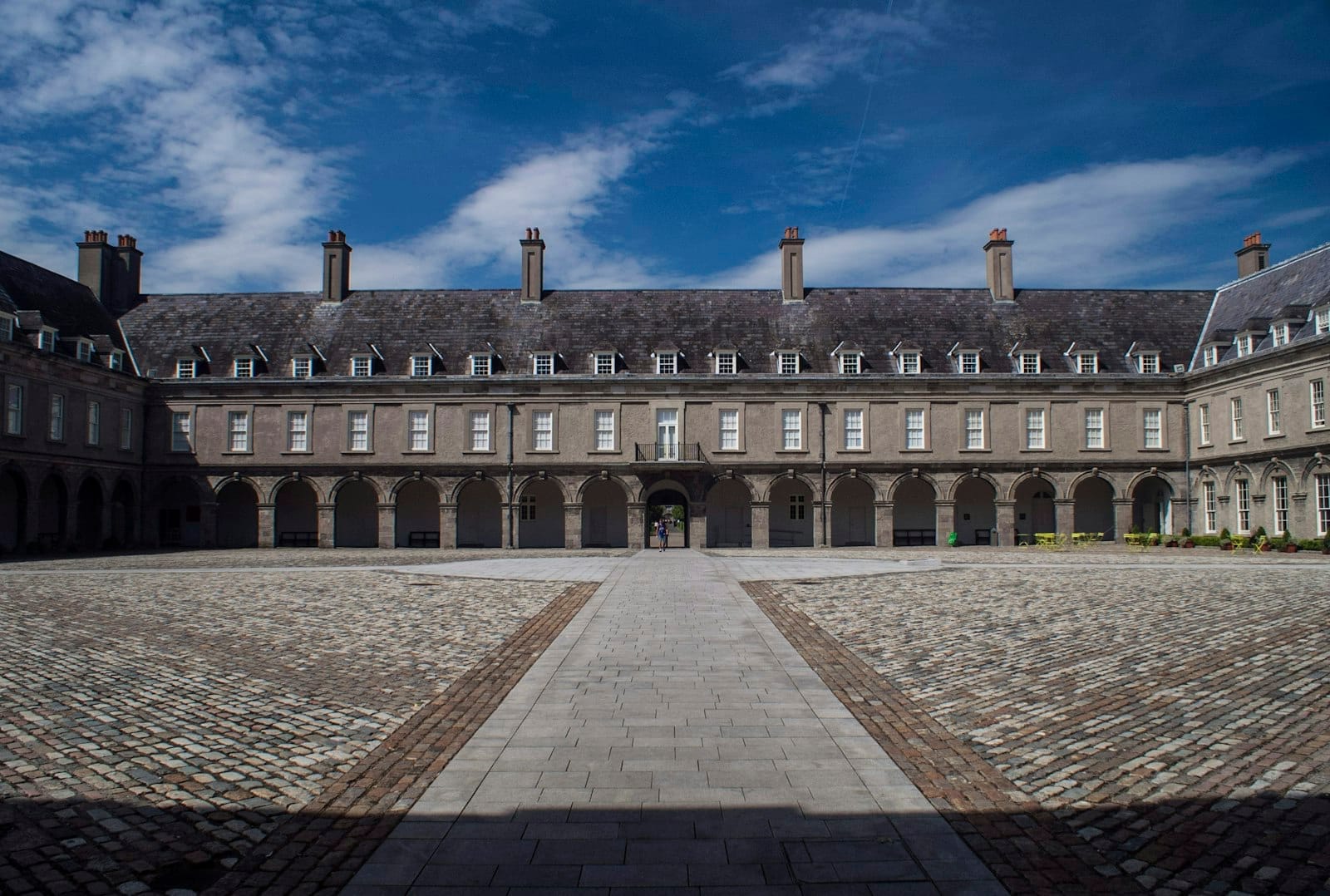
By mid-morning, tour buses begin arriving at Kilmainham Gaol, and the queues at the entrance build steadily. The gaol is one of the most visited sites in all of Ireland, and on busy summer days the surrounding streets absorb that footfall. Away from the gaol's immediate entrance, though, the pace drops off. The grounds of the Royal Hospital Kilmainham are genuinely peaceful: broad formal gardens, a medieval tower, a courtyard that feels more like rural France than inner Dublin.
In the afternoons, the light in the Royal Hospital's courtyard shifts into something quite beautiful, catching the pale limestone of the colonnaded walkway. The Irish Museum of Modern Art tends to draw a quieter, more contemplative crowd than the gaol, and the garden terraces make for an unexpectedly pleasant place to sit in good weather. By evening, the neighbourhood quietens considerably. There is no real nightlife scene here, and the main streets empty out early. This is not an area you come to after dark for entertainment.
ℹ️ Good to know
Kilmainham has a very different feel from central Dublin neighbourhoods. It is largely residential, relatively quiet, and focused almost entirely on historical and cultural attractions rather than shopping or nightlife. That is precisely what makes it worth a half-day visit.
What to See & Do
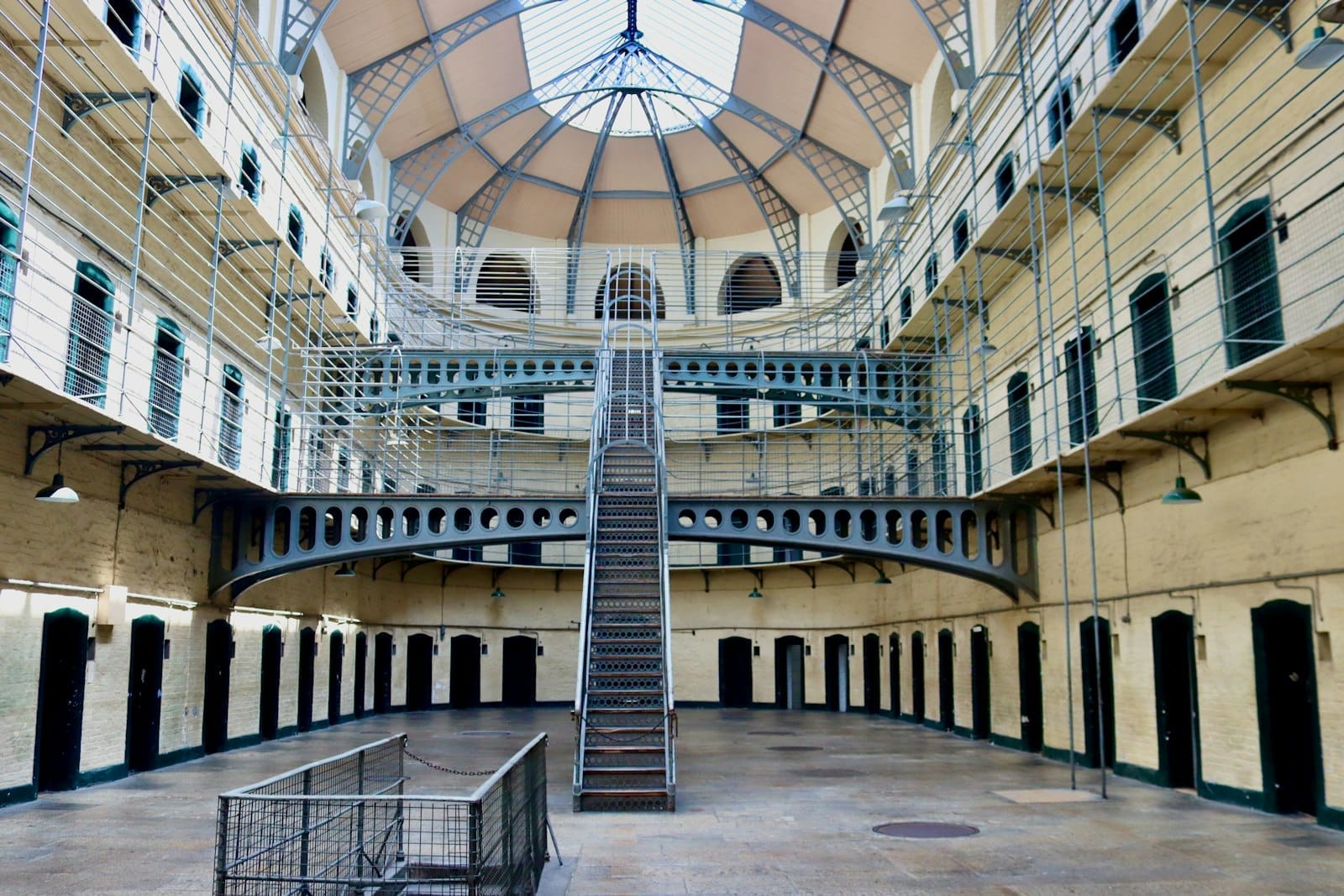
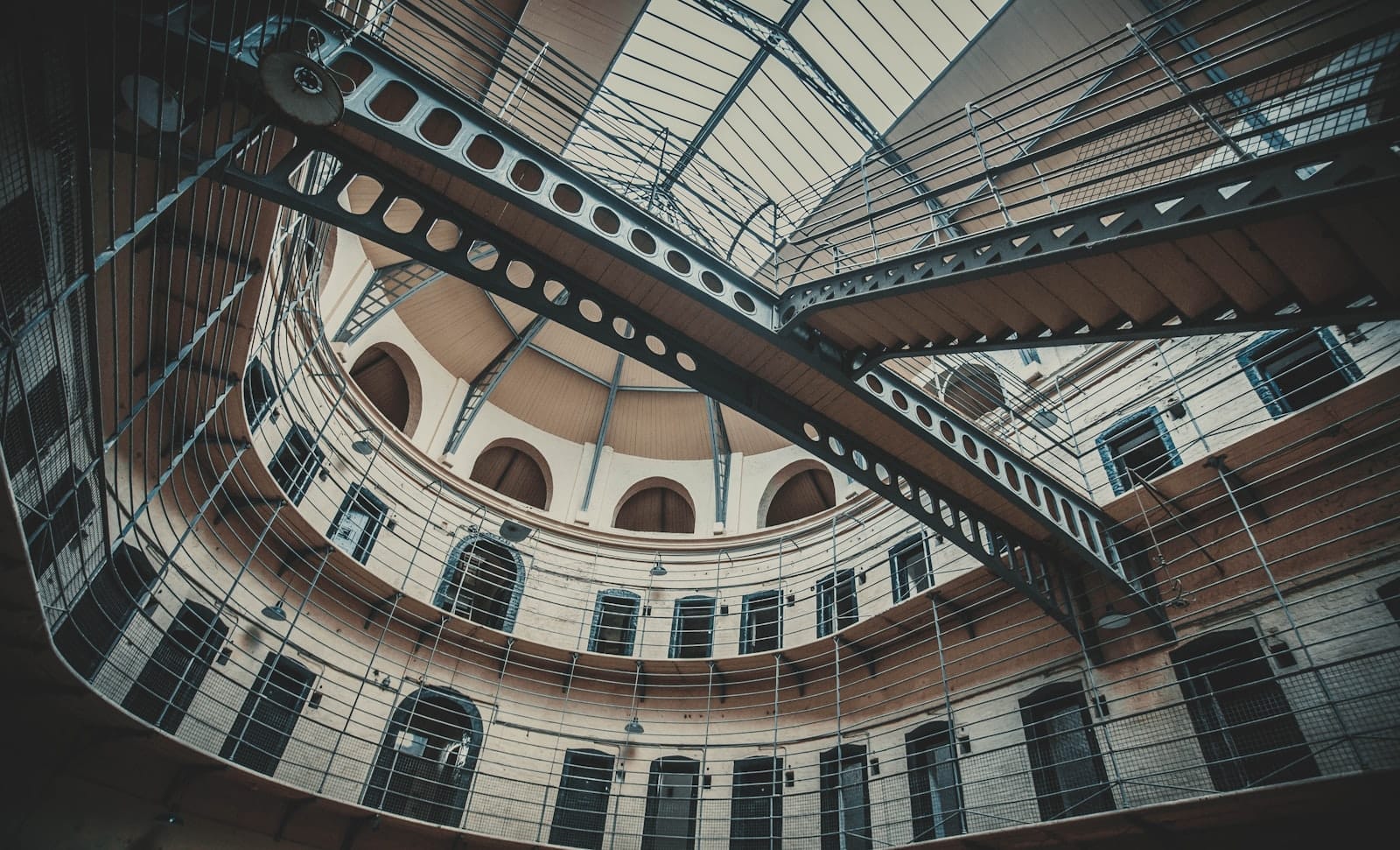
The single most significant site in the neighbourhood is Kilmainham Gaol, a former prison that held many of the key figures of Irish republican history, including the leaders of the 1798 Rebellion, the 1803 Rising, and the 1916 Easter Rising. Robert Emmet, Charles Stewart Parnell, and all fourteen of the 1916 Easter Rising leaders who were executed were held here. The museum tour walks you through the cells, the central hall with its Victorian glass roof, and the stonebreakers' yard where the executions took place. It is one of the most emotionally powerful museum experiences in Ireland, and it is difficult to overstate that.
⚠️ What to skip
Kilmainham Gaol is only accessible by guided tour, and tours sell out well in advance during the summer months. Book online through the Office of Public Works website before you arrive in Dublin. Walk-in tickets are rarely available from May through September.
Directly adjacent to the gaol, the neoclassical Kilmainham Courthouse is worth noting for its architecture, though it is not open to the general public. A short walk south brings you to the grounds of the Irish Museum of Modern Art at the Royal Hospital Kilmainham. The building itself, completed in 1684, was modelled loosely on Les Invalides in Paris and served as a home for retired soldiers for over 250 years. Today it houses one of Ireland's most significant collections of modern and contemporary art, as well as a rotating programme of major international exhibitions. Entry to the permanent collection is free.
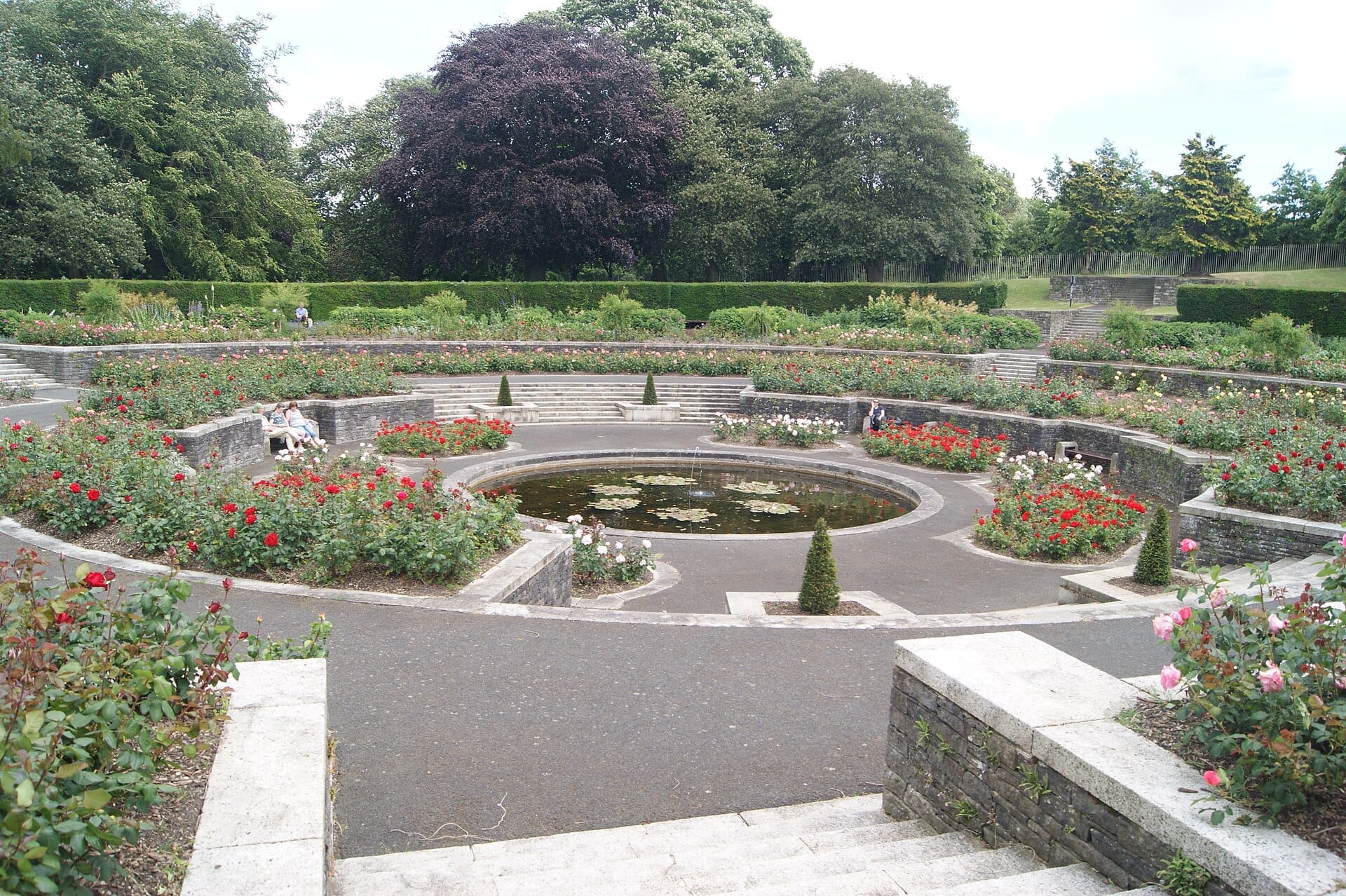
Within the Royal Hospital grounds, Bully's Acre is one of the oldest cemeteries in Dublin, with burials dating back centuries. It is a remarkably understated place given its age, bordered by stone walls and largely shaded by mature trees. The formal gardens of the Royal Hospital, with their geometric hedging and long axial views, are freely accessible and often completely empty.
Kilmainham Gaol: guided tours only, book in advance
Irish Museum of Modern Art (IMMA): permanent collection free, special exhibitions ticketed
Royal Hospital Kilmainham grounds and gardens: freely accessible
Bully's Acre cemetery: open to visitors within the Royal Hospital grounds
War Memorial Gardens: a short walk east along the riverbank, designed by Edwin Lutyens
A ten-minute walk east along the south bank of the Liffey brings you to the War Memorial Gardens at Islandbridge, designed by Edwin Lutyens to commemorate the Irish soldiers who died in the First World War. These are among the most serene gardens in the city, formal in their layout but rarely crowded, and they connect visually and thematically with the historical character of the wider Kilmainham area.
Eating & Drinking
Kilmainham is not a destination for food in the way that, say, the Portobello and Ranelagh area is. The neighbourhood does not have a restaurant strip or a concentration of independent cafes. What it does have is a small number of practical, unpretentious options close to the main attractions, and easy access to the much richer food and drink scenes of the surrounding areas.
The cafe within the Irish Museum of Modern Art is a reliable option for lunch or coffee during a visit, set within the historic building and reasonable in price. Around the gaol itself, there are a handful of cafes and pubs on the surrounding streets, including along South Circular Road. These tend to be neighbourhood locals rather than destination restaurants, serving straightforward Irish food at honest prices.
For a broader range of options, the best strategy is to walk east along the South Circular Road into the Portobello area, where Camden Street offers one of the most concentrated stretches of independent restaurants, bars, and cafes on Dublin's southside. This walk takes around fifteen to twenty minutes from the gaol. Alternatively, the Liberties and Smithfield areas to the northeast offer further options, including the Guinness Storehouse on St James's Gate, a ten-minute walk east of Kilmainham.
💡 Local tip
If you are visiting both Kilmainham Gaol and the Guinness Storehouse in the same day, the two are within comfortable walking distance of each other along James's Street and South Circular Road. Plan your gaol tour in the morning and walk east to the Storehouse for the afternoon.
Getting There & Around
The most straightforward way to reach Kilmainham from the city centre is the Luas Red Line, which runs from Abbey Street and Jervis in the city centre westward through Heuston Station. The Suir Road stop puts you roughly a ten-minute walk from both Kilmainham Gaol and the entrance to the Royal Hospital. The Red Line also connects Kilmainham with the Docklands to the east and with Tallaght and Saggart to the west, making it a useful line for itineraries that combine several areas.
Dublin Bus serves the area on multiple routes through Dublin 8, with stops along South Circular Road, Old Kilmainham Road, and Inchicore Road. The network is comprehensive but can be slower than the Luas in peak hour traffic. For precise current routes and timetables, check the Transport for Ireland journey planner. Walking from the city centre is also a realistic option: the distance from Christ Church Cathedral to Kilmainham Gaol is roughly 1.8 kilometres along Thomas Street and James's Street, passing the Guinness Storehouse and the Liberties en route.
Within the neighbourhood itself, everything worth seeing is walkable. The gaol, the courthouse, the Royal Hospital, and the War Memorial Gardens can all be reached on foot from each other within fifteen minutes. There is no particular need for a taxi or bus once you are in the area. Phoenix Park is just across the Liffey via Con Colbert Road and Heuston, or accessible directly from the Heuston Luas stop.
Luas Red Line: Suir Road stop, approx. 10–12-minute walk to Kilmainham Gaol
Dublin Bus: multiple routes along South Circular Road and Inchicore Road
Walking from Christ Church Cathedral: approx. 40–45 minutes via James's Street
Taxi or rideshare: straightforward from the city centre, no traffic bottlenecks outside peak hours
Cycling: the area is flat and Dublin Bikes docking stations are available at Heuston Station
Where to Stay
Kilmainham itself has very limited accommodation. The neighbourhood is primarily residential and does not have a hotel strip. A small number of guesthouses and B&Bs operate in the surrounding streets, but visitors who want to be close to the gaol and IMMA are generally better served by staying in the adjacent parts of Dublin 8, or in the city centre and travelling out for the day.
The most practical approach for most travellers is to base themselves in the city centre and make Kilmainham a half-day excursion. Staying near Heuston Station gives the closest access to the area while still providing the convenience of the city centre Luas. For a full overview of accommodation options across Dublin's neighbourhoods, the where to stay in Dublin guide covers the main areas in detail, including which parts of the south inner city suit different travel styles and budgets.
Travellers who specifically want a quieter, more residential Dublin experience and plan to spend significant time at the Kilmainham attractions may find it worth seeking out accommodation in the Kilmainham or Inchicore area. The trade-off is fewer nearby restaurant and nightlife options and a slightly longer walk or bus ride to the main city centre draws.
Is Kilmainham Worth Your Time?
Kilmainham asks something of you that the more visitor-facing parts of Dublin do not. It does not sell itself through atmosphere, cafe culture, or nightlife. Its case rests entirely on the weight of what happened here: the prison where a republic was born through the executions of its founders, the 17th-century hospital that became a gallery, the gardens that remember a war Ireland was officially neutral in. If that kind of historical depth matters to you, this is one of the most important half-days you will spend in Ireland.
If you are putting together a broader Dublin itinerary, Kilmainham fits naturally alongside the Smithfield and Liberties area for a full day exploring the western, historically significant side of the city. It also works well combined with a morning in Phoenix Park if you cross the river via Heuston. For travellers interested in the wider story of Irish independence, pairing Kilmainham with the GPO Witness History exhibition in the city centre gives a fuller picture of the Easter Rising from two opposite ends of its story.
TL;DR
Kilmainham is home to Kilmainham Gaol and the Irish Museum of Modern Art, two of Dublin's most significant cultural institutions, within easy walking distance of each other.
The neighbourhood is quiet and residential. It suits travellers who want a focused historical experience rather than a lively local scene.
Book Kilmainham Gaol tours well in advance, especially between May and September. Walk-in access is very limited.
Getting here is easy via the Luas Red Line to Heuston, or a 25-minute walk from Christ Church Cathedral through the Liberties.
Best suited to travellers with a serious interest in Irish history, modern art, or anyone wanting to understand what Dublin was before it became a tourist destination.
Three days is the sweet spot for Dublin. Long enough to cover the iconic historic sites, dig into the food and pub culture, and fit in a coastal or countryside excursion. This itinerary is built around real logistics, honest crowd warnings, and the kind of sequencing that makes a short trip feel unhurried.
Dublin punches well above its weight as a museum city. Several of its finest institutions are completely free, and the range spans Celtic gold, Viking archaeology, Irish revolutionary history, world literature, and contemporary art. This guide covers the best museums in Dublin, grouped by theme, with practical advice on when to go and what to expect.
Dublin rewards visitors year-round, but the timing of your trip shapes everything from hotel prices to what you can actually do outdoors. This guide breaks down every month, season, and key trade-off so you can plan with confidence.
Dublin sits at the centre of an exceptional day trip network. Within two hours you can reach glacial mountain valleys, medieval castles, dramatic coastal headlands, and one of Europe's great prehistoric monuments. This guide covers the best escapes, how to get there, and what to expect.
Dublin Bay is a UNESCO Biosphere Reserve with more beaches than most visitors expect. This guide covers the best strands, swimming spots, and coastal walks within easy reach of the city, from the vast sands of Dollymount to the dramatic cliffs of Howth and the sheltered coves of Dún Laoghaire.
Bloomsday is Dublin's most distinctive literary celebration, held every 16 June to honour the date James Joyce set Ulysses. This guide covers the key locations, walking routes, festival events, food traditions, and everything you need to join the festivities — whether you've read the book or not.
Dublin rewards couples who look beyond the obvious. This guide covers scenic walks, intimate cultural experiences, evening entertainment, and coastal day trips — with honest advice on what's worth it and what to skip.
Attending a Gaelic Games match at Croke Park is one of the most authentic experiences Dublin offers. This guide covers everything from buying tickets and navigating the stadium to understanding the sport, the season, and what separates a regular league game from an All-Ireland final.
Dublin rewards the curious traveller who ventures beyond the Guinness Storehouse and Temple Bar. From a mummified Crusader beneath a Northside church to a Victorian reservoir turned secret garden, these are the places Dubliners love and visitors rarely find.
Dublin transforms in winter, with Christmas markets running from late November through early January, citywide light trails, cathedral concerts, and festive fairgrounds. This guide covers every major event, what things actually cost, and what to watch out for before you visit.
Dublin is one of the few cities in the world to have produced three Nobel Prize-winning writers of literature. This guide maps the key sites connected to George Bernard Shaw, W.B. Yeats, and Samuel Beckett, plus James Joyce, Oscar Wilde, and others, covers the best guided tours with practical pricing, and gives you the detail to do it properly.
Dublin has around 772 pubs, dozens of late-night bars, and several distinct club districts. This guide breaks down where to drink, when to go, what it costs, and which neighbourhoods to skip if you want to avoid tourist pricing.
Dublin has a reputation for being expensive, but that reputation is only half true. The city's best museums are free, the centre is walkable, public transport is cheap with the right pass, and the finest pub sessions cost nothing beyond the price of a pint. This guide breaks down every major cost category so you can plan a genuinely great trip without watching every euro.
Seven days is enough to see Dublin's best and reach the wild west coast of Ireland, but only if you plan smart. This itinerary balances city time with coastal scenery, covers realistic driving and transit times, and flags the planning mistakes that turn a great trip into an exhausting one.
Dublin, Ireland offers a surprisingly varied shopping scene, from the flagship stores lining Grafton Street to independent boutiques on South William Street, weekend food markets in Temple Bar, and Ireland's largest mall in Dundrum. This guide covers where to go, what to expect, and how to avoid wasting time.
Dublin rewards walkers like few cities in Europe. Compact enough to cover on foot, layered enough to take weeks to unpack, the city reveals itself best at street level. This guide covers the stops, routes, and landmarks that make Dublin's walking tours so compelling.
Dublin punches well above its weight as a family destination. Between a world-class zoo, free city parks, Viking history museums, coastal castles, and indoor waterparks, there is genuinely enough to fill a week without repeating yourself. This guide covers the best things to do in Dublin with kids, organised by type, age range, and weather — so you can plan around Irish reality rather than tourist brochure optimism.
Dublin punches well above its weight for free attractions. National museums, modern art galleries, coastal walks, and grand public parks all cost nothing to enter. This guide covers 22 of the best free things to do across the city, organised by type so you can plan your days without watching your budget.
Dublin's Georgian streets and squares represent one of Europe's most intact examples of 18th-century urban planning. This guide covers the key buildings, the best self-guided walking route, what's actually open to visitors, and how to avoid the common traps that waste your time.
Dublin's public transport network covers the city and coast through buses, DART rail, Luas trams, and airport coaches. This guide breaks down fares, Leap Card options, airport transfer routes, and the practical details that save you time and money when navigating Ireland's capital.
Dublin sits at the doorstep of some of Ireland's finest walking country. Whether you want cliff-top sea views, ancient monastic valleys, or proper mountain terrain, these are the best hikes and trails within easy reach of the city.
Dublin's St Patrick's Festival is a multi-day national celebration centred on 17 March, with a free city-centre parade, ticketed concerts, street theatre, and events across the city. This guide covers the full programme, booking essentials, crowd logistics, and what to realistically expect from Ireland's biggest annual celebration.
Dublin packs centuries of history, world-class museums, legendary pubs, and coastal scenery into a compact, walkable city. This guide covers the best things to do in Dublin across every interest and budget, with honest advice on what's worth your time and what to skip.
Dublin's food scene has transformed well beyond stew and soda bread. This guide covers the essential Irish dishes, where to find them, what to pay, and which areas give you the best value — including a frank look at where not to waste your money.
Choosing where to stay in Dublin, Ireland shapes your entire trip. This guide breaks down every major neighbourhood by location, vibe, price range, and transport links, so you can book with confidence rather than guesswork.