Georgian Dublin: Architecture Guide & Self-Guided Walk
Dublin's Georgian streets and squares represent one of Europe's most intact examples of 18th-century urban planning. This guide covers the key buildings, the best self-guided walking route, what's actually open to visitors, and how to avoid the common traps that waste your time.
Plan and book this trip
Tools from our partner Travelpayouts help you compare flights and hotels. If you book through them, we may earn a commission at no extra cost to you.
Flights
Hotels map
TL;DR
- Georgian Dublin spans roughly 1714 to 1830 and is defined by Palladian symmetry, red-brick terraces, and those famous painted doorways.
- The best self-guided walk connects Merrion Square, Fitzwilliam Square, St Stephen's Green, and the Custom House — roughly 4-5 km total, manageable in half a day.
- Most Georgian streetscapes are free to walk and photograph; interior access varies significantly by building, and several require pre-booking.
- The Georgian district pairs well with visits to the National Gallery of Ireland and National Museum of Archaeology, both located on Kildare Street at the edge of the Georgian core.
- Georgian buildings are spread across several city zones — this is not a single preserved quarter but a city-wide architectural legacy worth exploring beyond the obvious squares.
What Georgian Dublin Actually Means
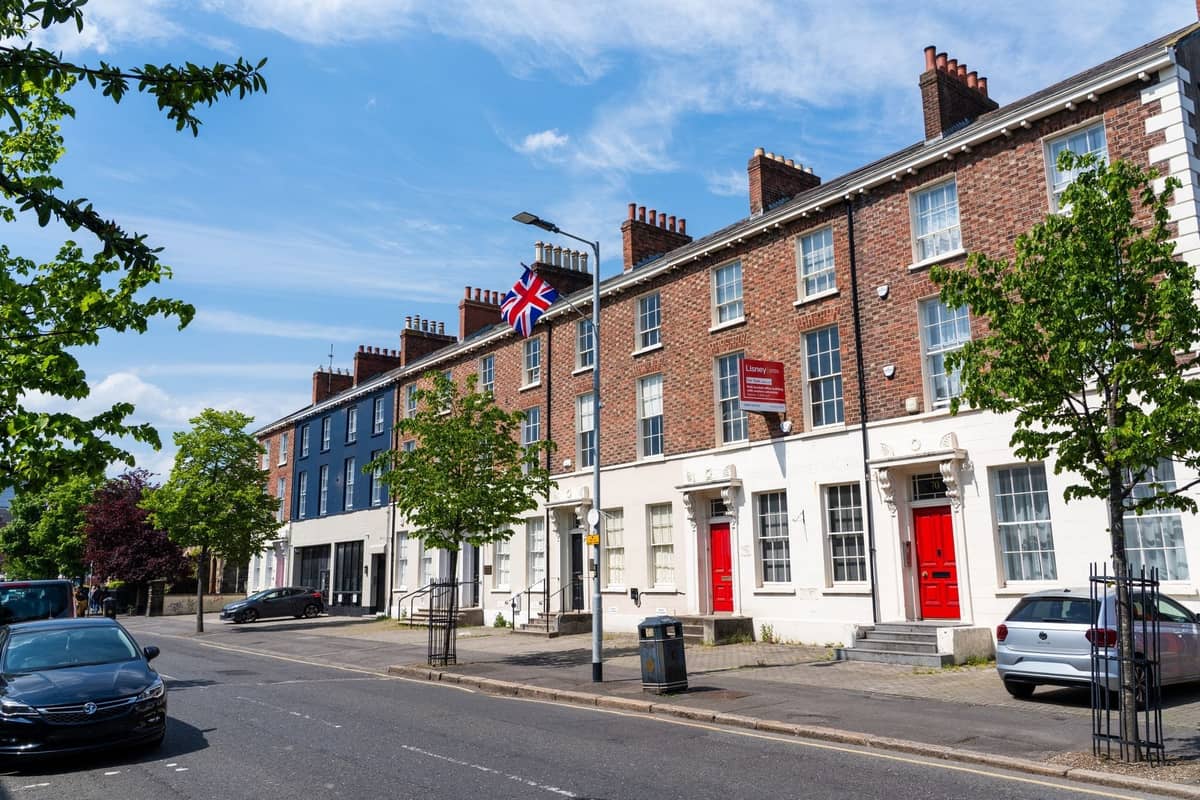
The term Georgian in Dublin carries two meanings simultaneously. It refers to the historical period of the four King Georges (1714 to 1830), and it describes a specific architectural style that was applied so consistently across the city that Dublin became one of the defining examples of Georgian urbanism in Europe. At its peak in the late 18th century, Dublin was among the largest cities on the continent, and the wealth flowing through it funded an extraordinary building programme.
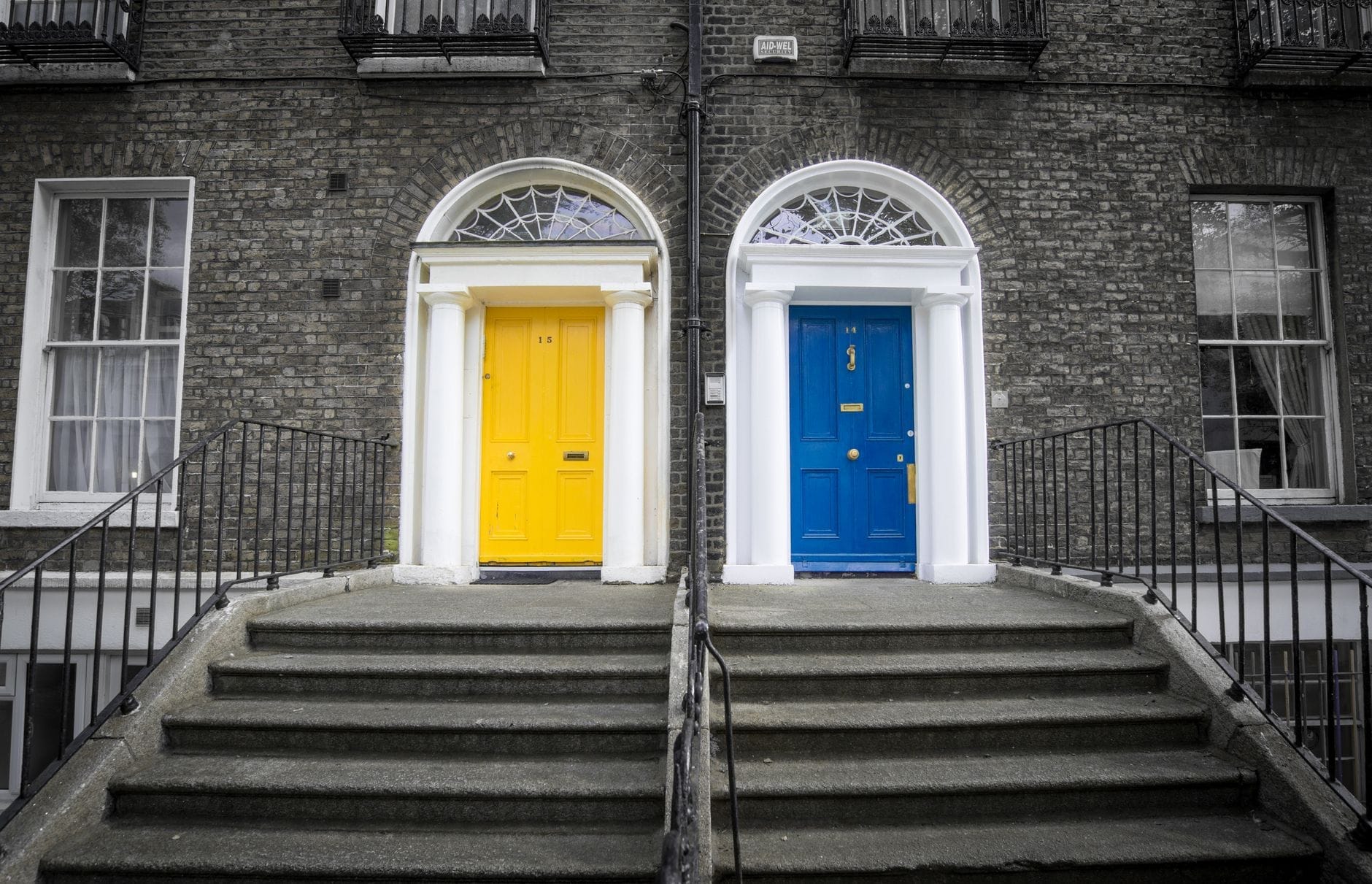
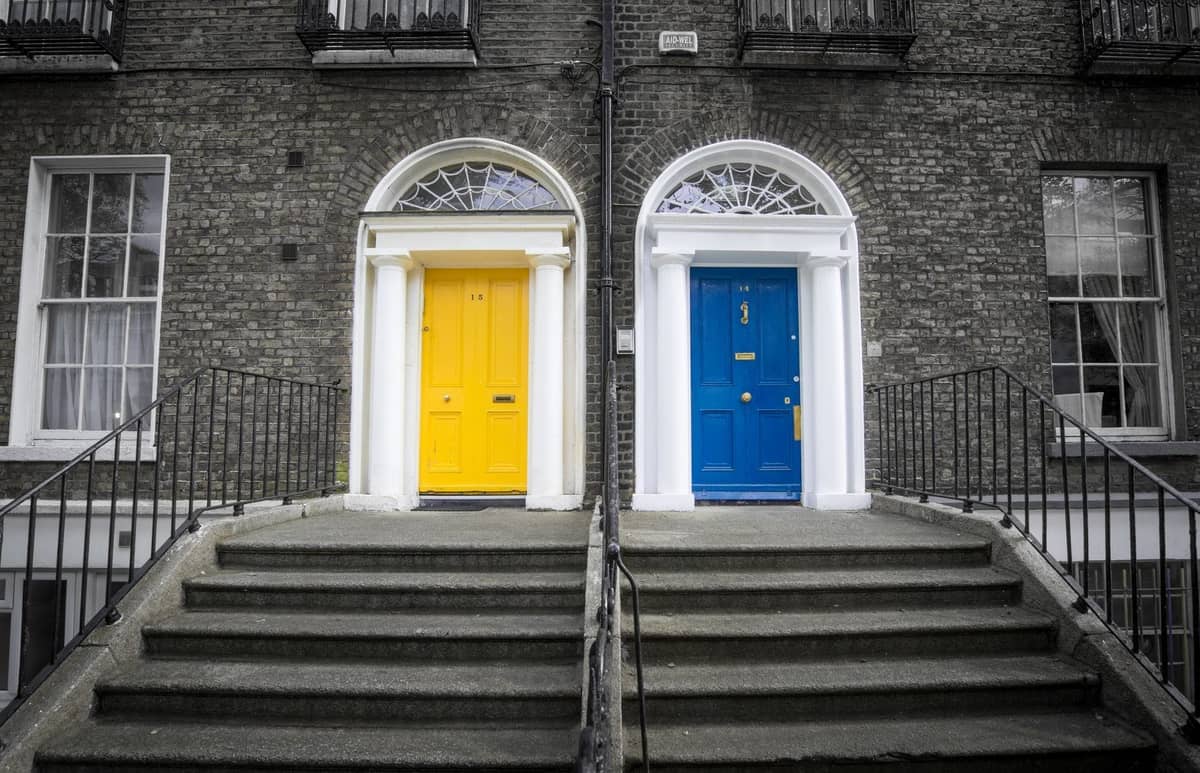
The style is grounded in Palladian principles: bilateral symmetry, mathematical proportions, red-brick or granite facades, sash windows that decrease in height on each ascending floor, and restrained classical detailing at the door surround. What makes Dublin's version distinctive is the concentration of the style across entire squares and streets, creating unified streetscapes rather than isolated showpiece buildings. The famous colourful front doors are actually a secondary feature — most were painted in later centuries — but they have become the shorthand image for Georgian Dublin in every tourism brochure.
ℹ️ Good to know
A common misconception: Georgian Dublin is not confined to one neighbourhood. The surviving buildings span the south city squares, the north inner city around Parnell Square, and suburban pockets as far as Rathfarnham. The south side concentration around Merrion and Fitzwilliam squares is simply the largest intact cluster.
The Self-Guided Walk: A Practical Route
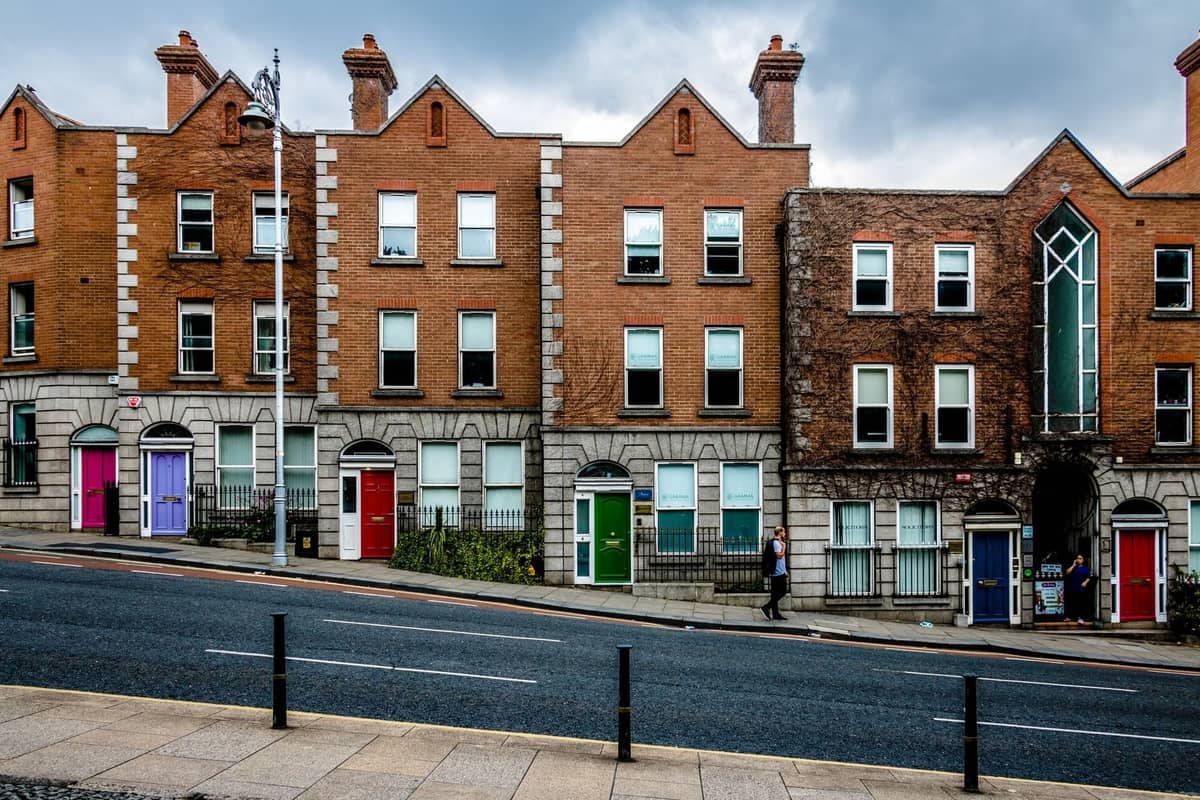
The most rewarding route for a Georgian Dublin walk starts at Merrion Square, works through the Fitzwilliam Street corridor, loops back via St Stephen's Green, and then moves north across the Liffey to finish at the Custom House. The full circuit covers roughly 4-5 km and takes between 2.5 and 4 hours depending on how long you linger and whether you go inside any buildings. If you only have a morning, cut the Custom House leg and stay south of the river — you will still cover the densest concentration of Georgian architecture in the city.
- Stop 1: Merrion Square The centrepiece of Georgian Dublin. The park is open daily and free. Walk the perimeter of the square and study the variation in door surrounds and ironwork fanlights — no two are identical. Oscar Wilde's flamboyant reclining statue sits in the northwest corner of the park.
- Stop 2: Fitzwilliam Street Lower Walk south from Merrion Square along Fitzwilliam Street Lower. This long uninterrupted terrace was once described as the longest Georgian street in Europe before a section was controversially demolished in the 1960s for ESB offices. What remains is still impressive and illustrates the scale of the original vision.
- Stop 3: Fitzwilliam Square Smaller and quieter than Merrion Square, Fitzwilliam Square retains its private residents' garden (not publicly accessible) and is largely surrounded by medical and professional offices. The atmosphere is closer to what these squares felt like in the 19th century.
- Stop 4: St Stephen's Green and Newman House Head west along the canal and north onto Harcourt Street, then approach St Stephen's Green from the south side. Newman House at numbers 85-86 contains some of the finest surviving Georgian plasterwork interiors in Ireland. Entry requires a ticket; check the Museum of Literature Ireland (MoLI) website for current hours.
- Stop 5: Leinster House and Kildare Street The parliament building sits between Merrion Square and Kildare Street. Built in 1747 as a ducal townhouse, it is said to have inspired the design of the White House in Washington D.C. Free tours are available when the Oireachtas is not in session, but must be pre-booked through the official Oireachtas website.
- Stop 6: Custom House (north of the Liffey) James Gandon's masterpiece, begun in 1781, stands on the north quays. The building is now a government department but operates a visitor centre. The exterior is the main draw — the riverfront elevation is best viewed from the south bank of the Liffey, framed by the Samuel Beckett Bridge.
💡 Local tip
Do the walk on a weekday morning between 9am and noon. The light falls well on the south-facing Georgian facades around Merrion Square, and the streets are active but not crowded. Weekend afternoons bring tour groups that cluster around the most-photographed doorways on Merrion Square North.
The Key Buildings: What to See and What to Know
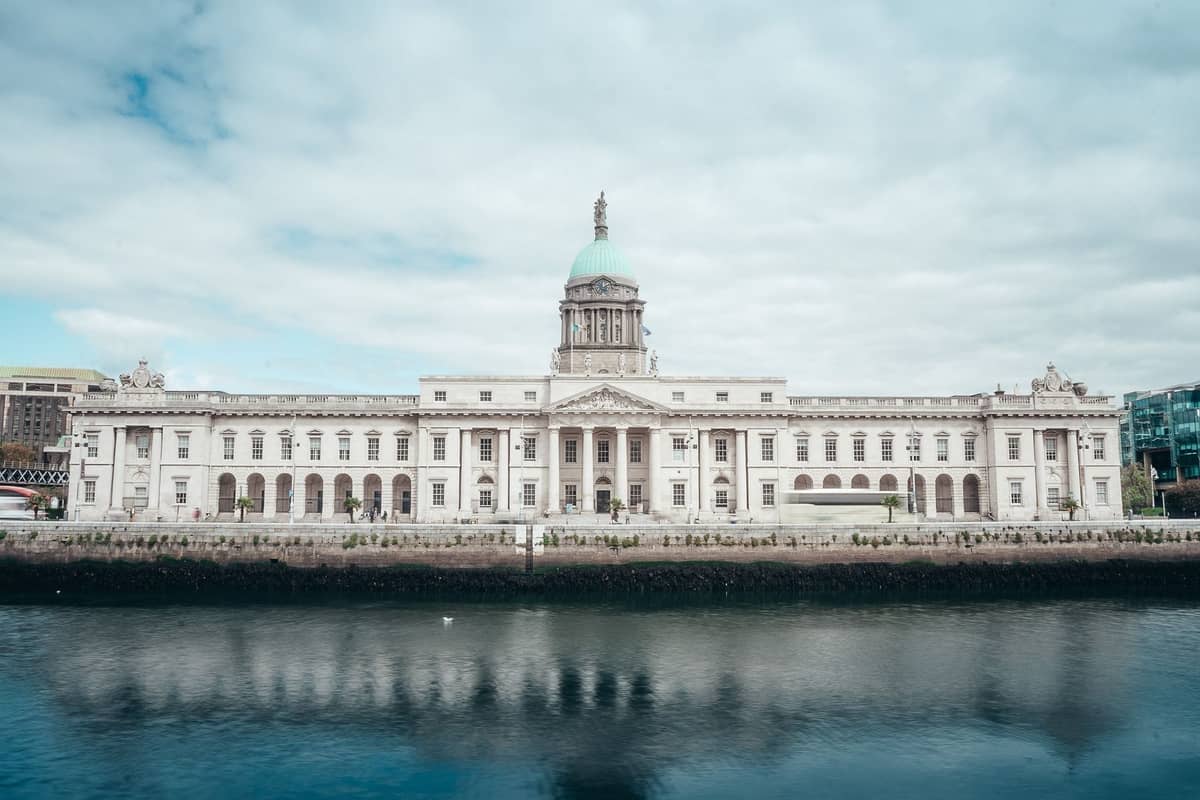
Beyond the squares themselves, several individual buildings justify a detour. The Custom HouseThe Custom House is the most ambitious single piece of Georgian civic architecture in Dublin. Its 100-metre riverfront facade and copper dome were designed by James Gandon, who also designed the Four Courts upstream. Both buildings were severely damaged during the War of Independence and have been extensively restored, so what you see today is partly 20th-century reconstruction — worth knowing before you photograph it as purely original Georgian fabric.
The Powerscourt Townhouse Centre on South William Street is an interesting case of adaptive reuse. The 1774 mansion was converted into an indoor shopping arcade in the 1980s, preserving the original staircase, plasterwork ceilings, and courtyard while housing independent shops and cafes. It is free to enter and one of the few Georgian interiors the general public can access without a ticket or pre-booking.
Leinster House requires separate mention. It was built for James FitzGerald, the 1st Duke of Leinster, and was deliberately positioned away from the fashionable north side of the city. FitzGerald is reported to have said that wherever he chose to live, fashion would follow — and it did. The south side became Dublin's prestige address within a generation, a spatial shift that still shapes the city's social geography today.
For those interested in interior plasterwork, the key names are the Francini brothers, who worked at Leinster House and Newman House, and Robert West, responsible for some of the finest work on the north side at Dominick Street. Dublin's Georgian stucco work is considered among the finest in Europe for its figurative ambition — ceilings feature birds, fruit, and human figures in high relief rather than the flatter geometric patterns common in England.
What's Actually Free and What Costs Money
The streetscapes, squares, and exterior architecture cost nothing to experience. Merrion Square Park is free and open daily. St Stephen's Green park is also free. Walking along Fitzwilliam Street, Baggot Street, and the north Georgian streets around Parnell Square requires only your feet.
- Merrion Square Park: free, open daily from 10:00 (hours vary seasonally)
- St Stephen's Green park: free, gated hours apply (hours vary seasonally)
- Fitzwilliam Square garden: private, not publicly accessible
- Powerscourt Townhouse Centre: free entry to the building and courtyard
- Leinster House tours: free, pre-booking required via oireachtas.ie, not available when Dáil is in session
- Museum of Literature Ireland (MoLI) at Newman House: paid entry, check MoLI.ie for current prices
- Custom House Visitor Centre: paid entry, check the OPW website for current prices and hours
⚠️ What to skip
Do not assume Leinster House tours are available on your chosen date. Availability is tied to the parliamentary calendar and can close at short notice. Book through the official Oireachtas website at least a week in advance. Walk-ins are not accepted.
Seasonal Considerations and Crowd Patterns
Georgian Dublin is a year-round proposition. The architecture does not change with the seasons, and the squares are worth visiting in any weather. That said, the experience differs considerably across the year. In summer (June to August), Merrion Square fills with an outdoor art market on weekends, the park is lively, and the door-photography crowd peaks. If you want unobstructed shots of the famous doorways on Merrion Square North, come on a weekday before 9am.
In winter, the squares are quieter and the light is lower in the sky, which can create striking photographs of the brick facades in the afternoon. Daylight is limited — Dublin sits at 53° north, and December days offer only around 7-8 hours of usable light — so plan your walk earlier in the day. Dublin in winterIn winter, the squares are quieter and the light is lower in the sky, which can create striking photographs of the brick facades in the afternoon. Daylight is limited — Dublin sits at 53° north, and December days offer only around 7-8 hours of usable light — so plan your walk earlier in the day. The city has practical advantages beyond Georgian architecture: museum queues are shorter and the city feels more like itself than during peak tourist season.
Spring (April and May) is arguably the most photogenic time for the squares. The trees in Merrion Square are in leaf, the light is improving, and the crowds have not yet peaked. Many interior venues also run reduced hours in low season, so check before visiting between November and February.
Georgian Dublin Beyond the Tourist Trail
Most visitors stick to the south side squares, but the north inner city has its own significant Georgian legacy. Parnell Square, north of the River Liffey, was originally Rutland Square and was developed in the mid-18th century — predating some of the south side squares. The Dublin City Gallery the Hugh Lane occupies Charlemont House on the north side of Parnell Square, a fine 1763 town house by William Chambers. The gallery itself has free admission and a strong permanent collection.
Henrietta Street is perhaps the most atmospheric Georgian street in the city, and the least visited. Located just north of the Four Courts, it was the most fashionable address in Dublin in the 1730s and 1740s, home to archbishops and lord chancellors. By the 20th century it had become one of the city's most overcrowded tenement streets. The Tenement Museum at 14 Henrietta Street tells this full arc of history through the building itself, from aristocratic townhouse to tenement housing up to 100 people. It requires pre-booking and is well worth the effort.
For context on how Dublin's Georgian legacy connects to the wider city experience, the Dublin walking tours scene includes several specialist guides focused on architectural history. These go beyond what a self-guided walk can offer, particularly for interiors and private buildings not normally open to the public.
- 14 Henrietta Street Tenement Museum The most compelling interior Georgian experience in Dublin. Tells the full social history of a single building from 1740s mansion to 20th-century tenement. Pre-booking essential via the museum website.
- Parnell Square and Hugh Lane Gallery Free to enter, undervisited, and worth combining with the north Georgian streets. The gallery's Francis Bacon studio reconstruction alone justifies the visit.
- Dominick Street Largely demolished but the surviving houses retain some of the finest plasterwork in the city. Worth a short detour from Henrietta Street.
- Iveagh House (St Stephen's Green South) A rare surviving example of a large Georgian mansion on St Stephen's Green, now the Department of Foreign Affairs. Exterior viewing only in most circumstances.
✨ Pro tip
Look up at the fanlights above Georgian front doors rather than just photographing the doors themselves. The leaded glass fanlights are where the real craftsmanship concentrates: each design is unique, and the patterns range from simple radials to intricate spider-web geometries. Early morning light shows them best, when the sun is low enough to backlight the glass.
FAQ
Can you walk the Georgian Dublin route without a guide?
Yes. The streetscapes, squares, and exteriors are entirely self-guided. Merrion Square, Fitzwilliam Square, St Stephen's Green, and the Custom House riverfront are all publicly accessible without booking. For interiors such as the Tenement Museum at 14 Henrietta Street or MoLI at Newman House, you will need to book tickets in advance.
How long does the Georgian Dublin walk take?
The core south-side route from Merrion Square through Fitzwilliam Square to St Stephen's Green takes around 2 hours at a comfortable pace with stops for photographs. Adding the Custom House and north-side Georgian streets brings the total to around 4-5 hours. Most visitors split this over a morning and an afternoon.
What is the best time of year to visit Georgian Dublin?
Late spring (April to May) offers the best combination of pleasant weather, longer daylight hours, and manageable crowds. Summer brings the outdoor art market to Merrion Square but also the most congestion around the most-photographed spots. Winter is quiet and can be atmospheric, but limited daylight requires earlier starts.
Are the Georgian buildings in Dublin protected?
Yes. The core Georgian streets and squares are designated as Architectural Conservation Areas under the Dublin City Development Plan, and many individual buildings are listed on the Record of Protected Structures. However, Dublin has a controversial history of Georgian demolition — several significant streets were lost in the 1960s and 1970s — and development pressure around the edges of the conservation areas remains an ongoing concern.
Is Georgian Dublin worth visiting if you are not interested in architecture?
The squares themselves are pleasant public parks regardless of architectural interest. The social history angle — from aristocratic mansions to tenement housing to government departments — is equally compelling. The Tenement Museum at 14 Henrietta Street is one of the most human-scale history experiences in the city and works as well for social history enthusiasts as for architecture fans.