Custom House Dublin: Georgia's Grandest Riverside Monument
The Custom House is Dublin's most accomplished neoclassical building, standing on the north bank of the River Liffey since the 1780s, with its construction completed in 1791. Designed by James Gandon, burned in 1921, and carefully restored, it holds two centuries of Irish administrative and political history behind a 100-metre Portland stone facade. Visitor Centre tickets start at €3 for child/student self-guided entry.
Quick Facts
- Location
- Custom House Quay, Dublin 1 — north bank of the River Liffey, between Butt Bridge and Talbot Memorial Bridge
- Getting There
- Busáras central bus station (~3 min walk); Abbey Street Luas stop (~5 min walk)
- Time Needed
- 60–90 minutes for exterior and Visitor Centre combined
- Cost
- Guided: Adult €8, Senior €6, Child/Student €4, Family €20. Self-guided: Adult €6, Senior €5, Child/Student €3, Family €15
- Best for
- Architecture lovers, history enthusiasts, Georgian Dublin walks
- Official website
- heritageireland.ie/places-to-visit/custom-house-visitor-centre
What the Custom House Actually Is
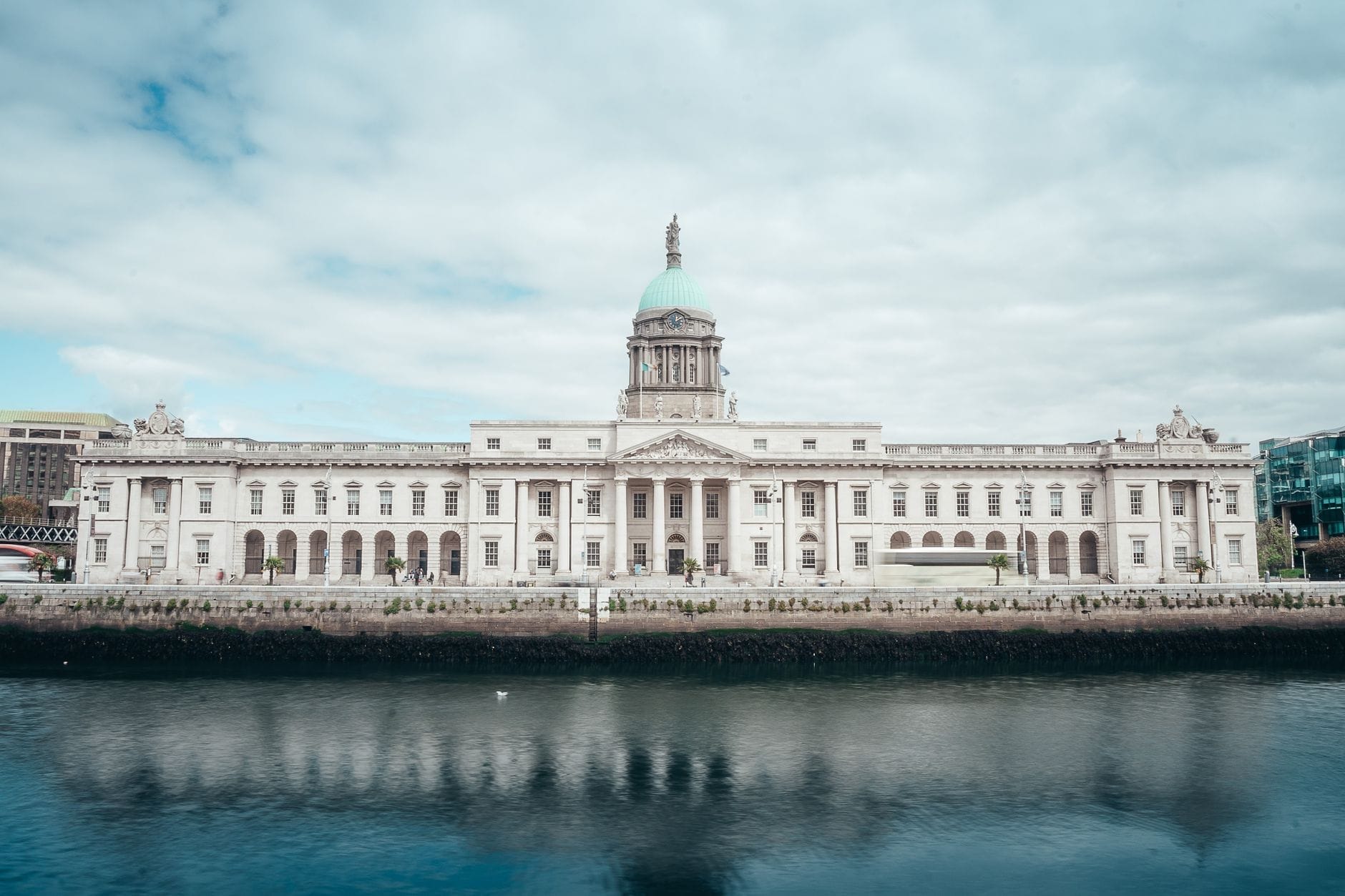
The Custom House is a neoclassical public building completed in 1791 to designs by Anglo-Irish architect James Gandon. It sits on Custom House Quay, facing directly onto the River Liffey, with a facade stretching roughly 114 metres. For much of its early life it served as Ireland's principal customs and excise administration centre. Today the building is occupied by a government department, and one wing houses the Custom House Visitor Centre, managed by Heritage Ireland, which tells the story of the building's construction, destruction, and restoration.
It is worth being clear about what kind of visit this is. You cannot walk freely through the working government offices. The attraction is the exterior — one of the most photographed riverside elevations in the country — and the contained Visitor Centre, which covers Gandon's architectural process, the 1921 burning, and the subsequent rebuilding. If you come expecting a grand interior tour, you will feel the limitation. If you come to understand a building that shaped Irish architectural identity and witnessed a defining moment in the country's independence, the visit earns its entry fee.
💡 Local tip
The Visitor Centre is open daily 09:30–17:30, with last admission at 16:45. Online booking is available through Heritage Ireland and is advisable in summer. Confirm current prices before visiting, as Heritage Ireland periodically updates its ticketing.
The Architecture: What to Look For on the Exterior
The south-facing riverfront elevation is the one that rewards careful attention. Gandon designed it in a Palladian-influenced neoclassical style, using Portland stone throughout. The central pavilion is fronted by a Doric portico, and above it rises a drum and dome topped by a 16-foot allegorical statue of Commerce. The figure is by Edward Smyth, the Dublin-born sculptor who produced most of the building's decorative stonework. Smyth also carved the 14 heads on the building's keystones, each representing one of the rivers of Ireland, plus the Atlantic Ocean. Walk the full length of the quayside facade and count them: they are set into the arched openings at ground level and are detailed enough to study up close.
The four corner pavilions each have their own sculptural programmes, and the end elevations facing east and west are worth checking before you go inside. Many visitors photograph only the centre and miss the full compositional sweep. Step back across to the south bank of the Liffey, near the Samuel Beckett Bridge approach, for the widest and most dramatic framing of the facade.
If Georgian architecture is a particular interest, the Custom House fits into a broader circuit of the city's 18th-century public buildings. The Four Courts upstream on the Liffey is also by Gandon, built around the same period, and the two buildings together define the scale of civic ambition in late 18th-century Dublin. For a structured overview of the period, the Georgian Dublin architecture guide covers both buildings in context.
Tickets & tours
Hand-picked options from our booking partner. Prices are indicative; availability and final rates are confirmed when you complete your booking.
Music and dance show with optional dinner at the Irish House Party
From 65 €Instant confirmationFree cancellationGo City | Dublin All-Inclusive Pass
From 79 €Instant confirmationFree cancellationGiant's Causeway, Dark Hedges, and Belfast Tour from Dublin
From 85 €Instant confirmationFree cancellationDublin self-guided audio tour
From 10 €Instant confirmation
How the Light and the Crowds Change Through the Day
Early morning, before 09:00, is the best time to photograph the building without people in the foreground. The south-facing facade catches morning light from the east at a low angle in spring and autumn, giving the Portland stone a warm grey-gold tone. By mid-morning the quayside footpath fills with commuters and joggers. On weekday afternoons the area is active with lunchtime foot traffic from the nearby financial services offices in the Docklands.
At dusk, especially in winter when the sky darkens early, the dome is often illuminated and reflects on the river surface. This is the best photographic window if you cannot visit early morning. The quayside lighting is consistent year-round; the river level is not, and on calm evenings the reflection can be clean and symmetrical.
Weekend mornings between 09:30 and 11:00 are the quietest window for the Visitor Centre itself. Tour groups from the city centre tend to arrive after 11:00, and the small exhibition space can feel congested when more than one group is present simultaneously.
The History Behind the Building: Construction, Burning, Restoration
James Gandon began the Custom House in 1781 at a moment of considerable political controversy. Dublin's merchants, who had commercial interests upriver at Essex Bridge, strongly opposed moving the customs function eastward and lobbied to have the project blocked. Gandon reportedly needed police protection during the early construction phases. Despite that opposition, the building was completed in 1791 at a cost of approximately £200,000 and opened formally on 7 November of that year.
On 25 May 1921, during the Irish War of Independence, the Irish Republican Army seized and set fire to the Custom House. The intention was to destroy records held there by British administrative bodies, including land registers and local government records, disrupting governance. The fire burned for five days. The interior was gutted, and many irreplaceable public records were lost permanently. The event was militarily costly for the IRA, with a number of fighters killed or captured during the operation, but it succeeded in its administrative objective.
Reconstruction under the Irish Free State government began in the early 1920s and was completed in 1928. The exterior stone was largely intact, but the interior was rebuilt in a simplified form. A new dome was constructed to replace the fire-damaged original. The Visitor Centre documents this restoration in some detail, including the challenge of sourcing materials to match the original Portland stone and the decisions made about which decorative elements to reinstate.
ℹ️ Good to know
The loss of records in the 1921 fire had lasting genealogical consequences for Ireland. Researchers tracing Irish family histories often encounter this gap, and the Custom House Visitor Centre briefly addresses the significance of what was destroyed.
Inside the Visitor Centre: What the Exhibition Covers
The Visitor Centre occupies a relatively compact space within the east wing of the building. The exhibition is organized chronologically: Gandon's commission and design process, the building's role in Irish customs administration through the 18th and 19th centuries, the 1921 burning, the reconstruction, and the building's current function. Display panels are text-heavy by modern museum standards, though archival photographs of the post-fire interior, showing the gutted shell and collapsed roof timbers, are among the most arresting images in the exhibition.
A guided tour, available at a slightly higher price than self-guided entry, takes approximately 45 minutes and adds interpretive commentary that helps contextualize the architectural details visible on the exterior. For visitors with a specific interest in the 1921 fire or Gandon's process, the guided format extracts more value from the space.
The Custom House sits at the western edge of the Docklands, an area that has changed dramatically since the 1990s. For a sense of how the broader neighbourhood connects to this history, the Docklands area guide covers the modern development alongside older industrial heritage. The EPIC Irish Emigration Museum is a short walk east along the quays and pairs well with a Custom House visit for a half-day of Irish history.
Practical Notes: Getting There, Accessibility, and Photography
The building is at Custom House Quay, Dublin 1. Busáras, Dublin's main intercity bus terminus, is approximately three minutes on foot to the northeast. The Abbey Street Luas stop on the Red Line is roughly five minutes west along the quays. Several Dublin Bus routes stop on Beresford Place directly behind the building. The location is walkable from O'Connell Street in under ten minutes.
Accessibility to the Visitor Centre requires advance notice. Heritage Ireland asks that visitors with mobility requirements contact them at least three days before arrival to arrange appropriate access. Only assistance dogs are permitted inside the building. Given that this is a working government building with a visitor element rather than a purpose-built museum, these constraints are worth factoring into planning if they apply to you.
Photography of the exterior is unrestricted from the public quayside. The riverfront footpath on the north bank is narrow in places, which limits wide-angle compositions at close range. A position from the south bank of the Liffey near Tara Street or from the Talbot Memorial Bridge gives the full facade width. A standard or moderate wide-angle lens is more useful than an ultra-wide here: the building is long rather than tall, and ultra-wide distortion can make the proportions look awkward.
⚠️ What to skip
Photography inside the Visitor Centre may be subject to restrictions. Confirm with staff on arrival. Flash photography is typically not permitted near archival display materials.
Who This Attraction Is For, and Who Might Not Connect With It
The Custom House works well as a destination for visitors interested in Georgian architecture, Irish political history, or the mechanics of 18th-century civic building. The exterior is free to view at any time and repays close attention even without entering the Visitor Centre. The paid interior adds substantial historical context but does not open up the rest of the building.
Visitors looking primarily for interactive or immersive museum experiences may find the Visitor Centre format lean. Those interests are better served elsewhere in Dublin: the GPO Witness History on O'Connell Street covers the 1916 Easter Rising with more multimedia production, and Kilmainham Gaol offers a more immersive experience of the independence period. The Custom House complements those visits rather than replacing them.
Families with young children may find the exhibition text-heavy and the restricted interior access frustrating. The quayside itself is open and flat, which is useful for pushchairs, but traffic on the adjacent road is fast-moving and the footpath near the water requires care with small children.
Insider Tips
- Walk the full perimeter of the building, not just the south quayside facade. The east and west end elevations are less photographed but show Gandon's handling of corner transitions and secondary sculptural details that the main facade crowds out.
- The 14 river heads by Edward Smyth on the keystones are at eye level in some sections. Take time to compare them individually: each has distinct features meant to personify a specific Irish river or the Atlantic Ocean, and the quality of carving is exceptional.
- For the cleanest riverside photograph with no pedestrians, aim to arrive at 08:30 on a weekday morning before commuter foot traffic builds on the quays.
- The Visitor Centre's guided tour adds around 20–25 minutes to the self-guided format and is worth the small price difference if you are visiting specifically for the 1921 fire and restoration history, as the guides draw on details not fully covered in the exhibition panels.
- Combine the Custom House with a walk east along the quays to the Samuel Beckett Bridge and the Docklands waterfront. The contrast between Gandon's 1791 stone facade and the 21st-century glass offices and cable-stayed bridge makes the architectural timeline of the Liffey very legible.
Who Is Custom House For?
- Architecture and design enthusiasts interested in neoclassical and Georgian civic building
- Visitors tracing Irish history from the independence period through to the present
- Photographers working on a riverside Dublin portrait, particularly at dawn or dusk
- Travellers doing a half-day Docklands and quays walking route combining multiple sites
- Anyone who has already visited the Four Courts and wants to see Gandon's other major Dublin commission
Nearby Attractions
Other things to see while in Docklands & Grand Canal Dock:
- Bord Gáis Energy Theatre
Designed by Daniel Libeskind and opened in 2010, the Bord Gáis Energy Theatre is Ireland's largest theatre, anchoring the regenerated Grand Canal Square in the Docklands. From West End transfers to opera and live music, it draws major international productions to one of Dublin's most architecturally striking buildings.
- EPIC The Irish Emigration Museum
EPIC The Irish Emigration Museum occupies the stone vaults of the 200-year-old CHQ Building on Custom House Quay. Across 20 immersive gallery rooms, it traces the journeys of Irish emigrants from medieval times to the present day, examining how a small island shaped science, politics, sport, and culture across every continent.
- Grand Canal Dock
Once the largest dock in the world and later left derelict for decades, Grand Canal Dock is now one of Dublin's most architecturally impressive public spaces. The basin, quays, and surrounding plazas are free to explore and offer a quieter, more contemporary side of the city.
- Jeanie Johnston Tall Ship & Famine Museum
Moored on Custom House Quay in Dublin's Docklands, the Jeanie Johnston Tall Ship & Famine Museum is a full-scale replica of the original 1847 barque that carried more than 2,500 Irish emigrants to North America without a single loss of life. Guided tours take visitors below decks into the cramped quarters where those passengers lived, making the scale of the Great Famine feel immediate and personal.