EPIC The Irish Emigration Museum: What to Expect Before You Visit
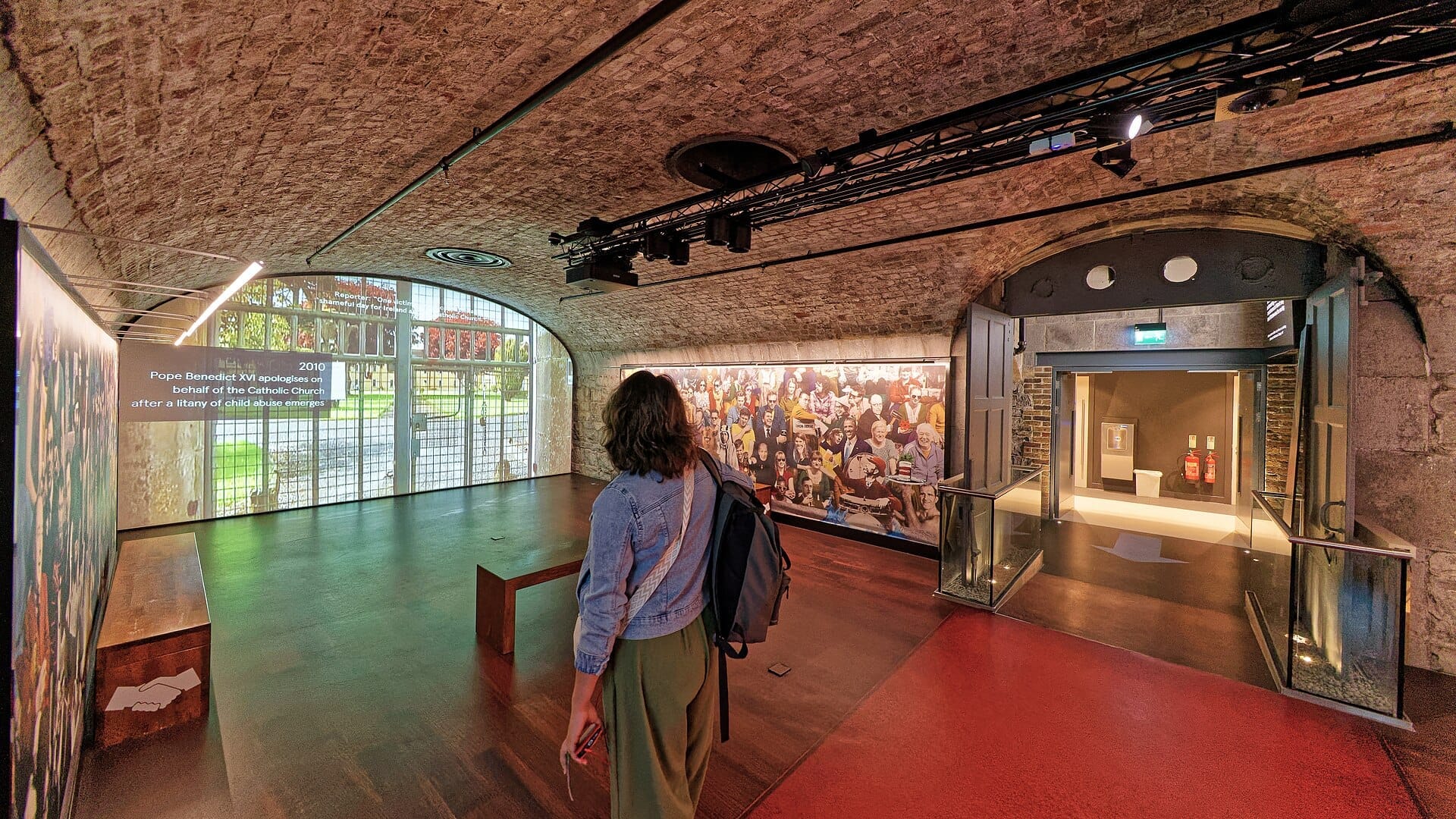
EPIC The Irish Emigration Museum occupies the stone vaults of the 200-year-old CHQ Building on Custom House Quay. Across 20 immersive gallery rooms, it traces the journeys of Irish emigrants from medieval times to the present day, examining how a small island shaped science, politics, sport, and culture across every continent.
Quick Facts
- Location
- The CHQ Building, Custom House Quay, Dublin 1 — Dublin Docklands
- Getting There
- George's Dock (Luas Red Line); short walk from Busáras bus station and Connolly DART/rail station
- Time Needed
- 2 to 3 hours for a thorough visit
- Cost
- Adults €22, Children €11, Seniors €19 (verify current prices at epicchq.com before visiting)
- Best for
- History enthusiasts, those tracing Irish heritage, families with older children
- Official website
- epicchq.com
What Is EPIC The Irish Emigration Museum?
EPIC The Irish Emigration Museum opened in May 2016 inside the vaults of the CHQ Building, a 200-year-old cast-iron warehouse on Custom House Quay in Dublin's Docklands. The acronym EPIC reflects the museum's ambition: this is not a straightforward chronicle of poverty and departure. It is a global argument about influence, identity, and what happens when a small island scatters its population across the world.
The museum covers roughly 10 million Irish emigrants who left Ireland over several centuries, tracing their footprints through 20 themed gallery rooms. Subjects range from medieval Irish monks who reached Iceland before the Vikings to modern athletes, musicians, scientists, and politicians with Irish roots. The treatment is broad but, in most rooms, genuinely surprising.
ℹ️ Good to know
Opening hours: generally 10:00am to 6:45pm daily, with last entry at 5:00pm. During June, July, and August the museum opens at 9:00am. Confirm hours at epicchq.com before your visit, as they can change.
The Building: Why the Vaults Matter
The CHQ Building was constructed around 1820 as a bonded warehouse for tobacco and wine, and its stone-barrel vaults are a significant part of the experience at EPIC. Stepping down into the lower level, you move through low curved ceilings, thick sandstone walls, and heavy iron columns. The temperature drops noticeably, and the acoustics shift. The building itself was a place where goods passed through on their way elsewhere, which makes it a quietly apt setting for a museum about people who did the same.
The contrast between the historic stone shell and the largely digital, touchscreen-driven gallery interiors is immediate. Some visitors find the pairing seamless; others find it jarring. What is certain is that the architecture alone gives the site a sense of weight and permanence that a purpose-built exhibition hall would struggle to replicate. Exterior views across the quay take in the Samuel Beckett Bridge and the wider Docklands skyline, making the CHQ a logical anchor point in this part of the city.
The building sits at the edge of one of Dublin's most changed districts. The surrounding Docklands area has been heavily redeveloped since the 1990s, and the CHQ is now surrounded by tech-company offices, apartment buildings, and the open water of George's Dock. It does not feel like old Dublin, which is worth knowing before you arrive.
Tickets & tours
Hand-picked options from our booking partner. Prices are indicative; availability and final rates are confirmed when you complete your booking.
EPIC The Irish Emigration Museum Entrance Tickets
From 20 €Instant confirmationFree cancellationIrish Whiskey Museum Premium 1-Hour Tour and Tasting
From 28 €Instant confirmationFree cancellationTour and Blending Experience at Irish Whiskey Museum
From 35 €Instant confirmationFree cancellationIrish Coffee Masterclass to Create, Taste, and Enjoy Your Irish Coffee
From 20 €Instant confirmationFree cancellation
Moving Through the 20 Galleries
The route through EPIC is linear and well-signposted, so there is little risk of losing your place in the narrative. Gallery themes include the causes of emigration (famine, economic hardship, political persecution), the experience of the crossing itself, arrival in America, Australia, Argentina, and Britain, and the subsequent generations who shaped those adopted countries.
The presentation is heavily interactive. Most panels are touchscreen-based, with video testimonials, animated maps showing emigrant flows by decade, and searchable databases of family names. Children who are old enough to read and engage with screens tend to find it genuinely involving. Younger children may lose patience in the more text-heavy rooms, but several galleries have audio and visual elements that hold broader attention.
Standout rooms include the gallery on the Irish influence in American politics, where the list of US presidents with documented Irish ancestry is displayed in full context, and the science and innovation section, which covers figures from Ernest Walton (the first person to artificially split the atom) to more recent Irish-descended researchers. The sports gallery is popular and tends to attract lingering visitors, particularly around material on boxing, athletics, and the GAA diaspora.
💡 Local tip
Allow at least 2 hours. Many visitors underestimate how much reading and interacting the galleries require. If you rush, the nuance is lost and it starts to feel like a series of information panels rather than a coherent story.
Time of Day: When to Arrive and What Changes
Morning visits, particularly on weekdays before 11:30am, are noticeably quieter. The vault spaces are not large, and the touchscreen panels become awkward to share when school groups arrive. Late morning on weekends can see queues at the entrance, though they typically move quickly. Afternoons between 1:00pm and 3:00pm are the busiest window.
The underground setting means natural light plays almost no role inside the galleries, so the experience is consistent regardless of weather. This makes EPIC a logical choice for a rainy Dublin afternoon, but it also means there is no visual payoff from visiting on a clear day versus an overcast one. The museum's atmosphere is self-contained and climate-controlled throughout the year.
If you are visiting Dublin in summer and the museum opens at 9:00am, arriving at opening gives you the first two gallery sections almost entirely to yourself. By 10:30am the building is measurably busier, particularly during July and August when guided group bookings increase.
Practical Details: Getting There, Tickets, and Accessibility
EPIC is located at Custom House Quay, Dublin 1. The closest Luas stop is George's Dock on the Red Line, a short walk from the museum entrance. Connolly Station (DART and mainline rail) is nearby, and Busáras, Dublin's central bus station, is also within walking distance. The area is flat and the route from any of these stops is straightforward.
Tickets can be booked online through the official site at epicchq.com, which is advisable during peak summer months to avoid potential delays at the box office. Adult tickets are priced at €22, children at €11, and seniors at €19 at the time of writing. Verify current prices before visiting, as they are subject to change. Combination tickets with the Jeanie Johnston tall ship, moored nearby on the quay, are sometimes available and worth checking.
The museum entrance involves a step down into the vaults. Those with specific mobility requirements should check the official site or contact the museum directly before visiting. Photography is generally permitted inside without flash. The Jeanie Johnston Tall Ship is moored just steps away and makes a natural pairing for a half-day in the Docklands.
Honest Assessment: What Works and What Does Not
EPIC does some things unusually well. The framing of emigration as a story of contribution rather than only loss is genuinely refreshing, and the database tools for tracing family names give it a personal dimension that conventional history museums rarely offer. The production quality is high, and the staff are notably engaged with visitor questions.
Where it is less successful is in depth. The 20-gallery format covers an enormous amount of territory, and some rooms feel like extended highlights reels rather than sustained arguments. The gallery on Irish emigrants in Britain, for instance, covers a community of millions across centuries in a relatively compressed space. Visitors who arrive with specialist knowledge of a particular period or region may find individual sections thin.
The museum is also primarily designed around English-language content. International visitors without strong English reading skills will get less from the touchscreen-heavy presentation than from a more visually or aurally driven exhibition. And at €22 for adults, it sits at the higher end of Dublin's museum pricing, particularly given that several major national museums in the city are free.
If you are interested in Irish history more broadly, EPIC works best alongside other sites rather than as a standalone visit. Pairing it with Glasnevin Cemetery Museum or Kilmainham Gaol gives the emigration narrative deeper political and social context.
Who Should Skip This Museum
Visitors looking for deep archival research or academic-level historical interpretation will likely find the experience too surface-level. The museum is designed for general audiences and does its best work with visitors who arrive with some curiosity but not existing expertise. Very young children will struggle with the text-heavy, screen-driven format. Budget-conscious travelers may weigh the €22 admission against the free-entry national museums on Kildare Street and find those a better fit.
Travelers primarily interested in medieval or early Irish history will be better served by the National Museum of Archaeology, which covers pre-emigration Irish civilization in far greater depth and at no admission cost.
Insider Tips
- Book tickets online in advance during July and August. Walk-up queues at peak times can add 20 to 30 minutes, and online booking sometimes unlocks small discounts.
- The CHQ Building's ground floor has a café and a shop worth browsing independently of the museum. The shop carries genealogy resources and locally produced books that are harder to find elsewhere in the city.
- If you have Irish ancestry, try the museum's family name database before your visit and arrive with a surname to search. The tool is more engaging when you have a personal stake in the results.
- George's Dock, directly outside, is one of the quieter spots in central Dublin to sit at the water's edge. Combining the museum visit with 20 minutes by the dock before or after gives the Docklands visit a more complete feel.
- The museum's ground floor exhibition space sometimes hosts temporary exhibits and events that are not always visible on the main website. Check the 'What's On' section of epicchq.com in advance of your visit.
Who Is EPIC The Irish Emigration Museum For?
- Visitors tracing Irish family roots or surname history
- History and culture travelers wanting a well-produced, English-language narrative museum
- Families with children aged 10 and older who can engage with interactive screen content
- First-time visitors to Dublin who want an overview of Ireland's global cultural impact
- Travelers visiting the Docklands area combining multiple quayside attractions in one afternoon
Nearby Attractions
Other things to see while in Docklands & Grand Canal Dock:
- Bord Gáis Energy Theatre
Designed by Daniel Libeskind and opened in 2010, the Bord Gáis Energy Theatre is Ireland's largest theatre, anchoring the regenerated Grand Canal Square in the Docklands. From West End transfers to opera and live music, it draws major international productions to one of Dublin's most architecturally striking buildings.
- Custom House
The Custom House is Dublin's most accomplished neoclassical building, standing on the north bank of the River Liffey since the 1780s, with its construction completed in 1791. Designed by James Gandon, burned in 1921, and carefully restored, it holds two centuries of Irish administrative and political history behind a 100-metre Portland stone facade. Visitor Centre tickets start at €3 for child/student self-guided entry.
- Grand Canal Dock
Once the largest dock in the world and later left derelict for decades, Grand Canal Dock is now one of Dublin's most architecturally impressive public spaces. The basin, quays, and surrounding plazas are free to explore and offer a quieter, more contemporary side of the city.
- Jeanie Johnston Tall Ship & Famine Museum
Moored on Custom House Quay in Dublin's Docklands, the Jeanie Johnston Tall Ship & Famine Museum is a full-scale replica of the original 1847 barque that carried more than 2,500 Irish emigrants to North America without a single loss of life. Guided tours take visitors below decks into the cramped quarters where those passengers lived, making the scale of the Great Famine feel immediate and personal.