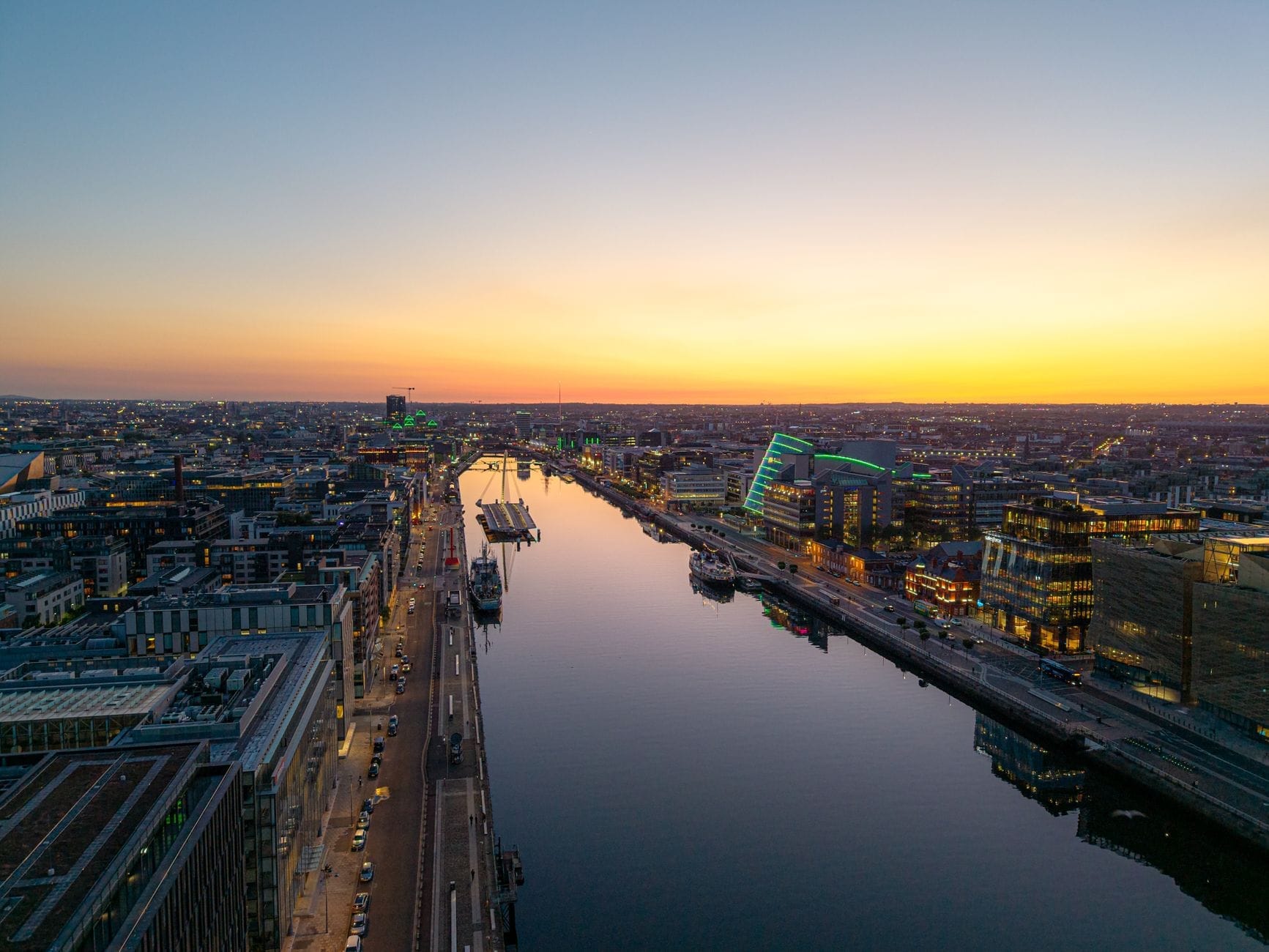
Dublin's Docklands and Grand Canal Dock district is the city's most dramatically transformed quarter, where former industrial wharves have given way to gleaming tech campuses, a striking public plaza, and one of Ireland's premier performance venues. It sits east of the city centre on both banks of the River Liffey, with the Grand Canal basin forming its southern anchor.
Dublin's Docklands is where the city's industrial past and its digital present collide along the water. Once the beating heart of a working port, this regenerated district now houses the European headquarters of some of the world's largest technology companies, a world-class concert hall, and one of Dublin's most architecturally ambitious public spaces. It is a neighbourhood that moves fast, looks modern, and rewards visitors who venture beyond the city's more familiar historic core.
Orientation
The Docklands district occupies the eastern edge of Dublin city, straddling the River Liffey roughly from the Custom House eastward to the mouth of the river at Dublin Bay. The area divides cleanly into two zones: North Lotts on the north bank of the Liffey, and Grand Canal Dock on the south bank in Dublin 2, centred on the tidal basin where the Grand Canal meets the river near Ringsend Road and Barrow Street.
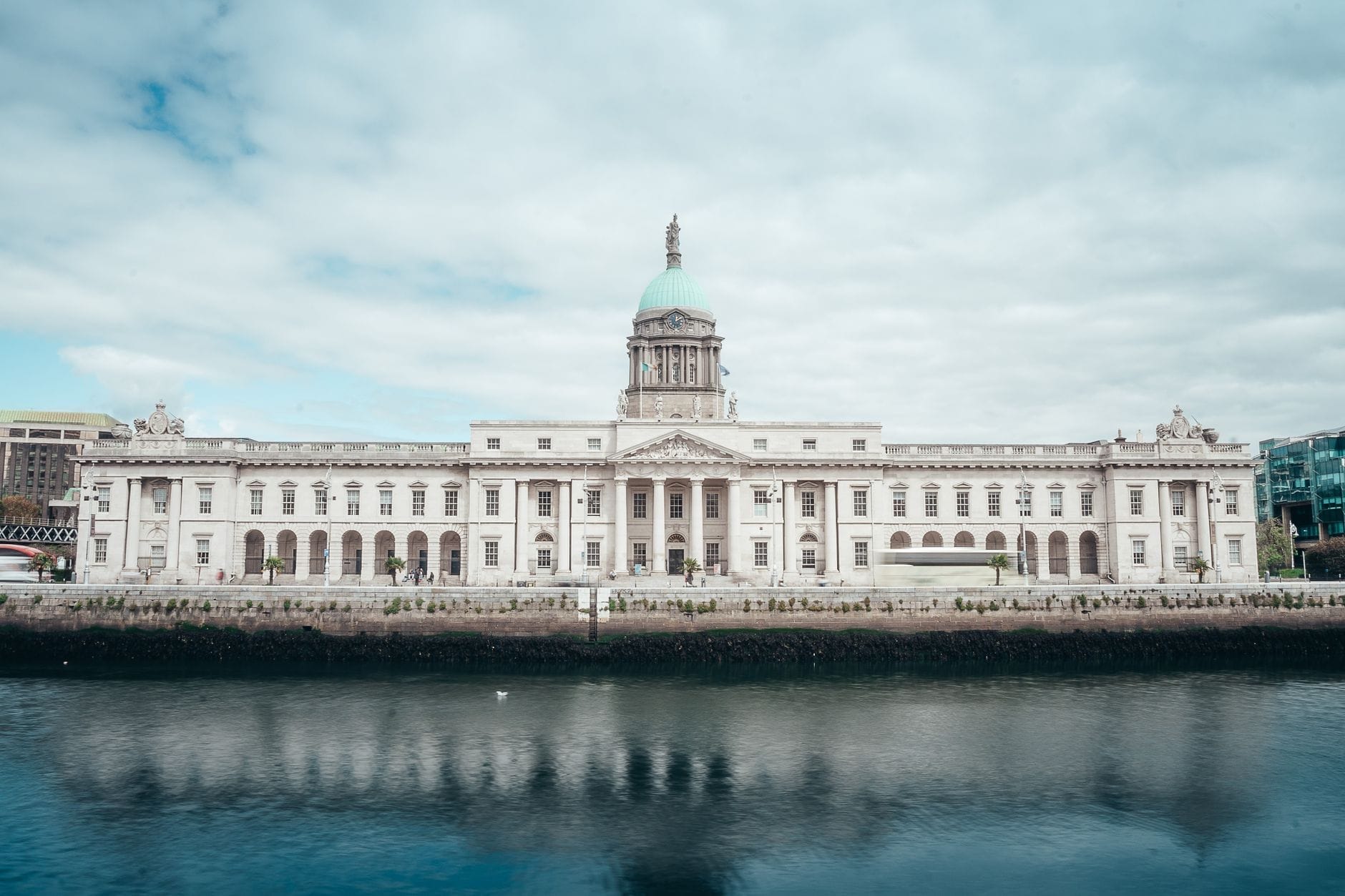
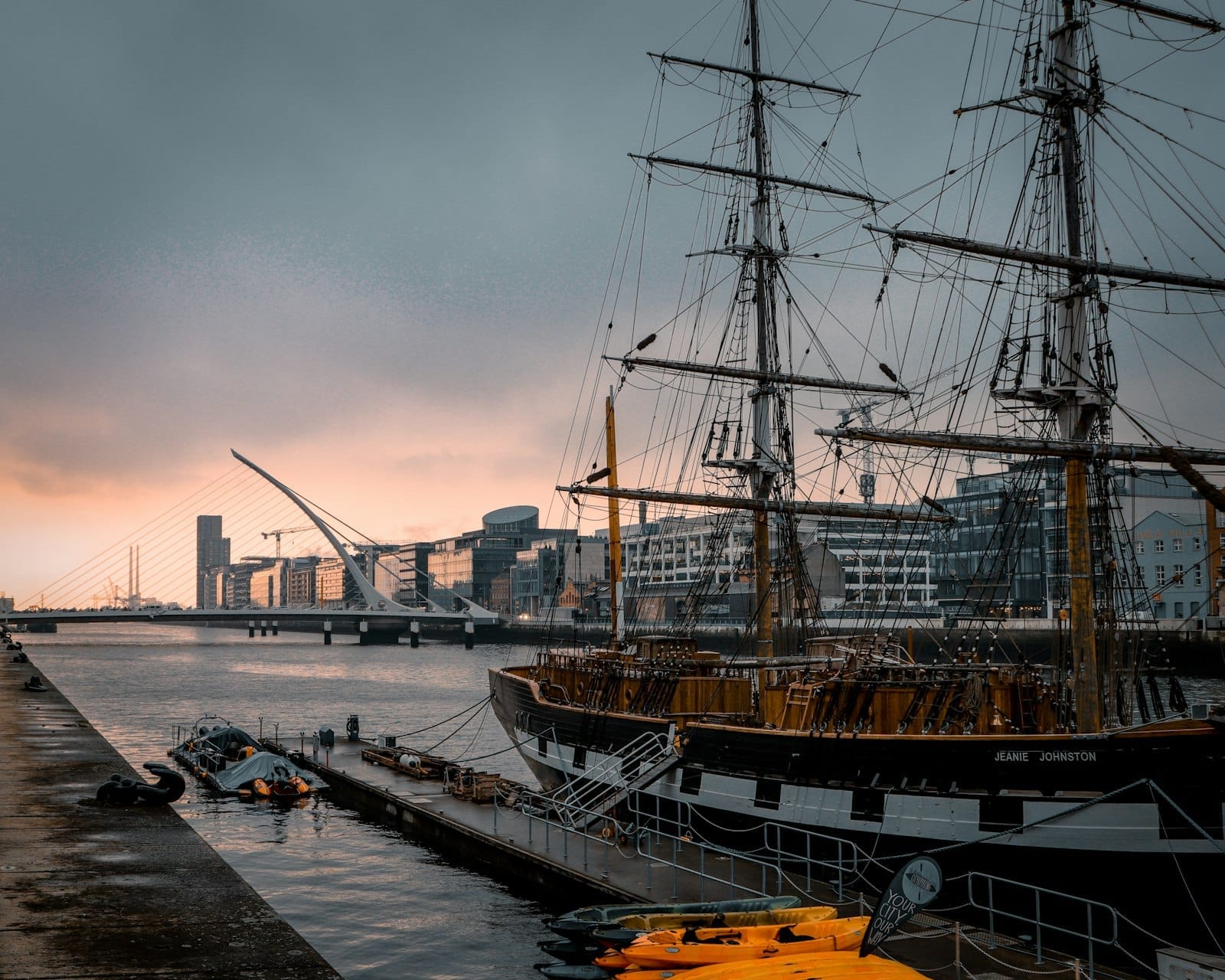
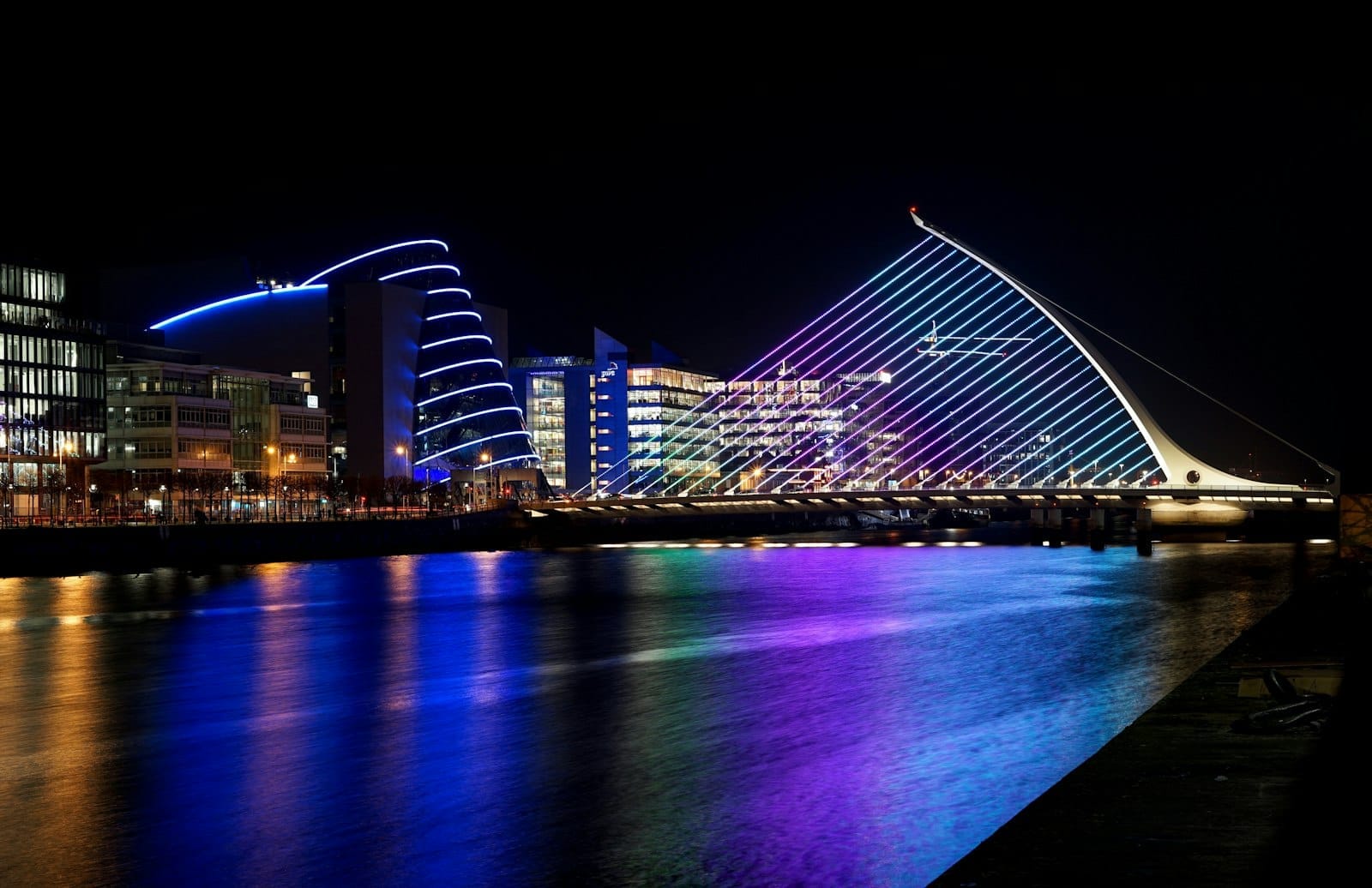
Together these zones form the North Lotts and Grand Canal Dock Strategic Development Zone, the planning framework that has governed the area's transformation since the early 2000s. The Samuel Beckett Bridge, designed by Santiago Calatrava, connects the two banks and has become the visual symbol of the area. Standing at its midpoint, you can look east toward the open bay and west toward the dome of the Custom House, which marks roughly where Docklands ends and the historic city centre begins.
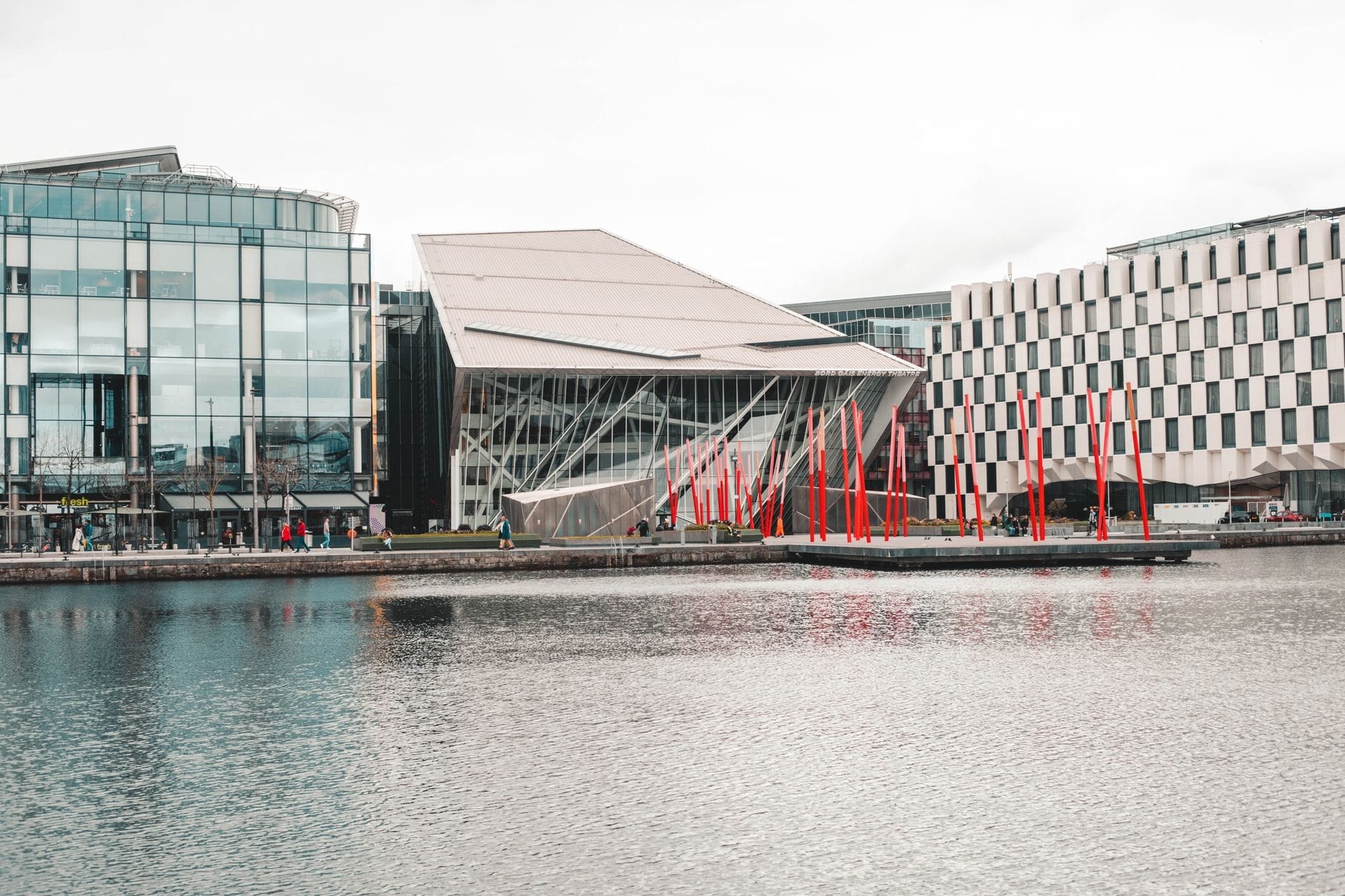
Getting your bearings is straightforward. On the south side, Grand Canal Square is the civic centrepiece, flanked by the Bord Gáis Energy Theatre and a cluster of restaurant and bar units. From the square, Barrow Street runs inland past tech offices toward Grand Canal Dock DART station. On the north side, North Wall Quay and the wider North Lotts area contain more corporate campuses and residential blocks, with the Convention Centre Dublin sitting prominently on the waterfront. The two sides are linked not just by the Beckett Bridge but also by the older Talbot Memorial Bridge a short distance upstream.
Character and Atmosphere
Early on a weekday morning, Docklands has the quality of a city within a city. Cyclists in high-vis gear cut along the quays, coffee cups in hand, heading toward glass-fronted campuses where lanyards and laptop bags are the dominant aesthetic. The scale of the architecture here is unlike anything else in Dublin: wide, wind-swept plazas, buildings that rise far higher than the Georgian terraces of the southside, and a general sense that this part of the city is still in the process of becoming something.
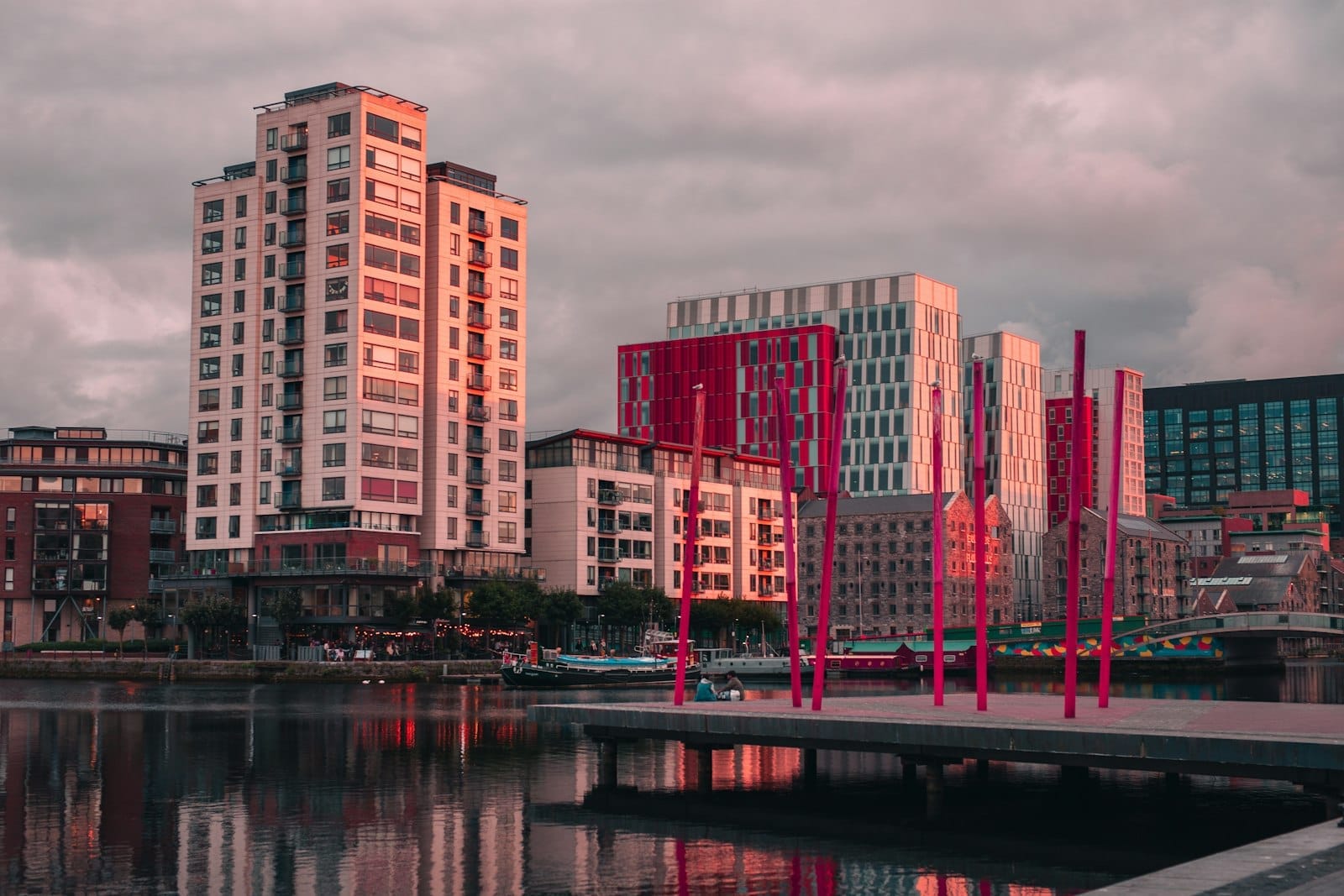
By lunchtime the waterfront around Grand Canal Square fills with workers from the surrounding offices. The red resin boardwalk that fronts the square, designed by landscape architect Martha Schwartz, gives the space an almost theatrical quality in afternoon light, the angular tilted poles throwing long shadows across the basin. On sunny days, people sit along the dock wall eating lunch. On grey days, and there are many of those in Dublin, the wind off the water can be sharp enough to clear the square entirely.
After dark, the neighbourhood splits. Evenings with a show at the Bord Gáis Energy Theatre draw a well-dressed crowd that fills the bars and restaurants around the square before curtain. On nights without a major event, things quiet down quickly. This is not a nightlife district in the way that Temple Bar or Camden Street are; the after-work drink culture is real, but it tends to wind up earlier, and the streets become noticeably empty by 10pm. Weekends shift the mood again: local residents, families using the waterfront paths, and visitors doing the walking tour of the quays give the area a more relaxed, unhurried feel.
ℹ️ Good to know
The Docklands has earned the nickname 'Silicon Docks' for good reason: Google, Meta, Airbnb, and LinkedIn all have significant Dublin operations here or nearby. The area's character is shaped in large part by this tech-sector population, which skews young and international.
What to See and Do
The centrepiece for most visitors is Grand Canal Dock and its surrounding square. The basin itself is used year-round for kayaking, rowing, and paddleboarding, with water sports operators based along the dock wall. It is one of the few places in Dublin city where you can get on the water without heading out to the bay, and the scale of the enclosed basin makes it a surprisingly sheltered spot even on blustery days.
The Bord Gáis Energy Theatre is one of Ireland's largest and most technically sophisticated performance venues, with a capacity of around 2,100. It hosts major touring musicals, opera, ballet, and large-scale concerts. If you are visiting Dublin and there is a show on during your stay, booking tickets here is worth it: the venue itself, designed by architect Daniel Libeskind, is striking inside and out, and the pre-show atmosphere around the square is one of the more convivial in the city.
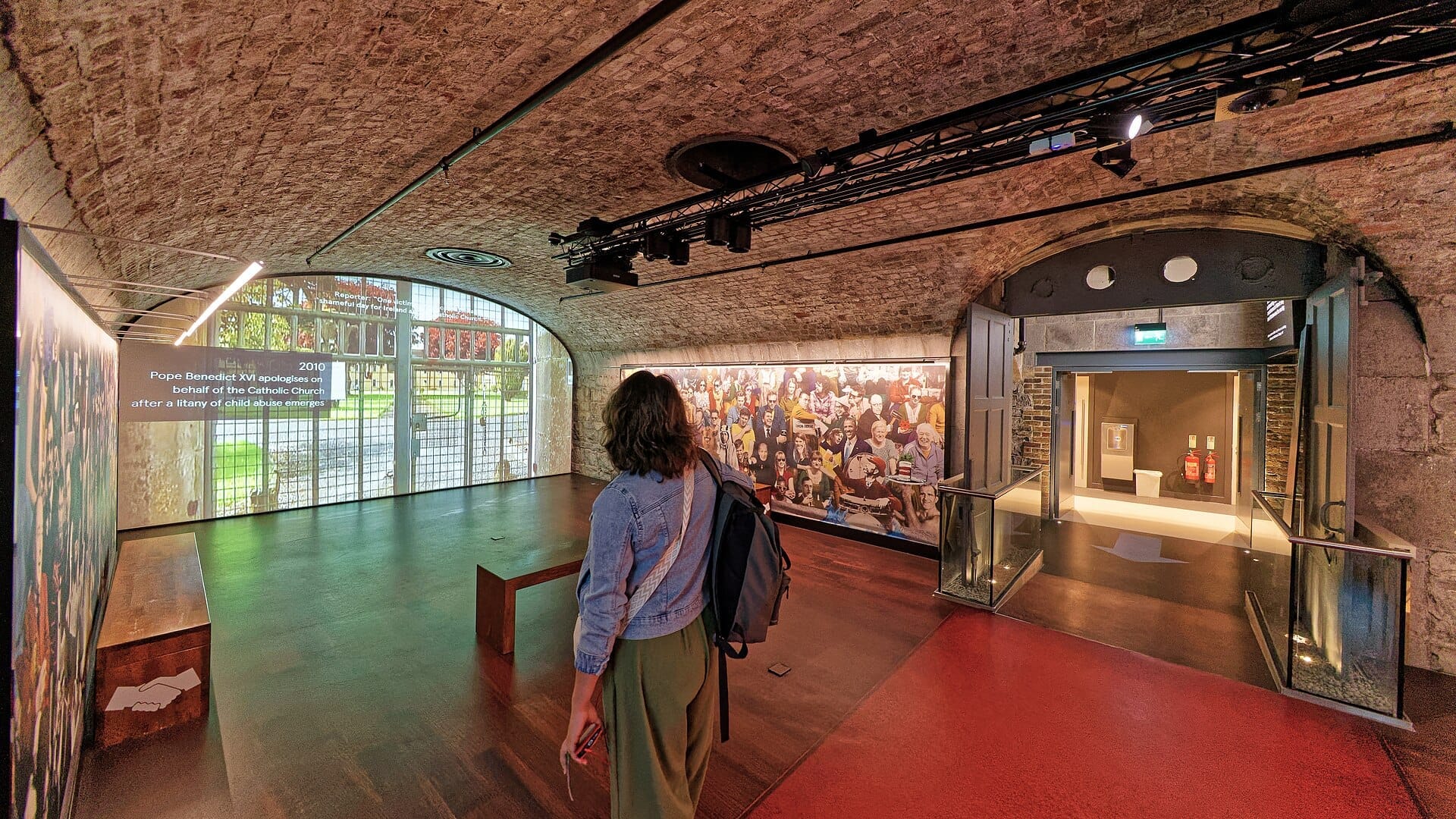
Walking the quays from here toward the city centre takes around 20 minutes and passes some of Dublin's most significant civic architecture. The Samuel Beckett Bridge is worth pausing on, and the stretch of North Wall Quay and City Quay offers unobstructed views across the Liffey. The nearby EPIC Irish Emigration Museum sits in the CHQ building, a beautifully restored 19th-century vaulted warehouse on Custom House Quay, roughly 15 minutes' walk from Grand Canal Square. It is one of the more thoughtfully designed museums in the city and well worth a few hours.
Grand Canal Dock basin: water sports, walking circuit, waterfront seating
Grand Canal Square: public art, events, pre-theatre gathering point
Bord Gáis Energy Theatre: major touring performances, opera, ballet, concerts
Samuel Beckett Bridge: architectural landmark, cross-Liffey views
EPIC Irish Emigration Museum: award-winning museum in the CHQ building
Boland's Mill: converted historic mill complex with gallery and event spaces
Convention Centre Dublin: contemporary architecture on the north quays
The Docklands also connects naturally to a Grand Canal Walk that you can follow west from the basin through Portobello and beyond. It is a genuinely pleasant route away from traffic, and it gives you a very different cross-section of Dublin than the quays.
Eating and Drinking
The food scene in Docklands is driven largely by the office population during the week and by theatre-goers on evenings. That shapes what is available: the density of good cafés is high, lunch options are strong, and the restaurants around Grand Canal Square skew toward the kind of reliable, moderately priced dining that works for a pre-show meal rather than a destination dining experience.
Grand Canal Square has a cluster of restaurants and bars facing the water, ranging from casual pizza and burger spots to more substantial Irish-European menus. The quality is generally solid without being remarkable. Prices reflect the corporate postcode: expect to pay a little more here than in equivalent spots in Rathmines or Stoneybatter. The upside is that booking a table on a Tuesday or Wednesday is rarely a problem, and the waterfront setting on a clear evening is genuinely appealing.
The café culture in Docklands is strong, particularly on Barrow Street and the surrounding streets where specialty coffee has followed the tech companies in. For something more characterful, the walk west along the canal toward Portobello takes you into a neighbourhood with a much denser and more varied food scene.
💡 Local tip
If you are heading to the Bord Gáis Energy Theatre, book a table at one of the Grand Canal Square restaurants at least a week in advance on show nights. The square empties out very quickly between performances, and last-minute options are limited.
Getting There and Around
Grand Canal Dock DART and commuter rail station on Barrow Street is the most direct public transport connection for the south Docklands. Trains run frequently between here and Connolly Station, which connects to the broader DART coastal network and mainline rail services. The journey from Connolly to Grand Canal Dock takes about seven minutes, and from Pearse Street station (near Trinity College) it is just one stop.
Several Dublin Bus routes serve the Docklands, running along the quays and down Pearse Street and Ringsend Road. For general guidance on navigating the city by public transport, the getting around Dublin guide covers all transport options including the Leap Card, which works across bus, DART, and Luas services and offers better value than single-journey cash fares.
On foot, the Docklands is approximately 20-25 minutes' walk from O'Connell Street, following the north quays east, or around 15-20 minutes from Trinity College following the south quays. The walking routes are flat and largely straightforward, and the quayside paths are well-maintained. Cycling is also practical: the Liffey towpath and the Grand Canal towpath are both popular routes, and Dublin Bikes docking stations are located around the fringes of the area.
⚠️ What to skip
Parking in Docklands is limited and expensive, and the one-way street system around the quays can be confusing for drivers unfamiliar with the area. Arriving by DART, bus, or on foot is strongly preferable, especially on theatre nights when the roads around Grand Canal Square become congested.
Where to Stay
Accommodation in the Docklands is predominantly aimed at business travellers. The hotels here tend to be modern, well-equipped, and efficiently run, with higher price points than equivalent rooms in the city centre. The main advantage of staying in this area is proximity to the DART station, the theatre, and the tech campuses, along with the waterfront environment and a general sense of space that the older, denser parts of the city centre do not offer.
For leisure visitors, the Docklands is not the most immersive base for experiencing Dublin's historic core. If your priority is proximity to Temple Bar, Trinity College, or the southside restaurant and pub scene, staying in the city centre or around St Stephen's Green makes more practical sense. That said, the DART connection means you are never far from anywhere, and for visitors attending events at the Bord Gáis Energy Theatre, staying nearby removes any logistics around late-night transport.
For a full overview of accommodation options across the city and how different areas compare, the where to stay in Dublin guide provides neighbourhood-by-neighbourhood comparisons for different budgets and travel styles.
Is Docklands Worth Your Time?
Docklands is not the right neighbourhood for everyone. If you are looking for Georgian streetscapes, traditional pubs, or the rough-edged character of Dublin's older working-class districts, you will not find much of that here. The regeneration has been thorough and, in places, a little sanitised: the corporate architecture dominates, and the sense of history that permeates areas like the Liberties or Kilmainham is largely absent.
What it does offer is a genuinely interesting piece of contemporary Dublin: a city attempting to absorb enormous economic growth and make public space from what was for decades derelict industrial land. The architecture of the Samuel Beckett Bridge, the Bord Gáis Energy Theatre, and the Convention Centre Dublin is among the most ambitious in Ireland. The waterfront is clean, the walking routes are excellent, and on a clear afternoon the views across the basin toward the quays have a quality that is hard to find elsewhere in the city.
For a broader picture of what Dublin has to offer beyond its most visited attractions, the things to do in Dublin guide is a useful starting point for planning a full visit.
TL;DR
Docklands is Dublin's most architecturally modern district, built on regenerated former port land east of the city centre, split across both banks of the Liffey.
Grand Canal Square and the Bord Gáis Energy Theatre are the area's main draws for visitors, alongside waterfront walking routes and the nearby EPIC Irish Emigration Museum.
The neighbourhood suits business travellers, theatre-goers, architecture enthusiasts, and anyone curious about Dublin's recent urban transformation.
It is not the right base for visitors primarily interested in Dublin's historic character, pub culture, or Georgian architecture; the city centre or southside inner suburbs serve those priorities better.
Getting here is easy: Grand Canal Dock DART station is one stop from Pearse Street, and the quays are a flat 20-minute walk from O'Connell Street.
Three days is the sweet spot for Dublin. Long enough to cover the iconic historic sites, dig into the food and pub culture, and fit in a coastal or countryside excursion. This itinerary is built around real logistics, honest crowd warnings, and the kind of sequencing that makes a short trip feel unhurried.
Dublin punches well above its weight as a museum city. Several of its finest institutions are completely free, and the range spans Celtic gold, Viking archaeology, Irish revolutionary history, world literature, and contemporary art. This guide covers the best museums in Dublin, grouped by theme, with practical advice on when to go and what to expect.
Dublin rewards visitors year-round, but the timing of your trip shapes everything from hotel prices to what you can actually do outdoors. This guide breaks down every month, season, and key trade-off so you can plan with confidence.
Dublin sits at the centre of an exceptional day trip network. Within two hours you can reach glacial mountain valleys, medieval castles, dramatic coastal headlands, and one of Europe's great prehistoric monuments. This guide covers the best escapes, how to get there, and what to expect.
Dublin Bay is a UNESCO Biosphere Reserve with more beaches than most visitors expect. This guide covers the best strands, swimming spots, and coastal walks within easy reach of the city, from the vast sands of Dollymount to the dramatic cliffs of Howth and the sheltered coves of Dún Laoghaire.
Bloomsday is Dublin's most distinctive literary celebration, held every 16 June to honour the date James Joyce set Ulysses. This guide covers the key locations, walking routes, festival events, food traditions, and everything you need to join the festivities — whether you've read the book or not.
Dublin rewards couples who look beyond the obvious. This guide covers scenic walks, intimate cultural experiences, evening entertainment, and coastal day trips — with honest advice on what's worth it and what to skip.
Attending a Gaelic Games match at Croke Park is one of the most authentic experiences Dublin offers. This guide covers everything from buying tickets and navigating the stadium to understanding the sport, the season, and what separates a regular league game from an All-Ireland final.
Dublin rewards the curious traveller who ventures beyond the Guinness Storehouse and Temple Bar. From a mummified Crusader beneath a Northside church to a Victorian reservoir turned secret garden, these are the places Dubliners love and visitors rarely find.
Dublin transforms in winter, with Christmas markets running from late November through early January, citywide light trails, cathedral concerts, and festive fairgrounds. This guide covers every major event, what things actually cost, and what to watch out for before you visit.
Dublin is one of the few cities in the world to have produced three Nobel Prize-winning writers of literature. This guide maps the key sites connected to George Bernard Shaw, W.B. Yeats, and Samuel Beckett, plus James Joyce, Oscar Wilde, and others, covers the best guided tours with practical pricing, and gives you the detail to do it properly.
Dublin has around 772 pubs, dozens of late-night bars, and several distinct club districts. This guide breaks down where to drink, when to go, what it costs, and which neighbourhoods to skip if you want to avoid tourist pricing.
Dublin has a reputation for being expensive, but that reputation is only half true. The city's best museums are free, the centre is walkable, public transport is cheap with the right pass, and the finest pub sessions cost nothing beyond the price of a pint. This guide breaks down every major cost category so you can plan a genuinely great trip without watching every euro.
Seven days is enough to see Dublin's best and reach the wild west coast of Ireland, but only if you plan smart. This itinerary balances city time with coastal scenery, covers realistic driving and transit times, and flags the planning mistakes that turn a great trip into an exhausting one.
Dublin, Ireland offers a surprisingly varied shopping scene, from the flagship stores lining Grafton Street to independent boutiques on South William Street, weekend food markets in Temple Bar, and Ireland's largest mall in Dundrum. This guide covers where to go, what to expect, and how to avoid wasting time.
Dublin rewards walkers like few cities in Europe. Compact enough to cover on foot, layered enough to take weeks to unpack, the city reveals itself best at street level. This guide covers the stops, routes, and landmarks that make Dublin's walking tours so compelling.
Dublin punches well above its weight as a family destination. Between a world-class zoo, free city parks, Viking history museums, coastal castles, and indoor waterparks, there is genuinely enough to fill a week without repeating yourself. This guide covers the best things to do in Dublin with kids, organised by type, age range, and weather — so you can plan around Irish reality rather than tourist brochure optimism.
Dublin punches well above its weight for free attractions. National museums, modern art galleries, coastal walks, and grand public parks all cost nothing to enter. This guide covers 22 of the best free things to do across the city, organised by type so you can plan your days without watching your budget.
Dublin's Georgian streets and squares represent one of Europe's most intact examples of 18th-century urban planning. This guide covers the key buildings, the best self-guided walking route, what's actually open to visitors, and how to avoid the common traps that waste your time.
Dublin's public transport network covers the city and coast through buses, DART rail, Luas trams, and airport coaches. This guide breaks down fares, Leap Card options, airport transfer routes, and the practical details that save you time and money when navigating Ireland's capital.
Dublin sits at the doorstep of some of Ireland's finest walking country. Whether you want cliff-top sea views, ancient monastic valleys, or proper mountain terrain, these are the best hikes and trails within easy reach of the city.
Dublin's St Patrick's Festival is a multi-day national celebration centred on 17 March, with a free city-centre parade, ticketed concerts, street theatre, and events across the city. This guide covers the full programme, booking essentials, crowd logistics, and what to realistically expect from Ireland's biggest annual celebration.
Dublin packs centuries of history, world-class museums, legendary pubs, and coastal scenery into a compact, walkable city. This guide covers the best things to do in Dublin across every interest and budget, with honest advice on what's worth your time and what to skip.
Dublin's food scene has transformed well beyond stew and soda bread. This guide covers the essential Irish dishes, where to find them, what to pay, and which areas give you the best value — including a frank look at where not to waste your money.
Choosing where to stay in Dublin, Ireland shapes your entire trip. This guide breaks down every major neighbourhood by location, vibe, price range, and transport links, so you can book with confidence rather than guesswork.