Best Time to Visit Dublin: A Month-by-Month Guide
Dublin rewards visitors year-round, but the timing of your trip shapes everything from hotel prices to what you can actually do outdoors. This guide breaks down every month, season, and key trade-off so you can plan with confidence.
Plan and book this trip
Tools from our partner Travelpayouts help you compare flights and hotels. If you book through them, we may earn a commission at no extra cost to you.
Flights
Hotels map
TL;DR
- May, June, and September offer the best balance of mild weather, long daylight hours, and manageable crowds — these are Dublin's true sweet spots.
- July and August are peak tourist season: busier, pricier, and not necessarily sunnier than late spring.
- November through February brings the lowest hotel rates, smaller queues at major attractions, and a genuine local atmosphere — worth considering if weather isn't your top priority.
- Book Kilmainham Gaol and the Guinness Storehouse at least several weeks ahead in summer — both use timed-entry ticketing and sell out regularly.
- Dublin has no true dry season: rain is possible any month, so pack layers and a waterproof regardless of when you travel.
Understanding Dublin's Climate Before You Book
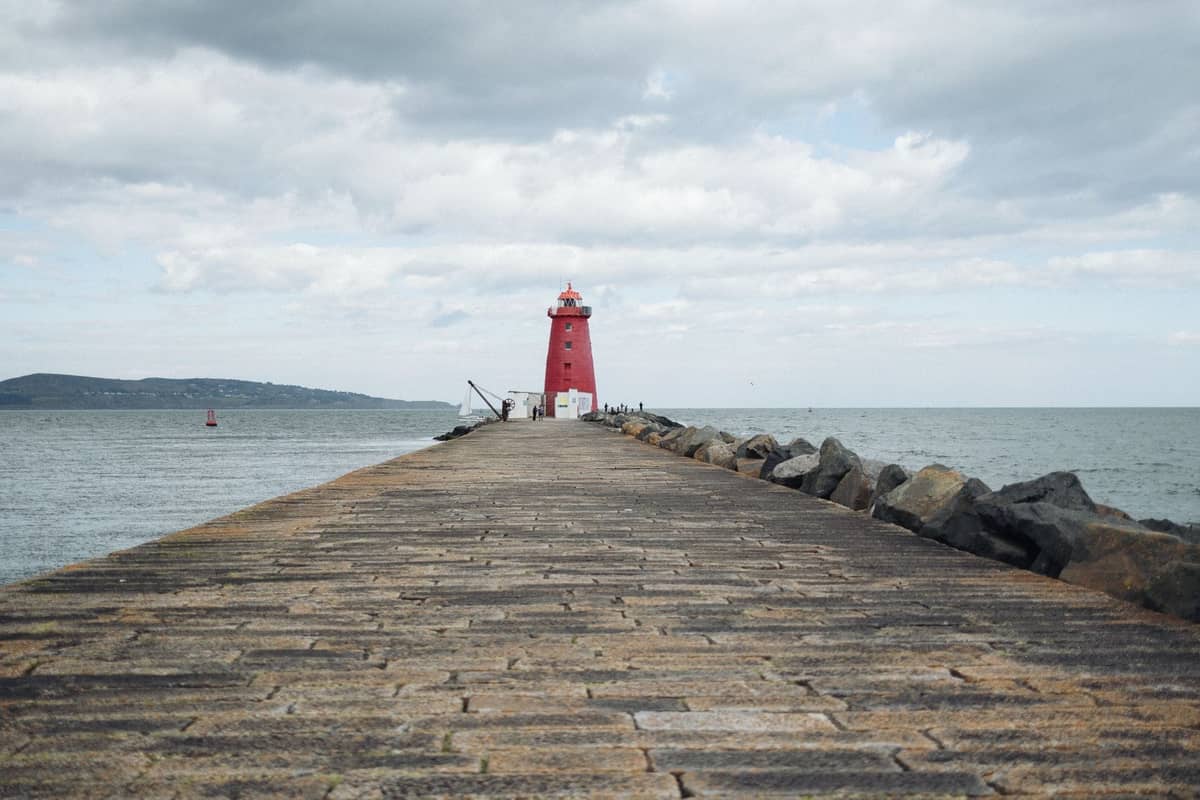
Dublin sits on the east coast of Ireland at the mouth of the River Liffey, facing Dublin Bay. Its temperate maritime (oceanic) climate means winters are mild rather than harsh and summers are cool rather than hot. The flip side is that meaningful sunshine is never guaranteed, and rainfall is distributed fairly evenly across all twelve months — there is no dry season in any meaningful sense.
Average temperatures give a useful frame: winter months (December to February) typically see daytime highs around 8 to 9°C, dropping to lows of 2 to 4°C at night. Summer (June to August) averages in the high teens Celsius, with highs occasionally reaching the low-to-mid 20s°C during warm spells. Spring and autumn sit in between, with March to May climbing from roughly 9°C to 14°C and September to November tapering back down from 15°C toward 9°C. These are long-term climate averages from Met Éireann data — any individual week can vary significantly.
ℹ️ Good to know
Dublin is on Greenwich Mean Time (GMT/UTC+0) in winter and Irish Summer Time (UTC+1) from late March to late October. That shift to summer time brings dramatically longer evenings — by mid-June, it stays light until past 10pm, which meaningfully extends what you can do each day.
The Dublin Mountains rise to the south of the city, forming the northern edge of the Wicklow Mountains range. This means that while the city centre itself is low-lying and coastal, a short drive south can put you in genuinely exposed upland terrain where temperatures drop and conditions change quickly — relevant if day trips to places like Glendalough or the Hellfire Club are on your agenda.
Month-by-Month Breakdown: When to Go and Why
- January & February The quietest period of the year. Hotels are at their cheapest, major attractions have short or no queues, and the city feels genuinely local. Temperatures hover around 5 to 8°C with short daylight hours (sunrise after 8am in January). Good for budget travellers or those prioritising museums, pubs, and indoor culture. Not suitable if outdoor walking and coastal exploration are the main draw.
- March St. Patrick's Day (17 March) transforms Dublin for a full festival week. The parade, concerts, and outdoor events attract large international crowds. Book accommodation three to four months ahead for mid-March. Outside of the festival period, early March is still quiet and affordable.
- April Spring begins in earnest. Days lengthen noticeably, average temperatures climb toward 11 to 13°C, and parks like St. Stephen's Green and Phoenix Park come alive. Easter weekend can bring a surge of visitors depending on the calendar year. Prices begin rising but are still well below summer peak.
- May Widely considered one of the best months. Long days, relatively low rainfall compared to autumn, temperatures in the mid-teens, and crowds that haven't yet reached summer density. Accommodation prices are moderate. Outdoor terraces open, coastal walks are enjoyable, and the city's event calendar starts filling. Strongly recommended for first-time visitors.
- June The start of high season. Bloomsday (16 June) is a cultural fixture for James Joyce enthusiasts. Long evenings make evening walks along the Grand Canal or out to Howth Head a genuine pleasure. Crowds and prices increase through the month, but June still has a more relaxed feel than July and August.
- July & August Peak season in every sense: highest visitor numbers, highest prices, and the most competition for accommodation and timed-entry attractions. Weather is no better than June — sometimes worse — and queues at major sights are at their longest. Worth it if you're tied to school holidays; otherwise, May, June, or September offer better value and a more comfortable experience.
- September Arguably the single best month for an independent traveller. Summer crowds have thinned, prices drop noticeably, temperatures remain in the low-to-mid teens, and daylight hours are still generous (sunset around 7:30 to 8pm). Cultural events and literary festivals fill the calendar. Strongly recommended.
- October Autumn deepens. Halloween has genuine cultural roots in Ireland, and Dublin hosts events across the final week of October. Temperatures fall toward 10 to 12°C and rain becomes more frequent. Still a perfectly viable time to visit, particularly for those interested in atmospheric, darker-season Dublin.
- November & December November is the quietest month outside January. December picks up sharply with Christmas markets, festive lighting on Grafton Street, and a lively atmosphere through to Christmas Eve. Hotels are cheap in early December but prices spike around Christmas and New Year. If you visit in mid-December, you get festive atmosphere at relatively low prices.
Peak, Shoulder, and Off-Season: What It Means in Practice

Peak season runs from late June through August. During this period, central Dublin hotels can cost two to three times what they charge in November, and the most popular attractions operate on timed-entry systems that sell out days or weeks in advance. If you're visiting in July or August, book accommodation at least three months ahead and purchase attraction tickets before you leave home.
Shoulder season — April, May, June, September, and October — is where most experienced Dublin visitors settle. Prices are lower, queues are shorter, and the weather is broadly comparable to peak summer. For a detailed itinerary that works in shoulder season, the 3-day Dublin itinerary maps out a practical route that doesn't require summer-peak bookings to execute.
Off-season (November through February, excluding St. Patrick's week and Christmas-New Year) is underrated. The Dublin in winter guide makes the case for visiting in the cold months: hotel rates are at their lowest, the city's world-class indoor attractions — Chester Beatty Library, the National Gallery, and the National Museum — are never crowded, and pubs feel the way pubs are supposed to feel.
⚠️ What to skip
A common mistake: visitors assume July is the driest month. In Dublin, rainfall differences between months are modest. July averages around 50–55mm of rain — not dramatically less than October's ~70mm. Don't book peak-season prices in the belief you're buying reliable sunshine. You're buying longer days and a busy city.
Dublin's Key Events and When They Fall
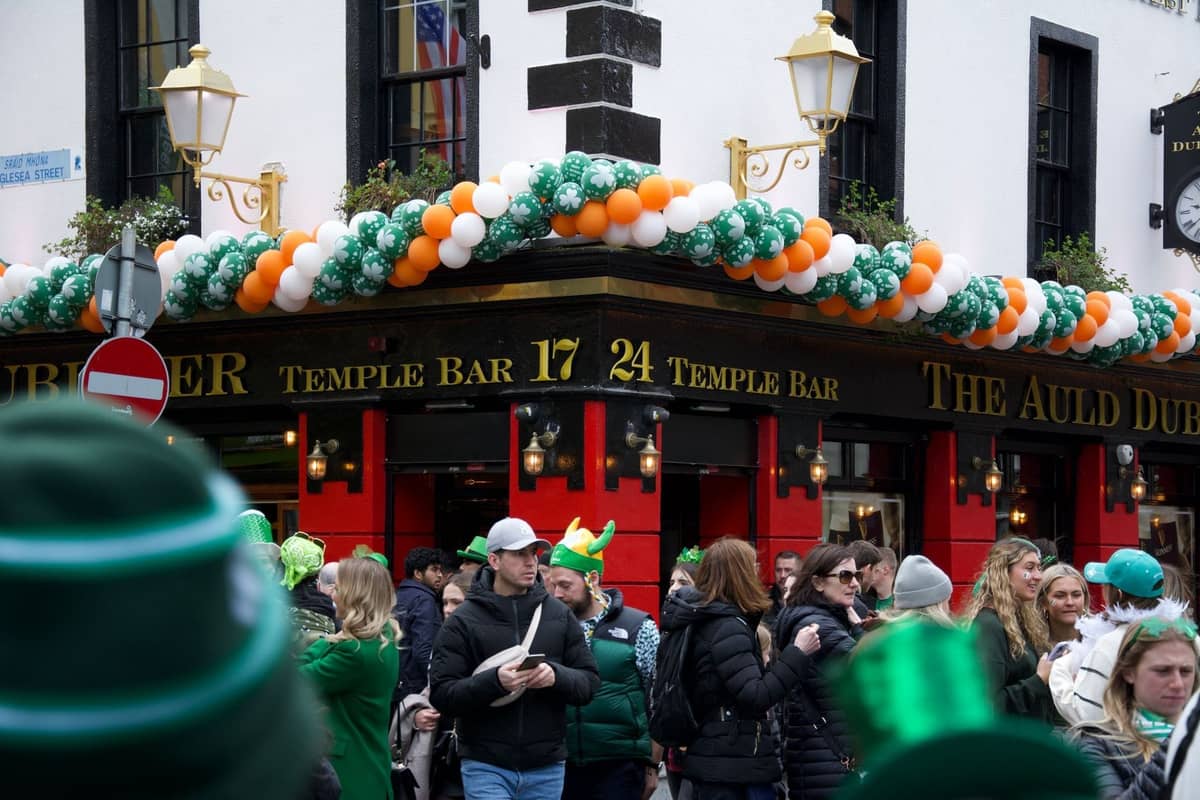
Timing your trip around a specific event can be the most compelling reason to choose one month over another. Dublin's festival calendar is dense, and several events genuinely change the character of the city for their duration.
- St. Patrick's Festival (mid-March) A week of concerts, street theatre, and the famous parade on 17 March. The city centre is packed and joyful. Book everything months in advance. Prices are at a brief annual peak.
- Bloomsday (16 June) Celebrating James Joyce's Ulysses, with readings, guided walks, and period-dress events centred on the James Joyce Centre and Sandycove. A genuinely literary and locally meaningful day rather than a purely tourist spectacle.
- Dublin Horse Show (August, RDS) A major equestrian and social event at the Royal Dublin Society grounds in Ballsbridge, drawing large crowds for several days. Affects accommodation availability in the southside and city centre.
- Dublin Fringe Festival & Dublin Theatre Festival (September-October) Two back-to-back performing arts festivals that make September and early October particularly strong for culturally-minded visitors. Venues across the city programme new work.
- Halloween / Samhain (late October) Ireland claims Samhain as its own, and Dublin leans into it. Expect street events, costume culture, and an atmospheric city in the last week of October.
- Christmas Season (December) Markets, illuminations on Grafton Street, and a festive city atmosphere from late November through 24 December. A good time to experience Dublin without the intensity of summer crowds.
Practical Considerations: Booking, Crowds, and What to Prioritise
Two attractions operate timed-entry systems that consistently sell out during high season: Guinness Storehouse and Kilmainham Gaol. For summer visits, book both at least two to four weeks ahead. For shoulder season, a week's notice is usually sufficient. For winter visits, you can often book same-day or walk up, though pre-booking is still sensible for Kilmainham.
The Book of Kells at Trinity College also draws significant queues in summer. Tickets are available online and skipping the walk-up queue is worth the minor administrative effort. The Long Room is included in the same ticket and alone justifies the visit.
✨ Pro tip
If your Dublin trip includes a day along the coast — Howth, Dún Laoghaire, or Dalkey — shoulder season (May or September) gives you the best odds of doing it comfortably. The DART coastal rail line is manageable on a weekday in May; on a sunny summer Saturday, it can feel like a commuter train at rush hour.
Dublin is also an excellent base for day trips. The best day trips from Dublin include Glendalough in the Wicklow Mountains and the coastal towns to the south. These are most enjoyable in May, June, and September, when trails are passable, daylight is generous, and the roads are less congested than in peak summer.
For visitors with a tight budget, off-season visits make a material difference. Hotel prices in November and early December can be 40 to 60 percent lower than in July, and many of Dublin's best experiences — free things to do in Dublin like the Chester Beatty Library, National Gallery, and National Museum of Archaeology — cost nothing year-round.
Who Should Visit When: A Quick Decision Framework
There is no objectively correct answer to when you should visit Dublin — it depends entirely on what you want to do and what trade-offs you're willing to make. Here's a practical summary.
- First-time visitors who want good weather and manageable crowds Choose May or September. You get most of the benefits of summer (long days, open terraces, outdoor events) without peak-season prices and queues.
- Families with school-age children July and August are the practical choice given school calendars. Book accommodation and key attractions early — three months ahead for hotels, several weeks ahead for timed-entry sights.
- Budget travellers November through early December or January-February. Flights and hotels are cheapest, the city's free museums are uncrowded, and the pub culture that defines Dublin doesn't change with the seasons.
- Culture and festival-focused visitors March for St. Patrick's Festival, June for Bloomsday, or September-October for the theatre and fringe festival season.
- Couples or those seeking a relaxed city break April, early June, or October. The city is active but not overwhelming, accommodation is in a middle price range, and the restaurant scene is easier to navigate without advance booking for every meal.
💡 Local tip
Whatever month you visit, pack a compact waterproof jacket and wear layers. Dublin's weather changes quickly, and being underprepared for a rain shower will dampen any season. This is not a climate warning — it's a packing note that every regular Dublin visitor will confirm.
FAQ
What is the best month to visit Dublin for good weather?
June and July have the longest daylight hours and the warmest average temperatures, but May and September often offer nearly as good conditions with fewer crowds and lower prices. Dublin's climate is mild year-round; no month guarantees sunshine, and rain is always possible.
When is the cheapest time to visit Dublin?
January, February, and November are consistently the cheapest months for flights and hotels. Early December (before the Christmas rush) also offers good value. Prices spike in July, August, and around St. Patrick's Day in March.
How far in advance should I book for a summer trip to Dublin?
For July and August travel, book accommodation at least three months ahead. Timed-entry attractions like the Guinness Storehouse and Kilmainham Gaol should be booked at least two to four weeks in advance. Popular restaurants may need reservations one to two weeks out.
Is Dublin worth visiting in winter?
Yes, particularly for travellers who prioritise culture, history, and atmosphere over outdoor activities. Museums like the Chester Beatty Library and the National Gallery are world-class and completely free. Pubs are at their most convivial. Hotel prices are significantly lower, and the Christmas season in December adds genuine festive atmosphere to the city.
When is the best time to visit Ireland overall, not just Dublin?
For Ireland as a whole, late May to early September offers the most reliable combination of accessible weather, open visitor attractions, and functioning ferry and coastal routes. September is widely favoured by experienced visitors for its balance of good conditions and reduced tourist density. If visiting rural areas or the west coast, June and July have the longest daylight for scenic drives and coastal walks.