Dublin Literary Trail: Following Joyce, Wilde & Beckett Through the City
Dublin is one of the few cities in the world to have produced three Nobel Prize-winning writers of literature. This guide maps the key sites connected to George Bernard Shaw, W.B. Yeats, and Samuel Beckett, plus James Joyce, Oscar Wilde, and others, covers the best guided tours with practical pricing, and gives you the detail to do it properly.
Plan and book this trip
Tools from our partner Travelpayouts help you compare flights and hotels. If you book through them, we may earn a commission at no extra cost to you.
Flights
Hotels map
TL;DR
- Dublin was designated a UNESCO City of Literature in 2010, and the literary trail connects dozens of real locations tied to Joyce, Wilde, Beckett, Swift, Yeats, and more.
- Key sites include the James Joyce Tower at Sandycove, the James Joyce Centre on North Great George's Street, Sweny's Pharmacy, and the Oscar Wilde statue at Merrion Square.
- Not all major sites are in the city centre: Beckett's birthplace is in Foxrock, and Joyce's Martello Tower is in Sandycove, both requiring separate trips.
- Guided options range from daytime walking tours (around €25 adult) to the popular evening Dublin Literary Pub Crawl, which runs year-round.
- Check the Book of Kells situation before visiting Trinity College: the Long Room renovation means the exhibit is in a temporary location and still requires advance booking.
Why Dublin's Literary Heritage Is Worth Taking Seriously
Dublin produced three Nobel Prize-winning authors in the space of roughly 60 years: George Bernard Shaw (1925), Samuel Beckett (1969), and William Butler Yeats (1923). Add James Joyce, Oscar Wilde, Jonathan Swift, Brendan Behan, Patrick Kavanagh, and Seamus Heaney to the picture, and you have a concentration of literary talent that is extraordinary for a city of around 1.3 million people. UNESCO recognised this in 2010 with its City of Literature designation, making Dublin part of a network that includes Edinburgh and Melbourne.
What makes the Dublin literary trail genuinely rewarding, compared to similar trails in other cities, is that the geography still holds. Many of the streets, pubs, pharmacies, and squares that appear in the work of Joyce or Wilde are still recognisable. You can stand outside 1 Merrion Square, where Wilde grew up, and see the same Georgian proportions he would have known. You can visit Sweny's Pharmacy on Lincoln Place, where Leopold Bloom buys a lemon soap in Ulysses, and the same lemon soaps are still sold there today by volunteers who run readings on the premises. The city hasn't erased its past so completely that the trail becomes abstract.
ℹ️ Good to know
Dublin's literary trail is not a single official route with signage throughout. It's better understood as a loose network of sites, museums, and guided experiences. This guide organises them into a practical sequence, but you should expect to combine multiple days or modes of transport if you want to cover everything.
James Joyce: The Sites That Actually Matter
Joyce is everywhere in Dublin, sometimes gratuitously so. The sites that genuinely reward a visit are the James Joyce Tower and Museum at Sandycove, the James Joyce Centre on North Great George's Street, and Sweny's Pharmacy near Lincoln Place. Everything else is supplementary.
The Martello Tower at Sandycove is the opening setting of Ulysses: Stephen Dedalus climbs to its top in the novel's first pages. Joyce himself stayed here for six nights in September 1904 with Oliver St John Gogarty. The tower is now a small, focused museum with original letters, photographs, and personal effects. It sits directly on the coast south of the city centre, reachable by DART to Sandycove and Glasthule station (about 20 minutes from Pearse Street). Opening hours and admission prices change seasonally, so verify before travelling.
The James Joyce Centre on North Great George's Street is the more accessible option for those staying in the city centre. It runs regular talks, exhibitions, and themed events, and acts as the main point of contact for Bloomsday in June, the annual citywide celebration of the single day (16 June 1904) on which Ulysses is set. During Bloomsday week, the Centre organises readings, walks, and performances across the city.
- James Joyce Tower, Sandycove Coastal Martello tower south of the city; the physical setting of the Ulysses opening. Reach by DART to Sandycove & Glasthule. Small museum with original artefacts.
- James Joyce Centre, North Great George's Street City-centre base for Joyce scholarship and events. Regular talks and Bloomsday coordination. Georgian townhouse setting.
- Sweny's Pharmacy, Lincoln Place Preserved Victorian chemist from Ulysses, near Trinity College. Volunteer-run, free entry. Lemon soaps sold on site; readings held throughout the week.
- Museum of Literature Ireland (MoLI), St Stephen's Green Holds the first edition copy of Ulysses and broader Irish literary collections. In a Georgian building directly on St Stephen's Green South.
Oscar Wilde and Samuel Beckett: Their Dublin Connections
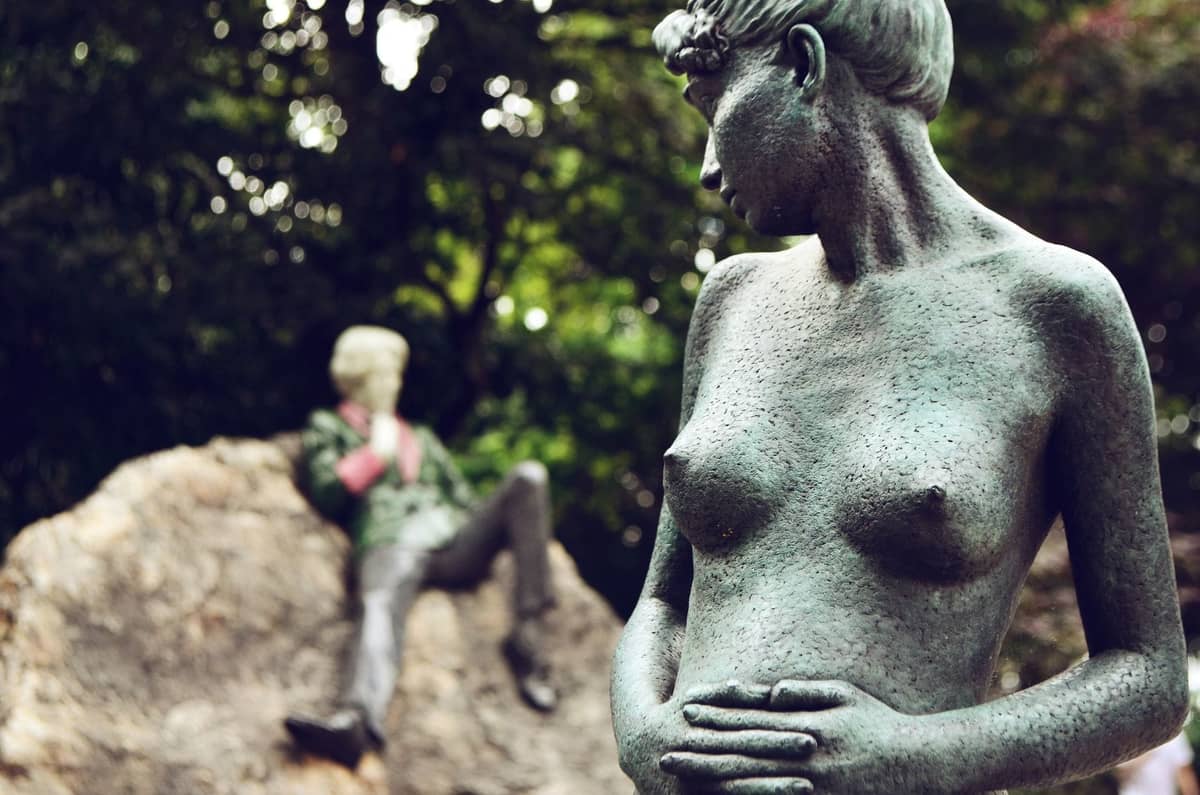
Wilde's Dublin presence is most tangible at Merrion Square, where the Wilde family lived at No. 1 from 1855 to 1878. The square's park contains a flamboyant reclining statue of Wilde by sculptor Danny Osborne, installed in 1997. It's one of the more photographed pieces of public art in Dublin, and the location is genuinely good: the Georgian facades around the square, the park itself, and the proximity to the National Gallery all make this a worthwhile stop regardless of literary interest.
Beckett's Dublin connections require more effort to follow. His birthplace on Brighton Road in Foxrock is a residential suburb well south of the city centre, not a museum or accessible public site. For most visitors, the better approach is to engage with Beckett through his work's theatrical legacy rather than geography. The Gate Theatre and the Abbey Theatre both have strong associations with his plays. The Samuel Beckett Bridge near the Docklands, designed by Santiago Calatrava and opened in 2009, is a notable piece of infrastructure named in his honour, though the connection to his writing is indirect.
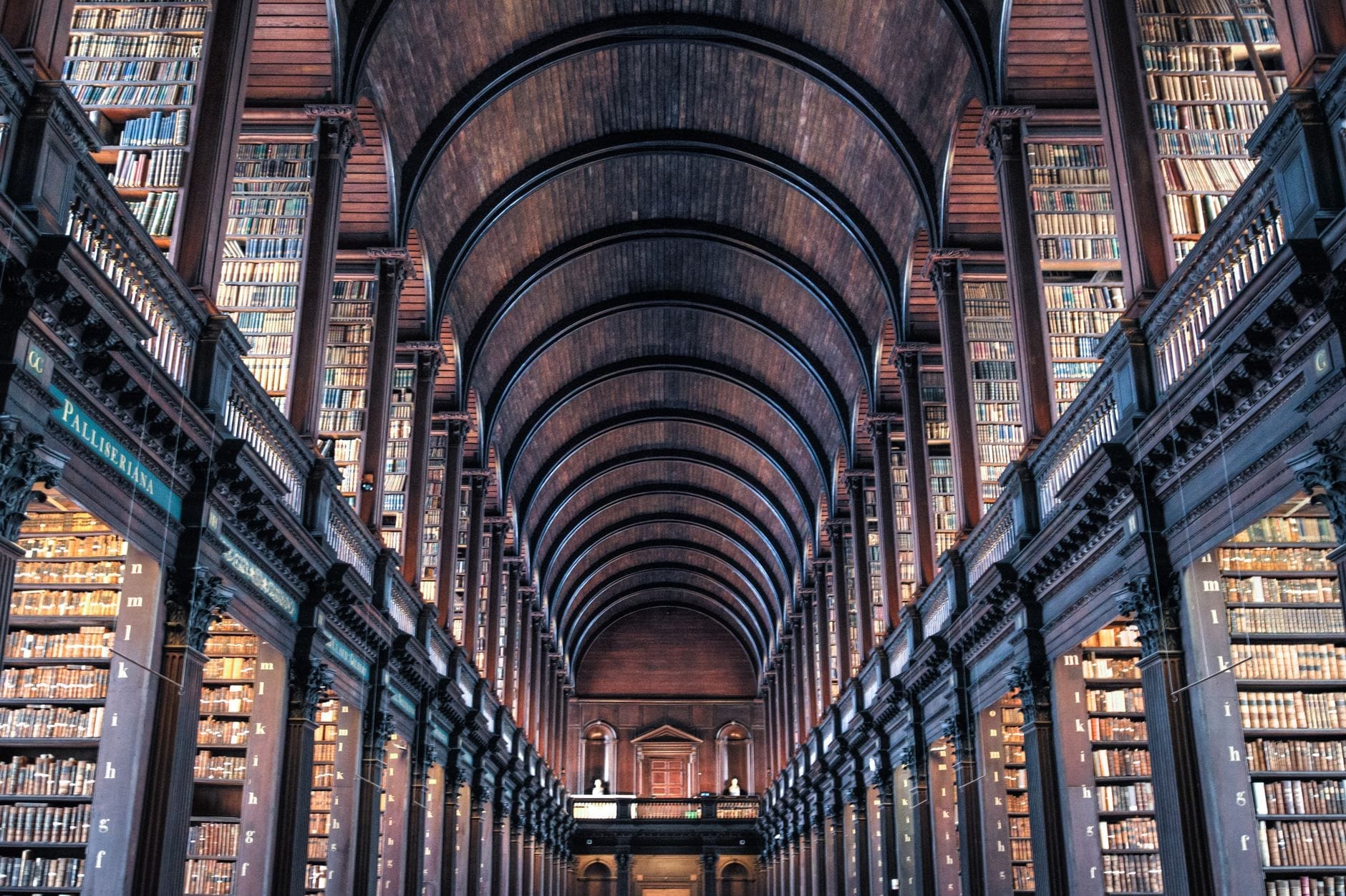
Beckett attended Trinity College Dublin, graduating in 1927, which gives the Trinity College campus a legitimate place on any Beckett-focused itinerary. The college also has deep connections to Swift, Burke, Goldsmith, and Bram Stoker, so a visit covers considerable literary ground in a single location.
⚠️ What to skip
The Long Room at Trinity College, home to the original Book of Kells exhibit, is closed for major renovation with reopening expected in the late 2020s. The Book of Kells is currently displayed in a temporary location on campus. Advance online booking is still required and recommended, especially in summer when demand is high.
Guided Literary Tours: An Honest Comparison
There are three main formats for guided literary tours in Dublin, each suited to different types of visitors. Choose based on whether you want depth and daylight, a theatrical evening experience, or a structured academic context.
Pat Liddy's Dublin Literary Tour is one of the more serious daytime options. The two-hour walk covers the historic core: Christ Church Cathedral, Dublin Castle, Marsh's Library, and St Patrick's Cathedral. Prices are around €25 for adults, €20 for seniors and students, and €15 for ages 12 to 18. The meeting point is the pedestrian gate at Christ Church Cathedral. This tour covers Wilde, Joyce, Swift, and others. Check the operator's site for current schedules and booking, as these vary by season.
The Dublin Literary Pub Crawl runs nightly in summer and Thursday to Sunday in winter, usually departing at 7:15pm. Two actors lead the group through four historic pubs and Trinity College, performing scenes and readings from Joyce, Beckett, Wilde, Behan, and others. The experience runs about two hours. Pricing is around €25 to €30 per adult at time of writing; check the Dublin Literary Pub Crawl website for current euro pricing and booking. This is not a deep-dive into literary criticism. It's an entertaining evening that works well for people who want an introduction to Dublin's writers in a social format.
For visitors who prefer a self-guided approach, the Dublin walking tour options include several literary-themed routes you can do independently using printed maps or smartphone apps. The James Joyce Centre sells a Ulysses walking map, and the Visit Dublin website provides a free Irish Writers Tour itinerary. These are suitable for morning visits when crowds at paid attractions are smaller.
- Pat Liddy's Dublin Literary Tour Daytime, 2 hours, ~€25 adult. Starts at Christ Church Cathedral. Covers Swift, Wilde, Joyce. Good for first-time visitors who want a structured daytime introduction.
- Dublin Literary Pub Crawl Evening, ~2 hours, from ~€25-30 adult. Actor-led through four pubs and Trinity. Nightly in summer, Thu-Sun in winter. Best for sociable evenings, not scholarly depth.
- Trinity College Literary Walk Loop starting and ending at Trinity College. Covers Swift, Yeats, Joyce, Heaney, Beckett. Check Visit Trinity for current scheduling and booking.
- Self-guided with MoLI as base Museum of Literature Ireland at St Stephen's Green is the best single starting point. Free to explore the square and nearby sites; museum charges admission.
Practical Logistics: Planning Your Literary Day
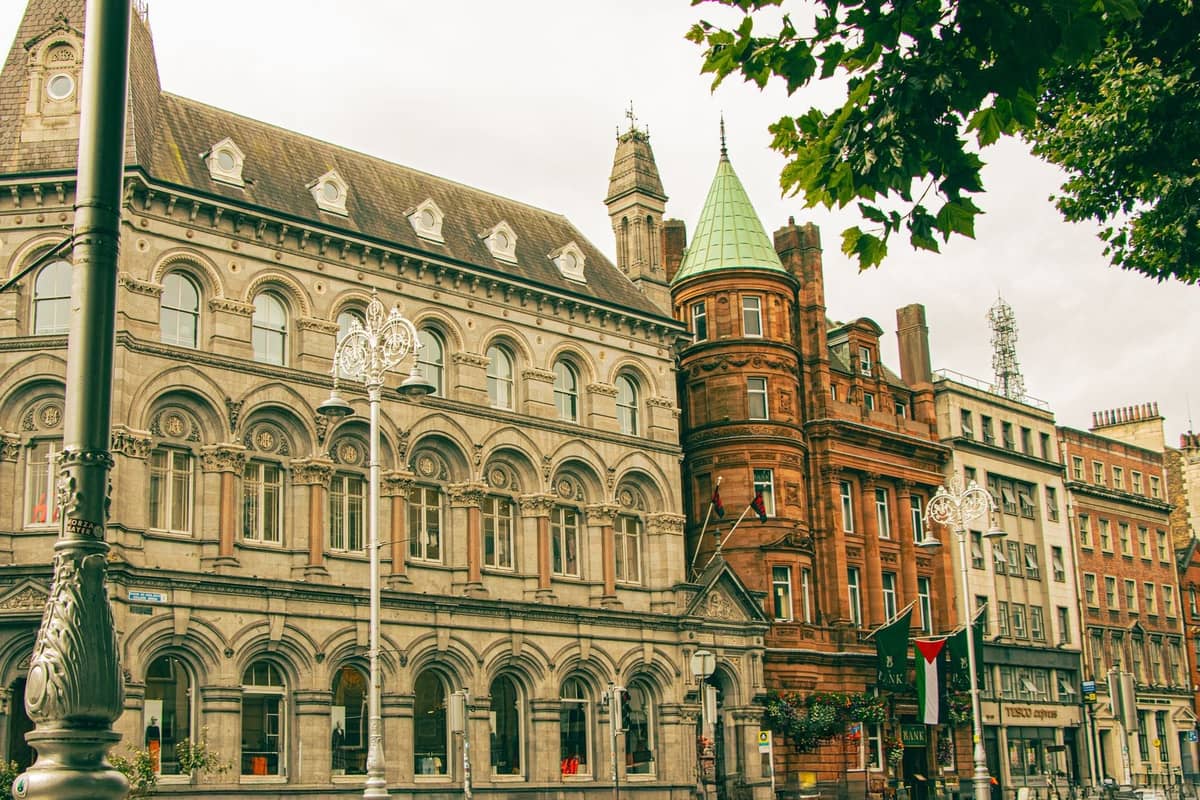
A sensible one-day literary itinerary keeps the city-centre sites together and saves the out-of-city locations for a separate half-day. Start at the Trinity College area: visit Sweny's Pharmacy on Lincoln Place (free), walk through the Trinity campus, and continue to the Museum of Literature Ireland on St Stephen's Green South. From there, the Oscar Wilde statue in Merrion Square Park is a 10-minute walk. This cluster takes most of a morning without feeling rushed.
For the James Joyce Tower at Sandycove, take the DART from Pearse Street station to Sandycove and Glasthule, a journey of around 25 minutes. This works well as an afternoon trip, ideally combined with a walk along the Dun Laoghaire waterfront. The tower and coastline together make the trip worthwhile; the tower alone is small enough that most visitors spend 30 to 45 minutes inside.
If you're visiting in mid-June, the timing around Bloomsday on 16 June transforms the literary trail significantly. Events are spread across the city for the full week, with costumed readings, theatrical performances, and organised walks. The James Joyce Centre coordinates much of the programming and publishes the schedule in advance. Booking anything Bloomsday-related early is strongly advised.
✨ Pro tip
Sweny's Pharmacy on Lincoln Place is run entirely by volunteers and operates on donations. It keeps irregular hours, so check their social media before visiting. Readings happen several times a week and are free. The lemon soap sold there (the same variety Bloom buys in Ulysses) costs a few euro and makes a far better Dublin souvenir than anything sold near Grafton Street.
Beyond the Big Three: The Wider Literary Landscape
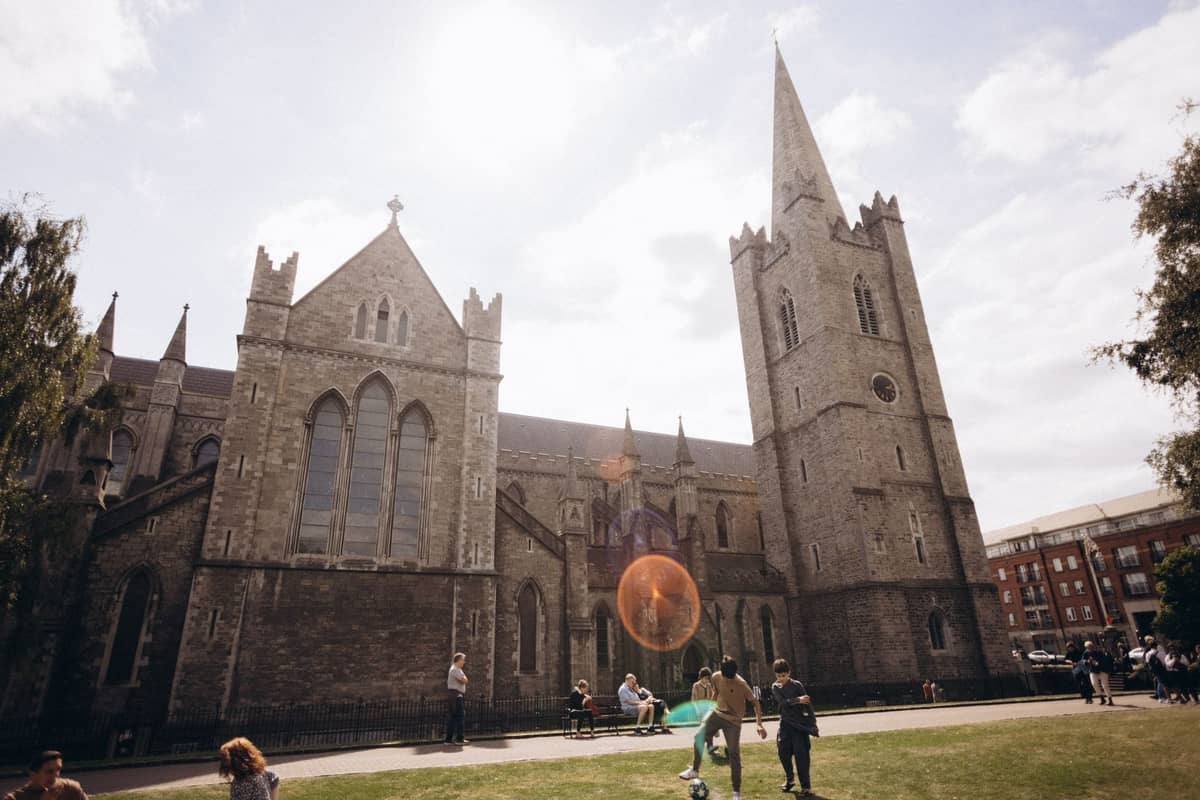
The trail extends well beyond Joyce, Wilde, and Beckett. Jonathan Swift served as Dean of St Patrick's Cathedral from 1713 until his death in 1745, and the cathedral still holds his grave and a small exhibit on his life. Bram Stoker, author of Dracula, was born in Clontarf and attended Trinity College. Patrick Kavanagh has a bench named after him beside the Grand Canal, a spot he wrote about directly in his poetry. Seamus Heaney, Nobel laureate in 1995, has a strong association with the city through his time at Carysfort College and later at the Royal Irish Academy.
The Dublin Writers Museum on Parnell Square North covers Irish literary history from the 18th century onward with manuscripts, personal items, and portraits. It sits close to the Garden of Remembrance and makes a logical pairing. The museum is particularly strong on the 19th and early 20th century period and gives useful context for visitors less familiar with the full arc of Irish literary history.
For a broader understanding of how Dublin's history shaped its writers, the Kilmainham Gaol provides essential context for the political circumstances that shaped the generation of writers active during and after the 1916 Easter Rising. It's not a literary site strictly speaking, but understanding that period makes Shaw, O'Casey, and others considerably more legible.
💡 Local tip
The best time to do outdoor literary walks is May to September, when daylight extends past 9pm and the Georgian streetscapes around Merrion Square and Fitzwilliam Square look their best. October to March works fine for indoor sites and pub crawls, but outer sites like the Sandycove tower are bleaker and have shorter opening windows.
FAQ
How long does a Dublin literary walking tour take?
Guided tours typically run two hours. A self-guided version covering the main city-centre sites (Trinity area, Merrion Square, St Stephen's Green cluster) takes around three to four hours at a comfortable pace. Adding Sandycove for the Joyce Tower adds at least a half-day with travel time.
Is the James Joyce Tower worth visiting?
Yes, if you have read Ulysses or have genuine interest in Joyce's biography. The setting is striking and the museum is well-curated. If you're only casually interested, the James Joyce Centre in the city centre is more accessible and covers similar ground without the DART trip.
Do I need to book the Dublin Literary Pub Crawl in advance?
In summer, yes. The evening pub crawl fills up quickly, particularly in June and July. Book through the official Dublin Literary Pub Crawl website at least a few days ahead. Off-season, walk-ups are usually possible on weeknights.
Is the Book of Kells exhibit open during the Long Room renovation?
The Book of Kells is currently displayed in a temporary location on the Trinity College campus while the historic Long Room undergoes renovation, expected to complete around 2026. Advance online booking is still required and recommended in peak season.
Are there free ways to follow the Dublin literary trail?
Several. Merrion Square Park and the Oscar Wilde statue are free. Sweny's Pharmacy operates on a donation basis. The Grand Canal (Kavanagh's bench) and the exterior of key buildings cost nothing to visit. The James Joyce Centre and Museum of Literature Ireland charge admission, but both have periodic free or reduced-price entry events. The Visit Dublin website also publishes a free self-guided Irish Writers Tour itinerary.