James Joyce Tower & Museum: Where Ulysses Begins
A 19th-century Martello tower on the rocky shore of Sandycove, the James Joyce Tower and Museum is where Joyce briefly lived in 1904 and where he set the famous opening chapter of Ulysses. Free to enter, compact but deeply evocative, it rewards anyone with even a passing interest in Irish literary history.
Quick Facts
- Location
- Sandycove Point, Dún Laoghaire, Dublin
- Getting There
- DART to Sandycove & Glasthule station (5–10 min walk); Bus 111 or 59 from Dalkey to Elton Park stop
- Time Needed
- 45 minutes to 1.5 hours
- Cost
- Free admission; groups requested to donate €1 per person
- Best for
- Literary travellers, architecture enthusiasts, coastal walkers
- Official website
- joycetower.ie
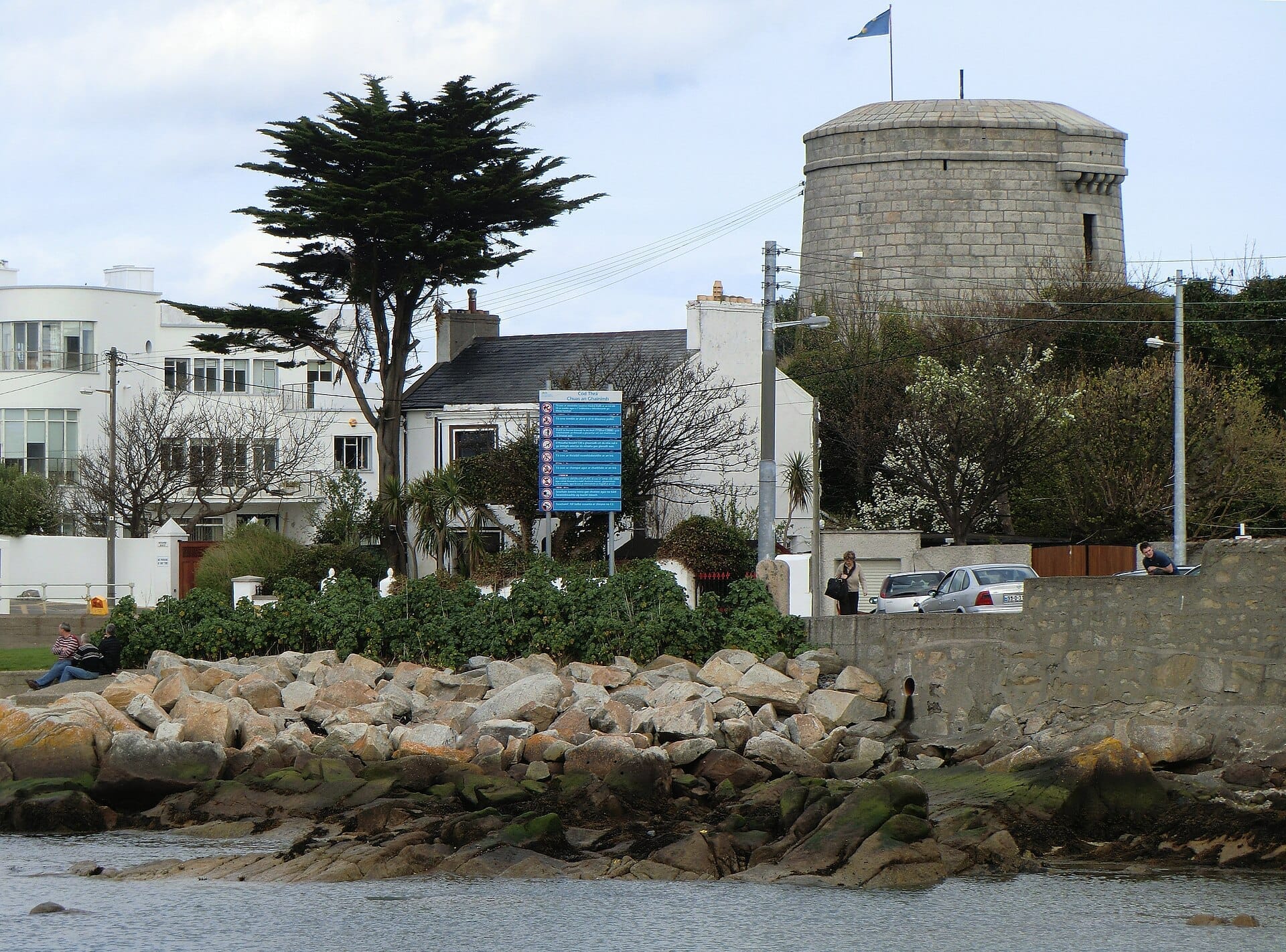
What the James Joyce Tower Actually Is
The James Joyce Tower and Museum is a squat, round Martello tower built by the British military in 1804 as one of a chain of coastal fortifications designed to repel a potential Napoleonic invasion that never materialised. It sits on a low granite promontory at Sandycove Point, roughly 14 km south of Dublin city centre and about 2 km from Dún Laoghaire town. The tower is small, with walls over a metre thick and a rooftop gun platform that now gives visitors uninterrupted views across Dublin Bay.
Its literary significance is precise and well-documented. In September 1904, the writer Oliver St John Gogarty rented the tower from the Secretary of State for War for an annual fee of eight pounds. James Joyce stayed there for six days before leaving abruptly after a tense incident involving another guest, Samuel Chenevix Trench, who fired a gun at the pots above Joyce's sleeping area during a nightmare. Joyce never returned to the tower, but he never forgot it either. He opened Ulysses, his 1922 novel, with Stephen Dedalus and the character Buck Mulligan standing on its rooftop, making it one of the most recognisable locations in 20th-century fiction.
The museum itself opened in 1962, partly through the efforts of Sylvia Beach, the Paris bookseller who first published Ulysses. It was the first dedicated Joyce museum in the world. Today the ground floor and first-floor rooms display first editions, personal letters, a waistcoat and tie owned by Joyce, his walking stick, and a death mask made after he died in Zurich in 1941. There is no charge to visit, and the collection is modest in scale but historically significant.
ℹ️ Good to know
Opening hours are Tuesday to Sunday, 10:00–16:00. On 16 June (Bloomsday), the tower opens at 07:45 for a special dawn reading. The tower is not wheelchair accessible due to the original military staircase design.
The Experience of Visiting: Room by Room, Then Rooftop
The entrance is at ground level, through a low door in the curved granite wall. The interior is darker and cooler than you expect, even on warm days. The walls are so thick they absorb sound, and the circular room has the slightly compressed feeling of a ship's cabin. Display cases hold the Joyce artefacts alongside editions of Ulysses in dozens of languages, including Japanese and Hebrew, a reminder of how far the book has travelled since Beach printed 1,000 copies in Paris.
The staircase to the upper levels is steep and narrow, the kind that requires turning sideways with a bag. Upstairs, a second display space contains photographs and documents relating to Joyce's life in Dublin, Trieste, Zurich, and Paris. The handwriting in the letters is small and precise. If you know the novel, you start recognising names: Nora Barnacle, Harriet Shaw Weaver, Ezra Pound.
The roof is the reason to make the climb. The circular gun platform gives a 360-degree view: Dublin Bay stretching northward toward Howth Head, the Wicklow Hills behind you to the south, and directly below, the famous Forty Foot bathing place, a tidal pool cut into the rocks where swimmers enter the sea year-round. On clear mornings, the light on the water is exactly as Joyce described it: a bowl of bitter waters.
💡 Local tip
Arrive early in the morning, when the light comes in low from the east across the bay and the Forty Foot swimmers are still in the water below. The rooftop is at its quietest before midday, and the views northward toward Howth are clearest before sea haze builds in the afternoon.
Tickets & tours
Hand-picked options from our booking partner. Prices are indicative; availability and final rates are confirmed when you complete your booking.
Giant's Causeway, Dark Hedges, and Belfast Tour from Dublin
From 85 €Instant confirmationFree cancellationDublin self-guided audio tour
From 10 €Instant confirmationBird of Prey, Cliffs of Moher and Aillwee Cave from Dublin
From 201 €Instant confirmationFree cancellationGame of Thrones Studio tour with return transfer from Dublin
From 63 €Instant confirmationFree cancellation
The Martello Tower: Architecture and Context
There are around 50 surviving Martello towers along the Irish coast, built between 1804 and 1806 as a rapid-response defence network against a possible Napoleonic invasion. The design is derived from a tower at Mortella Point in Corsica, which British forces found remarkably resistant to cannon fire during a 1794 engagement. The Irish towers were each garrisoned by one officer and 25 men, designed to delay rather than defeat any landing force.
The Sandycove tower is built from local granite and stands approximately 12 metres high. The walls at the base are over a metre thick. The original entrance was several metres above ground level, accessed by a ladder that could be pulled up, a defensive feature that also explains why visitors today still climb steep internal stairs rather than a comfortable modern staircase. The design was functional, not decorative, and it shows.
The tower sits within the broader Dún Laoghaire coastline, which repays exploration before or after your visit. The Dún Laoghaire Pier and its Victorian granite arms are a 20-minute walk up the coast road, and the combination of tower, pier, and seafront makes for a coherent half-day itinerary without needing to travel far.
Bloomsday and the Tower's Place in the Literary Calendar
Bloomsday, observed on 16 June each year, marks the date on which all the action of Ulysses takes place: 16 June 1904. The Joyce Tower is the natural starting point for any Bloomsday observance, since it is where the novel begins. The early morning opening at 07:45 on that date draws readers, scholars, and enthusiasts who gather on the rooftop for a reading from the opening chapter, Telemachus, as the sun rises over the bay.
If your visit to Dublin coincides with mid-June, planning around Bloomsday transforms an ordinary museum visit into something considerably more atmospheric. The Dublin Bloomsday guide covers the full day's events across the city, many of which are free and centred on the south inner city and the coast.
Outside of Bloomsday, the tower is quiet on most days. It does not have the visitor volume of the larger Dublin literary attractions. You will often find yourself in the museum with only a handful of other visitors, which is either appealing or underwhelming depending on what you came for.
Getting There and Planning Your Visit
The DART coastal rail line is the most direct connection. Take the DART from Pearse Street, Tara Street, or Connolly stations southbound and exit at Sandycove & Glasthule station. From the platform, the tower is a 5–10-minute walk downhill toward the sea. The journey from the city centre takes approximately 25 minutes and costs a standard DART fare. Bus routes 111 and 59 also serve the area, running from Dalkey and stopping at the Elton Park stop.
For a fuller day out, Dún Laoghaire town itself is worth exploring before or after the tower. The town has good cafes and restaurants along George's Street, and the pier walk is one of the better coastal walks within easy reach of Dublin. If you are planning a wider day trip along the southern coast, day trips from Dublin covers the options from Dún Laoghaire through to Dalkey and Killiney.
The tower is not wheelchair accessible. The internal stairs are original military construction: steep, narrow, and without handrails on both sides. Visitors with limited mobility can still view the ground-floor display but will not be able to reach the upper floor or rooftop.
⚠️ What to skip
The tower is closed on Mondays. Check the official site at joycetower.ie before travelling, as seasonal closures and special events can affect hours. Arriving to find it shut is a real possibility if you visit on a Monday or during special events.
Honest Assessment: Who Will Love This and Who Should Reconsider
For readers of Ulysses, or anyone following the Dublin literary trail, the James Joyce Tower and Museum is genuinely moving. Standing on the rooftop and reading the opening paragraphs of Telemachus while looking out at the actual bay Joyce described produces a specific kind of literary vertigo that larger, better-funded museums rarely achieve. The smallness of the space is part of what makes it work.
Visitors who have not read Joyce, or who have no particular interest in early 20th-century Irish literary culture, may find the collection thin. The museum is not large. The artefacts, however historically significant, do not have the visual impact of, say, the manuscript pages at the Book of Kells or the immersive exhibitions at the GPO Witness History museum. If you are managing limited time in Dublin and have no prior relationship with Joyce's work, the tower is probably not where you should spend it.
That said, the setting alone, a fortified granite tower on a rocky headland above a tidal swimming pool, is worth the DART journey even if the museum is not your primary motivation. Combine it with a swim at the Forty Foot and lunch in Dún Laoghaire, and the day earns its transport costs easily.
Insider Tips
- The Forty Foot bathing place directly below the tower is a year-round open-air sea swimming spot. Swimmers enter at all seasons, including Christmas Day. You do not need to be a Joyce enthusiast to find it extraordinary to watch.
- The museum's copy of the first edition of Ulysses is worth examining closely: the blue cover, the Greek-flag colouring, and the font are all deliberate choices by Joyce and Beach. Staff can explain the design decisions if you ask.
- On Bloomsday (16 June), arrive at the 07:45 opening rather than later in the day. The rooftop is crowded by mid-morning and the atmosphere of the early reading, with the sea light and a small group of dedicated readers, is not replicated by the afternoon crowds.
- The walk from Sandycove & Glasthule DART station takes you past some well-preserved Victorian terraces and a small park. It is short enough that most visitors don't bother looking around, which means you often arrive at the tower without the same cluster of people who took taxis.
- If you are following the full Dublin literary trail, the James Joyce Centre in the north inner city holds a complementary but quite different collection, focused more on Joyce's life in the city rather than specifically on Ulysses. The two visits work well together but do not duplicate each other.
Who Is James Joyce Tower & Museum, Sandycove For?
- Readers of Ulysses or anyone familiar with Joyce's biography
- Literary travellers building a Dublin writers' itinerary
- Architecture enthusiasts interested in Napoleonic-era coastal fortifications
- Visitors combining a coastal walk with a cultural stop
- Anyone in Dublin on 16 June looking to observe Bloomsday at its source
Nearby Attractions
Other things to see while in Dún Laoghaire:
- Dún Laoghaire East Pier Walk
The East Pier in Dún Laoghaire is a 1.3km granite walkway stretching into Dublin Bay, built from 1817 and free to walk year-round. Expect sea air, lighthouse views, dog walkers at dawn, and one of the most satisfying coastal strolls within easy reach of Dublin city centre.