Dún Laoghaire sits on Dublin's southern coastline, roughly 12 kilometres from the city centre, combining a working harbour history with Georgian and Victorian architecture, a strong café culture, and some of the best waterfront walking in the greater Dublin area. It functions as both a self-contained coastal town and a practical base for exploring the south Dublin coast.
Dún Laoghaire is Dublin's most distinctive coastal suburb: a Victorian harbour town that has never quite decided whether it belongs to the sea or the city, and is all the better for it. Its twin granite piers, wide promenade, and tree-lined streets of terraced houses give it a character unlike anything in central Dublin, while the DART line keeps it firmly connected to the capital in under 30 minutes.
Orientation
Dún Laoghaire (pronounced 'Dun Leary') sits on the southern shore of Dublin Bay, approximately 12 kilometres south of Dublin city centre. It is the administrative centre of the Dún Laoghaire-Rathdown county council area, which covers a broad swathe of south County Dublin stretching from the bay to the foothills of the Dublin Mountains.
The town's core runs along a grid of Victorian streets between the DART station and the seafront. Marine Road is the main artery linking the railway to the harbour. George's Street Lower and George's Street Upper form the primary commercial spine running roughly north-south through the town, lined with shops, cafés, and restaurants. York Road, Cumberland Street, and Library Road fan out from this core into quieter residential territory. The immediate surrounds include Tivoli Road, Cross Avenue, Glenageary Road Lower, Summerhill Road, and Clarinda Park, where terraced Victorian and Edwardian houses sit behind small front gardens.
To the south, the coastal villages of Sandycove and Glasthule merge almost imperceptibly into Dún Laoghaire's southern edge. Further along the coast lie Dalkey and Killiney, both accessible by DART or on foot. See our guide to Dalkey and Killiney if you plan to extend your coastal exploration.
Character and Atmosphere
The first thing you notice arriving in Dún Laoghaire is how much air there is. After the compressed streets of central Dublin, the wide open mouth of the harbour, the expanse of Dublin Bay, and the long straight promenade create an immediate sense of release. On a clear day, the Wicklow Mountains are visible to the south and the Hill of Howth to the north across the bay.
Early mornings belong to locals: swimmers heading for the Forty Foot bathing place at Sandycove, joggers on the piers, dog walkers doing slow circuits of the East Pier, and the first café staff opening shutters on George's Street. The light on the water in the morning, especially in autumn and spring, has a particular quality that explains why so many painters and writers have lived along this stretch of coast.
By mid-morning on weekends, the promenade and pier fill up with a mix of South Dublin families, cyclists, and visitors from the city who have taken the DART south for a few hours of sea air. The town centre on George's Street picks up steadily through the afternoon. This is genuinely a neighbourhood where people live and shop, not a tourist quarter sustained by visitors: there are pharmacies, hardware shops, and supermarkets among the boutiques and independent coffee shops.
After dark, Dún Laoghaire is calm rather than quiet. The restaurant strip along Marine Road and the streets around George's Street Lower stays active into the late evening, with a good selection of restaurants drawing diners from across South Dublin. It does not have the late-night intensity of central Dublin; by midnight the town is largely settled. This makes it well suited to travellers who want good food and proximity to the sea without the noise of a city-centre weekend.
ℹ️ Good to know
The name 'Dún Laoghaire' means 'Fort of Laoghaire', referencing a fort associated with the 5th-century High King of Ireland. For most of the 19th and 20th centuries the town was officially named Kingstown, reverting to the Irish name after independence in 1921.
History and Context
Dún Laoghaire's modern character was shaped by a single piece of legislation: the 1816 Act of Parliament that authorised construction of the harbour. Work began in 1817, and over the following decades the twin granite piers were built out into Dublin Bay to create one of the largest artificial harbours in Europe at the time. The purpose was practical: to provide a safe harbour of refuge and a reliable departure point for mail packets crossing to Holyhead in Wales.
The harbour triggered everything else. In 1834, the Dublin and Kingstown Railway opened, connecting the town to the city in what was Ireland's first passenger railway. The line ran along the coast, and the combination of sea air and reliable rail access turned the town into a fashionable Victorian resort. Grand terraces went up on the hillsides above the harbour, and the town acquired the prosperous, well-ordered character that its streets still carry today.
Through the 20th century the port function changed: car ferries replaced mail packets, and the ferry terminal at the harbour's western end became a major gateway to Britain. That route has since closed, but the harbour remains active with sailing clubs, the Irish Coast Guard, and seasonal ferry services. The administrative function has grown: since 1994 Dún Laoghaire has been the seat of Dún Laoghaire-Rathdown County Council, with County Hall on Marine Road housing the council's civic offices.
What to See and Do
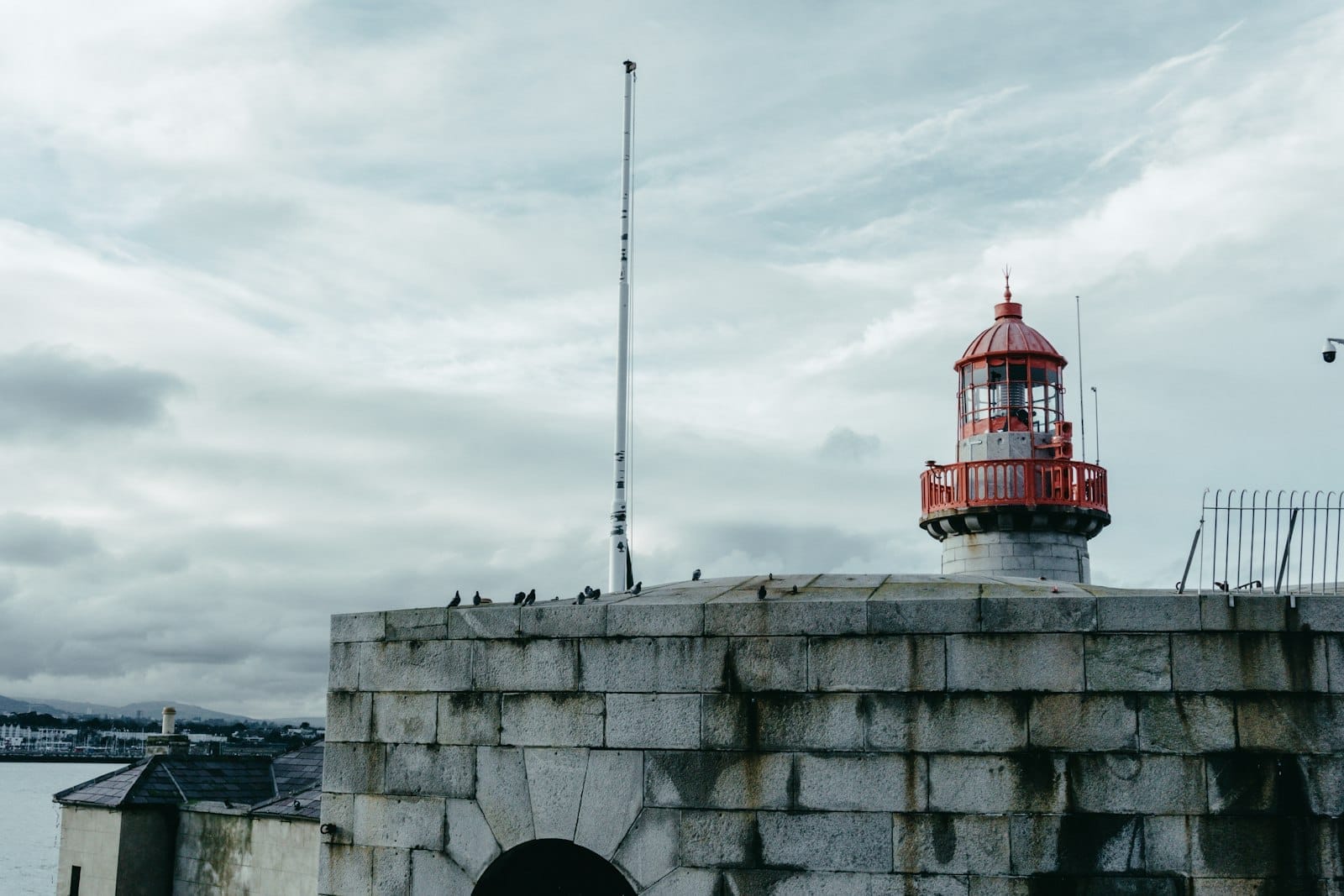
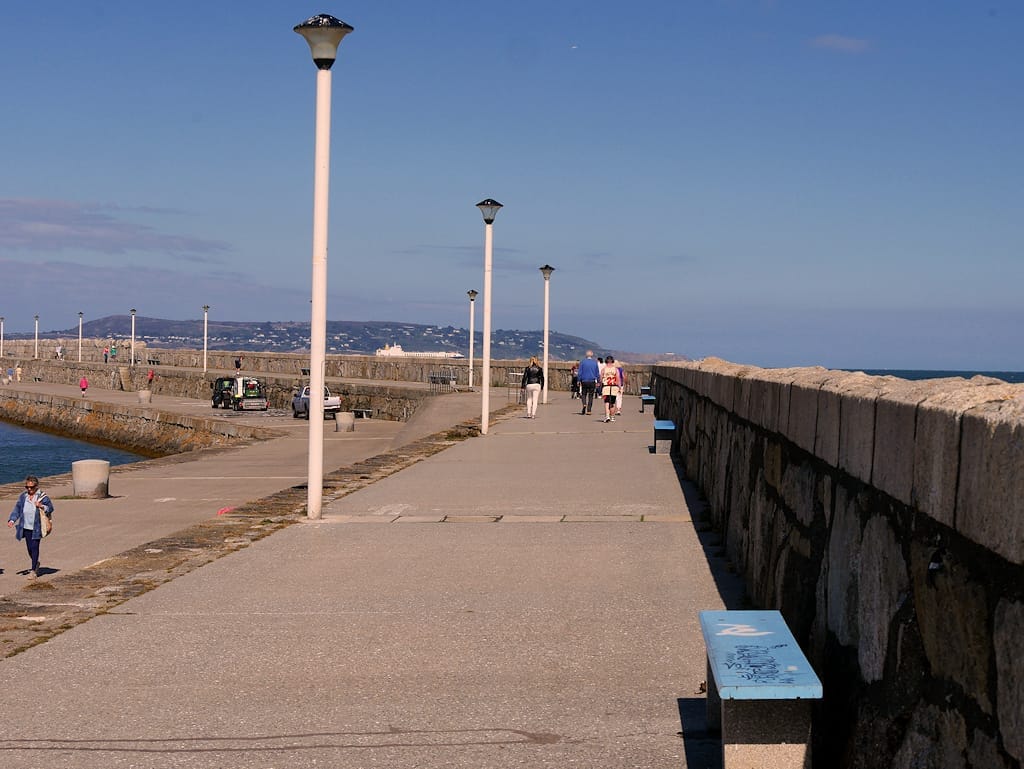
The harbour is the obvious starting point and deserves more than a glance from the promenade. Walk the East Pier from its landward end to the lighthouse at its tip: it is approximately 1.3 kilometres each way, and the views across Dublin Bay improve with every step. The West Pier is less maintained and less frequented but offers a different perspective back toward the town and the Dublin Mountains beyond. At the harbour's eastern end, the People's Park is a pleasant Victorian public garden that hosts a popular weekend market.
The Dún Laoghaire Pier walk is one of the most straightforward and rewarding things you can do on a visit: free, accessible, and with views that stretch from the Wicklow coast to Howth Head. On a clear winter afternoon, the low light turns the granite piers a warm amber and the bay looks like something from a 19th-century maritime painting.
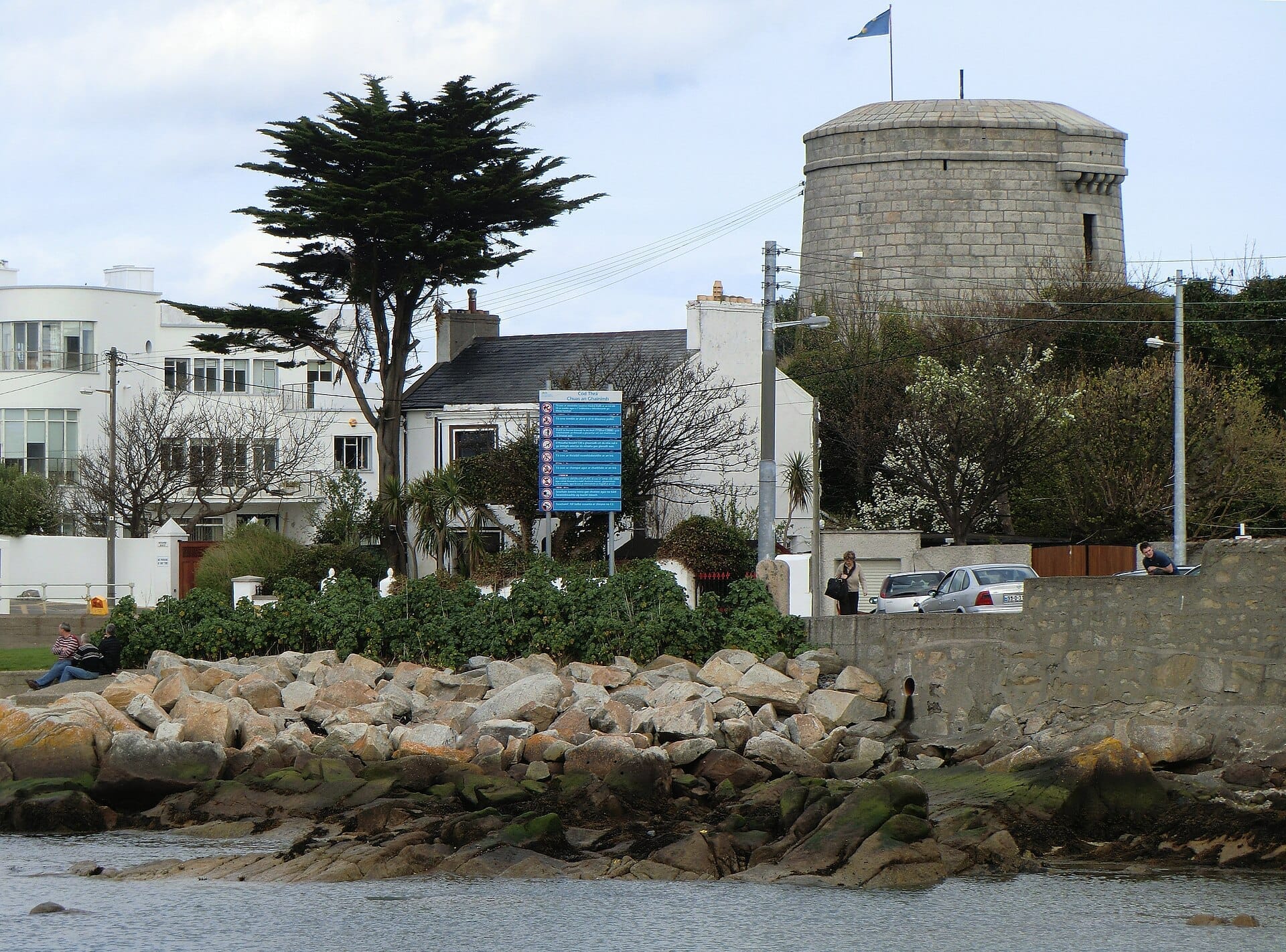
A short walk south from the harbour, past the Martello tower at Sandycove that James Joyce used as the setting for the opening chapter of Ulysses, you reach the James Joyce Tower and Museum. The tower is one of a series of Martello towers built around the Irish coast during the Napoleonic Wars, and the museum inside is compact but well assembled. The Forty Foot bathing place just below the tower is a sea swimming spot with a long tradition: open year-round, unheated, and popular at any hour.
Walk the East Pier to the lighthouse and back (free, allow 45-60 minutes)
Visit the James Joyce Tower and Museum at Sandycove
Swim or watch the swimmers at the Forty Foot bathing place
Browse the People's Park Weekend Market (Saturday and Sunday mornings)
Explore the National Maritime Museum of Ireland at the Mariners' Church on Haigh Terrace
Walk south along the coastal path toward Dalkey for views of Killiney Bay
💡 Local tip
The People's Park Weekend Market runs on Saturdays and Sundays in the Victorian park just east of the DART station. It draws a mix of food producers, craft sellers, and local artisans and is busiest from late morning onward. Arrive early for the best selection and a quieter atmosphere.
Eating and Drinking
Dún Laoghaire has a food scene that punches well above what you might expect from a coastal suburb. George's Street Lower and the streets immediately around it concentrate a significant number of independent restaurants, cafés, and wine bars, reflecting the spending power and food literacy of the local South Dublin population.
The café culture along George's Street runs from early morning to late afternoon with genuine quality. Specialty coffee, good pastries, and brunch menus are standard across several independent operators. The area attracts a knowledgeable local clientele who have clear expectations, which tends to keep standards honest. For a more traditional Irish pub experience, a few well-kept locals on the side streets off George's Street offer a quieter, less tourist-oriented alternative to the city centre pub scene.
The restaurant offer in the evenings leans toward European cooking: French bistro-style, Italian, and contemporary Irish menus built around fresh seafood from Dublin Bay and produce from the surrounding county. Price points are mid-range to upper-mid-range; this is not a budget dining destination, though lunch menus at several restaurants offer better value. Marine Road and the streets running off it toward the seafront have the highest concentration of evening restaurants.
Because specific restaurant names change more quickly than a neighbourhood's overall character, the reliable approach is to walk George's Street Lower and check menus on the day. The strip is compact enough that you can assess several options in a ten-minute walk, and opening hours in Ireland vary enough that a visual check is always worthwhile.
⚠️ What to skip
Dún Laoghaire has relatively few very cheap eating options compared to central Dublin. If you are travelling on a tight budget, consider eating in the city centre before heading out, or picking up supplies from one of the supermarkets on George's Street for a pier picnic, which in good weather is genuinely excellent.
Getting There and Around
The DART (Dublin Area Rapid Transit) is the primary connection between Dún Laoghaire and Dublin city centre. Trains run frequently throughout the day from Dún Laoghaire DART station, located on Haigh Terrace just above Marine Road. The journey to Pearse Station, the most convenient city-centre stop for the south side and Trinity College area, takes around 15 to 20 minutes. The full journey to Connolly Station, the main northern rail hub, takes approximately 25 to 30 minutes. Trains run roughly every 10 to 15 minutes during peak hours and every 15 to 20 minutes off-peak; always check current Irish Rail timetables before travelling, as schedules are subject to change.
The DART also runs south from Dún Laoghaire, giving easy access to Sandycove and Glasthule, Glenageary, Dalkey, and Killiney without needing to double back to the city. For a longer coastal excursion, see the getting around Dublin guide for advice on using the DART and Leap Card across the network.
Several Dublin Bus routes also serve Dún Laoghaire, connecting the town to Blackrock, Dún Laoghaire shopping centre (just north of the town centre), and various points across South Dublin. Bus connections are more useful for reaching parts of the county not covered by the DART than for the main city-centre journey, where the train is faster and more direct.
Within the town itself, almost everything worth seeing is walkable. The DART station, the harbour, the East Pier, and the main commercial streets form a compact area covering perhaps 800 metres from the furthest points. The walk south along the seafront to Sandycove and the Forty Foot takes about 15 to 20 minutes at a comfortable pace. A Leap Card (the reusable transport card used across Dublin's bus, DART, and Luas network) is the most economical way to pay for DART travel; single fares can be significantly more expensive when paid in cash.
Where to Stay
Dún Laoghaire is a credible alternative base to central Dublin for travellers who prefer sea air, quieter streets, and the option to walk to the water. The DART connection makes the city centre accessible without the cost or noise of a central hotel, and the town's restaurant and café offer is strong enough that you do not need to go into the city for meals.
The Royal Marine Hotel on Marine Road is the most prominent accommodation option in the town centre, a Victorian property that has operated as a hotel for most of its history and occupies a commanding position above the harbour. Beyond that, the area is better served by guesthouses, B&Bs in the surrounding residential streets, and self-catering apartments than by large hotel inventory. For a fuller picture of accommodation options across the city and its coastal suburbs, see the where to stay in Dublin guide.
Dún Laoghaire suits independent travellers, couples, and families more than large groups. It is a particularly good fit for anyone combining a Dublin city trip with coastal walks, sea swimming, or day trips south toward the Wicklow coast. If your primary purpose is Dublin city-centre sightseeing and nightlife, staying in Dún Laoghaire adds a commute that, while short, means you will leave events earlier or pay for late taxis. Know your own priorities before booking.
💡 Local tip
Staying in Dún Laoghaire positions you well for a day trip south to the Wicklow Mountains or along the coast to Dalkey and Bray. These routes are dramatically easier from the southern DART line than from the city centre, and the time saving on morning departures can be significant.
Day Trips and Onward Connections
Dún Laoghaire's position on the southern DART line makes it an excellent launching point for coastal exploration. Dalkey and Killiney are two stops south, Howth is accessible by DART via the city centre, and the Wicklow Mountains National Park is reachable by bus or car from the town. For a curated list of excursions beyond the city, the day trips from Dublin guide covers the best options with transport details.
The coastal path running south from Dún Laoghaire toward Dalkey and Killiney can be walked in sections or as a longer route, passing the Forty Foot, the Joyce Tower, and several small coves along the way. This stretch of coastline is genuinely one of the most scenic parts of the greater Dublin area and rewards a slow, unhurried pace far more than it rewards trying to cover it quickly.
TL;DR
Dún Laoghaire is a Victorian harbour town 12 kilometres south of central Dublin, connected by the DART in 15-20 minutes: close enough to use the city freely, far enough to feel like a different world.
The twin granite piers, the seafront promenade, and the Forty Foot bathing spot are the neighbourhood's defining experiences, all free and all best appreciated in the morning or late afternoon when crowds thin.
The food and café scene on George's Street and Marine Road is strong but not cheap: mid-range to upper-mid-range pricing reflects a local South Dublin clientele with high expectations.
Best suited to independent travellers, couples, and families who want sea air, coastal walking, and good restaurants without the noise of a city-centre base. Less ideal if your focus is nightlife or very early-morning museum queues.
Use a Leap Card for the DART and consider combining a Dún Laoghaire visit with a short hop south to Dalkey, Killiney, or the Wicklow coast for a fuller picture of Dublin's southern coastline.
Three days is the sweet spot for Dublin. Long enough to cover the iconic historic sites, dig into the food and pub culture, and fit in a coastal or countryside excursion. This itinerary is built around real logistics, honest crowd warnings, and the kind of sequencing that makes a short trip feel unhurried.
Dublin punches well above its weight as a museum city. Several of its finest institutions are completely free, and the range spans Celtic gold, Viking archaeology, Irish revolutionary history, world literature, and contemporary art. This guide covers the best museums in Dublin, grouped by theme, with practical advice on when to go and what to expect.
Dublin rewards visitors year-round, but the timing of your trip shapes everything from hotel prices to what you can actually do outdoors. This guide breaks down every month, season, and key trade-off so you can plan with confidence.
Dublin sits at the centre of an exceptional day trip network. Within two hours you can reach glacial mountain valleys, medieval castles, dramatic coastal headlands, and one of Europe's great prehistoric monuments. This guide covers the best escapes, how to get there, and what to expect.
Dublin Bay is a UNESCO Biosphere Reserve with more beaches than most visitors expect. This guide covers the best strands, swimming spots, and coastal walks within easy reach of the city, from the vast sands of Dollymount to the dramatic cliffs of Howth and the sheltered coves of Dún Laoghaire.
Bloomsday is Dublin's most distinctive literary celebration, held every 16 June to honour the date James Joyce set Ulysses. This guide covers the key locations, walking routes, festival events, food traditions, and everything you need to join the festivities — whether you've read the book or not.
Dublin rewards couples who look beyond the obvious. This guide covers scenic walks, intimate cultural experiences, evening entertainment, and coastal day trips — with honest advice on what's worth it and what to skip.
Attending a Gaelic Games match at Croke Park is one of the most authentic experiences Dublin offers. This guide covers everything from buying tickets and navigating the stadium to understanding the sport, the season, and what separates a regular league game from an All-Ireland final.
Dublin rewards the curious traveller who ventures beyond the Guinness Storehouse and Temple Bar. From a mummified Crusader beneath a Northside church to a Victorian reservoir turned secret garden, these are the places Dubliners love and visitors rarely find.
Dublin transforms in winter, with Christmas markets running from late November through early January, citywide light trails, cathedral concerts, and festive fairgrounds. This guide covers every major event, what things actually cost, and what to watch out for before you visit.
Dublin is one of the few cities in the world to have produced three Nobel Prize-winning writers of literature. This guide maps the key sites connected to George Bernard Shaw, W.B. Yeats, and Samuel Beckett, plus James Joyce, Oscar Wilde, and others, covers the best guided tours with practical pricing, and gives you the detail to do it properly.
Dublin has around 772 pubs, dozens of late-night bars, and several distinct club districts. This guide breaks down where to drink, when to go, what it costs, and which neighbourhoods to skip if you want to avoid tourist pricing.
Dublin has a reputation for being expensive, but that reputation is only half true. The city's best museums are free, the centre is walkable, public transport is cheap with the right pass, and the finest pub sessions cost nothing beyond the price of a pint. This guide breaks down every major cost category so you can plan a genuinely great trip without watching every euro.
Seven days is enough to see Dublin's best and reach the wild west coast of Ireland, but only if you plan smart. This itinerary balances city time with coastal scenery, covers realistic driving and transit times, and flags the planning mistakes that turn a great trip into an exhausting one.
Dublin, Ireland offers a surprisingly varied shopping scene, from the flagship stores lining Grafton Street to independent boutiques on South William Street, weekend food markets in Temple Bar, and Ireland's largest mall in Dundrum. This guide covers where to go, what to expect, and how to avoid wasting time.
Dublin rewards walkers like few cities in Europe. Compact enough to cover on foot, layered enough to take weeks to unpack, the city reveals itself best at street level. This guide covers the stops, routes, and landmarks that make Dublin's walking tours so compelling.
Dublin punches well above its weight as a family destination. Between a world-class zoo, free city parks, Viking history museums, coastal castles, and indoor waterparks, there is genuinely enough to fill a week without repeating yourself. This guide covers the best things to do in Dublin with kids, organised by type, age range, and weather — so you can plan around Irish reality rather than tourist brochure optimism.
Dublin punches well above its weight for free attractions. National museums, modern art galleries, coastal walks, and grand public parks all cost nothing to enter. This guide covers 22 of the best free things to do across the city, organised by type so you can plan your days without watching your budget.
Dublin's Georgian streets and squares represent one of Europe's most intact examples of 18th-century urban planning. This guide covers the key buildings, the best self-guided walking route, what's actually open to visitors, and how to avoid the common traps that waste your time.
Dublin's public transport network covers the city and coast through buses, DART rail, Luas trams, and airport coaches. This guide breaks down fares, Leap Card options, airport transfer routes, and the practical details that save you time and money when navigating Ireland's capital.
Dublin sits at the doorstep of some of Ireland's finest walking country. Whether you want cliff-top sea views, ancient monastic valleys, or proper mountain terrain, these are the best hikes and trails within easy reach of the city.
Dublin's St Patrick's Festival is a multi-day national celebration centred on 17 March, with a free city-centre parade, ticketed concerts, street theatre, and events across the city. This guide covers the full programme, booking essentials, crowd logistics, and what to realistically expect from Ireland's biggest annual celebration.
Dublin packs centuries of history, world-class museums, legendary pubs, and coastal scenery into a compact, walkable city. This guide covers the best things to do in Dublin across every interest and budget, with honest advice on what's worth your time and what to skip.
Dublin's food scene has transformed well beyond stew and soda bread. This guide covers the essential Irish dishes, where to find them, what to pay, and which areas give you the best value — including a frank look at where not to waste your money.
Choosing where to stay in Dublin, Ireland shapes your entire trip. This guide breaks down every major neighbourhood by location, vibe, price range, and transport links, so you can book with confidence rather than guesswork.