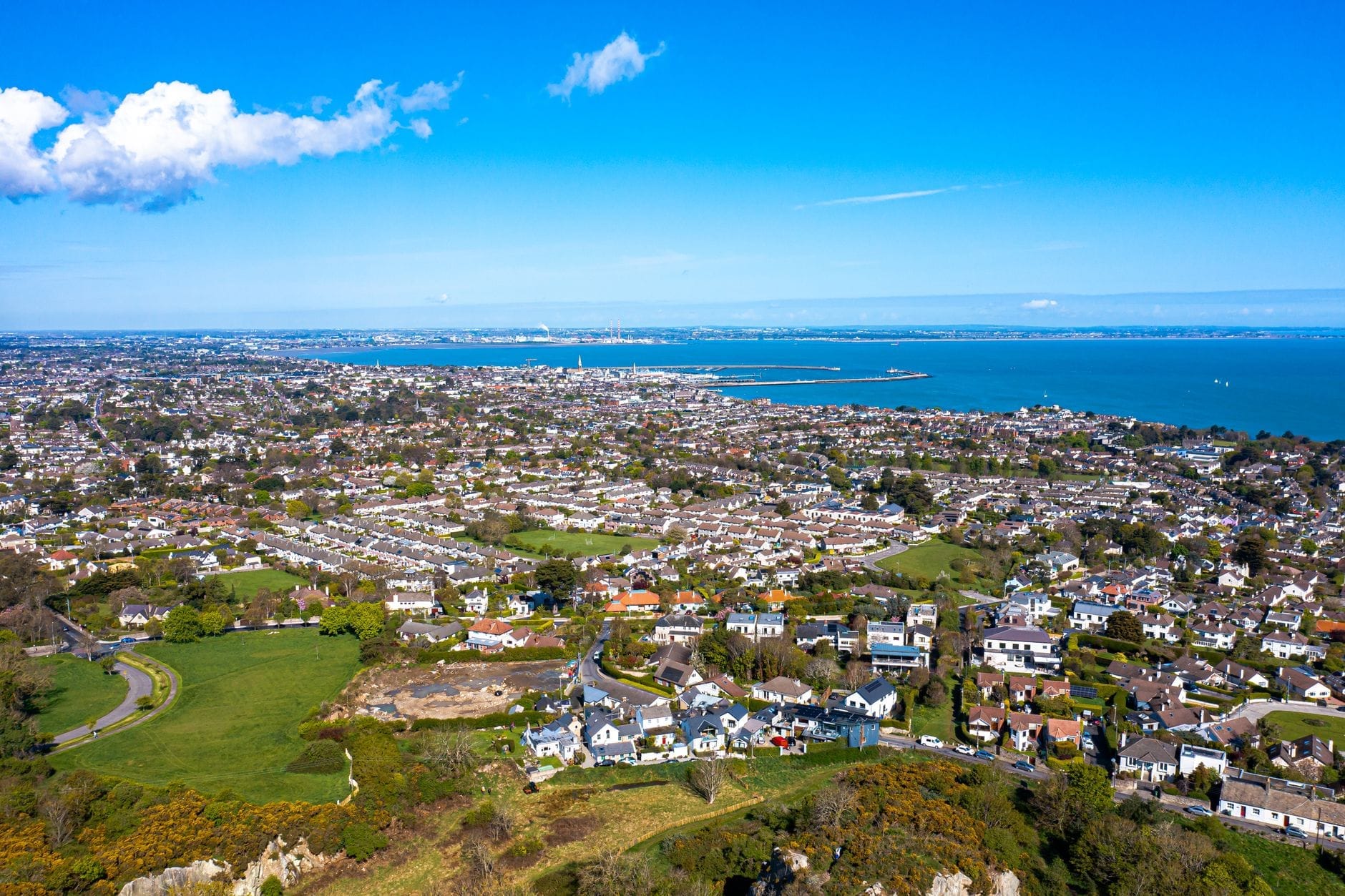
Dalkey and Killiney are Dublin's most scenic coastal suburbs, stretching along the southern shore of Dublin Bay. From the medieval streets of Dalkey village to the sweeping views atop Killiney Hill, this stretch of coastline sits in sharp contrast to the city's urban core, yet remains remarkably easy to reach by DART rail.
Dalkey and Killiney represent the quieter, more prosperous edge of Dublin's coastline: a medieval village turned affluent suburb, a hill with views that stop people mid-sentence, and a pebble beach that feels a world away from the city centre. This is where Dubliners come when they need to remember why they live here.
Orientation
Dalkey and Killiney sit roughly 16 kilometres southeast of Dublin city centre, in the administrative county of Dún Laoghaire-Rathdown. They occupy the southern end of a coastal arc that begins at Dún Laoghaire and curves down past Sandycove toward the wide open expanse of Killiney Bay. Together, they form a continuous stretch of coast that transitions from compact village to open hillside with very little interruption.
Dalkey itself is anchored around Castle Street and the small harbour at Coliemore Road, from which boats leave for Dalkey Island just offshore. Walking south from the village, Vico Road and Killiney Hill Road trace the hillside above the bay, eventually connecting to Killiney Hill Park. Below the hill, Killiney Strand runs for nearly two kilometres along the water's edge. The Italianate street names in this area, Vico Road, Sorrento Road, Sorrento Terrace, are no accident: Victorian-era residents who could afford to build on these dramatic clifftops drew obvious comparisons to the Bay of Naples.
The nearest neighbouring area to the north is Dún Laoghaire, which connects onward toward Dún Laoghaire's seafront and pier. Together, the two areas form a natural day out from the city. To the south, the suburb of Shankill marks the end of the Killiney coastline before the landscape opens toward Bray and County Wicklow.
Character & Atmosphere
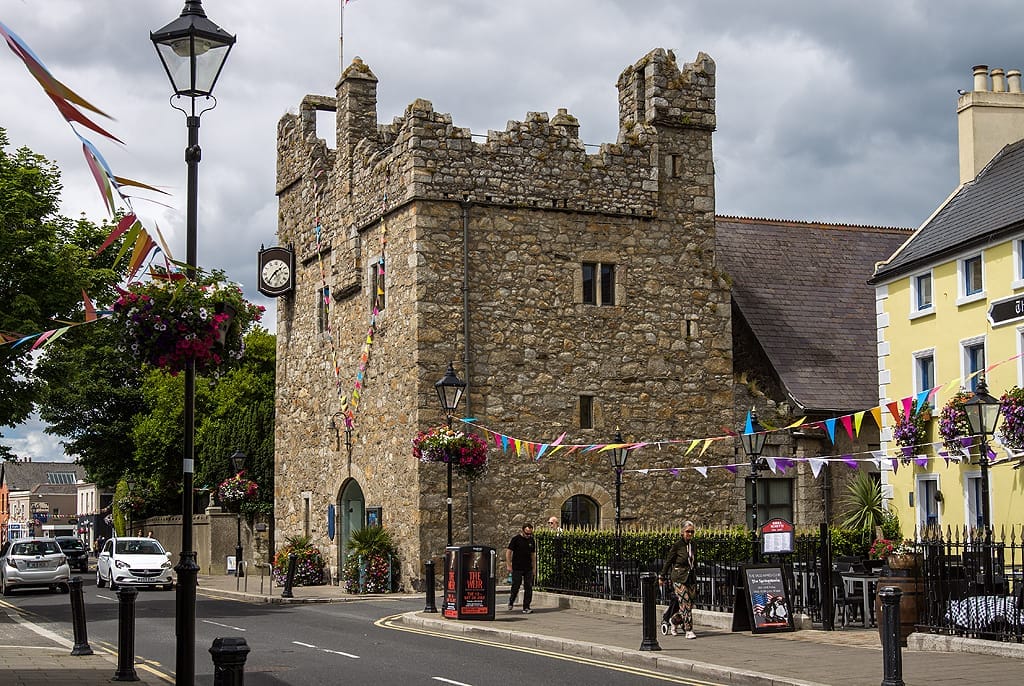
Dalkey village has the unhurried quality of a place that has always known its own value. The streets around Castle Street are narrow enough that two cars sometimes have to negotiate, and the footpaths fill with people who have come specifically to be here rather than passing through. There are independent bookshops, butchers, delis stocked with Irish cheeses and smoked fish, and restaurants that take their wine lists seriously. It is one of Dublin's wealthiest districts, and it shows, though not in a way that feels exclusive. The pubs are warm, the coffee is good, and the village has retained enough physical character, including the hulking stone walls of Dalkey Castle, to feel genuinely historic rather than manicured.
On a weekday morning, the village is quiet enough that you can hear your footsteps on Castle Street. By Saturday afternoon, the pavement tables are full, the DART has delivered its contingent of day-trippers, and there is a loose, unhurried energy that is characteristic of places people visit to relax. Sunday mornings bring runners heading for Killiney Hill and families walking down to Coliemore Harbour to watch the boats.
The light here is worth noting. Because the coastline faces broadly east and southeast across Dublin Bay, mornings are particularly clear, with the sun lifting off the water and catching the granite houses on the hillside. By late afternoon, the hill casts long shadows across the beach below, and the bay takes on a deeper, cooler tone. In summer, evenings extend well past nine o'clock, and the walk along Vico Road at dusk is one of the more quietly spectacular things you can do in the greater Dublin area.
Killiney, by contrast, is almost entirely residential. There is no village centre to speak of, just large houses behind stone walls, a DART station, and the park on the hill. Its appeal is almost entirely landscape-based: the hill, the beach, and the view. Visitors who come expecting cafes and pubs will be disappointed. Those who come expecting to walk somewhere genuinely beautiful will not.
ℹ️ Good to know
Dalkey has long attracted writers and artists. George Bernard Shaw spent his formative years here, and Maeve Binchy, who was born in Dalkey, set several of her novels in the area. Bono and other well-known figures have homes on the hillside above the village, though you are unlikely to notice the residences from the road.
What to See & Do
The most obvious starting point in the village is Dalkey Castle, a restored medieval tower house on Castle Street that dates to the fifteenth century. The castle operated as a customhouse during Dalkey's years as one of Dublin's main trading harbours, when the shallow waters of the Liffey made the deeper anchorage here commercially essential. Today it houses a heritage centre with guided tours that cover medieval history and living history performances, making it one of the better small heritage experiences on the Dublin coast.
From Coliemore Harbour, small boats run out to Dalkey Island, a low-lying island about 300 metres offshore. The island is uninhabited now, but it carries the ruins of a seventh-century church, a Martello tower dating to the Napoleonic era, and a surprisingly confident population of feral goats. The crossing takes only a few minutes, and the island makes for a pleasant hour of exploration. The boats are seasonal and run informally, so check locally before making plans around the crossing.
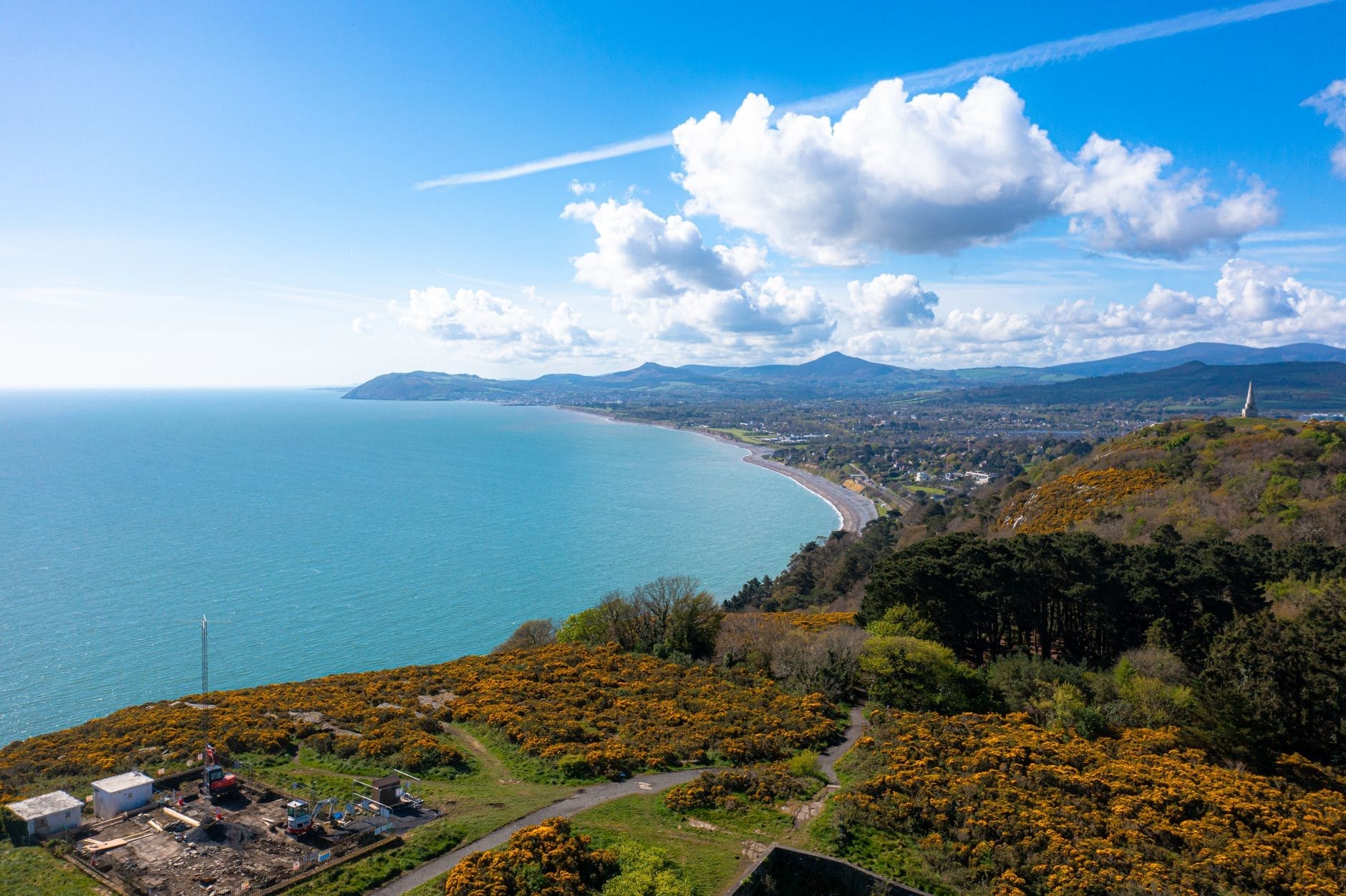
The main natural draw is Killiney Hill Park, which rises steeply behind both Dalkey and Killiney. The park is managed by Dún Laoghaire-Rathdown County Council and is free to enter. At the summit stands an obelisk built in 1742 to provide employment during the famine of 1740-41, one of the more understated pieces of social history in the Dublin region. The views from the top take in the full arc of Killiney Bay, the Wicklow Mountains to the south, and on a clear day, the distant outline of the Welsh coast. The paths vary in steepness, and the network is extensive enough to reward multiple visits.
Below the hill, Killiney Strand is a long pebble beach that attracts swimmers from spring through autumn. It is not a sand beach, and the water is cold by most standards, but it is clean, the setting is dramatic, and on warm summer weekends it draws a dedicated crowd. Continuing north along the coastal path from Killiney brings you eventually to the Forty Foot at Sandycove, the famous open-air sea-swimming spot associated with the opening of James Joyce's Ulysses, a walk of several kilometres that passes through some of the finest coastal scenery in the county.
Dalkey Castle and Heritage Centre on Castle Street: guided tours and living history
Dalkey Island: accessible by small boat from Coliemore Harbour, seasonal
Killiney Hill Park: free, well-marked trails, summit obelisk with panoramic views
Killiney Strand: pebble beach for swimming and coastal walks
Coastal path north toward Sandycove and the Forty Foot swimming point
Vico Road: scenic clifftop road with views over the bay, good for a late afternoon walk
💡 Local tip
The Dún Laoghaire to Dalkey to Killiney Hill loop trail is popular with both walkers and runners and is well-signed. Doing it north to south, starting from Dún Laoghaire DART station, means you finish the walk downhill at Killiney station, where you can catch the DART back. Bring water, as there are no facilities on the hill itself.
Eating & Drinking
Dalkey's food scene punches well above its size. The village has accumulated a collection of restaurants, wine bars, and cafes that would not look out of place in a much larger city, and the quality is generally high. The concentration of independent businesses along Castle Street and the streets radiating from it reflects both the relative affluence of the local population and a genuine food culture that predates recent trends.
For casual eating, the delis and cafes around the main street do excellent sandwiches, soups, and pastries. For something more substantial, the village has several restaurants covering Irish seafood, modern European cooking, and Italian, with fresh fish featuring heavily given the proximity to the harbour. Prices reflect the postcode: this is not budget territory, but the quality generally justifies the cost. Weekend evenings are busy, and booking ahead for sit-down restaurants is advisable.
The pub scene is genuinely good. Dalkey has several traditional pubs that have not been over-renovated, where you can get a decent pint of Guinness and, in the right conditions, some live music. These are neighbourhood pubs first, tourist pubs second, which makes them considerably more pleasant to spend time in. After dark, the village stays lively on weekends without tipping into the kind of noise that characterises parts of the city centre.
There is almost nothing to eat or drink in Killiney itself. If you are spending time on the hill or the beach, bring your own food, or plan to return to Dalkey village afterwards. The walk between the two is short enough that this is no great hardship.
Getting There & Around
The DART is by far the most practical way to reach this part of the coast. Dalkey station sits at the foot of the village and is served by the Dublin Area Rapid Transit line, with frequent services running from Connolly, Tara Street, and Pearse stations in the city centre. Journey time is approximately 30 minutes from the city centre. Killiney station, one stop further south, is the better option if your main destination is the hill or the beach. For a broader overview of how the DART and other transit options connect the city, the getting around Dublin guide covers the full network in detail.
By bus, Go-Ahead Ireland's route 59 operates between Dún Laoghaire, Dalkey, Glenageary, and Killiney Victoria Road on an approximately hourly frequency. For those arriving directly from Dublin Airport, Aircoach route 703 runs to Dún Laoghaire with stops in Dalkey and Killiney, though the service runs roughly every two hours, so it requires planning around the timetable.
Driving from the city centre takes around 30-40 minutes depending on traffic, using the N11 or the coastal route through Blackrock and Dún Laoghaire. Parking in Dalkey village is limited, and on summer weekends it fills quickly. The DART is the more reliable option for weekend visits. Once you arrive, both Dalkey and Killiney Hill are easily navigated on foot. The coastal walk between Dalkey and Killiney DART station via Vico Road and the hill is approximately 5-6 kilometres and takes between 90 minutes and two hours at a walking pace.
⚠️ What to skip
Killiney Hill paths can be steep and uneven in places, particularly on the direct ascent from Killiney Hill Road. Wear shoes with grip. The hill is exposed to wind and rain that can arrive quickly off the bay, so a light waterproof layer is worth carrying regardless of the forecast.
Where to Stay
Dalkey and Killiney are primarily residential suburbs, and accommodation options are limited compared to the city centre. There are no large hotels in the immediate area. What exists is mainly in the form of guesthouses, small boutique properties, and self-catering apartments, some of which occupy impressive positions with sea views.
Staying here makes most sense for travellers who want a quieter base outside the city, are primarily interested in the coastal walks and outdoor activities of this stretch of coast, or are visiting for several days and want to combine Dalkey with day trips along the DART line to Howth or the Dún Laoghaire waterfront. For first-time visitors to Dublin who want easy access to the main city attractions, the city centre or the inner southside will serve better. For a fuller picture of where different types of travellers tend to base themselves, the Dublin accommodation guide offers a useful overview by neighbourhood and travel style.
The DART connection is reliable enough that even staying in Dalkey does not mean sacrificing access to central Dublin. A morning in the city centre followed by an afternoon back on the coast is entirely workable, and the contrast between the two makes for a more varied stay than remaining in the city throughout.
Day Trips and Wider Connections
Dalkey and Killiney sit at the southern end of a coastal DART corridor that links several of Dublin's most interesting seaside destinations. A single day can comfortably include a morning at the Dún Laoghaire Pier followed by an afternoon on Killiney Hill, using the DART to connect them. In the other direction along the line, Howth to the north offers its own cliff walks and harbour seafood scene as a natural complement.
For those based in Dalkey, the Wicklow Mountains are within easy reach by car or organised tour. The drive south along the coast and up into the hills takes less than an hour, and the contrast between the bay views at sea level and the open moorland of the Wicklow uplands is striking. The Wicklow Mountains National Park and the monastic site at Glendalough make a logical extension to any stay in this part of the county.
TL;DR
Dalkey is a compact, well-preserved coastal village with medieval history, excellent food, and strong pub culture, set about 30 minutes from Dublin city centre by DART.
Killiney Hill offers some of the best free walking and views in the greater Dublin area, with a panorama across the bay to the Wicklow Mountains that justifies the trip on its own.
This area suits travellers who want coastal scenery, outdoor activity, and a quieter pace, rather than those prioritising central Dublin sightseeing or nightlife.
Accommodation is limited and mostly small-scale; day-tripping from the city centre via DART is the most common and practical approach.
Not ideal for travellers on tight budgets: restaurants and bars in Dalkey lean toward the premium end, and the area has very limited budget dining options.
Three days is the sweet spot for Dublin. Long enough to cover the iconic historic sites, dig into the food and pub culture, and fit in a coastal or countryside excursion. This itinerary is built around real logistics, honest crowd warnings, and the kind of sequencing that makes a short trip feel unhurried.
Dublin punches well above its weight as a museum city. Several of its finest institutions are completely free, and the range spans Celtic gold, Viking archaeology, Irish revolutionary history, world literature, and contemporary art. This guide covers the best museums in Dublin, grouped by theme, with practical advice on when to go and what to expect.
Dublin rewards visitors year-round, but the timing of your trip shapes everything from hotel prices to what you can actually do outdoors. This guide breaks down every month, season, and key trade-off so you can plan with confidence.
Dublin sits at the centre of an exceptional day trip network. Within two hours you can reach glacial mountain valleys, medieval castles, dramatic coastal headlands, and one of Europe's great prehistoric monuments. This guide covers the best escapes, how to get there, and what to expect.
Dublin Bay is a UNESCO Biosphere Reserve with more beaches than most visitors expect. This guide covers the best strands, swimming spots, and coastal walks within easy reach of the city, from the vast sands of Dollymount to the dramatic cliffs of Howth and the sheltered coves of Dún Laoghaire.
Bloomsday is Dublin's most distinctive literary celebration, held every 16 June to honour the date James Joyce set Ulysses. This guide covers the key locations, walking routes, festival events, food traditions, and everything you need to join the festivities — whether you've read the book or not.
Dublin rewards couples who look beyond the obvious. This guide covers scenic walks, intimate cultural experiences, evening entertainment, and coastal day trips — with honest advice on what's worth it and what to skip.
Attending a Gaelic Games match at Croke Park is one of the most authentic experiences Dublin offers. This guide covers everything from buying tickets and navigating the stadium to understanding the sport, the season, and what separates a regular league game from an All-Ireland final.
Dublin rewards the curious traveller who ventures beyond the Guinness Storehouse and Temple Bar. From a mummified Crusader beneath a Northside church to a Victorian reservoir turned secret garden, these are the places Dubliners love and visitors rarely find.
Dublin transforms in winter, with Christmas markets running from late November through early January, citywide light trails, cathedral concerts, and festive fairgrounds. This guide covers every major event, what things actually cost, and what to watch out for before you visit.
Dublin is one of the few cities in the world to have produced three Nobel Prize-winning writers of literature. This guide maps the key sites connected to George Bernard Shaw, W.B. Yeats, and Samuel Beckett, plus James Joyce, Oscar Wilde, and others, covers the best guided tours with practical pricing, and gives you the detail to do it properly.
Dublin has around 772 pubs, dozens of late-night bars, and several distinct club districts. This guide breaks down where to drink, when to go, what it costs, and which neighbourhoods to skip if you want to avoid tourist pricing.
Dublin has a reputation for being expensive, but that reputation is only half true. The city's best museums are free, the centre is walkable, public transport is cheap with the right pass, and the finest pub sessions cost nothing beyond the price of a pint. This guide breaks down every major cost category so you can plan a genuinely great trip without watching every euro.
Seven days is enough to see Dublin's best and reach the wild west coast of Ireland, but only if you plan smart. This itinerary balances city time with coastal scenery, covers realistic driving and transit times, and flags the planning mistakes that turn a great trip into an exhausting one.
Dublin, Ireland offers a surprisingly varied shopping scene, from the flagship stores lining Grafton Street to independent boutiques on South William Street, weekend food markets in Temple Bar, and Ireland's largest mall in Dundrum. This guide covers where to go, what to expect, and how to avoid wasting time.
Dublin rewards walkers like few cities in Europe. Compact enough to cover on foot, layered enough to take weeks to unpack, the city reveals itself best at street level. This guide covers the stops, routes, and landmarks that make Dublin's walking tours so compelling.
Dublin punches well above its weight as a family destination. Between a world-class zoo, free city parks, Viking history museums, coastal castles, and indoor waterparks, there is genuinely enough to fill a week without repeating yourself. This guide covers the best things to do in Dublin with kids, organised by type, age range, and weather — so you can plan around Irish reality rather than tourist brochure optimism.
Dublin punches well above its weight for free attractions. National museums, modern art galleries, coastal walks, and grand public parks all cost nothing to enter. This guide covers 22 of the best free things to do across the city, organised by type so you can plan your days without watching your budget.
Dublin's Georgian streets and squares represent one of Europe's most intact examples of 18th-century urban planning. This guide covers the key buildings, the best self-guided walking route, what's actually open to visitors, and how to avoid the common traps that waste your time.
Dublin's public transport network covers the city and coast through buses, DART rail, Luas trams, and airport coaches. This guide breaks down fares, Leap Card options, airport transfer routes, and the practical details that save you time and money when navigating Ireland's capital.
Dublin sits at the doorstep of some of Ireland's finest walking country. Whether you want cliff-top sea views, ancient monastic valleys, or proper mountain terrain, these are the best hikes and trails within easy reach of the city.
Dublin's St Patrick's Festival is a multi-day national celebration centred on 17 March, with a free city-centre parade, ticketed concerts, street theatre, and events across the city. This guide covers the full programme, booking essentials, crowd logistics, and what to realistically expect from Ireland's biggest annual celebration.
Dublin packs centuries of history, world-class museums, legendary pubs, and coastal scenery into a compact, walkable city. This guide covers the best things to do in Dublin across every interest and budget, with honest advice on what's worth your time and what to skip.
Dublin's food scene has transformed well beyond stew and soda bread. This guide covers the essential Irish dishes, where to find them, what to pay, and which areas give you the best value — including a frank look at where not to waste your money.
Choosing where to stay in Dublin, Ireland shapes your entire trip. This guide breaks down every major neighbourhood by location, vibe, price range, and transport links, so you can book with confidence rather than guesswork.