Howth is a peninsular fishing village perched on the northern edge of Dublin Bay, combining a working harbour, wild cliff walks, and some of the freshest seafood on the Irish coast. It sits at the end of a DART line, making it one of the easiest and most rewarding half-day trips from central Dublin.
Perched on Howth Head at the northern tip of Dublin Bay, Howth manages to feel genuinely remote while sitting just 30 minutes from the city centre by DART. It is a working fishing port, a clifftop walking destination, and one of the finest places in Ireland to eat fresh seafood, all compressed into a compact peninsular village with medieval ruins and views stretching south across the bay.
Orientation: Where Howth Sits and How to Picture It
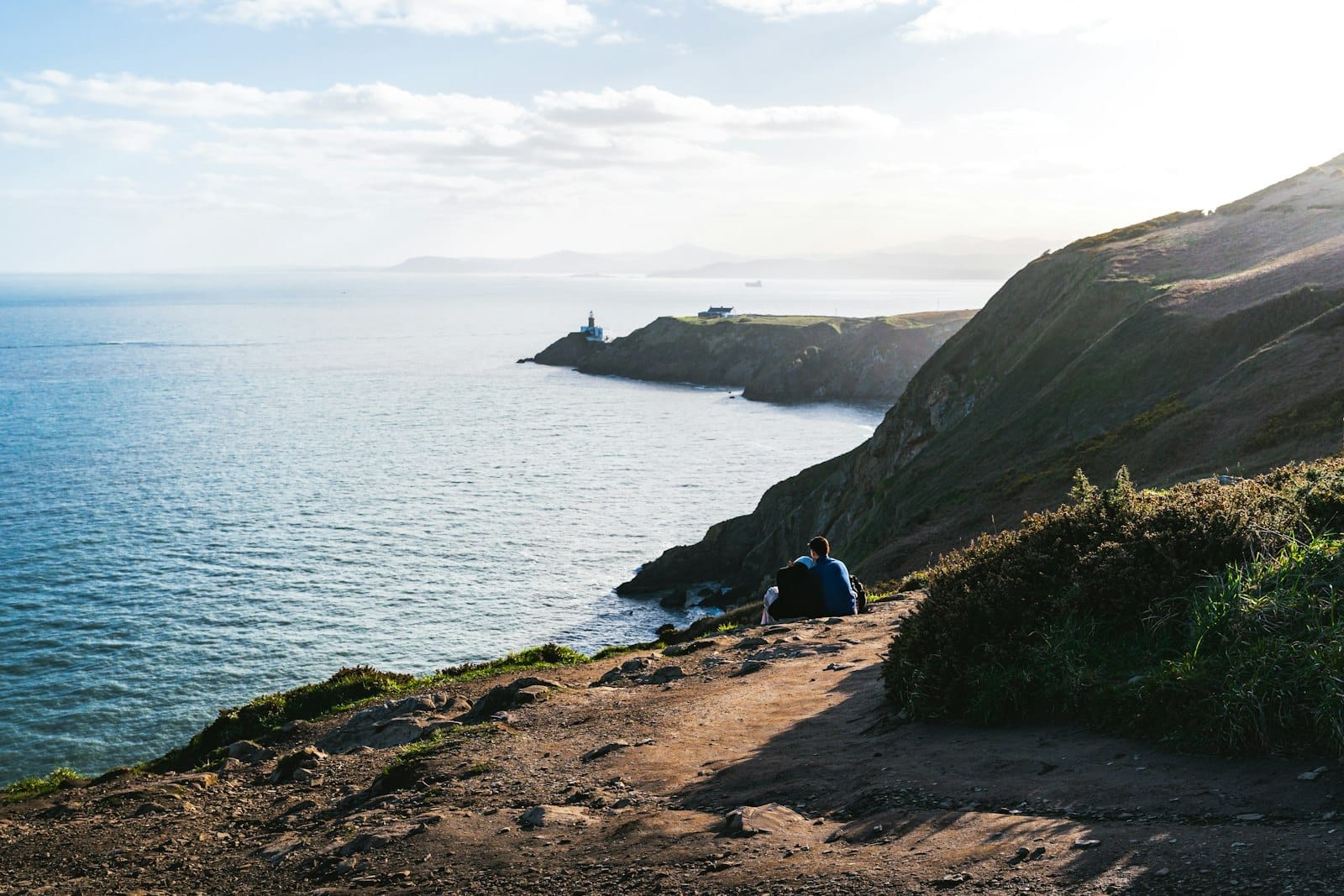
Howth occupies the bulk of Howth Head, a rocky peninsula that juts into the Irish Sea and forms the northern arm of Dublin Bay. The village itself sits on the northern, harbour-facing side of the headland, sheltered from the open sea by the hill that rises behind it, with the headland reaching around 171 metres at its highest point overall. To the south, the headland falls in dramatic cliffs toward the sea. To the west, the suburb of Sutton is the only land connection back to greater Dublin, making Howth feel geographically like an island even when it is not.
The historic core of the village runs along Harbour Road and Main Street, framing the 19th-century harbour on one side and climbing gently uphill on the other. Church Street, Abbey Street, and the area around the East Pier define the old conservation zone, with terraced cottages, stone walls, and merchant buildings from the 1800s still forming the streetscape. Howth Castle and its estate occupy the western approach to the village, while the cliff walk trail loops around the entire headland, passing through heathland, over exposed ridges, and above sea stacks before curling back into the village from the east.
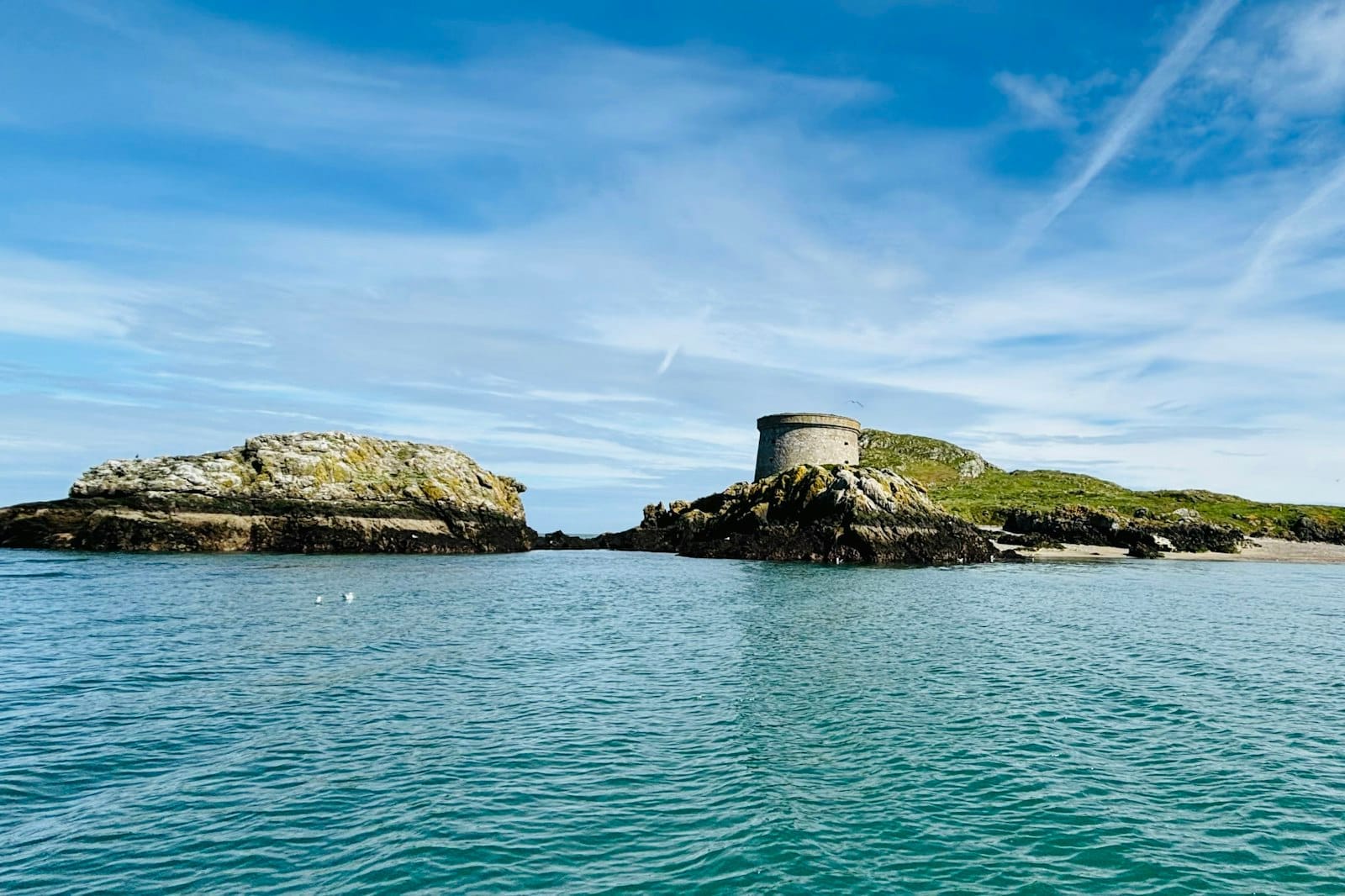
Offshore, about a kilometre from the harbour entrance, sits Ireland's Eye, an uninhabited island that is part of the Howth district. The island is accessible by boat from the harbour and holds the ruins of a 6th-century monastic church alongside nesting seabirds and a Martello tower.
Character and Atmosphere: What It Feels Like Through the Day
Howth has a split personality, and the time of day matters more here than in almost any other Dublin suburb. On a weekday morning, the harbour is genuinely working: trawlers unload their catch onto the West Pier, seagulls wheel noisily overhead, and the smell of diesel and salt is thick in the air. The fish market stalls are already open by mid-morning, and local restaurants receive deliveries at the back door. It feels industrial in the best sense, a port that still earns its living.
By early afternoon on a weekend, the character shifts. Day-trippers arrive off the DART in steady streams, and the East Pier fills with people walking toward the lighthouse, eating fish and chips from paper bags, and watching the boats. The seafood restaurants along the harbour front have queues by 1pm. This is not a complaint, simply a fact: Howth is one of Dublin's most popular excursions, and the crowd comes with the territory on sunny weekends. If you want the village to yourself, aim for a Tuesday morning in October.
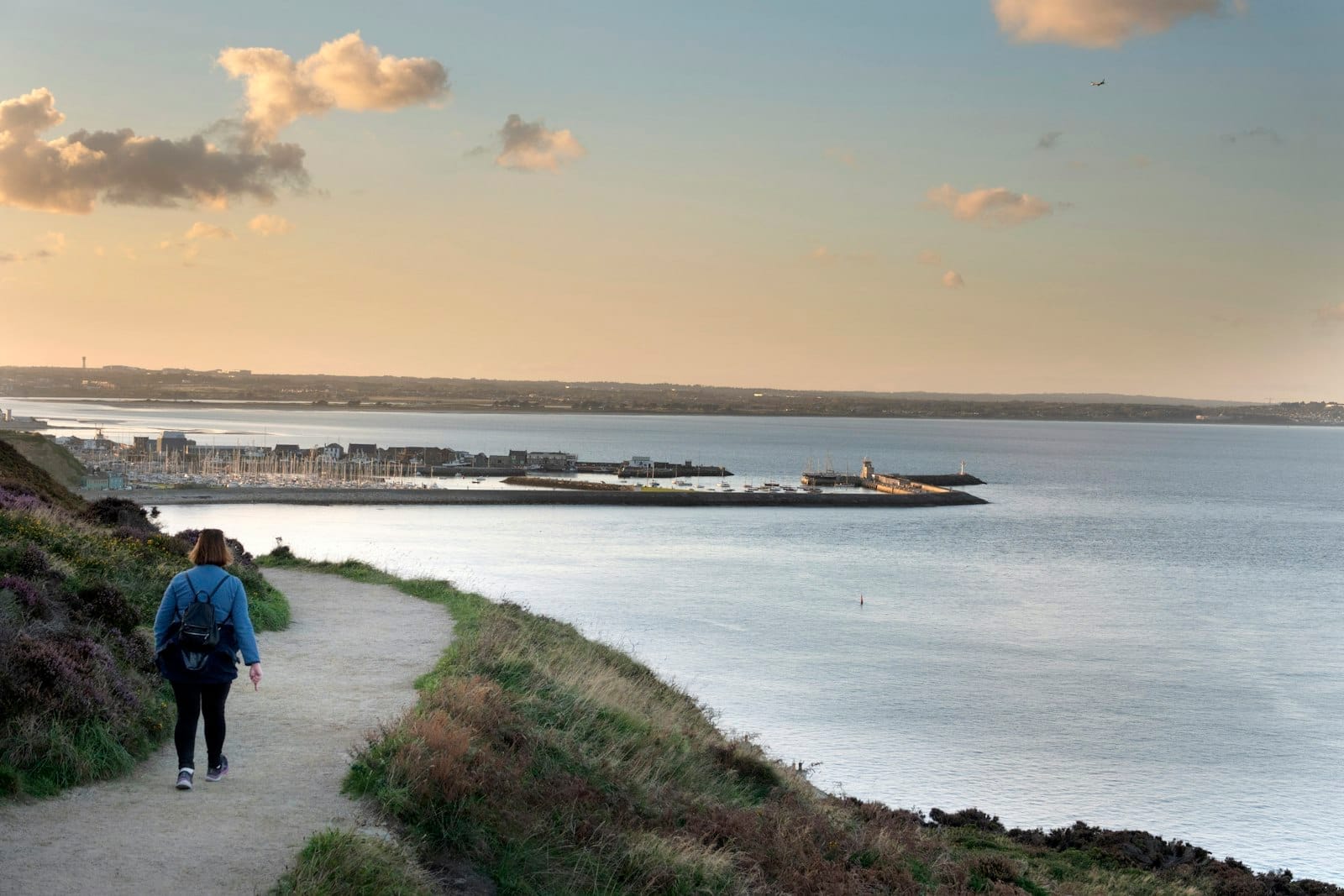
The cliff walk offers a completely different Howth. Once you are twenty minutes along the trail heading south from the harbour, the village disappears behind the hill and the path narrows to single file above exposed sea cliffs. On clear days the light off the Irish Sea is sharp and pale, and on grey days the headland folds into mist in a way that feels ancient. The heathland on the upper slopes blooms purple with heather in late summer, covering the hill in colour visible from the pier below. After dark, the harbour and Main Street have a quiet village feel: a handful of pubs with fires lit in winter, locals rather than tourists at the bar.
💡 Local tip
The best light for the cliff walk is in the morning, when the sun is behind you heading south along the headland. On weekends, starting before 10am puts you ahead of the main crowds on the trail.
What to See and Do
The Howth Cliff Walk is the defining activity here and should not be missed if you have the legs for it. The full loop around the headland takes roughly two to three hours at a comfortable pace and involves significant elevation change, with some sections close to the cliff edge. There are shorter variants that take in the upper paths without the full circuit, but the reward for the complete loop is arriving back at the harbour with an appetite for seafood and a clear sense of the headland's scale.
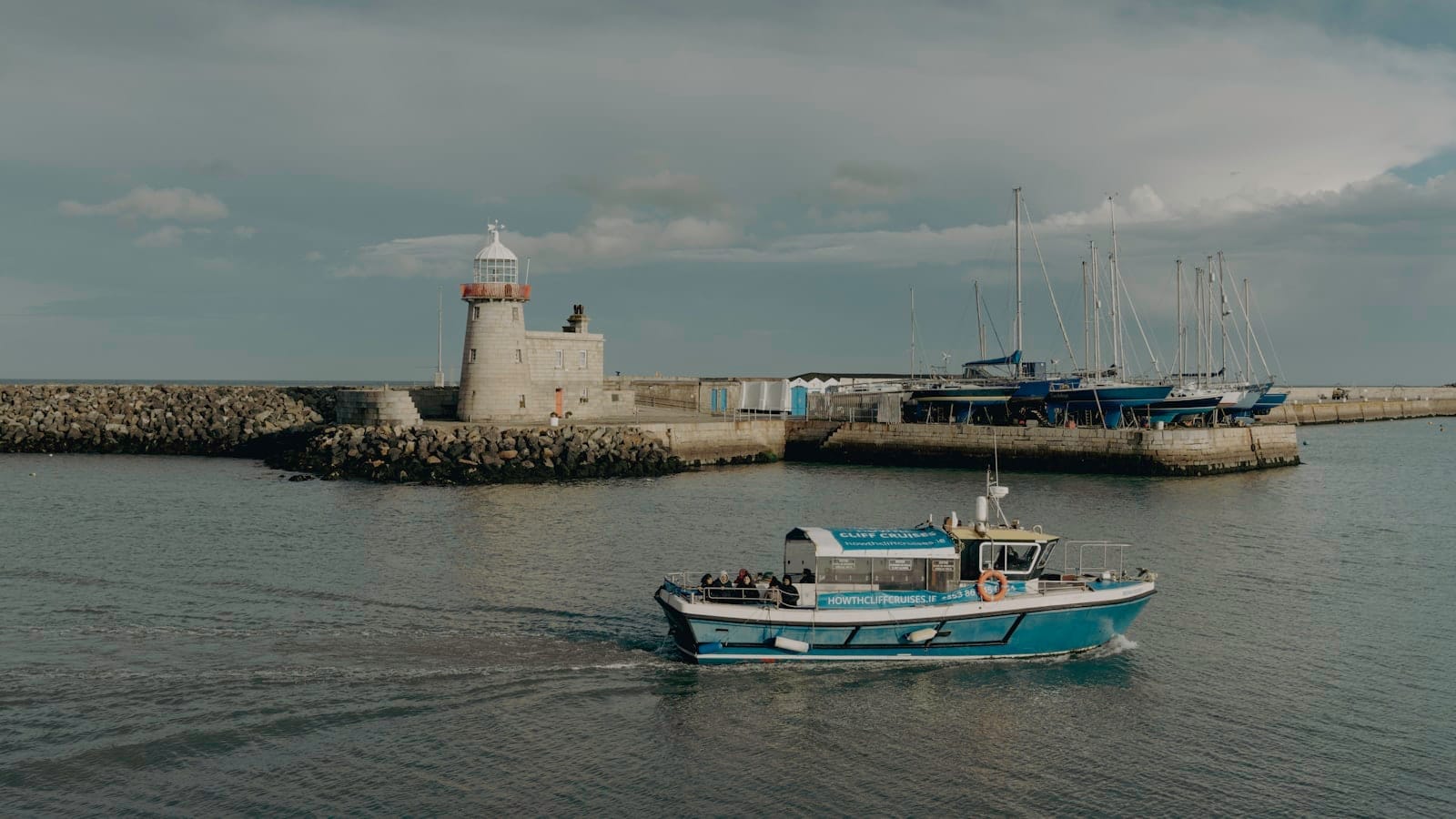
The harbour itself rewards slow exploration. The East Pier stretches out into the bay and provides one of the better elevated views back over the village and up toward the hill. The harbour was developed in the early 19th century with ambitions of becoming Dublin's main port, before Dún Laoghaire took that role. That history left Howth with an impressive piece of Victorian harbour engineering. From the pier, boats depart to Ireland's Eye, typically between April and October, with seasonal and weather-dependent schedules.
Howth Castle, on the western edge of the village approaching from Sutton, is one of the oldest continuously inhabited buildings in Ireland, with origins in the 14th century. The castle itself is not generally open to the public, but the estate grounds, including a walled garden and rhododendron woodland, are accessible and are particularly worth visiting in late May and early June when the rhododendrons are in full bloom. The ruined Abbey of St Mary, on Abbey Street near the harbour, is freely accessible and dates from the medieval period, with the grounds forming an atmospheric churchyard.
Howth Cliff Walk: full loop approximately 9km, allow 2-3 hours
East Pier: flat walk, views back over the bay, suitable for all fitness levels
Ireland's Eye boat trips: seasonal, depart from the West Pier
Howth Castle grounds and walled garden: especially good in late May
St Mary's Abbey ruins on Abbey Street: free access, medieval stonework
Howth fish market: open most mornings, browse and buy direct
Howth also appears in Irish literary history. James Joyce set a pivotal scene in Ulysses on Howth Head, and the connection is well-known among readers of Irish literature. Combining a visit here with Dublin's wider literary circuit makes good sense, and the Dublin literary trail covers the broader context.
Eating and Drinking
Seafood is the reason most people eat in Howth, and the quality-to-price ratio is strong by Dublin standards. The fish market on the West Pier sells fresh catch daily and is the source for most of the restaurants in the village, so the supply chain is unusually short. Lobster, crab, prawns, and whatever the boats brought in that morning are the things to order.
The restaurants along Harbour Road range from casual seafood chippers serving fish and chips in paper cones to sit-down restaurants with full à la carte menus and serious wine lists. The pier area tends toward the more casual end, which suits most visitors: there is something right about eating crab claws with your hands while looking at the boats. The village's Main Street has a handful of cafés, a good bakery, and some pubs that function as much as restaurants as drinking establishments, particularly at lunch.
Drinking options are limited compared to the city, which is part of the appeal. The pubs in Howth are local institutions rather than tourist venues: low ceilings, open fires in winter, and a clientele that is a genuine mix of fishermen, golfers, and residents. They tend to close earlier than Dublin city-centre pubs. If you are arriving from the city on a weekend evening expecting a late-night scene, Howth is not the answer.
⚠️ What to skip
On weekend afternoons in summer, the seafood restaurants along the harbour fill quickly and do not take reservations. If you want a table for lunch, arrive before 12:30pm or expect a wait. The fish and chip option along the pier is a genuinely good alternative.
Getting There and Around
The DART is the most straightforward way to reach Howth from central Dublin. Howth station sits directly at the harbour, the end of one branch of the DART network, and trains run regularly from Connolly, Tara Street, and Pearse stations, with a journey time of roughly 30 to 35 minutes from central stations such as Connolly, Tara Street, or Pearse. Trains on the Howth branch split from the main DART line at Howth Junction, so check that your train is signed for Howth rather than Malahide. For full context on getting around Dublin by public transport, see the getting around Dublin guide.
Dublin Bus routes also serve Howth from the city centre, running along the coast road through Clontarf and Raheny before reaching the village. The journey takes considerably longer than the DART depending on traffic, particularly on summer weekends, but the coast road route offers views of Dublin Bay that the rail line does not.
Driving to Howth is straightforward on the R105 from the city, but parking in the village at peak times on weekends is genuinely difficult. The area around the harbour has limited spaces, and the side streets fill quickly on sunny Saturdays. The DART removes this problem entirely and deposits you steps from the fish market and the pier.
Within the village, everything worth visiting is walkable from the DART station. The East Pier is a five-minute walk east along Harbour Road, the fish market is immediately adjacent to the station, and the start of the cliff walk path is reachable within fifteen minutes on foot heading south and uphill. Howth Castle and the abbey ruins are a short walk west along the Harbour Road in the opposite direction.
ℹ️ Good to know
The Leap Card (Dublin's reusable transit card) is valid on the DART and gives a discounted fare compared to single tickets. If you are spending more than a day in Dublin using public transport, it is worth having one loaded before your trip.
Where to Stay
Most visitors treat Howth as a day trip from Dublin rather than a base, and that is the sensible approach for anyone whose main interest is the city. Accommodation options in the village are limited and lean toward boutique hotels and guesthouses rather than large hotel chains. The trade-off for staying here is waking up to harbour views and morning quiet, while accepting that almost every Dublin attraction requires a 30-plus minute journey each way.
Howth suits as a base for visitors who want a quieter, more residential experience and plan to use the DART to reach central Dublin's sights. If your priority is spending several days moving between the major attractions, Trinity College, the museums, the Guinness Storehouse, and similar, staying in the city centre is more practical. The where to stay in Dublin guide covers the full range of neighbourhood options across the city.
Howth as a Day Trip: Practical Considerations
Howth consistently appears in any list of recommended half-day excursions from central Dublin, and it earns that reputation. The combination of a genuine harbour, a serious cliff walk, and excellent seafood is hard to match within 30 minutes of an Irish city. It also pairs well with other coastal stops: Dún Laoghaire is the comparable excursion on the south side of the bay, and the two together give a full picture of Dublin's coastal reach.
For a full day structured around Dublin's coastline and outdoor options, the Dublin beaches guide covers the broader coastal picture, while those interested in the hiking options on and around Howth Head alongside routes further south can find detail in the hiking near Dublin guide.
One honest caveat: Howth is weather-dependent in a way that city-centre neighbourhoods are not. On a clear day, it is extraordinary. On a wet, overcast morning when the headland is in low cloud, the cliff walk loses most of its appeal and the village feels thin on indoor options. Checking the forecast before committing a half-day to the trip is simply good planning, not pessimism.
⚠️ What to skip
The cliff walk involves exposed sections close to unfenced cliff edges. Sections of the path can be muddy and uneven after rain. Wear footwear with grip, keep children close on the exposed ridge sections, and do not attempt the full loop in poor visibility. Follow Fingal County Council trail signage throughout.
TL;DR
Howth is a genuine working fishing village on Dublin's northern coastal edge, accessible by DART in 30-35 minutes from the city centre, making it Dublin's most rewarding coastal half-day trip.
The cliff walk around Howth Head (approx. 9km full loop) is the standout outdoor activity, with dramatic views over the Irish Sea and heathland that blooms in late summer.
Seafood is the main reason to eat here: fresh catch from the harbour, fish markets on the West Pier, and restaurants ranging from paper-cone chippers to sit-down dining.
Best visited on weekday mornings or outside peak summer season to avoid weekend crowds at the harbour and long waits at seafood restaurants.
Howth works well as a day trip rather than a base; those wanting to be close to central Dublin's attractions are better served by staying in the city and making the short DART journey out.
Three days is the sweet spot for Dublin. Long enough to cover the iconic historic sites, dig into the food and pub culture, and fit in a coastal or countryside excursion. This itinerary is built around real logistics, honest crowd warnings, and the kind of sequencing that makes a short trip feel unhurried.
Dublin punches well above its weight as a museum city. Several of its finest institutions are completely free, and the range spans Celtic gold, Viking archaeology, Irish revolutionary history, world literature, and contemporary art. This guide covers the best museums in Dublin, grouped by theme, with practical advice on when to go and what to expect.
Dublin rewards visitors year-round, but the timing of your trip shapes everything from hotel prices to what you can actually do outdoors. This guide breaks down every month, season, and key trade-off so you can plan with confidence.
Dublin sits at the centre of an exceptional day trip network. Within two hours you can reach glacial mountain valleys, medieval castles, dramatic coastal headlands, and one of Europe's great prehistoric monuments. This guide covers the best escapes, how to get there, and what to expect.
Dublin Bay is a UNESCO Biosphere Reserve with more beaches than most visitors expect. This guide covers the best strands, swimming spots, and coastal walks within easy reach of the city, from the vast sands of Dollymount to the dramatic cliffs of Howth and the sheltered coves of Dún Laoghaire.
Bloomsday is Dublin's most distinctive literary celebration, held every 16 June to honour the date James Joyce set Ulysses. This guide covers the key locations, walking routes, festival events, food traditions, and everything you need to join the festivities — whether you've read the book or not.
Dublin rewards couples who look beyond the obvious. This guide covers scenic walks, intimate cultural experiences, evening entertainment, and coastal day trips — with honest advice on what's worth it and what to skip.
Attending a Gaelic Games match at Croke Park is one of the most authentic experiences Dublin offers. This guide covers everything from buying tickets and navigating the stadium to understanding the sport, the season, and what separates a regular league game from an All-Ireland final.
Dublin rewards the curious traveller who ventures beyond the Guinness Storehouse and Temple Bar. From a mummified Crusader beneath a Northside church to a Victorian reservoir turned secret garden, these are the places Dubliners love and visitors rarely find.
Dublin transforms in winter, with Christmas markets running from late November through early January, citywide light trails, cathedral concerts, and festive fairgrounds. This guide covers every major event, what things actually cost, and what to watch out for before you visit.
Dublin is one of the few cities in the world to have produced three Nobel Prize-winning writers of literature. This guide maps the key sites connected to George Bernard Shaw, W.B. Yeats, and Samuel Beckett, plus James Joyce, Oscar Wilde, and others, covers the best guided tours with practical pricing, and gives you the detail to do it properly.
Dublin has around 772 pubs, dozens of late-night bars, and several distinct club districts. This guide breaks down where to drink, when to go, what it costs, and which neighbourhoods to skip if you want to avoid tourist pricing.
Dublin has a reputation for being expensive, but that reputation is only half true. The city's best museums are free, the centre is walkable, public transport is cheap with the right pass, and the finest pub sessions cost nothing beyond the price of a pint. This guide breaks down every major cost category so you can plan a genuinely great trip without watching every euro.
Seven days is enough to see Dublin's best and reach the wild west coast of Ireland, but only if you plan smart. This itinerary balances city time with coastal scenery, covers realistic driving and transit times, and flags the planning mistakes that turn a great trip into an exhausting one.
Dublin, Ireland offers a surprisingly varied shopping scene, from the flagship stores lining Grafton Street to independent boutiques on South William Street, weekend food markets in Temple Bar, and Ireland's largest mall in Dundrum. This guide covers where to go, what to expect, and how to avoid wasting time.
Dublin rewards walkers like few cities in Europe. Compact enough to cover on foot, layered enough to take weeks to unpack, the city reveals itself best at street level. This guide covers the stops, routes, and landmarks that make Dublin's walking tours so compelling.
Dublin punches well above its weight as a family destination. Between a world-class zoo, free city parks, Viking history museums, coastal castles, and indoor waterparks, there is genuinely enough to fill a week without repeating yourself. This guide covers the best things to do in Dublin with kids, organised by type, age range, and weather — so you can plan around Irish reality rather than tourist brochure optimism.
Dublin punches well above its weight for free attractions. National museums, modern art galleries, coastal walks, and grand public parks all cost nothing to enter. This guide covers 22 of the best free things to do across the city, organised by type so you can plan your days without watching your budget.
Dublin's Georgian streets and squares represent one of Europe's most intact examples of 18th-century urban planning. This guide covers the key buildings, the best self-guided walking route, what's actually open to visitors, and how to avoid the common traps that waste your time.
Dublin's public transport network covers the city and coast through buses, DART rail, Luas trams, and airport coaches. This guide breaks down fares, Leap Card options, airport transfer routes, and the practical details that save you time and money when navigating Ireland's capital.
Dublin sits at the doorstep of some of Ireland's finest walking country. Whether you want cliff-top sea views, ancient monastic valleys, or proper mountain terrain, these are the best hikes and trails within easy reach of the city.
Dublin's St Patrick's Festival is a multi-day national celebration centred on 17 March, with a free city-centre parade, ticketed concerts, street theatre, and events across the city. This guide covers the full programme, booking essentials, crowd logistics, and what to realistically expect from Ireland's biggest annual celebration.
Dublin packs centuries of history, world-class museums, legendary pubs, and coastal scenery into a compact, walkable city. This guide covers the best things to do in Dublin across every interest and budget, with honest advice on what's worth your time and what to skip.
Dublin's food scene has transformed well beyond stew and soda bread. This guide covers the essential Irish dishes, where to find them, what to pay, and which areas give you the best value — including a frank look at where not to waste your money.
Choosing where to stay in Dublin, Ireland shapes your entire trip. This guide breaks down every major neighbourhood by location, vibe, price range, and transport links, so you can book with confidence rather than guesswork.