Howth Harbour & the Seafood Trail: Dublin's Best Coastal Escape
Perched on a rocky peninsula about 14 km north of Dublin city centre, Howth Harbour is a working fishing port where trawlers unload at dawn and seafood restaurants fill by noon. Whether you come for a self-guided wander along the quays or a guided craft beer and seafood trail, the harbour rewards visitors who make the 30-minute DART journey from the city.
Quick Facts
- Location
- Howth Head peninsula, approx. 14 km north of Dublin city centre
- Getting There
- DART to Howth Station (adjacent to the harbour); approx. 30–35 min from Pearse or Connolly stations
- Time Needed
- 2–3 hrs for a self-guided visit; 4–5 hrs for a guided seafood trail tour
- Cost
- Free for harbour access; guided Dublin Coastal Craft Beer & Seafood Trail from €95 per person
- Best for
- Seafood lovers, DART day-trippers, coastal walkers, families
- Official website
- www.visitdublin.com/guides/things-to-do-in-howth
What Howth Harbour Actually Is
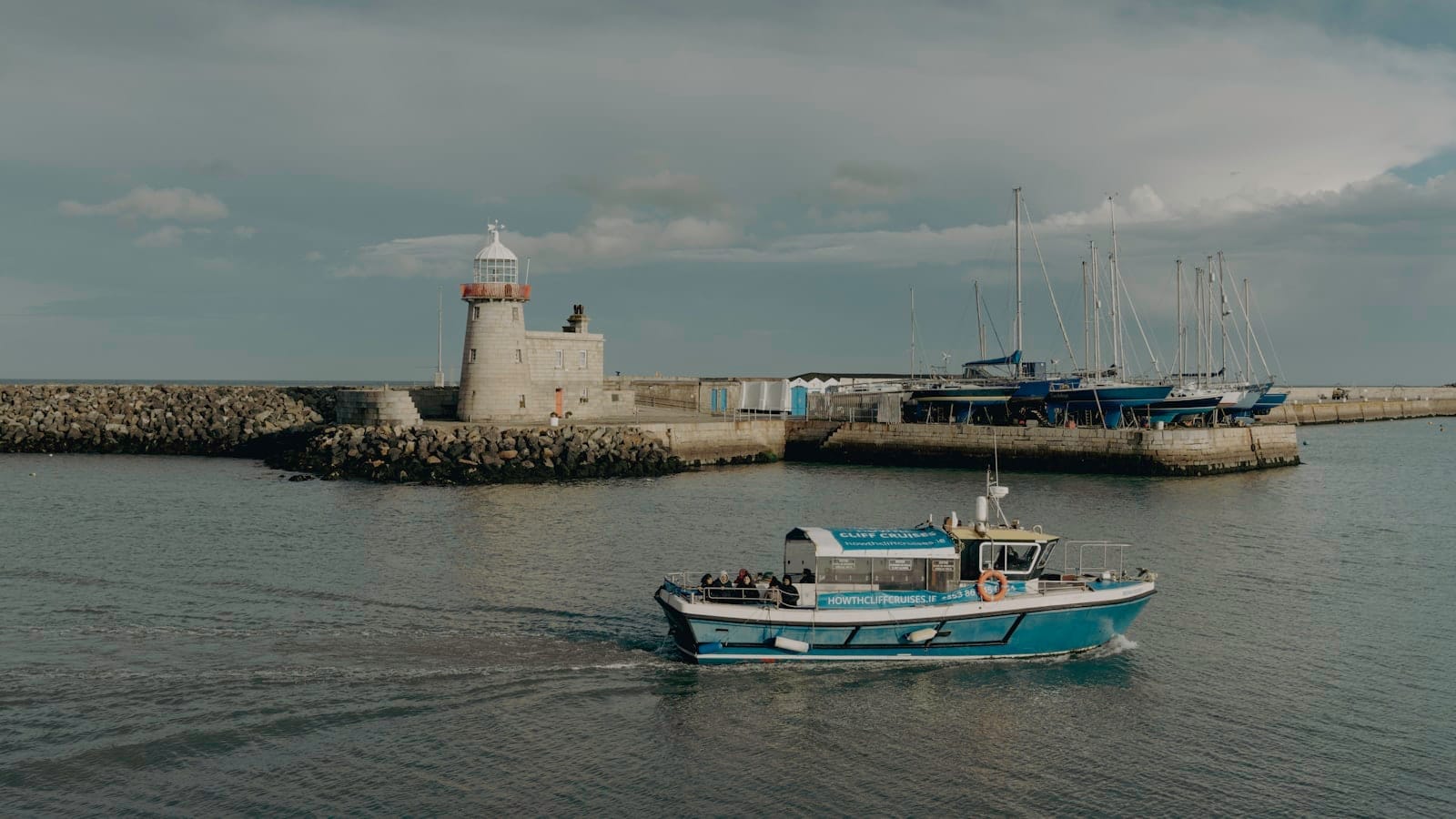
Howth Harbour (Irish: Calafort Binn Éadair, meaning 'harbour of Howth Head') is a fully operational fishing and leisure port on the northern arm of Dublin Bay. It is not a heritage attraction or a theme park version of a fishing village. Trawlers come and go on working schedules, and the smell of diesel and brine hangs around the pier early in the morning. That authenticity is exactly the draw.
The harbour has served as a trading and fishing port since at least medieval times, and the presence of two lighthouses on the outer piers reflects centuries of maritime activity on what is a genuinely exposed stretch of coast. Today it operates on two tracks simultaneously: an active commercial fishing fleet and a growing food and tourism offer built around the daily catch.
The so-called 'Seafood Trail' is not a single official attraction managed by a government body. It is better understood as a loose collection of independent seafood restaurants and fishmongers along the quayside, plus a handful of private guided tour products, most notably the Dublin Coastal Craft Beer & Seafood Trail run by Hidden Howth Experiences. If you want a structured, narrated experience with multiple tastings and local context, you book a tour. If you just want to eat well by the water, you can do that entirely for free. For broader context on getting around Dublin's coastline, see our guide to getting around Dublin.
💡 Local tip
The DART is by far the easiest way to reach Howth. Howth Station sits directly beside the harbour entrance, so you step off the train and are immediately on the waterfront. Driving saves little time and parking near the harbour can be very limited on summer weekends.
The Harbour at Different Times of Day
The character of Howth Harbour shifts dramatically depending on the hour. Arrive before 9am and the pier belongs almost entirely to the fishing fleet and the people who service it. Crates of fish are stacked on the quay, gulls work loudly and without embarrassment, and the water has a green-grey coldness that Dublin Bay always carries in the morning light. The fish market stalls typically open in the morning and this is the window to buy the freshest catch before the day-trippers arrive.
By late morning, the atmosphere transitions. Restaurants begin setting out pavement tables, tour groups start assembling near the station, and the harbour takes on a more relaxed weekend pace regardless of the day. The water is usually calmer in the morning than in the afternoon, which matters if you are considering a boat trip to Ireland's Eye, the small uninhabited island visible just offshore.
The early-to-mid afternoon on a clear summer day is when the harbour is at its most photogenic and its most crowded. The light on the water, the coloured hulls of the moored vessels, and the backdrop of Howth Head rising behind the village create an easy photograph. It is also when queues form outside the most popular seafood spots. Late afternoon, particularly on weekdays, is significantly quieter and tables are easier to secure.
Tickets & tours
Hand-picked options from our booking partner. Prices are indicative; availability and final rates are confirmed when you complete your booking.
Howth panoramic e-Bike tour in Dublin
From 59 €Instant confirmationFree cancellationGuided excursion to Howth from Dublin
From 45 €Instant confirmationFree cancellationHowth guided coastal walk in Dublin
From 39 €Instant confirmationFree cancellationHowth safari hiking tour
From 49 €Instant confirmationFree cancellation
Eating at the Harbour: The Self-Guided Approach
You do not need a tour to eat well here. The stretch of quayside restaurants and fish stalls around the West Pier and East Pier is compact enough to walk in fifteen minutes and assess your options before committing. Crab claws, fresh oysters, smoked salmon, and battered fish with chips are all available from multiple outlets. The quality gap between the best and worst options is wider than it looks, so paying attention to which places are busy with locals rather than tourists is a reasonable proxy.
The Friday market at Howth also draws food stalls and producers from around the region, making it a particularly good day to visit if your schedule is flexible. Weekend mornings see a similar, more consistent market offer. Eating outdoors on the pier is appealing in good weather, but Howth is exposed to the Irish Sea and even a mild onshore breeze can make an al fresco meal uncomfortable. The temperature feels several degrees cooler at the water's edge than it does in Dublin city centre.
⚠️ What to skip
Weather makes a significant difference to the Howth experience. On overcast or windy days, the outdoor seafood stalls and pier seating lose much of their appeal. Check the forecast before making it the centrepiece of your Dublin day, particularly in autumn and winter.
The Guided Seafood Trail: What You Get
The Dublin Coastal Craft Beer & Seafood Trail, operated by Hidden Howth Experiences, is the most structured way to cover the harbour's food offer in a single visit. Priced from €95 per person, it includes multiple seafood tastings, a multi-course lunch element, several craft beers matched to the food, and a local guide who provides context on the fishing industry, the village, and the produce. It operates in small groups, runs for roughly four to five hours, and is booked in advance with set departure times that vary seasonally.
At that price point, it is not a casual add-on. It works best for food-focused travellers who want someone else to navigate the choice and provide a narrative, rather than those who simply want a plate of fish by the water. It is structured as a walking food tour, so participants should be comfortable walking for several hours, though the harbour area itself is flat and straightforward.
For those building a longer coastal day, the tour pairs naturally with time on the Howth cliff walk before or after, depending on energy levels and the tour schedule.
Historical and Maritime Context
Howth's role as a harbour predates Dublin's growth into a major city. The village and its port on the Howth Head peninsula served as Dublin's primary packet (passenger) port until the early 19th century, when Dún Laoghaire (then called Kingstown) took over that function following the construction of its larger harbour. The transition effectively froze Howth in a smaller, fishing-focused identity that has defined it ever since.
The two lighthouses that mark the outer piers are visible from much of the harbour area and serve as a practical reminder of the coast's navigational history. The inner harbour, where the fishing fleet moors, is sheltered enough to walk comfortably, while the outer pier walk offers open sea views across Dublin Bay toward the Poolbeg towers on the south side and, on very clear days, the Wicklow Mountains beyond.
Howth also sits close to Ireland's Eye, a small uninhabited island with a ruined medieval church and a Martello tower, accessible by seasonal boat trips from the harbour. It adds a logical extension to any visit, particularly for those also considering the Ireland's Eye boat trip as part of a coastal day out.
Getting There and Practical Logistics
Howth Station is the terminus of a northbound DART branch. Trains run regularly from Connolly, Tara Street, and Pearse stations in central Dublin, with a journey time of approximately 30–35 minutes. The station is directly adjacent to the harbour, so orientation on arrival is immediate. The DART is also the most reliable option: the road into Howth via the coast road can be slow on weekend afternoons, and parking near the harbour is genuinely limited.
Dublin Bus routes serve Howth from the city but typically take longer and are more variable in journey time. They are useful if you are coming from a part of the city not easily connected to the DART line, but for most visitors the train is the clear first choice.
Accessibility on the harbour quays and promenade walkways is reasonable: the surfaces are paved and largely level, and most of the restaurants and stalls are accessible without steps. The cliff walks and hillside paths above the village are a different matter entirely, with steep and uneven terrain unsuitable for anyone with significant mobility limitations.
ℹ️ Good to know
Howth is about 14 km from Dublin city centre, in the administrative area of Fingal, County Dublin. Despite being a suburb in the technical sense, it feels genuinely separate from the city, which is part of the appeal. Budget at least half a day rather than treating it as a quick stop.
Who Should Think Twice
Howth Harbour is sometimes framed as a quick add-on to a Dublin itinerary, and that framing sets people up for disappointment. If you are visiting on a grey, wet weekday in November, the outdoor seafood stalls and pier atmosphere will be muted at best. The restaurants still function, but the experience loses the coastal lightness that makes the harbour worth the journey.
Visitors primarily interested in urban culture, nightlife, or indoor historical attractions are better served staying in central Dublin, where the concentration of museums, galleries, and pubs is far higher. Howth is specifically a coastal and food destination, and it earns its reputation most clearly on a dry day with enough time to walk, eat slowly, and absorb the maritime atmosphere without rushing.
If you are planning a fuller Dublin itinerary that includes both city-centre and coastal days, the one-week Dublin itinerary and the day trips from Dublin guide both place Howth in useful context alongside other options.
Insider Tips
- The fish market stalls on the West Pier open in the morning and close once stock sells out, sometimes before midday on busy days. If fresh fish or crab claws are your priority, arriving earlier in the day rather than at lunchtime is wise.
- The outer East Pier walk takes about 20–30 minutes to the lighthouse and back, offers open sea views across Dublin Bay, and is almost always less crowded than the restaurant quayside. It is a worthwhile leg-stretch before or after eating.
- Friday is the strongest day for the harbour market stalls and independent food producers. Weekend mornings are also good, but Friday tends to draw a more local crowd.
- The guided seafood trail can book up during summer weekends. If you want a specific date, booking two to three weeks in advance is sensible rather than hoping for last-minute availability.
- On clear days, the hill behind the village (accessible from the village centre) gives a panoramic view back over Dublin Bay toward the city and south toward Dún Laoghaire. It adds around 45 minutes and requires no specialist equipment, just suitable footwear.
Who Is Howth Harbour & Seafood Trail For?
- Seafood enthusiasts who want freshness directly from a working harbour rather than a city restaurant
- DART day-trippers looking for a coastal half-day that feels distinct from urban Dublin
- Couples wanting a relaxed waterfront lunch with easy access from the city centre
- Families with older children who can handle some walking and appreciate outdoor eating
- Food-focused travellers interested in a guided introduction to Irish coastal produce and craft beer
Nearby Attractions
Other things to see while in Howth:
- Howth Cliff Walk
The Howth Cliff Walk traces the dramatic headland of Howth Head north of Dublin, offering four marked loop routes ranging from 6 to 12 kilometres. Free to access year-round and reachable by DART from the city centre, it delivers sea cliffs, heathland, and panoramic views of Dublin Bay without requiring a car or a guide.
- Ireland's Eye Island
Ireland's Eye (Inis Mac Neasáin in Irish) is a small, uninhabited island sitting just north of Howth Harbour in County Dublin. Reachable by a 15-minute boat ride, it offers a ruined early medieval church, a Napoleonic-era Martello tower, dramatic coastal rock formations, and colonies of seabirds. There are no facilities, no toilets, and no easy terrain — but for those prepared, the reward is complete solitude within sight of Dublin city.