Howth Cliff Walk: Dublin's Most Rewarding Coastal Trail
The Howth Cliff Walk traces the dramatic headland of Howth Head north of Dublin, offering four marked loop routes ranging from 6 to 12 kilometres. Free to access year-round and reachable by DART from the city centre, it delivers sea cliffs, heathland, and panoramic views of Dublin Bay without requiring a car or a guide.
Quick Facts
- Location
- Howth Head, Howth, Co. Dublin — starting point at Howth DART station
- Getting There
- DART to Howth station (end of the line); Dublin Bus route 31 also serves Howth village
- Time Needed
- 2 hours (6 km Cliff Path Loop) to 4+ hours (12 km Bog of Frogs Loop)
- Cost
- Free — public walking routes, no admission fee
- Best for
- Walkers, photographers, day-trippers, families with older children
What the Howth Cliff Walk Actually Is
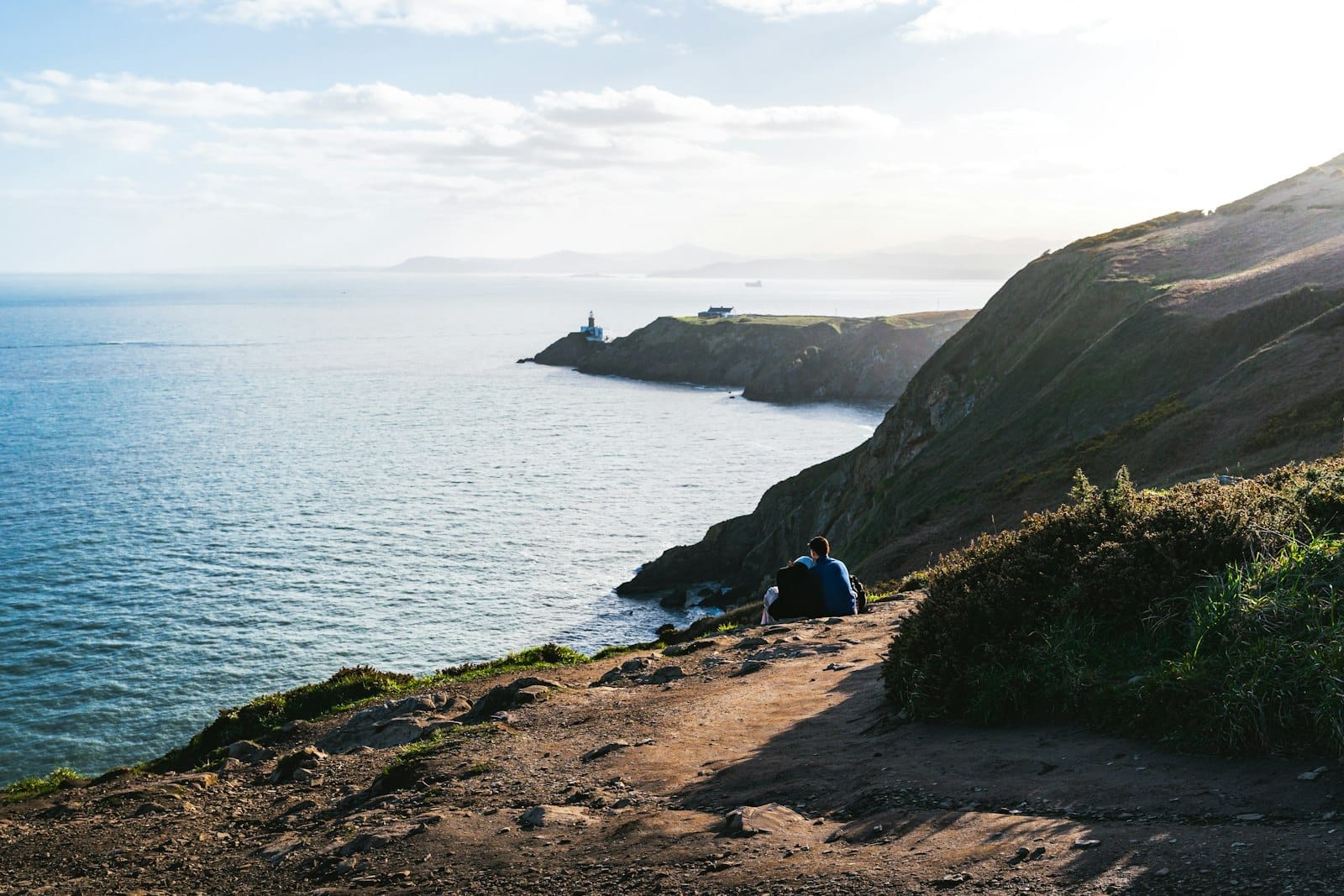
The Howth Cliff Walk is not a single path but a network of four colour-coded loop routes on Howth Head, the rocky promontory that juts into the Irish Sea about 15 kilometres north-east of Dublin city centre. The routes share a common starting point at Howth DART station and are waymarked with colour-coded posts: green (7.8 km), blue (7 km, the Tramline Loop), red (8 km, Black Linn), and purple (12 km, Bog of Frogs). Each loop increases in distance, elevation gain, and the degree of solitude you'll find on the path.
The terrain is coastal heathland: gorse bushes, sea pinks, and rough grass on one side; sheer drops to churning Atlantic water on the other. The paths are mostly unpaved, with sections of rock, compacted earth, and occasional wooden boardwalk. After rain, lower sections near the coast become slippery, and some stretches on the longer routes turn genuinely muddy. This is outdoor walking, not a manicured park trail.
⚠️ What to skip
Footwear matters here. Lightweight trainers manage the green route on a dry day, but anything longer or wetter calls for proper walking shoes or boots with grip. The cliff edges on the north-facing sections are unfenced in places.
The Four Routes: Choosing What Suits You
Green Route — Cliff Path Loop (7.8 km, ~130 m elevation gain)
The green route is the classic Howth experience. From the DART station you walk through the harbour, pick up the cliff path heading east, and follow the headland around to the Ben of Howth before looping back. The elevation gain of roughly 130 metres is gradual enough that most reasonably fit adults manage it without difficulty, and the route takes about two hours depending on pace and photo stops.
This is the route that fills up on sunny weekend afternoons. By 11am on a clear Saturday in June, the first kilometre past the harbour is already busy with families, cyclists who've taken the DART out for the morning, and groups of teenagers. Arrive before 9am or come on a weekday and the path feels almost private.
Blue Route — Tramline Loop (7 km)
The Tramline Loop adds a kilometre and follows the route of the old Howth Tram, which connected the village with the summit. The tram line itself is long gone, but the path it traced through the upper heathland remains, offering a slightly different perspective on the headland and a quieter return leg than the standard cliff path. Historically minded walkers enjoy the context; the tram once carried Dubliners out for weekend excursions in much the same spirit as visitors today.
Black Route — Black Linn Loop (8 km) and Red Route — Bog of Frogs Loop (12 km)
The black and red routes push further into the interior of the headland, gaining around 240 metres in the longer variants. The Bog of Frogs Loop at 12 kilometres takes most walkers around three hours and passes through heathland that sees far fewer visitors. These routes are genuinely quiet, particularly on weekday mornings, and they offer a different landscape character: less of the dramatic cliff edge, more of the open, windswept plateau above it. In poor visibility — which arrives without much warning on Howth Head — these routes require more navigation confidence, as the waymarking becomes harder to follow in mist.
💡 Local tip
If you only have half a day and want the best view-to-effort ratio, the green route with a detour to the Ben of Howth is the right choice. Save the longer loops for a return visit when you have more time and the weather is fully clear.
Tickets & tours
Hand-picked options from our booking partner. Prices are indicative; availability and final rates are confirmed when you complete your booking.
Howth guided coastal walk in Dublin
From 39 €Instant confirmationFree cancellationBird of Prey, Cliffs of Moher and Aillwee Cave from Dublin
From 201 €Instant confirmationFree cancellationDublin Self-Guided Audio Walking Tour
From 5 €Instant confirmationFree cancellationHowth panoramic e-Bike tour in Dublin
From 59 €Instant confirmationFree cancellation
What You See: Sensory Details of the Walk
The views from the cliff path open up within the first twenty minutes. Looking back toward Dublin, you can see the full arc of Dublin Bay, from the Poolbeg chimneys and the South Bull Wall to Dún Laoghaire harbour and, on clear days, the Wicklow Mountains rising beyond. The Ireland's Eye island sits less than a kilometre offshore from the harbour, its gannetry visible with binoculars.
The smell of gorse is the dominant sensory note from April through June: warm, coconut-like, and surprisingly intense on windless mornings. By late summer the heather takes over with a drier, more mineral scent. Fulmars and razorbills nest in the cliff faces; you'll hear the nasal calls of fulmars before you see them, and in nesting season (roughly April to July) they sometimes fly at head height along the cliff edge. For more coastal wildlife in the area, the boat trip to Ireland's Eye departs from Howth harbour and offers a closer look at the seabird colonies.
The light changes dramatically by time of day. Morning light comes in from the east, hitting the cliff faces directly and making photography straightforward. By mid-afternoon the western faces of the headland fall into shade and the light on Dublin Bay turns hazy. Sunset from the summit or the higher sections of the red route can be remarkable, though finishing a long loop in fading light requires planning.
Getting There and Practicalities
The DART is the cleanest way to get here. Howth is the northern terminus of the DART coastal rail line, and trains run regularly from Connolly, Tara Street, and Pearse stations in the city centre. The journey takes roughly 35 minutes from Connolly. There is no need to change trains, and the DART deposits you directly at Howth station, which is the standard starting point for all four loops. Dublin Bus routes 31 and 31A also serve Howth village from the city. For those arriving by car, parking is available near the harbour, but spaces fill quickly on weekends. The Howth peninsula is easily explored on foot once you arrive, so leaving the car in Dublin and taking public transport makes sense.
The walk can also be started from Howth Summit, which is accessible by bus and has its own car park. Starting from the summit shortens the initial ascent and puts you directly into the quieter upper sections of the longer routes, though you'll miss the harbour atmosphere at the start.
ℹ️ Good to know
All four routes are open year-round, and require no booking. There are no staffed facilities on the cliff path itself. Public toilets and cafés are available in Howth village near the station before and after the walk.
Accessibility: the routes are not wheelchair accessible and are unsuitable for buggies beyond the very first paved section near the harbour. The longer routes involve steep, rocky terrain with no formal infrastructure. People with limited mobility are better served by the harbour promenade and village itself, which are flat and well-surfaced.
Before and After: Making a Day of Howth
Howth village has enough substance to justify a full day out from Dublin. The harbour is lined with seafood stalls and restaurants; the fish and chips from the stalls on the East Pier are among the most frequently cited in the city, and the smell of salt and frying batter drifts across the car park most afternoons. After the walk, sitting on the pier wall with a cone of chips while watching the fishing boats is a reasonable reward for a morning on the cliffs. The Howth Harbour itself is worth twenty minutes of slow walking even if you're not hungry.
For a longer stay on the peninsula, Ireland's Eye boat trips run from the harbour in season, and the village has a small castle and abbey ruin worth a detour. If you're planning a broader coastal day out from the city, Howth pairs well with a visit to Dún Laoghaire Pier on the south side of the bay, though the two are not directly connected by transit and require returning to the city centre between them.
Honest Assessment: Who Should Reconsider
If you've read descriptions that suggest Howth is a half-hour stroll for anyone, disregard them. The green route is accessible to most adults, but it involves uneven terrain, occasional scrambling over wet rocks near the summit, and exposure to Atlantic weather with very little shelter. On a grey, windy November morning it can be genuinely hard going and not particularly photogenic. The longer routes demand proper preparation.
Visitors with very young children, those who struggle with uneven ground, or anyone looking for a gentle scenic walk without effort are probably better served by the flat seafront paths along Clontarf or Sandymount in the city. The cliff walk rewards people who are specifically coming for a walk, not those who are looking for a scenic backdrop for an easy stroll.
Similarly, if you're in Dublin for two or three days and your time is tight, consider whether a half-day trip to Howth fits the itinerary. A three-day Dublin itinerary typically has enough in the city centre to keep you busy without a day trip, though Howth makes a natural extension if you're staying longer or returning on a future visit.
Insider Tips
- Weekday mornings before 9am give you the cliff path almost entirely to yourself. Weekend afternoons between May and August can feel genuinely congested on the green route near the harbour end.
- The Ben of Howth is the highest point on the standard routes at around 171 metres. On a clear day the view from the trig point north toward the Mourne Mountains in Northern Ireland is possible, though haze makes this rare.
- The old tramline path (blue route) runs through a section of tree cover that the cliff path lacks entirely. On a very hot summer day, this makes it a more comfortable return leg than the exposed cliff edge.
- Howth harbour fish and chip stalls operate from late morning; arriving after a morning walk puts you ahead of the lunchtime queue that builds from about 12:30pm onward.
- The DART back to the city from Howth on Sunday evenings can be very crowded. If you finish your walk later in the afternoon, walking the twenty minutes down to Sutton station one stop back gives you a much better chance of a seat.
Who Is Howth Cliff Walk For?
- Day-trippers from Dublin city looking for fresh air and coastal scenery without renting a car
- Walkers wanting a proper half-day or full-day route with real elevation and sea views
- Photographers targeting Atlantic coastal light, seabirds, and Dublin Bay panoramas
- Visitors with two or more days in Dublin who want to see the coastline beyond the city
- Families with children aged roughly 8 and above who are comfortable on uneven terrain
Nearby Attractions
Other things to see while in Howth:
- Howth Harbour & Seafood Trail
Perched on a rocky peninsula about 14 km north of Dublin city centre, Howth Harbour is a working fishing port where trawlers unload at dawn and seafood restaurants fill by noon. Whether you come for a self-guided wander along the quays or a guided craft beer and seafood trail, the harbour rewards visitors who make the 30-minute DART journey from the city.
- Ireland's Eye Island
Ireland's Eye (Inis Mac Neasáin in Irish) is a small, uninhabited island sitting just north of Howth Harbour in County Dublin. Reachable by a 15-minute boat ride, it offers a ruined early medieval church, a Napoleonic-era Martello tower, dramatic coastal rock formations, and colonies of seabirds. There are no facilities, no toilets, and no easy terrain — but for those prepared, the reward is complete solitude within sight of Dublin city.