Dún Laoghaire East Pier Walk: Dublin Bay Views, History, and What to Expect
The East Pier in Dún Laoghaire is a 1.3km granite walkway stretching into Dublin Bay, built from 1817 and free to walk year-round. Expect sea air, lighthouse views, dog walkers at dawn, and one of the most satisfying coastal strolls within easy reach of Dublin city centre.
Quick Facts
- Location
- Dún Laoghaire Harbour, County Dublin, Ireland
- Getting There
- DART to Dún Laoghaire station (minutes on foot); Bus routes 7, 7a, 46a, 59, 111
- Time Needed
- 45–90 minutes (2.6km out and back)
- Cost
- Free, open year-round
- Best for
- Fresh air, coastal views, easy walks, dogs, photographers
What the East Pier Actually Is
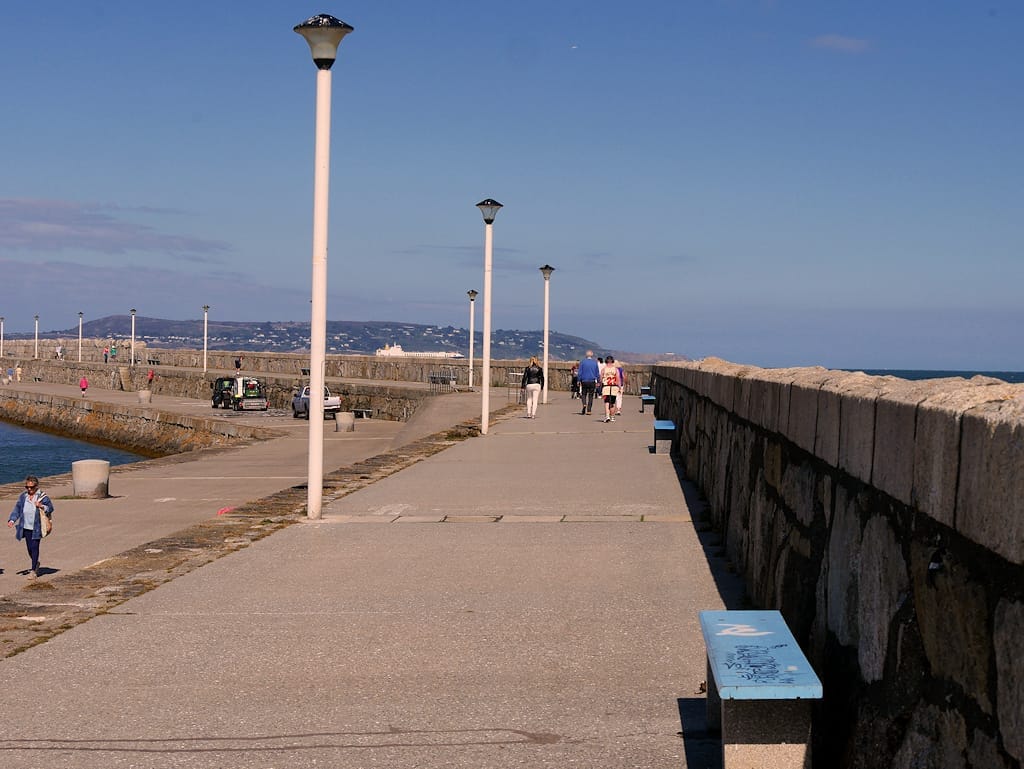
The Dún Laoghaire East Pier is a granite harbour pier approximately 1.3 kilometres long, extending into Dublin Bay from the town of Dún Laoghaire, about 12 kilometres south of Dublin city centre. Walking out and back covers roughly 2.6 kilometres of flat, wide, stone-paved path. There are no entry fees, no tickets, and no closing times. It is simply one of the finest free coastal walks in the greater Dublin area.
At its head stands a cast-iron lighthouse, painted white and red, which marks the end of the pier and the formal turn-around point for most walkers. The pier tapers slightly as you progress, and the stone ballustrade gives way at sections to open air with unobstructed sightlines across the bay toward Howth Head to the north and the Wicklow Mountains to the south.
💡 Local tip
The East Pier is the southern of the two main Dún Laoghaire piers. The West Pier exists but has restricted public access for safety reasons, with sections fenced off. If someone tells you to walk 'the pier,' they mean the East Pier.
A Brief History Worth Knowing
Construction of the East Pier began in May 1817, following an 1815 Act of Parliament that authorised the development of Dún Laoghaire Harbour (then known as Dunleary). The project was driven by the need for a safe harbour of refuge on the exposed Irish Sea coast, where ships frequently came to grief in storms. By 1821, the pier was substantially complete, built using granite quarried from nearby Dalkey Hill.
The scale of the engineering is easy to underestimate from a photograph. Walking the pier in person, with the granite blocks beneath your feet and the open sea on your right, gives a clearer sense of how ambitious the construction was for the early nineteenth century. The harbour became a major departure point for emigrants during the Famine years and a packet-boat link to Holyhead in Wales. It later served as the departure pier for the Royal Mail Steam Packet Company.
The town itself, originally Dunleary, was renamed Kingstown in 1821 following a visit by King George IV and then reverted to the Irish name Dún Laoghaire in 1920 after Irish independence. Understanding that context makes the harbour feel less like a scenic backdrop and more like a place with real historical weight. For travellers interested in this coastal pocket of Dublin, the nearby Dún Laoghaire area has several other sites worth pairing with the pier walk.
Tickets & tours
Hand-picked options from our booking partner. Prices are indicative; availability and final rates are confirmed when you complete your booking.
Giants Causeway, Dunluce castle, Dark Hedges tour from Dublin
From 71 €Instant confirmationFree cancellationGiant's Causeway, Dark Hedges, and Belfast Tour from Dublin
From 85 €Instant confirmationFree cancellationDublin self-guided audio tour
From 10 €Instant confirmationBird of Prey, Cliffs of Moher and Aillwee Cave from Dublin
From 201 €Instant confirmationFree cancellation
How the Pier Feels at Different Times of Day
Early mornings on the East Pier are genuinely different from the midday experience. By 7am, the pier belongs to a specific cast of regulars: swimmers heading to or from the Forty Foot bathing place at Sandycove, older residents in rain jackets walking dogs at a purposeful pace, and occasional solo runners. The light over the bay at this hour, particularly in summer, is pale and wide. The smell is pure salt water with occasional diesel from a passing ferry. The sound is mostly wind, your own footsteps on granite, and the low clunk of rigging on yachts moored in the harbour.
By mid-morning on weekends, the tone shifts. Families arrive. Children run ahead toward the lighthouse. Couples with takeaway coffees from the nearby seafront cafes claim the stone benches. At peak weekend hours in summer, the pier is busy enough that you will be weaving around other walkers, particularly in the central section. It never becomes unpleasantly crowded in the way that some city-centre attractions do, but calling it a quiet escape at 11am on a July Saturday would be inaccurate.
Late afternoons in autumn and winter offer some of the most atmospheric conditions on the pier. The sea takes on a grey-green colour, waves push against the outer wall and send occasional spray across the path, and the ferry lights from the Stena Line terminal across the harbour give the scene a melancholy working-port quality. Dress for wind. A mild Dublin day in October still means 20-25 knot gusts are possible at the pier head.
⚠️ What to skip
In stormy weather, waves can wash over sections of the outer pier path near the lighthouse. Exercise caution and turn back early if spray is reaching the walkway. The pier is not closed in bad weather, so judgment is entirely the visitor's.
The Walk Itself: What You Pass and Where to Look
The pier entrance sits close to the main Dún Laoghaire seafront, near the Royal St. George Yacht Club. The path begins wide and gradually narrows as you move further from shore. For the first few hundred metres, the inner harbour is on your left, usually dotted with yachts and small vessels. On your right, the outer bay opens toward the Irish Sea.
Roughly halfway along, there is a bandstand, a Victorian structure that still sees occasional performances in summer and makes a good photography subject even when empty. Benches along the inner side of the pier face the yacht basin and the town, and this is where most people stop to rest. The outer stone wall blocks wind at this section, making it noticeably warmer than the exposed pier head.
The final stretch to the lighthouse is the most exposed. The granite is darker here from constant sea spray. The lighthouse at the pier head is not open to visitors, but walking to its base and looking back toward the town gives you the full perspective: Dún Laoghaire spread out behind you, the Dublin Mountains visible to the southwest on clear days, and the curve of Dublin Bay drawing the eye north toward Howth. On very clear days, the Wales coast has reportedly been visible from this point, though that is weather-dependent and far from guaranteed.
If you want to extend the outing, the Howth Cliff Walk is reachable by DART and offers a more challenging coastal walk on the opposite side of Dublin Bay, making a possible full-day coastal itinerary from the pier.
Getting There and Practical Notes
The DART line from Dublin city centre to Dún Laoghaire station takes roughly 25 minutes and deposits you a short, flat walk from the pier entrance. This is the most straightforward approach from the city and makes the whole outing achievable without a car. Bus routes 7, 7a, 8, 45a, 46a, 59, 75, and 111 also serve the area. Fares and timetables should be checked via Transport for Ireland before travel, as they are subject to change.
The pier surface is flat, wide, and paved throughout, which makes it accessible for pushchairs and generally manageable for people with mobility considerations. There are no steps along the main walkway to the lighthouse. However, some sections near the pier head have uneven stone, and the surface can be slippery when wet. Visitors with specific accessibility requirements should note that no formal accessibility audit of the pier was available at time of writing.
There are no cafes or facilities on the pier itself. Toilets and food options are available at the seafront near the pier entrance, including several coffee shops along the main harbour front. The Lexicon Library building nearby is a useful landmark and has public facilities.
💡 Local tip
Wear layers. Even in summer, the wind speed at the pier head is meaningfully higher than in town. Sunscreen matters more than you expect on a bright day, because the reflection off the water amplifies UV exposure.
Photography on the East Pier
The East Pier rewards photographers at both ends of the day. At sunrise, the light falls from the east directly over the Irish Sea, illuminating the lighthouse and the outer harbour wall in warm tones. Mist over the water in early morning adds depth to any shot looking back toward the town. At sunset, the light catches the granite of the pier itself and the hulls of moored yachts in the inner harbour.
For those shooting with smartphones, the bandstand midway along provides a strong compositional anchor with the town skyline behind it. A wide-angle perspective from the lighthouse base looking back along the pier's full length captures both scale and context. Overcast days, which are common in Dublin, often produce better conditions for harbour photography than direct sun, reducing glare off the water.
The pier forms a natural part of any Dublin walking tour that extends south of the city. Combined with a stroll through the town and coffee at the seafront, it makes a half-day excursion that requires very little planning.
Who Will and Won't Enjoy This Walk
The East Pier works well for travellers who want sea air, open space, and a sense of perspective after the density of central Dublin. It is particularly good for those travelling with young children or dogs, both of whom handle the flat, wide path easily. It suits slower-paced visitors who want to sit on a bench, watch the ferries, and do nothing demanding.
Those expecting dramatic scenery comparable to cliff walks or mountain hikes will find it understated. The pier is flat and urban in character, set against a working harbour rather than wild coastline. Visitors seeking that kind of terrain should look at the Killiney Hill Park a short distance down the coast, or plan a day trip to the Wicklow Mountains. The pier also offers limited shelter in genuinely bad weather, so checking the forecast is not optional, it is practical necessity.
The East Pier is best understood as part of a broader Dún Laoghaire outing rather than a standalone destination requiring significant travel time. If you're building a day around it, pair it with the James Joyce Tower at Sandycove, a short walk or bus ride away, for a fuller afternoon. That combination covers coastal scenery, literary history, and some of the most characterful swimming culture in Ireland.
Insider Tips
- The best swimming at Dún Laoghaire is at the Forty Foot in Sandycove, a short walk from the pier. Year-round swimmers enter from the rocks before 8am most mornings. You can watch from the path without committing to the water.
- The inner harbour side of the pier faces the yacht basin and town, not the open sea. If you want wind protection and a quieter sit, use the benches on the inner side. If you want the full sea exposure and view, stay on the outer edge.
- Dún Laoghaire's seafront has a cluster of independent coffee shops worth checking rather than defaulting to chains. Walking the pier first and then finding a seat with a harbour view afterward is a better sequence than the reverse.
- The Victorian bandstand midway along the pier occasionally hosts free performances in summer. Check local event listings if you want to combine the walk with live music, but don't plan around it without confirming in advance.
- If the West Pier appears accessible, note that sections have been closed off for structural safety reasons. The East Pier is the main pier most visitors walk.
Who Is Dún Laoghaire East Pier Walk For?
- Families with young children looking for flat, easy outdoor time near Dublin
- Visitors wanting a free, low-effort half-day away from city-centre crowds
- Photographers seeking sea light at sunrise or atmospheric harbour shots in overcast conditions
- Dog walkers and people who want movement without terrain challenge
- Travellers pairing the walk with the James Joyce Tower, Killiney, or a full coastal DART day
Nearby Attractions
Other things to see while in Dún Laoghaire:
- James Joyce Tower & Museum, Sandycove
A 19th-century Martello tower on the rocky shore of Sandycove, the James Joyce Tower and Museum is where Joyce briefly lived in 1904 and where he set the famous opening chapter of Ulysses. Free to enter, compact but deeply evocative, it rewards anyone with even a passing interest in Irish literary history.