Getting Around Dublin: Transport, DART & Airport Transfers
Dublin's public transport network covers the city and coast through buses, DART rail, Luas trams, and airport coaches. This guide breaks down fares, Leap Card options, airport transfer routes, and the practical details that save you time and money when navigating Ireland's capital.

Plan and book this trip
Tools from our partner Travelpayouts help you compare flights and hotels. If you book through them, we may earn a commission at no extra cost to you.
Flights
Hotels map
TL;DR
- The TFI Leap Card saves around 20–30% on Dublin Bus, DART, and Luas versus cash fares — get one before your first journey.
- The Leap Visitor Card (€8 for 24hrs, €18 for 72hrs, €24 for 7 days) covers unlimited travel within the Dublin Short Hop Zone, ideal for exploring areas like Temple Bar and the coast.
- Dublin Airport has no DART or Luas connection — you reach the city centre by bus, coach or taxi only.
- You can now pay by contactless debit or credit card on Dublin Bus as well as with a Leap Card; cash must still be exact coins if you choose to pay that way.
- The DART coastal rail is the fastest way to reach Howth and Dún Laoghaire from the city centre.
How Dublin's Transport Network Is Organised

Dublin's public transport runs under the Transport for Ireland (TFI) umbrella, which coordinates buses, suburban rail, the DART coastal line, and the Luas tram system. The operators themselves are separate: Dublin Bus and Go-Ahead Ireland run most city and suburban bus routes, Irish Rail operates the DART and commuter trains, and Transdev runs the Luas. For the visitor, this matters mainly because tickets are not always interchangeable — but the Leap Card bridges most of them.
The city's geography shapes how you move around it. The River Liffey divides Dublin into northside and southside, and most of the historic core, major attractions, and shopping streets sit within a 2-3 km radius of O'Connell Street. For this central area, walking is often faster than waiting for a bus. Public transport becomes genuinely useful for reaching coastal suburbs, the airport, and outer neighbourhoods that are 20-40 minutes on foot from the city centre.
💡 Local tip
Download the TFI Live app before you arrive. It shows real-time departures for buses, DART, and Luas stops across the city and works without a local SIM card via Wi-Fi. The TFI Journey Planner at transportforireland.ie is the most reliable route-planning tool for Dublin.
The Leap Card: Your Essential Dublin Transport Tool
The Leap Card is a reloadable smartcard that works across Dublin Bus, Go-Ahead Ireland routes, Luas, DART, and most commuter rail services. It consistently costs less than paying cash. On Dublin Bus, the standard 90-minute Leap fare in Zone 1 (central Dublin) is €2.00 for adults — versus €2.40 or more in cash. That difference adds up quickly over a few days. You load credit onto the card and it deducts automatically each time you tap on and, where required, tap off.
If you're visiting for a short trip, the Leap Visitor Card is worth considering instead. It offers unlimited travel within the Dublin Short Hop Zone for a flat fee: €8 for 24 hours, €18 for 72 hours, or €24 for 7 days. For anyone making more than 4-5 journeys in a day, the 24-hour option pays for itself quickly. You can buy it at Dublin Airport, major rail stations, and city-centre outlets, or order online before departure.
- Standard Leap Card Reloadable, pay-as-you-go. Best if you want flexibility or plan to travel beyond the Short Hop Zone. Saves up to 31% versus cash fares.
- Leap Visitor Card (24 hours, €8) Unlimited travel on Dublin Bus, Luas, DART, and commuter rail within the Short Hop Zone. Good for a single full day of sightseeing.
- Leap Visitor Card (72 hours, €18) The most popular option for weekend visitors. Covers unlimited journeys across three calendar days.
- Leap Visitor Card (7 days, €24) Exceptional value for a full week. Cheaper than four 72-hour cards and valid for all standard TFI services within the zone.
⚠️ What to skip
The Leap Visitor Card is only valid within the Dublin Short Hop Zone. It will not cover intercity journeys to Cork, Galway, or other destinations outside the zone. If you plan day trips by train, check fares separately with Irish Rail.
Dublin Buses: Routes, Fares & What to Expect
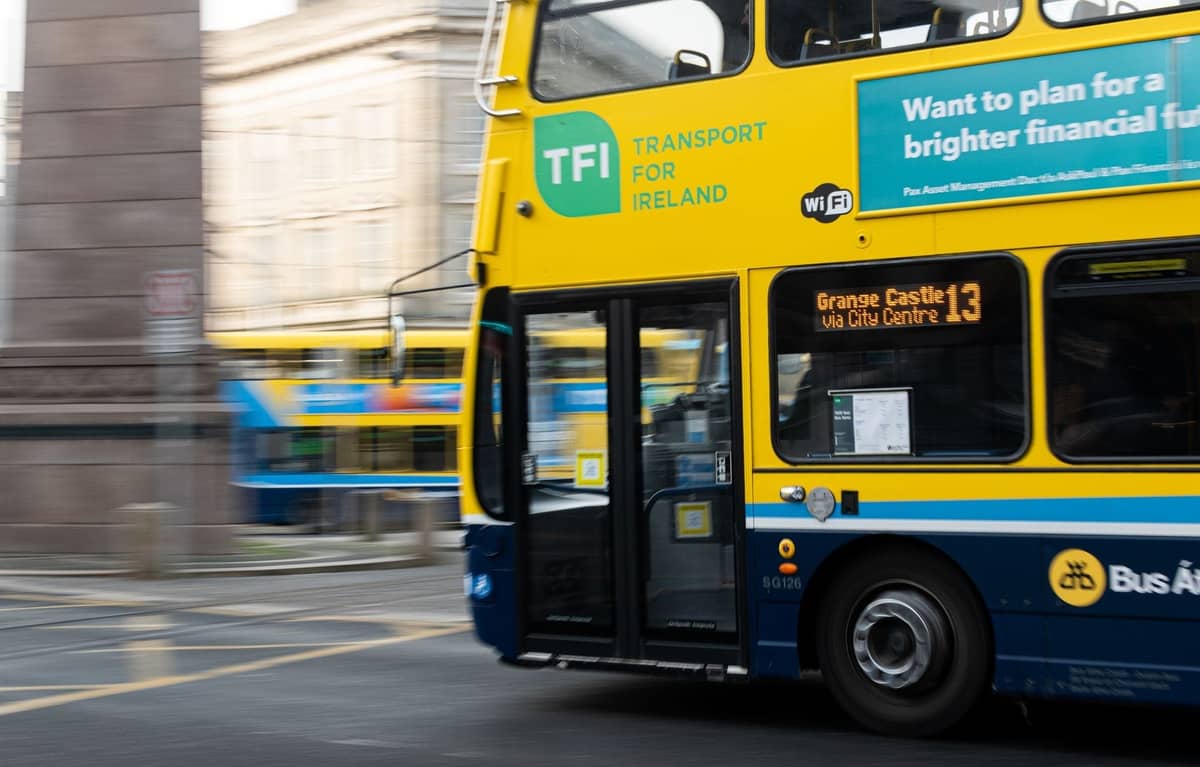
Dublin Bus operates the backbone of the city's surface transport, with Go-Ahead Ireland covering some outer suburban and orbital routes. Core city routes run from roughly 05:00 to around 23:30, with frequencies of 5-15 minutes on main corridors during peak hours (approximately 07:00-09:00 and 17:00-19:00). A growing number of key routes now run 24 hours, including some serving the city centre and key corridors towards the airport, though specific services and timetables continue to change under the BusConnects network redesign.
Paying cash on Dublin Bus requires exact coins — drivers do not give change. This catches a lot of visitors off guard. If you only have notes or want to avoid fumbling with coins, the Leap Card or contactless bank card payment are the practical solutions. Contactless payment from bank cards and mobile wallets is now accepted on standard Dublin Bus services. Adult cash fares run from €2.00 for short journeys up to €3.10 for Xpresso express services.
- Short hop adult Leap fare: €2.00 / cash: €2.00
- Standard adult Leap fare: €2.00 / cash: €2.40
- Xpresso express Leap fare: €2.40 / cash: €3.10
- Young adult/student Leap (90-min fare): €1.00
- Child Leap fare (90-min): €0.80
- Night bus (Nitelink at weekends): discounted Leap fares apply
The 90-minute transfer rule is important to understand. When you tap your Leap Card on a Dublin Bus, you get a 90-minute window during which you can transfer to another bus or Luas service within Zone 1 without paying an additional full fare. This effectively means a single €2.00 charge can cover a connection, which is useful when crossing the city.
The DART: Dublin's Coastal Rail Line
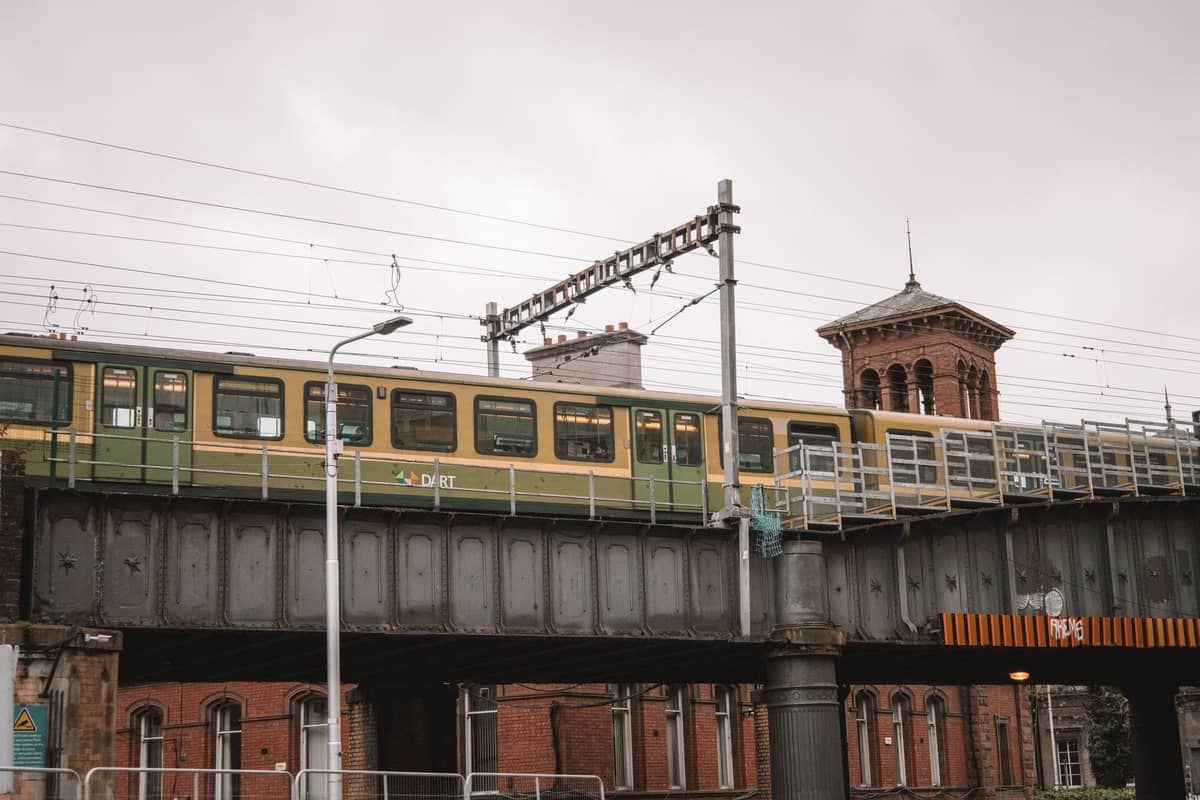
The DART (Dublin Area Rapid Transit) is an electrified heavy rail line that runs along Dublin Bay's coastline from Greystones in the south to Howth and Malahide in the north. It passes through the city centre at Connolly, Tara Street, and Pearse stations, making it easy to combine a coastal outing with a central starting point. The Howth Cliff Walk and the seafront at Dún Laoghaire Pier are both a direct DART ride from city centre stations.
DART trains are frequent during weekday peak hours and run to a regular timetable off-peak and at weekends. You can pay at station ticket machines by cash or card, or use a Leap Card (tap on at platform validators, tap off on exit). For most visitors travelling within the Short Hop Zone, DART fares are included in the Leap Visitor Card. Live departure information and full timetables are available via Irish Rail at irishrail.ie and through the TFI Live app.
✨ Pro tip
The DART is significantly faster than the bus for reaching coastal suburbs. Howth is around 30-35 minutes from Connolly Station, and Sandymount or Blackrock take under 15 minutes from Pearse. In summer, trains can fill up quickly on weekend afternoons — travel before midday if you want a seat.
The Luas Tram System

The Luas operates two lines. The Green Line runs from Broombridge in the north through the city centre (via St. Stephen's Green) to Brides Glen in the south, connecting the south Dublin suburbs and passing through areas popular with visitors. The Red Line runs east-west across the city, from The Point and Connolly in the Docklands through Heuston Station to Saggart and Tallaght in the south-west. The two lines intersect at Abbey Street and O'Connell/GPO stops in the city centre.
For most visitors, the Green Line is more relevant: it links St. Stephen's Green and Grafton Street with Ranelagh, Dundrum, and the south suburbs. The Red Line is useful if you're heading to Heuston Station for intercity trains, or to Smithfield and the Liberties. Luas fares are zone-based, and buying a ticket before boarding at platform machines is mandatory — there are no conductors and inspectors do check.
Getting from Dublin Airport to the City Centre
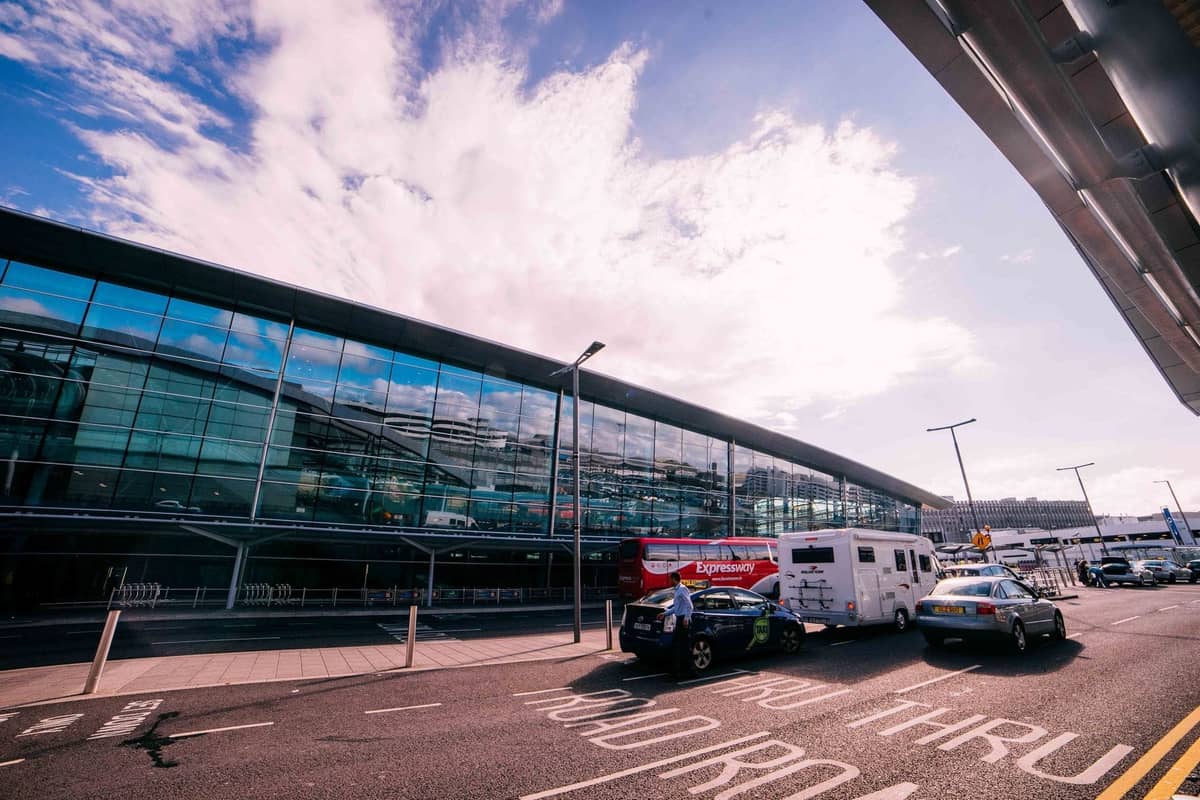
Dublin Airport (IATA: DUB) sits roughly 10 km north of the city centre in Collinstown. It's Ireland's busiest airport and the main international gateway. One crucial point: there is no DART station and no Luas stop at the airport. This surprises a lot of first-time visitors who assume a European capital's main airport will have a rail link to the centre. For now, your options are coach, taxi, or private transfer.
- Airport coach services Multiple operators run frequent services between Dublin Airport and the city centre (primarily O'Connell Street, Busáras, and Heuston Station). Journey time is typically 25-45 minutes depending on traffic — longer during weekday morning rush hour. Book tickets online in advance or at the airport.
- Dublin Bus public routes Standard Dublin Bus routes connect the airport to the city centre and are the cheapest option if you have a Leap Card. Check TFI route planners for current route numbers and schedules, as these change periodically.
- Licensed taxis Licensed taxis queue at the arrivals hall. Fares are metered under National Transport Authority regulations. Airport trips may include a small supplements for luggage or night hours — check current NTA regulated fares before travel. Expect to pay more during peak hours or in heavy traffic.
- Pre-booked private transfers Various companies offer fixed-price transfers from the airport to city hotels. Useful for groups or late-night arrivals when taxi queues can be long. Prices vary by provider and must be verified directly with the company.
If you're travelling on to other parts of Ireland immediately, Bus Éireann intercity coaches and some private operators also depart from Dublin Airport directly, avoiding the need to come into the city first. For a broader look at planning your time in Dublin after arrival, the 3 days in Dublin itinerary is a practical starting point.
Taxis, Ride-Hailing & Cycling

Licensed taxis in Dublin are regulated by the National Transport Authority and must use meters. Apps including Free Now, Uber (operating through licensed taxi drivers in Ireland, not private hire), and Bolt allow you to book and pay digitally. Availability and pricing models for individual apps can change, so check current app availability in Ireland before relying on any specific platform.
Dublin Bikes is the city's public bike-share scheme, with docking stations spread across the city centre. A short-term pass costs a few euros and gives access to bikes for journeys under 30 minutes at no additional charge. It's a practical option for flat central routes, though Dublin's traffic and occasional rain make it a fair-weather choice for most visitors. The city centre is compact enough that cycling between attractions in the core area is genuinely faster than waiting for a bus.
ℹ️ Good to know
Ireland drives on the left. If you plan to rent a car for day trips outside Dublin, adjust accordingly. Within Dublin city, driving is rarely advisable for visitors: parking is expensive, one-way systems are confusing, and traffic on the main arteries can be heavy during peak hours. Public transport covers the vast majority of visitor destinations efficiently.
For day trips beyond the reach of the DART, such as visiting Glendalough in the Wicklow Mountains or exploring Malahide Castle to the north, organised transport or a rental car is the most practical choice. Our day trips from Dublin guide covers the best options and how to reach them.
Practical Tips for Getting Around Dublin
- Buy or top up your Leap Card at Dublin Airport arrivals before taking any public transport into the city.
- Use the TFI Journey Planner at transportforireland.ie for exact routes and departure times — Google Maps is reliable too for Dublin transit.
- For the Luas, always tap your Leap Card on the platform validator before boarding, not on the tram itself.
- Dublin city centre is highly walkable: the distance from Trinity College to St. Patrick's Cathedral is under 15 minutes on foot.
- During St. Patrick's Day (17 March) and major events at Croke Park or the Aviva Stadium, expect severe bus delays — build extra time into any travel plans.
- Night buses (including Nitelink services at weekends) run to suburban areas when regular services are reduced; Leap Card discounted fares apply.
- Bus stops show real-time arrival information on electronic boards; the same data appears in the TFI Live app.
- Tipping taxi drivers is customary but not mandatory; rounding up to the nearest euro or adding a small amount is standard practice.
FAQ
What is the best way to get from Dublin Airport to the city centre?
The most common options are airport coach services (frequent, direct to key city stops, 25-45 minutes depending on traffic), standard Dublin Bus routes (cheapest if you have a Leap Card), and licensed taxis (metered, regulated by the NTA). There is no DART or Luas connection to the airport. Pre-booked private transfers are worth considering for groups or late-night arrivals. Check current operator schedules at transportforireland.ie before travel as routes and fares change.
Is the Leap Visitor Card worth buying for a short trip to Dublin?
For most visitors staying 1-3 days and making regular use of buses, DART, and Luas, yes. The 24-hour card at €8 and the 72-hour card at €18 both offer unlimited travel within the Dublin Short Hop Zone. If you plan to make fewer than 4-5 journeys per day, a standard Leap Card with pay-as-you-go credit may save more. The Visitor Card does not cover intercity trains or journeys outside the Short Hop Zone.
Can I use a contactless bank card on Dublin buses?
No. Dublin Bus did not accept contactless payment from bank cards or mobile wallets for many years, but now you can pay your fare using contactless as well as with a Leap Card. You can still pay with exact cash coins if you wish, but drivers cannot give change. This is a common source of frustration for visitors — getting a Leap Card before your first bus journey is still strongly recommended for the best value.
How does the DART differ from the Luas, and which should I use?
The DART is a full heavy rail service running along Dublin Bay's coastline from Greystones in the south to Howth and Malahide in the north — ideal for coastal suburbs and day trips. The Luas is a light rail tram system with two cross-city lines serving inner suburbs and connecting key points like Heuston Station, Smithfield, St. Stephen's Green, and the Docklands. Use the DART for coastal destinations and the Luas for cross-city movement without changing to a bus.
Is public transport in Dublin reliable enough, or should I take taxis?
For most journeys, public transport is reliable and significantly cheaper than taxis. Buses can run late during peak hours or major events, but the DART and Luas run to timetable with good consistency. The TFI Live app gives real-time information so you can plan around delays. Taxis make sense late at night when bus frequency drops, or for airport transfers with heavy luggage. For regular daytime city travel, buses, DART, and Luas are the practical choice.