Malahide Castle & Gardens: Ireland's Most Storied Medieval Estate
Malahide Castle & Gardens sits 13 km north of Dublin city centre in the coastal village of Malahide, Co. Dublin. Dating to the 12th century and home to the Talbot family for nearly 800 continuous years, the estate combines a genuine medieval castle with a walled botanical garden and 268 acres of parkland. It is one of the most historically layered day trips from the capital.
Quick Facts
- Location
- Back Road, Malahide, Co. Dublin (Eircode K36 YP65) — approx. 13 km north of Dublin city centre
- Getting There
- DART to Malahide Station (10-min walk); Dublin Bus routes 32 or 42 from city centre; route 102 from Dublin Airport. Free on-site parking by car.
- Time Needed
- Minimum 2 hours for castle tour, walled garden, and a walk through the parkland
- Cost
- Paid admission for castle tours and Butterfly House; parkland access free. Check malahidecastleandgardens.ie for current ticket prices.
- Best for
- History enthusiasts, families, garden lovers, and anyone combining a castle visit with a coastal village afternoon
- Official website
- malahidecastleandgardens.ie
What Malahide Castle Actually Is
Malahide Castle & Gardens is not a ruin, a reconstruction, or a museum installed inside a shell. It is a genuine medieval castle that was lived in by one Anglo-Norman family, the Talbots, from 1185 until 1973, with only one brief interruption during that period. That is an almost unbroken stretch of nearly 800 years under the same family name, which makes it one of the longest continuously family-occupied castles in Ireland. The fact that it is now run as a public attraction by Fingal County Council, which acquired the property in 1976, does not diminish the weight of that history once you are standing inside it.
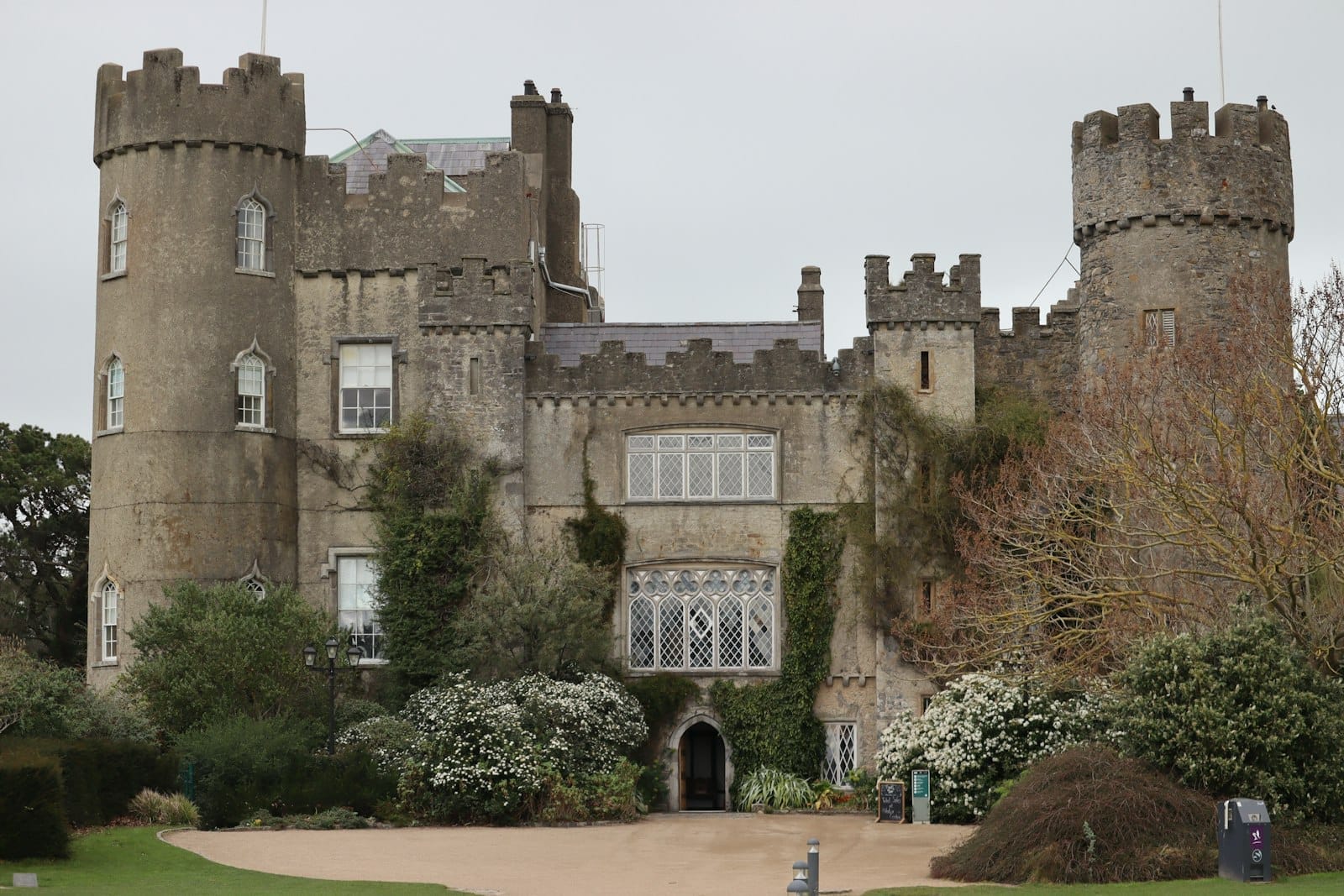
The castle itself is a compact but layered structure: the oldest stonework dates to the 12th century, while the Great Hall was added in 1495, and various towers and extensions accumulated across the Tudor, Jacobean, and Victorian periods. The result is a building that reads like a cross-section of Irish architectural history rather than a single coherent style. From the outside, on a grey morning with mist sitting on the parkland, it looks exactly like the kind of castle that earns that word without apology.
💡 Local tip
Guided castle tours run daily from 09:30 year-round at scheduled times. Arriving early means smaller groups and better light in the interior rooms, which can feel quite dark in the afternoon when tour groups have filled the corridors.
The Castle Interior: What the Tour Covers
The guided castle tour is the core of any visit. Rooms are dressed with period furniture and an extensive portrait collection, much of it connected to the National Gallery of Ireland's holdings during the Talbot era. The Great Hall is the centrepiece: a high-ceilinged banqueting room built in 1495, its dark oak beams and stone walls carrying a physical weight that photographs consistently fail to capture. Portraits line the walls, and the acoustics make even a moderate-sized tour group sound like a crowd.
Beyond the Great Hall, the tour moves through a series of furnished rooms, including the Oak Room, with its carved 16th-century panelling, and upper chambers that trace the changing tastes of successive Talbot generations. The family's Catholic faith during periods of religious persecution in Ireland is a thread the guides return to regularly, grounding the domestic details in the wider history of the country.
Visitors with mobility limitations should note that the Classic Castle Tour includes upper floors accessed via stairs. The building is a medieval structure, and while the modern visitor centre provides level-access facilities, internal lift availability for the castle's upper floors should be confirmed directly with the attraction before booking.
Tickets & tours
Hand-picked options from our booking partner. Prices are indicative; availability and final rates are confirmed when you complete your booking.
Blarney, Rock of Cashel and Cahir Castles Tour from Dublin
From 85 €Instant confirmationFree cancellationGiants Causeway, Dunluce castle, Dark Hedges tour from Dublin
From 71 €Instant confirmationFree cancellationGiant's Causeway, Dark Hedges, and Belfast Tour from Dublin
From 85 €Instant confirmationFree cancellationDublin self-guided audio tour
From 10 €Instant confirmation
The Gardens and Parkland: What to Do After the Tour
The 268-acre demesne is where the visit breathes out. Once you leave the castle, the grounds open up into long grass paths, mature trees, and the kind of quiet that surprises first-time visitors who expected a tighter, more theme-park-style site. The Talbot Botanical Walled Garden is the horticultural highlight: a sheltered enclosure of cultivated beds with a particular reputation for its Southern Hemisphere plant collection, built up by Milo Talbot, the last Talbot occupant, before his death in 1973. The mild maritime climate of the Dublin coastline allows species to survive here that would not last a winter in most of Ireland.
The Butterfly House, located within the walled garden, is a seasonal addition worth factoring in for families. The enclosed tropical environment is noticeably warmer than the surrounding gardens, and on cool overcast days, that warmth alone is reason enough to step inside. Children find the free-flying butterflies reliably arresting, and the contrast with the castle's stone interiors earlier in the visit keeps the afternoon varied.
For those who want more parkland walking, the demesne connects naturally to the surrounding Malahide area. The village itself, with its seafront and marina, is a short walk away, making it straightforward to extend the day. If you are planning a broader coastal afternoon, the Clontarf Promenade is a further option along the same coastal stretch toward the city.
How the Experience Changes by Time of Day and Season
The castle grounds are most atmospheric in the early morning, particularly in autumn and winter when low light catches the stonework and the parkland paths are almost empty. Weekend afternoons, especially in summer, bring a steady flow of family groups and school tours, which raises the noise level inside the castle considerably and reduces the meditative quality of the interior rooms.
Spring and early summer are the best seasons for the walled garden, when the planting is at its most active and the Butterfly House operates at full capacity. In winter, the gardens are quieter and some beds are bare, but the castle itself is no less impressive, and the guided tour content does not change with the season. The demesne can become muddy after persistent rain, which is not unusual in Dublin's maritime climate, so waterproof footwear is a practical recommendation for any visit between October and March.
⚠️ What to skip
Dublin's weather is unpredictable year-round. The parkland paths are largely unsurfaced and can be soft underfoot after rain. Bring a waterproof layer regardless of the forecast.
Getting to Malahide Castle from Dublin
The DART is the most straightforward option from the city centre. Services run to Malahide Station from Connolly, Tara Street, and Pearse stations, and the walk from the station to the castle entrance takes approximately 10 minutes on a flat, signposted route. The coastal rail journey itself, along Dublin Bay, is a decent introduction to the northeastern fringe of the city.
Dublin Bus routes 32 and 42 connect the city centre to Malahide village, with a stop less than 200 metres from the castle. If you are travelling directly from Dublin Airport, the Go-Ahead route 102 links the airport to Malahide village, which makes Malahide Castle a practical first or last stop for travellers on the northern approach to the city. For a fuller picture of how to move around Dublin, the getting around Dublin guide covers transport options in detail.
By car, the drive from Dublin Airport takes roughly 10 minutes, and the estate has free on-site parking with coach bays. From Dublin city centre, expect approximately 25 minutes outside peak traffic. The Eircode for navigation is K36 YP65.
Honest Assessment: Is It Worth the Trip?
Malahide Castle is not the most dramatically preserved medieval castle in Ireland, and it does not pretend to be. Its appeal is different: it is a place that feels genuinely lived-in rather than merely exhibited. The 800-year Talbot occupation gives the rooms a domestic specificity that more famous castles, restored for spectacle, sometimes lack. The guided tour is the right way to experience that specificity; the interpretive quality of the guides makes a significant difference to whether the history lands or remains abstract.
Visitors coming primarily for Dublin's urban culture, its pubs, literary history, or street life, may find the trip to Malahide a stretch if time is short. But for anyone with half a day and an interest in Irish history, the combination of the castle interior, the walled garden, and the coastal village setting makes for a well-rounded excursion. It pairs naturally with a morning at the National Museum of Archaeology or an afternoon exploring the Glasnevin Cemetery Museum for travellers building a day around Irish historical depth.
If you are travelling with children, Malahide Castle combines well with a broader Dublin family itinerary. The Butterfly House, the open parkland, and the castle's storytelling elements hold attention better than many museum-format attractions. The Dublin with kids guide includes further suggestions for family-friendly days out in the city.
Insider Tips
- Book castle tour tickets online in advance, especially on weekends in summer. Walk-up availability is not guaranteed, and the first tour slot at 09:30 is the least crowded.
- After the castle tour, walk the full perimeter of the walled garden rather than doubling back through the main path. The southern beds in the Talbot Botanical Garden receive more afternoon light and are where the Southern Hemisphere plantings are most concentrated.
- The village of Malahide is a 15-minute walk from the castle along the coast road. Finishing the visit with lunch or a coffee in the village, overlooking the estuary, is a better use of time than staying on-site once the tour and gardens are done.
- The castle exterior photographs best from the northwest approach, roughly 10 minutes into the demesne walk from the main car park. The angle includes the tower and the mature treeline without the visitor centre infrastructure in frame.
- If you are arriving by DART, check the return timetable before you enter the castle. Services become less frequent on evenings and on Sundays, and it is easy to spend longer than expected once the gardens are factored in.
Who Is Malahide Castle & Gardens For?
- History travellers who want to understand Irish domestic and political history through a single, well-preserved site
- Families with children aged 5 and above, combining the castle's storytelling with the Butterfly House and open parkland
- Garden enthusiasts, particularly those interested in unusual Southern Hemisphere plant species in an Irish climate
- Travellers arriving or departing via Dublin Airport who want a half-day cultural stop without going into the city centre
- Couples or solo visitors looking for a quieter, less commercial alternative to the city's main paid attractions
Nearby Attractions
Combine your visit with:
- Abbey Theatre
Founded in 1904 by W.B. Yeats and Lady Gregory, the Abbey Theatre is Ireland's National Theatre and one of the most historically significant stages in the English-speaking world. Sitting on Lower Abbey Street in the heart of Dublin city centre, it continues to produce new Irish work alongside classic plays that shaped a nation's identity.
- Blessington Street Basin
Once the Royal George Reservoir supplying water to Dublin's north side, Blessington Street Basin is now a free public park in Phibsborough. The central lake, Tudor gate lodge, and resident wildfowl make it one of the most quietly rewarding green spaces within walking distance of Dublin city centre.
- Casino Marino
Casino Marino is an 18th-century Neo-Classical pleasure house in north Dublin, designed by Sir William Chambers for the Earl of Charlemont. Despite its compact exterior, the building conceals 16 rooms across three floors — a feat of architectural illusion that continues to astonish visitors. Access is by guided tour only, with admission from €3 for children and students and €5 for adults.
- Clontarf Promenade
Clontarf Promenade stretches 4.5 kilometres along Dublin Bay from Fairview to the Bull Wall at Dollymount, offering open sea views, public art, and a marked cycle route along much of its length. It costs nothing to visit, runs along a flat sea wall path, and delivers some of the most expansive coastal scenery accessible from Dublin city centre.