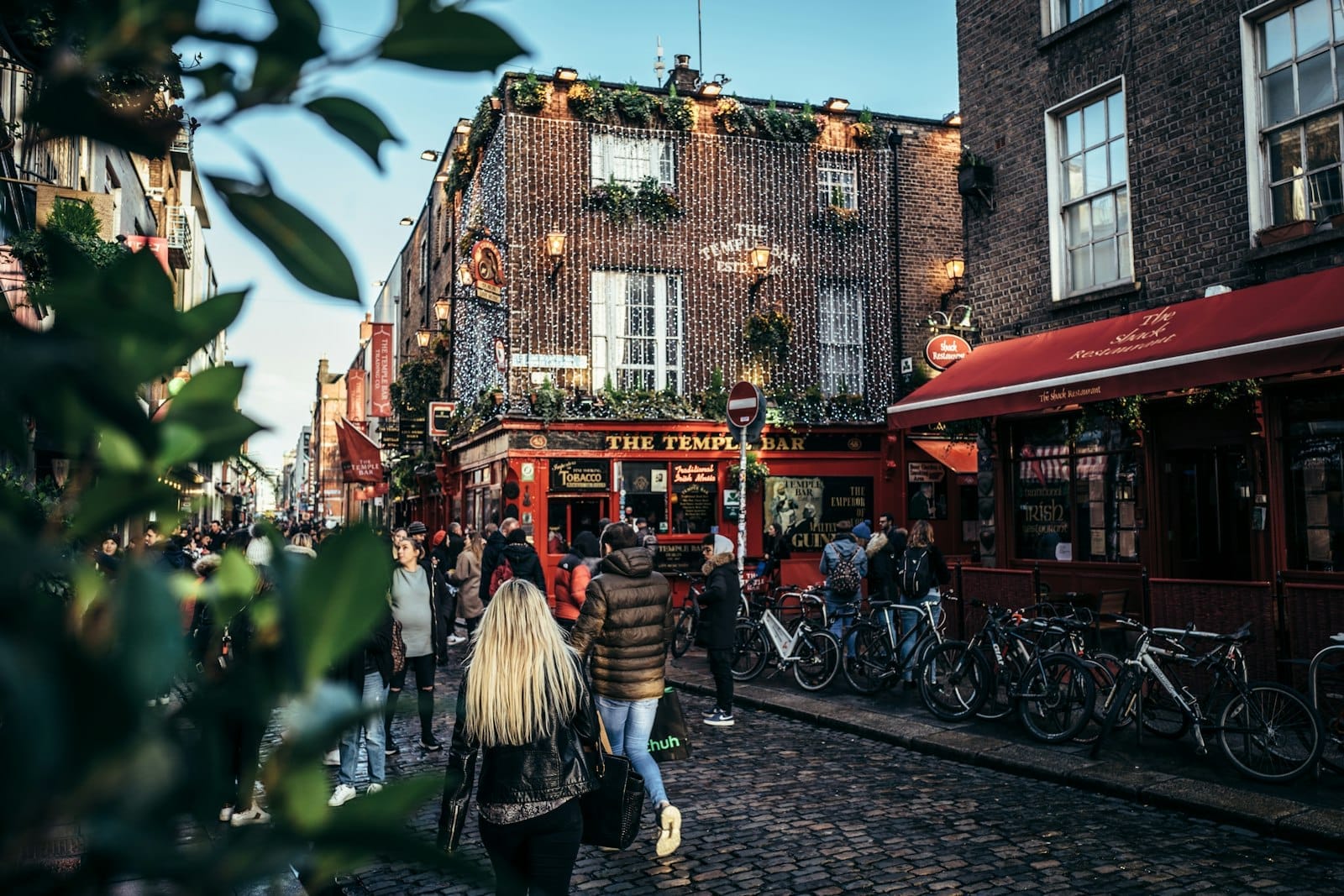
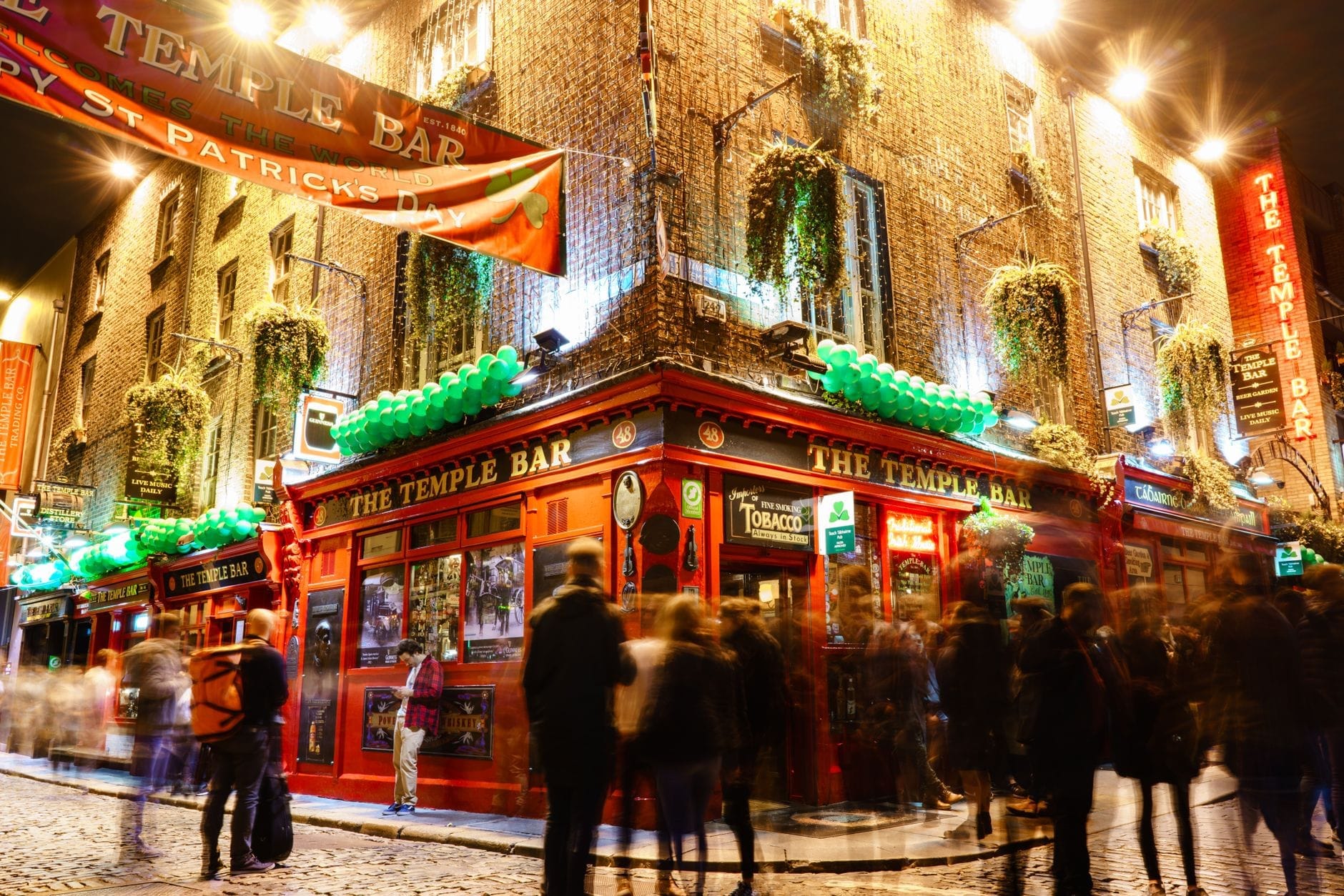
Temple Bar sits on the south bank of the River Liffey in the heart of Dublin, packed into a compact grid of cobbled laneways between Dame Street and the river. It is the city's designated cultural quarter, home to the Irish Film Institute, weekend markets, live music venues, and some of Dublin's most photographed pubs. The atmosphere shifts dramatically between a daytime cultural district and a high-energy nightlife zone after dark.
Temple Bar is Dublin's most recognizable central quarter: a tight grid of cobbled streets on the south bank of the Liffey where Georgian facades, colorful pub fronts, and cultural institutions sit within a few minutes' walk of each other. It draws more visitors per square kilometer than almost anywhere else in the city, which is both its appeal and its limitation.
Orientation
Temple Bar occupies a roughly square patch of the south Dublin city centre, bounded by Dame Street to the south, Westmoreland Street to the east, the River Liffey to the north, and Fishamble Street to the west. Within those boundaries, the district dissolves into a network of narrow laneways and small squares, most of them pedestrianized or restricted to light traffic. The main artery is Temple Bar street itself, running east to west through the middle of the quarter.
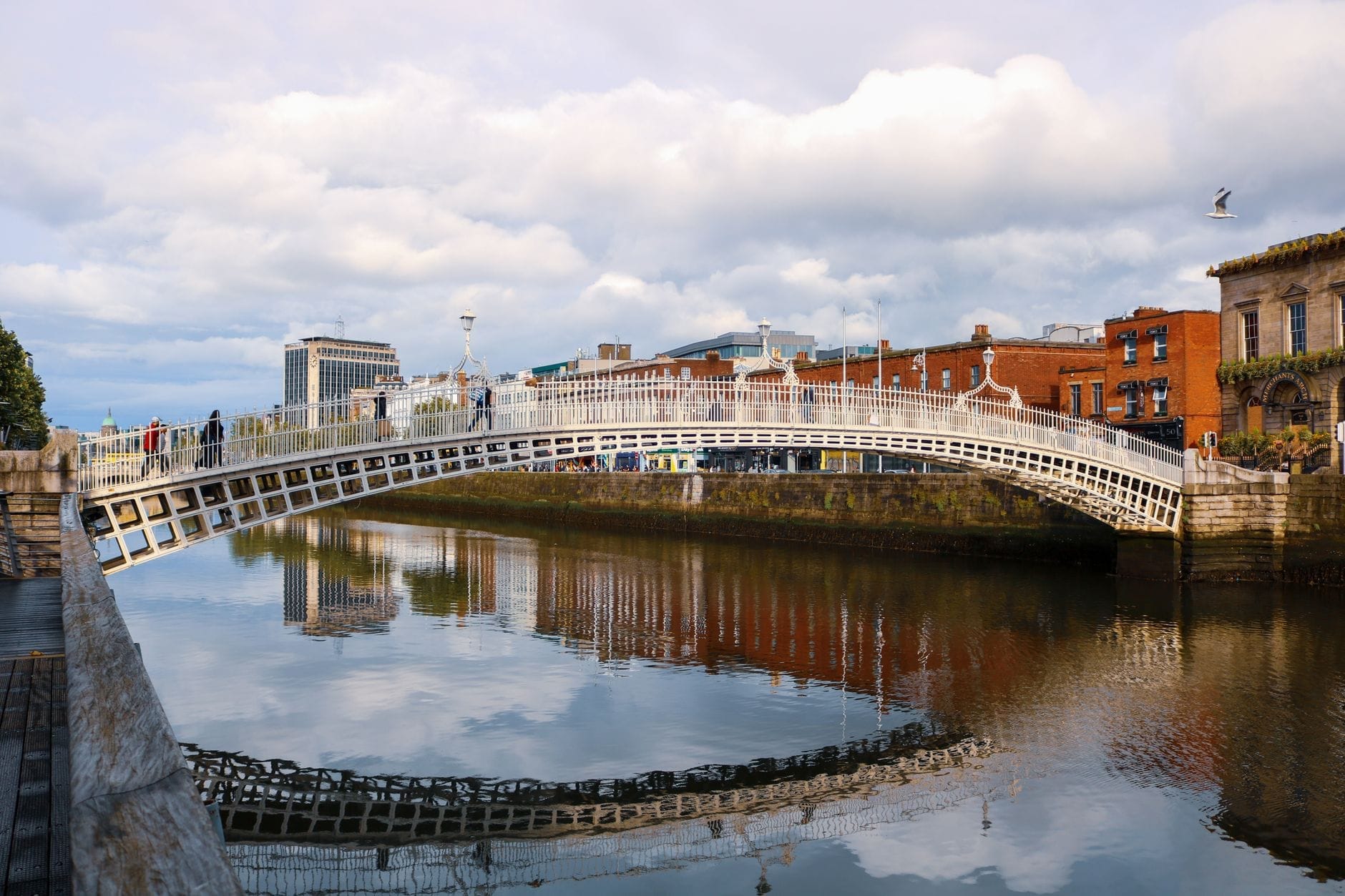
The Liffey forms a natural northern edge, with the Ha'penny Bridge connecting the quarter directly to the north side of the city at Liffey Street. To the south, Dame Street is a major city-centre thoroughfare that links Trinity College in the east to Dublin Castle and Christ Church Cathedral further west. That means Temple Bar sits at a genuine crossroads: turn south onto Dame Street and you are two minutes from Dublin Castle; turn north across the river and you reach O'Connell Street in under ten minutes on foot.
The district's position between Trinity College and the city core makes it almost impossible to avoid if you are walking between Dublin's main sightseeing areas. Grafton Street, Dublin's principal shopping street, is a five-minute walk southeast. The Smithfield district lies to the northwest across the river, while the Liberties area is to the southwest on the south side.
Character & Atmosphere
Temple Bar's character depends almost entirely on what time you arrive. In the morning, before 10am, the cobbled streets are quiet enough to notice the detail in the Victorian and Georgian brickwork: painted iron lamp posts, arched entrances to small squares, the smell of last night's rain still sitting in the uneven stones. The food market on Meeting House Square sets up on Saturdays and brings a more local crowd early in the day, with stalls selling farmhouse cheeses, bread, and street food.
By early afternoon the quarter fills steadily. Tourists move between pubs and attractions, buskers work the main corners, and the outdoor seating on Temple Bar street itself gets loud. The light in the afternoon falls well on the south-facing pub facades, which is partly why the area photographs so easily. The cobblestones, uneven and slightly treacherous in wet weather, catch the reflected light from surrounding shopfronts. It can feel genuinely atmospheric in these hours, particularly in the smaller laneways like Merchants Arch and Sycamore Street.
After 9pm, the dynamic shifts toward a younger, louder crowd. The pubs fill, the music gets turned up, and the streets outside the main venues become progressively busier through the night. On weekend nights, Temple Bar is one of the loudest patches of Dublin city, and the crowds on the main street can be genuinely thick between 10pm and 2am. This is not the place to stay if you are looking for quiet evenings or early-morning serenity. It is exactly the right place if pub energy and live music are what you came to Dublin for.
⚠️ What to skip
Temple Bar is one of the priciest areas in Dublin for drinks and food. Pints in the main tourist-facing pubs can cost significantly more than in neighborhoods like Portobello, Rathmines, or Smithfield. If budget matters, use the area for sightseeing and drink elsewhere.
History & Context
The name Temple Bar derives from the 17th-century residence and gardens of Sir William Temple, who held the area as provost of Trinity College. The 'bar' referred to a gateway or barrier, common in the street nomenclature of the period. Before that, the land along this stretch of the Liffey's south bank had Viking settlement origins, and the area's medieval street pattern, compressed and irregular, still reflects that earlier urban grain rather than any planned Georgian layout.
Through the 18th and 19th centuries, the district functioned as a commercial and printing quarter, with small workshops, warehouses, and traders operating out of the laneways. By the mid-20th century much of the area had become run-down. Dublin Corporation acquired significant portions of the land in the 1980s with plans for a bus terminus, a proposal that was eventually abandoned. The delay produced an unexpected result: cheap rents attracted artists, small theatres, record shops, and alternative businesses through the late 1980s and early 1990s, and that creative influx gave political ammunition to advocates who pushed for the area's designation as a cultural quarter. The Temple Bar Properties company was established in the early 1990s to manage regeneration, which produced the built fabric visible today, including Meeting House Square and many of the cultural institutions.
That regeneration history explains both the area's strengths and its contradictions. The cultural infrastructure is real: the Irish Film Institute, the National Photographic Archive, the Temple Bar pub, and several gallery spaces were all part of a deliberate plan. But the same success attracted mass tourism, which gradually displaced many of the independent businesses that gave the area its original appeal. What remains is a genuine cultural quarter with a thick layer of tourist infrastructure on top.
What to See & Do
The Irish Film Institute on Eustace Street is one of the area's most important institutions and one that many visitors overlook in favour of the pubs. It runs a year-round programme of art house cinema, retrospectives, and Irish film, and has a bar and cafe open to non-cinema visitors. It is a genuinely good reason to spend a daytime hour in Temple Bar rather than just passing through.
Meeting House Square, tucked behind Eustace Street, is the district's main open public space and the venue for the Saturday food market and Sunday book market. In summer it hosts outdoor film screenings and cultural events. It is also simply a good place to sit and orient yourself without the noise of the main thoroughfare.
Walking north through the Merchants Arch passage brings you directly to the Ha'penny Bridge, Dublin's most recognizable pedestrian crossing and worth seeing in both daylight and at night when it is lit. From the bridge you have a clear view up and down the Liffey and can orient yourself against landmarks on both banks.
Irish Film Institute (Eustace Street): art house cinema, archive screenings, bar and cafe
Meeting House Square: Saturday food market, Sunday book market, summer outdoor events
Ha'penny Bridge: iconic cast-iron pedestrian bridge, two minutes north through Merchants Arch
National Photographic Archive: rotating exhibitions of Irish photography, free entry
Temple Bar Gallery and Studios: contemporary Irish art, one of the larger artist-run spaces in the city
Fishamble Street: historically significant street at the western edge, site of the first performance of Handel's Messiah in Dublin in 1742
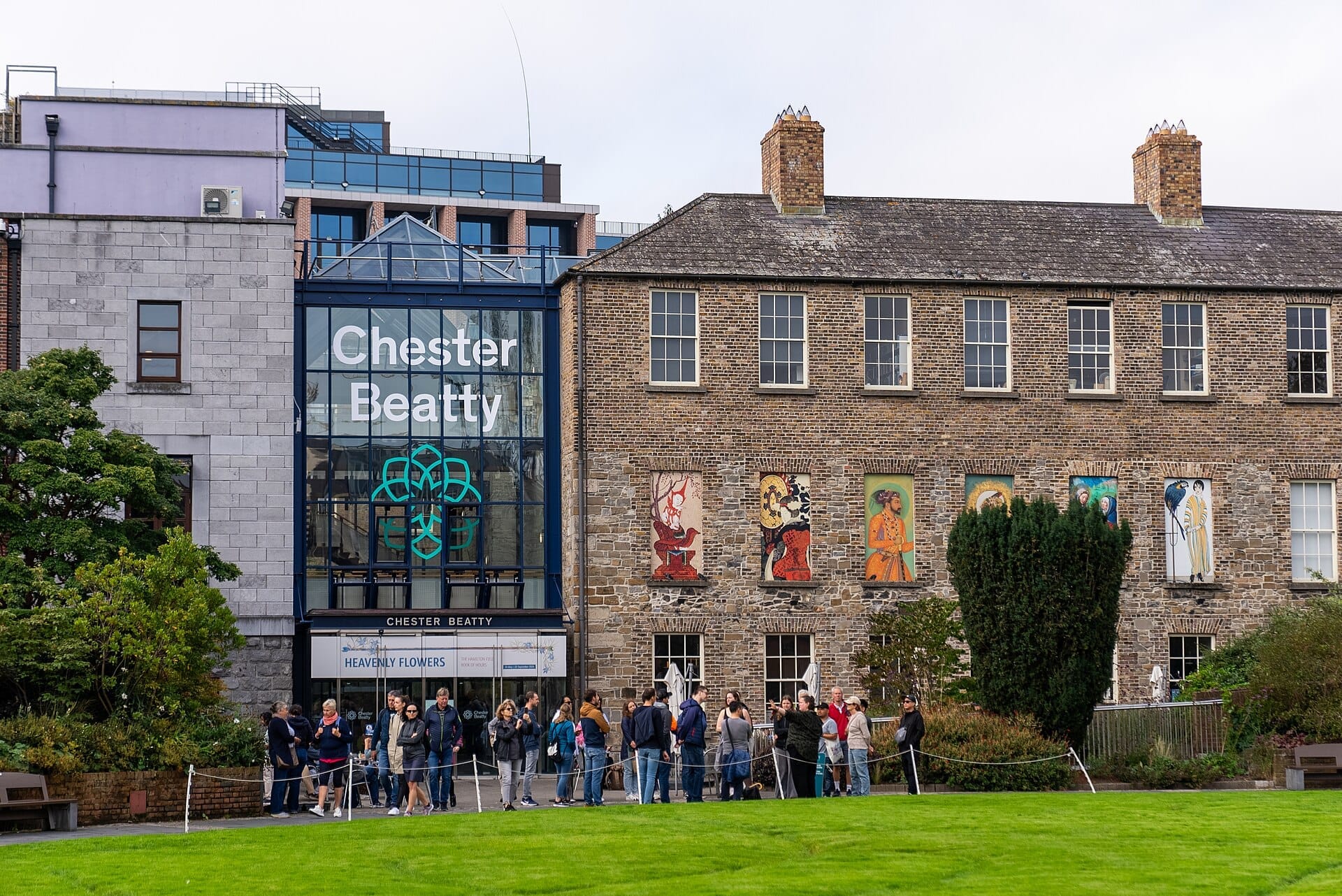
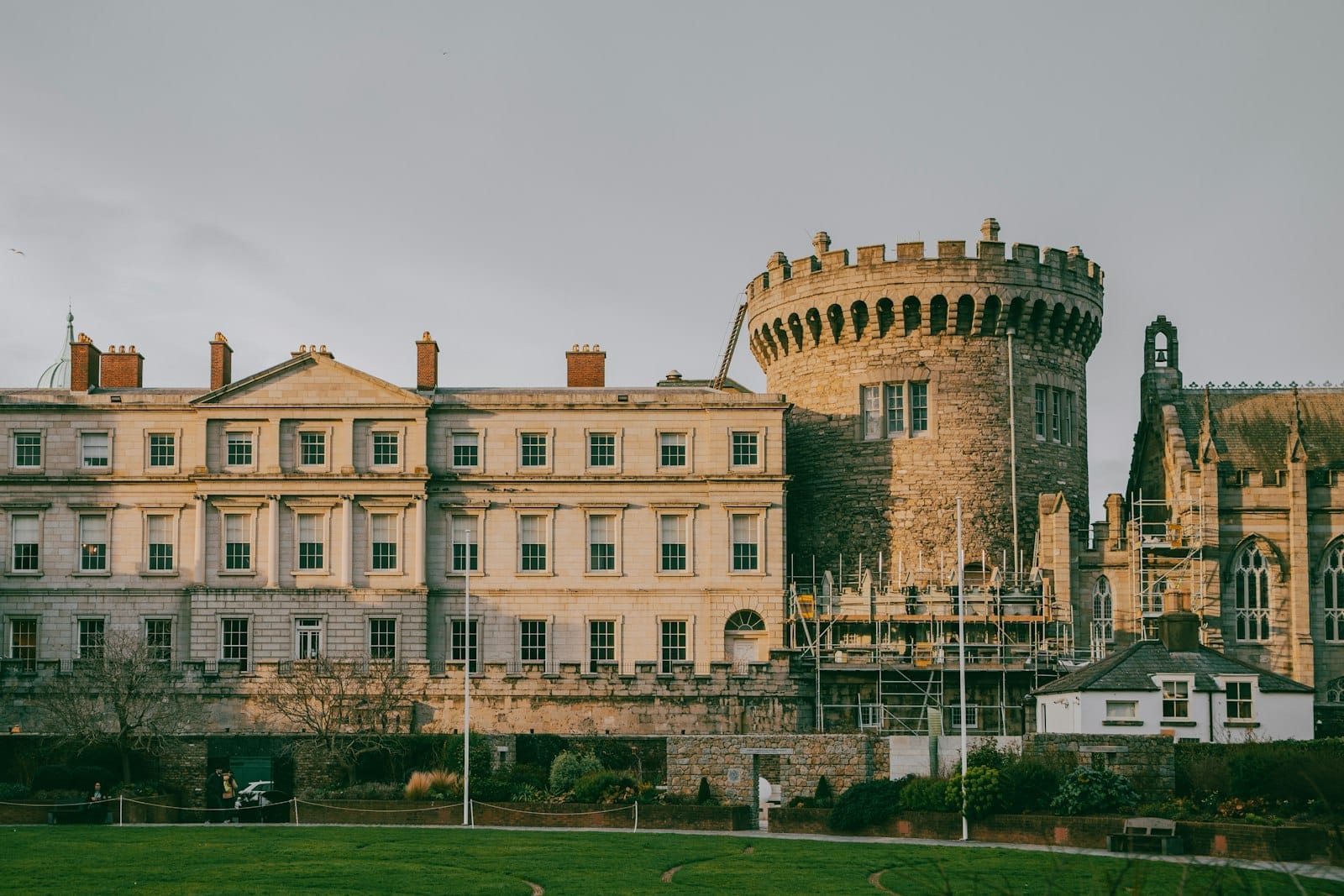
If you want to extend your day beyond Temple Bar, Dublin Castle is a five-minute walk southwest along Dame Street, and Christ Church Cathedral is another few minutes beyond that. The Chester Beatty Library in the castle grounds is consistently ranked among Dublin's best museums and is free to enter.
💡 Local tip
Temple Bar TradFest, held annually in January, is one of the best times to visit the area. The festival brings live traditional Irish music into the pubs and public spaces across the quarter, and the crowds are more musically focused than at a typical weekend. Check dates before planning around it, as they shift year to year.
Eating & Drinking
The food scene in Temple Bar divides roughly into two categories: places designed for tourists who have already arrived and are not leaving, and a smaller number of genuinely good options that happen to sit within the district's boundaries. The main Temple Bar street and its immediate surroundings are dominated by the former. Pubs here charge a premium for their location and the implicit promise of a 'traditional Irish experience.' The food is often secondary.
For better eating, the Saturday market in Meeting House Square is the most reliable option. The stalls change week to week but typically include hot food from several vendors, good coffee, and produce from around Ireland. For a more formal meal, the streets on the southern fringe of the district, closer to Dame Street, tend to have slightly better value and a less exclusively tourist-facing focus.
The pub culture here is real, even if the prices are inflated. The Temple Bar pub on the corner of Temple Bar and Bank Place is the most photographed pub in Dublin, with good reason: the exterior is genuinely striking, with hanging baskets and a well-maintained Victorian facade. Inside it gets loud and crowded quickly, but the atmosphere in the early evening before the main rush is worth experiencing at least once. Other pubs within the quarter vary considerably in character; some are music-led, others are quieter and more conversation-friendly.
Meeting House Square Saturday market: best option for affordable, varied food
Irish Film Institute bar and cafe: quieter than most in the area, reliably good coffee
Pubs on the main Temple Bar street: expect to pay above Dublin average for drinks
Dame Street fringe: slightly better value restaurants than the core of the quarter
ℹ️ Good to know
Traditional Irish sessions (live traditional music) do happen in some Temple Bar pubs, but many are ticketed or semi-staged for visitors. For more authentic sessions, areas like Smithfield or Rathmines tend to have less performative versions of the same music. That said, Temple Bar's TradFest in January is a genuine exception.
Getting There & Around
Temple Bar has no dedicated Luas tram stop or DART station, but its central location means that multiple transit options drop you within a short walk. Dame Street, running along the southern edge of the quarter, is one of Dublin's busiest bus corridors, served by numerous Dublin Bus routes connecting the area to the rest of the city. Westmoreland Street on the eastern boundary is another major bus stop cluster, with connections to O'Connell Street and the north side.
From the Luas Red Line, the nearest stops are on Abbey Street on the north side of the Liffey, reached in two to three minutes on foot across the Ha'penny Bridge or the Millennium Bridge. From the Luas Green Line, St Stephen's Green stop is about a twelve-minute walk southeast via Grafton Street. If you are arriving by DART, Tara Street station is the closest stop, roughly ten minutes on foot east along the quays.
For most visitors staying in Dublin city centre, Temple Bar is simply walkable from wherever you are. From Trinity College, the walk takes under five minutes along Dame Street. From O'Connell Street, it is about ten minutes south over the Ha'penny Bridge or any of the central Liffey crossings. A practical overview of transit options across the city is covered in the getting around Dublin guide.
Within the quarter itself, almost everything is on foot. The streets are narrow and mostly pedestrianized or low-traffic, and the entire district can be walked end to end in under fifteen minutes. Cycling is possible on the surrounding streets but the cobblestones inside the quarter are uncomfortable on standard road bikes. Dublin Bikes docking stations are located on the perimeter, on Wellington Quay and Dame Street.
Where to Stay
Staying in Temple Bar puts you within walking distance of virtually every major Dublin city centre attraction, which is a genuine advantage if your time is short and your itinerary heavy. The trade-off is noise. Weekend nights are significantly louder than almost anywhere else in central Dublin, and if your room faces the main street or the Liffey quays, expect activity until the small hours on Fridays and Saturdays.
Hotels within and immediately adjacent to the quarter range from budget hostels to mid-range properties. You are unlikely to find genuine luxury accommodation here; the neighborhood's character doesn't support it and the footfall makes it impractical. For couples or groups who want to be central and plan to be out late anyway, Temple Bar accommodation makes logistical sense. For families with children, or anyone who values early nights and quiet mornings at the weekend, staying slightly further out, in the St Stephen's Green area or along the Grand Canal, will be more comfortable.
For a broader view of accommodation options across Dublin by neighborhood type, the where to stay in Dublin guide covers the tradeoffs between central and residential locations in more detail.
Honest Assessment: Who Temple Bar Is For
Temple Bar rewards visitors who approach it with specific intentions. Come here to walk the cobbled laneways on a quiet weekday morning, catch a film at the IFI, browse the weekend markets, cross the Ha'penny Bridge at dusk, or experience at least one session in a landmark pub. These are things the quarter does well and that are worth your time.
Come expecting an authentic slice of everyday Dublin life and you will likely be disappointed. The neighborhood's success as a tourist destination has made it less representative of the city than areas like Portobello, Rathmines, or even Smithfield, where locals actually spend their time. Temple Bar is a curated version of Dublin's cultural identity, not the unfiltered one. Knowing that going in, it becomes easier to enjoy what it genuinely offers rather than resenting what it doesn't.
If you want to understand how Temple Bar fits into a wider Dublin itinerary, the 3 days in Dublin itinerary situates it alongside the city's other central neighborhoods and helps prioritize how much time to spend here versus elsewhere.
TL;DR
Temple Bar is Dublin's central cultural quarter, compact and walkable, between Dame Street and the River Liffey.
Best visited in the morning or early afternoon for the markets, the IFI, and the laneways before the evening crowds arrive.
Drinks and food prices are among the highest in Dublin; the Saturday food market in Meeting House Square is the best-value exception.
Nightlife is genuinely lively but can be very loud on weekends; not recommended for light sleepers or families with young children.
Ideal for first-time visitors who want to tick off the iconic Dublin pub experience and explore cultural institutions within a short walk of Trinity College and Dublin Castle.
Three days is the sweet spot for Dublin. Long enough to cover the iconic historic sites, dig into the food and pub culture, and fit in a coastal or countryside excursion. This itinerary is built around real logistics, honest crowd warnings, and the kind of sequencing that makes a short trip feel unhurried.
Dublin punches well above its weight as a museum city. Several of its finest institutions are completely free, and the range spans Celtic gold, Viking archaeology, Irish revolutionary history, world literature, and contemporary art. This guide covers the best museums in Dublin, grouped by theme, with practical advice on when to go and what to expect.
Dublin rewards visitors year-round, but the timing of your trip shapes everything from hotel prices to what you can actually do outdoors. This guide breaks down every month, season, and key trade-off so you can plan with confidence.
Dublin sits at the centre of an exceptional day trip network. Within two hours you can reach glacial mountain valleys, medieval castles, dramatic coastal headlands, and one of Europe's great prehistoric monuments. This guide covers the best escapes, how to get there, and what to expect.
Dublin Bay is a UNESCO Biosphere Reserve with more beaches than most visitors expect. This guide covers the best strands, swimming spots, and coastal walks within easy reach of the city, from the vast sands of Dollymount to the dramatic cliffs of Howth and the sheltered coves of Dún Laoghaire.
Bloomsday is Dublin's most distinctive literary celebration, held every 16 June to honour the date James Joyce set Ulysses. This guide covers the key locations, walking routes, festival events, food traditions, and everything you need to join the festivities — whether you've read the book or not.
Dublin rewards couples who look beyond the obvious. This guide covers scenic walks, intimate cultural experiences, evening entertainment, and coastal day trips — with honest advice on what's worth it and what to skip.
Attending a Gaelic Games match at Croke Park is one of the most authentic experiences Dublin offers. This guide covers everything from buying tickets and navigating the stadium to understanding the sport, the season, and what separates a regular league game from an All-Ireland final.
Dublin rewards the curious traveller who ventures beyond the Guinness Storehouse and Temple Bar. From a mummified Crusader beneath a Northside church to a Victorian reservoir turned secret garden, these are the places Dubliners love and visitors rarely find.
Dublin transforms in winter, with Christmas markets running from late November through early January, citywide light trails, cathedral concerts, and festive fairgrounds. This guide covers every major event, what things actually cost, and what to watch out for before you visit.
Dublin is one of the few cities in the world to have produced three Nobel Prize-winning writers of literature. This guide maps the key sites connected to George Bernard Shaw, W.B. Yeats, and Samuel Beckett, plus James Joyce, Oscar Wilde, and others, covers the best guided tours with practical pricing, and gives you the detail to do it properly.
Dublin has around 772 pubs, dozens of late-night bars, and several distinct club districts. This guide breaks down where to drink, when to go, what it costs, and which neighbourhoods to skip if you want to avoid tourist pricing.
Dublin has a reputation for being expensive, but that reputation is only half true. The city's best museums are free, the centre is walkable, public transport is cheap with the right pass, and the finest pub sessions cost nothing beyond the price of a pint. This guide breaks down every major cost category so you can plan a genuinely great trip without watching every euro.
Seven days is enough to see Dublin's best and reach the wild west coast of Ireland, but only if you plan smart. This itinerary balances city time with coastal scenery, covers realistic driving and transit times, and flags the planning mistakes that turn a great trip into an exhausting one.
Dublin, Ireland offers a surprisingly varied shopping scene, from the flagship stores lining Grafton Street to independent boutiques on South William Street, weekend food markets in Temple Bar, and Ireland's largest mall in Dundrum. This guide covers where to go, what to expect, and how to avoid wasting time.
Dublin rewards walkers like few cities in Europe. Compact enough to cover on foot, layered enough to take weeks to unpack, the city reveals itself best at street level. This guide covers the stops, routes, and landmarks that make Dublin's walking tours so compelling.
Dublin punches well above its weight as a family destination. Between a world-class zoo, free city parks, Viking history museums, coastal castles, and indoor waterparks, there is genuinely enough to fill a week without repeating yourself. This guide covers the best things to do in Dublin with kids, organised by type, age range, and weather — so you can plan around Irish reality rather than tourist brochure optimism.
Dublin punches well above its weight for free attractions. National museums, modern art galleries, coastal walks, and grand public parks all cost nothing to enter. This guide covers 22 of the best free things to do across the city, organised by type so you can plan your days without watching your budget.
Dublin's Georgian streets and squares represent one of Europe's most intact examples of 18th-century urban planning. This guide covers the key buildings, the best self-guided walking route, what's actually open to visitors, and how to avoid the common traps that waste your time.
Dublin's public transport network covers the city and coast through buses, DART rail, Luas trams, and airport coaches. This guide breaks down fares, Leap Card options, airport transfer routes, and the practical details that save you time and money when navigating Ireland's capital.
Dublin sits at the doorstep of some of Ireland's finest walking country. Whether you want cliff-top sea views, ancient monastic valleys, or proper mountain terrain, these are the best hikes and trails within easy reach of the city.
Dublin's St Patrick's Festival is a multi-day national celebration centred on 17 March, with a free city-centre parade, ticketed concerts, street theatre, and events across the city. This guide covers the full programme, booking essentials, crowd logistics, and what to realistically expect from Ireland's biggest annual celebration.
Dublin packs centuries of history, world-class museums, legendary pubs, and coastal scenery into a compact, walkable city. This guide covers the best things to do in Dublin across every interest and budget, with honest advice on what's worth your time and what to skip.
Dublin's food scene has transformed well beyond stew and soda bread. This guide covers the essential Irish dishes, where to find them, what to pay, and which areas give you the best value — including a frank look at where not to waste your money.
Choosing where to stay in Dublin, Ireland shapes your entire trip. This guide breaks down every major neighbourhood by location, vibe, price range, and transport links, so you can book with confidence rather than guesswork.