Christ Church Cathedral: Dublin's Oldest Stone Building in Continuous Use
Christ Church Cathedral has anchored Dublin's skyline for nearly a thousand years, predating the city's most famous landmarks by centuries. This guide covers what you actually see inside, when to go, how to get there, and whether the admission fee is worth it.
Quick Facts
- Location
- Christ Church Place, Dublin 8 (Smithfield-Liberties area)
- Getting There
- Luas Red Line (Four Courts stop, ~10 min walk); multiple Dublin Bus routes to the city centre
- Time Needed
- 1 to 1.5 hours for a thorough self-guided visit
- Cost
- Adults €12 | Seniors/Students €10 | Children under 12 €4 | Family (2+2) €28 | Under 4s free | Disabled visitor + carer free
- Best for
- Medieval history, ecclesiastical architecture, and travellers who want context for Dublin's earliest centuries
- Official website
- christchurchcathedral.ie
What Is Christ Church Cathedral?
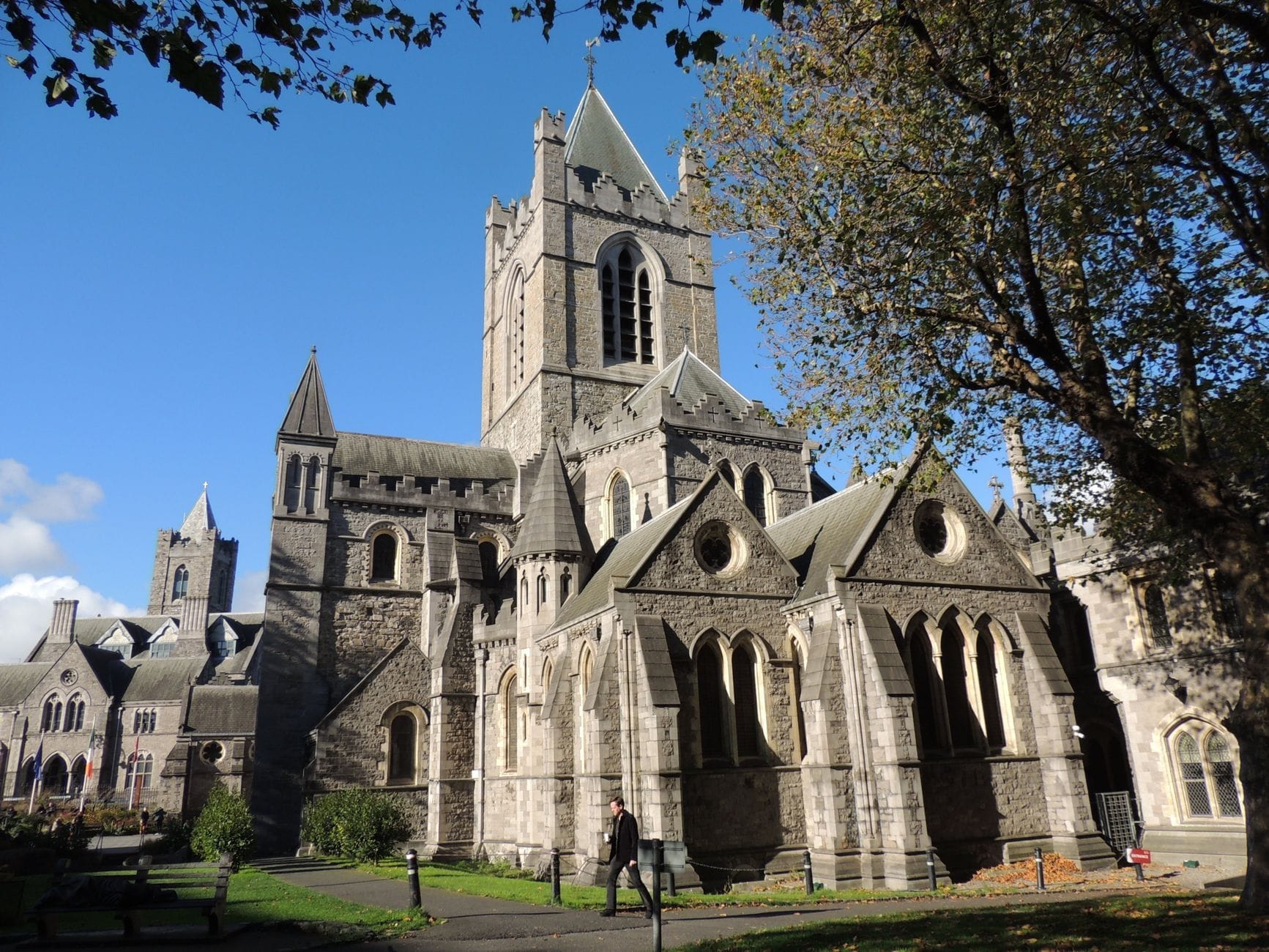
The Cathedral of the Holy Trinity, better known as Christ Church Cathedral, is the Church of Ireland's mother church for the United Dioceses of Dublin and Glendalough. It stands on a ridge just west of Dublin city centre, close enough to the River Liffey that you can see its tower from several bridges. The earliest manuscript evidence places a church on this site around 1030, making it one of the oldest continuously used ecclesiastical structures in Ireland. What you see today is a medieval stone building substantially remodelled in the Victorian era, but the bones of the original Norman construction are genuinely visible if you know where to look.
Unlike some European cathedrals that function primarily as tourist attractions, Christ Church is still an active place of worship, with regular services throughout the week. Visitors are welcome during self-guided touring hours, which run most of the day from Monday through Saturday and in shorter afternoon windows on Sunday. Last admission is 45 minutes before closing, so check the schedule before arriving.
💡 Local tip
Reduced-rate tickets are only available online; standard tickets can also be purchased at the welcome desk. If you qualify for a concession, book ahead on the cathedral's website rather than paying full price at the door.
Nearly 1,000 Years of History Compressed Into One Building
The cathedral's founding is traditionally linked to Sitriuc Silkbeard, the Norse King of Dublin, around 1030. The present stone structure was begun by Strongbow, the Anglo-Norman lord Richard de Clare, and Archbishop Laurence O'Toole after the Norman invasion of Ireland in 1169. O'Toole's body was buried at Eu Abbey in Normandy, but his heart relic was kept here; stolen in 2012 and recovered in 2018, it is now displayed in a specially designed shrine rather than its original heart-shaped iron casket, a detail that brings a jolt of medieval reality to what can otherwise feel like a museum visit.
The cathedral served as the seat of the Church of Ireland following the Reformation in the sixteenth century, and it was here that Lambert Simnel was crowned as a pretender King of England in 1487, one of the stranger footnotes in both Irish and English history. A major Victorian restoration by architect George Edmund Street in the 1870s saved the building from near-collapse but also significantly altered its character. Some architectural historians are critical of how much original medieval fabric was lost; others credit Street with preserving what remained. The result is a building that reads as both genuinely ancient and conspicuously Victorian in places.
For broader context on how Christ Church fits into Dublin's older quarters, the Dublinia museum sits directly adjacent in the former Synod Hall, connected by a covered bridge. It covers Viking and medieval Dublin and pairs well with a cathedral visit.
Tickets & tours
Hand-picked options from our booking partner. Prices are indicative; availability and final rates are confirmed when you complete your booking.
Dublin Christ Church Cathedral entrance ticket and self-guided tour
From 12 €Instant confirmationFree cancellationGiant's Causeway, Dark Hedges, and Belfast Tour from Dublin
From 85 €Instant confirmationFree cancellationDublin self-guided audio tour
From 10 €Instant confirmationBird of Prey, Cliffs of Moher and Aillwee Cave from Dublin
From 201 €Instant confirmationFree cancellation
What You Actually See Inside
The interior is darker and more cavernous than photographs suggest. The nave is long, the ceiling is high, and the stone floors absorb sound in a way that makes even a moderately crowded visit feel quiet. The north wall of the nave leans visibly outward, a structural curiosity left deliberately unrepaired as a record of the building's near-collapse before the Victorian restoration.
The crypt is the most compelling part of the visit and the most often overlooked. Running the full length of the cathedral, it is the largest medieval crypt in Ireland and one of the oldest in Ireland or Britain, with sections dating to the late twelfth century. The stone floors are uneven underfoot and the air is noticeably cooler and damp-smelling. The crypt houses a small exhibition of medieval artefacts including two carved stone effigies and a collection of plate and vestments. There is also a glass case containing two preserved cat and rat mummies found lodged in an organ pipe in the nineteenth century, allegedly immortalised in a passage from James Joyce.
The heart casket of St Laurence O'Toole, mentioned above, is in a side chapel and easy to walk past. Worth slowing down for. The floor tiles in several sections are Victorian reproductions of medieval patterns, while others are original medieval ceramic tiles, worn almost flat. The difference in texture underfoot is noticeable if you pay attention.
ℹ️ Good to know
The cathedral does not permit photography during services. Outside of service times, photography for personal use is generally permitted inside the building.
How the Experience Changes by Time of Day
Morning visits, particularly on weekdays before 11:00, are noticeably quieter. The light through the stained glass changes the mood of the nave significantly depending on the season: in winter, the interior can feel genuinely gloomy in a way that is historically appropriate; in summer, morning light catches the south clerestory windows more directly. The building opens at 09:00 Monday through Saturday, and arriving within the first hour means sharing the space with very few other visitors.
By midday and into early afternoon, tour groups arrive and the crypt in particular can become crowded in a narrow, corridor-like way. Saturday afternoons are typically the busiest period. Sunday visiting hours are restricted to two windows (12:30 to 15:00 and 16:30 to 18:30), which are shorter and can feel rushed if you want to explore thoroughly. For photography, morning light from the south is the most useful; the interior is not well-lit artificially, so a camera or phone that handles low light reasonably well is worth bringing.
Getting There and Getting In
The cathedral is at Christ Church Place, Dublin 8. From the city centre, it is walkable in around 15 to 20 minutes from Dame Street or College Green. The Luas Red Line stops at Four Courts, roughly a ten-minute walk north of the cathedral. Several Dublin Bus routes serve the surrounding streets. There is no dedicated car park at the cathedral itself; street parking in the immediate area is limited.
The cathedral is in the Liberties area of Dublin, one of the oldest parts of the city. If you're building a half-day route, Dublin Castle is about ten minutes' walk east, and St Patrick's Cathedral is around eight minutes' walk south. The two cathedrals together make a natural pairing for anyone interested in medieval or ecclesiastical Dublin.
Regarding accessibility, the cathedral states that everyone is welcome, but as a medieval structure there are physical limitations within certain parts of the building. Disabled visitors and their carers are admitted free of charge. If specific accessibility requirements matter to your visit, contacting the cathedral directly before arrival is the most reliable approach.
Is the Admission Fee Worth It?
At €12 for adults, Christ Church Cathedral costs more than several of Dublin's national museums, most of which are free. The honest assessment is that the value depends on what you're there for. If you have a genuine interest in medieval architecture, Norman history, or ecclesiastical heritage, the crypt alone justifies the entry cost. The floor tomb attributed to Strongbow, the O'Toole heart casket, and the sheer age of the crypt fabric are not things you can approximate elsewhere in the city.
If you are primarily a general sightseer doing a highlights tour of Dublin, the cathedral may feel expensive compared to free alternatives nearby. The exterior is visible and impressive from Christ Church Place without paying admission. Some travellers with limited time choose to combine a quick exterior view with a visit to Dublinia next door, which covers the Viking and medieval history of the city in a more explicitly exhibit-based format.
For visitors trying to balance a tight budget, the free things to do in Dublin guide covers alternatives, though it is worth noting that few free attractions in the city offer the same depth of medieval history.
Choral Evensong and Services
The cathedral's professional choir performs choral evensong on selected evenings during the year, and attendance at services is free (unlike the self-guided touring fee). For visitors with an interest in choral music or who want to experience the cathedral in its proper liturgical setting rather than as a tourist attraction, checking the cathedral's online schedule before visiting is worthwhile. The acoustic quality of the building during a sung service is considerably different from how it reads on a quiet weekday morning with a guidebook in hand.
Insider Tips
- The crypt is the oldest and historically richest part of the building. Do not walk through it quickly. Set aside 20 minutes specifically for it.
- The two mummified cat and rat found in the organ pipes are displayed in a glass case in the crypt. They are genuinely strange and worth finding. Look near the south side of the crypt interior.
- If you visit on a weekday, ask at the entrance about any scheduled services that day. Self-guided visiting times are paused during services, so planning around them prevents a wasted journey.
- The covered bridge connecting the cathedral to Dublinia is part of the Victorian-era works and is itself architecturally interesting. Dublinia sells a combination ticket that includes both attractions, and you can also buy it at the cathedral’s welcome desk, which reduces the overall cost if you plan to visit both.
- The north wall of the nave leans noticeably outward by roughly half a metre. It is visible to the naked eye and was left as-is after the Victorian restoration as a structural record. Worth looking for.
Who Is Christ Church Cathedral For?
- Travellers with a genuine interest in medieval Irish or Norman history
- Architecture enthusiasts, particularly those interested in Romanesque and Victorian Gothic
- Visitors building a heritage walking route through the old city combining Dublin Castle and St Patrick's Cathedral
- Anyone who finds ecclesiastical spaces compelling on their own terms, independent of faith
- Families with older children who have some tolerance for dimly lit stone interiors and historical context
Nearby Attractions
Other things to see while in Smithfield & The Liberties:
- Dublinia Viking and Medieval Museum
Dublinia brings over a thousand years of Dublin's earliest history to life through immersive reconstructions of Viking longships, medieval streetscapes, and hands-on archaeology exhibits. Housed in the 19th-century Gothic Revival Synod Hall beside Christ Church Cathedral, it rewards curious visitors of almost any age.
- Guinness Open Gate Brewery
Tucked inside the St. James's Gate complex on James's Street, the Guinness Open Gate Brewery is a working experimental taproom where Guinness brewers test recipes that never make it to supermarket shelves. No queues, no theatrics, just serious beer in a real brewery setting.
- Guinness Storehouse
The Guinness Storehouse takes you through seven floors of brewing history at St James's Gate, the birthplace of one of the world's most recognisable drinks. The experience ends at the rooftop Gravity Bar with a complimentary pint and views across the Dublin skyline. It draws more visitors than any other paid attraction in Ireland, and whether that's a recommendation or a caution depends entirely on what you're after.
- Jameson Distillery Bow St
Set in the historic Bow Street distillery building that dates to 1780, Jameson Distillery Bow St in Smithfield is the original home of Irish whiskey's most recognised name. Guided tours combine genuine industrial history with hands-on tasting, finishing at a rooftop bar above the cobbled square.