Shopping in Dublin: The Complete Guide to Streets, Markets & Malls
Dublin, Ireland offers a surprisingly varied shopping scene, from the flagship stores lining Grafton Street to independent boutiques on South William Street, weekend food markets in Temple Bar, and Ireland's largest mall in Dundrum. This guide covers where to go, what to expect, and how to avoid wasting time.
Plan and book this trip
Tools from our partner Travelpayouts help you compare flights and hotels. If you book through them, we may earn a commission at no extra cost to you.
Flights
Hotels map
TL;DR
- Grafton Street (southside) and Henry Street (northside) are Dublin's two main shopping corridors, each with a distinct character and price range.
- Most craft and food markets run Thursday to Saturday only — planning around this is essential.
- George's Street Arcade, open since 1881, is the best single stop for vintage, records, and independent traders.
- Dundrum Town Centre is Ireland's largest shopping centre, reachable by Luas Green Line in around 20 minutes from the city centre.
- For Irish-made goods and design, head to South William Street and the side streets off Grafton rather than the tourist-facing shops near Trinity.
Grafton Street and the Southside Shopping Core
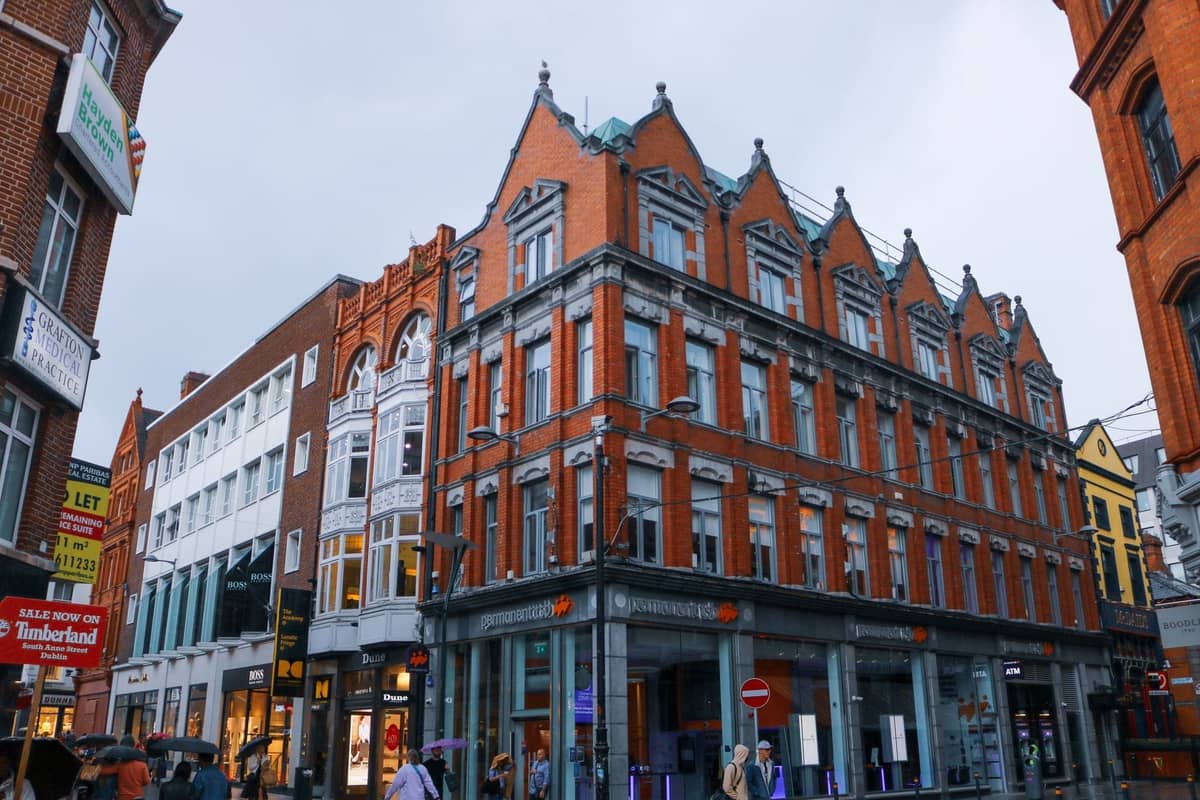
Shopping in Dublin on the southside means starting at Grafton Street, the city's most recognisable retail strip. It runs north to south from the top of Trinity College down to St Stephen's Green, entirely pedestrianised and lined with everything from Brown Thomas (Dublin's equivalent of Selfridges) to Weir & Sons jewellers. Brown Thomas in particular anchors the luxury end, stocking international brands alongside Irish designers.
The street itself is heavily visited, especially on weekends, and becomes genuinely difficult to navigate in December when Christmas shoppers and street performers converge. Weekday mornings before 11:00 are the most manageable. Most Grafton Street stores open around 09:00–10:00 and close between 18:00 and 19:00, with Thursday late opening typically running until 20:00 or 21:00. Always confirm on individual retailer websites before visiting, as hours shift seasonally.
The real shopping value on the southside is in the grid of side streets branching off Grafton: Drury Street, Castle Market, and above all South William Street. This stretch hosts independent boutiques, Irish design shops like Irish Design Shop and Costume, and a handful of quality cafes that make browsing feel less like a chore. Nearby, Powerscourt Centre occupies an 18th-century townhouse courtyard and is home to smaller independent retailers, antiques dealers, and a popular weekend farmers' market. It's worth an hour of anyone's time.
💡 Local tip
If you're looking for Irish-made clothing, jewellery, or homeware, avoid the souvenir shops clustered near the Molly Malone statue and around Temple Bar. The independent boutiques on South William Street and Drury Street offer far better quality at similar or only marginally higher prices.
Henry Street and the Northside Shopping District
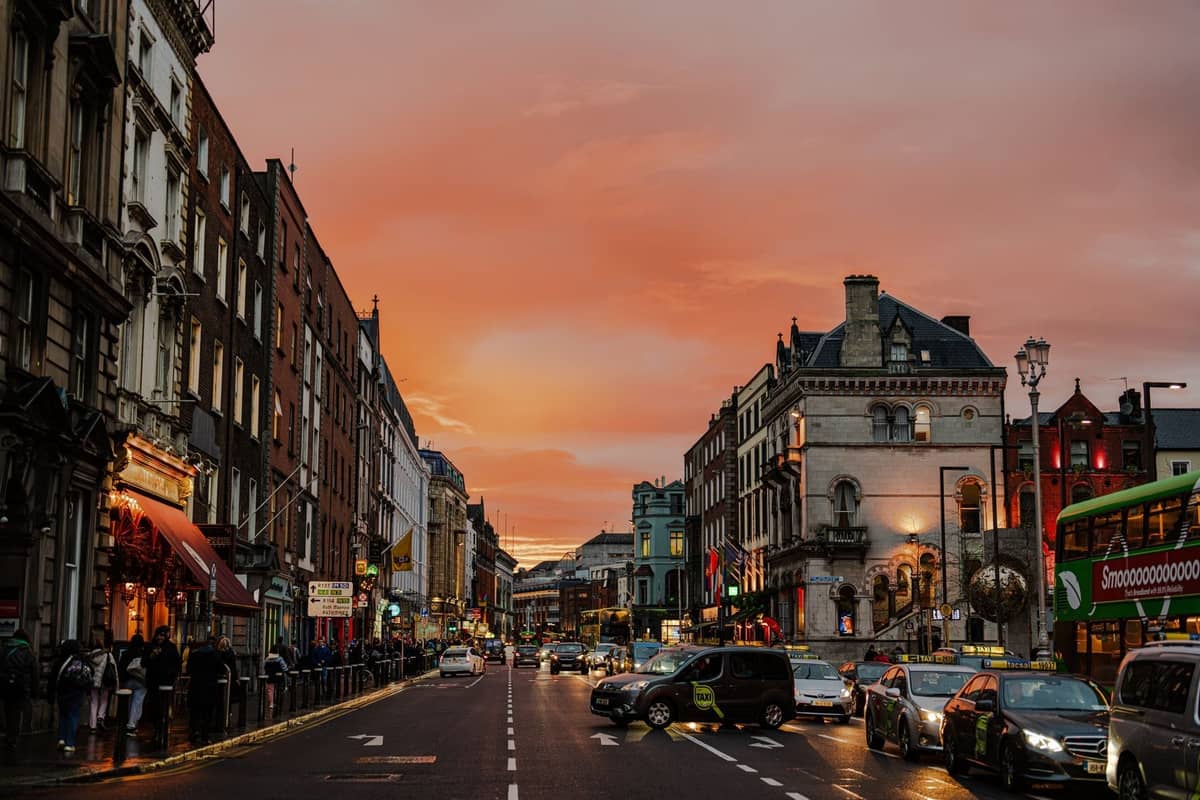
Cross the Ha'penny Bridge or O'Connell Bridge and you're in a different retail world. Henry Street on the northside is more mainstream than Grafton, with a stronger focus on high-street chains and department store shopping. Arnotts, Ireland's oldest department store, sits at the junction of Henry Street and Liffey Street and covers everything from fashion to homeware across multiple floors. It's considerably less expensive than Brown Thomas and more accessible for everyday purchases.
Three shopping centres cluster around Henry Street: Jervis Shopping Centre, the ILAC Centre, and the nearby Arnotts building. None are architecturally interesting, but they offer covered, practical shopping especially useful in Dublin's reliably wet weather. The Jervis Luas stop (Red Line) puts you right at the entrance, making this the easiest part of the city to reach by public transport from the north and west.
ℹ️ Good to know
Henry Street and Grafton Street are often compared, but they serve different purposes. Grafton skews toward premium retail and independent design. Henry Street is better for practical purchases, everyday clothing brands, and department store staples. Most locals use both depending on what they need.
Markets Worth Knowing About
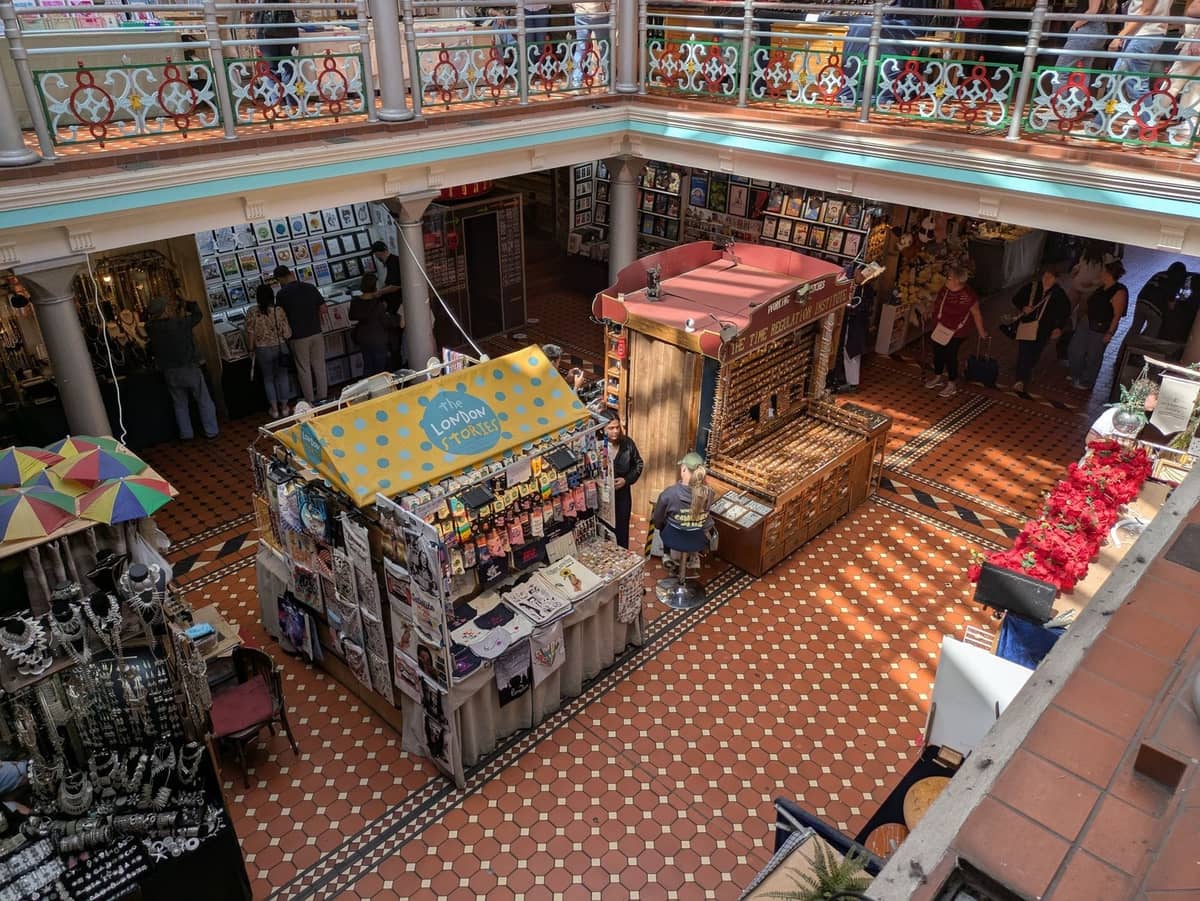
Dublin's market scene rewards planning. The George's Street Arcade is the standout. Built in 1881, it's a covered Victorian market hall running between South Great George's Street and Drury Street. Inside you'll find vintage clothing dealers, second-hand book stalls, vinyl record shops, jewellery makers, tarot readers, and hot food counters. It operates Monday to Saturday (with reduced Sunday hours) and is one of the few genuinely atmospheric shopping spaces in the city. It's not a flea market in the chaotic sense — most traders have been here for years and know their stock well.
In Temple Bar, there are three distinct markets to distinguish. The Temple Bar Food Market at Meeting House Square runs every Saturday from 10:00 to 16:30, year-round regardless of weather, and focuses on fresh produce, artisan bread, cheese, and hot food from independent producers. The Temple Bar Book Market operates on Saturdays at Barnardo Square. The Temple Bar Square Craft Market typically runs Thursday through Saturday, selling handmade jewellery, art prints, knitwear, and similar. None of these run daily, which catches a surprising number of visitors off guard — if you arrive on a Tuesday expecting a market, you'll find an empty square.
- George's Street Arcade Victorian covered market, 1881. Vintage, books, records, food. Mon–Sat main hours, limited Sunday. Drury Street entrance is less busy.
- Temple Bar Food Market Meeting House Square, Saturdays 10:00–16:30. Fresh produce and hot food. Runs year-round — bring a jacket in winter.
- Temple Bar Craft Market Temple Bar Square, typically Thursday–Saturday. Handmade goods, jewellery, art. Times vary — check templebar.ie before visiting.
- Liberty Market Meath Street, trading since 1973. Low-cost clothing, household goods, fabrics. Popular with local families rather than tourists.
- Powerscourt Centre Farmers' Market Saturday mornings in the courtyard of the Georgian Powerscourt Centre on South William Street. Artisan food and crafts in an elegant setting.
⚠️ What to skip
Most Dublin craft and food markets operate only on specific days, usually Thursday to Saturday or Saturday only. If markets are a priority, build your itinerary around them rather than hoping to stumble upon one. Check each market's official website or social media the week you travel, as schedules shift around public holidays and weather.
Shopping Malls and Suburban Centres
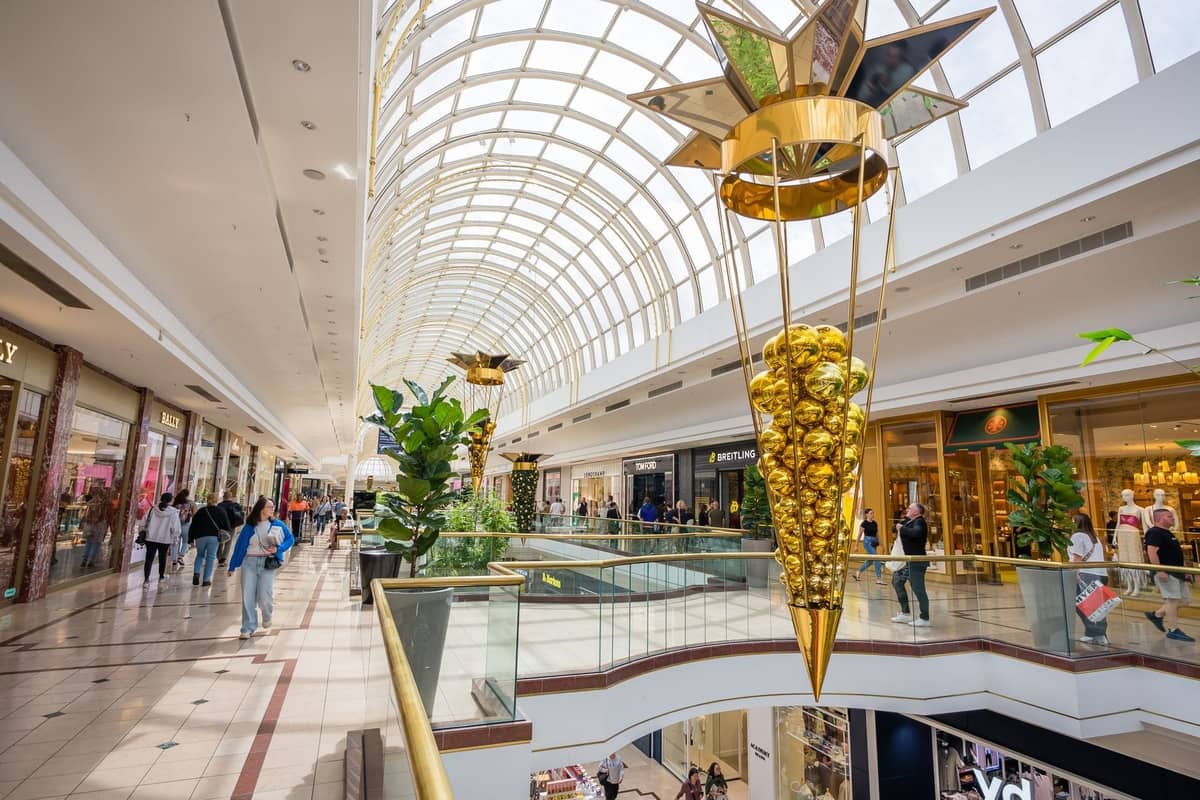
Dundrum Town Centre is Ireland's largest shopping centre and genuinely earns that description. It holds over 100 stores across two levels, including major international fashion brands, a cinema, and a range of restaurants and cafes. It's located in the Dundrum suburb in south Dublin, about 6 km from the city centre, and is served directly by the Luas Green Line at Balally and Dundrum stops. Journey time from St Stephen's Green is around 20 minutes. For visitors who want mainstream retail in a comfortable, covered environment, it outperforms the city-centre malls in both scale and experience.
Further out, both Dún Laoghaire and Blackrock have smaller but worthwhile retail areas worth combining with a coastal visit. Dún Laoghaire has a compact town centre with independent shops alongside chains, and the Bloomfields Shopping Centre for practical needs. If you're making a day trip along the DART line, both towns allow you to combine shopping with a walk along the seafront or pier. Blackrock Market, behind the main street, operates on weekends and has an eclectic mix of antiques, crafts, and food.
- Dundrum Town Centre Ireland's largest mall. 100+ stores, cinema, restaurants. Luas Green Line: Dundrum or Balally stops. Around 20 min from city centre.
- Jervis Shopping Centre Northside, on Henry Street. Mainstream high-street brands. Luas Red Line: Jervis stop. Practical for rainy days.
- ILAC Centre Also on Henry Street. Mix of retail and food court. Convenient for northside errands.
- Powerscourt Centre South William Street. Georgian townhouse conversion with independent retailers and design shops. Farmers' market on Saturdays.
- Blackrock Shopping Centre / Market DART line, about 20 min from Pearse Street. Weekend market for antiques and crafts alongside standard retail.
What to Buy: Irish-Made vs. Tourist Merchandise
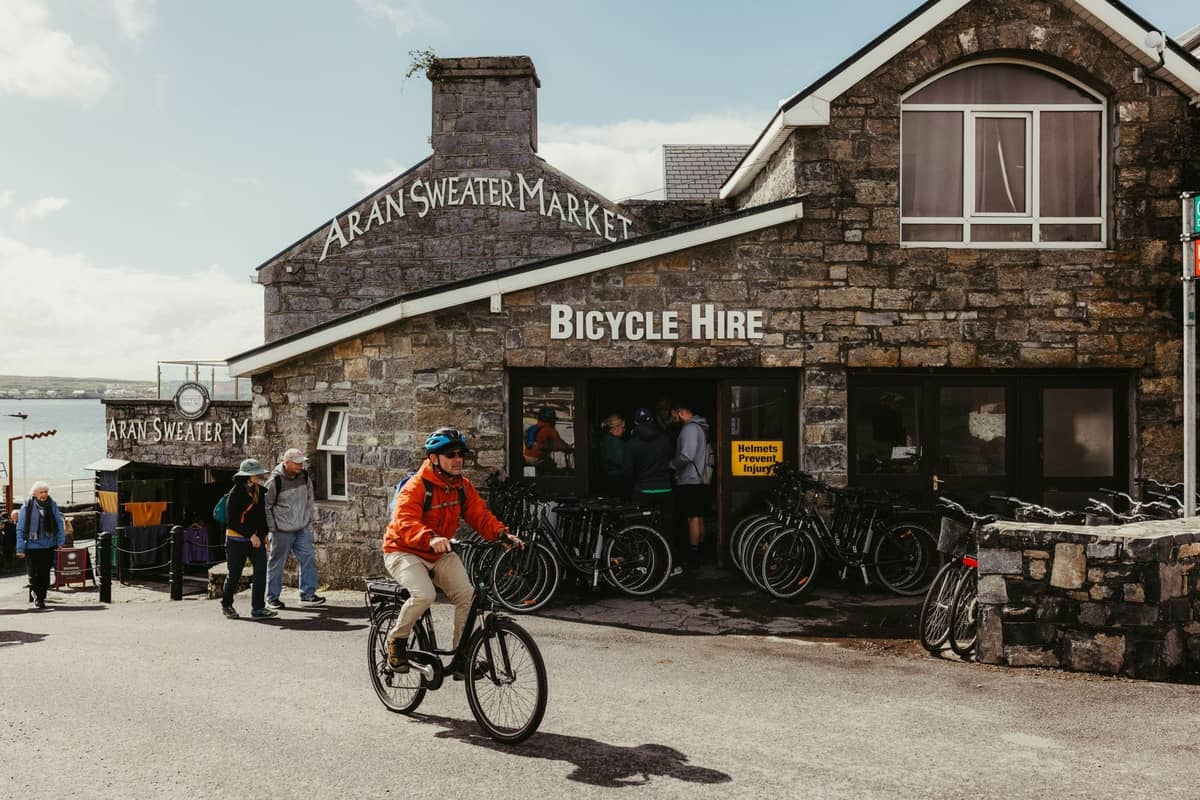
Dublin, Ireland sells a lot of shamrock-themed merchandise that has nothing to do with Irish craft traditions. The distinction matters if you want to bring home something genuinely made in Ireland. Aran knitwear is a legitimate Irish product, but much of what's sold near tourist attractions is manufactured abroad. If provenance matters to you, ask explicitly and look for labels. Shops like Avoca on Suffolk Street and the Irish Design Shop on Drury Street are reliably stocked with Irish-made goods: wool throws, ceramics, jewellery by Irish designers, and quality food products.
For whiskey and food gifts, specialist shops carry a wider and more interesting range than airport duty-free. Several of Dublin's whiskey distilleries have retail outlets worth visiting in their own right. The Teeling Whiskey Distillery in the Liberties and Jameson Distillery on Bow Street both have well-stocked shops where you can taste before buying. Books by Irish authors, particularly from specialist booksellers like Ulysses Rare Books near Grafton Street, make for distinctive and genuinely Irish purchases that won't weigh down your luggage in the way that pottery does.
Practical Tips for Shopping in Dublin
VAT refunds are available to non-EU visitors on eligible purchases through the Retail Export Scheme. Look for shops displaying the Tax Free Shopping sign, and ask for the documentation at point of sale — you'll need to get it stamped at the airport before departure. The standard VAT rate in Ireland is 23%, so on larger purchases this is worth pursuing. Keep receipts and allow extra time at Dublin Airport's customs hall on your way out.
Dublin's currency is the euro (EUR), and card payments are accepted almost universally, including contactless. Cash is rarely necessary for retail purchases, though some market stalls prefer it. For context on getting around between shopping districts, the Luas tram network is the most practical option: the Green Line connects the city centre to Dundrum, while the Red Line serves the northside and Smithfield area. See the guide to getting around Dublin for full transport details. If you're on a tight budget, the southside side streets and George's Street Arcade offer genuinely good browsing without the pressure of department store pricing. The Dublin on a budget guide covers this in more depth.
- Most city-centre shops open 09:00–10:00 and close 18:00–19:00; Thursday late opening typically runs to 20:00–21:00.
- Markets generally run Thursday to Saturday or Saturday only — check before travelling.
- Non-EU visitors can claim VAT back on eligible purchases; request documentation in-store.
- Card payments (including contactless) are standard across retail; some market stalls prefer cash.
- Dundrum Town Centre is the best option for a full day of mainstream shopping; reach it via Luas Green Line.
- Avoid souvenir shops near the main tourist sights for Irish-made goods; the independent boutiques on Drury Street and South William Street are a better source.
- December shopping on Grafton Street is atmospheric but very crowded; weekday mornings are significantly more manageable.
FAQ
What is the best shopping street in Dublin?
Grafton Street is Dublin's most prominent shopping street, running from St Stephen's Green to Trinity College with a mix of flagship stores, Brown Thomas department store, and street performers. For independent boutiques and Irish design, the side streets off Grafton — particularly South William Street and Drury Street — are more interesting.
When do the Dublin markets run?
Most of Dublin's craft and food markets run on specific days only. The Temple Bar Food Market operates every Saturday 10:00–16:30. The Temple Bar Craft Market typically runs Thursday to Saturday. George's Street Arcade operates Monday to Saturday (with limited Sunday hours). Always check current schedules on official websites before visiting, as times change around public holidays.
Is Dundrum Town Centre worth visiting from Dublin city centre?
Yes, if mainstream retail is what you're after. Dundrum is Ireland's largest shopping centre with 100+ stores and a cinema, about 20 minutes from St Stephen's Green on the Luas Green Line. It's more comfortable and better stocked than the city-centre malls, and the transport link is direct and frequent.
Where can I buy genuine Irish-made souvenirs in Dublin?
For authentic Irish-made goods, try Avoca on Suffolk Street, the Irish Design Shop on Drury Street, or the Powerscourt Centre on South William Street. Teeling and Jameson distilleries have quality whiskey shops. Avoid the souvenir outlets clustered near major tourist attractions — most of what they sell is not made in Ireland.
Can visitors claim a VAT refund on shopping in Dublin?
Non-EU visitors can claim VAT back on eligible purchases through Ireland's Retail Export Scheme. Look for the Tax Free Shopping sign in participating stores, request the refund form at point of sale, and have it stamped by customs at Dublin Airport before your departure. Ireland's standard VAT rate is 23%, making this worthwhile on larger purchases.