South William Street & Drury Street: Dublin's Best Independent Quarter
South William Street and Drury Street form a connected corridor of independent boutiques, cafes, wine bars, and Georgian-era streetscapes just a short walk from Grafton Street. Free to explore, open day and night, and far more rewarding than the main shopping drag.
Quick Facts
- Location
- Dublin 2, south inner city, a short block west of Grafton Street
- Getting There
- Luas Green Line (St Stephen's Green stop) or bus stops on Grafton Street and Nassau Street
- Time Needed
- 1–3 hours depending on browsing and stops
- Cost
- Free to walk; individual venues charge separately
- Best for
- Independent shopping, cafe culture, evening dining, Georgian Dublin architecture
What Are South William Street and Drury Street?
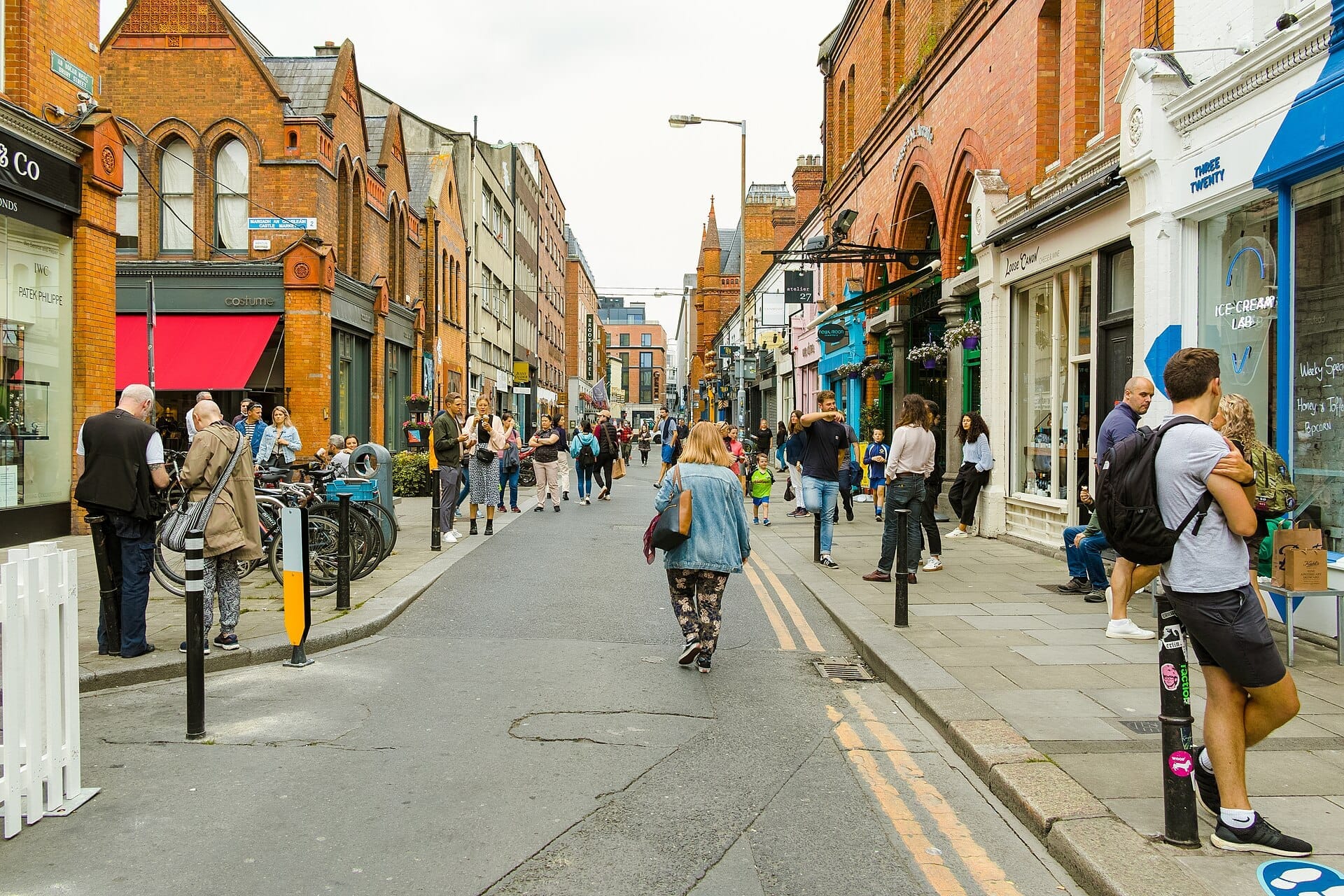
South William Street and Drury Street are two parallel streets in Dublin's south inner city that together form one of the most rewarding pedestrian corridors in the capital. They run roughly parallel to each other between Exchequer Street to the north and Stephen Street to the south, connected midway by Fade Street and Castle Market. The combined stretch is compact enough to cover on foot in twenty minutes, but interesting enough to hold you for an entire afternoon.
Where Grafton Street offers chain retail and reliable tourism infrastructure, this pair of streets offers something harder to find in central Dublin: genuine variety. Independent fashion boutiques sit alongside specialty coffee shops, wine bars, design stores, and restaurants that change frequently enough to reward repeat visits. The streets also carry a layer of Georgian-era Dublin architecture that gives the area visual weight beyond its commercial function.
💡 Local tip
These streets are public thoroughfares with no admission charge. The best way to experience them is simply to walk the full length of both, then double back on whichever side caught your attention.
A Bit of History: From Drury Lane to Dublin's Independent Quarter
Drury Street takes its name from Sir William Drury (1527–1579), the Lord Justice of Ireland, though the route itself existed under earlier informal names long before it was formalised as a street. South William Street was originally laid out in 1771, placing its core residential and commercial bones firmly in the Georgian period that shaped so much of Dublin 2's character.
The Irish name for Drury Street, An Bóthar Drury, reflects a straightforward transliteration rather than a descriptive term, so the street’s perceived character historically comes more from its physical narrowness than from its official name. That narrow character is still physically present today. Drury Street is partially pedestrianised in sections, and even where cars can pass, the footways feel close and human-scaled in a way that broader Dublin streets do not.
The area's transformation into an independent shopping and dining destination mirrors a broader pattern visible across central Dublin. If you want to understand how that shift relates to the surrounding neighbourhood, the St Stephen's Green and Grafton Street area guide provides useful context on how the commercial geography of Dublin 2 has developed.
Tickets & tours
Hand-picked options from our booking partner. Prices are indicative; availability and final rates are confirmed when you complete your booking.
Giant's Causeway, Dark Hedges, and Belfast Tour from Dublin
From 85 €Instant confirmationFree cancellationDublin self-guided audio tour
From 10 €Instant confirmationBird of Prey, Cliffs of Moher and Aillwee Cave from Dublin
From 201 €Instant confirmationFree cancellationGame of Thrones Studio tour with return transfer from Dublin
From 63 €Instant confirmationFree cancellation
What to Expect at Different Times of Day
Mornings before 10am are quiet on both streets. A few cafes open early and catch the pre-work crowd, and the light at that hour is genuinely pleasant on the upper storeys of the Georgian buildings. This is the best time to appreciate the architecture without distraction, and to photograph the streetscape before delivery vehicles and pedestrians fill the narrow lanes.
From late morning through the afternoon, the corridor becomes one of the more lively parts of central Dublin that doesn't feel overwhelmed. The footpath on South William Street is wide enough to browse comfortably, but Drury Street gets genuinely narrow when busy, particularly around Castle Market. Weekday afternoons are noticeably calmer than Saturdays, when the area draws a substantial crowd of Dubliners doing weekend shopping and brunch.
Evenings shift the character considerably. The dining and bar trade picks up from around 6pm, and by 8pm on a Friday or Saturday the outdoor seating areas and pavement tables are well occupied. The streets have hosted the Dublin By Night Fest event, which treats the area as a destination in its own right after dark, and even outside formal events, the atmosphere on a weekend evening is noticeably different from the daytime retail tone. If you are visiting primarily for dinner or drinks, arriving after 7pm gives you the area at its most sociable.
What You Actually See and Do Here
The retail on South William Street leans toward independent fashion, homeware, and design rather than mass-market brands. The units are small and the turnover of businesses is real, so the exact mix at any given time will differ from what any guide describes. What stays consistent is the general character: this is where Dubliners shop when they want something other than what is available on the main drag.
Drury Street has a tighter, more neighbourhood feel. Castle Market, the small covered market connecting Drury Street to South William Street, adds a textural detail that rewards a slow walk through: the overhead structure, the tight retail units, and the way it connects the two streets mid-block give it a covered-arcade quality unusual for this part of Dublin.
The streets sit within easy reach of several other worthwhile stops. Georges Street Arcade is one block west and is one of Dublin's oldest covered markets, operating since 1881. It is a natural pairing with a walk along South William and Drury Streets, and the two together form a complete independent-retail circuit.
For those interested in the broader Georgian streetscape of the area, the Georgian Dublin architecture guide places these streets in the wider context of 18th-century planning that shaped the south inner city.
Practical Information: Getting Here and Getting Around
Both streets are easy to reach on foot from Dublin's main public transport hubs. The Luas Green Line stops at St Stephen's Green, from which South William Street is a five-minute walk north. Multiple Dublin Bus routes serve the Grafton Street and Nassau Street corridor, placing you within a short walk of the northern end of both streets. If you are arriving by taxi, asking to be dropped at the junction of South William Street and Exchequer Street puts you at the most convenient entry point.
The streets themselves are free to walk and accessible around the clock. Drury Street is not formally pedestrianised, though its narrow carriageway and frequent foot traffic mean some sections feel semi-pedestrian, and the pavements narrow in places. Standard urban kerbs and crossings apply. Visitors with mobility considerations should check individual venues for internal accessibility, as the buildings along both streets vary considerably in age and configuration, and there is no uniform accessibility standard across the area.
ℹ️ Good to know
Grafton Street is approximately 200 metres from the South William Street / Drury Street corridor. If you are combining a visit with Grafton Street shopping, plan to use these streets as a circuit rather than a detour, walking one and returning via the other.
Photography and Practical Tips
The upper storeys of the buildings on South William Street have the most architectural interest: Georgian proportions, original window arrangements, and brick detailing that the ground-floor commercial fit-outs tend to obscure. A wide-angle lens or phone camera at pavement level looking upward gives a cleaner result than trying to frame the shopfronts directly. Overcast Dublin days are genuinely useful here: flat light reduces the heavy shadow that direct sun casts into these narrow lanes.
Drury Street's tight width makes it difficult to photograph well when busy. Early morning or late evening, when foot traffic drops, produces cleaner frames. Castle Market is worth photographing from inside the covered section, where the overhead structure creates a defined geometric ceiling against the sky.
If you are building a broader itinerary around this area, the Dublin shopping guide covers the full landscape of retail zones across the city, and helps position South William and Drury Streets relative to other options.
Who Should Come, and Who Might Not Bother
These streets suit travelers who enjoy independent retail, cafe culture, and urban wandering without a specific agenda. They are well suited to a morning or afternoon where you want to move at your own pace, browse without pressure, and eat or drink well without hunting for a table. Couples, solo travelers, and small groups who appreciate design and food tend to find the corridor genuinely rewarding.
Travelers who need a clear attraction to tick off, or who are primarily interested in major Dublin landmarks, may find the streets underwhelming. There is no single monument, no museum, and no fixed experience to have: the value is in the accumulation of small details rather than one centrepiece moment. Families with young children may also find the narrow pavements and pavement-side dining a bit awkward during busy periods.
⚠️ What to skip
On rainy weekends, both streets get crowded quickly, and Drury Street in particular feels cramped when shoppers are sheltering under awnings. If the forecast is poor, plan your visit for a weekday or arrive before 11am.
Insider Tips
- Castle Market, the short covered passage connecting Drury Street to South William Street mid-block, is easy to miss. Walk through it rather than around it: the covered section has a different acoustic and visual character from the open streets, and a handful of small units inside are only visible from within.
- The northern end of South William Street, closest to Exchequer Street, tends to have lighter foot traffic than the middle section near Fade Street. If you are looking for a cafe seat during peak weekend hours, check the northern end first.
- The Dublin By Night Fest periodically uses this corridor as a venue for evening events that extend business hours and add outdoor elements to both streets. Check the Visit Dublin events calendar before your trip if you are visiting in autumn.
- For a well-priced lunch, the streets running off South William Street, particularly Fade Street, have a higher concentration of sit-down options with less tourist pricing than the immediate Grafton Street area.
- South William Street is well-positioned as the eastern edge of a broader loop that takes in Georges Street Arcade and Drury Street. Do the full circuit rather than treating the two main streets as an out-and-back walk.
Who Is South William Street & Drury Street For?
- Independent shoppers looking for alternatives to chain retail
- Food and cafe culture enthusiasts wanting well-priced, non-tourist options
- Architecture walkers interested in Georgian Dublin streetscapes
- Evening diners and bar-goers seeking a sociable but manageable atmosphere
- Photographers looking for human-scale Georgian urban detail
Nearby Attractions
Other things to see while in St Stephen's Green & Grafton Street:
- George's Street Arcade
Built in 1881 as Ireland's first purpose-built shopping centre (later rebuilt after an 1892 fire), George's Street Arcade is a red-brick Victorian market hall on South Great George's Street, Dublin 2. Free to enter and open daily, it houses a mix of vintage clothing, records, antiques, food stalls, and independent retailers beneath a soaring glazed roof.
- Grafton Street
Grafton Street is Dublin's most recognisable shopping street, running 500 metres through the heart of the city from St Stephen's Green to College Green. Pedestrianised in the early 1980s, it draws everyone from commuters and coffee-seekers to tourists and street musicians. Entry is free and the street is open daily.
- Iveagh Gardens
Tucked behind the National Concert Hall on Clonmel Street, Iveagh Gardens is a free, formally designed Victorian park covering around 5 acres in the heart of Dublin 2. Opened to the public after years of restoration, it offers fountains, a rosarium, a cascade waterfall, and woodland walks with a fraction of the foot traffic you'll find at nearby St. Stephen's Green.
- Little Museum of Dublin
Housed in a Georgian townhouse at 15 St. Stephen's Green, the Little Museum of Dublin distills over a century of city life into a compact series of rooms and thousands of donated artefacts. Entry is by guided tour only, making this one of Dublin's most intimate and unexpectedly absorbing cultural experiences.