The Little Museum of Dublin: Big History in a Georgian Townhouse
Housed in a Georgian townhouse at 15 St. Stephen's Green, the Little Museum of Dublin distills over a century of city life into a compact series of rooms and thousands of donated artefacts. Entry is by guided tour only, making this one of Dublin's most intimate and unexpectedly absorbing cultural experiences.
Quick Facts
- Location
- 15 St. Stephen's Green, Dublin 2
- Getting There
- Luas Green Line: St. Stephen's Green stop; multiple Dublin Bus routes along Grafton Street and Dawson Street
- Time Needed
- 1 to 1.5 hours (guided tour format)
- Cost
- Ticketed; book online in advance at littlemuseum.ie (verify current prices before visiting)
- Best for
- History lovers, first-time Dublin visitors, literature fans, curious travellers short on time
- Official website
- www.littlemuseum.ie
What Is the Little Museum of Dublin?
The Little Museum of Dublin is a public history museum dedicated to the story of Dublin in the twentieth century. It opened in 2011 after a public appeal invited ordinary Dubliners to donate objects with a personal connection to city history. That grassroots origin shapes everything about it: the collection of thousands of artefacts was built from the attics, drawers, and family mantlepieces of the people who lived here, not from an institutional acquisition budget.
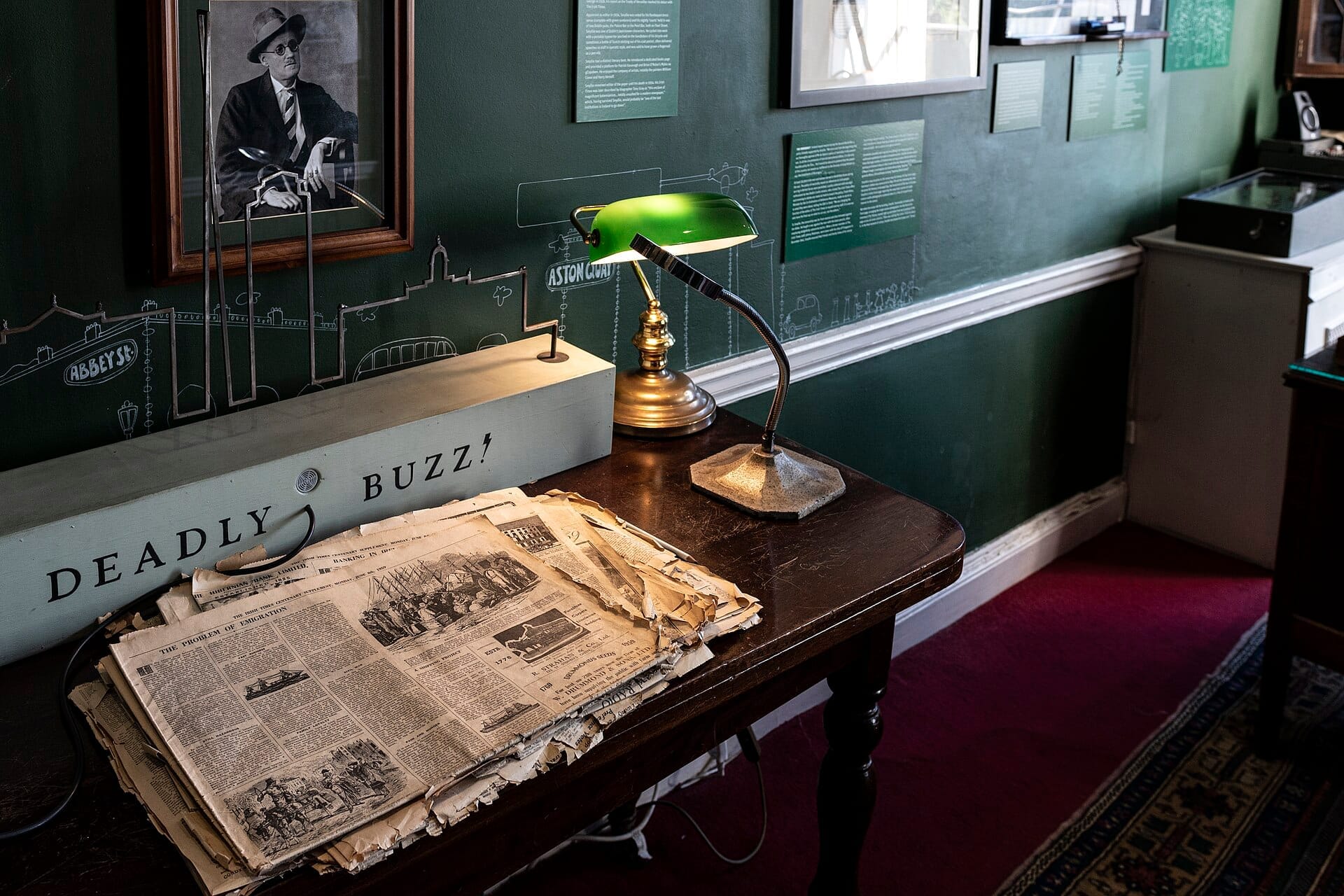
The building itself is a well-preserved Georgian townhouse on the north side of St. Stephen's Green. The facade is classic Dublin: dark brick, tall sash windows, a painted doorway. Inside, the rooms are relatively compact, which is partly the point. Everything feels chosen rather than curated by committee. Photographs sit beside political pamphlets, vintage advertisements share wall space with personal letters, and objects that would never make it into a national collection end up being the most telling details of all.
ℹ️ Good to know
Entry to the Little Museum of Dublin is by guided tour only. The museum is open daily from 9:30am to 5:00pm, with last entry at 4:30pm. Book your ticket online at littlemuseum.ie in advance, especially on weekends and during summer.
The Guided Tour: What to Expect
Unlike most museums where you move at your own pace, the Little Museum of Dublin asks you to experience everything with a guide. This is not a restriction: it is the product itself. The guides here are known for being genuinely good storytellers, comfortable with questions and willing to go off-script when the group is engaged. The museum’s famous guided tour lasts around half an hour, with most visits taking under an hour in total, and covers the full sweep of twentieth-century Dublin: the 1916 Easter Rising, the War of Independence, partition, the formation of the Irish state, the lean decades of mid-century emigration, the cultural upheaval of the 1960s, and the city's eventual economic transformation.
The format means the experience lives and dies on the quality of the guide you get on any given day. Most visitor accounts suggest the standard is consistently high, but it is worth knowing that this is not the place to come if you want to drift quietly through rooms on your own. Groups tend to be small enough to allow genuine conversation. Questions are welcomed, not just tolerated.
If Irish history and culture interest you beyond the museum walls, the Dublin Castle and National Museum of Archaeology offer deeper dives into different periods, both within easy walking distance.
Tickets & tours
Hand-picked options from our booking partner. Prices are indicative; availability and final rates are confirmed when you complete your booking.
Giant's Causeway, Dark Hedges, and Belfast Tour from Dublin
From 85 €Instant confirmationFree cancellationDublin self-guided audio tour
From 10 €Instant confirmationBird of Prey, Cliffs of Moher and Aillwee Cave from Dublin
From 201 €Instant confirmationFree cancellationGame of Thrones Studio tour with return transfer from Dublin
From 63 €Instant confirmationFree cancellation
The Collection: Objects That Tell a City's Story
Over thousands of objects fill the rooms, and the density is part of the experience. You will see early U2 memorabilia from when the band were still teenagers playing small Dublin venues, political posters from contentious twentieth-century referendums, period photographs of streets that were dramatically altered or destroyed, and everyday domestic objects that carry more meaning in context than they would in isolation.
The collection leans toward the social and cultural rather than the military or purely political, which gives it a different texture from, say, the exhibits at the GPO. There is a particular attentiveness to how ordinary Dubliners experienced moments of national significance: what was on the radio, what was in the shops, what the city smelled and sounded like during years of upheaval. That attention to lived experience is what separates this museum from a dry chronological survey.
For visitors who want to explore Dublin's literary history alongside its political story, the Dublin Literary Trail passes directly through this part of the city and connects several nearby sites.
The Setting: A Georgian Townhouse on St. Stephen's Green
The location at 15 St. Stephen's Green is worth appreciating in its own right. St. Stephen's Green is one of Dublin's most significant civic spaces, a large public park ringed by Georgian and Victorian architecture, and the townhouses on its perimeter give a genuine sense of how the city was built and lived in by its merchant and professional classes in the eighteenth and nineteenth centuries.
Standing outside before entering, you are looking at the same streetscape that would have been familiar to people living through the events described inside: the 1916 Rising, for instance, included fighting in the Green itself, and the building's neighbours have housed everything from embassies to private clubs over the decades. The interior staircase, original cornicing, and tall windows all survive from the Georgian period, giving the museum a texture that a purpose-built or converted warehouse space could never replicate.
The park itself is immediately adjacent. After your tour, St. Stephen's Green is a ten-second walk and offers a natural decompression point, particularly if you have been processing a lot of history in a short time.
Time of Day and Crowd Patterns
The museum opens at 9:30am, and many visitors find that morning visits feel genuinely unhurried: the green light comes through the tall sash windows, the tour groups are small, and the guides have energy and focus. By late morning, particularly on weekends between May and September, groups grow and the atmosphere shifts toward something livelier, with more families and mixed international groups.
Midday and early afternoon can be busier periods, especially on days when tour groups are pre-booked. The museum is small enough that a large group in a single room creates a noticeably different experience than a quieter morning slot.
💡 Local tip
Book the first tour slot of the day at 9:30am if you can. Groups are often smaller, and you will have the rooms to yourself in a way that is genuinely harder to achieve later in the day.
Getting There and Practical Details
The museum is at 15 St. Stephen's Green, on the north side of the park. The Luas Green Line runs directly to St. Stephen's Green station, which is a short walk from the museum entrance. Multiple Dublin Bus routes serve Dawson Street and Grafton Street, both within two minutes on foot. If you are staying anywhere in the city centre, the museum is almost certainly within comfortable walking distance.
The building is a Georgian townhouse, which means stairs are part of the structure. The museum undertook accessibility-focused renovations in recent years, and it is now wheelchair accessible, but visitors with specific mobility needs may still wish to contact the museum directly before booking. The official website is the most reliable source for up-to-date accessibility information.
For a broader picture of moving around Dublin by public transport, the getting around Dublin guide covers Luas, DART, and Dublin Bus in practical detail.
⚠️ What to skip
The museum is open daily from 9:30am to 5:00pm with last entry at 4:30pm, but hours can change around public holidays. Check the official website before visiting, and always book your tour slot in advance to avoid missing out, particularly in summer.
Is It Worth Your Time? An Honest Assessment
The Little Museum of Dublin is genuinely one of the more satisfying cultural stops in the city for people who want context rather than just sightseeing. It is not trying to be comprehensive, and it does not pretend to replace the National Museum or the GPO. What it does is give you a sense of how Dublin felt to the people who lived through the twentieth century, in a format that is warm, accessible, and surprisingly moving in places.
That said, it is not the right choice for everyone. If you have a deep existing knowledge of Irish history and are looking for new scholarly material, the content here will feel more introductory than revelatory. If guided tours in general feel confining to you, the format will likely frustrate rather than engage. Children under ten or eleven may find the pace and density challenging depending on the individual child, though younger teenagers with an interest in history tend to respond well.
For visitors who want to fill a full day in this part of the city, the St. Stephen's Green and Grafton Street area has enough galleries, parks, and food options to anchor a complete morning and afternoon.
Insider Tips
- Book the 9:30am opening tour slot to get a smaller group and a more conversational experience. It genuinely makes a difference in how much you take away from the tour.
- Ask your guide specifically about the U2 collection if it interests you: it is a surprisingly substantial part of the story of Dublin in the late 1970s and 1980s, and not every guide leads with it unprompted.
- The museum shop near the entrance carries a good selection of Irish history books and local publications that are not easily found in mainstream bookshops. Worth a browse even if you are not buying.
- If you are visiting during a busy tourist period, pre-book online rather than arriving and hoping for a same-day slot. The guided tour format means capacity is genuinely limited.
- Combine your visit with a walk around St. Stephen's Green immediately after. The park was the site of fighting during the 1916 Easter Rising, and the tour gives you specific context that makes that walk feel entirely different.
Who Is Little Museum of Dublin For?
- First-time visitors to Dublin who want a grounded introduction to Irish twentieth-century history before visiting larger sites like Kilmainham Gaol or the GPO
- Travellers with limited time who want cultural depth without committing to a half-day museum visit
- History and literature enthusiasts interested in Dublin's social and cultural life beyond the purely political
- Older teenagers and adults who enjoy guided storytelling formats over self-guided browsing
- Visitors on a return trip to Dublin who want to explore a smaller, more personal institution they may have skipped before
Nearby Attractions
Other things to see while in St Stephen's Green & Grafton Street:
- George's Street Arcade
Built in 1881 as Ireland's first purpose-built shopping centre (later rebuilt after an 1892 fire), George's Street Arcade is a red-brick Victorian market hall on South Great George's Street, Dublin 2. Free to enter and open daily, it houses a mix of vintage clothing, records, antiques, food stalls, and independent retailers beneath a soaring glazed roof.
- Grafton Street
Grafton Street is Dublin's most recognisable shopping street, running 500 metres through the heart of the city from St Stephen's Green to College Green. Pedestrianised in the early 1980s, it draws everyone from commuters and coffee-seekers to tourists and street musicians. Entry is free and the street is open daily.
- Iveagh Gardens
Tucked behind the National Concert Hall on Clonmel Street, Iveagh Gardens is a free, formally designed Victorian park covering around 5 acres in the heart of Dublin 2. Opened to the public after years of restoration, it offers fountains, a rosarium, a cascade waterfall, and woodland walks with a fraction of the foot traffic you'll find at nearby St. Stephen's Green.
- Merrion Square Park
Merrion Square Park is a free public park at the heart of one of Dublin's best-preserved Georgian squares, dating to 1762. Surrounded by grand red-brick townhouses, it combines manicured gardens, public art, and literary history in a compact, walkable space close to the National Gallery and Government Buildings.