George's Street Arcade: Dublin's Victorian Market Hall Worth Your Time
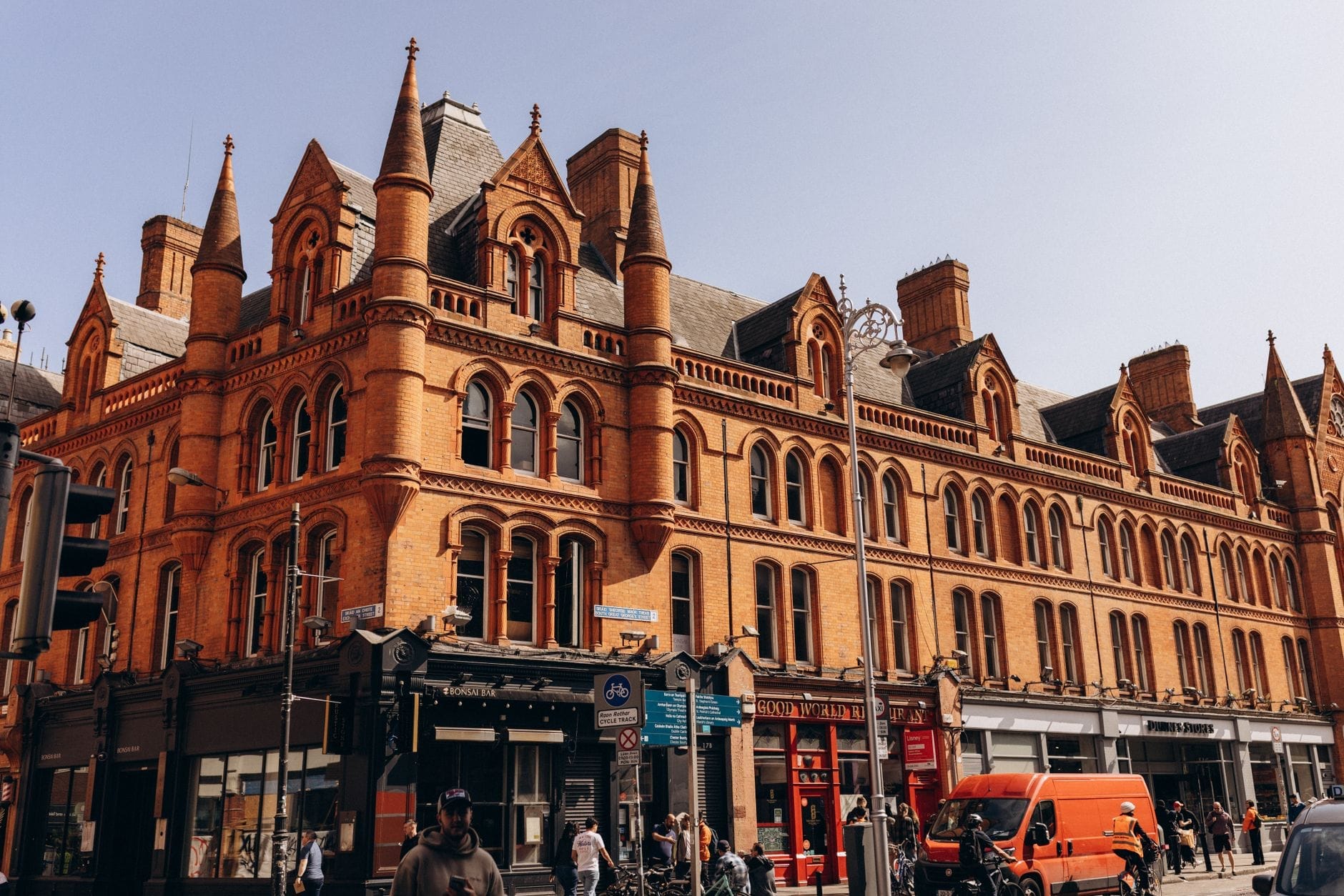
Built in 1881 as Ireland's first purpose-built shopping centre (later rebuilt after an 1892 fire), George's Street Arcade is a red-brick Victorian market hall on South Great George's Street, Dublin 2. Free to enter and open daily, it houses a mix of vintage clothing, records, antiques, food stalls, and independent retailers beneath a soaring glazed roof.
Quick Facts
- Location
- South Great George's Street, Dublin 2 — less than 5 minutes' walk from Grafton Street, Temple Bar, and Trinity College
- Getting There
- Walkable from Grafton Street, Temple Bar, and Trinity College; no Luas stop directly outside but well within the city centre walking area
- Time Needed
- 30–60 minutes for a browse; longer if you stop at a food stall or dig through record bins
- Cost
- Free to enter; individual stall prices vary
- Best for
- Vintage hunters, record collectors, casual browsers, and anyone wanting to step off the main shopping strip
- Official website
- georgesstreetarcade.ie
What Is George's Street Arcade?
George's Street Arcade is a covered Victorian market hall on South Great George's Street in Dublin 2, dating back to 1881. Ireland's first purpose-built shopping centre, it predates nearly every enclosed retail space in the country. The building is constructed in red brick with terracotta detailing and a long glazed barrel roof that fills the central aisle with diffused natural light, even on overcast Dublin days. It is not a tourist attraction in the staged sense: it is a working market that locals use regularly, and that quality is exactly what makes it worth visiting.
The arcade sits between South Great George's Street and Drury Street, forming a pedestrian cut-through at the heart of the city. It is surrounded by independent cafés, bars, and clothing shops, placing it in one of Dublin's more characterful retail corridors. If you are already on Grafton Street, George's Street Arcade is a four-minute walk west — close enough to fold into any city-centre itinerary without a dedicated trip.
ℹ️ Good to know
Opening hours: Mon–Wed 09:00–18:00, Thu–Sat 09:00–19:00, Sun 11:00–18:00. Admission is free. Hours on public holidays (including St Patrick's Day) are announced separately on the official website.
The Architecture: A Victorian Hall That Has Survived Fire and Decades
When the South City Markets, as it was originally named, opened in 1881, the intention was to bring a purpose-built, Continental-style market hall to Dublin. The design borrowed from the covered market architecture then appearing across Britain and Europe: load-bearing red brick, ornate terracotta façades, and an internal iron-and-glass roof structure that would keep merchants and shoppers dry through the Irish winter. The arcade's exterior on South Great George's Street is still one of the more handsome Victorian commercial frontages left in central Dublin.
A major fire destroyed much of the original structure in 1892, only eleven years after it opened. The rebuilt version, reopened in 1894, broadly preserved the original architectural character and is the building visitors walk through today. The Layden Family Group acquired the property in 1992 and has maintained it as a trading market rather than converting it to other uses, which is less common than it sounds given the development pressure on central Dublin real estate.
Standing inside the main aisle, look up at the roof trusses and glazing. The quality of natural light is one of the building's best features and is rarely mentioned in brief descriptions. The iron framework has an industrial honesty to it that contrasts with the terracotta ornamentation at arcade entry points. Photography here responds well to overcast conditions, when the diffuse light through the glass roof eliminates harsh shadows across stall displays.
Tickets & tours
Hand-picked options from our booking partner. Prices are indicative; availability and final rates are confirmed when you complete your booking.
Giant's Causeway, Dark Hedges, and Belfast Tour from Dublin
From 85 €Instant confirmationFree cancellationDublin self-guided audio tour
From 10 €Instant confirmationBird of Prey, Cliffs of Moher and Aillwee Cave from Dublin
From 201 €Instant confirmationFree cancellationGame of Thrones Studio tour with return transfer from Dublin
From 63 €Instant confirmationFree cancellation
What You Will Find Inside: Stalls, Traders, and the General Mix
The arcade's retail mix leans heavily toward the independent and secondhand. Vintage clothing stalls are well represented, ranging from curated rails of 20th-century pieces to denser, cheaper stock for rummaging. Record stalls stock a broad range of genres and conditions; serious collectors often arrive early in the week when new stock is more likely to be available and competition from other buyers is lower. Antiques, collectibles, handmade jewellery, and prints occupy other units.
Food is available inside the arcade and at adjacent units, covering casual breakfast and lunch options. If you are visiting mid-morning on a weekday, the food stalls are usually quieter and seating is easier to find than it would be at the lunchtime peak. The arcade also contains a small number of complementary service businesses, adding to the sense that it functions as a local neighbourhood anchor rather than a purely tourist-facing space.
For context on how this arcade fits into Dublin's broader independent retail landscape, the Dublin shopping guide covers the surrounding South Great George's Street and Drury Street area, where a cluster of independent shops continues north toward Dame Street and south toward Camden Street.
How the Arcade Changes Through the Day
Weekday mornings, particularly Tuesday and Wednesday before noon, are the calmest times to visit. The aisles are walkable at a relaxed pace, stall holders are approachable, and there is no pressure to move quickly. The light through the roof is at its most useful in the mid-morning hours before the lower afternoon sun angle reduces it.
Thursday and Friday lunchtimes see a noticeable increase in foot traffic from office workers and visitors combining the arcade with nearby food options. Saturday is the busiest day across all hours: the central aisle can become genuinely congested between 12:00 and 15:00, making it harder to browse stalls that face each other across a narrow walkway. If weekends are your only option, arriving at opening (09:00 on Saturday) gives you a quieter first hour.
Sunday opens later at 11:00 and generally has a slower pace than Saturday, making it a reasonable alternative if you want weekend browsing without peak Saturday crowds. The food stalls see steady Sunday morning trade from locals treating it as a casual start to the day.
💡 Local tip
For record and vintage browsing, early in the week gives you first access to new stock. Saturday afternoons are the hardest time to browse narrow stall frontages — the aisle becomes a slow shuffle rather than a browse.
Getting There and Practical Logistics
George's Street Arcade is in central Dublin 2 and straightforward to reach on foot from most city-centre starting points. From Grafton Street, walk west along Suffolk Street or Nassau Street and then south on South Great George's Street; the main arcade entrance is visible on the right. From Temple Bar, cross Dame Street and head south; the arcade is less than a five-minute walk. Trinity College is approximately five minutes on foot heading southwest.
For those using public transport, multiple Dublin Bus routes stop on Dame Street and South Great George's Street. The Luas Green Line stops at St Stephen's Green, from which the arcade is a short walk north (around 5–10 minutes). Full route and timetable information should be checked via Transport for Ireland before travel. If you are planning a broader day in this part of the city, the guide to getting around Dublin covers transport options across the city centre in more detail.
Accessibility: the arcade is an enclosed indoor space on the ground floor with pedestrian aisles throughout. The central aisle is level, though the width varies depending on how individual stalls are set out. Visitors with specific accessibility requirements, including step-free entrance confirmation or accessible toilet information, should contact the arcade directly before visiting, as the official site does not publish granular accessibility details.
Cultural Context: Why This Building Still Matters
The claim that George's Street Arcade is one of Europe's oldest city markets is not marketing overreach — it is simply accurate. Many Victorian market halls across Britain and Ireland were demolished during 20th-century redevelopment phases or converted into uses that bear no relation to their original purpose. George's Street survived both a catastrophic fire and the pressures of post-independence Dublin development to remain a functioning market. That continuity gives it a different quality to the purpose-built vintage markets and pop-up spaces that have appeared in other European cities. The traders here have real tenure, and some stalls have been operating in the same units for years. Dublin's Georgian and Victorian architectural heritage is concentrated in pockets like this one, and the arcade is among the better-preserved Victorian commercial interiors in the city.
It is also worth being clear about what the arcade is not. It is not the most polished or scenographic market space in Europe, and it does not try to be. Some stalls are densely packed in a way that rewards patience rather than a quick sweep through. If you are looking for a curated, Instagram-ready experience with consistent aesthetic branding, this will not deliver that. What it delivers instead is an authentic working market in a genuine Victorian structure, which is increasingly rare in any European capital.
Who Might Want to Skip This
Visitors with no interest in secondhand goods, vintage clothing, or records will find limited reason to linger. The arcade is not a food market destination in the way that covered markets in other cities function — food is available but it is not the primary draw. Travellers on a strictly limited itinerary who have not yet seen Dublin's major cultural or historical sites should prioritise those first; the arcade is a worthwhile addition to a day in the area but not a destination to plan a trip around independently.
If you are travelling with children, the arcade's narrow aisles and lack of dedicated child-oriented content mean it may not hold attention as well as alternatives. The Dublin with kids guide has better-matched suggestions for family-oriented itineraries in the city centre.
Insider Tips
- The arcade has two main entrances: one on South Great George's Street and one on Drury Street. If the South Great George's Street entrance feels crowded, try the Drury Street entrance for a less congested entry into the stalls.
- Record stalls tend to rotate stock mid-week. If you are a serious collector, a Tuesday or Wednesday morning visit beats the weekend rush and gives you first look at recently added inventory.
- The glazed roof provides the best natural light in the mid-morning hours. Photographers and anyone who wants to examine the detail of vintage pieces without artificial light will find this window most useful.
- The surrounding streets — particularly Drury Street and the block south toward Camden Street — have a strong cluster of independent cafés and bars. Combine your arcade visit with a walk along this corridor rather than heading straight back to Grafton Street.
- Public holiday hours are not standard and are announced separately. If you are visiting around St Patrick's Day or other Irish public holidays, check the official website the day before to avoid arriving at a closed arcade.
Who Is George's Street Arcade For?
- Vintage clothing shoppers looking for genuine secondhand stock rather than curated boutique prices
- Record collectors wanting to browse physical vinyl in an unhurried setting
- Architecture and history enthusiasts interested in Victorian commercial interiors
- Travellers wanting a break from the main Grafton Street retail strip without going far
- Locals and visitors looking for a casual mid-morning stop with food available on site
Nearby Attractions
Other things to see while in St Stephen's Green & Grafton Street:
- Grafton Street
Grafton Street is Dublin's most recognisable shopping street, running 500 metres through the heart of the city from St Stephen's Green to College Green. Pedestrianised in the early 1980s, it draws everyone from commuters and coffee-seekers to tourists and street musicians. Entry is free and the street is open daily.
- Iveagh Gardens
Tucked behind the National Concert Hall on Clonmel Street, Iveagh Gardens is a free, formally designed Victorian park covering around 5 acres in the heart of Dublin 2. Opened to the public after years of restoration, it offers fountains, a rosarium, a cascade waterfall, and woodland walks with a fraction of the foot traffic you'll find at nearby St. Stephen's Green.
- Little Museum of Dublin
Housed in a Georgian townhouse at 15 St. Stephen's Green, the Little Museum of Dublin distills over a century of city life into a compact series of rooms and thousands of donated artefacts. Entry is by guided tour only, making this one of Dublin's most intimate and unexpectedly absorbing cultural experiences.
- Merrion Square Park
Merrion Square Park is a free public park at the heart of one of Dublin's best-preserved Georgian squares, dating to 1762. Surrounded by grand red-brick townhouses, it combines manicured gardens, public art, and literary history in a compact, walkable space close to the National Gallery and Government Buildings.