Merrion Square Park: Dublin's Most Elegant Georgian Garden
Merrion Square Park is a free public park at the heart of one of Dublin's best-preserved Georgian squares, dating to 1762. Surrounded by grand red-brick townhouses, it combines manicured gardens, public art, and literary history in a compact, walkable space close to the National Gallery and Government Buildings.
Quick Facts
- Location
- Merrion Square, Dublin 2 (south city centre)
- Getting There
- Multiple Dublin Bus routes (4, 7, 8, 13, 45 and others) stop directly at Merrion Square
- Time Needed
- 30–60 minutes for a relaxed walk; longer on weekends when artists display work
- Cost
- Free entry
- Best for
- Architecture lovers, literary history, a quiet lunch break, Georgian Dublin context
What Merrion Square Park Actually Is
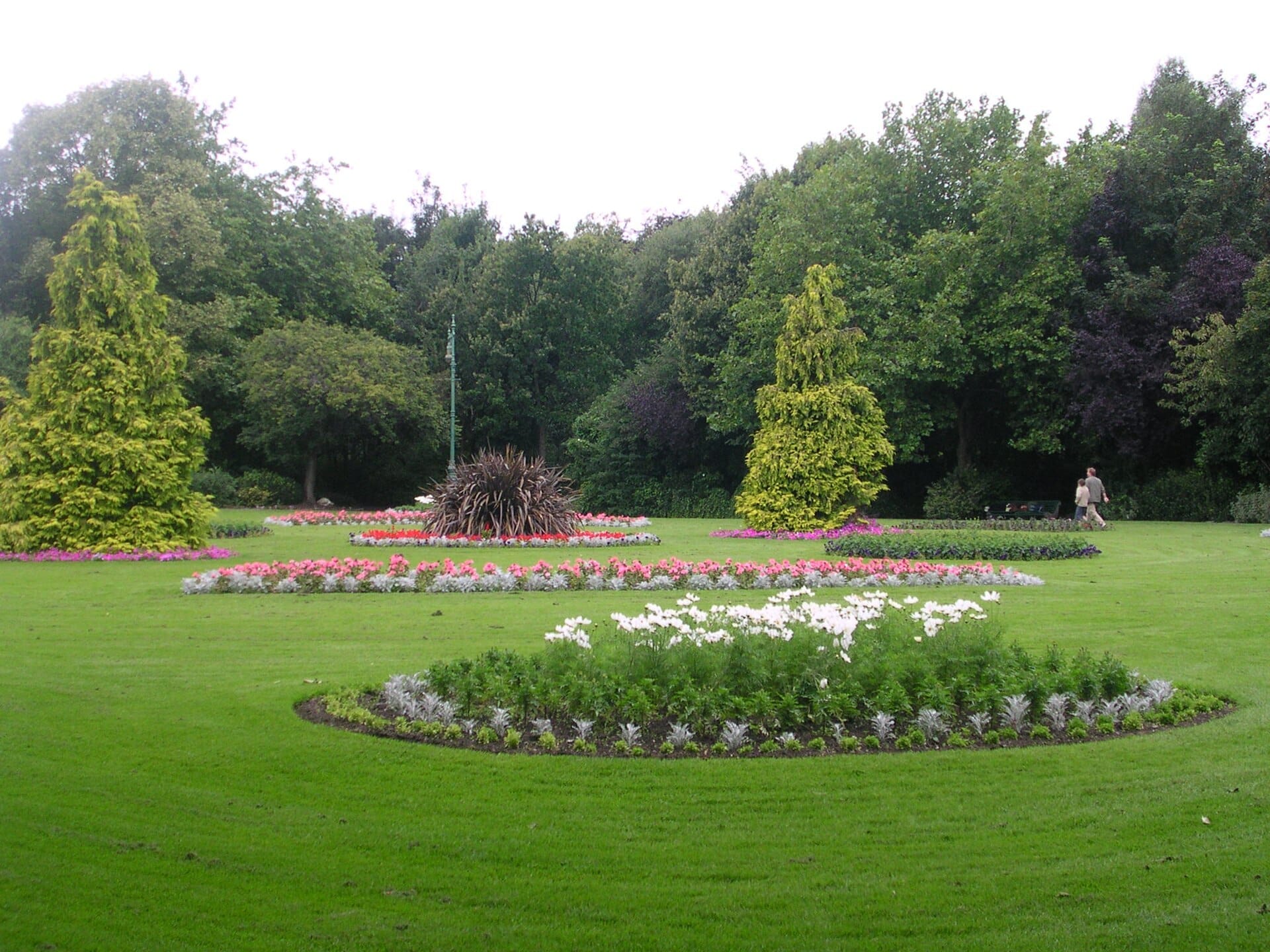
Merrion Square Park occupies the central garden of one of Dublin's most intact Georgian squares, established in 1762. For most of its history the garden was strictly private, reserved for the fee-paying residents of the surrounding townhouses. Today it is leased to Dublin City Council and open free to the public every day from 10:00, with closing times that shift from 17:00 in midwinter to 22:00 at the height of summer.
The park has been restored to its historical layout: formal paths, a central axis of open lawn, and perimeter planting that follows the proportions of the original 18th-century design. What surrounds it is equally important. The four terraces of red-brick Georgian townhouses that frame the square form one of the most photographed streetscapes in Ireland, and almost every door has a distinctive painted fanlight and a pair of cast-iron railings that date to the original build period.
💡 Local tip
The park opens at 10:00 every day year-round but closes as early as 17:00 in December and January. If you are visiting in winter, plan to arrive before mid-afternoon to allow time inside.
The Georgian Context: Why the Square Matters
Dublin's Georgian streetscapes were built rapidly from the 1760s onward, when the city was one of the largest in the British Empire and wealthy families competed for addresses close to the Irish Parliament on College Green. Merrion Square was developed on land belonging to the Fitzwilliam estate, and the houses on its north, east, and south sides remain among the best-preserved examples of the period anywhere in Europe.
The north side of the square is particularly significant. Number 1 Merrion Square was the childhood home of Oscar Wilde, and a flamboyant reclining statue of the playwright now sits in the northwest corner of the park, rendered in white Carrera marble and facing his former home across the railings. The statue, by sculptor Danny Osborne and unveiled in 1997, is one of the most photographed in Dublin. For more of the city's literary landscape, Dublin's literary trail connects Merrion Square to Joyce, Beckett, and Shaw sites across the city centre.
Other notable former residents of the square include Daniel O'Connell, the political leader known as 'The Liberator', who lived at Number 58, and W.B. Yeats, who lived at Number 82. The Catholic Church owned the park for much of the 20th century and had plans to build a cathedral on the site before those plans were abandoned and the land eventually passed into public use. Walking the perimeter paths, you read these layers of ownership and ambition in the proportions of the space itself.
The square sits directly adjacent to the National Gallery of Ireland, whose entrance faces the park's western edge. Government Buildings and Leinster House, the seat of the Irish parliament (the Oireachtas), are also within immediate walking distance, which gives Merrion Square an unusually concentrated civic weight for a public park.
Tickets & tours
Hand-picked options from our booking partner. Prices are indicative; availability and final rates are confirmed when you complete your booking.
Giant's Causeway, Dark Hedges, and Belfast Tour from Dublin
From 85 €Instant confirmationFree cancellationDublin self-guided audio tour
From 10 €Instant confirmationBird of Prey, Cliffs of Moher and Aillwee Cave from Dublin
From 201 €Instant confirmationFree cancellationGame of Thrones Studio tour with return transfer from Dublin
From 63 €Instant confirmationFree cancellation
What to Expect at Different Times of Day
On weekday mornings, the park is calm and mostly local. Office workers from the surrounding Georgian offices cut through on foot, and the benches along the central path fill with people eating lunch from around 12:30. The smell of cut grass after overnight rain, the faint traffic noise from Merrion Street, and the cawing of jackdaws in the large plane trees define the mid-morning atmosphere. It does not feel like a tourist attraction at this hour.
Weekends change the character entirely. From Saturday morning onward, local artists display paintings, prints, and drawings along the inner railings of the park, a tradition that has continued for decades. The art on show ranges from watercolour landscapes of the Wicklow Mountains to portraits and abstract work, and the sellers are happy to talk. The quality varies, but browsing is free and unhurried, and it attracts a different crowd than the weekday commuter flow.
In summer evenings, with the park open until 22:00 in June and July, the space takes on a genuinely warm city-park quality: groups sitting on the grass, the low gold light illuminating the Georgian facades, the distant sounds of Grafton Street buskers carried on the breeze. This is when the park earns its reputation as one of the better places to pause in central Dublin without paying for anything.
ℹ️ Good to know
There are no toilets, no café, and no parking within Merrion Square Park. Bring water if you plan to stay a while. The nearest public facilities are at St Stephen's Green (a 10-minute walk southwest).
Highlights Inside the Park
The Oscar Wilde Statue
The Oscar Wilde statue in the northwest corner is the park's most visited feature. Wilde is depicted reclining on a large rock, dressed in an embroidered smoking jacket, with his face turned toward Number 1 Merrion Square where he grew up. The marble surface is smoothly polished at the hands and face from decades of visitors touching the figure. Two smaller bronze figures nearby represent his wife Constance and a pregnant male figure representing the 'soul of genius', completing a composition that rewards a slow look from multiple angles.
The Restored Garden Layout
The central lawn is wide enough to feel open but not so large as to lose the enclosed, garden-square character that distinguishes Merrion Square from a generic city park. The paths have been restored to their historic alignment, running diagonally from corner to corner with a central cross-axis. Planting along the perimeter includes large mature trees, seasonal bedding, and stretches of lawn that are generally well maintained by Dublin City Council's Parks and Landscape Services Division.
The Boundary Railings and Art Displays
The inner railings are used by local artists on weekends as a display space, a long-standing informal arrangement rather than a formal market. Artwork is clipped or hung along the railing panels from the late morning onward. Even if you have no intention of buying, the displays offer an interesting cross-section of contemporary Irish amateur and semi-professional art, and the eastern railing stretch tends to have the highest concentration of work.
Getting There and Getting Around
The park is straightforward to reach from the city centre on foot. From Grafton Street, walk east along Nassau Street and continue past the back wall of Trinity College toward Clare Street; the northwest corner of the square is about a 10-minute walk. From Trinity College's front gate, the route is slightly shorter: south down Kildare Street or east along Nassau Street, then right onto Merrion Square North.
By bus, a number of routes stop directly on or very close to the square, including routes 4, 7, 7A and several others. Check the Transport for Ireland journey planner for current stop locations before travelling, as route arrangements in this part of the city are subject to periodic review.
For broader orientation to Dublin's transport options, see the guide to getting around Dublin, which covers DART, Luas, Dublin Bus, and cycling.
Accessibility
Most paths within the park are accessible, but some steps do exist at certain entry points and within the garden. There is no formal disabled parking bay within the park perimeter. Visitors with mobility requirements should check the Dublin City Council parks page for current access information before visiting, as restoration work occasionally affects specific path sections.
Photography Notes and Weather Considerations
The north side of the square (the terrace facing south across the park) is the most photographed. Late afternoon light in spring and summer falls directly on the brick facades at an angle that picks out the door details and fanlight glass. The southeast corner offers a view down the full length of the east terrace that works well in the lower light of early morning or overcast conditions.
Dublin's temperate maritime climate means overcast skies are common year-round. For the Oscar Wilde statue specifically, overcast conditions actually produce more even lighting and less harsh shadow across the white marble than direct midday sun. Rain will dampen the bench experience but does not significantly affect the architectural interest of the perimeter walk.
⚠️ What to skip
Merrion Square Park has no shelter. In heavy rain, the experience is limited to a quick perimeter walk. The National Gallery of Ireland immediately to the west is free to enter and provides a worthwhile dry alternative.
Honest Assessment: Is It Worth Your Time?
Merrion Square Park is not a destination that will occupy a full afternoon on its own. It works best as part of a broader walk through Georgian Dublin: enter from the northwest corner to see the Wilde statue, walk the perimeter to read the historical plaques, then exit south toward the National Gallery of Ireland or north toward the National Museum of Ireland on Kildare Street. On its own, 30 minutes is usually enough.
Visitors who arrive expecting manicured botanical complexity on the scale of Iveagh Gardens will find Merrion Square relatively simple in its planting. The real draw is the Georgian architecture that frames it, the free public art on weekends, and the quality of the surrounding streetscape, which offers some of the best 18th-century urban design anywhere in Ireland. If that is not your primary interest, the park may feel like an unremarkable green space.
Travellers on a very tight schedule who have to choose between Merrion Square and one of Dublin's major indoor attractions should probably prioritise the indoor option on a wet or cold day. In good weather, or when combined with the National Gallery, it earns its place in almost any Dublin itinerary.
Insider Tips
- The weekend art display along the inner railings has no fixed start time. Artists begin setting up from around 10:30 and the display reaches full density by noon. If you arrive at opening time on a Sunday morning, you may find the railings still bare.
- The plaque at Number 1 Merrion Square (north side, outside the park railings) marks the Wilde family home. It is easy to miss because it sits low on the wall. The contrast between the house and the reclining statue across the street makes for an interesting photograph.
- The southeast corner of the park offers a relatively quiet seating area that most visitors pass through without stopping. On warm days it is a useful escape from the main path, which can become crowded around the Wilde statue.
- The National Gallery entrance directly facing the park's west side is free to enter, no booking required for the permanent collection. Combining the park with the gallery makes for a very full half-day without spending anything.
- If you are visiting in late June or July, the park stays open until 22:00. The evening light on the Georgian terraces after 20:00 in summer is noticeably different from daytime and worth experiencing if you are already in this part of the city.
Who Is Merrion Square Park For?
- Architecture and Georgian history enthusiasts who want to walk the finest surviving example of a Dublin Georgian square
- Literary travellers tracing the lives of Oscar Wilde, W.B. Yeats, and Daniel O'Connell
- Budget-conscious visitors looking for a free, central outdoor space that connects multiple major cultural institutions
- Weekend visitors interested in browsing local art along the railing displays without any purchase obligation
- Photographers seeking well-preserved 18th-century urban streetscapes in central Dublin
Nearby Attractions
Other things to see while in St Stephen's Green & Grafton Street:
- George's Street Arcade
Built in 1881 as Ireland's first purpose-built shopping centre (later rebuilt after an 1892 fire), George's Street Arcade is a red-brick Victorian market hall on South Great George's Street, Dublin 2. Free to enter and open daily, it houses a mix of vintage clothing, records, antiques, food stalls, and independent retailers beneath a soaring glazed roof.
- Grafton Street
Grafton Street is Dublin's most recognisable shopping street, running 500 metres through the heart of the city from St Stephen's Green to College Green. Pedestrianised in the early 1980s, it draws everyone from commuters and coffee-seekers to tourists and street musicians. Entry is free and the street is open daily.
- Iveagh Gardens
Tucked behind the National Concert Hall on Clonmel Street, Iveagh Gardens is a free, formally designed Victorian park covering around 5 acres in the heart of Dublin 2. Opened to the public after years of restoration, it offers fountains, a rosarium, a cascade waterfall, and woodland walks with a fraction of the foot traffic you'll find at nearby St. Stephen's Green.
- Little Museum of Dublin
Housed in a Georgian townhouse at 15 St. Stephen's Green, the Little Museum of Dublin distills over a century of city life into a compact series of rooms and thousands of donated artefacts. Entry is by guided tour only, making this one of Dublin's most intimate and unexpectedly absorbing cultural experiences.