Powerscourt Centre: Dublin's Most Elegant Shopping Address
Housed in one of Dublin's finest Georgian townhouses, Powerscourt Centre on South William Street blends 18th-century architecture with independent boutiques, design shops, and cafes. Entry is free, and the courtyard alone is worth the detour.
Quick Facts
- Location
- 59 South William Street, Dublin D02 HF95, Ireland
- Getting There
- Luas Green Line – St Stephen's Green stop (~5 min walk); multiple Dublin Bus routes on nearby Dawson Street and Nassau Street
- Time Needed
- 45 minutes to 2 hours depending on browsing and dining
- Cost
- Free entry to the centre; guided tours may carry a separate fee (verify with centre)
- Best for
- Architecture lovers, design shoppers, solo browsers, and rainy-day escapes
- Official website
- www.powerscourtcentre.ie
What Is Powerscourt Centre?
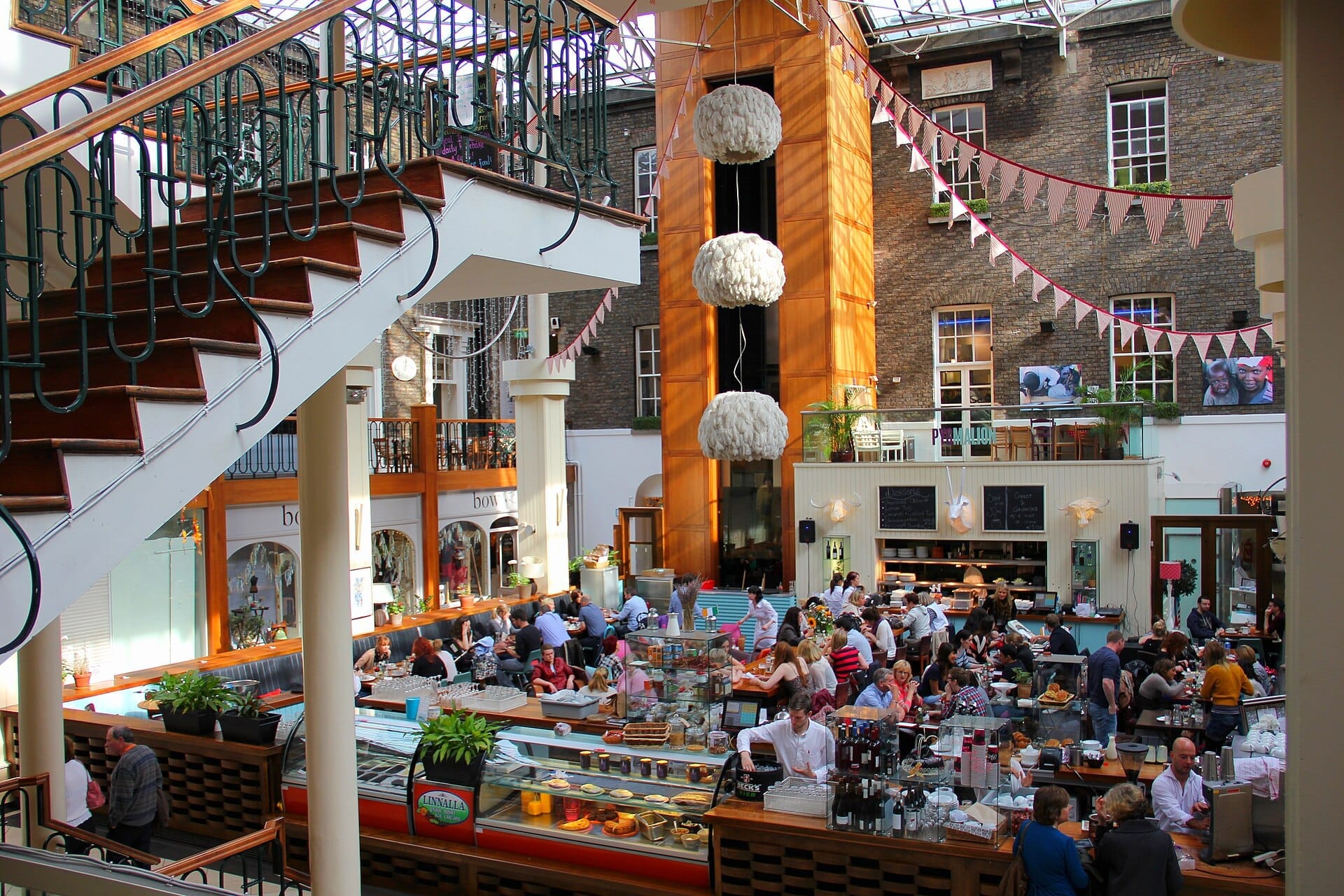
Powerscourt Centre, officially the Powerscourt Townhouse Centre, occupies one of Dublin's most significant 18th-century buildings at 59 South William Street, just off Grafton Street. What looks from the outside like a stately Georgian town residence is, on the inside, a multi-level shopping centre built around a glazed courtyard. The contrast between the soaring plasterwork ceilings and the racks of contemporary jewellery and clothing below is genuinely arresting.
The building was completed in the 1770s as a Dublin townhouse for Richard Wingfield, 3rd Viscount Powerscourt, and his wife Lady Amelia. It served as their base during the parliamentary season, when Anglo-Irish aristocratic families wintered in the capital. Architecturally, it is described as the third finest Georgian house in Dublin, notable for showing the transition from rococo to neoclassical ornamentation within a single building. The conversion to a shopping centre took place in 1981, and the original interiors, particularly the plasterwork and grand staircase, were preserved rather than stripped.
💡 Local tip
Entry to Powerscourt Centre is completely free. You can walk in off the street, admire the architecture, grab a coffee, and leave without spending a euro. Guided tours may carry a fee — check with the centre directly for current availability and pricing.
The Architecture: Why the Building Itself Is the Attraction
The townhouse sits in the heart of the Georgian quarter of Dublin city centre, a neighbourhood where the 18th-century street pattern is still largely intact. Walking in from South William Street, you pass through a relatively modest entrance that gives little away. Then the interior opens up: a central courtyard covered by a glass roof, surrounded by balconied galleries on three levels, with shopfronts fitted into what were once grand reception rooms.
Look upward and the original plasterwork is still there: medallions, swags, and cornicing that mark the shift from the exuberant curvilinear forms of rococo toward the cooler, more geometric language of neoclassicism. This is not reproduction work. The detailing survived two and a half centuries of use, political upheaval, and eventual commercial conversion. For anyone with an interest in Georgian Dublin, this is a more accessible and intimate experience than a formal museum tour.
The surrounding streets reinforce the context. South William Street sits within the broader St Stephen's Green and Grafton Street quarter, where Georgian terraces, Victorian shopfronts, and 20th-century infill buildings sit alongside each other. A short walk takes you to Merrion Square, Grafton Street, or the Little Museum of Dublin, all within the same architectural and historical orbit.
Tickets & tours
Hand-picked options from our booking partner. Prices are indicative; availability and final rates are confirmed when you complete your booking.
Wicklow and Glendalough day trip from Dublin with Powerscourt Gardens
From 65 €Instant confirmationFree cancellationDublin Shore Excursion in Glendalough and Dublin's city centre
From 80 €Instant confirmationFree cancellationShore Excursion of Howth and Dublin's City Centre
From 95 €Instant confirmationFree cancellationGiant's Causeway, Dark Hedges, and Belfast Tour from Dublin
From 85 €Instant confirmationFree cancellation
What to Expect Inside: Shops, Food, and Layout
Powerscourt Centre houses a mix of independent boutiques, design-led retailers, antique dealers, and food outlets. The retail offering leans toward the considered rather than the mass-market: you are more likely to find handmade jewellery, Irish design, vintage pieces, and specialty books here than chain-store staples. The centre operates across three main levels connected by the original staircases and a small lift.
The ground floor and courtyard level tend to attract the most foot traffic, with cafes and food vendors drawing visitors throughout the day. The upper galleries, where the light from the glass roof softens and the crowds thin, have a quieter, more contemplative feel. Browsers who take the stairs rather than staying at ground level often find the experience more rewarding, with the architectural details becoming more visible from the upper balconies.
Food and drink options are available within the centre itself. The courtyard-level seating fills up around lunchtime on weekdays and throughout weekend afternoons, particularly in cooler or wet weather when the covered space becomes a draw in its own right. If you want a seat comfortably, arriving before midday on a Saturday works better than trying at 1pm.
ℹ️ Good to know
Opening hours: Monday to Saturday 10:00–18:00, Sunday 12:00–18:00. The centre is open seven days a week. Verify with the centre directly if visiting on public holidays, as hours may differ.
How the Experience Changes Through the Day
Mornings from opening until around 11:30 are the quietest period. The light coming through the glass roof at this time is cooler and more diffuse, which is actually better for appreciating the plasterwork and ironwork details without the distraction of crowds below. Serious shoppers and architecture-focused visitors get the most from this window.
Midday to early afternoon on weekdays brings the lunch crowd, mostly local workers who use the cafes and browse between meetings. The atmosphere is relaxed but noticeably busier, with seating at a premium. Weekend afternoons are the peak period: the courtyard fills, noise levels rise with the ambient hum of conversations echoing off hard surfaces, and the more popular boutiques develop small queues. It is still a pleasant experience, but it is not a tranquil one.
Late afternoon, particularly in the hour before closing, sees crowds thinning again. The quality of light through the roof shifts warmer in summer, making this a good window for photography of the interior. Photographers should note that flash is largely unnecessary given the natural overhead light, and the reflective glass means strong midday sun can create more contrast than is ideal for shooting the details of the upper plasterwork.
Getting There and Practical Logistics
The centre is straightforward to reach on foot from most of central Dublin. The Luas Green Line stop at St Stephen's Green is approximately a five-minute walk. Multiple Dublin Bus routes run along Grafton Street and Nassau Street, both within easy walking distance. The centre is also well-connected to the George's Street Arcade, another covered shopping destination a short walk away, making a combined visit easy to plan.
There is no dedicated car park attached to the centre. The nearest paid car parks are on Drury Street and South King Street, both within a few minutes on foot. Dublin city centre parking is expensive and spaces fill early on weekends; arriving by public transport or on foot is the practical choice for most visitors.
Accessibility: the centre has a disabled entrance and lift access to upper floors. Toilet facilities, baby-changing, an ATM, and free Wi-Fi are available on site. The ground floor is the most straightforward for wheelchair users; some of the upper gallery areas involve older floor surfaces that may be uneven in places, so it is worth checking with centre staff on arrival if specific access requirements apply.
Honest Assessment: What Powerscourt Centre Is and Is Not
Powerscourt Centre is not a destination shopping centre in the sense of offering large-format retail or international flagship stores. If your goal is high-street shopping, Grafton Street itself or the nearby St Stephen's Green Shopping Centre will cover more of that ground. What Powerscourt Centre offers is a different kind of visit: a genuinely beautiful Georgian interior, a curated mix of independent and design retailers, and the rare experience of browsing in a building that has real historical weight.
For visitors who find generic shopping centres interchangeable, this one is different enough to warrant 45 minutes. For those who want to buy, not just look, the selection rewards patience and a preference for quality over volume. For travelers with no interest in either retail or Georgian architecture, there are stronger claims on limited time in Dublin.
If you are building a walking route through this part of the city, Powerscourt Centre fits naturally into a loop that also takes in the Little Museum of Dublin on St Stephen's Green and a walk up South William Street itself, which has a good concentration of independent food and drink spots. The Dublin shopping guide covers this quarter in more detail if you are planning a full day around it.
Insider Tips
- The upper balconies on the second and third levels are the best vantage points for understanding the full scale of the original townhouse interior. Most visitors stay at ground level and miss the overhead plasterwork entirely.
- Weekday mornings before 11:30 give you the space and quiet to actually look at the building without weaving around other visitors or waiting for seating.
- The South William Street entrance is the main access point, but the building also has a connection through to Clarendon Street at the back, useful if you are walking between Grafton Street and the George's Street area.
- If you are visiting in December, the centre dresses well for the Christmas period and the covered courtyard makes it a more comfortable experience than the outdoor Christmas markets when the weather turns wet.
- Guided architectural tours of the building are occasionally available through the centre or through external tour operators. These give access to the historical detail of the plasterwork and the Wingfield family history that is easy to miss on a self-guided visit.
Who Is Powerscourt Centre For?
- Architecture and Georgian history enthusiasts who want to see preserved interiors in an active, non-museum setting
- Design-conscious shoppers looking for independent Irish boutiques and makers rather than chain retail
- Travelers caught in Dublin's rain who want a covered, free, and genuinely interesting space to wait it out
- Solo visitors who enjoy browsing at their own pace without a fixed agenda
- Anyone building a walking route through the Grafton Street and South William Street quarter who wants a natural midpoint stop
Nearby Attractions
Other things to see while in St Stephen's Green & Grafton Street:
- George's Street Arcade
Built in 1881 as Ireland's first purpose-built shopping centre (later rebuilt after an 1892 fire), George's Street Arcade is a red-brick Victorian market hall on South Great George's Street, Dublin 2. Free to enter and open daily, it houses a mix of vintage clothing, records, antiques, food stalls, and independent retailers beneath a soaring glazed roof.
- Grafton Street
Grafton Street is Dublin's most recognisable shopping street, running 500 metres through the heart of the city from St Stephen's Green to College Green. Pedestrianised in the early 1980s, it draws everyone from commuters and coffee-seekers to tourists and street musicians. Entry is free and the street is open daily.
- Iveagh Gardens
Tucked behind the National Concert Hall on Clonmel Street, Iveagh Gardens is a free, formally designed Victorian park covering around 5 acres in the heart of Dublin 2. Opened to the public after years of restoration, it offers fountains, a rosarium, a cascade waterfall, and woodland walks with a fraction of the foot traffic you'll find at nearby St. Stephen's Green.
- Little Museum of Dublin
Housed in a Georgian townhouse at 15 St. Stephen's Green, the Little Museum of Dublin distills over a century of city life into a compact series of rooms and thousands of donated artefacts. Entry is by guided tour only, making this one of Dublin's most intimate and unexpectedly absorbing cultural experiences.