Glendalough Monastic Site: Ireland's Most Impressive Early Medieval Ruins
Founded in the 6th century by St Kevin, Glendalough is one of Ireland's most significant early medieval monastic settlements. Set in a glacial valley within Wicklow Mountains National Park, the site combines genuine historical weight with striking natural scenery. It is one of the most rewarding day trips from Dublin, and one of the few places where ancient ruins, mountain air, and quiet reflection genuinely coexist.
Quick Facts
- Location
- Glendalough, Bray, Co. Wicklow, A98 HC80 — approx. 50 km south of Dublin city centre, within Wicklow Mountains National Park
- Getting There
- No direct rail link. Tour buses and scheduled public services run from Dublin; check current timetables with operators. By car: approx. 1 hour via N11/M11 south, then R755 through Laragh.
- Time Needed
- 2–4 hours for the monastic site and visitor centre. Add 1–3 hours if walking to the Upper Lake or surrounding trails.
- Cost
- Visitor Centre: Adult €5, Senior/Group €4, Child/Student €3, Family €13. The monastic grounds themselves are free to walk. Parking at the visitor centre includes one free Visitor Centre admission.
- Best for
- History enthusiasts, hikers, photographers, families with older children, anyone wanting a full day out of the city
What Glendalough Actually Is
Glendalough Monastic Site is not a reconstruction or a heritage theme park. It is a genuine early medieval settlement, founded in the 6th century by St Kevin (Caoirnhín in Irish), who sought solitude in a remote glacial valley in the Wicklow Mountains. The Irish name, Gleann Dá Loch, means simply 'valley of two lakes', which describes the site perfectly: a narrow valley carved by Ice Age glaciers, flanked by two lakes, and populated by the stone remains of one of early Christian Ireland's most important religious communities.
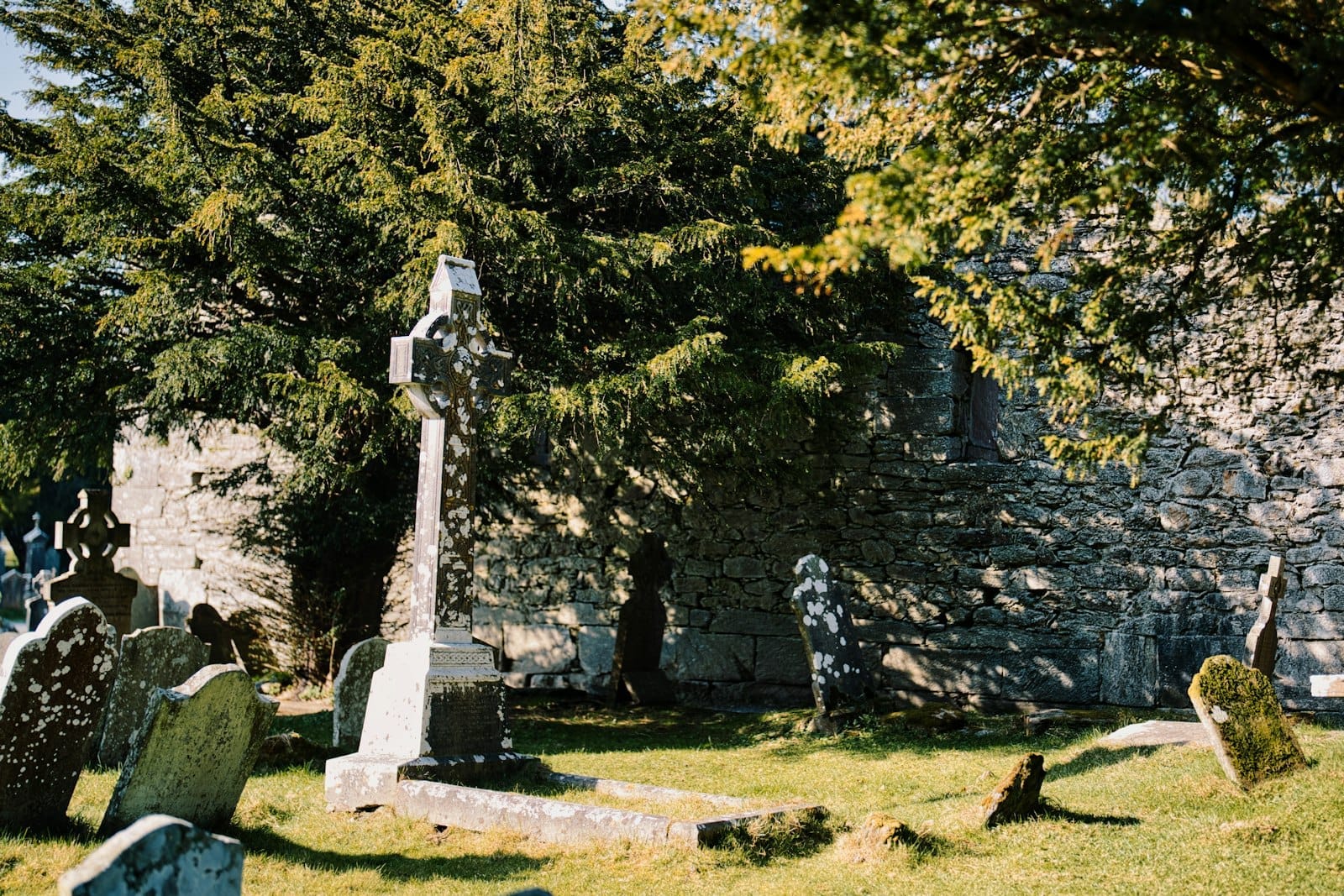
What survives today, including a near-intact round tower, cathedral ruins, several smaller churches, a decorative gateway arch, and an extensive graveyard, dates mostly from the 10th to 12th centuries. The archaeological remains have been under state care since 1875 and are now managed by the Office of Public Works (OPW) through Heritage Ireland. The site sits inside Wicklow Mountains National Park, which means the setting is as much a part of the experience as the ruins themselves.
ℹ️ Good to know
The monastic grounds are free to enter at any time. The €5 adult admission applies only to the Visitor Centre, which houses the interpretive exhibition and audiovisual presentation. You can walk around the ruins without paying, but the exhibition provides essential context.
The Round Tower and Cathedral: Understanding What You're Looking At
The round tower is the first thing most visitors photograph, and for good reason. Standing approximately 34 metres (112 feet) tall with a base circumference of around 16 metres (52 feet), it is among the best-preserved examples of its kind in Ireland. Round towers served multiple functions: they were bell towers, landmarks for approaching pilgrims, and, almost certainly, places of refuge during Viking raids. The entrance door, set several metres above ground level, is a common feature of these structures, though it was likely reached by a removable ladder rather than reflecting a defensive design alone.
The cathedral, the largest building on the site, dates from the 10th century with later additions through the 12th century. Its roofless nave and chancel are still substantial enough to convey the scale of what this community once was. At its height, Glendalough was a major centre of scholarship and monastic life, attracting students from across Ireland and continental Europe. By the 12th century it had become a pilgrimage destination of genuine regional significance.
St Kevin's Kitchen, despite the misleading nickname (it was never a kitchen), is one of the most photogenic structures on the site. It is a small Romanesque church with a miniature round tower growing from its nave roof, a form found almost nowhere else. The name comes from a chimney-like appearance that imaginative locals once associated with a cooking fire.
Tickets & tours
Hand-picked options from our booking partner. Prices are indicative; availability and final rates are confirmed when you complete your booking.
Wicklow and Glendalough day trip from Dublin with Powerscourt Gardens
From 65 €Instant confirmationFree cancellationWicklow and Glendalough day trip from Dublin with guided walk
From 75 €Instant confirmationFree cancellationWicklow, Glendalough, waterfall and sheepdog demo
From 40 €Instant confirmationFree cancellationDublin Shore Excursion in Glendalough and Dublin's city centre
From 80 €Instant confirmationFree cancellation
How the Experience Changes by Time of Day
Arriving early makes a significant difference. The site opens at 09:30 and the first hour or two, particularly on weekdays, tends to be quiet. The stone walls hold the cold of the night well into the morning, the grass is often still damp, and the valley mist that settles between the ridges can take until mid-morning to clear. In those conditions, with few other people present and soft light filtering through the trees along the graveyard, the place feels genuinely remote.
By late morning, particularly on summer weekends and bank holidays, the site becomes busy. Tour coaches arrive from Dublin from around 10:30 onward. The main graveyard path narrows between the gateway arch and the round tower, and at peak times it can feel crowded. This is not a reason to avoid Glendalough; it is simply a reason to time your visit with some care.
Late afternoon visits, particularly in summer when the site stays open until 18:00 (last admission 17:15), offer a second quiet window. Most tour groups have left by 16:00, the light turns warmer on the stone faces of the ruins, and the valley takes on a different quality. In winter, with earlier closing (17:00, last admission 16:15), the reduced hours mean this late-afternoon window is shorter.
💡 Local tip
Aim to arrive at opening (09:30) or after 15:30 to avoid the busiest periods. Midday on a summer Saturday is the most crowded time at the site.
The Visitor Centre: Worth Your Time Before You Walk the Grounds
The OPW Visitor Centre sits just inside the main entrance and is the logical first stop. The exhibition covers the history of early Christian monasticism in Ireland, St Kevin's life and the foundation of the settlement, the function of individual buildings, and the Viking raids that repeatedly disrupted the community between the 8th and 10th centuries. The audiovisual presentation runs to around 15 minutes and does a competent job of explaining why Glendalough matters in the wider context of Irish and European history.
The Visitor Centre is fully accessible for visitors with disabilities. Be aware, however, that the graveyard itself is described by Heritage Ireland as very difficult for wheelchair users, due to uneven ground and narrow paths between old headstones. The surrounding landscape, including trails toward the Upper Lake, involves variable terrain and is not universally accessible.
Beyond the Monastic City: The Upper Lake and Walking Trails
The monastic ruins cluster around the Lower Lake area, but Glendalough's second lake, the Upper Lake, sits another kilometre or so into the valley. The walk between the two is flat, follows a well-maintained path, and takes roughly 20 minutes each way. The Upper Lake is set against steeper valley walls, with waterfalls visible on the hillsides after wet weather, and it offers a quieter atmosphere than the main monastic precinct.
From the Upper Lake, several marked trails continue into the national park. The Wicklow Way long-distance route passes through this valley. Shorter loops, including the Spinc Ridge walk above the southern lakeshore, offer elevated views over both lakes and the valley floor. These require proper walking footwear: the ground is wet and rocky in sections even in dry periods. The Wicklow Mountains receive some of the highest rainfall in Leinster, and mud is a near-constant feature of the upper trails.
For those planning to combine the site with a longer walk in the national park, the Wicklow Mountains National Park page covers trail options and seasonal conditions in more detail. Glendalough works well as a half-day component of a broader Wicklow day trip.
⚠️ What to skip
Wear waterproof footwear if you plan to go beyond the main monastic precinct. The paths around the Upper Lake and onto the ridge trails are frequently waterlogged, regardless of season.
Getting There from Dublin: Practical Options
Glendalough has no direct train connection. The nearest rail station is Rathdrum, approximately 12 km away, which is not a practical walking distance. The most straightforward public option is a scheduled bus or tour service from Dublin. Several commercial tour operators run day trips from Dublin that include Glendalough as a primary or combined stop; these typically depart from central Dublin in the morning and return in the late afternoon. Check current schedules and book in advance, particularly for summer weekends.
By car, the journey from central Dublin takes approximately one hour under normal conditions via the N11/M11 southbound, then the R755 through the village of Laragh into the valley. Parking is available at the Visitor Centre car park; note that paid parking at the Visitor Centre includes one free Visitor Centre admission per vehicle, which is worth factoring into your planning. A separate car park operates at the Upper Lake, managed by Wicklow County Council rather than the OPW.
If you are planning a broader day out of the city, Glendalough pairs naturally with other Wicklow destinations. The Powerscourt Estate is roughly 30 km north of Glendalough via the R755 and R760, making a logical morning-afternoon combination by car. See our day trips from Dublin guide for full itinerary options.
Photography, Seasons, and What to Expect in Different Weather
Glendalough photographs well in almost any weather, which is fortunate given Wicklow's climate. Overcast conditions, common here, produce flat, diffused light that actually suits the grey granite of the buildings better than harsh sun. Mist in the valley adds atmosphere. Heavy rain makes the stone darker and more textured, though it also makes the graveyard path slippery and the trails beyond the main site genuinely muddy.
The round tower is most effectively photographed from the graveyard, with the cathedral ruins in the foreground. Morning light from the east hits the tower's west face; afternoon light from the west catches the east-facing cathedral entrance. The monastic gateway arch, a carved Romanesque structure that frames the path into the main enclosure, is particularly photogenic in low-angle light.
Autumn (September to November) brings colour to the valley's deciduous trees, which frame the lakes especially well. Spring (April to May) offers lower visitor numbers than summer and longer daylight than winter. Summer offers the longest hours and the fullest trail access, but also the most visitors. Winter visits are genuinely viable: the site stays open, the valley is quiet, and the absence of foliage opens up sightlines to the valley walls that summer obscures.
For seasonal planning context relevant to Dublin and the wider region, our best time to visit Dublin guide covers weather patterns, crowd levels, and event calendars across the year.
Opening Hours and Admission: The Details That Matter
The Visitor Centre operates on seasonal hours. From mid-March to 14 October, it is open daily 09:30 to 18:00 (last admission 17:15). From 15 October to mid-March, hours shorten to 09:30 to 17:00 (last admission 16:15). The site is closed from 23 to 29 December inclusive. Note that the toilets in the Visitor Centre also close at 16:15 during the winter period.
Admission to the Visitor Centre is €5 for adults, €4 for seniors and groups, €3 for children and students, and €13 for a family ticket. The monastic grounds and graveyard are open and free to walk at any time, independent of Visitor Centre hours. Verify prices on the Heritage Ireland website before your visit, as they are subject to change.
Insider Tips
- If you park in the main Visitor Centre car park and pay for parking, your ticket includes one free Visitor Centre admission. Keep your parking ticket to present at the desk.
- The graveyard contains headstones spanning many centuries, some still actively used. Walk carefully and avoid stepping on flat grave slabs, particularly the older ones near the round tower.
- The path from the main monastic site to the Upper Lake is flat and takes about 20 minutes each way. Most day-trippers skip it and go no further than the round tower, which means the Upper Lake is noticeably quieter, even on busy days.
- The site is closed 23 to 29 December, which catches some visitors out over the holiday period. Check Heritage Ireland's website for any additional closures before travelling.
- If you want the round tower to yourself in photographs, arrive at 09:30 on a weekday in shoulder season (April, May, or September). By 10:30 on summer weekends, the path between the gateway arch and the tower will have significant foot traffic.
Who Is Glendalough Monastic Site For?
- History and archaeology enthusiasts who want to understand early Christian Ireland beyond the textbook
- Hikers and walkers combining the monastic site with trails through Wicklow Mountains National Park
- Photographers looking for a site that works across seasons and weather conditions
- Families with older children (10+) who can engage with the historical context; the Visitor Centre exhibition is well-paced for this age group
- Visitors wanting a full-day escape from Dublin that combines cultural and natural interest without requiring specialist planning
Nearby Attractions
Combine your visit with:
- Abbey Theatre
Founded in 1904 by W.B. Yeats and Lady Gregory, the Abbey Theatre is Ireland's National Theatre and one of the most historically significant stages in the English-speaking world. Sitting on Lower Abbey Street in the heart of Dublin city centre, it continues to produce new Irish work alongside classic plays that shaped a nation's identity.
- Blessington Street Basin
Once the Royal George Reservoir supplying water to Dublin's north side, Blessington Street Basin is now a free public park in Phibsborough. The central lake, Tudor gate lodge, and resident wildfowl make it one of the most quietly rewarding green spaces within walking distance of Dublin city centre.
- Casino Marino
Casino Marino is an 18th-century Neo-Classical pleasure house in north Dublin, designed by Sir William Chambers for the Earl of Charlemont. Despite its compact exterior, the building conceals 16 rooms across three floors — a feat of architectural illusion that continues to astonish visitors. Access is by guided tour only, with admission from €3 for children and students and €5 for adults.
- Clontarf Promenade
Clontarf Promenade stretches 4.5 kilometres along Dublin Bay from Fairview to the Bull Wall at Dollymount, offering open sea views, public art, and a marked cycle route along much of its length. It costs nothing to visit, runs along a flat sea wall path, and delivers some of the most expansive coastal scenery accessible from Dublin city centre.