Powerscourt Estate & Gardens: Ireland's Most Impressive Landscaped Grounds
Set in the foothills of the Wicklow Mountains, Powerscourt Estate combines a restored 18th-century Palladian mansion with 47 acres of formal gardens ranked among the finest in the world. It is one of the most rewarding day trips from Dublin, especially for visitors who appreciate landscape design, history, and open air.
Quick Facts
- Location
- Enniskerry, Co. Wicklow, Ireland (approx. 30 min south of Dublin city centre)
- Getting There
- By car via N11 southbound, Exit 7 (Bray South/Enniskerry/Powerscourt) for Enniskerry; local taxis available from nearby towns
- Time Needed
- 3–5 hours for gardens and house; add 1 hour if visiting the Waterfall separately
- Cost
- Paid entry for Gardens and Waterfall (separate tickets); check powerscourt.com for current prices
- Best for
- Garden lovers, architecture enthusiasts, families, photographers, day-trippers from Dublin
- Official website
- powerscourt.com
What Powerscourt Estate Actually Is
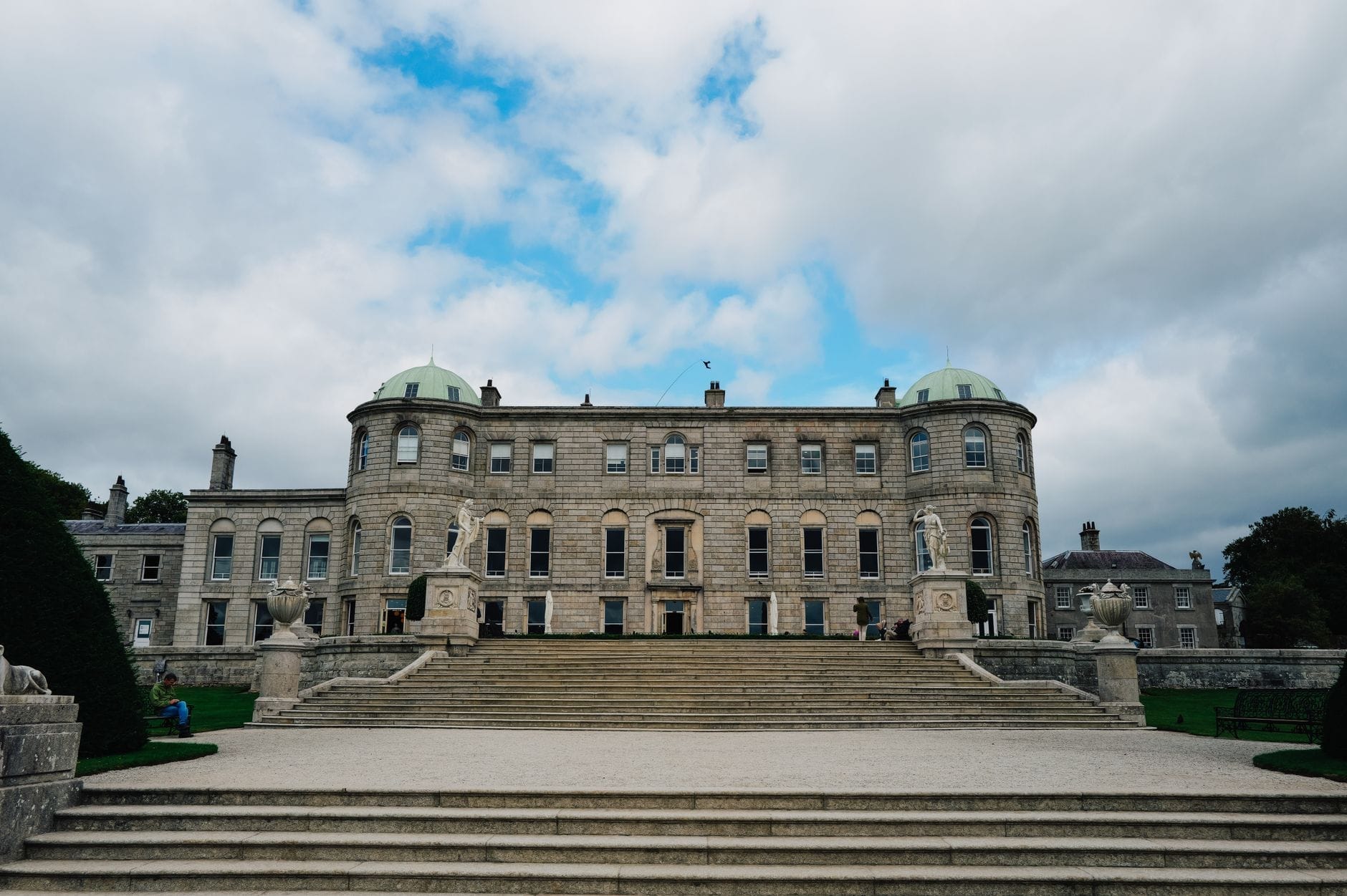
Powerscourt Estate, House & Gardens is a 1,000-acre landed estate in Enniskerry, County Wicklow, built around a restored Palladian mansion and enclosed by 47 acres of formal and informal gardens. It sits against the northern slopes of the Wicklow Mountains, with Sugar Loaf mountain forming a natural focal point at the end of the main garden axis. National Geographic has ranked Powerscourt Gardens third in its list of the world's top ten gardens, and that recognition reflects how deliberately and ambitiously the landscape was designed. This is not a park where you wander freely; it is a composed landscape with terraces, fountains, statuary, ponds, and woodland walks arranged with architectural precision.
The estate operates as a working visitor attraction with gardens open daily from 9:30 to 17:30 (last entry 30 minutes before closing; winter closing times vary and are tied to dusk), though seasonal hours can vary and should be confirmed at powerscourt.com before travel. The restored mansion houses a selection of retail shops and a café rather than room interiors open to the public, which is worth knowing before you arrive expecting a furnished country house tour. The Powerscourt Waterfall, at 121 metres the highest waterfall in Ireland, is a separate site about 6 kilometres from the main estate and requires its own admission ticket.
ℹ️ Good to know
Powerscourt Gardens and the Waterfall are ticketed separately. If you plan to visit both in one day, budget at least 5–6 hours and check that both sites are open before setting out, as seasonal closures can apply.
A Brief History of the Site
The name Powerscourt comes from the Le Poer (de Paor) family, who occupied a 13th-century medieval castle on this ground. Centuries of successive ownership shaped and reshaped the estate before the present house was commissioned in the early 18th century. The architect Richard Cassels, who also designed Leinster House in Dublin, redesigned the structure as a Palladian mansion between 1731 and 1741, creating the imposing symmetrical facade that still defines the property today.
The garden terraces, considered the estate's centrepiece, were laid out primarily in the 19th century under the direction of successive Viscount Powerscourts, drawing on Italian and Japanese garden influences. The result is a layered landscape that drops in broad stone terraces from the house toward the Triton Lake, with Sugar Loaf mountain in the distance serving as a borrowed landscape element on clear days.
In November 1974, on the very day the restored house was to be opened to the public after significant renovation work, a fire gutted the interior. The shell stood for over two decades before a second restoration programme in the 1990s converted the building into its current retail and hospitality use. The house reopened in 1996. The fire and its timing lend the estate an unusual history: a structure that survived centuries but was undone by a single afternoon, and then brought back as something different.
Tickets & tours
Hand-picked options from our booking partner. Prices are indicative; availability and final rates are confirmed when you complete your booking.
Wicklow and Glendalough day trip from Dublin with Powerscourt Gardens
From 65 €Instant confirmationFree cancellationGiant's Causeway, Dark Hedges, and Belfast Tour from Dublin
From 85 €Instant confirmationFree cancellationDublin self-guided audio tour
From 10 €Instant confirmationBird of Prey, Cliffs of Moher and Aillwee Cave from Dublin
From 201 €Instant confirmationFree cancellation
The Gardens: What You Actually See
The formal terraces begin directly behind the house and descend in broad flights of granite steps toward the Triton Lake and its Pegasus fountain. The upper terraces are framed by wrought-iron railings, stone urns, and clipped topiary. At midday in summer, the light on the pale stone and the green of the lawn is almost theatrical. By late afternoon, the same terraces carry long shadows from the trees, and the temperature drops noticeably as you move away from the south-facing house wall.
Below the main terraces, the garden opens into less formal zones. The Japanese Garden, created in the early 20th century using soil brought back from Japan as ship ballast, is one of the quieter corners of the estate and often less visited than the main terraces. The Pet Cemetery, a row of small headstones for the estate's animals dating back generations, is an odd and affecting detail that stops most visitors for a moment. The walled Pepper Pot Tower and the Italian-style statuary throughout the terraces reward close attention.
The kitchen garden and walled sections provide structure and contrast to the open parkland. In spring, the rhododendrons around the woodland walks are a significant draw. In summer, the rose garden is in full colour. Autumn brings the most atmospheric light across the terraces, with fewer visitors than the peak summer months. Winter is quieter still; the garden is open but stripped back, and the bones of the landscape design become clearest without the distraction of colour.
💡 Local tip
For the best photographs of the main axis, position yourself at the top of the first terrace, directly behind the house, in morning light. The fountain, lake, and Sugar Loaf mountain align perfectly, and the low-angle sun avoids the harsh midday wash that flattens the scene later in the day.
Visiting by Time of Day and Season
Powerscourt is busiest between 11:00 and 15:00 on weekends and public holidays, particularly in summer. Tour coaches from Dublin typically arrive mid-morning, so arriving at 9:30 when the gates open, or after 15:30, gives you a noticeably quieter experience on the terraces. Weekday visits in spring and early autumn are the least crowded.
Weather matters more here than at most attractions. Rain narrows the experience significantly: the terraces become slippery on the stone steps, and the view toward Sugar Loaf disappears into cloud. The gardens have no covered sections worth sheltering in, so a wet day reduces Powerscourt from a three-hour visit to a forty-minute one. Clear days in May, early June, and September tend to offer the most reliable combination of light, colour, and visibility. Checking the forecast for the Wicklow foothills specifically, rather than Dublin city, is worth the extra step.
The café inside the mansion is a reasonable option for a break, though it becomes crowded during the midday peak. The formal restaurant has table service and a more extensive menu. If you prefer to eat outside, there are lawn areas near the café exit where seating is available in dry weather.
Getting There from Dublin
By car, the estate is just 30 minutes from Dublin under normal traffic conditions. Take the N11 southbound toward Wexford, leave at Exit 7 (Bray South/Enniskerry/Powerscourt), and follow the signed route via Enniskerry village. In the village, take the road to the left of the clock tower, continue up the hill for around 600 metres, and the estate entrance is on the right, opposite the church. Parking is available on site.
Organized day trips from Dublin that include Powerscourt are widely available and offer a practical alternative for visitors without a car. The estate's own website lists transportation partners. If you are combining Powerscourt with other Wicklow sites, you may want to consult a broader day trips from Dublin guide to plan the routing efficiently, as the Wicklow Mountains area rewards a structured approach.
The estate notes accessibility by road and rail, with local taxis available from nearby Enniskerry and Bray. Bray has a DART station connecting directly to Dublin city centre. From Bray, a taxi to the estate is a short ride; there is currently no scheduled public bus service running directly to the estate gates. Anyone relying on public transport should confirm current options before travelling.
⚠️ What to skip
Dogs are not permitted in the Gardens (guide dogs excepted). They are welcome at the Waterfall site and along the estate avenue on a lead. Plan accordingly if you are travelling with a dog.
The Palladian House: What You Can and Cannot See
The exterior of Powerscourt House is among the most photogenic Georgian-era facades in Ireland. The central block with its curved wings, the arched entrance hall, and the decorative detailing on the stonework all reflect Richard Cassels's skill at adapting the Palladian grammar to the Irish landscape. The house looks most impressive from the garden terraces below, where the full sweep of its frontage reads against the sky.
Inside, the post-fire restoration converted the building for commercial use rather than period restoration. The interior is now occupied by a collection of shops including interiors, garden accessories, and lifestyle retail, along with a ballroom available for events. If you arrive expecting to tour furnished period rooms, you will be disappointed. The interior is pleasant but essentially a retail environment. The value of the house at Powerscourt is its exterior form and its setting within the wider garden composition.
Powerscourt offers a different kind of Georgian experience from the formal house museums in Dublin city. For context on the period architecture, the Georgian Dublin architecture guide covers the broader tradition that Cassels and his contemporaries established across Ireland.
Who Should Reconsider This Visit
Powerscourt is genuinely impressive, but it is not the right stop for every traveller. The garden terraces involve uneven stone steps and slopes; visitors with significant mobility difficulties will find large sections inaccessible, and the wheelchair-accessible routes cover only part of the overall grounds. The estate's official site provides accessibility detail that should be reviewed in advance.
Visitors with a tight one-day Dublin itinerary may find that the 30-minute drive each way, combined with 3 to 4 hours on site, takes more time than they can spare. If your primary interest is Irish history rather than landscape or architecture, attractions closer to Dublin city centre may offer more of what you are looking for. The estate is not a wilderness experience; it is a formally composed landscape, and visitors expecting wild Wicklow scenery should note that the surrounding national park and mountain trails offer something entirely different.
If you are planning a fuller exploration of the Wicklow area, Wicklow Mountains National Park offers the wilder, more open landscape that contrasts with Powerscourt's controlled formality.
Insider Tips
- Arrive at 9:30 when the gates open on weekdays: the terraces are often empty for the first hour, and the morning light on the stonework and fountain is significantly better than the flat midday light.
- The Japanese Garden is consistently overlooked by visitors focused on the main terraces. It is worth the short detour, particularly in late spring when the planting is at its peak.
- The Powerscourt Waterfall requires a separate ticket and a 6-kilometre drive from the main estate. It is best visited in autumn or after heavy rain when the flow is strongest; in a dry summer it can be underwhelming.
- If visiting on a day with uncertain weather, check the Met Éireann forecast specifically for Enniskerry or the Wicklow foothills. Dublin city forecasts regularly underestimate cloud and rain at this slightly elevated location.
- The garden café becomes very crowded between 12:00 and 14:00. Either eat before 11:30 or wait until mid-afternoon to get a table without queuing.
Who Is Powerscourt Estate & Gardens For?
- Garden and landscape design enthusiasts looking for one of Europe's most composed formal gardens
- Architecture visitors interested in 18th-century Palladian design in an Irish context
- Families with older children who can manage the terrace steps and benefit from the open parkland space
- Photographers seeking the classic Wicklow mountain backdrop with foreground garden structure
- Day-trippers from Dublin wanting a full outdoor experience within 30 minutes of the city
Nearby Attractions
Combine your visit with:
- Abbey Theatre
Founded in 1904 by W.B. Yeats and Lady Gregory, the Abbey Theatre is Ireland's National Theatre and one of the most historically significant stages in the English-speaking world. Sitting on Lower Abbey Street in the heart of Dublin city centre, it continues to produce new Irish work alongside classic plays that shaped a nation's identity.
- Blessington Street Basin
Once the Royal George Reservoir supplying water to Dublin's north side, Blessington Street Basin is now a free public park in Phibsborough. The central lake, Tudor gate lodge, and resident wildfowl make it one of the most quietly rewarding green spaces within walking distance of Dublin city centre.
- Casino Marino
Casino Marino is an 18th-century Neo-Classical pleasure house in north Dublin, designed by Sir William Chambers for the Earl of Charlemont. Despite its compact exterior, the building conceals 16 rooms across three floors — a feat of architectural illusion that continues to astonish visitors. Access is by guided tour only, with admission from €3 for children and students and €5 for adults.
- Clontarf Promenade
Clontarf Promenade stretches 4.5 kilometres along Dublin Bay from Fairview to the Bull Wall at Dollymount, offering open sea views, public art, and a marked cycle route along much of its length. It costs nothing to visit, runs along a flat sea wall path, and delivers some of the most expansive coastal scenery accessible from Dublin city centre.