Dalkey Castle & Heritage Centre: Medieval History on Dublin's Coastal Edge
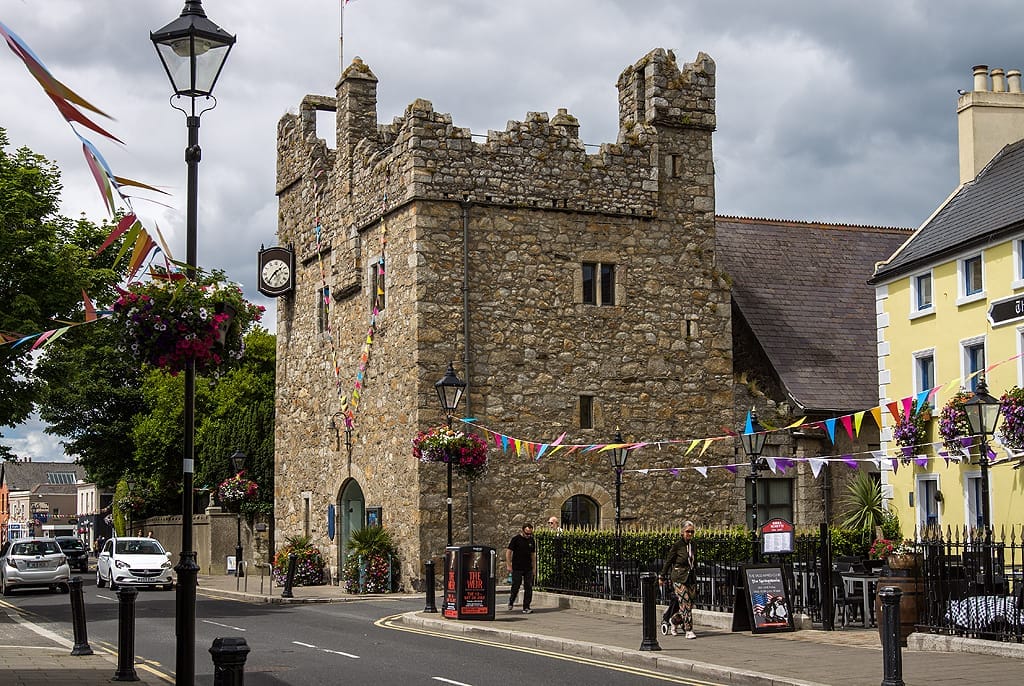
Dalkey Castle & Heritage Centre brings together a 14th-century fortified townhouse, a 10th-century church, and an early medieval graveyard, all within a short walk of the DART station. Guided tours run daily except Tuesday, and the surrounding village is worth at least an afternoon of your time.
Quick Facts
- Location
- Castle Street, Dalkey, Co. Dublin, A96 DE61
- Getting There
- DART to Dalkey Station, approx. 30 min from Pearse or Connolly
- Time Needed
- 1.5 to 2.5 hours for the tour and grounds; allow extra for the village
- Cost
- Adult €18 / Senior & Student €17 / Child (under 12) €12 — book online in advance
- Best for
- History enthusiasts, families with older children, day-trippers combining heritage with the coast
- Official website
- dalkeycastle.com
What Dalkey Castle Actually Is
Dalkey Castle & Heritage Centre is a medieval fortified townhouse, classified as an Irish National Monument, that has been operating as a public heritage attraction since 1998. The castle itself dates to around 1390, when merchant families in Dalkey built a series of fortified warehouses to protect valuable goods arriving by sea before they could be transported onward to Dublin city centre. Dalkey was, at that time, one of the most important ports on the Irish east coast, and the castle is a surviving remnant of that commercial and defensive infrastructure.
The site is more layered than a single castle visit. Immediately adjacent to the fortified townhouse is St Begnet's Church and graveyard, with origins traced to the early medieval period (the church itself is typically dated to the 10th century), making it one of the older ecclesiastical sites in the greater Dublin area. A modern heritage centre building connects these elements and houses interpretive exhibitions, period rooms, and the facilities needed to receive visitors year-round. Together, the three components span well over a thousand years of continuous human activity on this small plot of land in a quiet coastal town.
💡 Local tip
Tours should ideally be booked online in advance. Walk-ins are welcome but are not guaranteed a place, particularly on weekends and during the summer months. Check the official website for the current tour schedule before you travel.
Getting There: The DART Makes It Easy
The straightforward approach is the DART, Dublin's coastal rail service. From Pearse Street or Connolly Station in the city centre, the journey to Dalkey takes around 30 minutes and runs frequently. Dalkey Station is a short, flat walk from Castle Street. The route passes through Dún Laoghaire, which is worth noting if you want to combine this trip with time by the water. The DART and Dublin's public transport network run on the Leap Card system, which saves money over single-journey fares.
Dalkey is also reachable by bus from the city centre, though the DART is faster and more direct. Drivers will find parking in the village, but Dalkey's streets are narrow and fill up on sunny weekends when the coastal crowd is at its largest. Public transport is the sensible choice.
Tickets & tours
Hand-picked options from our booking partner. Prices are indicative; availability and final rates are confirmed when you complete your booking.
Blarney, Rock of Cashel and Cahir Castles Tour from Dublin
From 85 €Instant confirmationFree cancellationGiants Causeway, Dunluce castle, Dark Hedges tour from Dublin
From 71 €Instant confirmationFree cancellationGiant's Causeway, Dark Hedges, and Belfast Tour from Dublin
From 85 €Instant confirmationFree cancellationDublin self-guided audio tour
From 10 €Instant confirmation
The Guided Tour: What to Expect Inside
Entry to Dalkey Castle is by guided tour only, which keeps group sizes manageable and means the experience is structured rather than self-directed. Tours run at fixed times throughout the day; the schedule expands during the summer season (April to October) with extra 15:30 and 16:30 slots added in the afternoon. Tuesday is the one day the castle does not operate, so plan accordingly.
Tours typically begin in the heritage centre and move through the medieval building, covering the history of the Dalkey merchants, the function of the fortified townhouse, and the architectural details that distinguish this type of defensive structure from a traditional castle. The interior spaces are compact and stone-floored, with the kind of cool, slightly damp air that stone buildings hold regardless of season. Lighting is low in places, which adds atmosphere but is worth knowing if you are visiting with young children.
The battlements at the top of the castle offer views across the rooftops of Dalkey toward the sea. This section is not wheelchair accessible. The heritage centre building, however, is accessible, and the ground-floor exhibitions can be experienced independently of the upper castle levels.
ℹ️ Good to know
Winter and shoulder seasons (January to May and September to December): tours run at 10:00, 11:30, 13:30, 14:45, and 16:00 on most weekdays, with weekend and Bank Holiday Mondays starting at 10:30 for the first tour. Summer season (June to August): weekday tours run at 10:00, 11:30, 13:30, 14:30, 15:30, and 16:30, with Saturday, Sunday, and Bank Holiday Monday start times shifting to 10:30 for the first tour.
The St Begnet's Church and Graveyard: The Part Most People Overlook
The graveyard of St Begnet's Church, which sits directly beside the castle, is older than the castle by several centuries. The church itself has roots going back to around 700 AD, and the site takes its name from St Begnet, an early Irish saint associated with the area. The graveyard contains headstones spanning many generations, and the ruined church structure has that characteristic Irish quality of looking both ancient and completely at home in its surroundings.
Visiting in the morning, before the first tour fills up, is the best time to appreciate this part of the site without distraction. The light in the graveyard in early spring, when it is cool and the tourists are few, has a stillness to it that the summer crowds never quite allow. If you are interested in ecclesiastical architecture or early Irish Christian history, give yourself time here rather than treating it as a footnote to the castle visit.
How the Experience Changes by Time of Day and Season
The first tour of the morning is consistently quieter than the midday and early afternoon slots. For the 10:00 or 11:30 start on a weekday, group sizes tend to be smaller and there is less waiting between sections of the tour. Midday tours in July and August fill quickly, particularly with families and visitors combining the castle with a day on the coast.
Autumn and early spring visits have a particular quality. Dalkey is a working village, not a tourist set-piece, and outside of the peak summer months the streets around the castle are quieter. The weather is less reliable, but the payoff is a more local atmosphere and a noticeably more relaxed tour. Bring a waterproof layer regardless of season. The castle battlements catch the wind off the Irish Sea, and even a warm afternoon in June can feel considerably cooler at the top.
If you are planning a longer stay in the area, the Dalkey and Killiney coastline offers a full day's worth of walking, with Killiney Hill Park nearby and the harbour a short stroll from the castle. Combining the heritage centre with a walk along the cliff is one of the better ways to spend a clear day within easy reach of the city.
Historical Context: Why Dalkey Mattered
To understand why a small coastal town has a cluster of fortified medieval buildings, it helps to know that Dalkey's natural harbour made it the effective deep-water port for Dublin during the medieval period. Dublin's own harbour was too shallow for the larger vessels of the time, so goods were offloaded at Dalkey and held in fortified warehouses before being moved overland or by smaller boat into the city. At its peak, Dalkey had seven castles, of which Dalkey Castle is the best preserved surviving example.
This commercial significance declined as Dublin's own port infrastructure improved, but the architecture left behind gives a clearer picture of medieval Irish merchant life than many more famous sites in the city centre. For visitors interested in this period, the castle works well alongside sites like Dublin Castle and Christ Church Cathedral, which between them trace the administrative and religious history of the same era.
Photography and Practical Notes
The exterior of the castle, particularly the section facing Castle Street with the stone arch and graveyard wall, photographs well in the morning when the light comes from the east. The interior spaces are dark; a phone camera will struggle in the lower rooms, and flash is generally not permitted. The battlements give a workable aerial view of the castle roof and the graveyard below, though the framing is constrained by the parapet.
Wear flat, sturdy shoes. The internal stairs are stone and uneven in places, and the graveyard ground is irregular. There is no specific dress code requirement for the site, but comfort over style is genuinely the right call here.
⚠️ What to skip
The castle battlements are not wheelchair accessible. If full access to the upper levels is important to your visit, contact the heritage centre directly before booking.
Is It Worth the Trip from Dublin City Centre?
For visitors with a serious interest in medieval Irish history, yes without question. The tour is well-structured, the site is genuinely old and well preserved, and the surrounding village has enough character to make the journey feel like more than a single-attraction excursion. Dalkey has a number of good pubs and cafes on Castle Street and the surrounding lanes, making it easy to turn this into a half-day or full-day outing.
For visitors primarily focused on Dublin's city-centre offerings, this requires deliberate planning. It is not something you can fold into a passing hour. But if you are already consulting a day trips from Dublin guide or looking to move beyond the standard city-centre circuit, Dalkey Castle offers genuine historical depth rather than a polished, packaged experience.
Who might reasonably skip it: visitors with very limited time in Dublin, those who find guided tours frustrating rather than illuminating, and anyone primarily interested in contemporary culture or nightlife. The castle is not relevant to those itineraries, and there is no shame in acknowledging that.
Insider Tips
- Book the 10:00 weekday tour for the smallest group sizes and quietest experience, particularly outside of June to August.
- The village of Dalkey is compact enough to explore on foot in under an hour. The harbour is a 10-minute walk from the castle and worth the detour, especially on a clear day.
- If you are combining this with Killiney Hill Park, wear hiking footwear from the start. The walk up from the village is short but steep in places.
- Tuesday is the one day Dalkey Castle does not operate. More than one traveller has arrived by DART to find the doors closed.
- The heritage centre has a small gift shop with locally themed items. It is more restrained than average tourist shops and carries some titles on Dalkey's history and Dublin coastal heritage that are harder to find elsewhere.
Who Is Dalkey Castle & Heritage Centre For?
- Visitors with a serious interest in medieval Irish history and architecture
- Families with children aged 8 and older who respond well to living history formats
- DART day-trippers looking to combine heritage with coastal scenery
- Travellers who have already covered the main city-centre attractions and want depth over spectacle
- Anyone researching the ecclesiastical or commercial history of medieval Dublin's hinterland
Nearby Attractions
Other things to see while in Dalkey & Killiney:
- Killiney Hill Park & Viewpoint
Killiney Hill Park rises 153 metres above Dublin Bay on the bay's southern side, offering some of the most dramatic viewpoints in the greater Dublin area. With woodland trails, a Victorian obelisk, and a curious stone pyramid, it rewards walkers who make the climb from Killiney DART station. Admission is free, the terrain is genuine, and the views on a clear day are genuinely hard to beat.