Dublin City Gallery The Hugh Lane: Georgian Grandeur, World-Class Modern Art, Free Entry
Housed in the 1763 Charlemont House on Parnell Square North, Dublin City Gallery The Hugh Lane is Ireland's premier modern art museum. The Francis Bacon Studio reconstruction is one of Europe's most extraordinary art installations, and the collection spans Impressionism to contemporary Irish art.
Quick Facts
- Location
- Charlemont House, Parnell Square North, Dublin 1
- Getting There
- Parnell Square North (check current transit before visiting)
- Time Needed
- 1.5 to 2.5 hours
- Cost
- Free admission
- Best for
- Art lovers, architecture fans, rainy-day escapes, solo travellers
What Is Dublin City Gallery The Hugh Lane?
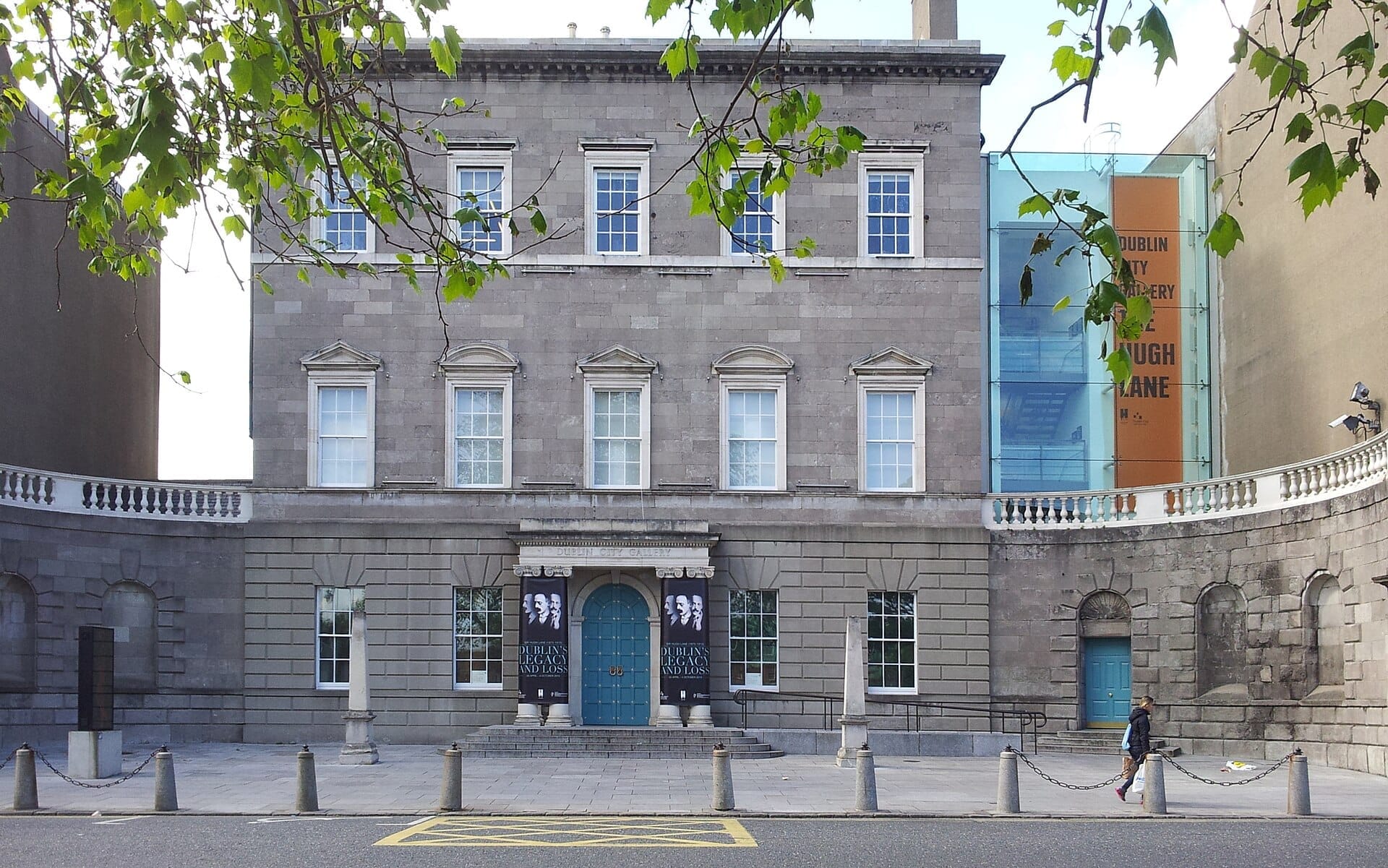
Dublin City Gallery The Hugh Lane is Ireland's municipal gallery of modern art. Founded by Sir Hugh Lane, a Cork-born art dealer with an eye for what European modernism was becoming, the gallery occupies Charlemont House, one of the finest Georgian townhouses in Dublin. The building was designed in 1763 by Sir William Chambers, the same architect behind Somerset House in London, and its stone facade and restrained classical proportions feel deliberately monumental on Parnell Square North.
What sets the Hugh Lane apart from Dublin's other free museums is the sheer range of what it holds: Impressionist works by Monet, Degas, and Renoir; a significant collection of stained glass by Harry Clarke; rotating exhibitions of contemporary Irish and international art; and, most remarkably, the complete reconstruction of Francis Bacon's London studio, moved from 7 Reece Mews, South Kensington, and reinstalled exactly as Bacon left it at his death in 1992. The studio alone justifies the visit.
💡 Local tip
The gallery is temporarily closed for refurbishment. Check the official website before planning a visit.
The Building: Charlemont House and Its Setting
Charlemont House dates to 1763 and was originally the town residence of the Earl of Charlemont, one of the leading aristocratic patrons of 18th-century Ireland. Sir William Chambers gave it a sober, elegant facade that stands in deliberate contrast to the more decorative Georgian terraces elsewhere in the city. When Dublin Corporation acquired the building in 1930 to serve as the permanent home of the gallery, it preserved much of the original interior layout, including the proportioned entrance hall and the main staircase.
The gallery sits on the north side of Parnell Square, directly opposite the Garden of Remembrance. This juxtaposition is worth pausing over: Ireland's memorial to those who died in the struggle for independence faces a building that houses some of the finest European painting of the late 19th century, collected largely by a man who wanted Dublin to compete with Paris and London. The architectural dialogue between the two is one of the more quietly compelling things about this corner of the city.
Inside, the gallery has been sensitively extended over the decades. The original Georgian rooms now connect to purpose-built gallery spaces that handle larger contemporary works without feeling like an afterthought. Natural light floods the upper floor rooms in the morning, making the Impressionist works especially rewarding before noon.
Tickets & tours
Hand-picked options from our booking partner. Prices are indicative; availability and final rates are confirmed when you complete your booking.
Giant's Causeway, Dark Hedges, and Belfast Tour from Dublin
From 85 €Instant confirmationFree cancellationDublin self-guided audio tour
From 10 €Instant confirmationBird of Prey, Cliffs of Moher and Aillwee Cave from Dublin
From 201 €Instant confirmationFree cancellationGame of Thrones Studio tour with return transfer from Dublin
From 63 €Instant confirmationFree cancellation
The Francis Bacon Studio: The Single Most Compelling Room
When Francis Bacon died in Madrid in 1992, his studio at 7 Reece Mews in South Kensington was found to contain thousands of items, including paint tubes squeezed flat, dust-caked photographs, slashed canvases, torn pages from monographs, empty wine bottles, and layers of paint spatters that had accumulated over decades. His stepsister gave the entire contents to the Hugh Lane in 1998, and the gallery undertook a painstaking archaeological cataloguing and reconstruction of the space.
The studio is now displayed behind glass on the ground floor. You stand at the threshold and look into a room that is simultaneously chaotic and intimate. Every object is where Bacon left it. The floor is thick with decades of hardened paint. The walls are covered with the photographs, postcards, and torn reproductions that fed his visual imagination. It is one of the few places in any museum where you are genuinely looking at a working artist's mind preserved in three dimensions rather than framed on a wall.
Adjacent to the studio is an archive room where visitors can learn more about the reconstruction through catalogue materials and digital displays. If you have any interest in Bacon's process or in the relationship between a painter's source material and finished work, this archive can absorb an hour on its own. It is a resource that very few galleries in Europe can match.
The Permanent Collection: From Impressionism to Harry Clarke
Hugh Lane's original bequest included works by Monet, Degas, Manet, Renoir, and Corot, acquired at a moment when these painters were still considered radical purchases for a municipal gallery. Many of these works were at the centre of a long legal dispute between Ireland and the United Kingdom following Lane's death on the Lusitania in 1915. A codicil to his will, leaving the paintings to Dublin rather than London's National Gallery, was unsigned, and the resulting controversy kept the collection split between the two cities for decades. Since 1993, the paintings rotate between Dublin and London on a structured sharing agreement, so a portion of the Lane Bequest works may be in London during your visit. Check the gallery's programme before you go if specific Impressionist paintings are your primary reason for visiting.
The stained glass collection is less well known than the Impressionist works but arguably more unique. Harry Clarke's work is some of the finest Art Nouveau stained glass produced anywhere in Europe, and the Hugh Lane holds a significant number of panels. If you have visited the National Museum of Ireland or the Chester Beatty Library and found yourself drawn to intricate decorative arts, the Clarke panels reward close, slow attention.
The contemporary Irish collection is strong and regularly refreshed. Works by Sean Scully, Cecily Brown, and a rotating cast of younger Irish artists occupy the newer gallery spaces. The quality is consistent, and unlike some national collections that feel frozen in time, the Hugh Lane actively acquires and commissions new work.
When to Visit and What to Expect
The gallery is open Tuesday through Sunday and closed on Mondays. It attracts a mixed crowd: art students sketching in the Impressionist rooms in the mornings, school groups moving through in structured visits around mid-morning, and a quieter stream of independent visitors through the afternoon. Weekend afternoons in summer can feel crowded in the Bacon Studio corridor, where the viewing space is narrow and groups inevitably create bottlenecks.
The best light for the Impressionist works comes in the morning when sunlight enters the upper-floor rooms from the north and east. The contemporary galleries are lit artificially and can be visited at any time without concern. If you are visiting in winter, the grey Dublin light actually suits the building's Georgian stonework, and the indoor warmth makes the experience feel more sheltered than exposed.
ℹ️ Good to know
The gallery sits directly opposite the Garden of Remembrance on Parnell Square North.
Parnell Square is a 10 to 15-minute walk north from the Grafton Street area or a short walk from O'Connell Street. The Parnell stop on the Luas Green Line brings you to within a few minutes' walk. From Temple Bar, the walk north across the Ha'penny Bridge and up O'Connell Street takes around 20 minutes on foot.
Accessibility and Practical Notes
When open, the gallery is described as fully wheelchair accessible, with step-free routes throughout the main spaces and designated disability parking directly outside on Parnell Square North. The building's Georgian layout means some original doorways are narrower than modern purpose-built galleries, but the principal rooms and the Bacon Studio are all accessible.
Admission is free when the gallery is open. Some temporary exhibitions and evening events may carry a separate charge, but the permanent collection including the Bacon Studio is normally free. Check the official website for current café and bookshop availability. The bookshop in particular carries Irish art criticism, Bacon scholarship, and Harry Clarke monographs that are difficult to find elsewhere.
⚠️ What to skip
The Bacon Studio viewing area is narrow and can become congested when tour groups arrive. If you are visiting with young children or have mobility considerations, aim to visit the studio early in the morning or on a weekday afternoon.
Is the Hugh Lane Worth Your Time?
It is worth being direct: the Hugh Lane is not the largest or most encyclopedic art museum in Dublin. It does not have the breadth of the National Gallery of Ireland's Old Masters collection, and it does not have the scale of a Tate Modern or a Centre Pompidou. If you are visiting Dublin for three days and have only one museum slot, the choice between the Hugh Lane and the National Gallery depends entirely on whether you prefer modern art or the broader European tradition.
What the Hugh Lane has that no other gallery in Ireland can offer is the Bacon Studio and the Lane Bequest Impressionists, combined in a Georgian house on a square that feels genuinely removed from the tourist density of central Dublin. It is not on the standard trail that runs between the Guinness Storehouse and Trinity College. That distance is actually an advantage. Visitors who make the deliberate choice to come here tend to stay longer, engage more carefully, and leave with a more specific memory of Dublin than those who complete the standard circuit.
If you have no particular interest in modern art and are not drawn to Bacon's work, this may not be the priority. But for anyone who cares about Impressionism, 20th-century painting, stained glass, or the history of how a small capital city built a world-class collection through ambition and legal controversy, the Hugh Lane delivers consistently.
Insider Tips
- The Francis Bacon Studio archive terminals allow you to search and view all 7,500 catalogued items from the studio. Very few visitors use them. If you have 20 extra minutes, they reveal more about Bacon's visual thinking than any single painting could.
- Check the gallery's programme page before visiting. Free lunchtime concerts are occasionally held in the main hall, and the gallery runs evening talks and curator tours that are open to the public, usually at no charge.
- The bookshop stocks Harry Clarke monographs and Bacon scholarship titles that are difficult to find in general Dublin bookshops. If you are interested in either, budget time and a few euros here.
- Parnell Square is undergoing development in the area around the gallery. Street-level access and parking availability can vary, so if you are arriving by car, check current conditions before your visit.
- The gallery's upper-floor rooms facing south and east receive the best natural light in the morning. If the Impressionist works are your priority, arrive within an hour of opening on a clear day.
Who Is Dublin City Gallery The Hugh Lane For?
- Art lovers with a specific interest in Impressionism or 20th-century painting
- Anyone wanting to understand Francis Bacon's process beyond the finished canvases
- Visitors looking for a free, unhurried cultural experience away from the main tourist circuit
- Architecture and heritage enthusiasts drawn to Georgian Dublin
- Travellers on tight budgets who want serious museum quality without admission costs
Nearby Attractions
Combine your visit with:
- Abbey Theatre
Founded in 1904 by W.B. Yeats and Lady Gregory, the Abbey Theatre is Ireland's National Theatre and one of the most historically significant stages in the English-speaking world. Sitting on Lower Abbey Street in the heart of Dublin city centre, it continues to produce new Irish work alongside classic plays that shaped a nation's identity.
- Blessington Street Basin
Once the Royal George Reservoir supplying water to Dublin's north side, Blessington Street Basin is now a free public park in Phibsborough. The central lake, Tudor gate lodge, and resident wildfowl make it one of the most quietly rewarding green spaces within walking distance of Dublin city centre.
- Casino Marino
Casino Marino is an 18th-century Neo-Classical pleasure house in north Dublin, designed by Sir William Chambers for the Earl of Charlemont. Despite its compact exterior, the building conceals 16 rooms across three floors — a feat of architectural illusion that continues to astonish visitors. Access is by guided tour only, with admission from €3 for children and students and €5 for adults.
- Clontarf Promenade
Clontarf Promenade stretches 4.5 kilometres along Dublin Bay from Fairview to the Bull Wall at Dollymount, offering open sea views, public art, and a marked cycle route along much of its length. It costs nothing to visit, runs along a flat sea wall path, and delivers some of the most expansive coastal scenery accessible from Dublin city centre.