Phoenix Park, Dublin: What to Expect in Europe's Largest Enclosed Capital Park
Covering roughly 707 hectares on Dublin's western edge, Phoenix Park is one of the largest enclosed public parks in any European capital city. Free to enter around the clock, it contains wild fallow deer, the Irish President's residence, Dublin Zoo, and centuries of layered history. This guide tells you how to make the most of it.
Quick Facts
- Location
- Phoenix Park, Dublin 8 (D20 A402) — roughly 2–4 km west of Dublin city centre, north of the River Liffey
- Getting There
- Several Dublin Bus routes serve the Parkgate Street entrance; the park is also accessible by bicycle or a 30-40 min walk from the city centre. Check Transport for Ireland (TFI) for current route numbers.
- Time Needed
- 2–5 hours for a relaxed visit; a full day if you include Dublin Zoo and the Visitor Centre
- Cost
- Free to enter. Separate paid admission for Dublin Zoo and some guided experiences — verify current prices on site.
- Best for
- Families, joggers, wildlife spotters, history enthusiasts, and anyone needing a break from the city's pace
- Official website
- www.phoenixpark.ie
What Phoenix Park Actually Is
Phoenix Park, known in Irish as Páirc an Fhionnuisce, is a 707-hectare enclosed public park sitting about 2 to 4 kilometres west of Dublin city centre. To put that in perspective: it is larger than New York's Central Park and London's Hyde Park combined. The park is encircled by approximately 11 kilometres of perimeter wall, and within that boundary you will find wild fallow deer, the official residence of Ireland's President, one of Europe's oldest zoos, a Victorian walled garden, and a 17th-century hunting ground that became one of the city's great democratic open spaces.
The park is free to enter and open 24 hours a day. The main gates on Parkgate Street and Castleknock Gate stay open continuously; smaller side gates generally close around 22:45, so if you arrive late, use one of the main entrances. This is not a manicured ornamental garden designed for passive viewing. It is a genuinely large, semi-wild space that rewards curiosity and walking.
💡 Local tip
Wear walking shoes. The park's internal roads are useful for cycling, but the most interesting parts — the deer fields, the woodland edges, the Magazine Fort path — involve uneven ground, especially after rain.
A Brief History Worth Knowing
The park was established in the 1660s as a royal deer-hunting enclosure, and the deer that graze here today are direct descendants of the original herd introduced at that time. It was opened to the public in 1747, which makes it one of the earlier large urban parks in Europe to be given over to general public use.
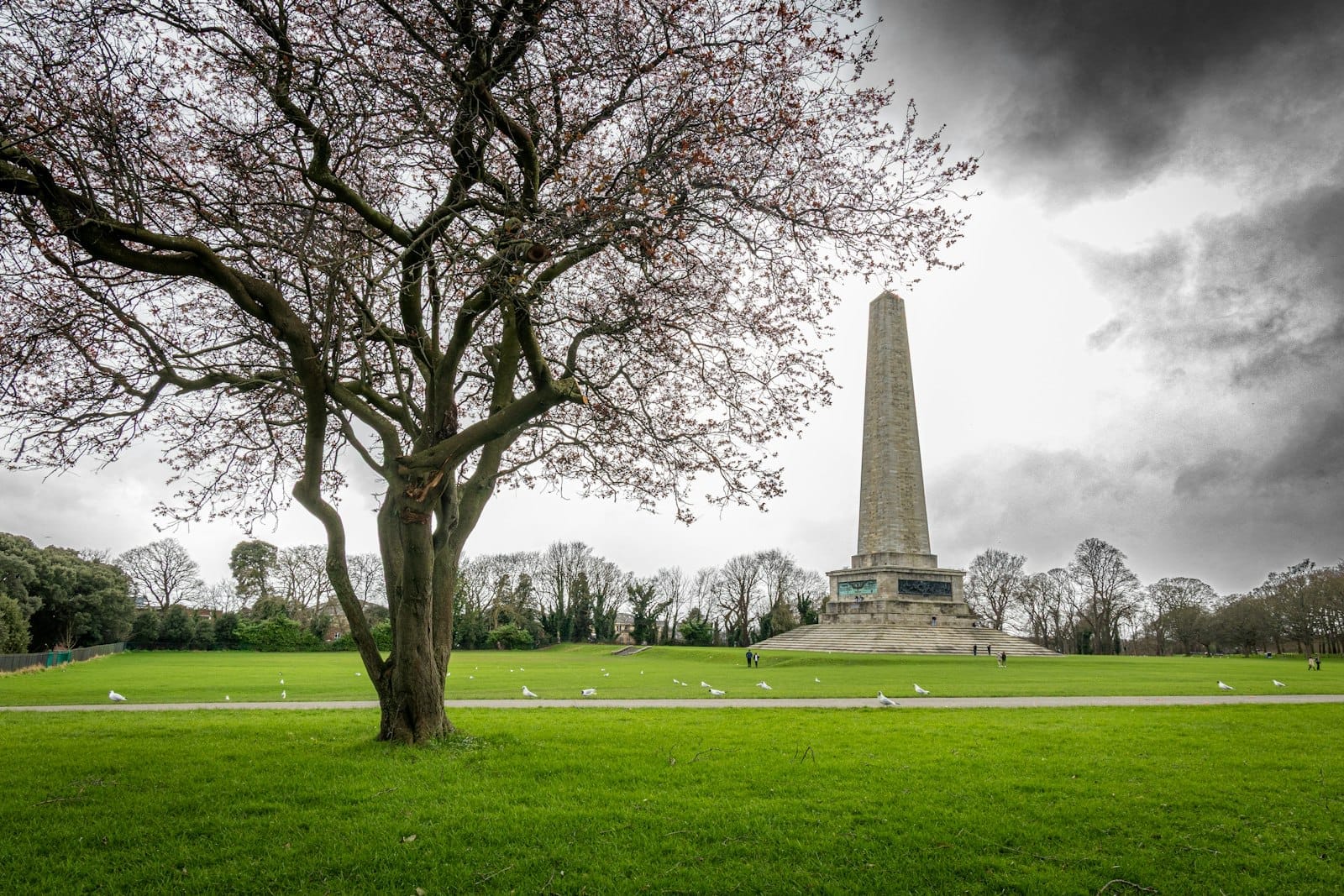
The name 'Phoenix' has nothing to do with the mythological bird. It is an anglicisation of the Irish 'Fionn Uisce'. The tall monument near the centre of the park, known as the Phoenix Monument, was erected in 1747 and features a phoenix bird on its column.
The park has witnessed some of the most significant moments in Irish political history. Lord Frederick Cavendish and Thomas Henry Burke were assassinated here in 1882 in an event known as the Phoenix Park Murders. Pope John Paul II celebrated Mass in the park in 1979 before a crowd estimated at over one million people. It remains a site where Irish public memory and everyday life sit in quiet proximity.
For deeper historical context around Dublin's parks and public spaces, the Georgian Dublin architecture guide explains how the city's open spaces were shaped during the same era the park took its current form.
Tickets & tours
Hand-picked options from our booking partner. Prices are indicative; availability and final rates are confirmed when you complete your booking.
Giant's Causeway, Dark Hedges, and Belfast Tour from Dublin
From 85 €Instant confirmationFree cancellationDublin self-guided audio tour
From 10 €Instant confirmationBird of Prey, Cliffs of Moher and Aillwee Cave from Dublin
From 201 €Instant confirmationFree cancellationGame of Thrones Studio tour with return transfer from Dublin
From 63 €Instant confirmationFree cancellation
What You Will Find Inside
The Deer
Around 600 fallow deer roam the park freely. They are wild animals and not fenced into a specific zone, so encounters are unscripted. Keep a respectful distance.
Áras an Uachtaráin
The official residence of the President of Ireland, Áras an Uachtaráin, stands within the park and is open for free guided tours on Saturdays, subject to availability. The house dates to 1751 and has served as the President's home since 1938. Tours are issued on a first-come, first-served basis from the Phoenix Park Visitor Centre on Saturday mornings — arrive early in summer or you may miss out. The exterior and surrounding gardens are visible from the park roads even when tours are not running.
Dublin Zoo
Founded in 1831, Dublin Zoo occupies the northwestern edge of the park and is a separate, ticketed attraction. It is one of the oldest zoos in the world and remains one of Ireland's most visited family destinations. Expect significant queues at peak summer weekends. Book tickets online in advance if you are visiting with children during school holidays. The zoo is worth a half-day visit on its own — combining it with a full park walk in a single visit is ambitious unless you are happy with a shorter route.
The Phoenix Park Visitor Centre and the People's Gardens
The Visitor Centre is located near the Parkgate Street entrance and provides a solid orientation to the park's history and wildlife. It is housed in the Victorian-era buildings near Ashtown Castle, a small tower house that has stood on the site since the 17th century. Entry to the Visitor Centre is free.
Just inside the Parkgate Street entrance sits the People's Gardens, laid out in 1864. It offers a quiet, structured corner that contrasts with the open grassland beyond.
Chesterfield Avenue and the Magazine Fort
The main road running through the park is Chesterfield Avenue, stretching about 4 kilometres from the Parkgate Street gate to Castleknock Gate. This is the park's spine, and it gives you a sense of the scale. On weekdays it carries vehicle traffic, but on certain days sections are closed to cars and given over to cyclists and pedestrians — check phoenixpark.ie for current traffic-free dates.
At the southern end of the park, near the Islandbridge Gate, stands the Magazine Fort on Thomas's Hill. Built in 1735, it offers good views over the surrounding area. It is not always open to the public, but the hill itself is accessible and worth the short climb.
How the Park Changes by Time of Day
Early morning, between roughly 6am and 8am, the park belongs to dog walkers, joggers, and the deer. The light across the open fields in that window is remarkable on clear days, and the absence of traffic on Chesterfield Avenue makes the scale of the place feel even more pronounced. The air carries the smell of damp grass, and on cold mornings a low mist often sits in the hollows near the wooded areas.
From mid-morning onward, particularly on weekends between May and September, the park fills steadily. Families with children, cyclists, picnic groups, and football players claim different corners. The area around the Visitor Centre becomes the most congested. If you prefer a quieter experience, move to the southwestern sections of the park near the Furry Glen and the Hollow, which see considerably less foot traffic even on busy days.
Late afternoon on a summer evening is one of the more pleasant times to visit. The light from the west catches the open grassland at an angle that makes the whole landscape look much more dramatic than midday photos suggest. Many visitors time a walk along Chesterfield Avenue to coincide with this light.
⚠️ What to skip
After dark, the park is open but poorly lit in most areas. Stick to well-used paths and gates if you are visiting in the evening. The Parkgate Street entrance and the roads near the Visitor Centre are the most active after nightfall.
Practical Walkthrough: How to Navigate the Park
The most straightforward entry point for visitors arriving from the city centre is the Parkgate Street gate in Dublin 8. From here, the People's Gardens are immediately on your left, and the Visitor Centre is a short walk ahead. This is the most logical starting point for a first visit.
A reasonable 2-hour walk from Parkgate Street takes you through the People's Gardens, up Chesterfield Avenue past the Phoenix Monument, and out toward the Castleknock Gate. A longer half-day route can incorporate the Magazine Fort and a loop around the deer fields. The park produces its own maps, available at the Visitor Centre and downloadable from phoenixpark.ie.
If you are combining the park visit with other things to do in the area, the full Dublin attractions guide can help you plan a logical route through the western districts.
- Cycling: The park has dedicated cycling routes. Bike hire is available near the Visitor Centre (verify current operators on site).
- Photography: The deer fields near the main avenue offer the best wildlife shots in early morning. Bring a longer lens if deer close-ups are the goal.
- Picnicking: Allowed throughout the park. The Hollow, a natural amphitheatre near the centre of the park, is a favourite spot.
- Accessibility: Paved paths along Chesterfield Avenue and in the People's Gardens are wheelchair-accessible. The wider park's terrain is variable.
Who Should Think Twice Before Visiting
Phoenix Park is not the right choice if you are looking for a curated, manageable green space with clear signage at every turn. It is big, and parts of it can feel disorienting without a map. Visitors with very limited time in Dublin who are weighing it against central attractions should know that the park alone does not offer a single definitive experience — its value is cumulative, and it rewards slower, more exploratory visits. Those who struggle with long walks on uneven terrain will find the central avenue manageable but the more interesting wooded areas difficult.
If you are short on time but want a central park experience, St Stephen's Green in the city centre is smaller, more contained, and surrounded by other key attractions.
Getting There and Getting Around
Several Dublin Bus routes serve the Parkgate Street entrance on the park's eastern edge. The park is accessible by bus, bicycle, and walking from the city centre.
Driving into the park is possible, and there is parking near the Visitor Centre and at various points along Chesterfield Avenue, but spaces fill quickly on sunny weekend afternoons. Cycling from the city centre is a practical option; the route along the north quays is relatively flat.
For a broader overview of public transport options across Dublin, see the guide to getting around Dublin which covers buses, trams, and bike hire.
Insider Tips
- The deer are most reliably visible in open grassland south of Chesterfield Avenue, between the Phoenix Monument and the Castleknock Gate, in the hour after dawn. Weekday mornings in September and October — when the light is low and the rut is beginning — are the best conditions for close observation.
- Saturday Áras an Uachtaráin tours are free but issued in person from the Visitor Centre on the morning of the visit. Arrive by 9:30am at the latest in summer; places run out fast and there is no online booking system for these tours.
- The Furry Glen, a small wooded valley in the southwestern corner of the park, is one of the least crowded areas even on busy days. It takes about 20 minutes to walk there from Chesterfield Avenue and the contrast in atmosphere is significant.
- The park road is sometimes closed to motor vehicles on specific days as part of planned car-free initiatives. These dates are announced on phoenixpark.ie and are worth checking before you arrive if you are planning to cycle — traffic-free days make the experience considerably better.
- If you want the best light for photography along Chesterfield Avenue, arrive in the late afternoon in May or June, when the sun sets to the northwest and illuminates the avenue from the side. The phoenix column casts a long shadow that makes for a cleaner composition.
Who Is Phoenix Park For?
- Families spending a full day in Dublin who want open space and Dublin Zoo in a single location
- Joggers and cyclists looking for traffic-light-free routes of serious length
- Wildlife enthusiasts wanting a genuine encounter with fallow deer in a city setting
- Visitors with an interest in Irish political history and presidential architecture
- Travellers seeking free, substantial outdoor space away from the congestion of central Dublin
Nearby Attractions
Other things to see while in Phoenix Park:
- Áras an Uachtaráin
The official home of the President of Ireland, Áras an Uachtaráin sits within the vast grounds of Phoenix Park and opens its doors to the public on most Saturdays, free of charge, subject to official State business. Built in 1751 and redesignated as the presidential residence in 1938, it offers one of Dublin's most unusual and genuinely rewarding free experiences.
- Dublin Zoo
Founded in 1831 and set within Phoenix Park, Dublin Zoo is Ireland's oldest zoo and home to over 400 animals across roughly 70 species. Allow half a day for a full visit, and book tickets online in peak season.
- Farmleigh House & Estate
Farmleigh House and Estate is a 78-acre former Guinness family residence set inside Phoenix Park, 5km from Dublin city centre. The parkland is free to enter year-round, and guided tours of the Victorian mansion offer a rare look inside one of Ireland's finest state-owned properties.