Farmleigh House and Estate: Dublin's Hidden Parkland Treasure in Phoenix Park
Farmleigh House and Estate is a 78-acre former Guinness family residence set inside Phoenix Park, 5km from Dublin city centre. The parkland is free to enter year-round, and guided tours of the Victorian mansion offer a rare look inside one of Ireland's finest state-owned properties.
Quick Facts
- Location
- Phoenix Park, Dublin 15, D15 TD50 (5km from city centre)
- Getting There
- Dublin Bus routes 37 and 39 serve nearby stops; the estate is also accessible on foot or by bike from Phoenix Park's main gate
- Time Needed
- 1.5 to 3 hours for parkland and guided house tour combined
- Cost
- Parkland free; guided tours €8 adult, €6 senior, €4 student/child, €20 family
- Best for
- History lovers, architecture fans, families, and anyone wanting quiet green space near Dublin
- Official website
- farmleigh.ie
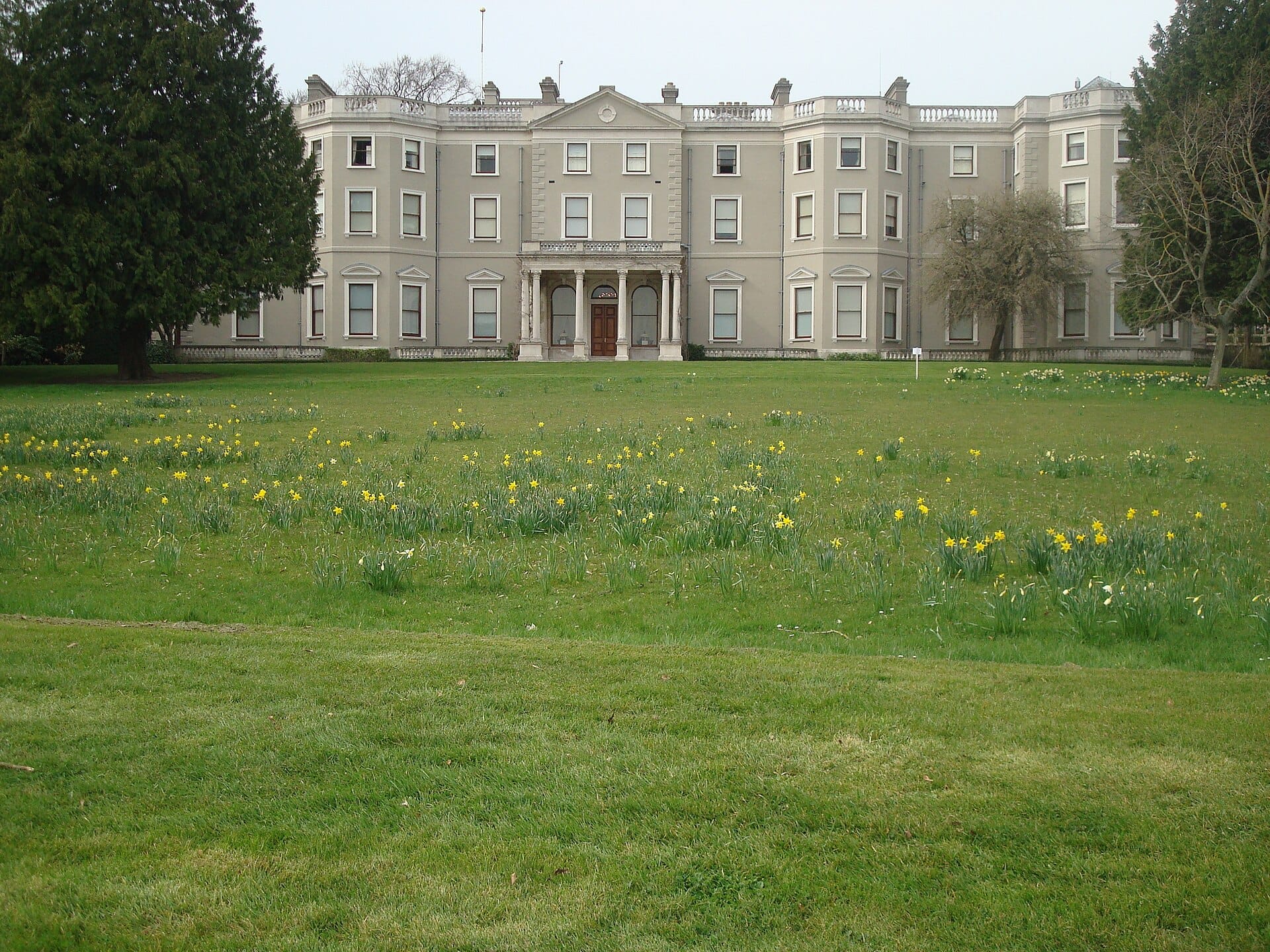
What Farmleigh Actually Is
Farmleigh House and Estate is a 78-acre Georgian and Victorian property at the northwestern edge of Phoenix Park. The Irish state purchased it from the Guinness family in June 1999 and opened it to the public in July 2001. Today it functions as the State Guesthouse, used to accommodate visiting heads of state, while remaining accessible to the public as a working heritage site and parkland.
The estate was assembled by Edward Cecil Guinness, 1st Earl of Iveagh, who rebuilt and substantially expanded an earlier Georgian house in the 1880s to create the Victorian mansion visible today. The result is a layered building: a restrained classical core surrounded by confident Victorian additions, set against walled gardens, a boathouse on a lake fed by the River Liffey, a clock tower, and wide lawns that open up into Phoenix Park itself.
The contrast with the rest of the park is immediate. Compared to the open deer pasture of Phoenix Park, Farmleigh feels enclosed and considered. Clipped hedges, formal flower beds, and estate paths replace open grassland. It is a different kind of space, more like an English country estate than an urban park.
ℹ️ Good to know
The house itself is currently closed for essential building maintenance works. Outdoor guided tours of the exterior and grounds run daily at 11:30am and 2:30pm until the house re-opens. Check farmleigh.ie before visiting for the latest status.
The Parkland: What to Expect When You Arrive
Entry to the estate grounds is free and open every day of the year. Most visitors enter from the Farmleigh Gate on the North Road within Phoenix Park. The first thing you notice is the drop in noise: even on busy weekend afternoons when cyclists and joggers fill the main park roads, the Farmleigh parkland absorbs visitors quietly. The gravel paths crunch underfoot, the lawns are cut short, and the walled garden creates a self-contained world apart.
The walled garden is the centerpiece for most daytime visits. It is arranged in formal geometric sections, mixing kitchen garden beds with ornamental planting. In late spring and early summer the color payoff is high: roses, climbing plants on the brick walls, and structured herbaceous borders. In winter the structure of the garden itself, the espaliered trees and clipped box hedging, still makes it worth walking through, even if the color has gone.
The lake and boathouse, tucked at the lower end of the grounds, reward the walk down. The water is still and reflects the Victorian boathouse facade in flat-light conditions. Early morning is the best time to visit this section: the light is soft, the park is quiet, and the chances of having the lakeside path to yourself are much higher than at midday on a summer weekend.
💡 Local tip
Photography tip: the lakeside view back toward the house works best in the hour after sunrise or before sunset, when low-angle light catches the Victorian brickwork and iron railings. Midday light flattens the facade considerably.
Tickets & tours
Hand-picked options from our booking partner. Prices are indicative; availability and final rates are confirmed when you complete your booking.
Music and dance show with optional dinner at the Irish House Party
From 65 €Instant confirmationFree cancellationGo City | Dublin All-Inclusive Pass
From 79 €Instant confirmationFree cancellationGiant's Causeway, Dark Hedges, and Belfast Tour from Dublin
From 85 €Instant confirmationFree cancellationDublin self-guided audio tour
From 10 €Instant confirmation
The History Behind the Architecture
The original house on the site was a modest Georgian structure. Edward Cecil Guinness, whose family fortune was built on the St. James's Gate Brewery, transformed it into a country retreat in the 1880s as a residence within easy distance of Dublin. The expansion reflects the confidence of late Victorian wealth: the clock tower, the extension of the main house, and the formal layout of the grounds are all products of that era.
The Guinness family connection to Dublin's architectural and cultural landscape is deep. Farmleigh sits in the same tradition as the family's other philanthropic and aesthetic investments in the city, including the restoration of St. Patrick's Cathedral and the gift of Iveagh Gardens to the public. Visiting Farmleigh adds a dimension to any reading of Dublin's Victorian-era history that a city-center itinerary alone cannot provide.
For visitors interested in the Guinness story from a different angle, the Guinness Storehouse in the Liberties covers the brewing side of the family legacy. Farmleigh is where the private, domestic wealth was expressed in stone, brick, and landscape.
Guided Tours: What They Cover
While the house interior is currently closed for building works, outdoor guided tours run twice daily at 11:30am and 2:30pm. These tours cover the estate's exterior architecture, the history of the Guinness connection, the role of Farmleigh as the State Guesthouse, and the landscape design of the grounds. Tour guides are knowledgeable and the format is relaxed, with time for questions. The tours typically last around 45 minutes to an hour.
When the house is open under normal conditions, interior tours take in the principal reception rooms, which retain much of their original Victorian decoration, furniture, and fittings. The billiard room, library, and sunroom are consistently cited as highlights. Tour prices are €8 for adults, €6 for seniors, €4 for students and children, and €20 for a family. The ground floor of the house is fully accessible to wheelchair users.
⚠️ What to skip
Do not plan your visit around interior house access without first checking farmleigh.ie. Maintenance closures are not always announced far in advance and can extend across multiple seasons.
How the Experience Changes by Time and Season
Farmleigh rewards visits at different points of the day and across the seasons in distinct ways. On a clear weekday morning in May or June, the walled garden is at its peak and the estate is quiet enough to feel private. Weekend afternoons from June to August bring families with children, picnickers on the lawns, and a more active atmosphere, which is pleasant in its own way but changes the character of the visit.
Autumn strips the formality back and replaces it with color along the estate's tree-lined paths. The beech and chestnut plantings around the perimeter turn in October and early November, and low autumn light across the lawns gives the house a moodier, more cinematic quality than the flat brightness of high summer. Winter visits require a warmer layer and waterproof shoes, but the parkland never closes and the bare structure of the garden is worth seeing for anyone interested in how formal gardens work at their bones.
Dublin's climate is consistently mild but reliably damp. Even in summer, a light rain jacket is sensible. The gravel paths in the walled garden can become slippery after rain, and the lower lake path collects mud in wet months. Wearing shoes you are comfortable getting dirty is practical advice rather than overcaution.
Getting There and Getting the Most Out of Your Visit
Farmleigh is located inside Phoenix Park, 5km west of Dublin city centre. Dublin Bus route 37 serves stops on the Navan Road, from which the Farmleigh Gate is a short walk through the park. Driving is possible: there is parking within Phoenix Park, and the estate has its own car park. Cycling from the city centre via the Liffey Quays and Phoenix Park takes roughly 20 to 30 minutes at a relaxed pace and is a practical and pleasant option on dry days.
Farmleigh pairs naturally with a broader visit to Phoenix Park. The Áras an Uachtaráin, the official residence of the President of Ireland, is a short drive or cycle away within the same park and also offers free guided tours on Saturdays. Dublin Zoo is similarly nearby for families.
If you are building a full day out west of the city centre, the Irish Museum of Modern Art at the Royal Hospital Kilmainham is around 4km southeast of Phoenix Park and makes a logical second stop, particularly for visitors with an interest in contemporary Irish art.
There is a cafe on the estate grounds, which is useful for a mid-visit break, particularly after the guided tour. The menu is relatively simple: hot drinks, sandwiches, and light lunches. It is not a destination in itself but it removes the need to plan food around the visit.
Who Will Get the Most From Farmleigh, and Who Might Not
Farmleigh works well for visitors who want something calmer and more layered than the major paid attractions in the city centre. It suits people with an interest in Victorian architecture, estate garden design, or the history of Dublin's wealthy industrial families. Families with young children tend to enjoy the open lawns, the walled garden's enclosed walkways, and the lake, which holds the attention of children in a way that interior museum tours often don't.
Visitors primarily interested in Ireland's political or literary history may find Farmleigh less central to their interests than sites like Kilmainham Gaol or the GPO Witness History exhibition. Farmleigh is about a different chapter of Dublin's past: private wealth, Victorian aesthetics, and state ceremony rather than political struggle.
Visitors with very limited time and a list of central Dublin sights to cover may find the 5km journey westward hard to justify for a half-day visit. It is not a site that compresses well into a short itinerary. It works best when you have the time to walk slowly and sit somewhere.
Insider Tips
- The outdoor guided tours at 11:30am and 2:30pm are the only way to access estate areas beyond the open parkland during maintenance closures, and they run daily regardless of weather. Arriving 10 minutes early lets you ask the guide questions before the group fills in.
- The walled garden has a quieter rear section that many first-time visitors miss. Follow the path behind the main formal beds toward the back wall, where older espalier fruit trees are trained against the brickwork.
- Cycling into Phoenix Park from the city centre and locking your bike at the Farmleigh Gate before walking the estate is significantly faster than waiting for a bus connection, and the Liffey Quays cycle path is well-marked from O'Connell Bridge.
- If you visit in autumn, the tree-lined path that runs along the perimeter of the estate between the main house and the lake turns a deep amber and copper in October. This section is one of the least photographed parts of the grounds but one of the most rewarding to walk.
- Farmleigh is one of the few places in Dublin where a picnic on state-owned grounds feels genuinely unhurried. The lawns south of the walled garden see far fewer visitors than the main Phoenix Park meadows and are ideal for a slow afternoon.
Who Is Farmleigh House & Estate For?
- Architecture and design enthusiasts drawn to Victorian country house building
- Families looking for free outdoor space with structured gardens to explore
- Photographers wanting estate and garden subjects away from the city centre crowds
- Visitors combining a half-day west Dublin itinerary with Phoenix Park and Áras an Uachtaráin
- Anyone who wants to understand how Dublin's industrial wealth shaped the city's built environment
Nearby Attractions
Other things to see while in Phoenix Park:
- Áras an Uachtaráin
The official home of the President of Ireland, Áras an Uachtaráin sits within the vast grounds of Phoenix Park and opens its doors to the public on most Saturdays, free of charge, subject to official State business. Built in 1751 and redesignated as the presidential residence in 1938, it offers one of Dublin's most unusual and genuinely rewarding free experiences.
- Phoenix Park
Covering roughly 707 hectares on Dublin's western edge, Phoenix Park is one of the largest enclosed public parks in any European capital city. Free to enter around the clock, it contains wild fallow deer, the Irish President's residence, Dublin Zoo, and centuries of layered history. This guide tells you how to make the most of it.
- Dublin Zoo
Founded in 1831 and set within Phoenix Park, Dublin Zoo is Ireland's oldest zoo and home to over 400 animals across roughly 70 species. Allow half a day for a full visit, and book tickets online in peak season.