Phoenix Park is one of the largest enclosed urban parks in Europe, covering 707 hectares on Dublin's north-west side. Home to wild fallow deer, Áras an Uachtaráin, Dublin Zoo, and the Wellington Monument, it offers an entirely different pace of life from the city streets just 2.5 kilometres away.
Phoenix Park sits on Dublin's north-west side like a city within a city: a 707-hectare walled landscape of open grassland, woodland avenues, and historic estates where herds of wild fallow deer roam freely and the noise of the capital fades within minutes of passing through the gates. It remains genuinely used by Dubliners, not just visitors.
Orientation
Phoenix Park occupies the northwest side of Dublin's inner city, roughly 2.5 kilometres from O'Connell Street as the crow flies and about 3.5 kilometres by road from the city centre. The park sits north of the River Liffey, bounded to the south by Conyngham Road and the river itself, and to the east by Parkgate Street, which is the main city-side entrance. The perimeter wall runs approximately 11 kilometres in total, and within that boundary the park stretches westward toward the suburb of Castleknock and northward toward Cabra.
The main gate at Parkgate Street is the most-used entry point and the logical starting place for most visitors. From here, the main road through the park, Chesterfield Avenue, runs in a straight line westward, bisecting the park and providing access to the zoo, the Visitor Centre, Áras an Uachtaráin, and the Wellington Monument. Secondary gates at Castleknock and several smaller access points are open during daylight hours, making circular routes possible on foot or by bike. The park is not connected to the city's DART or Luas networks by a station inside its boundaries, but Heuston Station on the Luas Red Line sits directly adjacent to the Parkgate Street entrance.
Understanding how Phoenix Park relates to surrounding neighbourhoods helps with planning. To the south across the Liffey lies Kilmainham, home to Kilmainham Gaol and the Irish Museum of Modern Art. To the east, the city centre and Smithfield and the Liberties are a short bus ride or a walkable distance along the quays. Phoenix Park is best understood as a destination in its own right rather than a neighbourhood to stay in: there is no residential street life inside the walls, and accommodation is found in adjacent areas like Smithfield or across the river in Kilmainham.
Character and Atmosphere
Early mornings in Phoenix Park belong to the locals. Between 7am and 9am on a weekday, Chesterfield Avenue fills with joggers, cyclists commuting through to the other side of the park, and dog walkers threading across the open grassland known as the Fifteen Acres, despite being far larger than that name implies. The light at this hour, especially in spring and autumn, falls across the grassland in long, flat rays that make the deer appear almost theatrical. A herd of around 400 to 600 wild fallow deer lives within the park, and sightings are easiest in the quieter stretches away from the main avenue, particularly near the southern tree lines.
By mid-morning on weekends, the pace shifts. Families arrive for Dublin Zoo, school groups gather near the Visitor Centre, and cyclists rent bikes from the kiosk near the main gate. The avenues are wide enough that it rarely feels crowded even on a busy summer Saturday, and the park's scale means you can walk for thirty minutes from Chesterfield Avenue and find yourself in near-silence among mature trees. The Victorian Walled Kitchen Garden and the area around Áras an Uachtaráin retain a particular stillness that feels disconnected from the city entirely.
Afternoons in summer bring picnickers to the open lawns, informal football games, and a general unhurried quality that is rare this close to a capital city. In winter, the park takes on a different character altogether: mist collects in the hollows, the deer move closer to the roads in search of grass, and the bare oak and horse chestnut canopies along the formal allées reveal the bones of the Victorian parkland design. It is a genuinely different place in each season, and worth visiting at different times of year if the opportunity arises.
💡 Local tip
The fallow deer are wild animals. They are used to human presence but should not be approached, fed, or cornered. During the autumn rutting season (usually October), male deer can be unpredictable. Give them a wide berth and observe from a distance.
What to See and Do
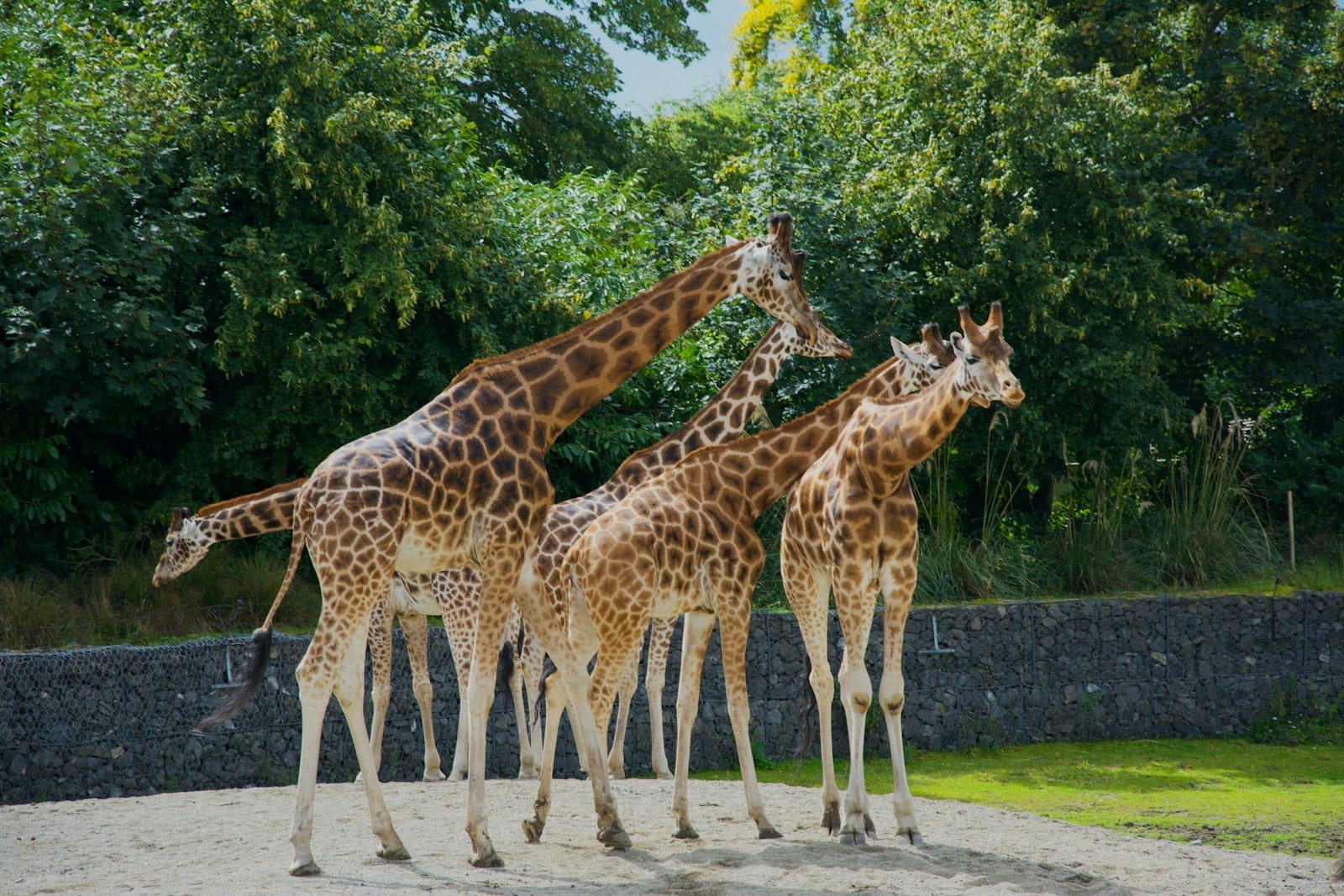
The park contains several distinct attractions worth treating as separate destinations within the larger space. Dublin ZooDublin Zoo sits near the Parkgate Street entrance on the eastern side and is one of Ireland's most visited attractions. Founded in 1831, it occupies around 28 hectares of the park's northeastern corner. It is a full day's activity on its own, particularly for families, and tickets should be booked in advance during school holidays and summer weekends.
Áras an Uachtaráin, the official residence of the President of Ireland, occupies a large estate within the park's northern section. Free guided tours run on Saturdays, departing from the Phoenix Park Visitor Centre. The house itself is an 18th-century mansion with significant additions made over the centuries, and the tours are genuinely informative about Irish constitutional history. Demand for tour places is high in summer, so arriving early at the Visitor Centre is advisable.
The Phoenix Park Visitor Centre occupies the former stables of the papal nuncio's residence and provides useful context on the park's history, from its origins as a royal deer park in the 1660s to its present form. Entry is free. Adjacent to the Visitor Centre, the restored Victorian Walled Kitchen Garden is worth the short detour: the formal planting beds and glasshouses operate as a working heritage garden, and it is one of the quieter corners of the park even on busy days.
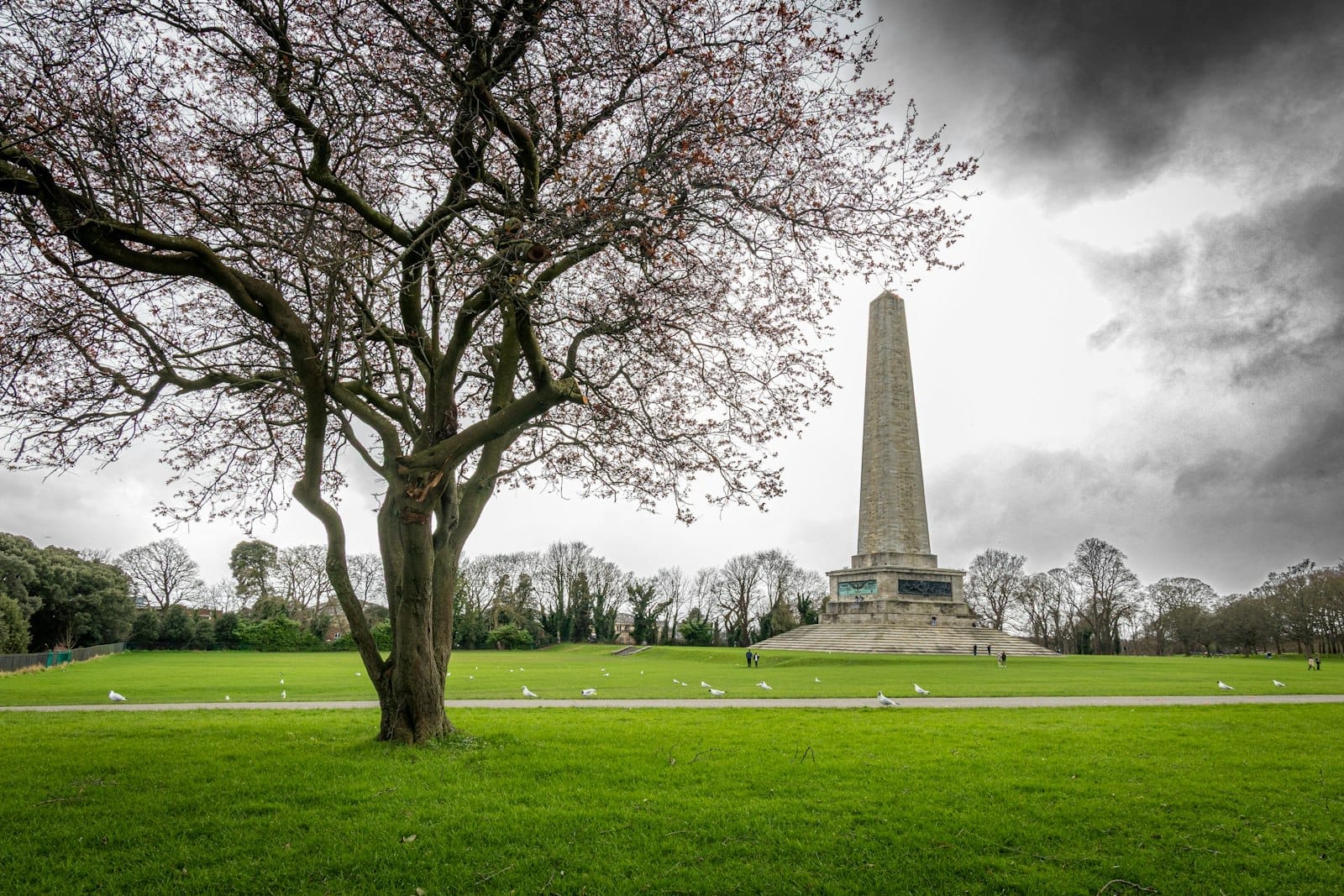
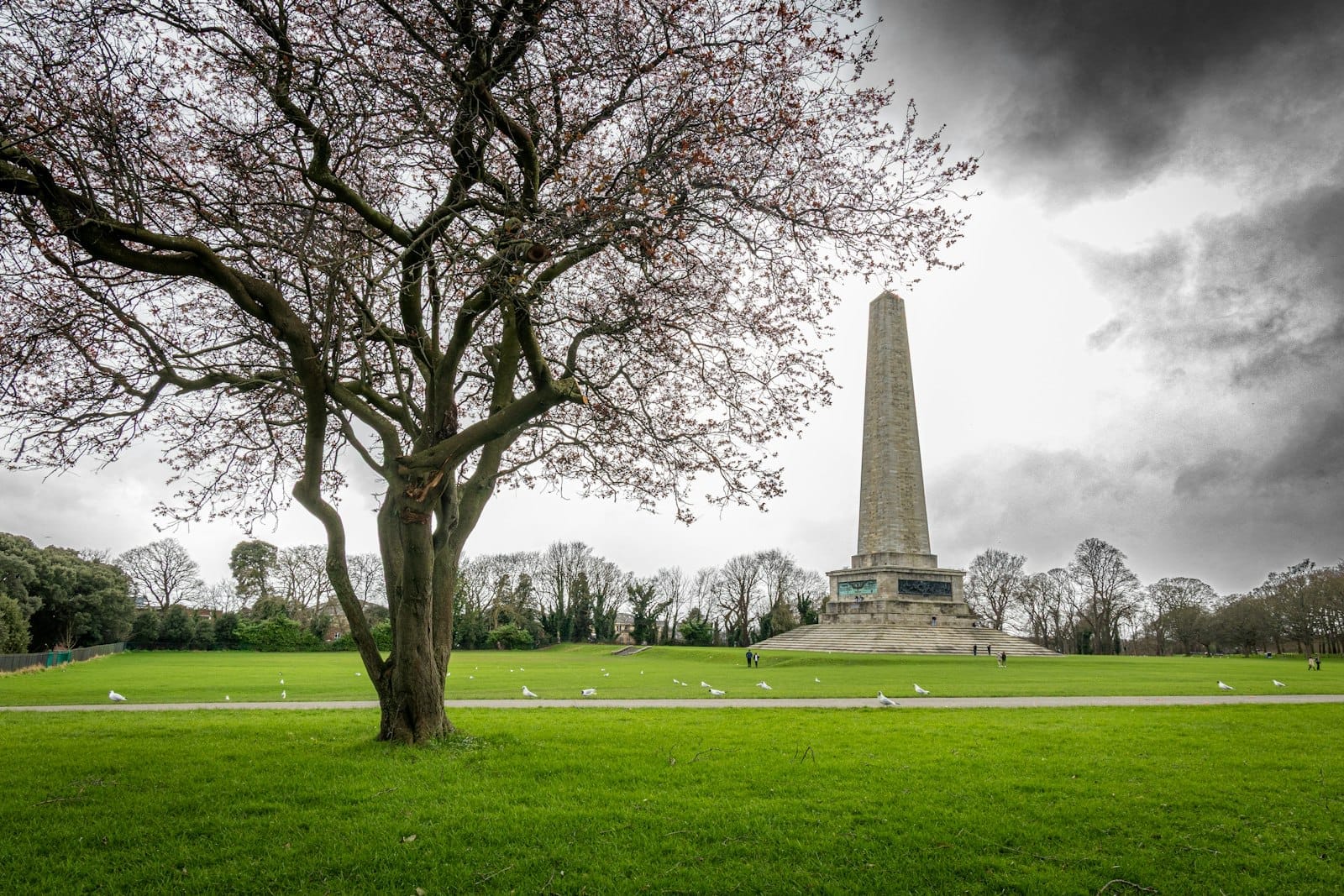
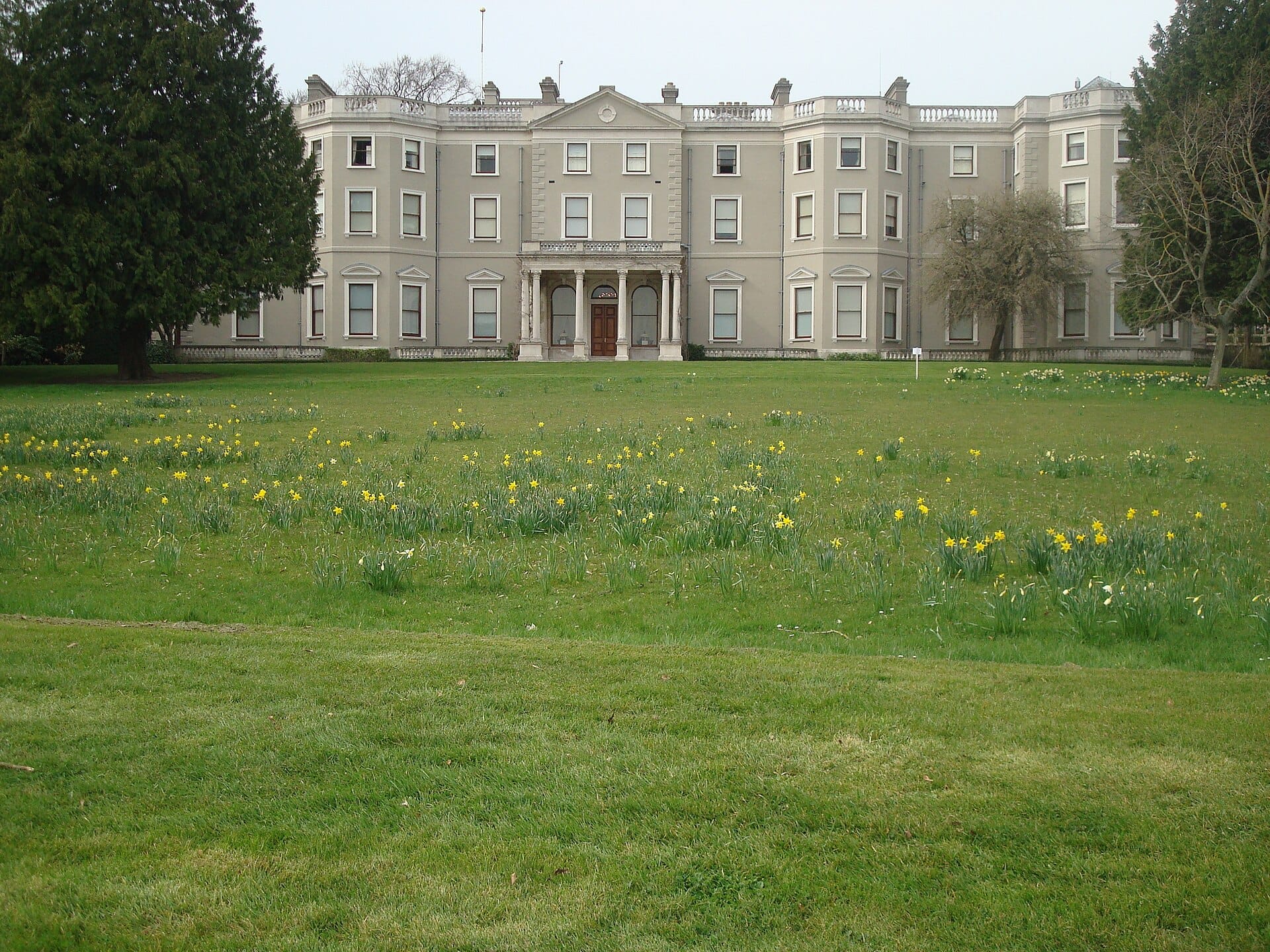
The Wellington Monument, a tapering obelisk standing 62 metres tall and completed in 1861, is the tallest obelisk in Europe. It stands at the eastern end of the park near the Parkgate Street entrance, surrounded by open ground that makes it visible from considerable distances. It serves as a useful landmark for orienting yourself within the park. Further into the park, Farmleigh House, the Irish State's official guest residence, opens periodically to the public with free admission; check the OPW website for current opening schedules before visiting.
Cycling: bike hire is available near the Parkgate Street entrance; the flat roads of Chesterfield Avenue and the network of secondary paths make the park well-suited to casual cycling
Running: the park hosts regular parkrun events on Saturday mornings at the Fifteen Acres
Cricket and polo: the park has dedicated grounds for both sports, with seasonal fixtures taking place on the central grasslands
Phoenix Park Visitor Centre: free entry, good café, and a base for the Áras an Uachtaráin tour sign-up
Birdwatching: woodpeckers, sparrowhawks, long-eared owls, and numerous woodland species are recorded regularly in the park's mixed woodland areas
ℹ️ Good to know
The park is open 24 hours a day, every day of the year. Individual attractions within the park (Dublin Zoo, Áras an Uachtaráin, Farmleigh House, the Visitor Centre) have their own opening hours and some require advance booking. Check each directly before visiting.
Eating and Drinking
Options for eating and drinking within the park itself are limited, which is part of what keeps it feeling like a park rather than a commercial precinct. The Phoenix Park Visitor Centre has a café serving coffee, light lunches, and baked goods; it is a reliable option for a mid-morning break or a light lunch. Dublin Zoo has its own catering within its grounds. Beyond those, the park has no restaurants or pubs inside its walls.
For a proper meal, the nearest options are in Smithfield, a ten-minute walk from the Parkgate Street gate along the quays. The Smithfield area has a range of cafés and casual restaurants. Alternatively, the area around Heuston Station has a handful of pubs and café-bars that serve food throughout the day, suitable for a meal before or after a visit. If you plan to spend a full day in the park, particularly with children, bringing your own food is practical: the open lawns are designed for exactly that use, and picnicking on the grass near the Wellington Monument or the Fifteen Acres is entirely normal.
There are no supermarkets inside the park boundaries. The nearest convenience stores and grocery options are on Parkgate Street itself and along the roads leading toward Smithfield to the east or Castleknock to the west. If you are cycling through the park from the city, Castleknock village on the western side has cafés and a small commercial centre.
Getting There and Around
The most straightforward approach from the city centre is on foot or by bus along the north quays. From O'Connell Street, the walk to Parkgate Street takes around 30 to 35 minutes along the Liffey quays. The route is flat, direct, and passes through the legal district near the Four Courts, making it a worthwhile walk in its own right.
By Luas, the Red Line stops at Heuston Station, which sits immediately outside the Parkgate Street gate. From the city centre at Jervis or Smithfield stops, Heuston is a short tram ride. Several Dublin Bus routes also serve Parkgate Street and the roads flanking the park's southern wall. A dedicated Phoenix Park Shuttle Bus operates from Parkgate Street into the park, stopping at the Visitor Centre, the zoo, and other points along Chesterfield Avenue. This is the most practical option if you are visiting with young children or want to reach the western end of the park without walking the full length of the avenue. Check current timetables with Transport for Ireland before travel, as schedules change seasonally. For broader guidance on navigating Dublin's public transport network, the getting around Dublin guide covers the full system in detail.
Within the park, the distances are substantial. From the Parkgate Street gate to the western Castleknock Gate is approximately 4 kilometres by road. Walking the full length of Chesterfield Avenue and back is a 8-kilometre round trip, which takes most people around two hours at a relaxed pace. Cycling is the most efficient way to cover the park if you want to visit multiple attractions in one visit. Bike hire operates from a kiosk near the main entrance; no advance booking is needed for the hire bikes, though availability can be limited on busy summer weekends.
⚠️ What to skip
Driving into the park is possible, but parking is limited and the roads are shared with cyclists, pedestrians, and deer. On summer weekends and bank holidays, parking areas near Dublin Zoo fill early in the morning. BBQs, campfires, and camping are not permitted anywhere in the park. Drones and UAVs are also prohibited.
Where to Stay
There is no accommodation within Phoenix Park itself. The closest base for exploring the park is Smithfield, on the northern quays roughly 10 minutes walk from Parkgate Street. Smithfield has a growing number of hotels and apartment hotels at various price points, and it connects easily to the rest of the city via the Luas Red Line. For a broader comparison of Dublin neighbourhoods for accommodation, the where to stay in Dublin guide covers the options across the city.
Staying in Smithfield or the Liberties puts Phoenix Park within easy reach while keeping you close to other major attractions: Guinness Storehouse, the Jameson Distillery on Bow Street, and Kilmainham Gaol are all within walking distance of the same base. This makes it a practical choice for visitors whose itinerary combines the park with the western historic sites of Dublin. City centre hotels around O'Connell Street also work well for Phoenix Park visits, with the option to walk or take the Luas to Heuston depending on energy levels.
Phoenix Park suits all types of travellers, from families spending a day at Dublin Zoo to solo visitors looking for a long walk away from the tourist circuit. If your trip is focused primarily on the park, visiting Dublin with kids has specific guidance on making the most of the zoo and the wider park with children.
Practical Notes
Phoenix Park is a year-round destination, but it rewards visits at different times of year in different ways. The park is at its most atmospheric in autumn, when the deer rut takes place and the deciduous tree canopy turns colour across the avenues. Spring brings bluebells and new foliage along the woodland walks. Summer offers the longest days for cycling and picnicking. Winter, while cold and occasionally wet, produces some of the most dramatic light conditions, particularly in the early morning when mist sits over the Fifteen Acres. For advice on planning around Dublin's seasons, the best time to visit Dublin guide provides a month-by-month breakdown.
The park also appears on several self-guided walking itineraries as a half-day or full-day excursion from the city centre. If you are combining it with nearby heritage sites, the Kilmainham area directly across the Liffey is the natural pairing: a morning in Phoenix Park followed by an afternoon at Kilmainham Gaol and the Irish Museum of Modern Art covers a substantial part of Dublin's western historic arc in a single day.
TL;DR
Phoenix Park is the largest enclosed public park in any European capital city, covering 707 hectares with open grassland, woodland, and historic estates.
Wild fallow deer roam freely throughout the park; sightings are common, especially in the early morning and in areas away from Chesterfield Avenue.
Key attractions within the park include Dublin Zoo, Áras an Uachtaráin (free Saturday tours), Farmleigh House, the Wellington Monument, and the Phoenix Park Visitor Centre.
The park is best reached via the Luas Red Line to Heuston Station or by walking along the north quays from the city centre; a shuttle bus operates within the park seasonally.
Best for: families, cyclists, runners, anyone wanting open space away from the city centre, and visitors combining the park with nearby sites in Kilmainham and Smithfield.
Three days is the sweet spot for Dublin. Long enough to cover the iconic historic sites, dig into the food and pub culture, and fit in a coastal or countryside excursion. This itinerary is built around real logistics, honest crowd warnings, and the kind of sequencing that makes a short trip feel unhurried.
Dublin punches well above its weight as a museum city. Several of its finest institutions are completely free, and the range spans Celtic gold, Viking archaeology, Irish revolutionary history, world literature, and contemporary art. This guide covers the best museums in Dublin, grouped by theme, with practical advice on when to go and what to expect.
Dublin rewards visitors year-round, but the timing of your trip shapes everything from hotel prices to what you can actually do outdoors. This guide breaks down every month, season, and key trade-off so you can plan with confidence.
Dublin sits at the centre of an exceptional day trip network. Within two hours you can reach glacial mountain valleys, medieval castles, dramatic coastal headlands, and one of Europe's great prehistoric monuments. This guide covers the best escapes, how to get there, and what to expect.
Dublin Bay is a UNESCO Biosphere Reserve with more beaches than most visitors expect. This guide covers the best strands, swimming spots, and coastal walks within easy reach of the city, from the vast sands of Dollymount to the dramatic cliffs of Howth and the sheltered coves of Dún Laoghaire.
Bloomsday is Dublin's most distinctive literary celebration, held every 16 June to honour the date James Joyce set Ulysses. This guide covers the key locations, walking routes, festival events, food traditions, and everything you need to join the festivities — whether you've read the book or not.
Dublin rewards couples who look beyond the obvious. This guide covers scenic walks, intimate cultural experiences, evening entertainment, and coastal day trips — with honest advice on what's worth it and what to skip.
Attending a Gaelic Games match at Croke Park is one of the most authentic experiences Dublin offers. This guide covers everything from buying tickets and navigating the stadium to understanding the sport, the season, and what separates a regular league game from an All-Ireland final.
Dublin rewards the curious traveller who ventures beyond the Guinness Storehouse and Temple Bar. From a mummified Crusader beneath a Northside church to a Victorian reservoir turned secret garden, these are the places Dubliners love and visitors rarely find.
Dublin transforms in winter, with Christmas markets running from late November through early January, citywide light trails, cathedral concerts, and festive fairgrounds. This guide covers every major event, what things actually cost, and what to watch out for before you visit.
Dublin is one of the few cities in the world to have produced three Nobel Prize-winning writers of literature. This guide maps the key sites connected to George Bernard Shaw, W.B. Yeats, and Samuel Beckett, plus James Joyce, Oscar Wilde, and others, covers the best guided tours with practical pricing, and gives you the detail to do it properly.
Dublin has around 772 pubs, dozens of late-night bars, and several distinct club districts. This guide breaks down where to drink, when to go, what it costs, and which neighbourhoods to skip if you want to avoid tourist pricing.
Dublin has a reputation for being expensive, but that reputation is only half true. The city's best museums are free, the centre is walkable, public transport is cheap with the right pass, and the finest pub sessions cost nothing beyond the price of a pint. This guide breaks down every major cost category so you can plan a genuinely great trip without watching every euro.
Seven days is enough to see Dublin's best and reach the wild west coast of Ireland, but only if you plan smart. This itinerary balances city time with coastal scenery, covers realistic driving and transit times, and flags the planning mistakes that turn a great trip into an exhausting one.
Dublin, Ireland offers a surprisingly varied shopping scene, from the flagship stores lining Grafton Street to independent boutiques on South William Street, weekend food markets in Temple Bar, and Ireland's largest mall in Dundrum. This guide covers where to go, what to expect, and how to avoid wasting time.
Dublin rewards walkers like few cities in Europe. Compact enough to cover on foot, layered enough to take weeks to unpack, the city reveals itself best at street level. This guide covers the stops, routes, and landmarks that make Dublin's walking tours so compelling.
Dublin punches well above its weight as a family destination. Between a world-class zoo, free city parks, Viking history museums, coastal castles, and indoor waterparks, there is genuinely enough to fill a week without repeating yourself. This guide covers the best things to do in Dublin with kids, organised by type, age range, and weather — so you can plan around Irish reality rather than tourist brochure optimism.
Dublin punches well above its weight for free attractions. National museums, modern art galleries, coastal walks, and grand public parks all cost nothing to enter. This guide covers 22 of the best free things to do across the city, organised by type so you can plan your days without watching your budget.
Dublin's Georgian streets and squares represent one of Europe's most intact examples of 18th-century urban planning. This guide covers the key buildings, the best self-guided walking route, what's actually open to visitors, and how to avoid the common traps that waste your time.
Dublin's public transport network covers the city and coast through buses, DART rail, Luas trams, and airport coaches. This guide breaks down fares, Leap Card options, airport transfer routes, and the practical details that save you time and money when navigating Ireland's capital.
Dublin sits at the doorstep of some of Ireland's finest walking country. Whether you want cliff-top sea views, ancient monastic valleys, or proper mountain terrain, these are the best hikes and trails within easy reach of the city.
Dublin's St Patrick's Festival is a multi-day national celebration centred on 17 March, with a free city-centre parade, ticketed concerts, street theatre, and events across the city. This guide covers the full programme, booking essentials, crowd logistics, and what to realistically expect from Ireland's biggest annual celebration.
Dublin packs centuries of history, world-class museums, legendary pubs, and coastal scenery into a compact, walkable city. This guide covers the best things to do in Dublin across every interest and budget, with honest advice on what's worth your time and what to skip.
Dublin's food scene has transformed well beyond stew and soda bread. This guide covers the essential Irish dishes, where to find them, what to pay, and which areas give you the best value — including a frank look at where not to waste your money.
Choosing where to stay in Dublin, Ireland shapes your entire trip. This guide breaks down every major neighbourhood by location, vibe, price range, and transport links, so you can book with confidence rather than guesswork.