Dublin Zoo: Ireland's Oldest Zoo Inside Europe's Largest City Park
Founded in 1831 and set within Phoenix Park, Dublin Zoo is Ireland's oldest zoo and home to over 400 animals across roughly 70 species. Allow half a day for a full visit, and book tickets online in peak season.
Quick Facts
- Location
- Phoenix Park, Dublin 8, D08 AC98, Ireland
- Getting There
- Public transport serves Phoenix Park from the city centre; approximately 15–20 minutes by car or taxi from the city centre
- Time Needed
- 3–5 hours for a thorough visit; full day with young children
- Cost
- Adults approx. €22.50 | Children (3–15) approx. €17.00 | Under-3s free. Verify current prices at dublinzoo.ie before visiting.
- Best for
- Families with children, wildlife enthusiasts, rainy-day alternatives to city sightseeing
- Official website
- www.dublinzoo.ie
What Dublin Zoo Actually Is
Dublin Zoo is Ireland's largest zoo and one of the oldest zoological gardens in the world, founded on 1 September 1831 by a group of scientists and naturalists. It sits on 28 hectares within Phoenix Park, which is frequently cited as the largest enclosed public park in any European capital city. The zoo welcomes over one million visitors each year and is home to more than 400 animals across around 70 species, many of them rare or endangered.
The zoo's setting inside Phoenix Park is a genuine advantage. Unlike many urban zoos hemmed in by roads and buildings, Dublin Zoo has room to breathe. Large open paddocks, tree-lined walkways, and landscaped habitats mean the enclosures feel spacious by city-zoo standards. The African Plains section alone covers a substantial stretch of land and can be viewed from elevated walkways that put you at eye level with the landscape rather than looking down into a pit.
ℹ️ Good to know
Opening hours: daily 9:30am to 6:00pm, with last entry at 5:00pm. The African Plains area closes at 5:30pm. Always verify current hours at dublinzoo.ie before your visit, as seasonal variations may apply.
The Experience: Morning vs. Afternoon
Arriving at opening time, around 9:30am, is a noticeably different experience from arriving mid-morning. The zoo is quietest in the first hour. Animal keepers are active, moving around enclosures, and many animals are alert and feeding rather than resting in shade. The gorilla habitat in particular tends to show more activity early in the morning, when the animals are moving between indoor and outdoor sections.
By 11:00am on weekends and during school holidays, the main paths near the entrance and the big cats area become significantly busier. Pushchairs create natural bottlenecks at some of the narrower viewing points. If you have limited time, prioritise the African Plains walkway early, as the late-morning sun positions well for sightlines across the savanna habitat and the crowds thin out once school groups have passed through on their fixed routes.
Mid-afternoon, roughly 1:30pm to 3:30pm, is the least productive time for observing many animals. Heat, even on mild Irish days, encourages big cats and primates to rest in sheltered spots out of view. The Family Farm area and the Sea Lion Cove, however, tend to hold interest throughout the afternoon because the animals there are more reliably visible and keeper talks are often scheduled in the afternoon.
💡 Local tip
Check the keeper talk schedule at the information board near the entrance when you arrive. These free talks, scheduled throughout the day at specific enclosures, are timed around feeding, which is when you will see the most active and visible animal behaviour.
Tickets & tours
Hand-picked options from our booking partner. Prices are indicative; availability and final rates are confirmed when you complete your booking.
Giant's Causeway, Dark Hedges, and Belfast Tour from Dublin
From 85 €Instant confirmationFree cancellationDublin self-guided audio tour
From 10 €Instant confirmationBird of Prey, Cliffs of Moher and Aillwee Cave from Dublin
From 201 €Instant confirmationFree cancellationGame of Thrones Studio tour with return transfer from Dublin
From 63 €Instant confirmationFree cancellation
Key Zones and What to Expect in Each
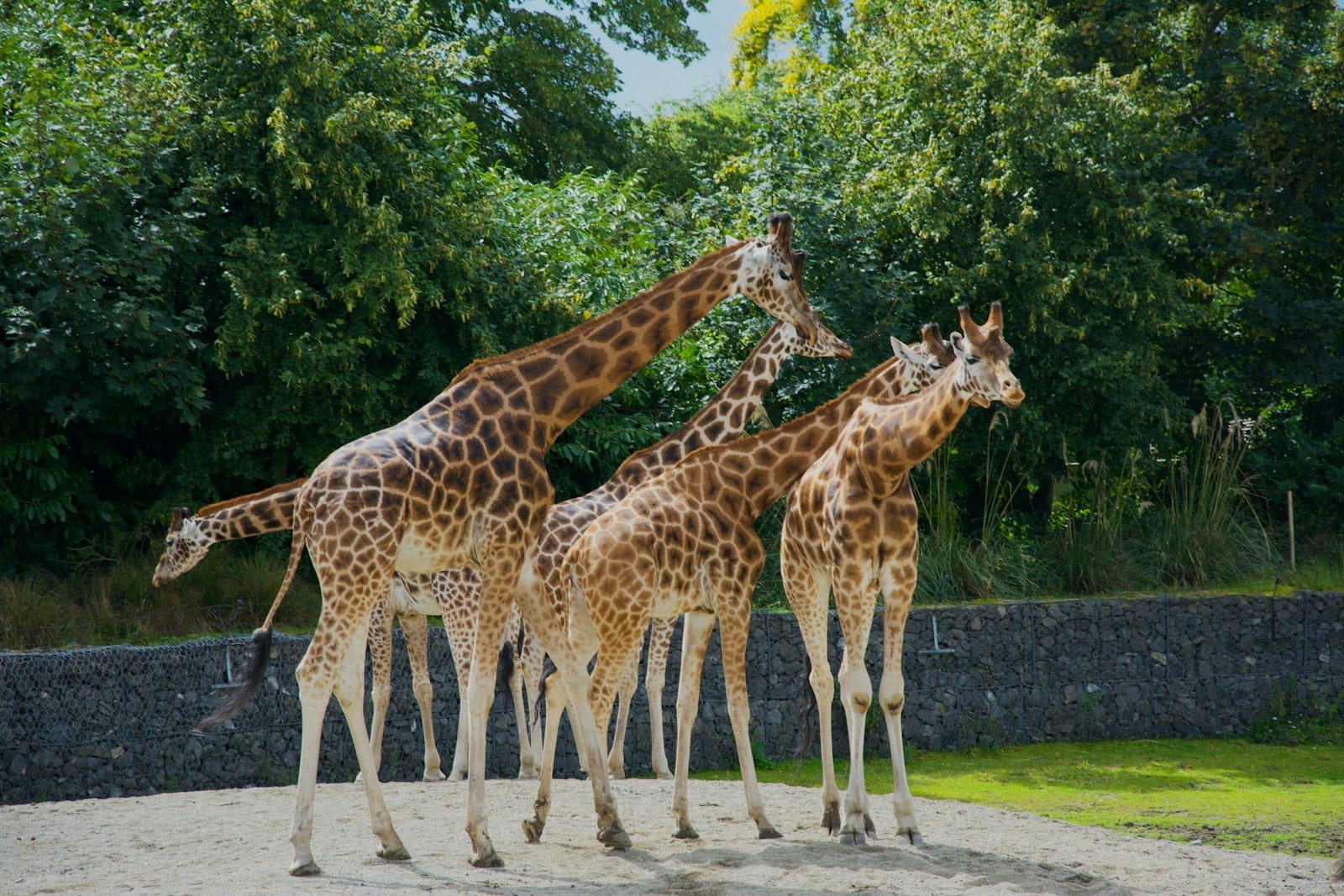
The zoo is organised into distinct themed zones. The African Plains is the flagship area, designed around open grassland habitats. Giraffes, African wild dogs, and white rhinos are among the animals here. The elevated boardwalk that runs alongside parts of the zone is one of the better viewpoints in the zoo, offering a long sightline across a habitat that does not feel artificially compressed.
The Zoorassic World zone, a dinosaur-themed add-on within the grounds, is aimed squarely at younger children and involves animatronic dinosaur installations along a dedicated path. It is not a natural history exhibit and should be understood as an entertainment feature rather than a wildlife experience. Adults without children are unlikely to find it compelling, but it consistently draws long queues from families with under-tens.
The Kaziranga Forest Trail focuses on Asian species, including Sumatran orangutans, Asian lions, and Komodo dragons. The indoor primate house connected to this area has good visibility and interpretation panels that explain conservation status. The smell inside the reptile and tropical houses is noticeable on humid days, though the temperature inside is kept consistently warm, which makes these buildings useful on colder, wet days when outdoor areas feel less comfortable.
The Sea Lion Cove provides an above and below-water viewing option. The underwater glass panels give a direct view of the sea lions' movements that you cannot get from poolside. This is one of the more technically impressive viewing experiences in the zoo. The Family Farm, near the centre of the site, gives younger children a chance to see domestic animals at close range, which can be a welcome change of pace for toddlers who are overwhelmed by the scale of the larger zones.
Historical Context: Nearly 200 Years in Phoenix Park
When Dublin Zoo opened on 1 September 1831, it was among the earliest zoological gardens in the world, following only London (1828) and Paris. The founding group of scientists established it on land leased within Phoenix Park, a location that has remained unchanged while the city grew around it. In its early years, Sunday admission was set at one penny, which made it accessible to working-class Dubliners at a time when most cultural institutions charged significantly more.
The zoo sits within Phoenix Park, which also contains Áras an Uachtaráin (the official residence of the President of Ireland), Áras an Uachtaráin, Farmleigh House, and a resident herd of fallow deer that roams freely across the park. The contrast between the zoo's managed enclosures and the wild deer wandering on the grassland outside its walls is one of the more unusual juxtapositions in any European capital city.
Over nearly two centuries, the zoo has shifted from a Victorian menagerie model toward a conservation-focused institution. It participates in European Endangered Species Programmes (EEPs) for several of the animals in its care, including Sumatran orangutans and Humboldt penguins. This conservation remit is woven into the interpretive signage throughout the zoo, though the depth of engagement with it depends on how much time visitors take to read the panels.
Practical Walkthrough: Getting There, Getting Around
Dublin Zoo is located inside Phoenix Park, with its own dedicated entrance and car park. Driving is straightforward, with signage from the park's main entrance roads. On-site parking is available, though it fills quickly on weekend mornings during school holidays and on bank holiday weekends. Arriving before 10:00am significantly reduces parking stress on busy days.
By public transport, Dublin Bus routes serve stops near the park's main gates, from where the zoo entrance is a short walk. Journey time from the city centre is roughly 15 to 20 minutes depending on traffic. The Getting Around Dublin guide covers current route options in more detail. Taxis and ride-hailing apps are a practical option for direct door-to-door access, particularly with young children or after a long day when the walk back to a bus stop feels less appealing.
The zoo's internal paths are mostly paved and wide enough for pushchairs and wheelchairs along the main routes. Some secondary paths, particularly in the more naturalistic sections, have uneven surfaces. For specific accessibility requirements including step-free route planning or mobility aid hire, contact the zoo directly at info@dublinzoo.ie or call +353 (0)1 474 8900 before your visit.
⚠️ What to skip
Ticket prices and opening hours are subject to change. Always verify current admission fees and hours at dublinzoo.ie before you visit. Booking online in advance is advisable during Irish school holidays, as peak-day attendance can be very high.
Photography at Dublin Zoo
The African Plains boardwalk and the sea lion underwater panel are the two strongest photography locations in the zoo. The boardwalk gives natural light and distance for wide animal shots without glass or bars. The underwater panel works best on quieter mornings when you can position without people in frame. Early morning light inside the zoo, particularly in the Kaziranga Forest Trail, comes through tree cover at a low angle between 9:30am and 11:00am, which gives warmer tones than the flat midday light.
A telephoto or zoom lens is useful for the larger enclosures where animals can be at the far end of their habitat. For indoor houses, a wide aperture is more practical given the artificial lighting. Flash photography is prohibited near the animals, and for practical reasons as well as animal welfare, keeping the camera silent and movements slow near enclosure glass tends to produce better results than rushing from spot to spot.
Is It Worth Your Time? An Honest Assessment
Dublin Zoo is genuinely good by European city-zoo standards. The African Plains habitat, the sea lion viewing, and the primate areas are well-designed and offer real wildlife observation rather than token enclosures. For families with children, it is one of the most reliable full-day options in Dublin regardless of weather, since a mix of indoor and outdoor spaces means a damp Irish afternoon does not ruin the visit.
For adults without children, the value depends on how much interest you have in zoos as institutions. The historical depth, the conservation programmes, and the park setting make it more than a routine tick-box attraction, but it will not compete with a day spent exploring the Chester Beatty Library or walking the Dublin Literary Trail for visitors whose primary interest is culture and history. At approximately €22.50 for an adult, it is not cheap by Dublin attraction standards, and travellers on a tight budget should factor that in.
Visitors who are sensitive to animal welfare debates around zoos will find a mixed picture here. The zoo participates in European conservation programmes and has invested in habitat expansion, but it remains a captive animal facility. That context is worth considering before you decide whether it aligns with your priorities.
Insider Tips
- Pick up the printed zoo map from the entrance kiosk, not just the digital version. The physical map is easier to navigate with children and marks keeper talk times updated for that day.
- The zoo's café areas get congested between 12:00pm and 2:00pm. Bringing your own lunch and using the picnic benches scattered through the grounds saves time and money, and is explicitly permitted by the zoo.
- If you are visiting with very young children, the Family Farm section near the centre of the zoo is often less crowded than the African Plains and gives toddlers closer contact with animals at their eye level.
- The Zoorassic World feature carries an additional charge on top of regular admission. If your group has no interest in animatronic dinosaurs, this is easy to skip without missing any live animal exhibits.
- Combining a zoo visit with time in Phoenix Park itself adds real value to the trip. The fallow deer herd roams freely on the open grassland near the park's main roads and costs nothing to observe. Arrive at the zoo at opening, leave by early afternoon, and spend an hour in the wider park before heading back to the city.
Who Is Dublin Zoo For?
- Families with children of all ages, particularly those with under-12s looking for a structured full-day activity
- Wildlife and conservation enthusiasts interested in endangered species programmes and animal behaviour
- Visitors spending more than two days in Dublin who have covered the main cultural and historical sites
- Rainy or overcast days when a mix of indoor and outdoor animal houses makes poor weather manageable
- Anyone already planning a visit to Phoenix Park who wants to combine the zoo with a wider park afternoon
Nearby Attractions
Other things to see while in Phoenix Park:
- Áras an Uachtaráin
The official home of the President of Ireland, Áras an Uachtaráin sits within the vast grounds of Phoenix Park and opens its doors to the public on most Saturdays, free of charge, subject to official State business. Built in 1751 and redesignated as the presidential residence in 1938, it offers one of Dublin's most unusual and genuinely rewarding free experiences.
- Phoenix Park
Covering roughly 707 hectares on Dublin's western edge, Phoenix Park is one of the largest enclosed public parks in any European capital city. Free to enter around the clock, it contains wild fallow deer, the Irish President's residence, Dublin Zoo, and centuries of layered history. This guide tells you how to make the most of it.
- Farmleigh House & Estate
Farmleigh House and Estate is a 78-acre former Guinness family residence set inside Phoenix Park, 5km from Dublin city centre. The parkland is free to enter year-round, and guided tours of the Victorian mansion offer a rare look inside one of Ireland's finest state-owned properties.