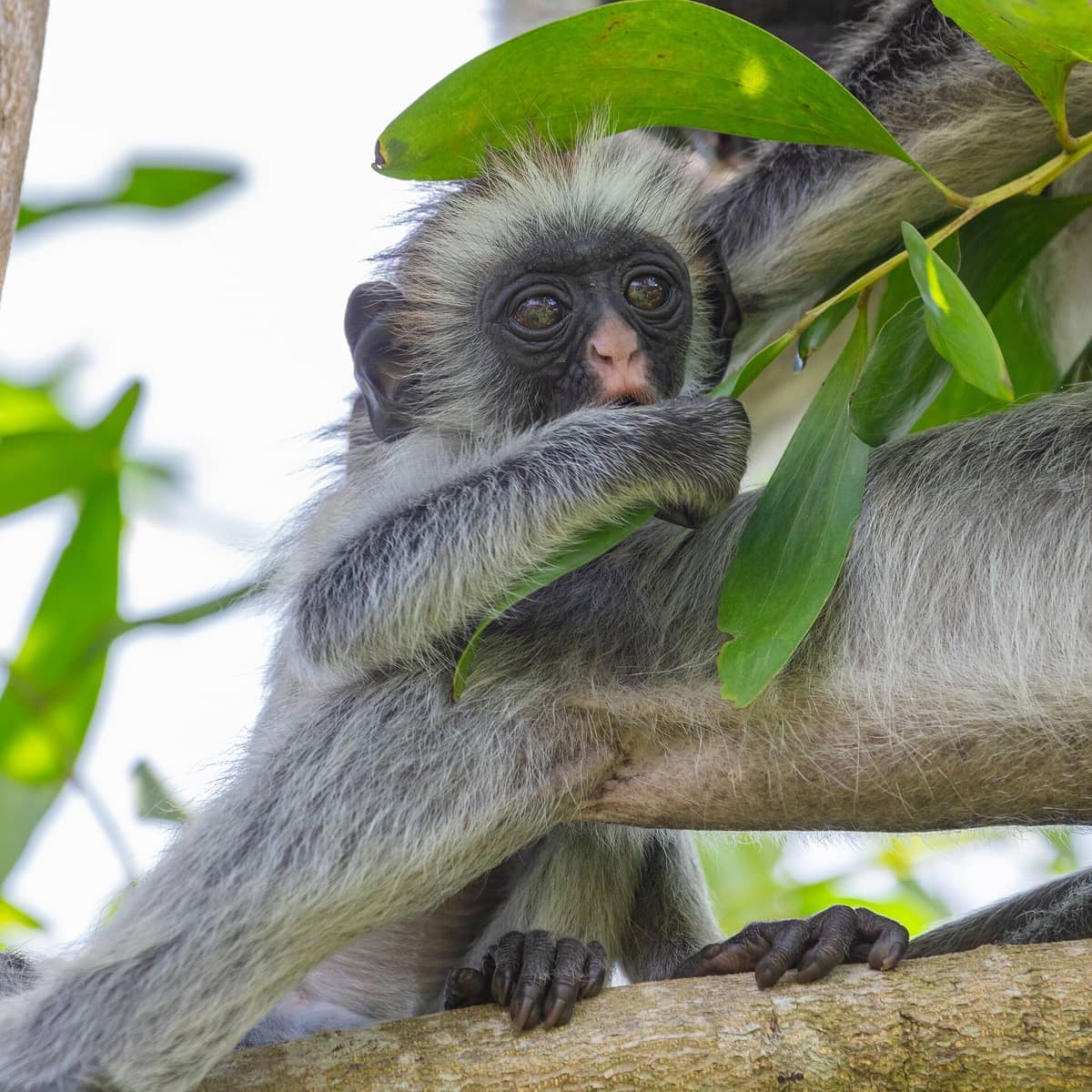
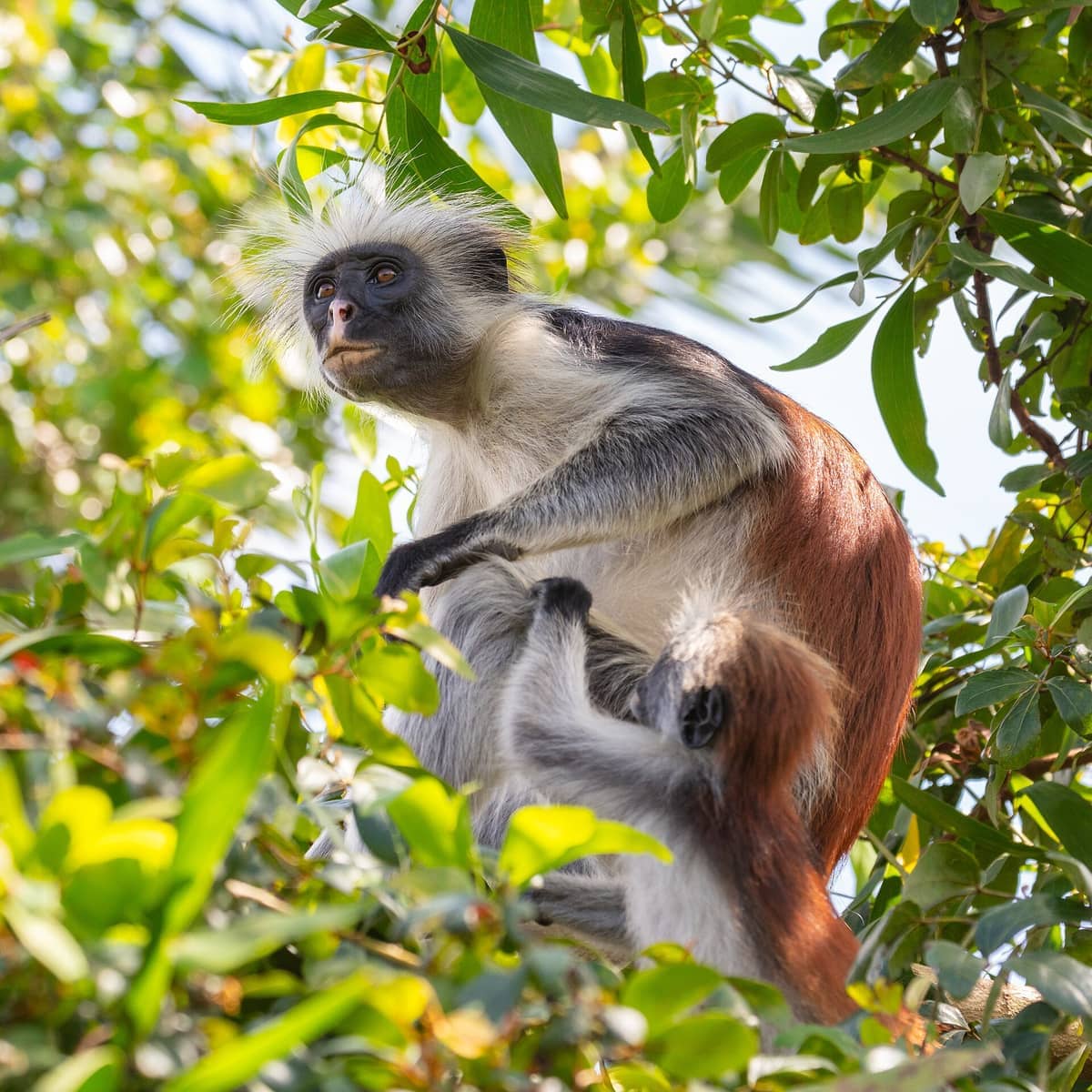
Jozani-Chwaka Bay National Park covers roughly 50 square kilometres of southeastern Unguja, protecting the island's last significant patch of indigenous forest alongside a tidal bay fringed by mangroves. It is the only national park in Zanzibar and the single best place on the island to encounter the endangered Zanzibar red colobus monkey in the wild.
Jozani-Chwaka Bay is where Zanzibar drops the beach-resort script entirely. This is forest, wetland, and tidal bay: a genuinely wild interior that most visitors only glimpse from a car window on their way to the southeast coast, but which rewards anyone who stops and walks.
Orientation
Jozani-Chwaka Bay sits in the southeastern quarter of Unguja, the main island of the Zanzibar archipelago. The protected area spans roughly 50 square kilometres, stretching from the dense groundwater forest around Jozani village in the interior to the tidal flats and mangrove channels of Chwaka Bay on the Indian Ocean coast. The main visitor entrance and ranger station are on the central road that cuts across the island between Stone Town and the southeast coast villages.
Stone Town lies approximately 35 kilometres to the northwest. The villages of Paje and Jambiani are roughly 15 to 20 kilometres south along the coast. This geographic position makes Jozani a natural midpoint stop on any journey between Stone Town and the southeast beaches, and most organised day trips are structured exactly that way. Chwaka Bay itself faces northeast, opening toward the open ocean, and its shoreline communities have historically depended on fishing and seaweed farming rather than tourism.
The park has no town centre or main street in the conventional sense. The visitor infrastructure concentrates at the main entrance gate near Jozani village: a ticket office, a small information centre, ranger-guided trail departure points, and a car park. Everything else, including the mangrove boardwalk and the bay-side trails, requires walking from that hub. For broader context on how this area fits into a wider Zanzibar itinerary, the one week in Zanzibar guide covers how to sequence a park visit with the coast.
Character & Atmosphere
The shift in atmosphere as you leave the coastal road and enter the Jozani forest is immediate and physical. The tree canopy closes overhead, the temperature drops a few degrees, and the light changes from the hard white glare of the beach to something softer and green-tinged. The forest floor is dark red earth, often damp even in the dry season because Jozani sits above a freshwater lens that keeps the groundwater forest alive through months when the rest of the island looks parched.
Mornings are the best time to visit. Before 9 a.m., the forest trails are quiet, the bird noise is at its loudest, and the red colobus troops tend to be active and moving through the lower canopy. By late morning, organised tour groups begin arriving from Stone Town and the north-coast resorts, and the entrance area can become congested around the most frequently visited monkey territory. If you are travelling independently, arriving at opening time is worth the early start.
Afternoons in the forest have a different quality. The tour buses have largely left by 2 p.m., and the trails become quiet again. The light through the canopy turns golden in the hour before dusk, and the mangrove boardwalk, which can feel crowded at midday, becomes almost meditative. The bay side of the park, away from the main forest trails, rarely sees many visitors at any hour, and the tidal channels at low tide have the particular silence of a landscape that is mostly water and mud and birds.
This is not a neighbourhood in the urban sense. There are no restaurants, bars, or guesthouses inside the park boundary. The communities around the park edges, including the fishing villages on Chwaka Bay, live at a pace and on a scale that has little to do with the visitor economy, even though the park is one of Zanzibar's most visited natural attractions. That contrast is part of what makes the area feel genuinely distinct from the resort-heavy coastline.
💡 Local tip
Arrive at the park gate before 9 a.m. to see the red colobus troops before the main tour group rush. Rangers begin guided walks at opening time and group sizes are smallest in the first hour.
What to See & Do
The Zanzibar red colobus monkey is the reason most visitors come, and the park delivers reliably. This subspecies is found nowhere else on earth, and Jozani holds the largest surviving population. Troops move through the forest canopy and frequently descend to ground level near the main trail, close enough that no binoculars are needed. Entry to the park includes a ranger-guided forest walk, and the rangers are genuinely knowledgeable about colobus behaviour, tree species, and forest ecology. The Jozani-Chwaka Bay National Park page has full practical details on entry fees and what to expect on the guided walk.
The mangrove boardwalk is a separate trail that leads from the forest edge into a raised wooden walkway over the mangrove channels. It takes about 20 to 30 minutes to complete and offers a completely different ecosystem from the forest: tidal, salt-tolerant, populated by crabs, herons, kingfishers, and the occasional monitor lizard resting on a root system at the waterline. The boardwalk is included in the standard park entry and is accessible without a guide, though rangers can accompany you if requested.
Beyond the main visitor infrastructure, the park contains areas of coral rag forest, a rarer and drier habitat than the groundwater forest around the main entrance, as well as the tidal flats of Chwaka Bay itself. The bay is an important nursery ground for fish and is recognised under the UNESCO Man and the Biosphere Programme, which designated the national park. Birdwatching in the bay-edge habitats is productive, particularly for waders and herons at low tide.
If you are combining natural attractions in a single day, the park is commonly paired with a spice farm visit on the way out from Stone Town, or with a stop at one of the southeast coast beaches afterward. The drive between Jozani and Paje or Jambiani takes roughly 20 to 30 minutes.
Ranger-guided red colobus forest walk (included in park entry)
Mangrove boardwalk trail over Chwaka Bay tidal channels
Birdwatching in the coral rag forest and bay-edge wetlands
Photography of Zanzibar red colobus, sykes monkeys, and forest birds
Community village walks in the settlements around the park boundary (ask at the entrance gate)
⚠️ What to skip
Do not feed the colobus monkeys. Park rules prohibit it, rangers enforce it, and human food is genuinely harmful to their digestive systems. Keep at least three metres of distance at all times and do not crouch or make sudden movements near a troop.
Eating & Drinking
There are no restaurants or cafés inside the park, and the immediate surroundings offer very limited food options. A small refreshment stand near the entrance gate typically sells water, soft drinks, and basic snacks. This is not a place to plan a meal.
If you are driving from Stone Town, the most practical approach is to eat before you leave or pack food for the trip. Visitors heading onward to the southeast coast will find a better range of options in Paje and Jambiani, where beach-facing guesthouses and restaurants serve everything from grilled seafood to wood-fired pizza, at prices well below what you would pay in Stone Town. The drive from the park gate to the first restaurants in Paje takes about 20 to 25 minutes.
For those interested in connecting the park visit to the wider Zanzibari food culture, the Zanzibar food guide covers the island's cooking traditions in detail, including the spice-inflected Swahili cuisine that the region's agricultural landscape helped create.
💡 Local tip
Bring at least 1.5 litres of water per person. The forest feels cool compared to the beach, but the humidity is high and the walks are longer than they look on the trail map. Do not rely on buying water inside the park.
Getting There & Around
From Stone Town, the most straightforward option is a private taxi or a pre-arranged transfer. The drive takes approximately 45 minutes to one hour depending on road conditions and traffic around Zanzibar Town. Taxis do not operate on meters; agree the fare before departing, and confirm whether the driver will wait during your park visit or return at a set time. A round trip with a waiting period of two to three hours is a common arrangement.
Dala-dala shared minibuses are the budget option. Routes 309 and 310 are reported to serve the Jozani area from Stone Town, though route numbers and stopping points can change. The dala-dala journey takes considerably longer than a taxi due to stops along the route and will typically leave you at or near the park entrance road rather than at the gate itself. For practical guidance on dala-dala travel across the island, the getting around Zanzibar guide explains how the shared minibus system works and what to expect.
Organised day tours from Stone Town and the north-coast resorts typically include transport, park entry, and a guide in a single package. These can be booked through your hotel, any travel agent in Stone Town, or one of the many tour operators along the Stone Town waterfront. The advantage of a tour is convenience; the disadvantage is that you are on the group's schedule and will arrive at peak time with other tour vehicles.
Renting a scooter or car gives the most flexibility: you can arrive early, spend as long as you want, and continue directly to the southeast coast afterward without backtracking to Stone Town. The road from Stone Town to Jozani is tarmacked and in reasonable condition. Inside the park, all movement is on foot on the marked trails.
The park is a natural addition to a day trip from Stone Town, or can anchor the middle section of a longer circuit that includes Kizimkazi dolphin watching to the south and a beach stay on the east coast.
Where to Stay
There is no accommodation inside the park boundary. The closest base for visitors who want to spend more than a few hours in the area is the southeast coast, particularly the villages of Paje and Jambiani, both within 20 to 30 kilometres of the park entrance. Staying on the east coast puts the park within easy reach as a half-day excursion and lets you combine it with beach time and the mangrove and seaweed-farming landscapes that characterise that stretch of coastline.
For a wider overview of accommodation options across the island, the where to stay in Zanzibar guide compares the main areas, including the southeast coast, the northern beaches, and Stone Town. If your priority is the national park, the southeast coast lodges are the most practical base, and some of the smaller guesthouses in Jambiani and Paje organise early-morning park transfers for guests.
Travellers whose primary interest is wildlife rather than beaches might also consider pairing a Jozani visit with a wider Tanzania safari, since the park, while excellent for primates and birdlife, is modest in size and best understood as one component of a richer wildlife itinerary. The Zanzibar and Tanzania safari combination guide covers how to structure that kind of trip.
Practical Considerations
The park is open every day of the year. Entry fees are paid at the gate and are charged in US dollars for non-residents. The fee structure has changed over time, so confirm current prices at the gate or through your accommodation before budgeting. Children are typically charged at a reduced rate.
Wear closed-toe shoes or sturdy sandals for the forest trails. The paths can be muddy after rain, and the mangrove boardwalk occasionally has wet patches even in dry weather. Light, long-sleeved clothing is useful: the forest has mosquitoes, and some sun protection is needed on the more exposed sections of the mangrove trail. A hat and insect repellent are worth carrying.
The park is generally considered safe, and rangers accompany visitors on the main trails. The wider context of safety on the island is covered in the is Zanzibar safe guide, which addresses the practical considerations relevant to most travellers.
Photography is permitted throughout the park. The light under the forest canopy is low, so a camera that performs well in dim conditions will produce better results than a phone camera alone. The colobus monkeys are accustomed to visitors and will often remain still for extended periods, which makes for better photographs than trying to track fast-moving wildlife.
ℹ️ Good to know
Jozani-Chwaka Bay was designated a UNESCO Man and the Biosphere Reserve and became Zanzibar's only national park in 2004. The park protects the island's largest remaining groundwater forest and is the core habitat for an estimated total Zanzibar red colobus population of 5,862, a subspecies found nowhere else in the world.
TL;DR
Zanzibar's only national park, protecting 50 square kilometres of forest, wetland, and tidal bay in the southeast of Unguja.
The essential destination for anyone wanting to see the Zanzibar red colobus monkey, a subspecies found nowhere else on earth.
Best visited early morning before organised tour groups arrive; a two to three hour visit covers the forest walk and mangrove boardwalk comfortably.
No accommodation or restaurants inside the park; use Paje or Jambiani on the southeast coast as a base, or visit as a day trip from Stone Town (approximately 35 km, 45 to 60 minutes by road).
Not suited to travellers who want nightlife, beach time, or urban atmosphere, but a rewarding half-day for wildlife, birdwatching, or anyone wanting to understand the island beyond its coastline.
Zanzibar's beaches are not all equal. Tides, winds, crowds, and access vary dramatically between the north, east, and west coasts. This guide breaks down every major beach so you can pick the right one for how you travel.
Zanzibar's tropical monsoon climate shapes everything from beach conditions to hotel prices. This guide breaks down every month of the year so you can choose the right time for your trip — whether you're chasing perfect skies, dolphin season, or lower prices.
Zanzibar's main island is just the beginning. These day trips take you to pristine coral reserves, ancient ruins, wildlife sanctuaries, and remote beaches that reveal a completely different side of the archipelago. Here are the best excursions worth leaving your resort for.
Freddie Mercury was born in Zanzibar in 1946, and Stone Town still carries the traces of his early life. This guide covers the museum, the birthplace controversy, the Shangani heritage trail, and exactly what to expect when you visit.
From the airport taxi to a dala-dala rattling toward Nungwi, transport in Zanzibar requires some planning. This guide covers every option available on Unguja, with practical advice on costs, routes, and what to avoid.
Zanzibar attracts hundreds of thousands of visitors each year, and most have uneventful trips. But the island has real risks that travel blogs often downplay. This guide covers crime patterns, health hazards, common scams, transport dangers, and practical precautions so you can travel with clear eyes.
Zanzibar delivers a rare combination: a UNESCO-listed historic city, diverse coastlines, and Indian Ocean marine life, all within a few hours of mainland Tanzania. But it is not the right destination for everyone. Here is what you actually need to know before booking.
Seven days is enough time to experience Zanzibar properly — the historic labyrinth of Stone Town, the white-sand beaches of the north and east coasts, a spice tour through the island's interior, and the Indian Ocean reefs just offshore. This itinerary is built around realistic travel times, not a fantasy schedule.
Stone Town is one of East Africa's most historically layered urban environments, a UNESCO World Heritage Site where Swahili, Arab, Indian, and colonial influences converge in a single square kilometre. This self-guided walking tour covers the essential landmarks, practical logistics, and practical observations you need to explore it well.
Zanzibar packs an extraordinary range of experiences into a relatively small island. This guide covers the best things to do in Zanzibar across history, beaches, wildlife, food, and water sports — with clear advice on what's worth your time and what to skip.
Choosing where to stay in Zanzibar is the single most important decision of your trip. The island spans over 1,500 square kilometres, and the right base depends entirely on what you want: history, nightlife, reef diving, kite surfing, or pure seclusion. This guide breaks down every major area with a clear assessment of who each one suits.
Zanzibar's all-inclusive resort scene spans barefoot-luxury bungalows on the north coast to family-friendly complexes along the east. This guide breaks down what's genuinely included, which areas suit which traveler, and the pricing realities you won't find on most booking sites.
Zanzibar has a reputation as a luxury destination, but it is entirely possible to travel the island on a tight budget. This guide covers cheap transport, affordable places to stay, where to eat well for under $5, and which attractions are genuinely worth paying for.
Zanzibar's coral reefs rank among the Indian Ocean's most accessible and biodiverse. This guide covers the top snorkelling sites, what you'll actually see underwater, current pricing, the best seasons to go, and what responsible tourism looks like in practice.
Most travelers treat Zanzibar and Dar es Salaam as an either/or choice. They don't have to be. This guide breaks down exactly how to connect the two destinations, what to spend your time on in each, and how to structure the trip so neither feels rushed.
Zanzibar offers some of the Indian Ocean's most accessible reef diving, from the shallow coral gardens of Mnemba Atoll to the deeper, current-swept walls of Leven Bank. This guide covers the best dive sites, what to pay, when to go, and how to avoid the pricing traps that catch first-time visitors.
Zanzibar's cuisine is one of the most distinctive in East Africa, shaped by centuries of Arab, Indian, and Swahili influence. This guide covers the dishes worth seeking out, where to eat them, what to pay, and a few traps to avoid.
Zanzibar rewards the curious traveller. Beyond the famous beaches and spice tours, the island holds coral-cave slave history, crumbling sultan palaces, a centuries-old mosque, and a sandbank that appears from the sea at low tide. This guide covers the experiences most visitors never find.
Zanzibar delivers the kind of honeymoon backdrop that is hard to fabricate: white coral-sand beaches, warm turquoise water, historic Stone Town, and a spice-scented coastline. This guide covers where to stay, what to do, when to go, and what to watch out for so you can plan with confidence.
Three days in Zanzibar is enough to cover the island's highlights if you plan smart. This itinerary focuses on Stone Town, a spice tour, one great beach, and an island excursion, without wasting hours on unnecessary cross-island transfers.
December brings warm seas, festive energy, and the tail end of the short rains to Zanzibar. Here is what to honestly expect from the weather, where to spend Christmas and New Year, and how to avoid the peak-season pitfalls that catch first-timers off guard.
July sits in the heart of Zanzibar's dry season, making it one of the most popular months to visit. Here's what the weather actually looks like, what cultural events are happening, which beaches perform best, and what to plan ahead for.
Paje is one of the Indian Ocean's most reliable kitesurfing destinations, with two distinct wind seasons, a sheltered reef lagoon, and schools catering to every level. This guide covers the wind windows, tide realities, lesson costs, and practical logistics so you can plan a session that actually works.
Zanzibar delivers a rare combination: Indian Ocean beaches, rich Swahili culture, and some of East Africa's most impressive resort properties. This guide breaks down where to stay, what to expect at each price point, which coasts suit which traveler, and how to avoid the overpriced traps that catch first-timers.
From the fish stalls of Darajani to the grill smoke of Forodhani Gardens at night, Zanzibar's markets are among the most rewarding experiences on the island. This guide covers every major market, what to buy, what to skip, and how to navigate it all without overpaying.
Zanzibar after dark is more varied than most travelers expect. This guide breaks down where to go, what to expect, and how to make the most of evenings across Stone Town, Nungwi, Kendwa, and the southeast coast.
Zanzibar was the largest slave-trading port in East Africa. This guide covers the key sites, museums, and historical context that make Stone Town one of the most significant places to understand this chapter of world history — including what to expect, what gets glossed over, and how to visit responsibly.
Zanzibar rewards independent travelers with spice-scented alleys, turquoise reefs, and some of East Africa's most sociable guesthouses. This guide covers everything you need to plan a confident solo trip: the safest areas, realistic costs, cultural etiquette, and how to move around the island without a group.
A Zanzibar spice tour is one of the most rewarding half-days you can spend on the island, but the experience varies enormously depending on which farm you visit, which operator you book with, and what time of year you go. This guide covers all of it: the best farms near Stone Town, clear price breakdowns, seasonal considerations, and what separates a genuinely good tour from a rushed photo-op.
Stone Town's UNESCO-listed streetscape is one of the most architecturally layered urban environments in the Indian Ocean world. This guide breaks down the building styles, carved door traditions, construction materials, and cultural influences that shaped the historic quarter, with practical advice on what to look for and how to explore it.
Zanzibar's culture is one of the most layered in East Africa, shaped by centuries of Arab, Persian, Indian, and African exchange along the Swahili coast. This guide covers what to wear, how to behave, when to visit, and what most tourists overlook about life here.
Combining a Tanzania safari with a Zanzibar beach stay is one of the most rewarding travel itineraries in Africa. This guide covers the logistics, best timing, route options, costs, and common mistakes to avoid when planning your Tanzania and Zanzibar combo trip.
Zanzibar works surprisingly well as a family destination, but it takes some planning. This guide covers the best beaches, wildlife encounters, cultural experiences, and practical logistics for traveling with children on Unguja, the main island.