San Francisco's Japantown is one of the oldest and largest Japanese American communities in the United States, centered on Post Street and the indoor Japan Center malls in the Western Addition. Compact but packed with cultural institutions, independent shops, authentic restaurants, and annual festivals, it rewards visitors who slow down and look past the first storefront.
San Francisco's Japantown occupies roughly six blocks of the Western Addition, yet it holds more cultural weight per square foot than neighborhoods ten times its size. This is one of only three remaining Japantowns in the entire United States, a survivor of World War II incarceration, postwar urban renewal, and decades of demographic pressure. What you find here is not a theme park version of Japanese culture but a working community with mochi shops, martial arts studios, community centers, and a five-story pagoda rising above a covered mall.
Orientation
Japantown sits in San Francisco's Western Addition district, roughly midway between downtown and the Pacific Heights ridge. The neighborhood's commercial core runs along Post Street and Sutter Street between Fillmore Street to the east and Laguna Street to the west. Planning documents generally describe the broader study area as bounded by California Street or Pine Street to the north, O'Farrell Street to the south, Gough Street to the east, and Steiner Street to the west, though the streets that actually feel like Japantown tighten considerably to that central Post Street corridor.
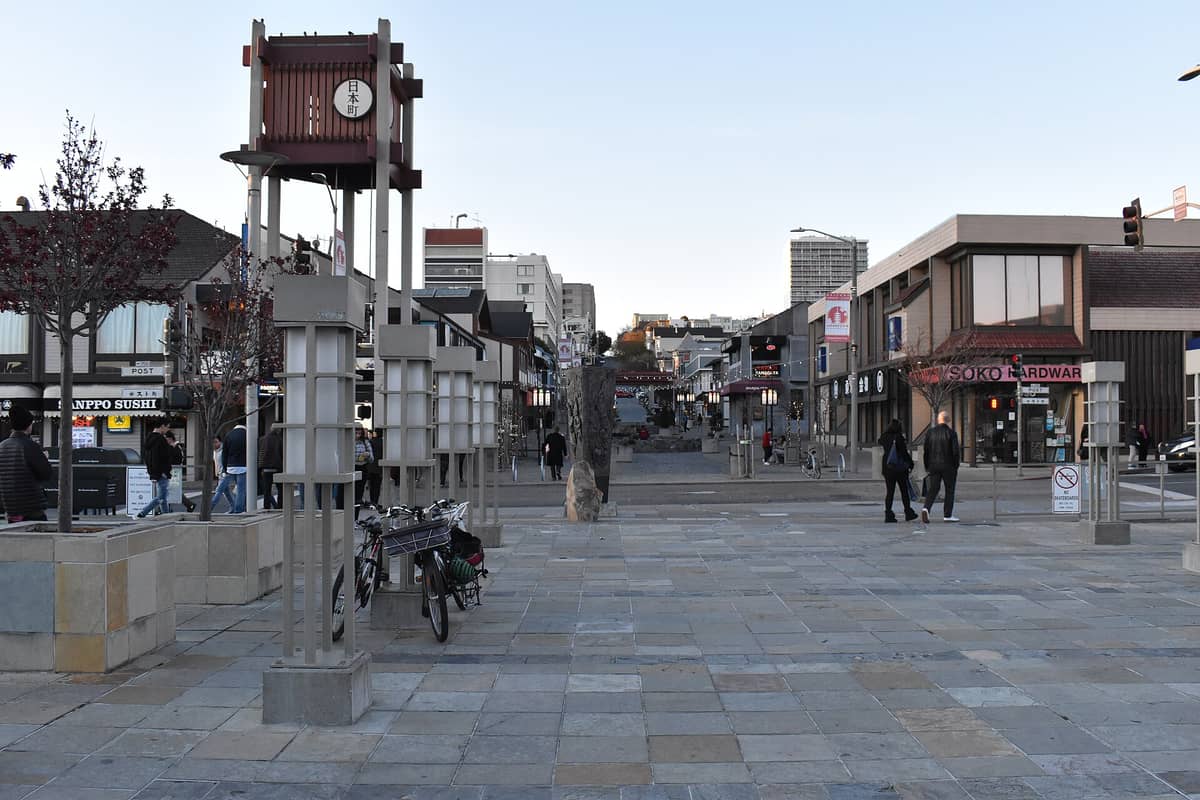
The physical anchor of the neighborhood is the Japan Center complex, a covered mall development built in the 1960s that spans the two blocks between Laguna and Fillmore along Post Street. The Peace Plaza sits between the two main mall buildings, and the concrete Peace Pagoda dominates the open courtyard. Just north, the Buchanan Street pedestrian mall adds a tree-lined outdoor spine running between Sutter and Post. Surrounding these landmarks is a mix of low-rise commercial buildings, Victorian residential blocks, and community institutions that have been here for generations.
Japantown connects naturally to several adjacent neighborhoods. Walk four blocks east on Post Street and you are at the edge of the Fillmore corridor, historically a jazz and African American cultural district. Walk north up Fillmore Street and you rise quickly into Pacific Heights, one of San Francisco's wealthiest residential streets. To the south, the Western Addition transitions into the Tenderloin. Understanding these adjacencies helps: Japantown is a relatively calm pocket between some of the city's more intense zones.
Character & Atmosphere
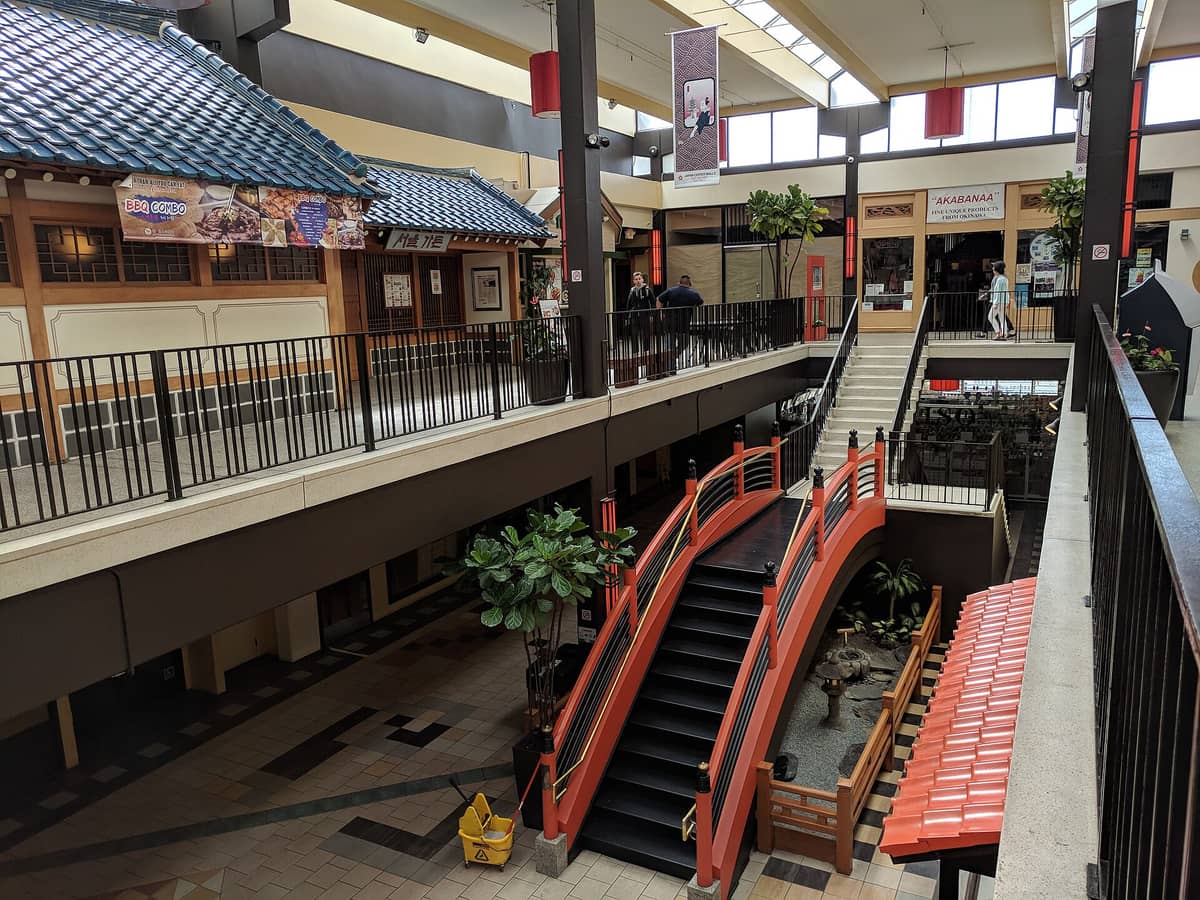
Japantown operates on a quieter frequency than most San Francisco commercial districts. On a weekday morning, Post Street is largely still. The indoor Japan Center malls smell faintly of incense from the gift shops and fresh fish from the market stalls. Shopkeepers arrange window displays of ceramic tea sets and anime figurines. The Buchanan Street pedestrian mall gets a thin slice of morning light between buildings, and a few older residents sit on the benches that line it.
By midday, the character shifts. Lunch crowds fill the ramen shops and izakayas along Post Street and inside the Kintetsu and Kinokuniya buildings. There is usually a line at the more popular spots by 12:30. The indoor malls fill with a mix of regulars, Japanese American families, tourists, and younger visitors drawn by the anime and manga shops. The Peace Plaza, often empty on grey mornings, becomes a gathering point for photographs of the pagoda.
Evenings in Japantown are low-key compared to neighborhoods like the Mission or North Beach. Many shops close by 8 or 9 pm. The restaurants run later, and on weekends there is enough foot traffic to feel lively without feeling chaotic. After 10 pm the streets are quiet. This is not a nightlife neighborhood, and that is not a criticism. It is the kind of place where a meal and a browse through a bookshop constitute a full evening.
The two biggest disruptions to this low-key rhythm are the Northern California Cherry Blossom Festival in April and the Nihonmachi Street Fair in August. During the Cherry Blossom Festival, the neighborhood transforms: taiko drumming echoes off the mall buildings, food stalls line the streets, and crowds fill the Peace Plaza for performances. If you are here during either event, arrive early or accept the crowds as part of the experience. Outside of festivals, Japantown moves at its own deliberate pace.
ℹ️ Good to know
Japantown is one of only three historically established Japantowns remaining in the United States. The others are in Los Angeles and San Jose. San Francisco's was nearly destroyed by the federal urban renewal programs of the 1950s and 1960s, which displaced thousands of residents. The community that remains has fought hard to stay.
What to See & Do
The Japan Center Malls are the neighborhood's organizing structure, comprising the Kinokuniya Building and the Kintetsu Building connected by the Peace Plaza. Inside Kinokuniya you will find the San Francisco outpost of the famous Japanese bookstore chain, stocking Japanese language books, manga, art books, stationery, and a selection of English titles about Japan. It is the kind of shop that rewards slow browsing. The rest of the mall holds gift shops selling lacquerware, ceramics, Japanese snacks, anime merchandise, and household goods.
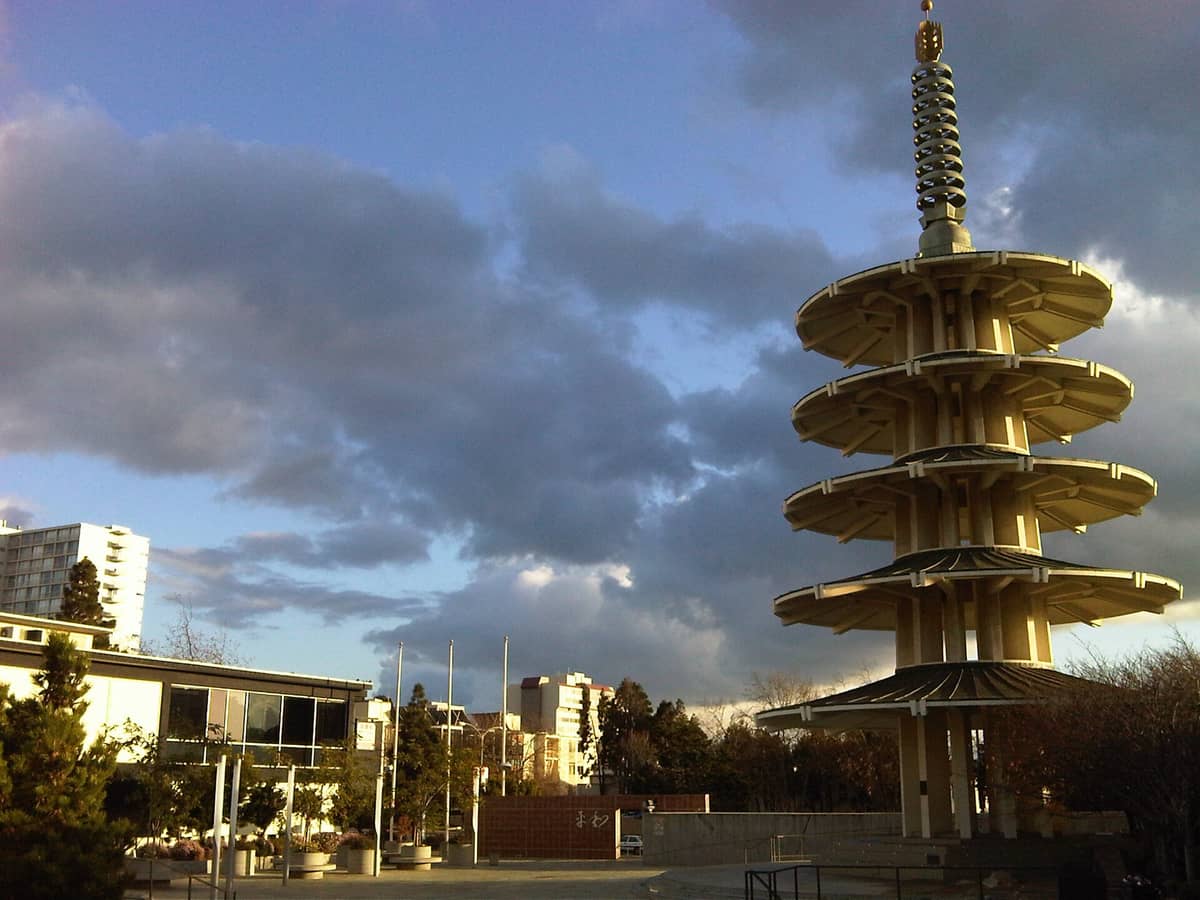
In the open courtyard between the two buildings stands the Peace Plaza Pagoda, a five-tiered concrete tower gifted to San Francisco by the city of Osaka in 1968. It is a striking piece of postwar civic architecture, designed by Yoshiro Taniguchi. The plaza around it hosts the Cherry Blossom Festival performances and various community events year-round. It is worth pausing here even on a quiet day.
The Buchanan Street pedestrian mall, running between Sutter and Post streets just east of the Japan Center, was redesigned in recent decades and features Japanese-inspired lanterns and community murals. It connects the mall complex to the surrounding residential streets and gives the neighborhood something that the indoor malls cannot: open air and a sense of the neighborhood as a lived-in place rather than a commercial destination.
Beyond shopping and food, Japantown has cultural institutions worth knowing. The Japanese Cultural and Community Center of Northern California, on Sutter Street, runs language classes, cultural programs, and community events throughout the year. Check their events calendar before you visit. The neighborhood is also home to several martial arts dojos, a Buddhist temple, and community organizations that have operated here for decades.
Browse Kinokuniya Bookstore for Japanese manga, stationery, and art books
Walk the Buchanan Street pedestrian mall and read the community history murals
Photograph the Peace Pagoda in the Japan Center courtyard
Visit the Japanese Cultural and Community Center for rotating exhibitions and programs
Shop for Japanese ceramics, snacks, and kitchenware in the indoor mall shops
Check event listings for taiko drumming performances and cultural demonstrations
💡 Local tip
If you visit during the Northern California Cherry Blossom Festival in April, arrive early for the grand parade along Post Street. Viewing spots fill up quickly, and the parade route down Post Street is the visual centerpiece of the whole event.
Eating & Drinking
The food in Japantown is the main reason many visitors come and return. The concentration of Japanese restaurants in a small area means real variety rather than the same menu copied across five storefronts. You can eat well across multiple price points without leaving Post Street.
Ramen is the most visible category. Several dedicated ramen shops operate in and around the Japan Center malls, ranging from rich tonkotsu broths to lighter shoyu styles. Lines form at peak hours on weekends, but the turnover is fast. Beyond ramen, the neighborhood has solid izakayas for small plates and Japanese whisky, sushi counters with both omakase and a-la-carte options, and Japanese curry houses that are among the best places in the city for a quick, warming lunch under fifteen dollars.
Sweets are a particular strength. Look for mochi from traditional confectionery shops that have operated in the neighborhood for decades. Manju, daifuku, and seasonal wagashi are sold by weight or by piece. There are also several Japanese-style bakeries producing milk bread, melon pan, and red bean pastries that work well as a morning snack or afternoon pick-me-up between the shops.
The covered malls also house a Japanese grocery and a handful of food stalls that sell savory crepes, yakitori, and packaged Japanese snacks. For a sit-down meal, the restaurants on Post Street proper tend to be slightly larger and easier to get a table on weekday evenings. On weekends, go early for lunch (before noon) or late (after 2 pm) to avoid the main rush.
For context on the wider Japanese food scene beyond Japantown, and how it fits into San Francisco's broader dining landscape, the what to eat in San Francisco guide covers the city's food neighborhoods and specialties in detail.
⚠️ What to skip
Many Japantown restaurants close between lunch and dinner service, typically from around 2:30 to 5:30 pm. If you arrive mid-afternoon expecting a full meal, you may find shuttered doors. Plan your visit around the lunch or dinner window, or stick to the cafe and bakery options that keep all-day hours.
Getting There & Around
Japantown has no dedicated BART or Muni Metro station, which means the most practical ways in are by bus or on foot from a nearby neighborhood. The 38-Geary bus on Geary Boulevard, one of the city's busiest surface routes, stops within a few blocks and runs frequently from downtown. The 22-Fillmore runs along Fillmore Street on the eastern edge of the neighborhood and connects to the Mission District to the south and Pacific Heights to the north. The 2-Clement and 31-Balboa lines also serve the broader area.
From Union Square or the Civic Center area, Japantown is roughly 1.5 to 2 miles west, which is a 30 to 40 minute walk across flat to gently rolling terrain. It is walkable but not trivially close. The bus routes make more sense for most visitors. From the Powell Street BART station, the 38-Geary bus can get you here in around 15 minutes depending on traffic.
If you are combining Japantown with other Western Addition and Lower Pacific Heights stops, the 22-Fillmore is the most useful single route. It connects directly to the Mission District to the south, making a north-south neighborhood tour easy without doubling back downtown. Rideshares are widely available in the area and drop-off directly on Post Street.
Parking exists in the Japan Center garage on Geary Boulevard, which is reasonably priced by San Francisco standards and validated by some mall businesses. If you are driving from outside the city, this is one of the easier San Francisco neighborhoods to arrive at by car, though standard city parking rules apply on surrounding streets. For a full breakdown of getting around San Francisco by transit, the getting around San Francisco guide covers all major transit options.
Where to Stay
Japantown is a small neighborhood and does not have a large hotel inventory within its immediate borders. A handful of hotels and boutique properties operate in the area, generally along the Post Street and Geary Boulevard corridors. Staying here puts you within walking distance of Lower Pacific Heights, close enough to Fillmore Street for evening dining, and roughly equidistant from the western edge of downtown and Golden Gate Park.
The neighborhood suits travelers who want a quieter base than Union Square while remaining connected to the city. It works well for Japan enthusiasts, repeat visitors who want a residential feel, and anyone who places a priority on walkable access to good food over proximity to major tourist attractions. The streets are calm at night, which is a genuine advantage if you are traveling with young children or prefer lower ambient noise.
Travelers who need to be close to the Moscone Convention Center or the Financial District may find the commute from Japantown slightly inconvenient on transit. For a wider comparison of where to stay across San Francisco's neighborhoods, the where to stay in San Francisco guide gives a full breakdown by neighborhood type and traveler profile.
Japantown in the Context of San Francisco
Japantown makes the most sense as part of a broader Western Addition or multi-neighborhood day rather than a sole destination. A natural pairing is Fillmore Street heading south from the Japan Center, where independent boutiques, coffee shops, and the remnants of the old Fillmore jazz district give the walk texture. Combining Japantown with Haight-Ashbury is a reasonable half-day itinerary given the short distance west.
For first-time visitors trying to fit Japantown into a tight schedule, the 3-day San Francisco itinerary and the San Francisco neighborhoods guide both include advice on sequencing neighborhoods efficiently. Japantown typically earns two to three hours for a focused visit: a loop through the malls, lunch, and a walk along Buchanan Street covers the core without rushing.
One honest note on expectations: Japantown is a small, quiet neighborhood that matters enormously to the community that built and sustains it, but it is not a visually dramatic destination in the way that the waterfront or Golden Gate Park are. What it offers is intimacy, authenticity, and a sense of a community that has persisted against considerable historical pressure. That is worth something distinct from spectacle.
TL;DR
One of only three remaining historically established Japantowns in the United States, with deep roots in Japanese American history and community life.
The commercial core centers on the Japan Center indoor malls and Peace Plaza, with the Buchanan Street pedestrian mall adding outdoor character.
Best for: food enthusiasts, Japan culture fans, travelers who want a calm residential-feeling neighborhood within reach of central San Francisco.
Not ideal for: travelers who need walking distance to downtown attractions, or those looking for active nightlife after 10 pm.
Plan 2 to 3 hours for a core visit; extend with Fillmore Street or combine with a nearby neighborhood for a half-day western San Francisco loop.
Visit during the April Cherry Blossom Festival for the neighborhood at its most energetic, but book ahead and arrive early for the best experience.
San Francisco's beaches are unlike anywhere else in California. Cold water, dramatic fog, and powerful Pacific surf define the city's coastline, but the scenery is extraordinary. This guide covers the best beaches in San Francisco for sunset walks, surfing, coastal hikes, and day trips beyond the city.
San Francisco packs an unusually deep museum scene for a city of its size. This guide covers the city's finest institutions across art, science, history, and culture, with practical tips on pricing, free days, and how to plan your visit.
San Francisco's climate defies expectations. Summer is foggy and cool, fall is surprisingly warm, and winter can be a genuine bargain. This guide breaks down every season so you can pick the right time for your trip, your budget, and your tolerance for Karl the Fog.
San Francisco is one of the most visually dramatic cities in America, built on hills that frame the bay, the bridges, and the Pacific at every turn. This guide covers the best viewpoints in the city and beyond, from free hilltop parks to lesser-known coastal perches that most visitors never find.
San Francisco sits at the gateway to one of the most varied day-trip landscapes in America. Within two hours you can be walking among thousand-year-old redwoods, tasting Cabernet in Napa, hiking coastal bluffs in Point Reyes, or exploring a former federal prison on a rocky bay island.
San Francisco is one of America's most spectacular cities, and you don't need a big budget to experience it. From iconic bridges and coastal trails to free museum days and world-class public art, this guide covers the best free things to do in San Francisco.
From BART airport transfers to cable car fares, this guide covers every way to get around San Francisco — with practical advice on what's worth it, what to skip, and how to navigate the city like someone who actually lives there.
San Francisco offers a deep luxury travel scene for a city of its size. This guide covers where to stay, what to eat, which experiences justify the price, and how to time your visit to get the best value on high-end accommodations.
San Francisco International Airport sits 13-15 miles south of downtown, and getting into the city is straightforward once you know your options. This guide breaks down every transport method from SFO, including real costs, travel times, and the mistakes most first-timers make.
San Francisco's built environment spans Victorian row houses, Edwardian flats, Beaux-Arts civic monuments, and bold modernist towers. This guide breaks down the key styles, landmark buildings, and best neighborhoods to explore on foot, with practical advice for architecture walks in any season.
San Francisco's cable car system is one of the most recognizable transit networks in the world — and also one of the most misunderstood. This guide covers all three operating lines, how fares and passes work, the best times to ride, and clear guidance on avoiding the worst queues.
San Francisco's ferry network spans two separate operators, multiple terminals, and fares that vary by route and payment method. This guide breaks down every major route, current pricing, and how to avoid the most common mistakes first-time riders make.
San Francisco packs an enormous amount into 47 square miles of land. This guide covers everything a first-time visitor needs to know: how to arrive, where to stay, what to prioritize, and the common mistakes that waste time and money.
San Francisco Fleet Week is one of the largest free public events in the United States, drawing hundreds of thousands of visitors to the Bay waterfront each October. This guide covers the Blue Angels air show schedule, the best free viewing spots, ship tour logistics, VIP ticket options, and practical advice for navigating the crowds.
San Francisco is one of California's most naturally romantic cities. Bay views, foggy evenings, world-class food, and historic neighborhoods create an atmosphere that pairs well with almost any travel style. This guide covers where to go, what to spend, when to visit, and how to make the most of a couples trip to the City and County of San Francisco.
At 1,017 acres, Golden Gate Park is one of the great urban parks in the United States, and most visitors only scratch the surface. This guide covers the top attractions, practical logistics, seasonal timing, and the spots worth seeking out beyond the obvious.
San Francisco rewards the curious. Beyond the Golden Gate Bridge and Alcatraz, the city hides mosaic staircases, acoustic sculptures, Victorian cemeteries, and rooftop gardens that most visitors never find. This guide points you to the spots locals actually love.
San Francisco is one of America's most walkable cities, but its hiking scene goes far beyond neighborhood strolls. These trails deliver coastal cliffs, forested ridgelines, panoramic summits, and wild Pacific shorelines all within city limits or a short drive away.
San Francisco in summer is nothing like a Southern California beach vacation. Expect cool temperatures in the mid-60s°F, morning fog that can linger well past noon, and a packed event calendar from June through August. This guide breaks down exactly what you'll encounter and how to prepare.
Three days is enough to hit San Francisco's iconic landmarks, explore distinct neighborhoods, and get a real feel for the city. This itinerary routes each day logically so you spend less time in transit and more time actually experiencing the city.
The Mission burrito is not just a meal. It is a San Francisco institution with a disputed origin, a precise construction method, and a handful of taquerias that have been perfecting it for decades. This guide covers the history, the key ingredients, where to find the best version, and what separates the real thing from a pale imitation.
Muir Woods National Monument sits just 12-17 miles north of San Francisco, protecting one of the last old-growth coast redwood stands in the Bay Area. This guide covers everything you need to plan a successful day trip: mandatory reservations, transport options, trail choices, seasonal timing, and the common mistakes that catch first-time visitors off guard.
Napa Valley sits just 50-60 miles north of San Francisco, making it one of the Bay Area's most rewarding day trips. This guide covers every logistic: how to get there, what tastings cost, when to book, and how to pace a single day without burning out before the third pour.
San Francisco packs an extraordinary range of distinct neighborhoods into just 47 square miles of land. From the foggy avenues of the Outer Sunset to the sunny slopes of the Mission, this guide breaks down what each district is actually like, who it suits, and how to navigate between them.
San Francisco's nightlife runs deeper than most visitors expect. This guide breaks down the best neighborhoods for a night out, what to expect at live music venues, how late things actually run, and which parts of the city suit your style — from craft cocktail bars to late-night dance floors.
San Francisco has a reputation for draining wallets, but that reputation is only partly deserved. With the right approach to accommodation, transport, food, and attractions, a solo traveler can get by on $110–$160 per day without missing the city's best experiences. This guide breaks down exactly where your money goes and where you can cut back.
Twenty-four hours in San Francisco is enough to walk an iconic bridge, eat world-class food, explore historic neighborhoods, and watch the sun set over the Pacific. This itinerary is built around geography so you spend less time in transit and more time actually experiencing the city.
San Francisco is one of America's most rewarding cities to visit, but it rewards prepared travelers. This guide covers the real safety picture: car break-ins, petty theft hotspots, neighborhoods to navigate carefully, and practical strategies to keep your trip trouble-free.
San Francisco's shopping scene spans far more than one famous square. This guide breaks down every major retail district, from luxury flagships around Union Square to independent boutiques in Hayes Valley, vintage shops on Haight Street, and specialty food at the Ferry Building, with practical advice on getting there, what to expect, and where to skip.
The San Francisco to Los Angeles corridor is one of the most-traveled routes in the United States, with options ranging from a 90-minute flight to a two-day Pacific Coast Highway road trip. This guide breaks down every realistic method by cost, time, and comfort so you can choose the right one for your trip.
San Francisco is one of the world's great walking cities, built for exploration on foot. These 20 self-guided stops span the city's most rewarding routes, from waterfront promenades and Victorian hilltops to mural-filled alleys and coastal cliffs.
Forty-eight hours is enough time to hit San Francisco's greatest hits and still feel like you've gone beyond the surface. This guide covers the essential waterfront, neighborhoods, parks, and cultural stops to build a memorable weekend in one of America's most compelling cities.
San Francisco is one of the most family-friendly cities in the United States, with world-class science museums, free outdoor spaces, bay cruises, and a compact layout that keeps logistics manageable. This guide covers the best attractions for children, how to save on tickets, when to visit, and how to get around without a car.
San Francisco packs an extraordinary range of experiences into about 47 square miles of land. From the Golden Gate Bridge and Alcatraz to neighborhood walks through Chinatown and the Mission, this guide covers the top things to do in San Francisco with clear, practical detail to help you spend your time well.
San Francisco has one of the most serious food cultures in the United States, with about 30 Michelin-starred restaurants according to the 2026 Michelin Guide, roughly 4,400 restaurants packed into about 47 square miles, and an obsessive commitment to local, seasonal ingredients. This guide covers the iconic dishes, the neighborhoods where each food culture lives, what things actually cost, and where visitors consistently go wrong.
Choosing where to stay in San Francisco shapes your entire trip. This guide breaks down the city's most practical neighborhoods by price, transit access, safety, and atmosphere, so you can book with confidence rather than guesswork.