Chenghua District sits on the northeastern edge of Chengdu's urban core, blending major tourist infrastructure with working-class residential streets and a creative culture scene built from the bones of old factories. It is most visited for the Chengdu Research Base of Giant Panda Breeding, but travelers who stay longer find a district in genuine transition, where coal-era industrial architecture now hosts cafés, galleries, and live music venues.
Chenghua District is where Chengdu keeps its pandas and its industrial past in equal measure. Stretching across roughly 109 square kilometers northeast of the city center, it is the kind of place most visitors pass through without realizing they are in it, though those who slow down find one of the city's most interesting urban transformations unfolding block by block.
Orientation
Chenghua District occupies the northeastern quadrant of Chengdu's urban core. Its boundaries run against Jinjiang District to the south, Jinniu District to the west, Xindu District to the north, and Longquanyi District to the east. The district covers approximately 109.3 square kilometers, making it mid-sized by Chengdu standards, compact enough to be largely navigable by metro but spread out enough that its different zones feel genuinely distinct from each other.
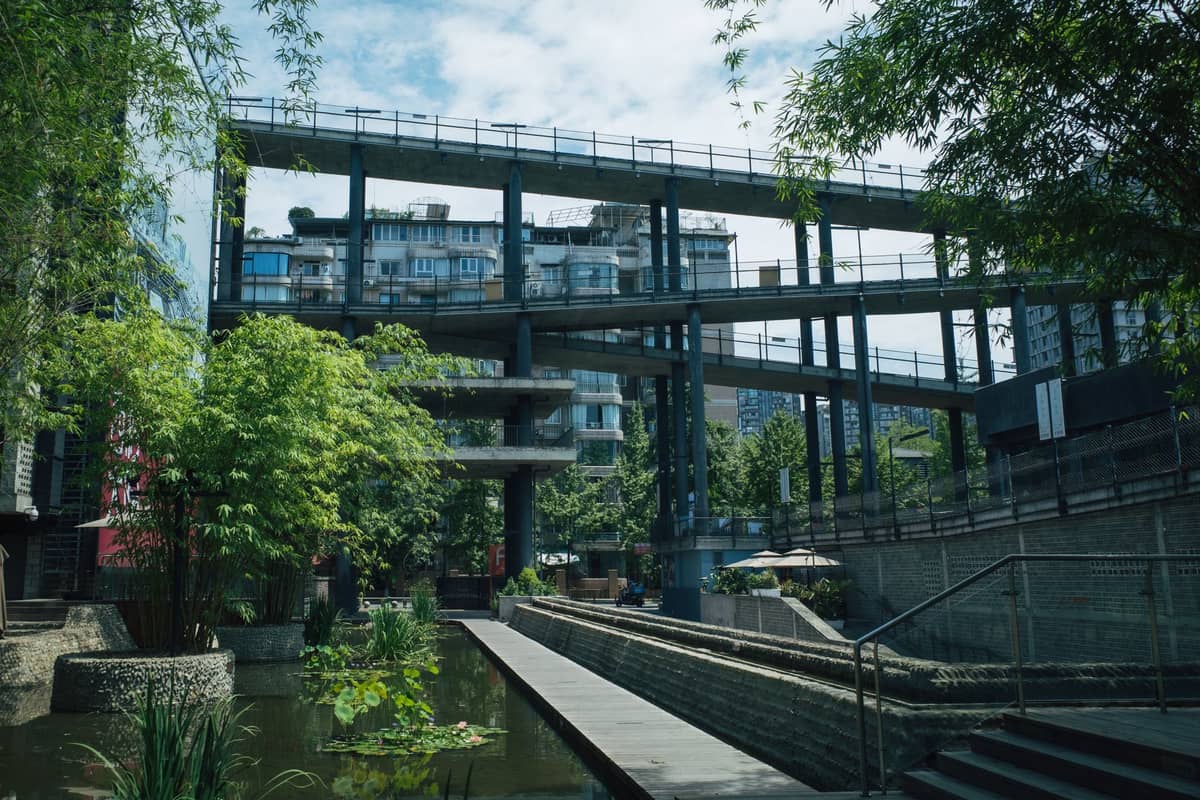
The district divides loosely into three functional zones. The northern section is anchored by the Chengdu Research Base of Giant Panda Breeding, set among bamboo-shaded grounds near Panda Avenue. The central belt runs along the Second Ring Road and holds a dense mix of residential towers, neighborhood markets, and older commercial streets. The southern edge of Chenghua, where it meets Jinjiang District, is where the district's most celebrated reinvention sits: Dongjiao Memory (Eastern Suburb Memory), the creative quarter repurposed from a former industrial campus.
Chengdu East Railway Station, one of the most important high-speed rail hubs in southwestern China, sits near the southern boundary of Chenghua and functions as the main arrival and departure point for trains to Chongqing, Xi'an, and points east. For many travelers, it is their first experience of the district. Understanding where it sits helps with navigation: the station's northern exits connect into Chenghua proper, while the southern exits edge toward Jinjiang District.
Character & Atmosphere
Chenghua is not a district that announces itself with famous streets or a single defining image. Its character emerges gradually. The residential streets west of Zhaojuesi South Road feel like the Chengdu that most tourists never reach: ground-floor noodle shops with laminated menus, elderly residents playing cards under canopies, small grocery stalls spilling bags of dried chilies onto the pavement. The light in the afternoons has a particular quality here, filtered through plane trees and the city's characteristic overcast sky.
Mornings in Chenghua begin early and loudly around its street markets. By 7am, the areas near residential compounds are fully alive with vendors selling tofu, fresh greens, and steamed buns from three-wheeled carts. The smell of doubanjiang, Sichuan's fermented broad-bean chili paste, drifts from street-food stalls long before most tourists have left their hotels. This is the daily rhythm of a working urban district, and it is genuinely different from the curated atmosphere of Kuanzhai Alley or Jinli.
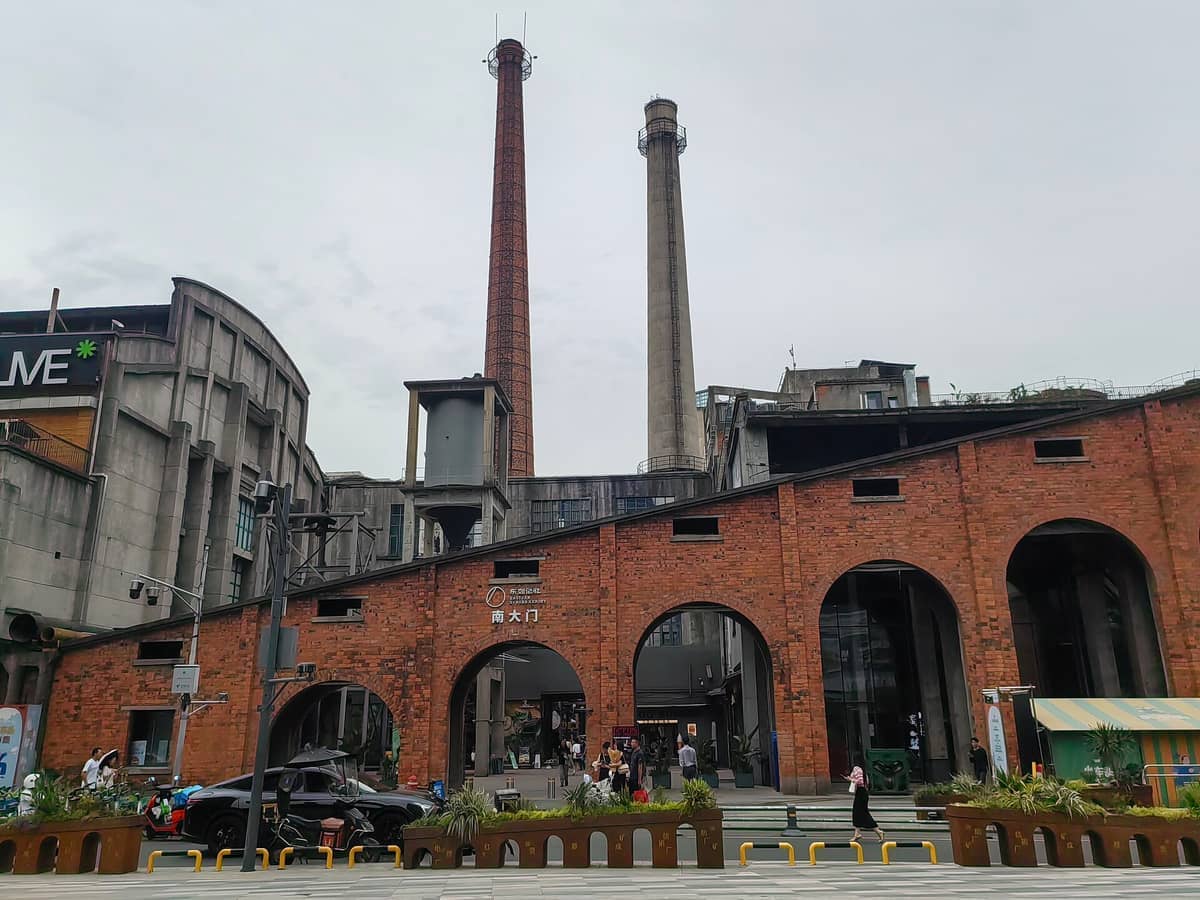
By contrast, the area around Eastern Suburb Memory shifts into a different mode entirely as the day progresses. The old factory buildings, with their Soviet-influenced brick facades and tall smokestack silhouettes, fill up with young Chengdu residents from mid-afternoon onward. On weekends, the space hosts outdoor concerts, vintage markets, and food stalls that run well past midnight. It is one of the city's few outdoor entertainment districts where the architecture does the talking, and where the crowd skews local rather than tourist.
After dark, the Chengdu East Railway Station area takes on the slightly anonymous energy of any major transit hub: bright fluorescent lights, convenience stores, and people moving purposefully with luggage. Travelers arriving late should note this is a functional space, not a social one. The more interesting nighttime streets are a few stops north or east on the metro, closer to the bars and music venues around Eastern Suburb Memory.
ℹ️ Good to know
Chenghua is an honest cross-section of modern Chengdu rather than a highlight reel. Visitors expecting polished tourist infrastructure across the whole district will find it only in specific pockets. The appeal lies precisely in the contrast between those pockets and the working-city streets around them.
What to See & Do
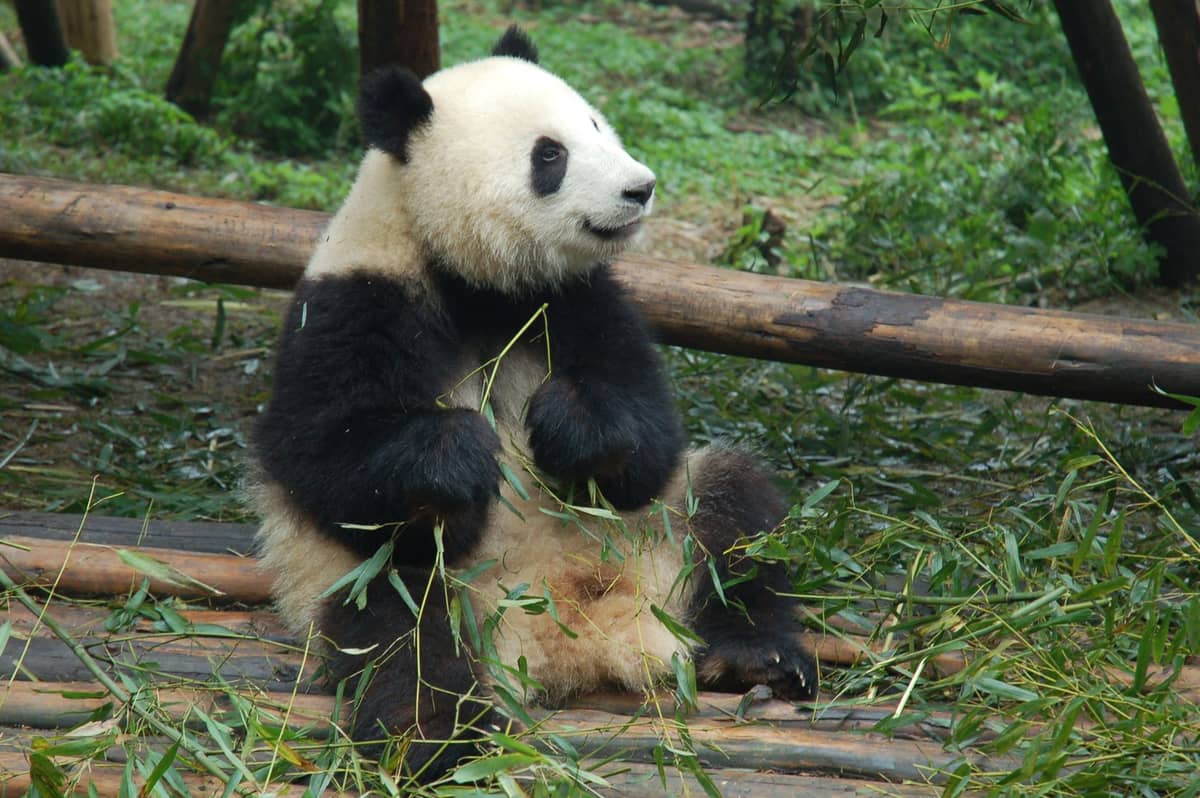
The Chengdu Research Base of Giant Panda Breeding is the single most visited attraction in all of Chengdu, and it sits entirely within Chenghua District. The base covers over 100 hectares of bamboo forest and naturalistic enclosures in the northern part of the district, near what is now officially named Panda Avenue (Xiongmao Dadao). It functions as both a conservation and research facility, and the number of giant and red pandas resident there changes over time as animals are born, transferred, or loaned internationally. Plan to arrive as early as possible, ideally before 9am, when pandas are most active and crowds are thinnest.
The Eastern Suburb Memory (Dongqu Jiyi / Dong Jiao Ji Yi) is Chenghua's second most distinctive destination. Built on the grounds of a former state-owned electronics and machinery factory complex, it has been converted into a sprawling creative district with performance venues, independent shops, recording studios, and a consistently strong live music calendar. The brick factory buildings and preserved industrial equipment give it a texture that newer commercial developments in the city cannot replicate. Check the venue listings before visiting; it is significantly more rewarding when there is programming scheduled.
Zhaojue Temple (昭觉寺, Zhāojué Sì) is one of Chengdu's significant Buddhist monasteries and sits near the intersection of Zhaojuesi South Road and the north section of the Second Ring Road. The temple dates back to the Tang Dynasty and has been rebuilt and restored several times over the centuries. It receives a fraction of the tourist attention given to Wenshu Monastery in Qingyang District, which makes the atmosphere notably quieter. Early mornings here, when monks are in the courtyards and incense smoke drifts through the gates, offer a genuine sense of active religious life rather than museum-like preservation.
Chengdu Research Base of Giant Panda Breeding: arrive before 9am for active pandas and smaller crowds
Eastern Suburb Memory: an industrial campus turned creative and music district, best on weekends
Zhaojue Temple: Tang Dynasty Buddhist monastery with low tourist traffic and authentic atmosphere
Chengdu East Railway Station area: worth exploring the street food corridor north of the station concourse
💡 Local tip
The panda base is best combined with an early start. Pandas are generally more active earlier in the day, and activity often drops significantly by late morning. Book tickets online in advance, as timed entry and visitor-flow controls apply.
Eating & Drinking
Chenghua's food scene is firmly rooted in everyday Sichuan cooking rather than tourist-facing restaurants. The streets around the residential neighborhoods near Zhaojuesi and along the roads feeding into the Second Ring Road are lined with the kind of small, family-run places that serve dan dan noodles, zhong dumplings, and mapo tofu at prices that rarely exceed 20 to 30 yuan for a full meal. This is where Chengdu locals eat, and the quality is consistently high because the competition is intense. There are no concessions here for mild palates: the food is seasoned for Sichuanese taste, which means numbing spice is a baseline rather than an option. For a broader understanding of what to order, the Chengdu food guide covers the essential dishes and how to navigate Sichuan menus.
Around Eastern Suburb Memory, the food offer shifts upward in price and presentation. The cluster of restaurants and snack vendors within the creative district includes craft beer bars, specialty coffee shops, and street food vendors targeting the young local crowd that fills the space on weekends. Sichuan skewers (chuanchuan xiang) are particularly popular here in the evenings. For travelers who want to understand the full width of the city's Chengdu street food culture, the combination of early-morning market eating in Chenghua's residential streets and evening eating at Eastern Suburb Memory covers two very different registers of the same cuisine.
Chenghua is not typically associated with high-end hot pot, but the district has its share of local hot pot restaurants that draw neighborhood regulars rather than tourists. For travelers who want to go deeper on the subject, the Chengdu hot pot guide explains how to read a hot pot menu and what to expect from a local rather than tourist-oriented restaurant.
Tea culture in Chenghua is quieter than in the more famous parks of Qingyang and Wuhou Districts, but several neighborhood teahouses operate near Zhaojue Temple and in the older residential lanes. These are working teahouses, not tourist reconstructions: plastic chairs, strong green tea served in lidded mugs, and locals spending entire afternoons reading newspapers or playing mahjong. The price of tea here is typically a fraction of what it costs in Renmin Park's famous teahouse.
💡 Local tip
If you are arriving by high-speed rail at Chengdu East Station, the food corridor north of the station forecourt offers a faster and cheaper introduction to Sichuan noodles and dumplings than anything inside the station itself. Walk five to ten minutes north and look for the strip of small restaurants that serve the commuter crowd.
Getting There & Around
Chenghua is one of the most metro-accessible districts in Chengdu. Chenghua is served by several Chengdu Metro lines, with Line 3 providing access to the panda base via Panda Avenue Station. The key stations for visitors include Panda Avenue Station for the panda base and Chengdu East Railway Station for high-speed rail connections.
From Tianfu Square, the geographic center of Chengdu, Chengdu East Station is approximately 20 to 25 minutes by metro depending on the line and interchange taken. From the panda base back to central Chengdu, the journey typically takes 30 to 40 minutes on the metro via Panda Avenue Station. For full details on navigating Chengdu's metro network, including which lines connect to the airports, the Chengdu transit guide covers the city's routes clearly.
Within the district, walking works well for the areas around individual attractions but not for moving between them. The distance from Chengdu East Station to Eastern Suburb Memory, for example, is manageable on foot at roughly 2 to 3 kilometers, but the walk passes through busy arterial roads rather than interesting streets. The metro remains the faster choice. Didi (China's principal ride-hailing app) is the practical alternative for trips that don't align neatly with metro lines, particularly for early morning visits to the panda base before the metro reaches full frequency.
Chengdu East Railway Station also serves as a coach terminal for regional bus services, connecting Chenghua to destinations within Sichuan Province. Zhaojuesi Coach Station, near the temple, handles additional regional routes. Travelers planning day trips to places like Dujiangyan or Leshan should note that these routes typically depart from different stations in other districts; confirm departure points before planning an itinerary.
⚠️ What to skip
Chengdu East Railway Station is one of the busiest rail hubs in southwestern China. On national holidays and Golden Week, passenger volume becomes very high. Allow significant extra time for security queuing, and arrive at least 45 minutes before your train's departure time during busy periods.
Where to Stay
Most international visitors to Chengdu choose to base themselves in Jinjiang District, near Chunxi Road and Taikoo Li, or in Wuhou District near the historic sites. These areas offer denser concentrations of internationally oriented hotels and easier walking access to the city's top-tier attractions. The Chengdu accommodation guide compares all of the main neighborhoods for different traveler types.
Chenghua does have accommodation options, particularly clustered around Chengdu East Railway Station and near the panda base. The station area hotels are practical for early-morning train departures or late arrivals by high-speed rail, but the surrounding streets are transit-functional rather than pleasant to explore on foot. Budget guesthouses and mid-range chain hotels operate in this zone and are straightforward, if unremarkable.
Staying near the panda base makes most sense for travelers who want to arrive at opening time without a long metro journey. There are hotels along Panda Avenue and in the adjacent residential streets, with options ranging from budget guesthouses to mid-scale Chinese business hotels. Neither zone offers the food and nightlife density of central Chengdu, so travelers who want evening activities will find themselves commuting back toward Jinjiang or Wuhou by metro. For most first-time visitors, Chenghua is better treated as a day-trip destination than a base.
Practical Notes for Visitors
Chenghua District sits outside the tourist-polished circuits that cover much of central Chengdu, which means English signage is sparse beyond the major attractions. The panda base is professionally set up for international visitors with English-language materials and clear navigation. Eastern Suburb Memory has some English signage in the commercial areas. Beyond these zones, navigating Chenghua requires either basic Mandarin, a translation app, or a map downloaded offline. The Chengdu first-timer guide covers the practical basics that help in neighborhoods like this.
Safety in Chenghua follows the general pattern of Chengdu as a whole: the district is a low-risk urban environment for most travelers. Standard precautions around busy transit hubs apply, particularly at Chengdu East Station where pickpocketing can occur in crowds. For broader guidance on common issues, the Chengdu safety tips guide is worth reading before visiting.
The best time to visit Chenghua aligns with Chengdu's broader seasonal pattern. Spring (March to May) and autumn (September to November) bring moderate temperatures and lower rainfall, making outdoor time at the panda base or Zhaojue Temple considerably more comfortable. Summer visits are possible but the combination of heat and humidity can make the panda base grounds feel draining after an hour or two. Winter visits to the panda base are worth considering: crowds drop significantly, the pandas tend to be more active in cooler weather, and the bamboo forest has a quieter, more atmospheric quality under the grey winter sky.
Summary
TL;DR
Chenghua District is the home of the Chengdu Research Base of Giant Panda Breeding, the city's single most visited attraction, and is best reached early in the morning for maximum panda activity and minimum crowds.
Eastern Suburb Memory, built on a repurposed factory campus in the district's southern zone, is one of Chengdu's most authentic creative and music destinations, with a crowd that skews local and a programming calendar worth checking before visiting.
The district's residential streets offer some of the most unfiltered everyday Chengdu street food in the city, at prices well below what you will find in tourist-facing neighborhoods.
Chenghua is exceptionally well served by metro, with seven lines crossing the district and key stations for every major attraction, making it easy to visit as a day trip from a base in Jinjiang or Wuhou Districts.
Most first-time visitors will find Chenghua better as a destination than a base, unless arriving or departing by high-speed rail from Chengdu East Station or prioritizing early access to the panda base.
Three days is enough time to cover Chengdu's essential experiences without rushing. This itinerary balances the panda base, historic streets, Sichuan cuisine, cultural landmarks, and a day trip option, with practical notes on logistics, timing, and what to skip.
Chengdu's museum scene spans 4,500 years of Sichuan history, from mysterious Bronze Age civilizations to Tang Dynasty poets and dinosaur fossils. This guide covers the standout institutions, what to expect inside each one, and how to plan your visits efficiently.
Chengdu's temple scene spans 1,400 years of Buddhist and Taoist history, from incense-filled city monasteries to sacred peaks rising above the clouds. This guide covers the best temples in Chengdu and beyond, with honest advice on what to expect at each one.
Chengdu rewards visitors year-round, but the timing of your trip makes a real difference. This guide breaks down every season by weather, crowd levels, panda activity, and practical logistics so you can choose the window that actually suits your plans.
Chengdu is surrounded by ancient towns that most visitors completely overlook. This guide covers the five best options — Huanglongxi, Luodai, Jiezi, Anren, and Pingle — with real transport details, honest assessments, and seasonal advice to help you choose the right one for your trip.
Chinese New Year transforms Chengdu into one of China's most atmospheric festival cities, with temple fairs, lantern displays, and Sichuan folk performances across the city. But the season also brings peak crowds, tight transport, and some genuine planning challenges. This guide tells you exactly what to expect and how to prepare.
Chengdu is the capital of Sichuan Province, home to 21 million people, giant pandas, and some of the most distinctive food in China. This guide covers the practical details that actually matter for a first visit: which airport you land at, when to go, what to eat, where to stay, and how to get around without confusion.
Chengdu has a slower, more sensory side that makes it genuinely rewarding for couples. This guide covers the most romantic experiences in the city — from dawn panda visits and teahouse afternoons to Sichuan opera nights and scenic day trips — with a clear take on what's worth your time.
Hot pot is not just a meal in Chengdu — it is the social ritual that defines the city's food culture. This guide covers the best restaurants for Sichuan hot pot, exactly how to order, what to expect on the bill, and how to handle the heat without ruining your evening.
Chengdu's after-dark scene runs deeper than the typical tourist circuit. This guide breaks down the city's main nightlife districts, what each one actually offers, realistic price ranges, and how to get around after the metro stops running.
Chengdu is one of China's most rewarding cities for budget travelers. From free parks and temples to street food that costs less than a coffee back home, here's how to experience the best of Chengdu without overspending.
Chengdu is the world's foremost destination for seeing giant pandas in a conservation setting. This guide covers the Chengdu Research Base of Giant Panda Breeding in detail, how to book tickets, the best time to arrive, how to get there, and what the experience is actually like — including what most visitors get wrong.
Chengdu rewards those who step outside. This guide covers the city's best parks, gardens, riverside walks, and natural escapes, from the teahouse-dotted paths of People's Park to the forested peaks of Mount Qingcheng, an hour from the city center.
Chengdu is one of China's safest major cities for visitors, but that doesn't mean you can skip due diligence. From airport taxi scams to tea house traps, here's everything you need to stay safe, avoid getting ripped off, and travel with confidence.
Chengdu is one of southwestern China's best cities for shopping, whether you're after luxury brands, handmade Shu brocade, panda merchandise, or bulk spices for your hotpot. This guide covers the top malls, local markets, souvenir picks, and practical advice to help you spend wisely.
Chengdu is a UNESCO Creative City of Gastronomy and one of the most rewarding cities in Asia for eating on foot. This guide covers the essential Sichuan dishes, the best street food districts, practical navigation tips, and honest notes on what lives up to the hype.
Tea houses are central to daily life in Chengdu in a way that few cities can claim. This guide covers the history, etiquette, best venues, what things cost, and exactly what to expect when you sit down for tea in one of China's most relaxed cities.
The Chengdu to Chongqing route is one of southwestern China's most popular day trips or short breaks. This guide covers every transport option, station logistics, fare breakdowns, and how to make the most of your time in both cities.
Two of southwestern China's most compelling cities, separated by roughly 300 km and connected by high-speed rail. This guide breaks down what each city does best, who each suits, and whether you should bother visiting both.
Chengdu's historic core is genuinely walkable, but only if you know which clusters of sights sit close together and which require transport. This guide maps out three practical self-guided walking routes, breaks down entry costs, and flags the common mistakes that turn a pleasant city walk into an exhausting detour.
Chengdu is one of China's most family-friendly cities, pairing iconic wildlife encounters with hands-on cultural experiences, open parks, and food kids actually enjoy. This guide covers the top activities for families, practical logistics, and practical notes on what works best with children in tow.
Chengdu sits at the center of one of China's richest regions for day-trip travel. Within two hours by rail or road, you can stand before a 71-meter Tang Dynasty Buddha, hike Taoist mountain trails, and explore a 2,300-year-old irrigation system still in use today. This guide covers the best day trips from Chengdu, organized by theme.
Chengdu has two airports, an expanding metro network, and a ride-hailing app that works well once you set it up. This guide covers every transport option with real fares, practical route advice, and honest warnings about what to avoid.
Chengdu is the capital of Sichuan Province and home to giant pandas, world-class spicy food, ancient heritage, and one of China's most livable urban cultures. This guide cuts through the hype to tell you exactly what to expect, what to skip, and whether Chengdu deserves a spot on your itinerary.
Sichuan Opera is one of Chengdu's most distinctive cultural experiences, but knowing where to go, what to expect, and how to book makes a real difference. This guide covers the top venues, ticket tiers, the truth about face-changing, and practical logistics to help you plan a show worth attending.
Chengdu is one of China's most rewarding cities to explore, with a lineup that runs from giant panda encounters and 2,300-year-old irrigation systems to fiery hot pot dinners and late-night tea houses. This guide covers the best things to do in Chengdu with specific advice on timing, tickets, transport, and what to skip.
Chengdu is one of China's great eating cities, and Sichuan cuisine is far more complex than its reputation for chili heat suggests. This guide covers the essential dishes, street snacks, hot pot etiquette, price ranges, and where to actually find the best food across the city.
Choosing where to stay in Chengdu is straightforward once you understand the city's layout and metro network. This guide breaks down the top neighbourhoods by location, price range, and what kind of trip they suit best, so you can book with confidence.