Chengdu Natural History Museum: Fossils, Deep Time, and One of China's Most Striking New Science Buildings
Opened in November 2022, the Chengdu Natural History Museum is one of the largest and most architecturally ambitious natural history institutions in southwestern China. Located in Chenghua District and easily reached by Metro Line 8, it covers over 17,000 m² of exhibition space across geology, paleontology, biodiversity, and earth-science themes.
Quick Facts
- Location
- No. 88 Chenghua Avenue, Shilidian Road, Chenghua District, Chengdu
- Getting There
- Metro Line 8, Shilidian Station (十里店站), Exit B
- Time Needed
- 2.5 to 4 hours for a thorough visit
- Cost
- ¥20 full-price adult ticket; half-price and free categories apply
- Best for
- Families with children, fossil enthusiasts, architecture fans, rainy-day visits
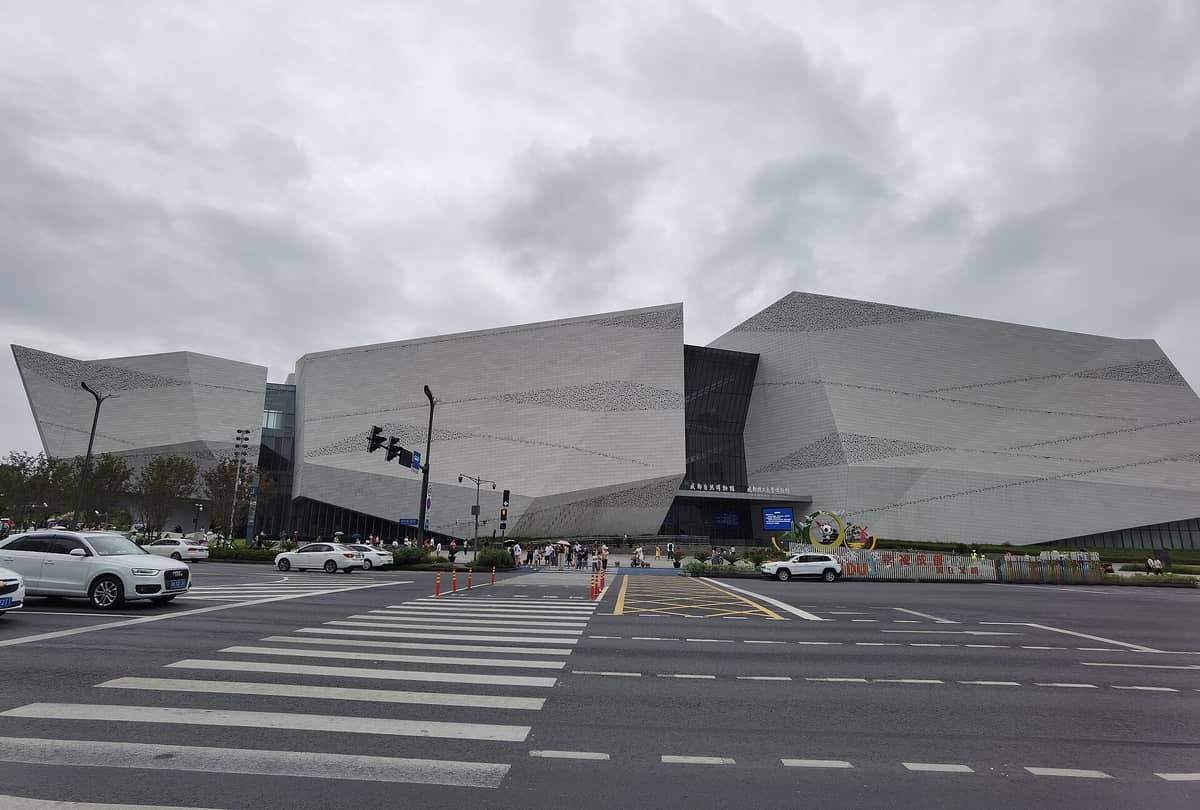
What the Chengdu Natural History Museum Actually Is
The Chengdu Natural History Museum, officially known in Chinese as 成都自然博物馆(成都理工大学博物馆), opened on November 23, 2022. It occupies a site of approximately 61,000 m², with total building area exceeding 50,000 m² and dedicated exhibition space of around 17,000 m². Those numbers place it among the larger natural history museum complexes in China, though the building itself is arguably as interesting as what is inside it.
The museum is affiliated with Chengdu University of Technology, a university with a long-established reputation in geological and earth sciences research. That academic grounding shows in the collection's depth, particularly in mineralogy, stratigraphy, and the paleontological material recovered from Sichuan and the broader Chinese interior. This is not a general-purpose science center with touchscreens and pop-science summaries. It is a proper natural history institution with substantial specimens, and it rewards visitors who come prepared to spend real time in it.
ℹ️ Good to know
Opening hours: Tuesday to Sunday, 09:00 to 17:00. Last entry is at 16:30. The museum is closed on Mondays, except when a public holiday falls on that day. Verify current hours before visiting, especially around national holidays when schedules may change.
The Building: Architecture Worth Noting Before You Go Inside
First-time visitors often stop at the entrance forecourt and look back at the structure before going in. The design draws on geological forms, with angular volumes that echo stratified rock layers and ridge lines. At ground level the material palette is raw and mineral, referencing the earth-science theme without resorting to the kind of forced metaphor that makes some institutional architecture look like a logo. On overcast days, which are common in Chengdu from autumn through early spring, the stone-grey facade reads as serious and cohesive. On bright days the same surfaces catch directional light and reveal texture that flat photography misses.
The interior atrium spaces are tall, which makes the museum feel less compressed than many of Chengdu's older civic buildings. Natural light enters through controlled openings rather than broad glazed walls, keeping gallery temperatures more stable and reducing glare on specimen displays. For visitors arriving from the Metro on a hot summer afternoon, the difference in temperature between the street and the entrance hall is immediate and welcome.
Tickets & tours
Hand-picked options from our booking partner. Prices are indicative; availability and final rates are confirmed when you complete your booking.
Panda Base and city highlights private day tour in Chengdu
From 302 €Instant confirmationFree cancellationChengdu to Yibin private tour with Wuliangye Liquor Museum visit
From 300 €Instant confirmationChengdu private evening tour with hot pot dinner
From 247 €Instant confirmationFree cancellationGiant Buddha and Huanglongxi Old Town private day tour from Chengdu
From 368 €Instant confirmationFree cancellation
What the Exhibition Halls Cover
The museum's permanent collection is organized around several major themes: Earth sciences and geology, paleontology with a substantial focus on Mesozoic fauna from China, mineralogy, and biodiversity covering both the Sichuan Basin and broader ecological zones. The paleontology galleries are the most consistently crowded section, and for good reason. Sichuan Province has produced significant dinosaur fossil discoveries, and the specimens on display include material that is genuinely impressive in scale and scientific value, not replicated casts filling space.
The mineral and rock collection tends to attract a quieter audience of geology students and specialist visitors, but it is worth slowing down for even without prior knowledge. The variety of crystal structures, ore samples, and gemstone specimens from across China's mineral-rich regions is displayed with enough spatial separation to study individual pieces rather than scan past them. Labels are primarily in Chinese, though some sections include English descriptions.
The biodiversity sections address the ecological breadth of the region, including endemic species associated with the Sichuan Basin and adjacent mountain zones. Visitors who have already been to the
Visitors who have already visited the Chengdu Research Base of Giant Panda Breeding will find context here for the conservation biology framing that panda tourism often simplifies. The museum treats the giant panda as one component of a complex regional ecosystem rather than as an isolated icon.
How the Experience Changes by Time of Day
Arriving at or just after opening, around 09:00 to 09:30, gives the clearest run through the paleontology galleries before school groups and weekend families fill the main circulation routes. The atrium is quietest then, and the low morning light through the entrance facade creates long shadows across the entrance hall floor that disappear by mid-morning.
By 11:00, particularly on weekends and school holidays, the dinosaur fossil halls become genuinely crowded. This is a popular venue for families with young children, and the noise level in the high-ceilinged halls rises accordingly. If you are visiting with small children, that energy is part of the atmosphere. If you are trying to read specimen labels or focus on detail, plan either to arrive early or to visit those galleries last, after the midday peak begins to settle.
Afternoons from around 14:00 to 15:30 tend to see a slight dip in crowd density as groups leave for lunch or other activities. This is a reasonable window for the geology and mineral sections, which require closer attention and reward a quieter visit. Remember that last entry is 16:30, so arriving after 14:30 limits how much ground you can cover comfortably.
💡 Local tip
Best visiting window: Tuesday to Friday mornings, arriving close to the 09:00 opening. Weekend mornings are significantly more crowded, especially during school term breaks and public holidays.
Getting There and Practical Logistics
Metro Line 8 connects the museum directly to central Chengdu. Alight at Shilidian Station (十里店站) and use Exit B. Metro Line 8 connects the museum directly to central Chengdu. Alight at Shilidian Station (十里店站) and use Exit B. The museum is directly accessible from the exit. Multiple bus routes also serve the area, including lines 20, 86, 112, 128, 177, 199, 303, 305, 349, 405, 654, 659, 662, K16, G169, and G99, though bus routes and numbering can change and Metro Line 8 is the more reliable navigation anchor.
Chenghua District sits east of the city center. Visitors combining this museum with central Chengdu attractions should allow for transit time: Tianfu Square is around 20 to 25 minutes by Metro, and Wuhou District attractions require at least one interchange. Planning the museum as a standalone half-day excursion or pairing it with nearby Chenghua district stops is more efficient than combining it with attractions on the western side of the city.
Ticket price is ¥20 for full-price adult admission. Concession categories exist but specific eligibility details should be confirmed at the ticket office. Purchase is from the ticketing desk; bring identification as Chinese museums commonly require ID presentation for ticket purchase, including for foreign visitors. Payment by mobile wallet (WeChat Pay or Alipay) is standard at most Chengdu museum ticket counters.
⚠️ What to skip
Accessibility: Available visitor information does not confirm specific step-free access routes, lift locations, wheelchair loan availability, or accessible toilet provision. Contact the museum directly before visiting if mobility access is a requirement.
Honest Assessment: Who Will Get the Most From This Visit
This museum is genuinely well-suited to families with school-age children, particularly those who have already covered the panda tourism circuit and want something with more scientific depth. It also works well as a Chengdu family itinerary anchor on a day when heat or rain makes outdoor sightseeing unappealing. Chengdu's summers run warm and wet, and the museum's air-conditioned interior becomes considerably more attractive when the humidity outside is high.
For adult visitors with a specific interest in geology, mineralogy, or Chinese paleontology, the collection justifies a focused visit on its own terms. The depth of the earth-science material reflects the university's academic specialization and goes beyond what a general-interest science center would present.
Visitors with limited time in Chengdu who are primarily interested in cultural history, Sichuan cuisine, or the city's urban character may find that other museums serve their itinerary better. The
Visitors drawn primarily to Chengdu's cultural and historical identity may find the Sanxingdui Museum or the Sichuan Provincial Museum more relevant to their interests. The Natural History Museum does not address Sichuan's human history or the Bronze Age civilization context that makes Sanxingdui internationally significant.
English-language signage is present in parts of the museum but is not comprehensive. Visitors without Mandarin reading ability will find the experience navigable in the main fossil and specimen halls, but will miss detail in text-heavy geology and stratigraphy sections. A translation app with camera function is useful to have on hand.
Photography and Practical Tips for the Visit
The tall fossil displays and atrium spaces photograph well with a wide-angle lens or a phone in ultra-wide mode. Lighting in the specimen galleries uses directional spotlighting against dark backgrounds, which means standard auto-exposure tends to underexpose the surrounding context. Bracket your exposures or use the museum's high-contrast light to frame specimens against dark negative space deliberately.
The mineral collection presents a different photographic challenge: many specimens are displayed in cases with reflective glass. Shoot at an angle rather than straight on, and use a lens hood or your free hand to block overhead reflections. Early morning, when the halls are less crowded, gives more freedom to reposition for better angles without other visitors in frame.
Wear comfortable flat shoes. The museum floor plan involves significant walking across multiple levels, and the building's scale means that even a focused single-theme visit covers considerable ground. If you plan to continue into central Chengdu after the museum, the Metro connection via Line 8 is the most straightforward route toward Chunxi Road and the surrounding commercial district.
Insider Tips
- Tuesday morning is the least-crowded slot across most weeks. School groups typically arrive mid-morning and tend to concentrate in the dinosaur halls; if you head to the geology and mineral sections first and finish with paleontology, you can often reach the fossil galleries just as the groups are moving on.
- Bring or buy water before entry. On-site food and beverage options may be limited; check current availability with staff at the entrance, as museum cafe and vending arrangements can change.
- Last entry is 16:30, but the museum closes at 17:00. That is not enough time to cover the full collection meaningfully. If you arrive after 15:00, pick one or two sections and go deep rather than trying to rush through everything.
- Chinese ID or passport presentation is commonly required at museum ticket counters in Chengdu. Have your passport accessible rather than packed at the bottom of a bag.
- A translation app with camera or live-text function, such as Google Translate or Baidu Translate, makes the Chinese-only geology labels considerably more informative. Download the relevant language package before your visit so it works offline.
Who Is Chengdu Natural History Museum For?
- Families with children aged 6 and older who want more than a panda visit
- Geology, mineralogy, or paleontology enthusiasts looking for specialist depth
- Rainy or hot-day visitors seeking a full half-day indoor itinerary
- Architecture-interested travelers curious about contemporary Chinese institutional design
- Visitors who have already covered Chengdu's main cultural sites and want a different kind of experience
Nearby Attractions
Other things to see while in Chenghua District:
- Chengdu Research Base of Giant Panda Breeding
The Chengdu Research Base of Giant Panda Breeding is the world's largest captive giant panda breeding and visitor centre, home to dozens of giant and red pandas across 238 hectares of bamboo forest in Chenghua District. This guide covers exactly when to arrive, what to expect at each enclosure, and how to make the most of a half-day visit.
- Chengdu Zoo
Established in 1953 and covering about 17.73 hectares in Chenghua District, Chengdu Zoo is the city's main municipal zoo. With over 300 species on site, including giant pandas, it draws a broad local crowd and serves as a practical alternative to the more famous Panda Base for visitors on a tight budget.
- Eastern Suburb Memory (Dongjiao Memory)
Once a state-owned electronics factory, Dongjiao Memory is now Chengdu's most atmospheric cultural park, combining preserved Soviet-style industrial architecture with live music venues, independent galleries, street art, and a dense cluster of cafés and restaurants. Entry is free and the park is open around the clock.