Chengdu Zoo: What to Expect Before You Go
Established in 1953 and covering about 17.73 hectares in Chenghua District, Chengdu Zoo is the city's main municipal zoo. With over 300 species on site, including giant pandas, it draws a broad local crowd and serves as a practical alternative to the more famous Panda Base for visitors on a tight budget.
Quick Facts
- Location
- No. 234 Zhaojuesi South Road, Chenghua District, Chengdu
- Getting There
- Metro Line 3, Zoo Station, Exit A (approx. 260 m walk to entrance)
- Time Needed
- 2–3 hours for a relaxed visit
- Cost
- CNY 20 adult; reduced rates for eligible children/students. Verify before arrival.
- Best for
- Families, budget travelers, panda fans who want a shorter queue
- Official website
- http://www.cdzoo.com.cn
What Chengdu Zoo Actually Is
Chengdu Zoo, known in Chinese as 成都动物园 (Chéngdū Dòngwùyuán), is a municipal zoo that has operated in some form since 1953. It is located on Zhaojuesi South Road in Chenghua District and is priced accordingly at CNY 20 for adults.
That distinction matters for international visitors weighing their options. The zoo houses giant pandas, but the conditions, viewing distances, and overall panda experience differ significantly from what you get at the Panda Base in the northern suburbs. On the other hand, the zoo is cheaper, far easier to reach by metro, and considerably less crowded with tour groups. Those tradeoffs are worth understanding before you decide.
If pandas are your primary reason for visiting Chengdu, you will find a more thorough breakdown of all the options in the complete Chengdu panda guide. The zoo works best as part of a broader day in Chenghua District rather than as a standalone destination.
The Experience: Walking the Grounds
The zoo's layout is largely linear, with paved paths connecting enclosure clusters. Early on a weekday morning, the atmosphere is genuinely calm. Older residents often arrive just after opening at 08:00 in the March–October season, or 08:30 in the November–February season, to walk the shaded paths before the heat builds, and the sounds are mostly birdsong from the aviary sections and distant animal calls. By 10:00, school groups and weekend families change the character entirely: stroller traffic picks up, the snack vendors near the central paths do brisk business selling skewers and packaged drinks, and the noise around the primate enclosures becomes considerable.
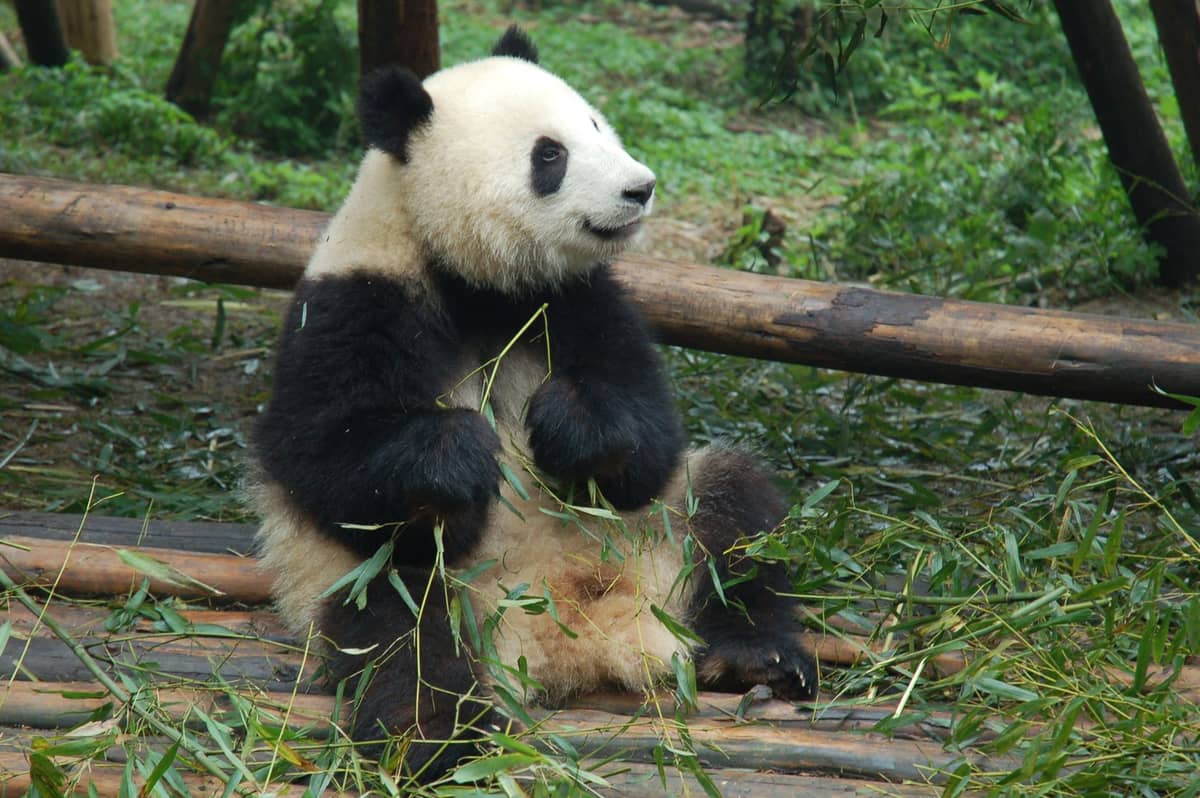
The giant panda enclosure is the zoo's centerpiece and draws the densest crowd. The pandas here tend to be active in the morning, as they are elsewhere, and tend to rest through the middle of the day. Arriving by 09:00 gives you the best chance of seeing them move around rather than sleep. The viewing area is a standard railed walkway; sightlines are decent but the enclosure does not replicate the more naturalistic habitat design found at the Panda Base.
Beyond pandas, the zoo maintains collections of large cats, bears, primates, and a notable bird section. The African savanna-style enclosures for giraffes and zebras are popular with younger children. The aquarium section, located near the center of the grounds, provides a change of pace on hot afternoons since it is one of the few fully enclosed, air-conditioned spaces on site.
💡 Local tip
Arrive at or just before 08:00 (08:30 in winter) on a weekday for the quietest conditions and the most active panda behavior. Last admission is at 16:30, and the zoo closes at 17:30, so a mid-afternoon arrival gives less time than the closing hour suggests.
Tickets & tours
Hand-picked options from our booking partner. Prices are indicative; availability and final rates are confirmed when you complete your booking.
Panda Base and city highlights private day tour in Chengdu
From 302 €Instant confirmationFree cancellationChengdu to Yibin private tour with Wuliangye Liquor Museum visit
From 300 €Instant confirmationChengdu private evening tour with hot pot dinner
From 247 €Instant confirmationFree cancellationGiant Buddha and Huanglongxi Old Town private day tour from Chengdu
From 368 €Instant confirmationFree cancellation
How the Visit Changes by Time and Season
Summer (June through August) is the most challenging season to visit. Temperatures regularly reach the high 20s Celsius, and the combination of humidity, crowds, and limited shade on the main paths makes midday uncomfortable. The zoo has some mature tree cover, but not enough to keep paths cool between 11:00 and 15:00. If you visit in summer, bring water, wear light and breathable clothing, and plan to use the aquarium or any covered rest areas during the hottest hours.
Spring (March to May) and autumn (September to November) are the most pleasant windows. Temperatures are moderate, the grounds look their best when the planting is in good condition, and weekend crowd levels, while still heavy by international zoo standards, are more manageable than during national holidays. Avoid Golden Week in early October and the Spring Festival period if you dislike dense crowds.
Winter visits (November through February) come with shorter opening hours: the zoo opens at 08:30 instead of 08:00 and closes at 17:30. Chengdu winters are mild but overcast and occasionally damp. Some animals are less visible, moved to indoor enclosures. On the upside, crowd levels are at their annual low, and the pandas in particular may be more active in cooler temperatures.
⚠️ What to skip
National holidays, particularly Golden Week (1–7 October) and the Spring Festival period, bring very heavy attendance. If you visit during these times, expect queues at the panda enclosure and crowded paths throughout.
Getting There and Practical Logistics
The zoo is one of the more straightforward attractions to reach by public transit in Chengdu. Metro Line 3 stops directly at Zoo Station, and Exit A brings you to within roughly 260 metres of the main entrance on Zhaojuesi South Road. The walk is flat and simple.
Taxis and Didi ride-hailing are also practical options, particularly for families with young children or visitors arriving from hotels south of the river. Drop-off directly in front of the entrance is straightforward, though traffic on Zhaojuesi South Road can slow things during morning and evening peaks.
For broader orientation on getting around the city, the getting around Chengdu guide covers the metro network, ride-hailing setup for international visitors, and day-trip logistics.
Tickets are purchased at the main entrance. The standard adult price is CNY 20. Children under 1.3 metres enter free, while reduced prices apply to eligible children and students; verify current eligibility criteria at the window, as conditions can change. The official website is cdzoo.com.cn, though the Chinese-language version contains more current information than any third-party listings.
Chengdu Zoo vs. the Panda Base: Making the Right Choice
This comparison comes up often, and it deserves a direct answer. The Chengdu Research Base of Giant Panda Breeding is a dedicated conservation and research facility with significantly larger panda enclosures, a broader range of panda age groups, and a more immersive setting. It is also considerably more expensive (admission is substantially higher), located further from the city center, and attracts large tour groups, particularly in the morning hours it recommends for active panda viewing.
Chengdu Zoo costs CNY 20 and is two metro stops from the urban core. If you are traveling with children who want to see many animals rather than focus specifically on pandas, or if your schedule and budget do not allow a dedicated half-day trip to the Panda Base, the zoo is a reasonable choice. It is not a substitute for the Panda Base experience; it is a different category of attraction.
Visitors who are specifically traveling to Chengdu for pandas and have built their itinerary around that should prioritize the Panda Base. Visitors for whom the zoo is one of several things to do in a day in Chenghua District will likely find the value-to-effort ratio here quite good.
Who Should Consider Skipping
Travelers who have limited time in Chengdu and are choosing between this and the Panda Base should choose the Panda Base. The zoo cannot match that facility's panda experience, and if pandas are the reason you came to Chengdu, the zoo will feel like a compromise.
Solo adult travelers without a specific interest in the animal collection may find the zoo underwhelming compared to the city's other cultural and culinary attractions. Chengdu's museums, historic streets, and food scene offer more distinctive experiences for time-pressed visitors. The zoo is not poorly maintained or unpleasant; it simply does not offer the kind of differentiated experience that justifies a visit when time is short.
If you are looking for outdoor green space in the city rather than a zoo experience, People's Park in Qingyang District offers a very different kind of afternoon, with tea houses, mahjong tables, and a cross-section of local daily life that no zoo visit can replicate. For a broader overview of parks and green spaces, see the Chengdu parks and outdoor spaces guide.
Photography and Practical Notes
Photography is generally permitted throughout the zoo. The panda enclosure lighting is adequate in the morning but can be flat and dim on overcast winter days. A phone camera is sufficient for most enclosures; a telephoto lens is useful for the large-cat and bird sections where animals are kept at distance from viewing rails. Flash photography near sensitive species is inadvisable and may be restricted by posted signage.
Food and drink are available at snack stalls and a canteen near the center of the grounds. Quality is functional rather than notable. The food is standard park-vendor fare, skewers, packaged snacks, and bottled drinks. If you plan to stay for more than two hours, bringing your own water is sensible, particularly in summer.
Accessibility details specific to the zoo, such as step-free route availability, wheelchair rental, and accessible toilet provision, are not fully documented in public sources. If these matter for your visit, contact the zoo directly before arriving to confirm current arrangements.
Insider Tips
- Arrive within the first hour of opening on a weekday: the paths around the panda enclosure are far less congested, the animals are more active, and the overall experience is noticeably more relaxed than at midday.
- The aquarium section near the center of the grounds is one of the few fully enclosed spaces at the zoo. On hot summer afternoons or wet days, it makes a useful rest point mid-visit.
- If you plan to visit both the zoo and the Chengdu Research Base of Giant Panda Breeding on the same trip, do the Panda Base first. The zoo's panda section will feel less impressive afterward rather than more.
- The metro connection is genuinely convenient. Metro Line 3, Zoo Station, Exit A places you at the entrance in a flat 260-metre walk. There is no need to arrange a taxi or join a tour to reach this attraction.
- Last admission is at 16:30, with the zoo closing at 17:30. A visit started after 15:30 will feel rushed and may not give you enough time to cover the full grounds.
Who Is Chengdu Zoo For?
- Families with young children who want a full range of animals beyond pandas
- Budget travelers who want a panda sighting without the higher cost of the Panda Base
- Visitors with only a few hours to spare and a hotel in Chenghua District
- Travelers combining the zoo with other Chenghua District stops as part of a full day out
- Repeat visitors to Chengdu who have already done the Panda Base and want a different option
Nearby Attractions
Other things to see while in Chenghua District:
- Chengdu Natural History Museum
Opened in November 2022, the Chengdu Natural History Museum is one of the largest and most architecturally ambitious natural history institutions in southwestern China. Located in Chenghua District and easily reached by Metro Line 8, it covers over 17,000 m² of exhibition space across geology, paleontology, biodiversity, and earth-science themes.
- Chengdu Research Base of Giant Panda Breeding
The Chengdu Research Base of Giant Panda Breeding is the world's largest captive giant panda breeding and visitor centre, home to dozens of giant and red pandas across 238 hectares of bamboo forest in Chenghua District. This guide covers exactly when to arrive, what to expect at each enclosure, and how to make the most of a half-day visit.
- Eastern Suburb Memory (Dongjiao Memory)
Once a state-owned electronics factory, Dongjiao Memory is now Chengdu's most atmospheric cultural park, combining preserved Soviet-style industrial architecture with live music venues, independent galleries, street art, and a dense cluster of cafés and restaurants. Entry is free and the park is open around the clock.