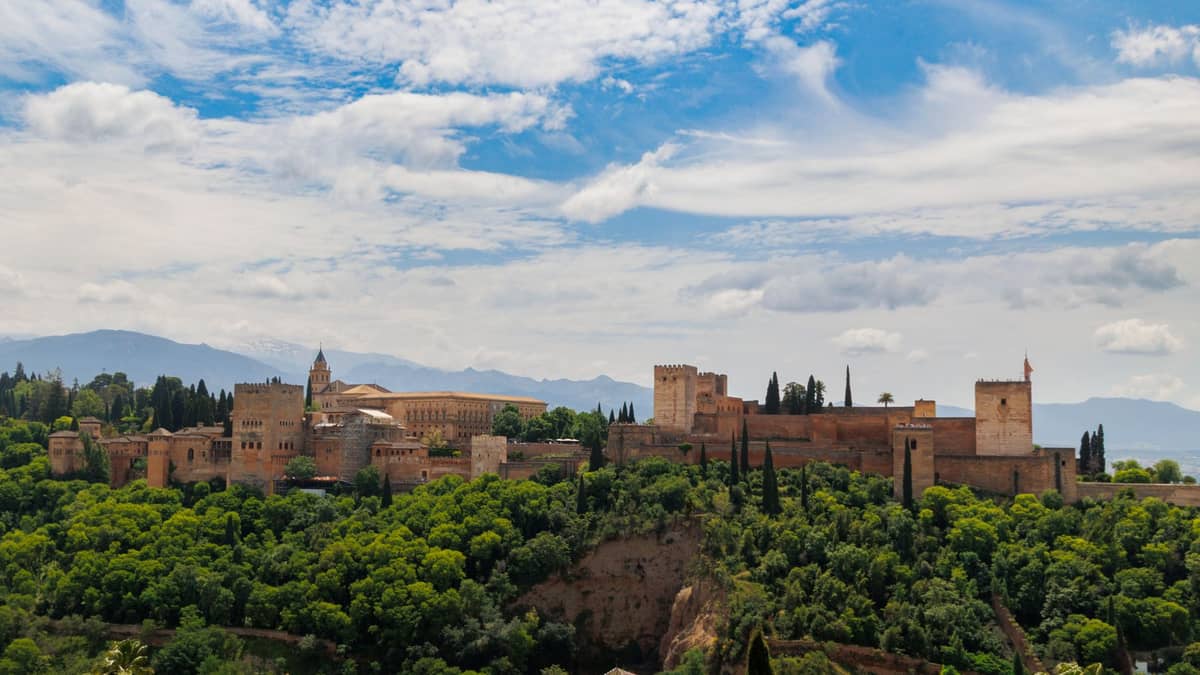
Alhambra Hill, known historically as La Sabika, is the wooded sandstone ridge that rises above the Darro River on Granada's eastern edge, carrying the full weight of the Alhambra palace complex on its crest. More than just the site of a monument, the hill is a self-contained world of fortresses, royal palaces, gardens, and pine forest that took centuries to build and can take a full day to properly explore.
La Sabika is Granada's defining landform: a long, narrow ridge of reddish soil and stone on which the Nasrid sultans built the most sophisticated palace complex in medieval Europe. The hill is part of a UNESCO World Heritage Site, an active archaeological zone, and the single most visited monument complex in Andalusia. Everything else in Granada orients itself around it.
Orientation
La Sabika sits on the eastern edge of Granada's historic urban core, separated from the city centre by a short but steep climb. The hill runs roughly east to west, with its highest and westernmost point dropping sharply toward the Darro River valley below. On its north face, the river creates a natural moat, and across that narrow gorge lies the Albaicín, Granada's ancient Moorish quarter. To the south, the hill's gentler slope descends toward the Realejo district and, further out, the residential streets leading to the Vega plain.
The main spine of the complex is Calle Real de la Alhambra, the road that threads along the crest of the hill through the monument. The southern approach, via Paseo de la Sabica, is the principal vehicular and pedestrian access route, leading to the Access Pavilion where tickets are checked. The western base of the hill meets Plaza Nueva, the social hub of central Granada, at an elevation difference of roughly 75 metres, which sounds modest until you are walking it on a July afternoon.
Administratively, La Sabika is not a residential neighbourhood in the way the Albaicín or Realejo are. It functions almost entirely as a protected monument zone, managed by the Patronato de la Alhambra y Generalife. The forested slopes around the complex are part of the Bosque de la Alhambra, a pine and elm woodland that buffers the palaces from the city and gives the hill its distinctive silhouette.
Character & Atmosphere
The hill operates on a rhythm set almost entirely by visitor access windows rather than by neighbourhood life. At dawn, before the first ticket holders arrive, the upper paths through the forest are nearly empty. The air carries the smell of damp pine and earth, and the towers of the Alcazaba catch the earliest orange light while the city below is still grey. This is when the hill feels closest to what it must have been: remote, commanding, slightly severe.
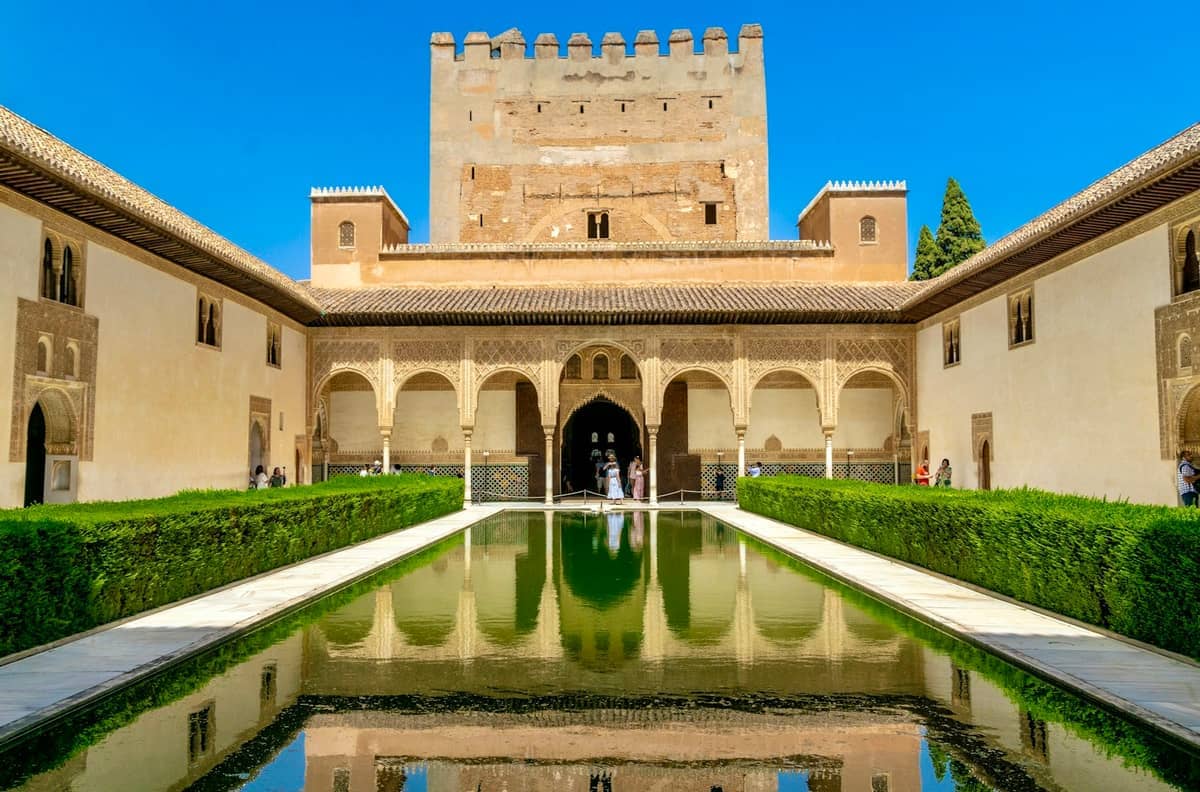
By mid-morning, the Access Pavilion is handling its full quota of timed-entry visitors. The Nasrid Palaces in particular move at a controlled pace, with timed slots that mean crowds are distributed rather than concentrated. Still, the interior courtyards of the Comares and Leones palaces can feel dense with people and camera phones. The famous reflections in the Patio de los Arrayanes are rarely photographed without other visitors in the frame unless you arrive at the very start of your entry window.
By early afternoon in summer, the open areas of the Alcazaba bake under direct sun, and temperatures on the exposed battlements regularly exceed 35°C. The Generalife gardens, further east, provide shade and the sound of water from their irrigation channels, making them a sensible refuge. In spring and autumn, the afternoon light on the palace facades is exceptional, warm and directional in a way that photographs rarely capture adequately.
After the last visitors leave and the gates close, the hill returns to its forest silence. The walking paths on the outer slopes, including the Cuesta de los Chinos along the Darro riverbank, remain accessible until later in the evening and offer views of the lit-up complex from below. The towers of the Alcazaba illuminate at night and are visible across much of Granada, including from the Albaicín's miradores directly opposite.
⚠️ What to skip
The outer forest paths around La Sabika, particularly those on the northern slope above the Darro, should be avoided by solo travellers after dark. The paths are poorly lit and see almost no foot traffic once the monument closes.
What to See & Do
The Alhambra is the reason this hill exists in the minds of most visitors, and it earns its reputation. The complex is typically divided into three main zones: the Alcazaba fortress, the Nasrid Palaces, and the Generalife. Each requires separate planning within your ticket.
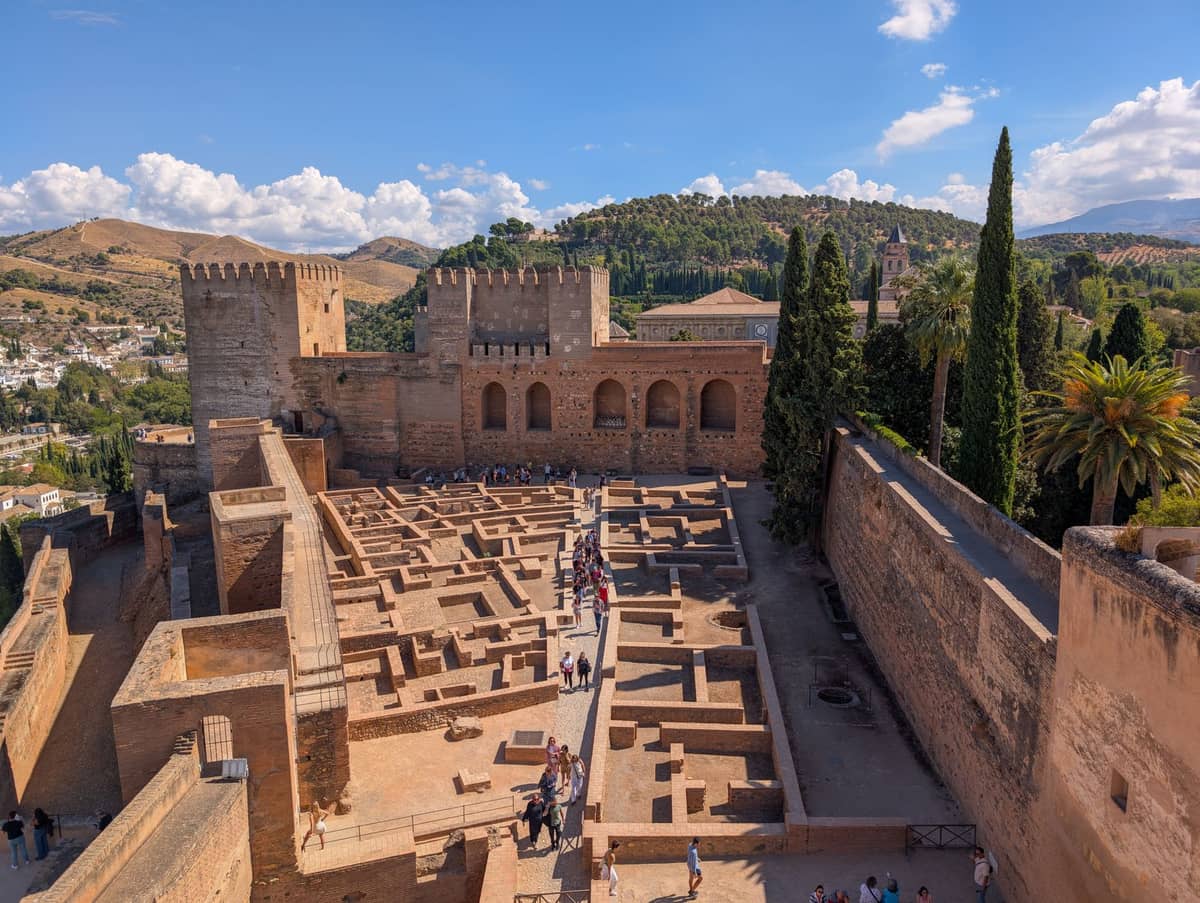
The Alcazaba is the oldest part of the complex, the military citadel that occupied the westernmost and highest point of La Sabika before the palaces were built. Climbing the Torre de la Vela gives the most complete panoramic view of the city, the Albaicín, and the Sierra Nevada. It is also one of the few spots where you can truly read the geography of Granada, understanding how the Darro valley separates the two great hills and how the city spread onto the plain.
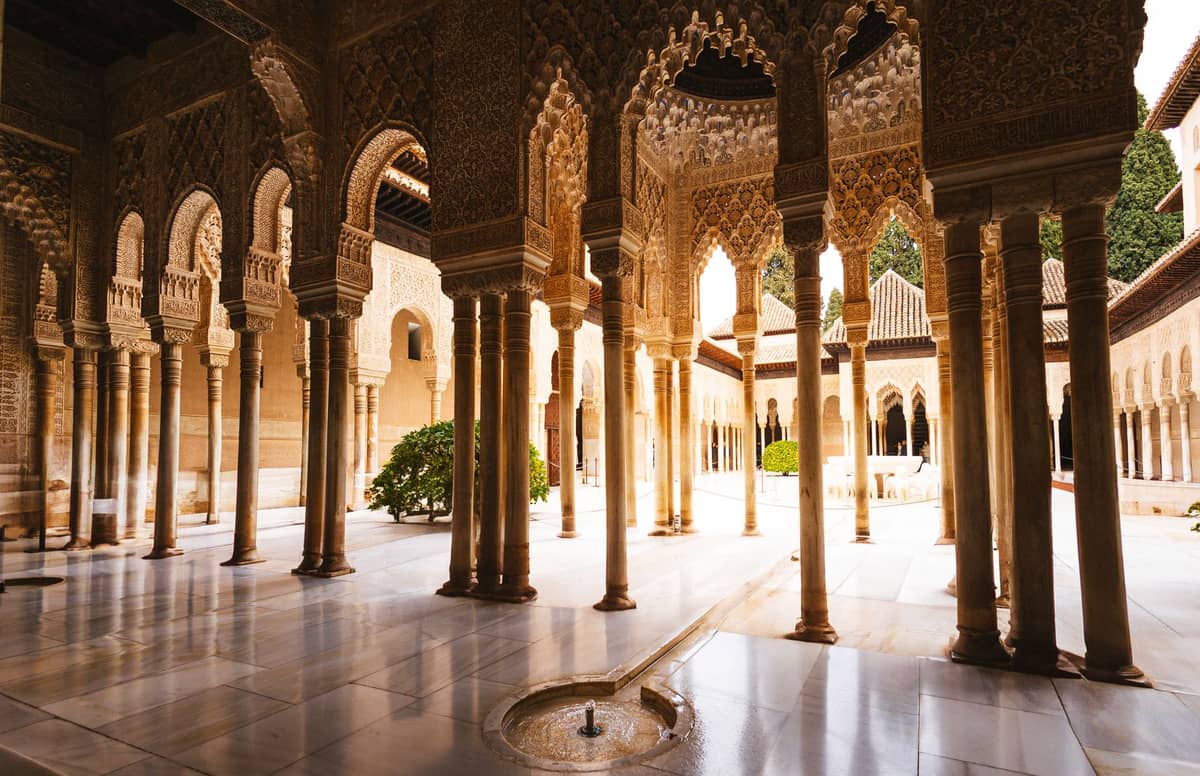
The Nasrid Palaces occupy the central section of the hill and represent the pinnacle of Andalusian Islamic architecture. The geometric stucco work, the muqarnas vaulting, the inscribed poetry on the walls, and the engineering of the water system through the palaces all reward slow, attentive looking. Timed entry slots are enforced: your ticket will specify a 30-minute window within which you must enter the palaces, and late arrivals are not admitted.
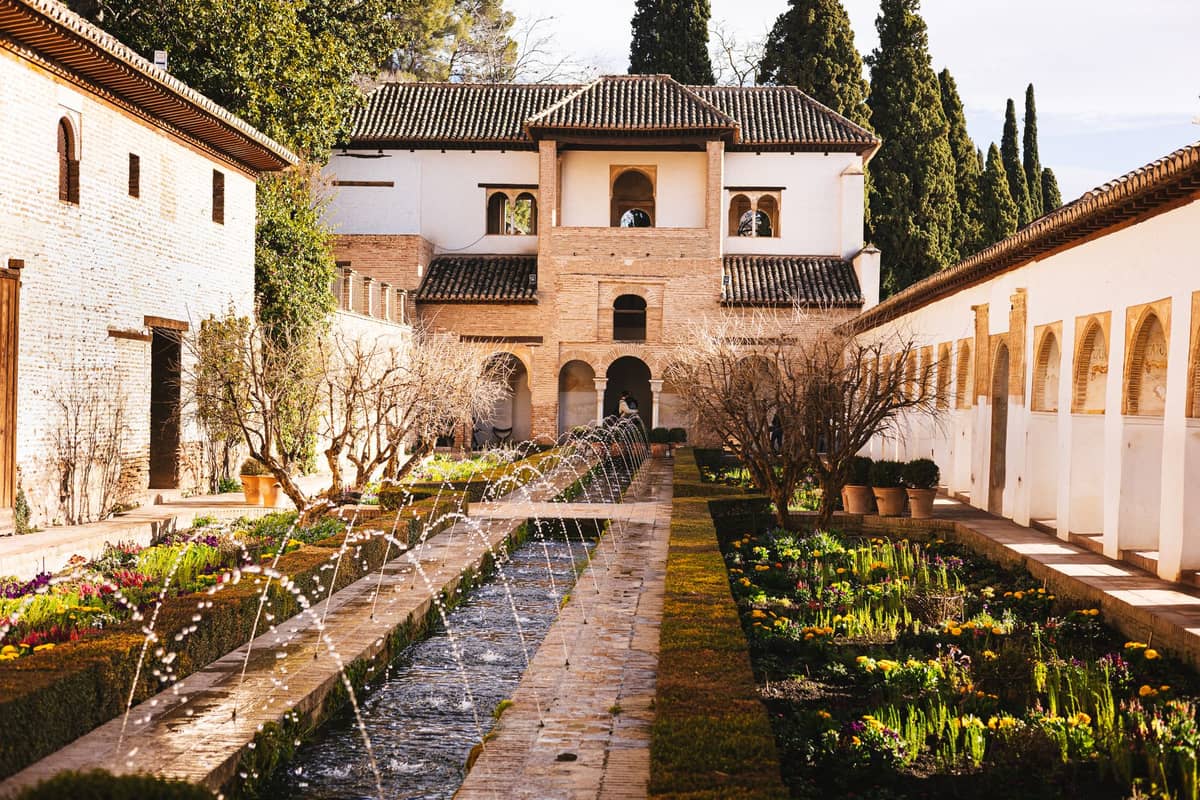
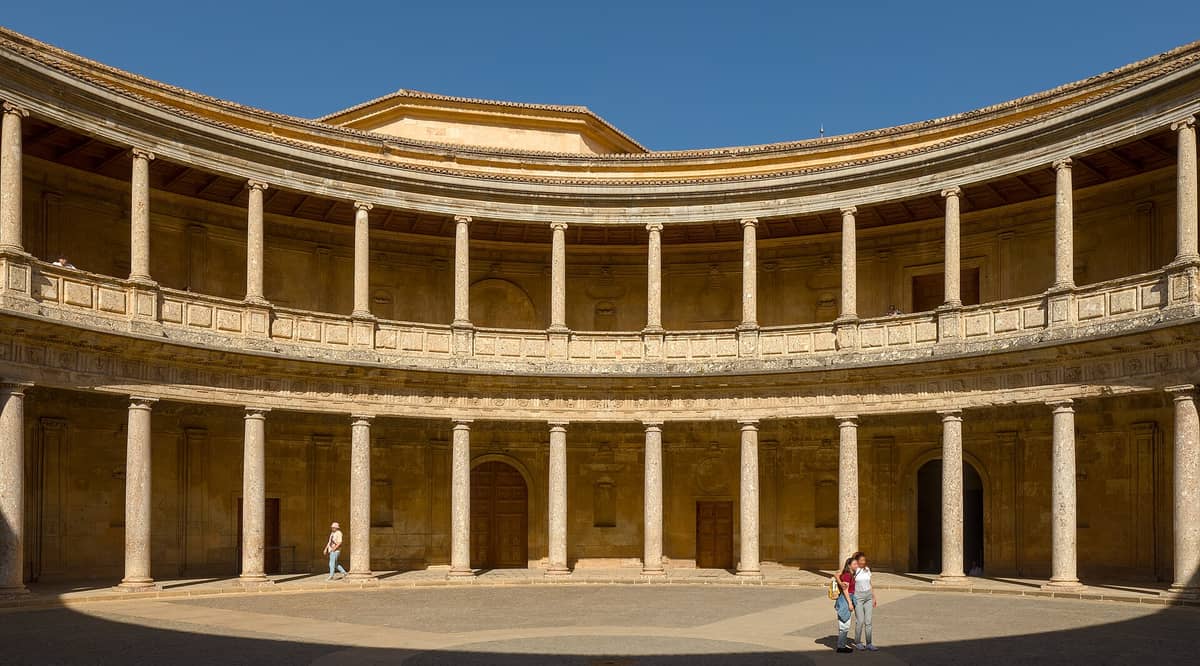
The Generalife gardens lie on a second, slightly higher hill to the northeast of the main complex, connected by a walkway. These were the summer retreat of the Nasrid sultans, and the terraced gardens with their water channels and rose beds are at their best in May and June. The Palacio de Carlos V sits incongruously within the Nasrid compound, a Renaissance circular courtyard palace commissioned by Charles I of Spain in the 1520s and begun after 1526. It never functioned as a royal residence but now houses two museums.
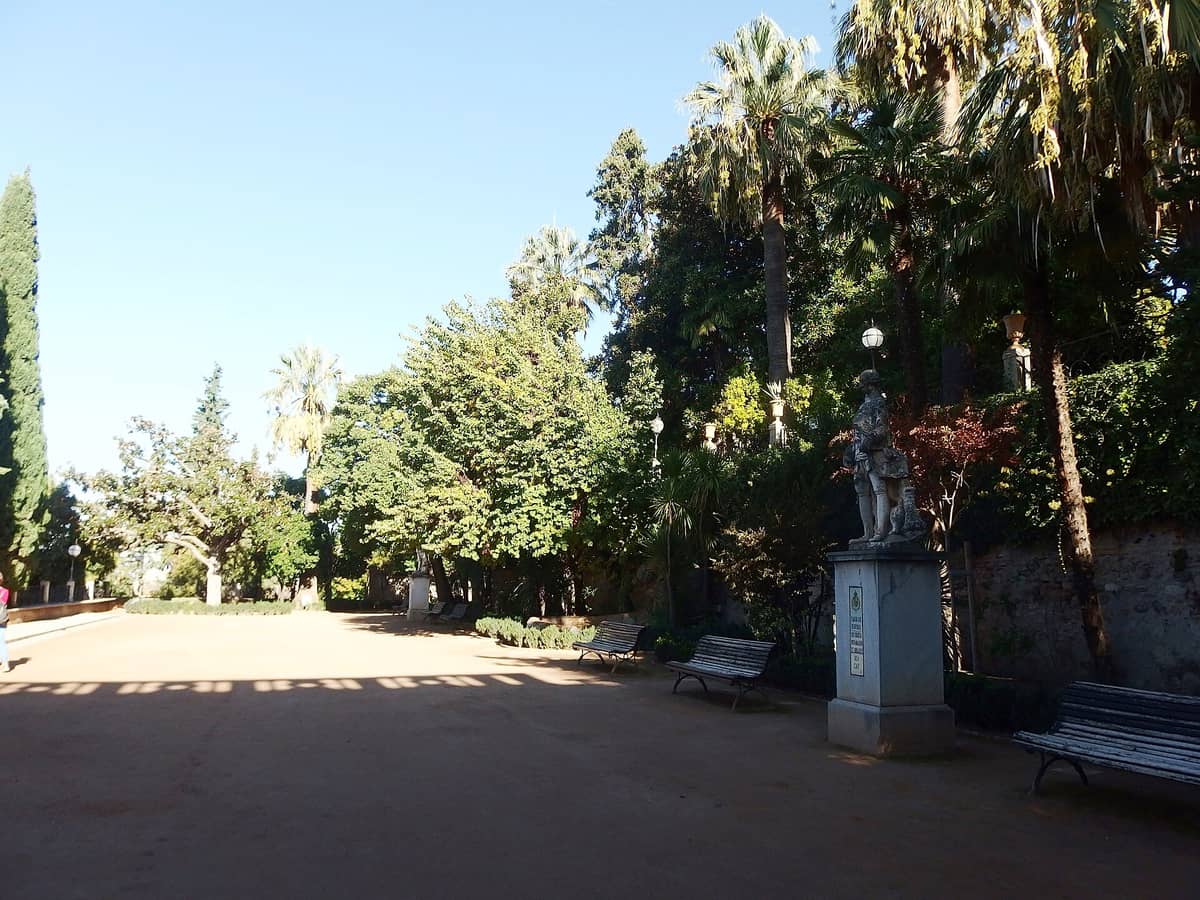
Less visited but worth seeking out is the Carmen de los Mártires, a 19th-century garden estate on the southern slope of La Sabika, just outside the Alhambra walls. Entry is free, the gardens are well maintained, and on weekday mornings you may find them almost completely empty, which is a meaningful contrast to the palace complex above.
Alcazaba fortress and Torre de la Vela viewpoint
Nasrid Palaces: Mexuar, Comares, and Leones complexes
Generalife gardens and royal summer palace
Palacio de Carlos V and its interior courtyard
Bosque de la Alhambra forest walks on the outer slopes
Carmen de los Mártires gardens (free entry, southern slope)
Cuesta de los Chinos riverside path below the northern face
💡 Local tip
Carmen de los Mártires is free and usually quietest on weekday mornings — a useful pause after the palace crowds.
Eating & Drinking
Eating on the hill itself is a convenience play, not a culinary one. The Alhambra complex has a café inside the Parador and a few visitor-facing bars and kiosks, but food quality is secondary to location and the prices reflect captive-audience economics. If your visit spans the midday window, you are better off bringing your own food or planning to eat before you arrive.
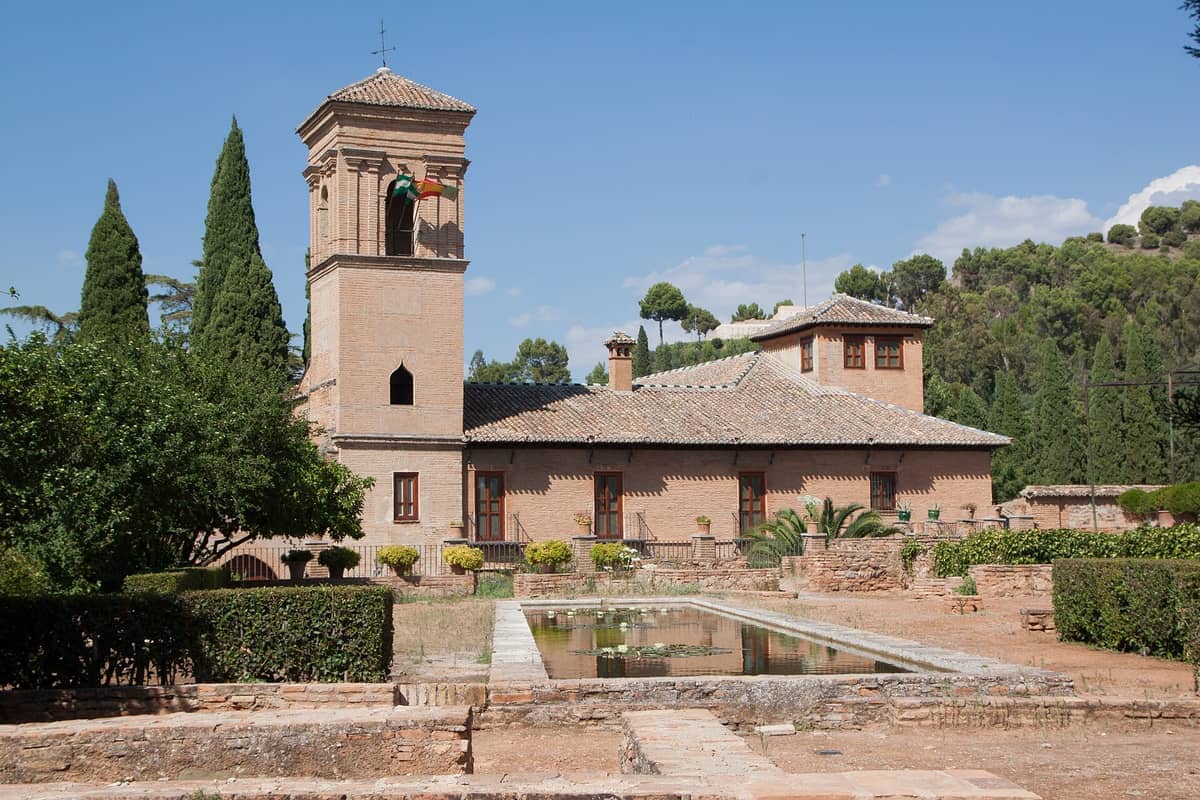
The Parador de Granada occupies the former convent of San Francisco within the Alhambra walls and operates a restaurant open to non-guests. The setting, with a dining terrace overlooking the Generalife gardens, is genuinely exceptional. The food is competent Andalusian cuisine at premium prices. It is worth considering for a special occasion lunch if you have a reservation, but walk-ins at peak season are nearly impossible.
The better strategy is to eat in the city before coming up, or to descend to the bars around Plaza Nueva and Calle Navas after your visit. Granada's tradition of free tapas with every drink order is one of the city's genuine pleasures, and it is best experienced in the lower city where the tapas are generous and the bars are local rather than tourist-facing.
For a proper meal near the hill's base, the streets around Plaza Nueva and the lower Albaicín have a good spread of options at various price points. The free tapas culture in Granada operates most reliably in these central neighbourhoods. If you want to understand what to order and where, the Granada food guide covers the local specialities in detail.
Getting There & Around
There are three practical ways to reach La Sabika from the city centre, each with different trade-offs in terms of effort, time, and what you see along the way.
On foot via Cuesta de Gomérez is the most common approach and the most atmospheric. The street climbs steeply from Plaza Nueva through a gate into the Bosque de la Alhambra, and the full walk to the Access Pavilion takes around 15 to 20 minutes at a moderate pace. The path is shaded for most of its length and is flanked by guitar workshops, some of which have operated on this street for generations. The gradient is real: this is not a casual stroll for anyone with mobility limitations.
The alternative foot route from the Darro riverbank side, via Cuesta de los Chinos (also called Cuesta del Rey Chico), is quieter and climbs through the lower forest along the northern face of the hill. It connects Paseo de los Tristes to the Generalife entrance and is longer than the Gomérez route, but the path along the river below the hill walls is one of the best short walks in Granada.
By bus, city minibus lines C30 and C32 run from the Plaza Isabel la Católica area up to the Alhambra. The C35 stops at Paseo de la Sabica 38, roughly two minutes' walk from the Access Pavilion. These small buses run frequently during visiting hours and cost a standard urban bus fare (verify current fares before publishing). They fill up quickly at peak times, particularly on summer mornings when the first entry windows open.
Taxis and ride-hailing services (Uber and Cabify both operate in Granada) can drop you at the Access Pavilion directly via Paseo de la Sabica. This is the most practical option for visitors with mobility limitations, heavy bags, or those arriving at the early morning slots. There is a dedicated drop-off and pick-up area near the Pavilion. Note that after your visit, taxi availability on the hill itself can be limited at busy times, so consider booking a return pickup in advance or walking back down.
ℹ️ Good to know
Alhambra tickets sell out, especially from spring through autumn. Book only through the official Patronato site (tickets.alhambra-patronato.es).
Where to Stay
Staying on the hill itself means two hotels inside the walls: the Parador de Granada, which occupies a former Franciscan convent, and Hotel América. The Parador is expensive, books out months in advance, and offers an experience that cannot be replicated. Waking up inside the Alhambra walls, with access to the monument before and after general visiting hours, is a different proposition from staying in the city below. If this aligns with your budget, the Granada luxury guide covers what to expect.
For most visitors, the practical question is where to stay in the city for easy access to the hill. The neighbourhoods closest to La Sabika are the lower Albaicín (particularly the streets around Plaza Nueva and Paseo de los Tristes), the Realejo, and the immediate Centro. From any of these, you are within 15 to 25 minutes on foot. Staying further out and relying on buses works fine for the visit itself, but you lose the ability to arrive at the moment the first light hits the Alcazaba, which is worth something.
La Sabika’s name is traditionally linked to an Arabic term associated with a high piece of ground or necklace-like ridge, while the Alhambra’s reddish sandstone soil and rock give its towers their characteristic warm colour. The ridge was fortified from at least the 9th century, but the Nasrid dynasty, who ruled Granada as the last Muslim kingdom on the Iberian Peninsula from 1238 to 1492, transformed it into the complex that exists today. The Alcazaba military citadel was built first, then the royal palaces were added and expanded across the 13th and 14th centuries, with successive sultans each adding rooms, towers, and water systems.
The hill's entire western end, the Medina, functioned as a small town housing the court's officials, craftspeople, and servants. Today this area lies largely as archaeological ruins between the palaces and the Generalife, giving the complex a scale that surprises many visitors who expect a single building rather than what is effectively a fortified city on a ridge.
After the Christian reconquest in 1492, the complex passed to the Castilian crown. Much of the Medina was demolished or fell into disrepair, and Charles I (Charles V of the Holy Roman Empire) commissioned a Renaissance palace to be built within the Nasrid compound in the 1520s, producing the architectural juxtaposition that defines the hill today. The Alhambra and Generalife were listed as a UNESCO World Heritage Site in 1984, with the adjacent Albaicín added to the listing in 1994. For a detailed historical framing, the Granada Moorish heritage guide provides the wider context across the city.
The forest covering the slopes, the Bosque de la Alhambra, reflects 19th-century restoration and landscaping. Administrators of that period planted elm and poplar along the lower slopes and the Cuesta de Gomérez, in the same century as Washington Irving's stay. The upper areas retain older vegetation including cypress trees that have been part of the hill's visual identity for centuries.
💡 Local tip
The Duke of Wellington did not hold the Alhambra estate. The woodland on these slopes is later 19th-century landscaping, not a relic of a Wellington tenure.
Practical Considerations
The Alhambra is open daily except Christmas Day and New Year’s Day (25 December and 1 January), with both daytime and evening visiting sessions. Evening visits cover only the Nasrid Palaces and are a genuinely different experience, with the stucco work lit by warm artificial light and far fewer people than the daytime sessions. Opening hours and ticket prices change periodically and must be verified on the Patronato de la Alhambra's official website before publishing or visiting.
The hill is accessible year-round, but the experience varies significantly by season. Summer (July and August) brings temperatures above 35°C on the exposed battlements of the Alcazaba, and the queues and visitor volumes are at their highest. Spring and autumn offer the most comfortable conditions for exploring both the monument and the surrounding forest paths. Winter visits are quieter and often involve dramatic cloud and light, particularly from January to February when snow on the Sierra Nevada is visible from the Torre de la Vela.
For practical seasonal guidance, the best time to visit Granada covers the trade-offs across the year in detail. Visitors combining the hill with other parts of the city should also read the two-day Granada itinerary which structures the Alhambra alongside the Albaicín and lower city efficiently.
TL;DR
La Sabika is not a residential neighbourhood but a UNESCO-listed monument hill carrying the full Alhambra complex: the Alcazaba fortress, Nasrid Palaces, Generalife gardens, and surrounding forest.
Tickets for the Nasrid Palaces sell out weeks or months in advance, especially March to October. Booking before arrival in Granada is essential, not optional.
The hill rewards early arrivals: the first light on the Alcazaba towers and the quieter early-morning slots in the palaces are significantly better than the midday crowd peak.
Eating on the hill is expensive and average. Plan to have a proper meal in the lower city before or after your visit, where Granada's free tapas tradition operates properly.
Best suited to: first-time visitors to Granada, history and architecture enthusiasts, travellers with a full day to spend. Not well suited to: visitors expecting a neighbourhood experience, anyone without a pre-booked ticket, or travellers with limited mobility who haven't arranged the bus or taxi access in advance.
Two days in Granada, Spain is enough to cover the Alhambra, the Albaicín, the cathedral quarter, flamenco in Sacromonte, and the city's legendary free tapas culture — if you plan correctly. This guide gives you a day-by-day structure, realistic timing estimates, and the booking details that most itineraries leave out.
Walk Granada's UNESCO-listed Albaicín quarter at your own pace. This guide covers the full route from Plaza Nueva to Mirador de San Nicolás, every key stop along the way, seasonal timing advice, and the practical details most visitors only find out when they arrive.
Buying Alhambra tickets is the single most important logistical task before visiting Granada. This guide covers official prices, every ticket type, the timed entry system for the Nasrid Palaces, and how to avoid the most common booking mistakes.
Granada's climate swings from near-freezing January nights to 36°C July days, and its tourist calendar is shaped by everything from Semana Santa processions to Alhambra ticket availability. This guide breaks down every month so you can match your trip to your priorities, whether that's perfect weather, low prices, or catching a specific festival.
Granada sits at one of Spain's most rewarding crossroads, with the Sierra Nevada, white mountain villages, Mediterranean coast, and great Andalusian cities all within reach. These are the best day trips you can do from Granada, with advice on how to get there and what to see.
Granada is one of Spain's most important cities for flamenco, with nightly performances ranging from intimate cave shows in Sacromonte to polished tablao productions near the historic centre. This guide covers the best venues, price ranges, booking strategies, and what first-timers need to know before they go.
Granada is one of the few places left in Spain where ordering a drink automatically earns you a free plate of food. This guide explains the rules, the best neighborhoods, drink prices, timing, and the common myths that catch tourists off guard.
Granada rewards budget travellers generously. From UNESCO-listed Moorish streets and hilltop viewpoints to free-entry monuments and river walks beneath the Alhambra, the city has more genuinely free experiences than almost anywhere in Andalusia.
Everything you need to navigate Granada Spain, from airport transfers and the Metro to the dedicated mini-buses for the Alhambra. Includes current fares, seasonal schedules, and the one booking mistake that locks visitors out of the Nasrid Palaces.
Getting to Granada is easier than most travellers expect. This guide covers every realistic option: flying into GRX, taking the high-speed AVE from Madrid, catching a bus from Málaga Airport, and everything in between, with current prices, journey times, and practical planning notes on which route suits your trip.
Granada rewards curious travelers who look beyond the Alhambra queues. From a free 13th-century royal pavilion buried in a municipal building to a panoramic hilltop hermitage above the cave district, these are the places that most visitors walk straight past.
December is one of Granada's most rewarding months to visit. The city fills with Christmas lights and markets while Sierra Nevada, just 30 km away, opens its ski slopes. Crowds at the Alhambra thin out, hotel prices drop, and the tapas bars are as good as ever. Here is everything you need to plan a winter trip.
Granada rewards those who plan carefully and spend wisely. This guide covers the finest hotels near the Alhambra, the best Michelin-recognized restaurants in the city, private cultural experiences, and the practical logistics that separate a smooth luxury trip from an expensive disappointment.
Most visitors spend their entire time in Granada fixated on the Alhambra and never realize the city holds a dozen other Moorish monuments within walking distance. This guide covers the essential sites, ticket combinations, walking routes, and practical details you need to explore Granada's full Islamic heritage.
Granada's nightlife runs later than almost anywhere else in Spain, fueled by a large student population and a culture that treats midnight as a warm-up. This guide covers the best neighborhoods for drinks, which clubs deliver, what things actually cost, and how to avoid the classic tourist mistakes.
Granada is one of the most affordable cities in Spain — if you know how the system works. This guide breaks down free tapas, Alhambra ticket pricing, tourist passes, free attractions, and the best times to visit for lower costs and smaller crowds.
Semana Santa in Granada is one of Andalusia's most atmospheric Holy Week celebrations, with daily processions from Palm Sunday to Easter Sunday winding through medieval streets. This guide covers routes, schedules, seating, crowd tips, and everything a visitor needs to experience it properly.
Granada rewards those who look up, and those who climb. This guide covers every significant mirador and panoramic viewpoint in the city, from the famous terrace at San Nicolás to the high-altitude plateau of the Sierra Nevada, with practical advice on timing, access, and what you'll actually see from each spot.
Granada rewards families who plan ahead. From timed-entry Alhambra tickets to the hands-on Parque de las Ciencias and snow-capped Sierra Nevada day trips, this guide covers every family-friendly activity in Granada, Spain, with practical advice on crowds, costs, and seasonal timing.
Granada sits at the foot of the highest mountain range in mainland Spain, putting serious alpine terrain within an hour of the city centre. This guide covers the best hikes near Granada, from accessible gorge walks to high-altitude summit routes, with practical advice on getting there.
Granada is one of Spain's most historically layered cities, but it comes with real trade-offs: intense summer heat, Alhambra ticket logistics, and crowds that can frustrate the underprepared. This guide gives you the full picture so you can decide if it belongs on your itinerary.
Las Alpujarras is one of the most rewarding day trips from Granada — a chain of Moorish-era whitewashed villages clinging to the southern slopes of the Sierra Nevada. This guide covers how to get there by bus or car, which villages to prioritize, what to eat, and how to make the most of a single day in the mountains.
Granada, Spain is one of Europe's most atmospheric cities for couples. Moorish palaces, candlelit flamenco caves, ancient bathhouses, and hilltop sunsets combine to create something genuinely difficult to replicate anywhere else. This guide covers the best romantic experiences, practical planning details, and practical planning notes on what actually lives up to the hype.
Sierra Nevada is Spain's highest skiable and southernmost major ski resort, sitting just 40 km from Granada city. This guide covers the full picture: season dates, lift pass pricing, how to get there, what the slopes are actually like, and what most first-timers get wrong.
Granada, Spain packs an extraordinary range of experiences into a city of just 230,000 people: a UNESCO-listed palace complex, a medieval Moorish quarter, cave flamenco, and a tapas culture where every drink comes with free food. This guide cuts through the noise and tells you exactly what to do, when to go, and what to skip.
Granada's food culture runs much deeper than free tapas. This guide covers the city's signature dishes, seasonal specialties, best markets, and practical tips for eating well in one of Andalusia's most distinctive culinary cities.
Granada, Spain has one of Europe's most distinctive food cultures: order a drink and a free tapa arrives automatically. This guide covers the free tapas system in full, the best neighborhoods to eat, what dishes to prioritize, and the restaurants worth booking in advance.
Choosing where to stay in Granada Spain shapes your entire trip. This guide breaks down the four main neighbourhoods for visitors, with a clear look at terrain, atmosphere, hotel options, and price ranges to help you book with confidence.