Parador de Granada: The Hotel Inside the Alhambra That Changes How You See Everything
The Parador de Granada is a 4-star hotel and restaurant occupying a former Franciscan convent built directly on top of Nasrid-era palace remains, located inside the Alhambra complex. It is one of the few places in the world where you can sleep, or simply have lunch, inside a UNESCO World Heritage Site after the day-trip crowds have gone home.
Quick Facts
- Location
- Real de la Alhambra, s/n, 18009 Granada, inside the Alhambra complex
- Getting There
- Bus line C30 to Alhambra, then on foot or taxi; guests with room reservations may request vehicle access at the Alhambra gate
- Time Needed
- 1–2 hours for a meal; overnight stay for the full experience
- Cost
- No entry fee; restaurant meals priced individually; room rates vary by date (check paradores.es for current prices)
- Best for
- Romantic stays, special occasions, post-Alhambra dinners, architecture lovers
- Official website
- paradores.es/en/parador-de-granada
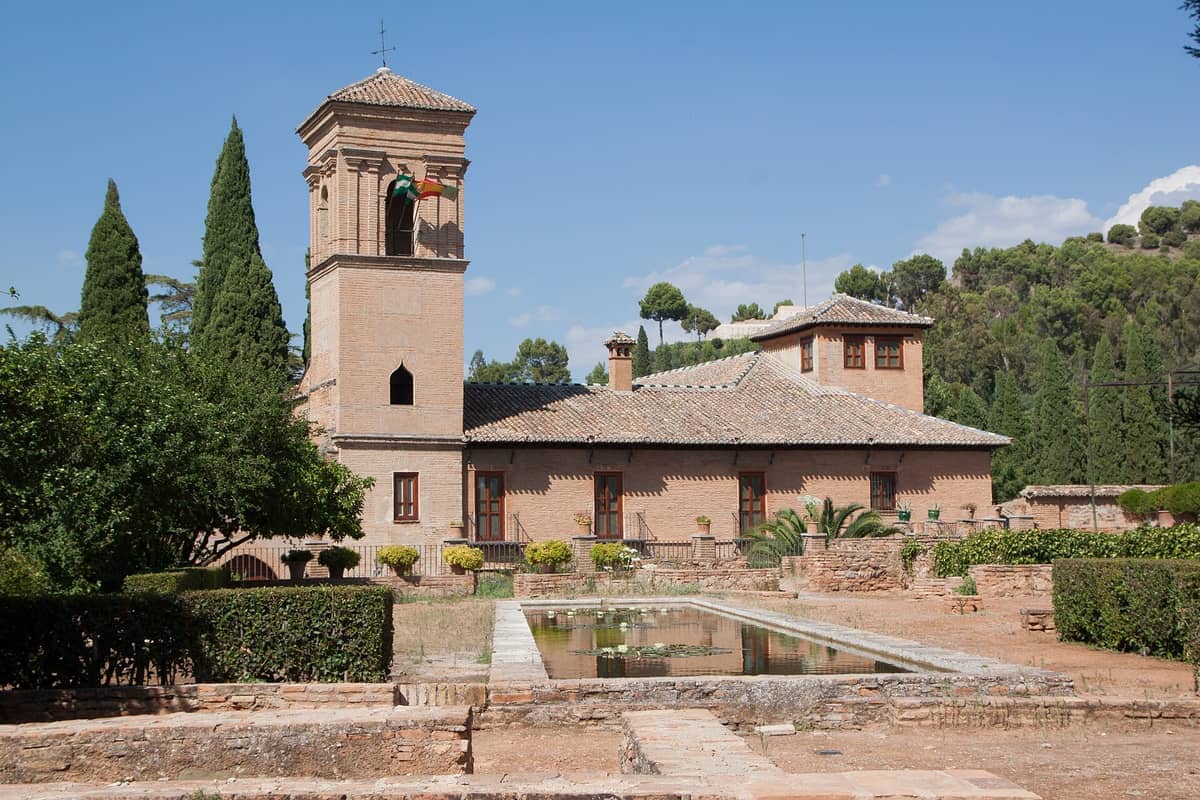
What the Parador de Granada Actually Is
The Parador de Granada is not a hotel that happens to be near a famous monument. It sits inside the Alhambra walls, on the same hill, among the same cypress trees and irrigation channels that date back to the Nasrid sultans. The building itself occupies the former Convent of San Francisco, a Franciscan monastery built in the late 15th century on the orders of the Catholic Monarchs, Ferdinand and Isabella, and constructed directly over the remains of a Nasrid-era palace and its gardens. Isabella herself was temporarily interred here before her remains were moved to the Royal Chapel in the city below.
The Paradores network, Spain's state-run chain of historic hotels, took over the building and has operated it as one of its flagship properties. The classification is 4-star, but the architectural setting places it in a category that no star rating really captures. Walking the corridors, you move through arched cloisters and past fragments of Islamic tile work that predate the convent itself.
ℹ️ Good to know
You do not need to be a hotel guest to visit. The Parador's restaurant is open to the public for breakfast (08:00–11:00), lunch (13:00–15:00), and dinner (20:30–22:00). Reservations are strongly recommended, especially for dinner. Hours can vary; confirm directly at paradores.es before visiting.
The Setting: What You See When You Arrive
Reaching the Parador requires passing through the Alhambra complex itself. If you arrive by foot from the city, you walk up through the Bosque de la Alhambra, a forested path that shades the route. By the time you reach the building, you are already surrounded by the fortified walls and towers of the Alhambra hill. The Parador's entrance is modest relative to its surroundings: a low stone doorway that opens into a colonnaded cloister.
The central cloister is the heart of the former convent. The garden within it is planted with roses, orange trees, and clipped hedges, with a stone fountain at the center. In the morning, before restaurant service begins, the cloister is quiet enough to hear water moving. The smell of orange blossom in spring is pronounced. In summer, the stone walls hold a coolness that the city below has already lost by 9 a.m.
The grounds sit a short walk from the Generalife gardens and within the same perimeter as the Nasrid Palaces. At dusk, when Alhambra ticket holders have largely departed, the area around the Parador takes on a different atmosphere entirely: quieter, the light turning amber across the towers, and the city of Granada visible below through breaks in the cypress hedges.
Tickets & tours
Live prices and dates from our booking partner. If you book, we may earn a commission at no extra cost to you.
Flamenco show in a Sacromonte cave in Granada with drink
From 26 €Instant confirmationFree cancellation1-hour Flamenco Show at Palacio Flamenco in Granada
From 25 €Instant confirmationFree cancellationAlpujarras tour from Granada
From 57 €Instant confirmationFree cancellationCordoba full-day trip from Granada
From 99 €Instant confirmationFree cancellation
Historical Layers: Nasrid Palace, Franciscan Convent, Parador
The site's history unfolds in visible layers. Beneath and around the convent structure, archaeological investigation has identified remains of a Nasrid-era palace, including sections of decorative stucco and the outlines of former rooms and courtyards typical of 14th and 15th-century palatial Andalusian architecture. The Franciscan convent was built beginning in the 1490s, shortly after the Christian reconquest of Granada in 1492. The Catholic Monarchs chose this specific location, on top of an existing Nasrid structure, as a deliberate assertion of the new political and religious order.
Isabella I of Castile died in 1504. Until the Royal Chapel in the cathedral complex was completed and her remains transferred, she and Ferdinand were temporarily interred at this convent. A commemorative chapel within the Parador marks this. The building seen today blends surviving Gothic and Renaissance elements of the convent with 20th-century restoration work carried out when Paradores converted it into a hotel.
Understanding this history makes the Parador more than a luxury hotel: it is a document of the political transitions that shaped Granada. For more context on the city's layered Moorish and Christian heritage, the Granada Moorish heritage guide provides useful background before a visit.
The Experience by Time of Day
Visiting at different times produces genuinely different experiences, and this is worth planning around. Early morning, before the Alhambra's ticketed areas open at full capacity, the grounds around the Parador are as quiet as they get. Guests staying overnight can walk the exterior gardens in near-solitude, with morning mist sometimes sitting in the valley below and the Sierra Nevada visible to the southeast on clear days.
Lunch at the restaurant, from 13:00, brings in day visitors alongside hotel guests. The dining room and terrace offer views across the Alhambra gardens, and the menu draws on Andalusian and national Spanish traditions. The terrace, when open, is among the more unusual places to eat lunch in Granada, with the Comares Tower visible above the tree line. Expect the restaurant to fill up; a walk-in at peak season may not get a table.
Dinner is the most atmospheric option for non-guests. After the main Alhambra visitor flow ends in the late afternoon, the surrounding grounds settle. Arriving for a 20:30 dinner means walking through the Alhambra complex in the evening, which, if you have already visited during the day, feels like seeing a familiar place transformed. The ambient light changes the stone from sand-coloured to a warm orange-red.
💡 Local tip
For dinner, book at least 2–3 weeks in advance during spring and autumn peak season. The restaurant can be reached directly through the Paradores website or by phone.
Staying Overnight: What It Actually Offers
An overnight stay at the Parador de Granada is the most direct way to experience the Alhambra outside of tourist hours. Guests who are staying can access the Parador's immediate grounds and gardens at times when day visitors are not present. This includes early mornings before ticket entry opens and late evenings after the monument closes. The Alhambra's ticketed palace areas are not accessible outside of official opening hours regardless of where you are staying, but the atmospheric difference of being on the hill at night is real.
Room categories vary, and the building's historic structure means rooms differ significantly in size, ceiling height, and aspect. Some rooms look onto the central cloister garden; others face the surrounding Alhambra grounds. Booking directly through paradores.es allows selection of specific room types. Rates are dynamic and should be checked at the time of booking. The Parador is classified at 4 stars, and the facilities are more restrained than a contemporary luxury hotel of the same rating: the appeal is the location and the architecture, not a spa or rooftop pool.
Vehicle access is an important practical point. The Alhambra normally restricts cars entering the complex, but guests with a confirmed room reservation can request access at the entrance gate, subject to the Alhambra's current traffic regulations. If you are arriving without a car, bus line C30 from central Granada stops near the Alhambra entrance. For full details on getting around the city, the getting around Granada guide covers the main options.
⚠️ What to skip
The Parador does not include Alhambra entrance tickets with room rates. Book your Alhambra tickets separately and well in advance, as they sell out weeks ahead during peak season. See the Alhambra tickets guide for the process.
Practical Notes: Getting There, Accessibility, and What to Bring
The address is Real de la Alhambra, s/n, 18009 Granada. Getting there on foot from the city centre takes approximately 25–35 minutes via the Cuesta de Gomérez, the traditional pedestrian approach to the Alhambra. Bus line C30 operates from the city and stops near the Alhambra ticket pavilion, from which the Parador is a further 10-minute walk through the complex. Taxis can drop guests at or close to the Parador entrance, subject to access permissions.
The building has elevator access and is described as wheelchair accessible for both the hotel rooms and the restaurant, with adapted rooms available featuring roll-in showers and grab rails. The grounds around the Parador, however, include uneven stone paths, as do all parts of the Alhambra complex. Visitors with limited mobility should plan the approach by taxi rather than the steep pedestrian route from the city.
The surrounding Alhambra hill has a number of further sites worth combining with a visit here. The Palace of Charles V is a short walk within the same complex, and the Alcazaba fortress offers the hill's best panoramic views. For anyone spending more than a day in the city, the 2-day Granada itinerary provides a practical framework that includes the Alhambra hill alongside the city's other areas.
Who Should Skip It
The Parador de Granada suits visitors for whom the historical and atmospheric setting outweighs the considerations of price and facility level. Travelers expecting a modern luxury hotel with contemporary design, extensive wellness facilities, or a high-energy environment will likely find this building quiet and its aesthetics more austere than expected. The corridors are cool, the decor is traditional, and the experience tilts toward contemplation rather than entertainment.
Non-guests visiting solely to walk through the public areas will find access limited to the restaurant and its adjacent spaces. The Parador is not a museum with free entry; it is a working hotel. If the restaurant prices are outside your budget and you are not staying, the building's exterior and cloister gardens are not generally open for casual tourism. The Alhambra complex itself, its towers, walls, and cypress-lined paths, surrounds the Parador and is accessible as part of a standard Alhambra visit.
Insider Tips
- Book a cloister-facing room if you want the most architecturally authentic experience: these rooms overlook the central garden and feel closest to the convent's original structure, rather than a standard hotel room.
- Non-guests who want to see the interior should book the restaurant rather than attempting to walk in as tourists. A long lunch gives a legitimate reason to spend time in the cloister and dining areas without a room reservation.
- If you are dining in the evening, check whether your Alhambra ticket is for a general daytime slot or a nighttime visit. Some ticket categories allow evening access to the Nasrid Palaces, which can be combined with dinner at the Parador on the same evening.
- Spring, specifically late April and May, is when the cloister garden is at its most photogenic: roses blooming against stone archways with morning light. Summer light is harsher and the garden less lush.
- Vehicle access for guests requires showing a room reservation confirmation at the Alhambra entrance gate. Have this printed or clearly accessible on your phone before arriving; the gate staff will check.
Who Is Parador de Granada For?
- Couples celebrating a special occasion who want an overnight stay unlike any other in Spain
- Architecture and history enthusiasts wanting to experience the Alhambra outside of peak visitor hours
- Travelers who have already visited the Alhambra on a previous trip and want a deeper, slower engagement with the site
- Diners looking for a lunch or dinner setting with genuine historical atmosphere rather than tourist-facing decor
- Photographers wanting access to the Alhambra grounds in early morning light before the main crowds arrive
Nearby Attractions
Other things to see while in Alhambra Hill (La Sabika):
- Alcazaba
The Alcazaba is the oldest surviving section of the Alhambra complex, a Nasrid military fortress perched at the western tip of the hill. Its towers offer some of the most commanding views in Granada, looking out over the Albaicín, the Darro valley, and on clear days, the snow-capped Sierra Nevada.
- Alhambra
The Alhambra is one of the most visited monuments in the world for good reason: it is an extraordinarily complete surviving example of Nasrid Islamic palatial architecture, set above Granada on the hill of Sabika. This guide covers what to expect at each section of the complex, how to secure tickets, and how to make the most of your visit.
- Carmen de los Mártires
Tucked just minutes from the Alhambra entrance, Carmen de los Mártires is a sprawling 19th-century romantic garden on Alhambra Hill that most visitors walk straight past. Shaded paths, ornamental lakes, Moorish-influenced terraces, and resident peacocks reward those who take the detour.
- Casa-Museo Manuel de Falla
Tucked into the hillside near the Alhambra, the Casa Museo Manuel de Falla preserves the modest carmen where Spain's greatest 20th-century composer worked for nearly two decades. Original furnishings, a working piano, and handwritten manuscripts make this one of Granada's most intimate cultural visits.
Planning a trip? Discover personalized activities with the Nomado app.